What an Air Purifier Can and Can’t Do About Your Mold

Air purifiers for mold trap 99.97% of airborne spores, yet won’t remove what’s on your walls. Here’s what to buy and the one type to avoid.
Table of Contents
You smelled something musty, or you spotted a dark patch in the bathroom — and now you’re wondering if a filter in the corner will fix it.
Here’s the honest answer before you spend a dollar: an air purifier for mold spores captures what’s floating in your air, but it does not remove the mold itself.
That distinction is the whole game. Get it wrong, and you waste money while the mold quietly comes back.
A purifier pulls airborne mold spores out of the air you breathe, and the right one also cuts that musty smell. What it can’t do is scrub growth off your drywall or dry the damp corner feeding it.
If someone in your home has allergies or asthma, the stakes feel higher — and the marketing gets louder. You’ll see units promising to “destroy” or “prevent” mold, and several of those claims fall apart under scrutiny.
This guide keeps things brand-neutral. We’ll cover what a purifier actually does, which features matter, what it costs, and where it fits inside a broader mold removal and prevention plan — including one type of “mold purifier” that can make your air worse.
Do air purifiers actually help with mold?
Yes — an air purifier with a true HEPA filter captures airborne mold spores and lowers your exposure, but it does not remove mold growing on surfaces or fix the moisture causing it. Treat it as one layer of defense, not a cure.
What an air purifier does — and doesn’t — do
The clearest way to set expectations is to split it down the middle.
| What a purifier will do | What a purifier won’t do |
|---|---|
| Capture airborne mold spores before you inhale them | Remove mold growing on walls, wood, or grout |
| Reduce the musty smell (with an activated carbon filter) | Kill mold living inside walls or under floors |
| Lower spore counts kicked up by cleaning or foot traffic | Fix the leak or humidity feeding the growth |
| Help sensitive people breathe a little easier | Replace professional remediation for large mold |
Source: synthesized from EPA guidance on home air cleaners.
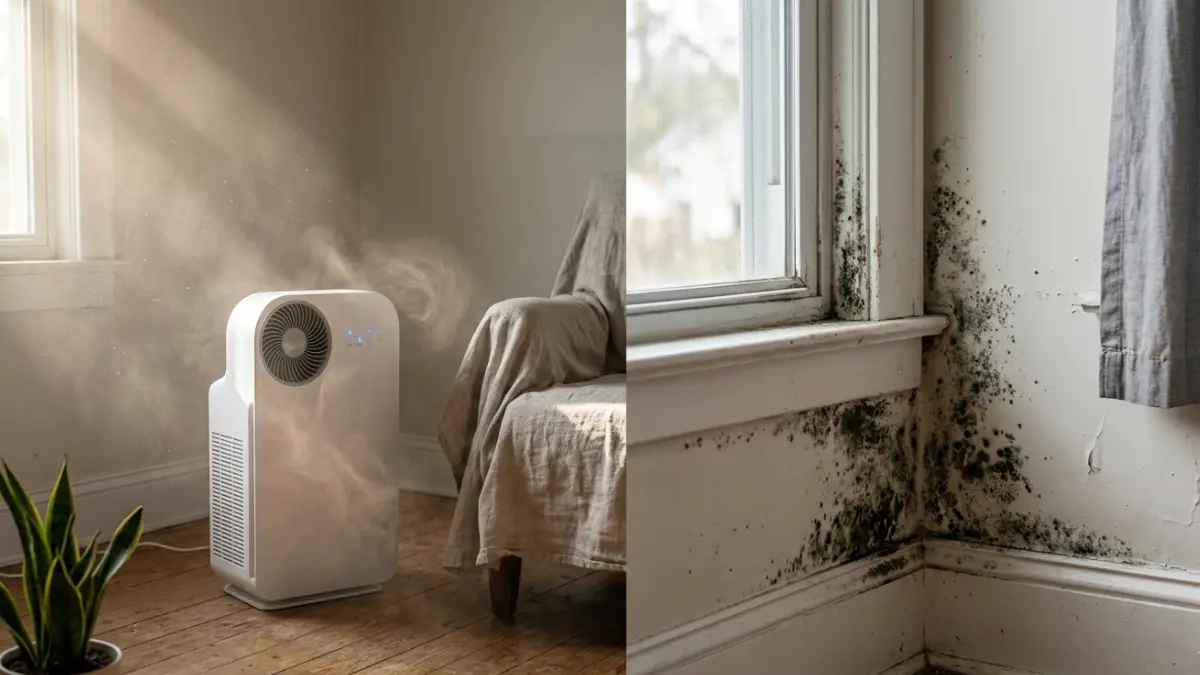
On the last point, the EPA is direct about this in its guide to home air cleaners: air cleaners don’t address the cause of mold, because mold grows from a water or moisture problem.
Before you shop, confirm you’re dealing with mold and not its lookalike — here’s how to tell mold from mildew. Spores you don’t capture drift down and settle, which is why mold can take hold in carpet and upholstery.
Why mold spores are easy for HEPA to catch
Mold spores are bigger than most people guess, and that works in your favor.
Most measure roughly 1 to 30 microns, while a true HEPA filter captures 99.97% of particles down to 0.3 microns — the single hardest size to trap. Anything larger or smaller is caught even more efficiently, so spores sit comfortably in a HEPA filter’s strike zone.
What to look for in an air purifier for mold
Five features separate a purifier that helps with mold from one that just hums in the corner.
The five specs that matter
Prioritize these, in roughly this order:
- True HEPA filtration — captures 99.97% of particles at 0.3 microns, well within the size range of mold spores.
- An activated carbon filter — absorbs the gaseous, musty odor that HEPA media alone can’t touch.
- A CADR matched to your room — the Clean Air Delivery Rate should fit your square footage so the unit actually clears the air.
- A sealed system — keeps captured spores from leaking back out before they reach the filter.
- No ozone, no ionizer-only design — these can irritate your lungs and underperform on spores.
That 99.97% figure isn’t a marketing flourish — it’s the EPA’s definition of a true HEPA filter. Skip anything labeled “HEPA-type” or “HEPA-like,” which doesn’t meet that bar.
Matching CADR to your room size
CADR tells you how fast a unit cleans air, and bigger rooms need bigger numbers.
A practical rule: pick a CADR in CFM equal to at least two-thirds of your room’s square footage for solid hourly air changes. Use this as a quick reference:
| Room size (sq ft) | Minimum CADR to look for (CFM) |
|---|---|
| Up to 150 | ~100 |
| 150–300 | ~200 |
| 300–500 | ~330 |
| 500–700 | ~460 |
Source: based on AHAM two-thirds sizing guidance.
Ignore vague “covers up to 1,500 square feet” claims, which usually assume a single weak air change per hour. And if you suspect mold inside your HVAC air ducts, a tabletop unit won’t reach it — that’s a ductwork job, not a filter job.
Purifier, dehumidifier, or remediation: where each fits
A purifier solves one piece of a mold problem, and pretending it solves all three is how people waste money.
They solve different jobs and work best together, not instead of each other:
| Air purifier | Dehumidifier |
|---|---|
| Removes airborne mold spores and odor | Removes moisture from the air |
| Reduces what you breathe | Removes the condition mold needs to grow |
| Does nothing about humidity | Does nothing about spores already airborne |
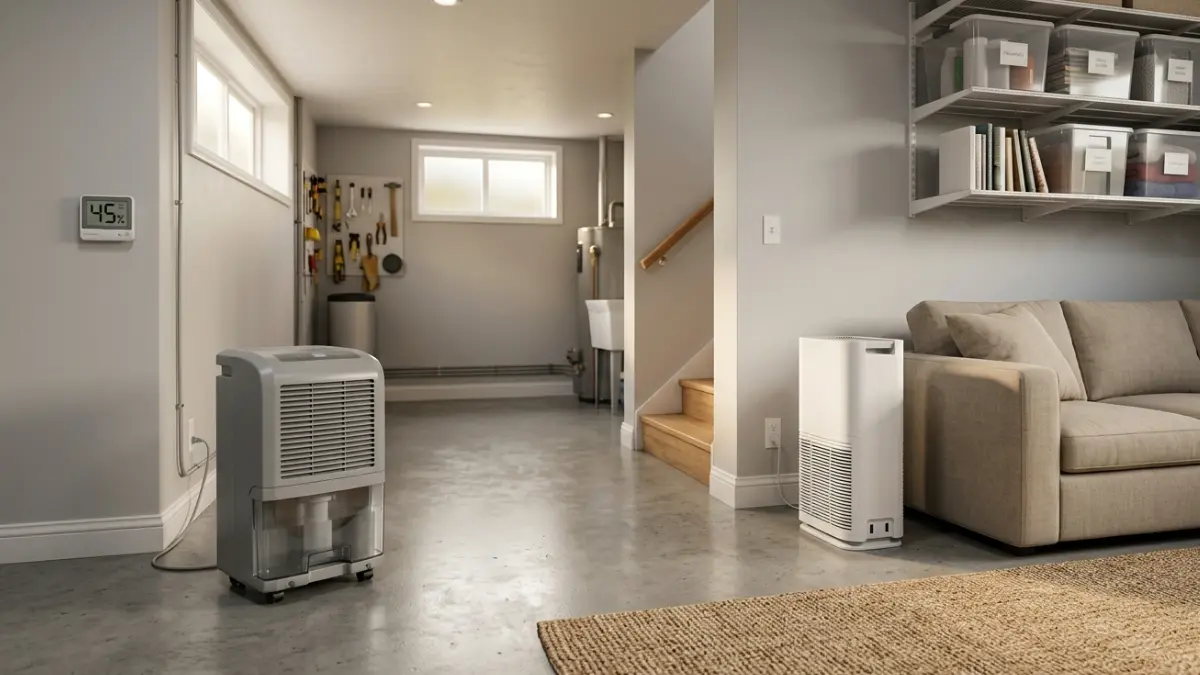
Air purifier vs dehumidifier — you likely need both

- Smart Features: The Govee Wireless Thermometer Hygrometer supports all basic functions as well as smart functions such a…
- High Accuracy and Fast Refresh Time: With the Swiss-made smart hygrometer sensor, the temperature is accurate up to ±0.5…
- Upgraded Display: This room humidity gauge is easy to read due with a 3-inch bright LCD screen with large numbers. The m…
If your space feels damp or reads above 50% humidity, the dehumidifier is doing the real prevention work.
By drying the air, a dehumidifier removes the moisture mold feeds on, while the purifier clears the spores already circulating. A cheap hygrometer tells you whether you’re inside the 30–50% range health agencies recommend.
When to clean it yourself, and when to call a pro
The purifier never removes mold you can already see — you have to clean or cut it out by hand.
On hard surfaces, that means scrubbing, sealing, and sometimes replacing material, whether it’s drywall or wood studs and framing. Small patches under 10 square feet are often a safe DIY mold removal job with the right safety gear.
⚠️ Warning: Mold goes airborne the moment you disturb it. For visible growth larger than 10 square feet, hidden mold, or anyone immunocompromised in the home, hire a remediation pro rather than tackling it yourself.
Then fix the source, or it returns — stopping mold from growing back is about moisture, not filters. If this all started with water intrusion, work through the steps for mold after flooding first.
What it costs: purifier vs filters vs remediation
The sticker price is the smallest part of the math.
Upfront and running costs of a mold air purifier
A capable HEPA-plus-carbon unit runs roughly $150 to $400, and replacement filters are the cost most buyers forget.
Budget about $50 to $150 a year for filters, depending on the model and how dirty your air runs. That ongoing number is worth weighing before you commit to a unit.
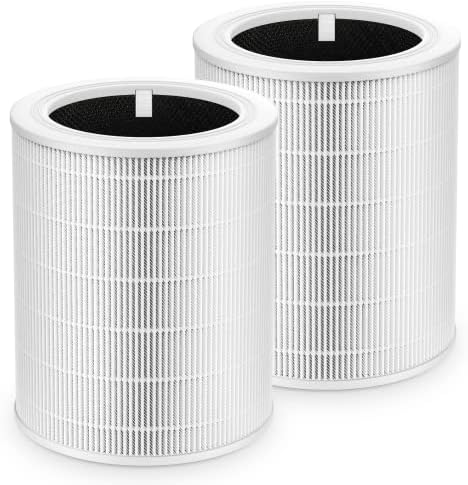
- Compatible With: Our Core 600S replacement filter fully compatible with LEVOIT Core 600S-P air purifier with perfect siz…
- 3-in-1 Filtration Defense: The core 600s-p filter replacement provide 3 layers of defense to protect your family health….
- HEPA Filter: The HEPA Core 600S filter can collect 99.97% of 0.3 micron par-ticles. And the activated carbon filber is m…
How that compares to professional remediation
Filters look trivial next to professional remediation, which is exactly why the purifier is exposure control, not a substitute.
| Expense | Typical cost |
|---|---|
| HEPA + carbon air purifier | $150–$400 |
| Replacement filters | $50–$150 per year |
| Mold inspection | $200–$600 |
| Professional remediation | $1,200–$3,750 (avg ~$2,400) |
Source: 2026 home-services remediation estimates; figures vary by region and severity.
Remediation pricing swings with where the mold is, so it helps to see removal costs room by room and what a mold inspection really costs. Handling a small patch yourself? DIY removal has its own, far lower cost breakdown.
Best types to consider — and what to avoid
Match the unit to your room, then steer clear of the one category that can hurt your air.
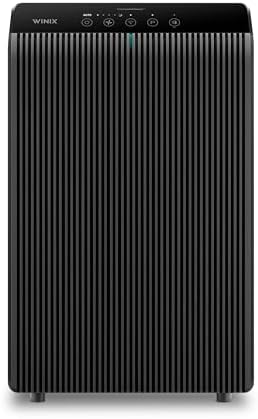
- 𝐀𝐇𝐀𝐌 𝐕𝐞𝐫𝐢𝐟𝐢𝐝𝐞 𝐚𝐭 𝟑92 𝐬𝐪 𝐟𝐭.: Also cleans rooms up to 1,882 sq ft in 1 hour (941 sq ft in 30 minutes, 627 sq ft in 20 min…
- 𝐖𝐢𝐧𝐢𝐱 𝐓𝐫𝐮𝐞 𝐇𝐄𝐏𝐀: Captures 99.99%* of airborne allergens including pollen, dust, smoke, and pet dander, as small as 0.01 …
- 𝐀𝐝𝐯𝐚𝐧𝐜𝐞𝐝 𝐎𝐝𝐨𝐫 𝐂𝐨𝐧𝐭𝐫𝐨𝐥 𝐂𝐚𝐫𝐛𝐨𝐧 𝐅𝐢𝐥𝐭𝐞𝐫: Reduces VOCs and household odors from cooking, pets, and smoke. It is designed to c…
Solid HEPA and carbon options by room size

- 𝐖𝐇𝐘 𝐂𝐇𝐎𝐎𝐒𝐄 𝐀𝐇𝐀𝐌 𝐕𝐄𝐑𝐈𝐅𝐈𝐃𝐄 𝐀𝐈𝐑 𝐏𝐔𝐑𝐈𝐅𝐈𝐄𝐑𝐒: AHAM (Association of Home Appliance Manufacturers) is an ANSI-accredited organiz…
- 𝐋𝐄𝐕𝐎𝐈𝐓’𝐒 𝐌𝐎𝐒𝐓 𝐏𝐎𝐖𝐄𝐑𝐅𝐔𝐋 𝐀𝐈𝐑 𝐏𝐔𝐑𝐈𝐅𝐈𝐄𝐑: A powerhouse at purifying your air in any room. It scans for tiny airborne contamin…
- 𝐔𝐋𝐓𝐑𝐀-𝐏𝐎𝐖𝐄𝐑𝐅𝐔𝐋 𝐏𝐔𝐑𝐈𝐅𝐈𝐂𝐀𝐓𝐈𝐎𝐍 𝐅𝐎𝐑 𝐄𝐗𝐓𝐑𝐀-𝐋?𝐑𝐆𝐄 𝐒𝐏𝐀𝐂𝐄𝐒: The Levoit Core 600S-P Air Purifier is built for extra-large rooms, …

- THE ALL-NEW MIGHTY2: The next generation of Wirecutter’s Top Pick air purifier. The Mighty2 (AP-1512N) is highly efficie…
- IEST-RP-CC007 Standard Certified HEPA: Features an upgraded 3-stage filtration system including a washable pre-filter an…
- MEGASCAN LASER SENSOR: Accurately detects a full spectrum of particles (PM1, PM2.5, PM10) in real-time. The intuitive LE…
Look for true HEPA plus activated carbon, then size by CADR rather than by the box’s coverage claim.
Well-reviewed units that fit common rooms include the Levoit Core 600S for large spaces, the Winix 5510, the Coway Airmega line, Blueair, Alen BreatheSmart, and Medify MA-40. Each pairs HEPA with carbon, but the right pick still comes down to your room’s square footage.
ℹ️ Disclaimer: These models are examples for common room sizes, not endorsements. Confirm current specs and match the CADR to your space before buying.
Skip ozone generators and ionizer-only “mold” purifiers
Some devices sold as “mold purifiers” are ozone generators or ionizer-only units, and both are weak choices.
The EPA warns that ozone is a lung irritant and doesn’t control mold at safe concentrations, and its testing found ionizers less effective than HEPA filters at capturing fungal spores.
⚠️ Warning: Don’t run ozone generators in occupied rooms. Ozone can irritate airways and worsen asthma, and it won’t fix a mold problem.
This matters most for sensitive people. The CDC links mold exposure to coughing, wheezing, and worsening asthma, with higher risk for anyone immunocompromised. If a specific exposure worries you, learn the black mold symptoms worth taking seriously.
Air purifiers and mold: frequently asked questions
1. Do air purifiers help with mold?
Yes, air purifiers help with mold by capturing airborne spores and lowering your exposure, especially with a true HEPA filter. They reduce what you breathe and can ease symptoms for sensitive people. They do not remove mold on surfaces or fix the moisture that lets it grow.
2. Do air purifiers remove mold spores from the air?
A true HEPA air purifier removes mold spores from the air, trapping 99.97% of particles down to 0.3 microns. Since most spores measure 1 to 30 microns, they fall well within range. The unit only filters air passing through it, not spores embedded in walls or carpet.
3. Can an air purifier get rid of mold smell?
An air purifier reduces mold smell only when it includes an activated carbon filter. The musty odor comes from gases that HEPA media can’t trap, while carbon absorbs them. The smell returns if active growth remains, so carbon manages odor but never replaces removing the source.
4. Will an air purifier fix mold without remediation?
No, an air purifier won’t fix mold without remediation. It captures airborne spores but can’t remove growth on surfaces or stop the moisture feeding it. Visible or hidden mold still needs cleaning or professional removal. Use the purifier as exposure control alongside remediation, never as a standalone substitute.
5. Air purifier or dehumidifier for mold — which is better?
Neither is better, because an air purifier and a dehumidifier solve different problems. The purifier captures airborne spores you breathe, while the dehumidifier removes the moisture mold needs to grow. In damp rooms, run both: the dehumidifier prevents new growth, and the purifier clears circulating spores.
6. What filter is best for mold spores?
A true HEPA filter is best for mold spores, capturing 99.97% of particles at 0.3 microns. Pair it with an activated carbon filter for musty odors. Avoid “HEPA-type” or “HEPA-like” filters, which don’t meet the same standard, and skip ozone or ionizer-only units that underperform on spores.
7. Do HEPA filters capture mold spores?
Yes, HEPA filters capture mold spores efficiently. A true HEPA filter traps 99.97% of airborne particles at 0.3 microns, the hardest size to catch, and mold spores are larger at roughly 1 to 30 microns. That puts them squarely within a HEPA filter’s capture range.
8. Are ozone generators or ionizers safe for mold?
No, ozone generators are not safe for mold. The EPA warns ozone is a lung irritant and doesn’t effectively control mold at safe concentrations. Ionizers, which charge particles so they settle onto surfaces, also underperform filters on spores. Choose a true HEPA unit with activated carbon instead.
9. Do UV-C air purifiers kill mold?
UV-C air purifiers have limited effect on mold. Home units rarely deliver enough exposure to kill spores reliably, and UV only reaches spores directly in its path, not mold inside walls or carpet. Treat UV as a minor add-on, not a reason to skip true HEPA filtration.
10. How big an air purifier do I need for mold?
Size your air purifier for mold by matching its CADR to your room. A useful rule is a CADR in CFM equal to at least two-thirds of the room’s square footage. For a 300-square-foot room, look for roughly 200 CFM, and ignore inflated coverage claims.
11. Where should I place an air purifier for mold?
Place an air purifier for mold in the room where you spend the most time or where spores run highest, like a damp bedroom or basement. Keep it a few inches from walls and furniture for airflow, and avoid blocking the intake. One unit treats one room, not a whole house.
12. Should I run the air purifier all the time?
Yes, run your air purifier continuously for mold. Spores are released constantly, so steady operation keeps counts low instead of letting them rebuild between cycles. Most modern units stay quiet and energy-efficient on lower settings. Continuous running matters more than a high burst, especially in damp problem rooms.
13. How often should I change a mold-exposed filter?
Change a HEPA filter exposed to mold every 6 to 12 months, and sooner in heavily contaminated air. Activated carbon filters often need replacing every 3 months. A loaded filter loses efficiency and can hold spores, so wear a mask when handling it and replace on schedule.
14. Can an air purifier make mold worse?
No, an air purifier won’t make mold worse, since it can’t add moisture or spread growth. The real risk is relying on it alone while the moisture source persists, letting mold keep spreading on surfaces. A long-overdue filter also works less effectively, so maintain it and fix the source.
15. Do air purifiers help with black mold?
Air purifiers help with black mold the same way they help with any mold, by capturing airborne spores and fragments. They can’t remove black mold from surfaces or neutralize it inside walls. Because black mold signals a moisture problem, removal and source repair stay the priority, while the purifier limits exposure.
16. Are air purifiers worth it for mold allergies?
Air purifiers are worth it for mold allergies for many people. By lowering airborne spore counts, a true HEPA unit can ease sneezing, congestion, and irritation, though research shows improvements vary. It works best combined with moisture control and removal. This isn’t medical advice; ask your doctor about persistent symptoms.
17. Can mold grow inside the air purifier itself?
Yes, mold can grow inside an air purifier when the filter stays damp. It’s uncommon in dry rooms, but high humidity plus trapped organic matter creates conditions for growth on a saturated filter. Keep the room’s humidity in check, replace filters on schedule, and store units in dry spaces.
The bottom line on air purifiers for mold
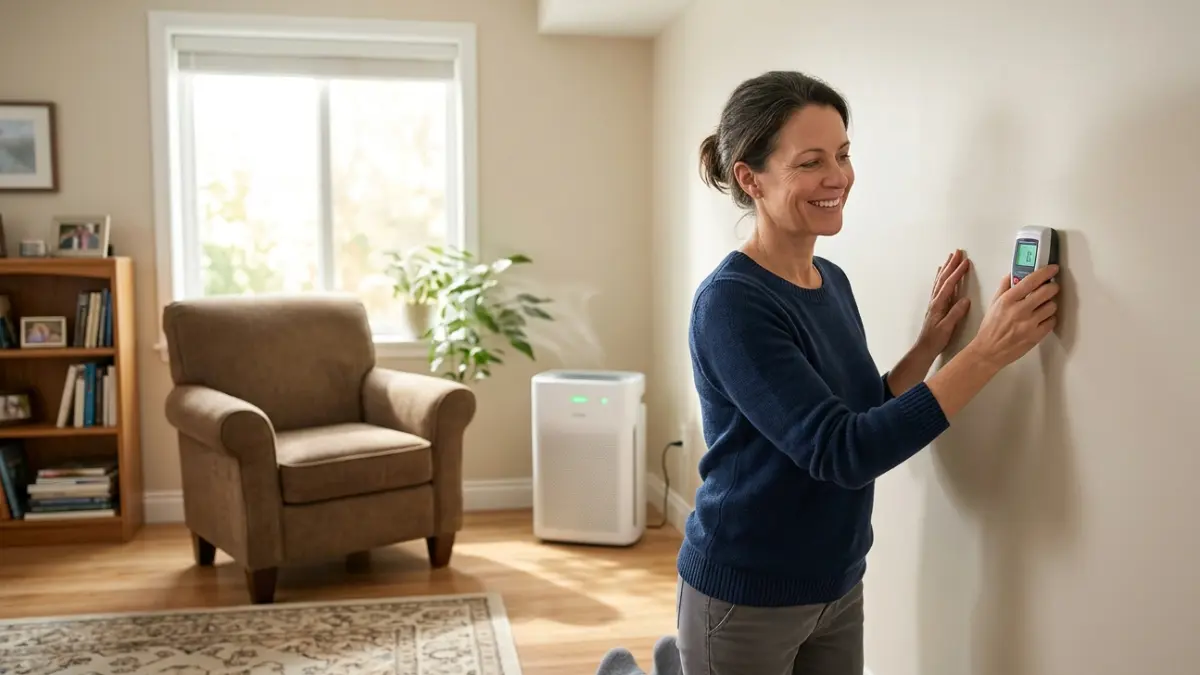
An air purifier earns its place in a mold plan as one layer, not the whole strategy.
With a true HEPA filter and activated carbon, it pulls spores and odor out of the air you breathe and helps sensitive people feel better. What it can’t do is remove mold you can see or dry the damp that feeds it.
So pair it with a dehumidifier, and fix the moisture first. Handle small patches yourself, call a pro for big or hidden growth, and skip anything that leans on ozone.
Treat the purifier as breathing insurance while you work through a diagnose-and-fix remediation guide — that’s where the problem actually ends.
Related guides from Gladewick
Remove mold by surface
- Get rid of mold on concrete floors
- Remove bathroom mold from grout, caulk, and walls
- Black mold removal steps by surface type
Remove mold by location
- Basement mold removal, step by step
- Fix garage mold
- Attic mold removal costs and safe fixes
- Crawl space mold removal costs and next steps
Costs, insurance, and testing
Prevention and products
- What keeps bringing your mold back after remediation
- Using vinegar for mold removal without the guesswork
- Find the right mold removal products for your surface
- Keep a vacation home mold-free while you’re away
Health and exposure
- Mold exposure symptoms in children, explained by age
- What mold exposure during pregnancy means for your baby
Renting and selling