What DIY Mold Removal Really Costs—and When to Call a Pro

DIY mold removal cost stays under $300 for a small patch—but cross the 10-square-foot line and the math flips fast. Here’s exactly where it tips.
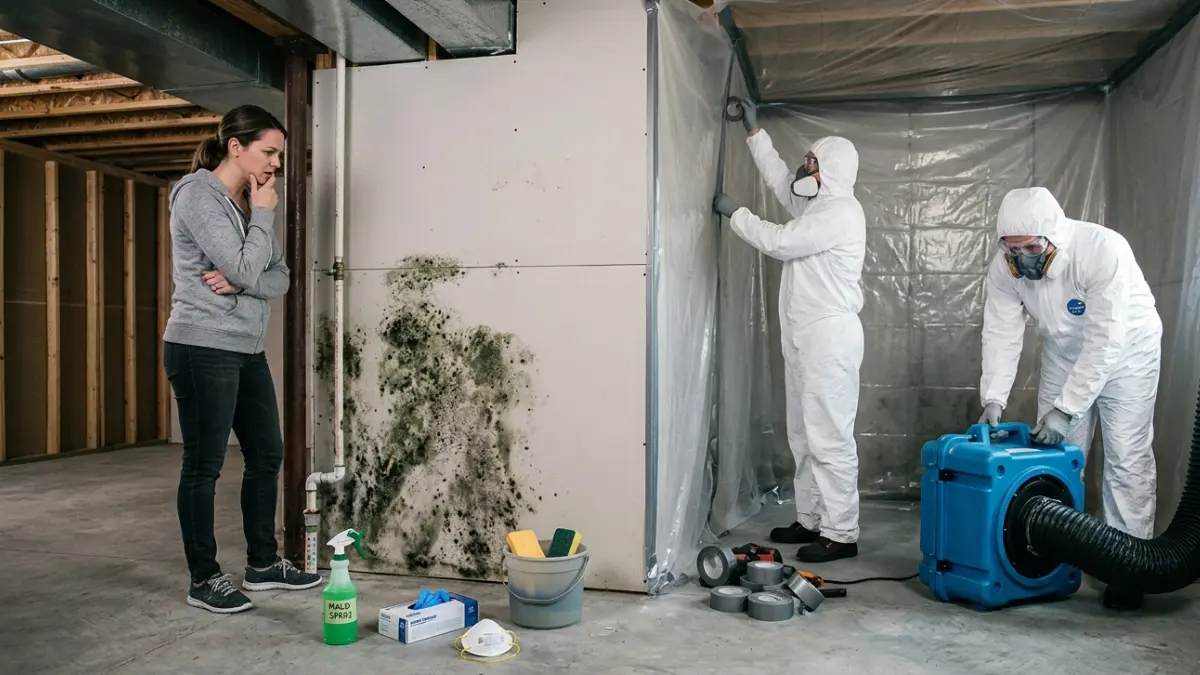
Table of Contents
Spotting mold on your wall sparks one immediate question: is this a $50 problem or a $5,000 one? Here’s the short answer—DIY mold removal cost runs about $50 to $300 for a small patch, while professional remediation averages around $2,300.
The gap looks enormous. But the right choice almost never comes down to price alone.
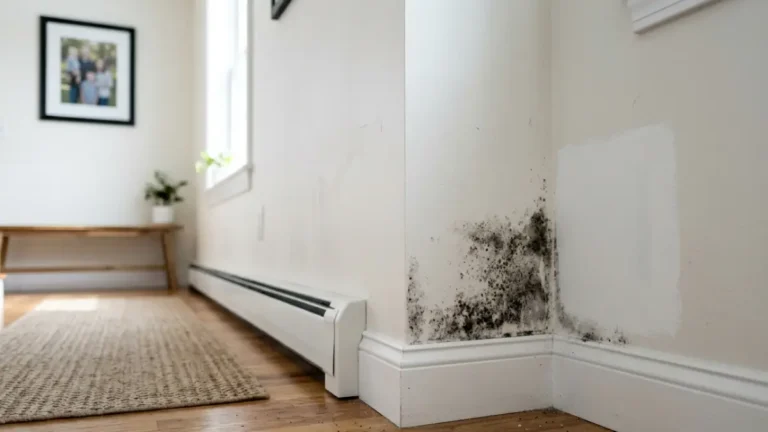
One factor decides most of it: how much area the mold covers. The federal guideline most contractors follow draws the line at roughly 10 square feet—about a 3-foot by 3-foot patch.
Below that, on a hard surface, with clean water behind it, this is usually a weekend job. Above it, or once mold creeps into drywall, framing, or your HVAC, the math—and the safety picture—changes fast.
This breakdown gives you the real numbers, the size rule that splits the two paths, and the honest cases where doing it yourself ends up costing more. For the full picture across every scenario, our step-by-step plan for diagnosing and tackling mold maps the whole process.
ℹ️ Disclaimer: Costs here are general 2026 estimates and vary by region, mold type, and severity. Large infestations, contaminated water, and health conditions change the calculation—when in doubt, get a professional assessment.
What DIY mold removal actually costs
Done right, a small mold cleanup costs less than a nice dinner out.
Small-area DIY mold removal typically costs $50 to $300, depending on the cleaning products and protective gear you buy.
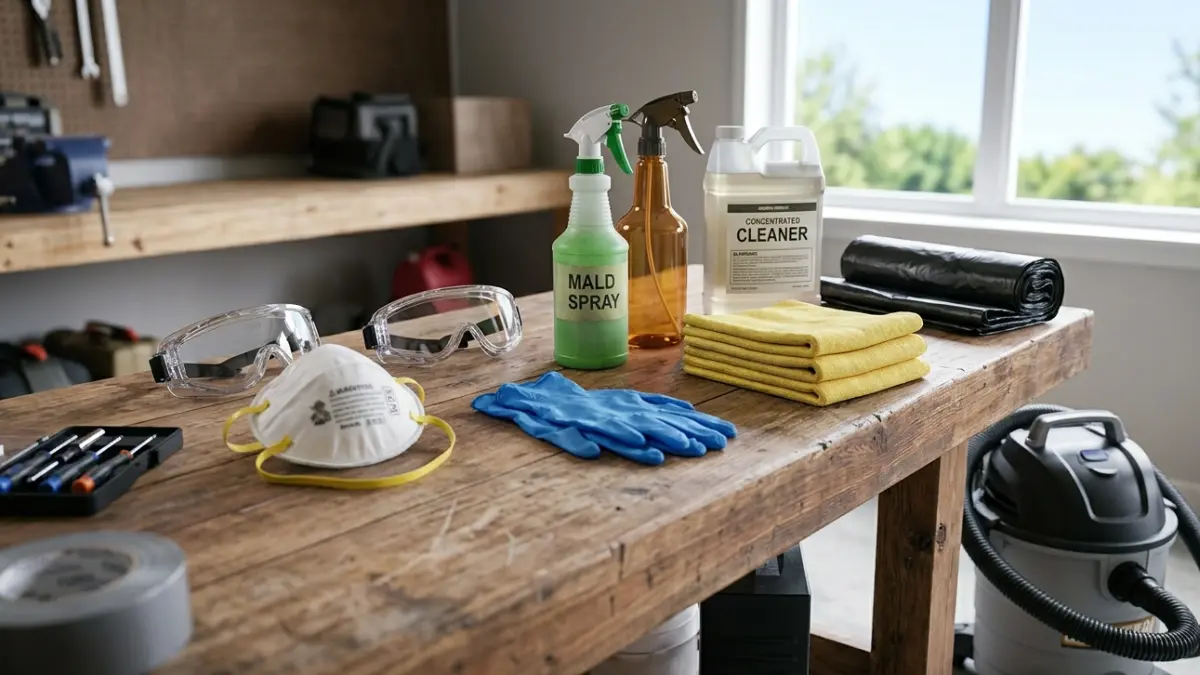
DIY supply cost, line by line
Every honest estimate starts with the gear, not just the cleaner.
| Item | Typical cost | Notes |
|---|---|---|
| Cleaning solution | $10–$75 | Bleach runs under $5; EPA-registered mold products cost more |
| N95 respirator, gloves, goggles | $20–$150 | The minimum protective gear health agencies recommend |
| Wet/dry vacuum | $30/day rental, $80–$200 to buy | Only for larger or wet cleanups |
| Bags and plastic sheeting | $10–$30 | For bagging porous debris on the spot |
Cost ranges compiled from current U.S. restoration-industry pricing, 2025–2026.
Before spending anything, confirm it’s mold and not its milder cousin. Our guide on how to tell mold from mildew keeps people from over-treating a surface stain that a $4 spray would handle.
What pushes a DIY job toward $300
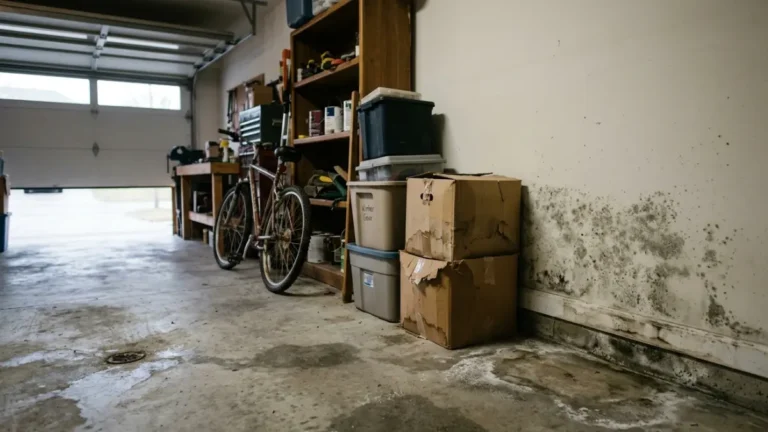
The low end assumes a hard, non-porous surface—tile, glass, sealed stone, or mold on a concrete floor—that wipes clean.
The number climbs when you need a HEPA-filter vacuum or replacement materials. Product choice matters too, which is why we break down the right mold removal product for each surface and how to use vinegar without the guesswork for a low-fume option.
✅ Pro Tip: Mist the spot with a spray bottle before scrubbing. Dry-brushing sends spores airborne—a damp surface keeps them down and your cleanup contained.
What professional mold remediation costs
Hire it out, and the price reflects a process, not a quick scrub.
Professional mold remediation costs $1,100 to $3,400 on average, with most homeowners landing near $2,300. Small contained jobs run $500 to $1,500; whole-home cleanup after a flood can reach $10,000 to $30,000.
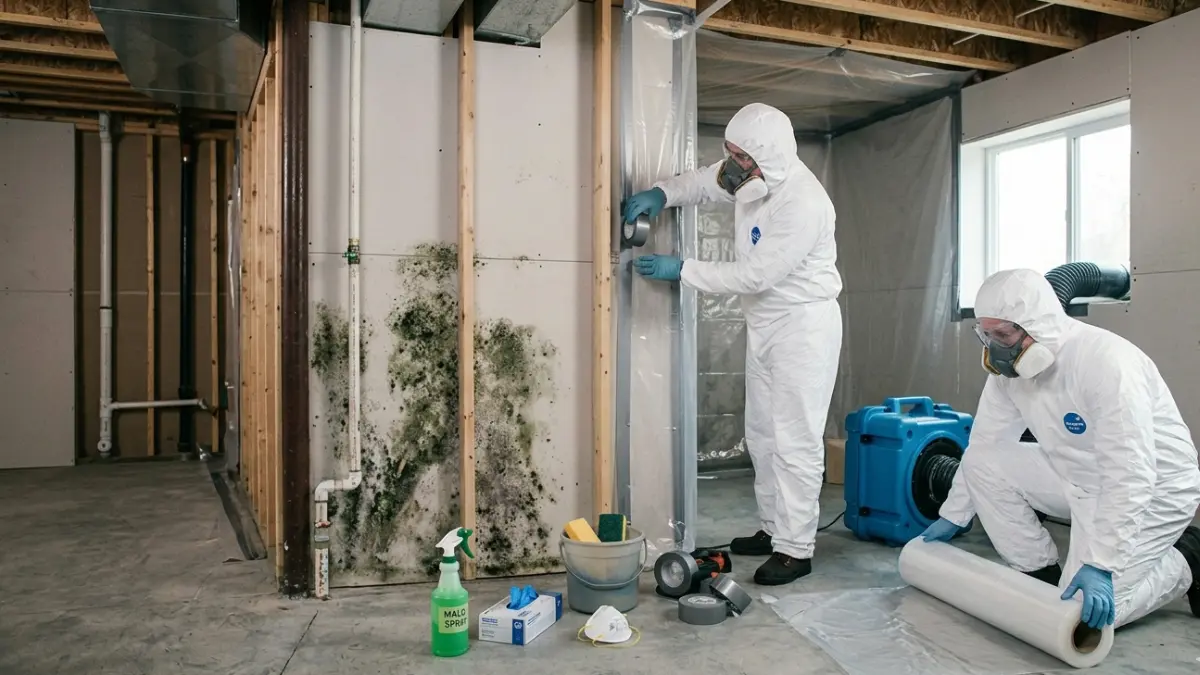
Typical price ranges by location
Where the mold lives drives the bill as much as how much of it there is.
| Area affected | Typical pro cost | Why it costs that |
|---|---|---|
| Bathroom | $500–$1,500 | Small, accessible, mostly hard surfaces |
| Attic | $1,000–$3,000 | Often involves insulation and ventilation fixes |
| Basement | $1,500–$4,000 | Humidity and hidden moisture raise the scope |
| Crawl space | $500–$2,000 | Tight access, frequently paired with sealing |
| HVAC system | $3,000–$10,000 | Ductwork spreads spores; cleaning is labor-heavy |
Ranges reflect current U.S. restoration pricing, 2025–2026. Black mold can add 20–50%.
For your specific space, we lay out mold remediation costs room by room. Basements get their own proven removal method, while attic mold and crawl space mold each carry their own cost quirks.
What you’re actually paying for
It’s tempting to read a $2,300 quote as overpriced scrubbing. It isn’t.
Certified crews follow the IICRC S520 standard: inspect, seal off the area, remove contaminated materials, run HEPA filtration, dry everything, then verify the result. Labor alone is roughly 60% of the total—and the containment and air scrubbing are exactly the steps a DIY job skips.
Black mold raises both the risk and the price; our guide to black mold removal by surface type explains why those jobs run higher.
DIY vs. pro: the side-by-side cost comparison
Here’s the whole decision in one view.
| Factor | DIY | Professional |
|---|---|---|
| Cost | $50–$300 | ~$2,300 average |
| Time | A few hours | 1–5 days |
| Equipment | Mask, gloves, spray | HEPA scrubbers, containment |
| Best for | Under ~10 sq ft, hard surface | Larger, porous, or hidden mold |
| Risk if done wrong | Spreads spores, regrowth | Minimal—work is verified |
Cost figures: U.S. restoration pricing, 2025–2026.
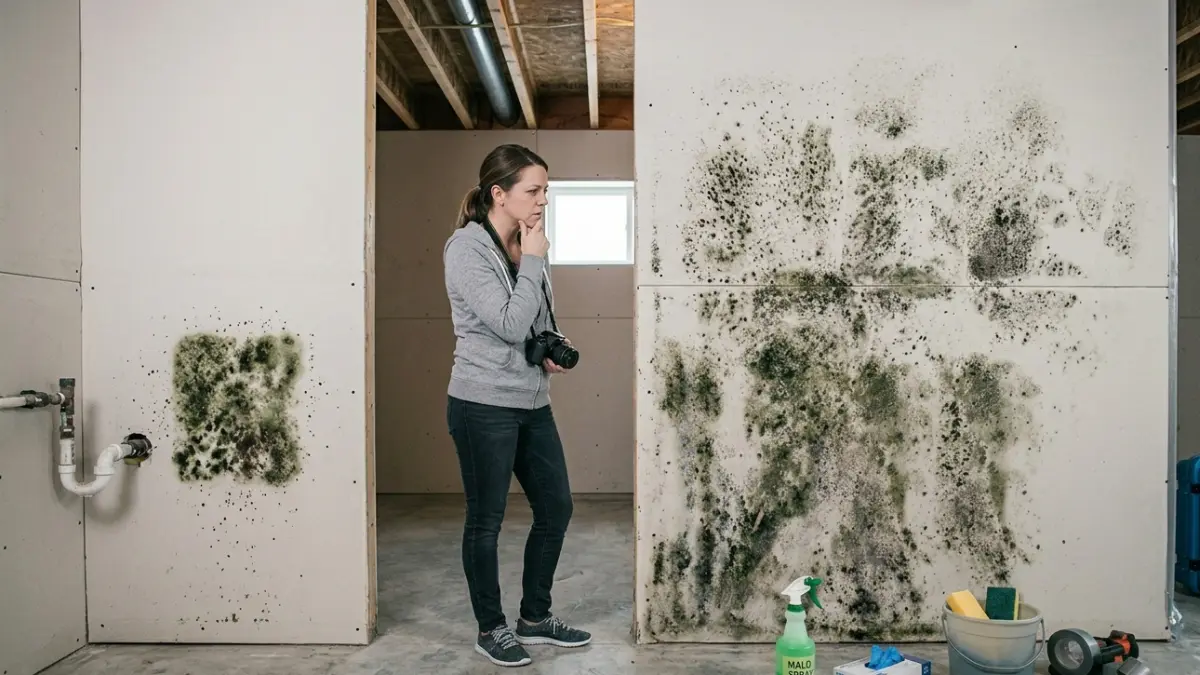
The simple rule: how big is the mold?
One measurement settles most of these decisions.
If the patch is smaller than about 10 square feet—roughly a 3-foot by 3-foot area—on a hard surface, and not fed by dirty water, you can almost always handle it yourself. A small spot of bathroom grout and caulk mold is the textbook DIY job.
Bigger than that, or growing into porous drywall and framing, and you’re in professional territory. Our breakdown of exactly when DIY mold removal is the right call walks through the gray-area cases.
💡 Expert Note: Whether professional removal is “worth it” depends entirely on scope. For a 2-square-foot shower stain, paying $2,000 is overkill. For 30 square feet behind a wall, $50 of bleach is a false economy.
When DIY costs more than hiring a pro
The cheapest-looking option sometimes ends up the most expensive.
The hidden cost of getting it wrong
I once watched a homeowner attack a 20-square-foot basement patch with a bucket of bleach, no containment, and a box fan running the whole time. Three weeks later the growth had spread past 60 square feet, the job became a full professional remediation, and the final bill ran roughly five times the original estimate.
Spores travel the moment you disturb them. A contained problem quietly becomes a whole-floor one.
The 4 times you should not DIY
Hand the job to a professional if any one of these is true:
- The area is larger than about 10 square feet—federal guidance points to a pro past this size.
- The mold came from contaminated water like sewage or floodwater, which carries extra hazards—exactly the case after mold sets in following a flood.
- The mold is in your HVAC system, where running the unit blows spores into every room; mold in air ducts needs specialized handling.
- Someone home has asthma, allergies, or a weakened immune system, putting them at real risk during cleanup.
The EPA 10-square-foot rule
The threshold isn’t a guess—it’s the point where spore release during removal starts to outpace simple precautions.
The EPA’s mold cleanup guidance for homeowners recommends professional help once mold passes roughly 10 square feet or significant water damage is involved. Past that point, bleach on porous drywall or mold that’s reached the wood studs only hides the stain while the roots survive—which is why replacement, plus a remediation company you can trust, usually beats a second and third DIY attempt.
⚠️ Warning: Don’t run a fan or HVAC while disturbing more than a small patch of mold. Moving air carries spores into clean rooms and can turn one room into a whole-house problem.
How to DIY small-area mold safely (and avoid paying twice)

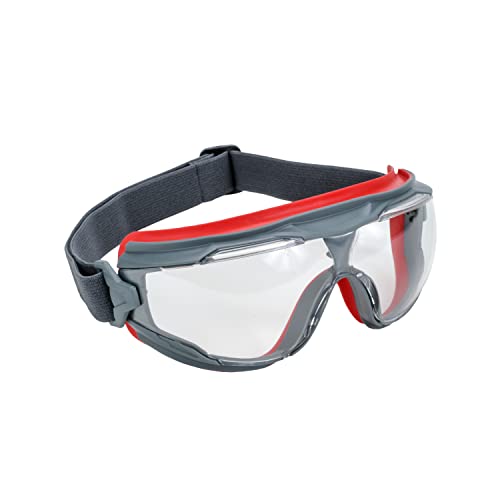
- 3M Scotchgard Anti-Fog Coating lasts longer than traditional anti-fog coatings, helping to increase eyewear performance …
- Workers may enjoy reliable, clearer sight longer, because the coating with its active ingredient is bonded to the lens. …
- The coating withstands disinfection with diluted bleach soaking or alcohol wipes without losing its anti-fog performance
Cleared for DIY? Two things separate a one-time fix from a recurring bill.
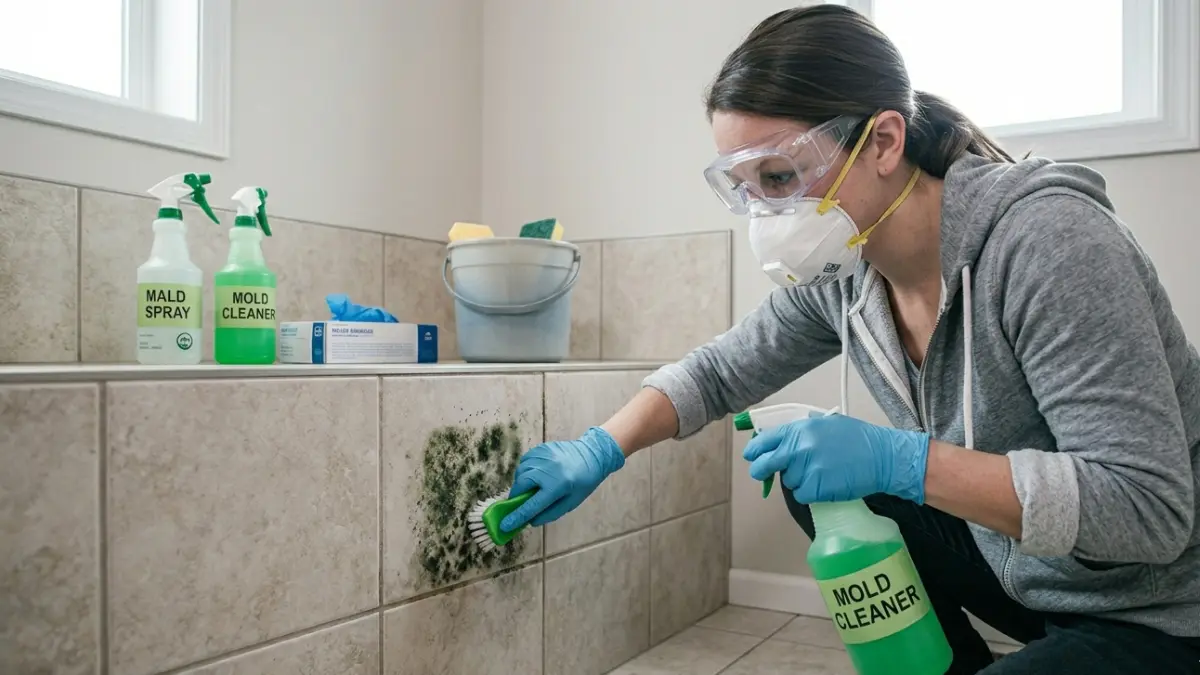
The safe small-area cleanup steps
Protect yourself first—mold spores measure 1 to 30 microns and are easily inhaled.
- Gear up. Wear an N95 respirator, gloves, and sealed goggles at minimum; our mold safety gear checklist covers the full kit.
- Contain and dampen. Close vents, mist the area, and never dry-scrub.
- Clean hard surfaces. Scrub with detergent or a bleach solution, then dry completely.
- Toss porous debris. Bag moldy drywall, ceiling tile, or carpet that can’t be saved.
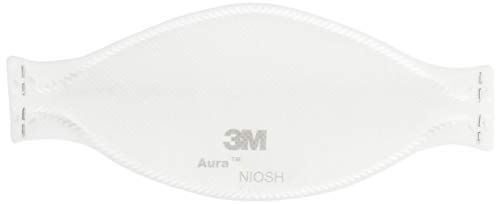
- NIOSH APPROVED: N95 for at least 95% filtration efficiency against certain non-oil based particles like dust and smoke.
- REDUCED EYEWEAR FOGGING: Designed to direct exhaled air away from the nose panel, helping reduce eyewear fogging
- COMFORTABLE: Braided headbands help keep respirator securely in place and minimize pulling of hair
The CDC’s mold cleanup guidance is clear that anyone with asthma, allergies, or a weakened immune system should sit cleanup out entirely.
Fix the moisture or it comes back
Mold is a symptom. Moisture is the disease.
The single most-skipped step is fixing the leak or humidity that fed the mold—the EPA’s guide to mold and moisture stresses drying wet areas within 24 to 48 hours. A dehumidifier that holds indoor humidity below 50% is the cheapest insurance against mold growing back, and post-cleanup testing confirms the job actually worked.
💡 Expert Note: A $15 hygrometer tells you whether your basement sits above 60% humidity—the point where mold thrives. Knowing that number is worth more than any spray.
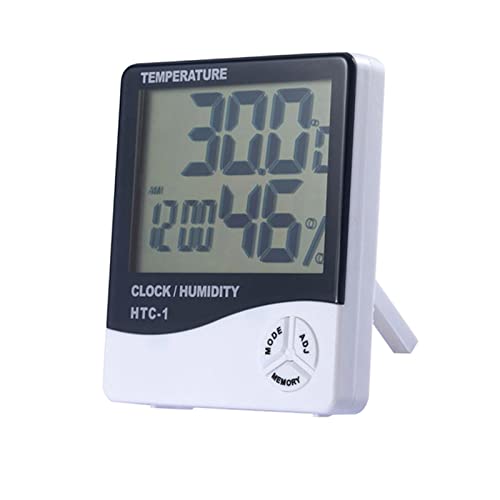
- 【Multi Function】Accurate hygrometer digital thermometer displays high and low temperature & humidity;At the same time, r…
- 【Easy to Use and Install】This indoor room thermometer features a kickstand and hanging hole, can be placed in vertical o…
- 【12/24 Hour, °F/°C Selector】12/24 hour display switching function; ℃ /℉ switching function. Measuring Temperature Range:…
DIY vs. pro mold removal: frequently asked questions
1. How much does it cost to remove mold yourself?
DIY mold removal costs $50 to $300 for a small area. That covers cleaning products ($10–$75), protective gear like an N95 mask and gloves ($20–$150), and disposal bags. Costs stay low only for hard, non-porous surfaces under about 10 square feet.
2. Is it cheaper to remove mold yourself?
Yes, removing mold yourself is far cheaper upfront—$50 to $300 versus a $2,300 professional average. But cheaper only holds for small, hard-surface patches. On porous materials or large areas, a failed DIY attempt spreads spores and often costs more than hiring a pro from the start.
3. Can I remove mold myself or do I need a professional?
You can remove mold yourself if the area is under about 10 square feet, sits on a hard surface, and wasn’t caused by contaminated water. Call a professional for larger growth, mold in HVAC systems, sewage-related water, or if anyone home has respiratory or immune conditions.
4. How much does professional mold remediation cost?
Professional mold remediation costs $1,100 to $3,400 on average, with most homeowners paying around $2,300. Small contained jobs run $500 to $1,500, while whole-home remediation after flooding can reach $10,000 to $30,000. Location, mold type, and labor rates drive the final price.
5. What is the EPA 10 square foot rule for mold?
The EPA 10 square foot rule is a guideline: mold covering less than about 10 square feet can usually be cleaned by a homeowner, while anything larger calls for professional remediation. Past that size, spore release during removal becomes much harder to contain safely.
6. How big is 10 square feet of mold?
Ten square feet of mold is roughly a 3-foot by 3-foot patch—about the size of a small bath mat. If your mold covers more area than that, or hides behind walls you’d have to open up, federal guidance recommends bringing in a professional rather than tackling it yourself.
7. Is DIY mold removal safe?
DIY mold removal is safe for small areas when you wear an N95 respirator, gloves, and goggles, and keep the space ventilated. It becomes unsafe with large infestations, toxic black mold, contaminated water, or for anyone with asthma, allergies, or a weakened immune system.
8. Does bleach actually kill mold?
Bleach kills surface mold on hard, non-porous materials like tile and glass, but it doesn’t penetrate porous surfaces such as drywall or wood. On those, bleach lightens the stain while the roots survive and regrow. Dedicated mold products or full material removal work far better.
9. What’s the difference between mold removal and remediation?
Mold removal means cleaning visible mold from a surface. Mold remediation is the full process: assessing the problem, containing the area, removing contaminated materials, filtering the air, fixing the moisture source, and verifying the result. Professionals perform remediation; homeowners typically handle small-scale removal.
10. Can mold come back after DIY removal?
Yes, mold often returns after DIY removal when the underlying moisture problem isn’t fixed. Cleaning the surface without addressing the leak, humidity, or condensation that fed it leaves both spores and dampness behind. Fixing the water source is what actually prevents regrowth.
11. How much does black mold removal cost?
Black mold removal costs 20% to 50% more than standard remediation because of the added safety precautions and protective equipment required. A job that might cost $2,000 for common mold can run $2,400 to $3,000 or more once toxic black mold is confirmed and contained.
12. What mask do I need to remove mold?
You need at least a NIOSH-approved N95 respirator to remove mold—it filters 95% of airborne spores. For larger jobs or ripping out moldy drywall, step up to a half-face or full-face respirator with P100 filters for stronger protection and a tighter facial seal.
13. Does homeowners insurance cover mold removal?
Homeowners insurance covers mold removal only when it results from a sudden, covered event like a burst pipe—not from neglect or long-term humidity. Coverage and limits vary widely by policy. Our guide on when insurance covers mold remediation explains how to check yours.
14. How much does a mold inspection cost?
A professional mold inspection costs $300 to $1,000, averaging around $650. Price depends on home size, samples taken, and lab testing. It’s worth it before a sale, after flooding, or when you smell mold but can’t see it—what a mold inspection really costs breaks it down.
15. What happens if you don’t remove mold?
If you don’t remove mold, it spreads across surfaces, eats into drywall and wood, and can weaken structural materials over time. It also degrades indoor air quality and may trigger allergic reactions, coughing, or worsened asthma—especially for sensitive household members. The longer it sits, the costlier the fix.
16. Is professional mold removal worth it?
Professional mold removal is worth it for large infestations, hidden mold, HVAC contamination, or toxic black mold—cases where a botched DIY job spreads spores and costs more. For a small surface patch under 10 square feet, professional service is usually unnecessary and DIY handles it well.
17. How do I know if there’s mold behind my walls?
Signs of mold behind walls include a persistent musty smell, discoloration bleeding through paint, peeling or bubbling surfaces, and warped drywall. Recurring allergy-like symptoms indoors are another clue. Confirming hidden mold usually requires opening the wall or professional moisture testing rather than guesswork.
The bottom line: which option is right for you
One rule carries the whole decision.
Under about 10 square feet, hard surface, clean-water source? DIY it for $50 to $300, gear up properly, and fix the moisture so it doesn’t return. Bigger, porous, hidden, or a health-sensitive household? Bring in a professional at around $2,300 and skip the risk of spreading it.
The real cost of mold isn’t the first cleanup—it’s the second and third when the job gets done halfway. Get it right once, whichever path you take.
When you’re ready to go deeper on any scenario, our complete mold remediation guide is the next stop.
ℹ️ Disclaimer: Figures are general estimates. For larger or uncertain situations, a professional inspection is inexpensive insurance—get multiple quotes before committing to remediation.