How Your Dehumidifier Prevents Mold Without Killing It

Dehumidifiers prevent mold but never kill it—here’s the pint size for every room, the 50% humidity target, and when to call a pro.
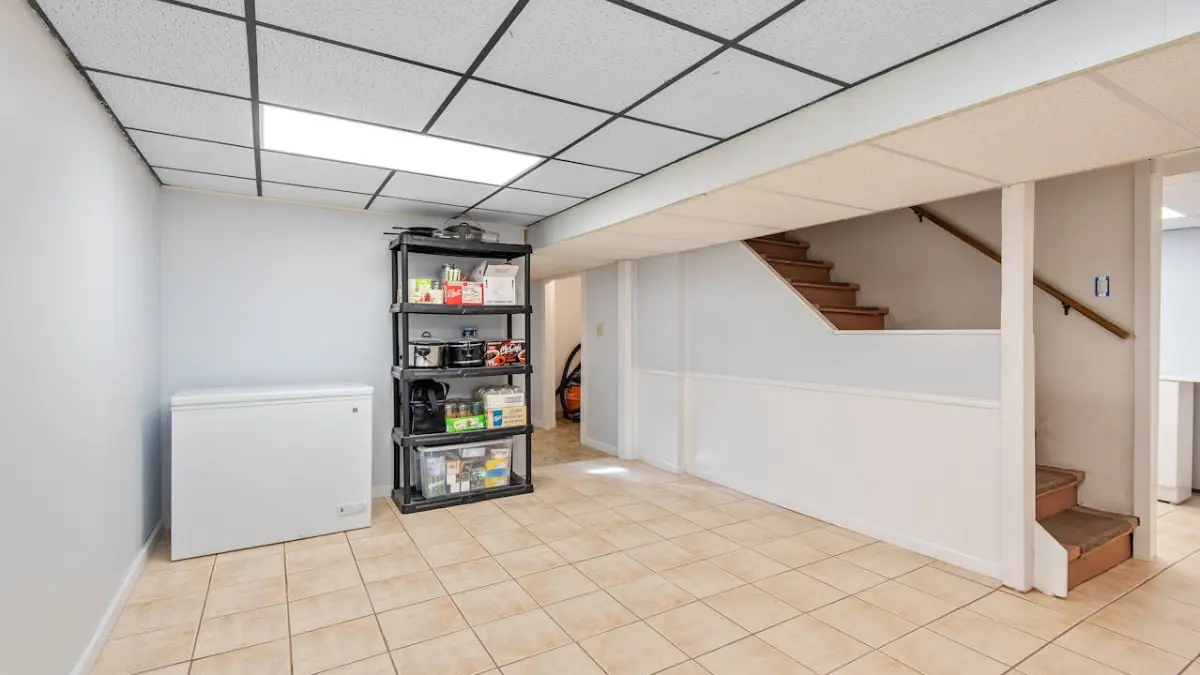
Table of Contents
Here’s the truth most buying guides skip: a dehumidifier for mold prevents new growth, but it won’t kill the mold you already have. That one distinction decides whether you solve your problem or just mask it.
Mold needs moisture to grow. Pull the relative humidity in a room below the level mold can use, and new colonies can’t take hold.
That’s the whole job of a dehumidifier — moisture control, not mold removal. Knowing that up front saves you money and frustration.
This guide gives you the specifics no listicle does: the exact pint capacity your room needs, the humidity setting to dial in tonight, where to place the unit, and which type fits each space.
You’ll also learn when a dehumidifier isn’t enough and a professional should step in.
If you’re facing active mold right now, start with our full plan for diagnosing and fixing a mold problem. Then come back here to keep it from returning.
How a dehumidifier prevents mold
Yes, a dehumidifier helps with mold by removing excess moisture from the air and holding indoor humidity below the level mold needs to grow. It does not kill or remove mold that’s already there.
Mold spores drift through every home. They only become a problem when they land on a damp surface with enough moisture to feed on.
How dehumidifiers control moisture
A dehumidifier pulls warm, damp air across a cold coil, where moisture condenses and drains away.
Control the humidity and you remove the one thing mold can’t live without. Below 60% relative humidity, new mold can’t establish; below 50%, existing growth goes dormant.
The EPA’s guidance on mold and moisture in the home recommends keeping indoor humidity below 60%, ideally 30 to 50 percent.
Does a dehumidifier kill mold?
No. A dehumidifier won’t kill mold — it removes the moisture that lets mold spread, a different job entirely.
To clear what’s already growing, you have to physically clean it, and the method depends on the surface: mold on drywall, wood studs and framing, or carpet you may need to replace.
Match the cleaner to the surface with our guide to choosing the right mold removal products. For bigger jobs, see when DIY mold removal makes sense and how to handle black mold by surface type.
💡 Expert Note: Running a dehumidifier after you clean mold is what stops it returning. The cleaning removes the colony; the dehumidifier removes the conditions that let it regrow.
How to choose the right size and features
The right size comes down to two things: how big the space is and how damp it gets. Get it wrong and the unit either can’t keep up or short-cycles.
What size dehumidifier do I need?

- 4,500 SQ. FT. DEHUMIDIFIER – Removes up to 50 pints of moisture per day with an adjustable humidity setting from 35% to …
- ULTRA QUIET OPERATION – This model has quiet operation as 49 dBA(low mode). Enjoy sleep, a good book, or your favorite s…
- SMART CONTROL -This dehumidifier is Wi-Fi enabled and can be controlled from anywhere through the cloud using the SmartH…
Use this as your starting point for moisture removal capacity, measured in pints per day.
| Space & dampness | Room size | Recommended capacity | Target humidity |
|---|---|---|---|
| Small, slightly damp room | Up to 500 sq ft | 20–30 pints | 45–50% |
| Damp basement or large room | 500–1,500 sq ft | 40–50 pints | 45% |
| Very wet space or post-leak | 1,500–3,000+ sq ft | 50–70 pints | 40–45% |
| Whole home, chronic humidity | Multiple rooms | Whole-house system | 45% |
Capacity is rated in pints per 24 hours; see ENERGY STAR’s dehumidifier buying guidance for certified, efficient models.
Features that matter for mold control

- AUTOMATIC CONDENSATE PUMP: features a vertical-type switch to reduce footprint and is designed to automatically remove c…
- THERMALLY PROTECTED, HIGH-PERFORMANCE MOTOR: 1/50 HP, 1.0 Amps, 60 Watts, 115 Volts, 60 Hz, fan-cooled motor; CSA certif…
- BUILT TO LAST: ABS tank, motor cover and volute; stainless steel motor shaft; thermal overload protected motor; can hand…
A few features do the real work — ignore the marketing on the rest. Look for an adjustable humidistat, a continuous drain option, and automatic shut-off.
For a damp basement, a built-in pump saves you from emptying a tank every few hours. Energy Star certified units noticeably cut running costs.
✅ Pro Tip: Size up, not down. An undersized unit runs nonstop, never reaches your target, and lets humidity rebound — the exact condition that grows mold.
Best dehumidifier types for every space
Match the unit to where moisture collects in your home. The right type for a closet is the wrong type for a basement.
Large spaces and basements
For basements and big rooms, a compressor dehumidifier in the 40–70 pint range does the heavy lifting and pulls the most water.
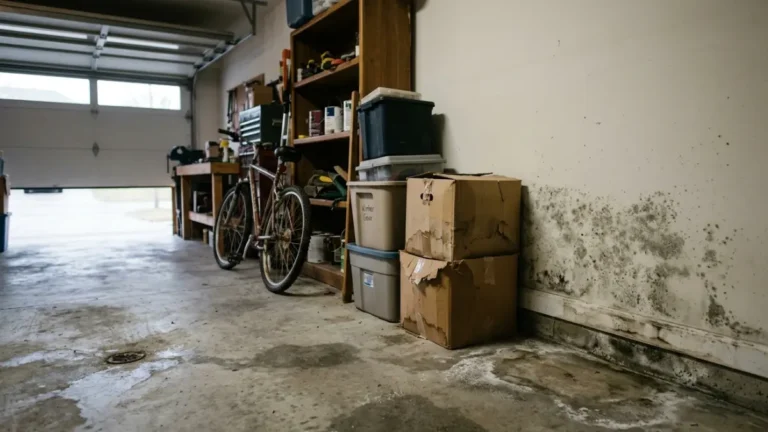
Basements are the most common mold spot. If yours shows signs, see our method for removing basement mold, and note that bare concrete floors hold moisture that quietly feeds it.
Small rooms, closets, and baths
For closets, bathrooms, and RVs, a small desiccant dehumidifier or mini Peltier unit runs quietly in tight spots. They remove less water but suit low-volume areas.
Bathrooms, crawl spaces, and attics are humidity traps. Our guides to bathroom mold in grout and caulk, crawl space mold removal costs, and attic mold causes and safe fixes cover those spots.
Whole-house versus portable
A whole-house dehumidifier ties into your HVAC and treats every room. A portable unit costs less and targets one problem area.
| Type | Best for | Coverage | Drain option |
|---|---|---|---|
| Compressor (40–70 pt) | Basements, large rooms | Up to 3,000 sq ft | Tank, hose, or pump |
| Desiccant or mini | Closets, baths, RVs | Up to 500 sq ft | Tank or hose |
| Whole-house | Entire home | All rooms | Hardwired drain |
If your system circulates damp, musty air, the cause may be mold inside your air ducts, which a portable unit can’t reach.
Ideal humidity setting and where to place it
Set it and place it right, and a dehumidifier works almost on autopilot. Most people get the number wrong in one direction or the other.
What humidity level prevents mold?
Keep indoor relative humidity between 30% and 50% to prevent mold; mold can begin growing once humidity climbs above 60%. Set your dehumidifier to a target of 45–50% for the best balance.
Lower than 30% isn’t better — it dries out wood, paint, and skin without adding protection.
Where to place your dehumidifier
- 【Multi Function】Accurate hygrometer digital thermometer displays high and low temperature & humidity;At the same time, r…
- 【Easy to Use and Install】This indoor room thermometer features a kickstand and hanging hole, can be placed in vertical o…
- 【12/24 Hour, °F/°C Selector】12/24 hour display switching function; ℃ /℉ switching function. Measuring Temperature Range:…
Put the unit where moisture is worst and air moves least. Follow these steps for the best dehumidifier placement:
- Place it in the dampest, most enclosed spot — usually a basement, bathroom, or laundry area.
- Keep several inches of clearance around the intake and exhaust vents for airflow.
- Set your target humidity and let it run continuously for the first few days.
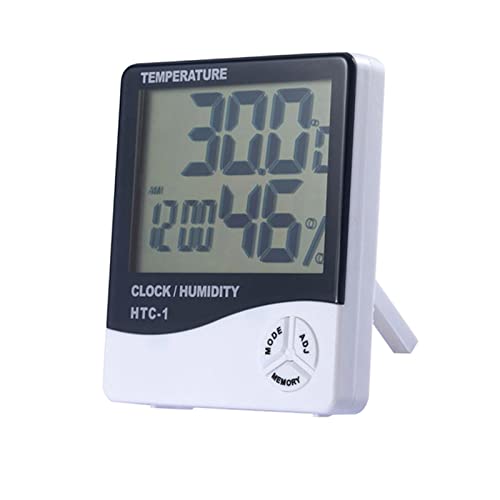
- Confirm the reading with a separate hygrometer, since built-in sensors often read high.
ℹ️ Disclaimer: A dehumidifier manages humidity, not active leaks. Fix the water source first, or the unit will run forever chasing moisture it can’t beat.
Mold, your health, and when to call a pro
Mold isn’t only a home problem — it’s a health one, and that’s when DIY can stop being smart. Knowing the line protects both your family and your wallet.
Health risks of indoor mold
Mold exposure can trigger coughing, congestion, throat irritation, and worsened asthma, especially over time. Reactions vary widely from person to person.
Symptoms also differ by who’s exposed. Review black mold symptoms you shouldn’t dismiss, how it shows up in children by age, and what it can mean during pregnancy. The CDC’s information on mold and your health details the respiratory effects.
Dehumidifier versus air purifier for mold
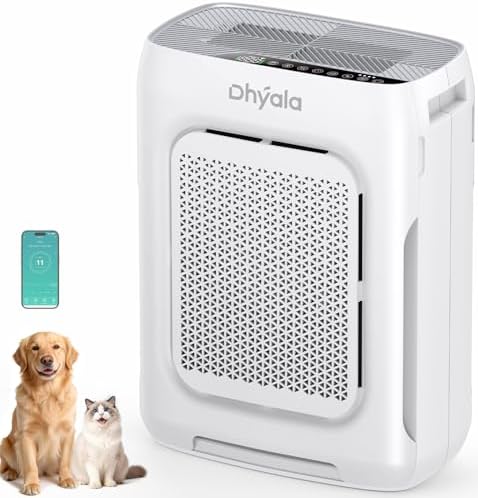
- 𝐇𝐢𝐠𝐡𝐞𝐫 𝐀𝐢𝐫𝐟𝐥𝐨𝐰 & 𝐋𝐚𝐫𝐠𝐞𝐫 𝐂𝐨𝐯𝐞𝐫𝐚𝐠𝐞: This latest air purifier features a front and rear dual-sided, left and right dual-sid…
- 𝐃𝐮𝐚𝐥 𝐅𝐢𝐥𝐭𝐞𝐫𝐬 & 𝟑-𝐒𝐭𝐚𝐠𝐞 𝐃𝐞𝐬𝐢𝐠𝐧: Equipped with dual filters, each air filter uses a 3-stage filtration system (pre-filter …
- 𝐒𝐦𝐚𝐫𝐭 𝐖𝐢-𝐅𝐢 & 𝐀𝐮𝐭𝐨 𝐌𝐨𝐝𝐞: No longer limited by distance, you can remotely control your home air purifier via a mobile app…
They solve different problems. A dehumidifier removes the moisture that grows mold, while an air purifier with a HEPA filter captures spores already airborne.
For an active problem you want both, plus the cleanup itself — one controls the conditions, the other controls what’s floating.
When to call a professional
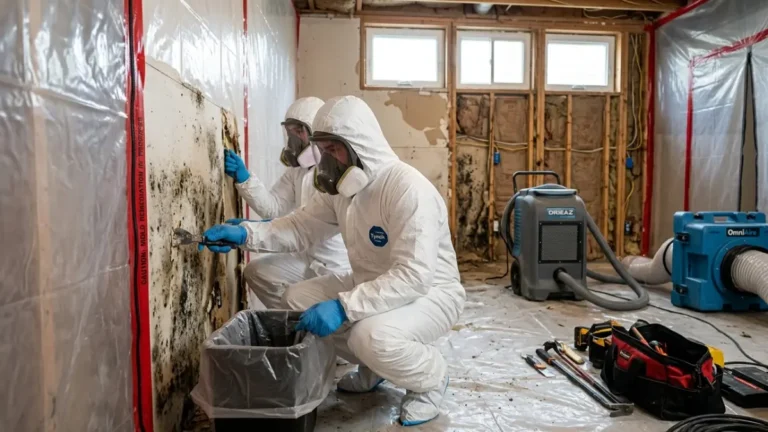
Some jobs aren’t DIY. Call a professional when mold covers more than about 10 square feet, keeps returning, or follows flooding.
⚠️ Warning: Disturbing large mold colonies releases a sudden burst of spores. For anything beyond a small patch, wear proper mold removal safety gear or hire a professional.
Before you spend, learn what a mold inspection costs, how to vet a remediation company you can trust, whether your insurance covers it, and how post-remediation testing confirms the job worked.
The bottom line on dehumidifiers and mold
A dehumidifier is your best tool for mold prevention, as long as you remember what it does: it controls moisture, and it doesn’t cure active mold.
Get the size right for your space, set it to 45–50%, place it where moisture collects, and verify with a hygrometer. Do that, and you’ve taken away the one thing mold needs to grow.
If mold is already present, treat it first, then let the dehumidifier keep it gone. Our step-by-step mold remediation plan walks you through the fix.
Your home should feel fresh, dry, and healthy. The right humidity makes that effortless.
Frequently asked questions about dehumidifiers and mold
1. Does a dehumidifier help with mold?
Yes, a dehumidifier helps with mold by lowering indoor humidity below the level mold needs to grow. It pulls excess moisture from the air, stopping new spores from establishing. It won’t kill or remove existing mold, so pair it with surface cleanup for full protection against regrowth.
2. Does a dehumidifier kill mold?
No, a dehumidifier does not kill mold. It removes the airborne moisture mold needs to spread, which halts new growth and keeps dormant mold from waking up. To eliminate existing mold, you must physically clean the surface or hire a remediation professional to handle it.
3. What humidity level prevents mold?
A humidity level between 30% and 50% prevents mold from growing. Mold typically needs relative humidity above 60% to establish, so keeping your home under 50% removes that risk. Use a hygrometer to confirm the reading, since humidity in a room shifts throughout the day.
4. What size dehumidifier do I need for mold?
The size dehumidifier you need depends on room square footage and dampness. A small room needs 20–30 pints per day, a damp basement needs 40–50 pints, and very wet or large spaces need 50–70 pints. Size up rather than down to prevent humidity rebound between cycles.
5. Where should I place a dehumidifier to prevent mold?
Place a dehumidifier in the dampest, least-ventilated area, such as a basement, bathroom, or laundry room. Keep several inches of clearance around the vents for airflow, and position it near the moisture source. In open spaces, central placement gives the most even coverage across the room.
6. Can a dehumidifier make mold worse?
A dehumidifier won’t make mold worse when it’s working and well maintained. A dirty unit or a full tank can grow mold inside itself and blow spores back out. Clean the filter and tank regularly, and empty standing water so the appliance never becomes a mold source itself.
7. How long does a dehumidifier take to stop mold?
A dehumidifier starts lowering humidity within hours, often reaching a safe level below 50% within a day or two. Stopping mold means holding that level continuously, not just briefly. Existing mold stays put until you clean it, but new growth halts once humidity drops and stays down.
8. Should I run my dehumidifier all the time?
You should run a dehumidifier whenever humidity rises above 50%, which in damp spaces often means continuously. Most units have a humidistat that cycles them on and off automatically at your set target. Running one continuously in a basement is normal and keeps mold conditions from creeping back.
9. Is a dehumidifier or air purifier better for mold?
Neither replaces the other, because they do different jobs. A dehumidifier removes the moisture that lets mold grow, while an air purifier with a HEPA filter captures airborne spores. For an active mold problem, run both alongside physical cleanup to get the most complete results.
10. Do I need a dehumidifier in my basement for mold?
Most basements benefit from a dehumidifier because they trap humidity and sit below grade where moisture naturally collects. If your basement feels damp or smells musty, a 40–50 pint unit set to 45% usually keeps mold from forming. Pair it with fixing any water intrusion for lasting results.
11. What setting should a dehumidifier be on to prevent mold?
Set your dehumidifier to a target humidity of 45–50% to prevent mold. This range is low enough to stop mold growth but high enough to avoid overly dry, uncomfortable air. In very damp spaces or right after a leak, drop the target to 40–45% temporarily until things dry out.
12. Can a dehumidifier remove a musty smell?
A dehumidifier reduces musty odors by removing the dampness that causes them, but it won’t fully erase smells from existing mold or mildew. The odor usually lingers until the source is cleaned away. Combine the dehumidifier with surface cleaning to clear a musty smell completely and keep it gone.
13. Is a dehumidifier worth it for mold?
A dehumidifier is worth it if your home runs humid or has a mold history, since prevention costs far less than remediation. For occasional dampness, a portable unit pays for itself quickly. If you’re selling and need mold resolved first, address that before relying on prevention alone.
14. Does a dehumidifier help with mold in a crawl space?
A dehumidifier helps with crawl space mold by drying out the trapped, ground-level moisture that fuels it. Crawl space units are built for low, enclosed areas and often pair with a vapor barrier. Together they keep humidity low enough that mold can’t take hold beneath your home.
15. How much does it cost to run a dehumidifier?
Running a dehumidifier costs roughly $10–$50 per month depending on size, runtime, and local electricity rates. Energy Star certified models use noticeably less power. Remediation is far pricier, and mold repair costs vary by room, so prevention is usually the cheaper path overall.
16. Whole-house or portable dehumidifier — which prevents mold better?
A whole-house dehumidifier prevents mold better across an entire home, since it ties into your HVAC and treats every room automatically. A portable unit is cheaper and ideal for a single problem area like a basement. Choose based on whether your humidity is widespread or localized to one spot.
17. Who is responsible for fixing mold in a rental?
Responsibility for mold in a rental usually falls on the landlord when it stems from building issues like leaks. Rules vary by state, so review your landlord’s mold responsibility and your rights when a landlord won’t fix mold to understand your options.