Your Realistic Mold Remediation Timeline, Day by Day

Mold remediation timelines range from a single day to three weeks, and it’s safe to return just 24–48 hours after the work wraps—if the moisture is fixed.
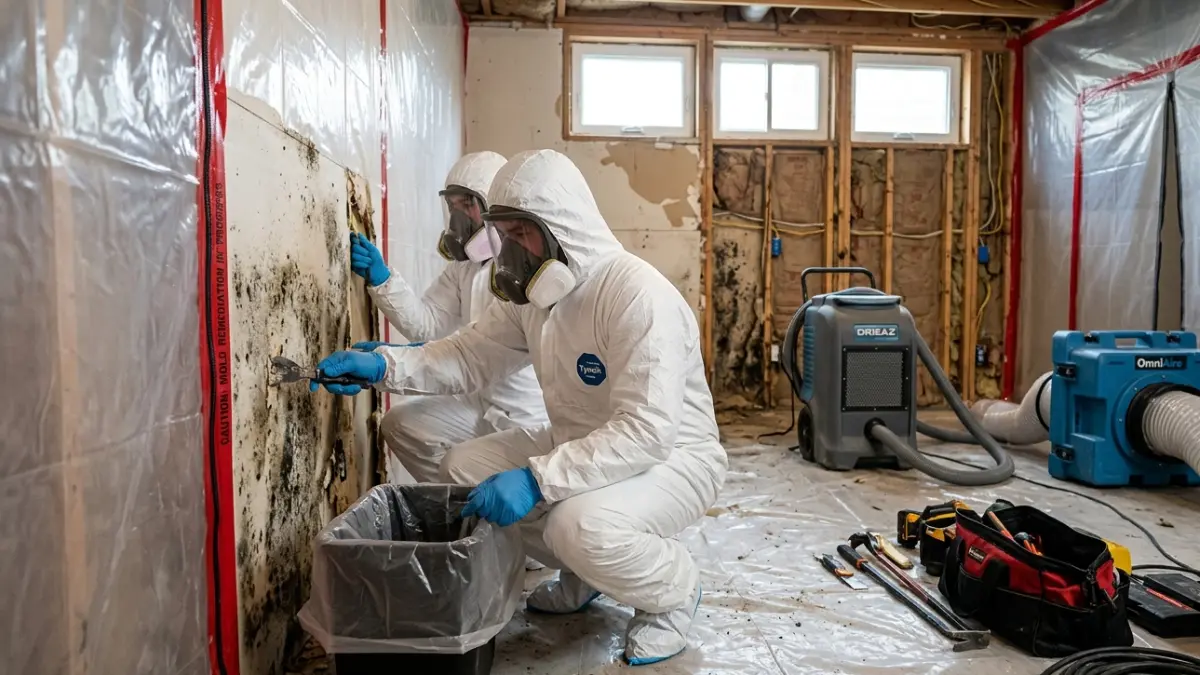
Table of Contents
You found mold, and now you need a timeline — not a sales pitch.
Mold remediation takes 1 to 5 days for most homes, though the full picture depends on how much mold there is and what it touched. A bathroom patch might be gone in a day.
A flooded basement can stretch into weeks.
Here’s the part most pages skip: finishing the remediation and getting your house back to normal are two different milestones. The crew may pack up in three days, but drying, clearance testing, and any rebuild add time on top.
This guide breaks the timeline into the stages you’ll actually live through. We’ll map your situation — small patch, whole room, or whole house — to a realistic number of days.
For the full picture of diagnosing and planning a job, start with our complete guide to mold remediation. Then we’ll cover cost, safety, and when to call a pro.
How long mold remediation takes by size
Most residential mold remediation takes 1 to 5 days, though larger or HVAC-related jobs can run 1 to 3 weeks or more once drying and rebuilding are included.
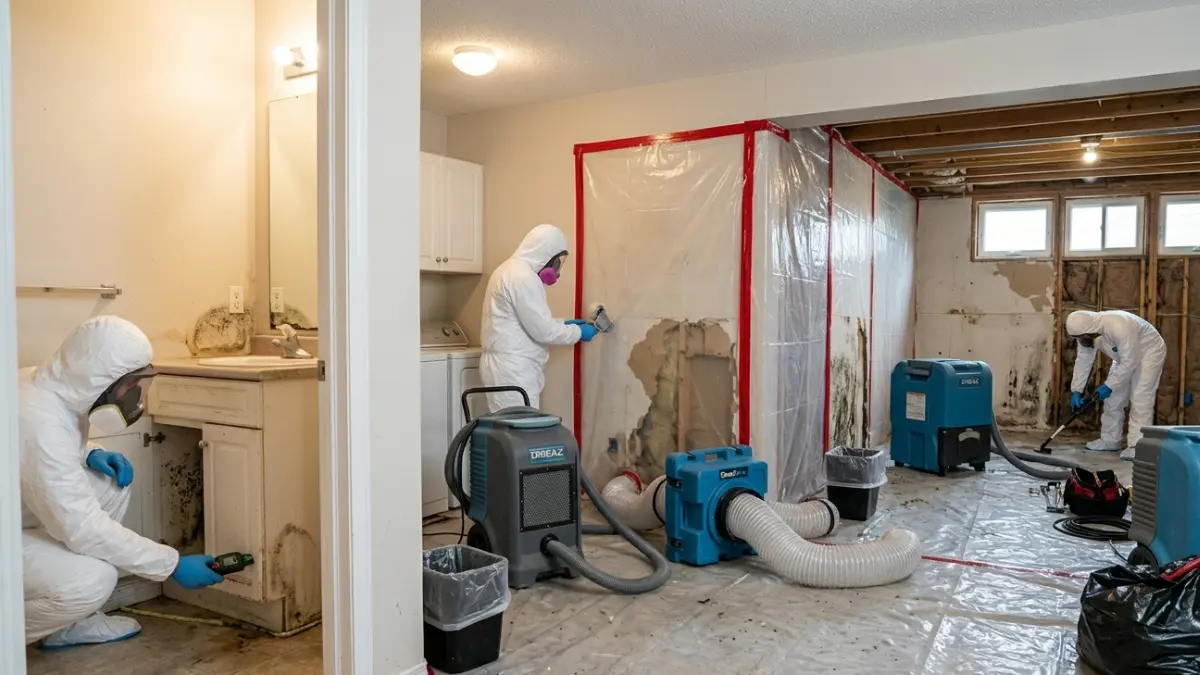
The size of the affected area is the single biggest factor. Here’s how the stages typically stack up by job size.
| Job size | Active removal | Drying | Clearance testing | Typical total* |
|---|---|---|---|---|
| Small (under 10 sq ft) | Hours–1 day | 1–2 days | Same day–1 day | 1–3 days |
| Moderate (10–100 sq ft) | 1–3 days | 2–3 days | 1–2 days | 3–7 days |
| Large / whole-house (100+ sq ft) | 3–7+ days | 3–5+ days | 1–2 days | 1–3+ weeks |
Total excludes reconstruction, which runs on its own schedule. Severe water damage extends every stage.
Typical timeline: 1 to 5 days for most homes
The 1-to-5-day window covers the vast majority of household problems — a leak under a sink, mold behind a washer, a damp closet wall.
Most of that time goes to containment, removal, and cleaning. Drying and a clearance check usually follow within the same week.
Small jobs: can mold be removed in one day?
Yes — a contained patch under 10 square feet on a hard surface can often be handled in a single day.
The catch is the moisture source. If the leak isn’t fixed, the mold returns no matter how fast the cleanup went.
Large and whole-house jobs: 1 to 3 weeks
Whole-house remediation is rare and usually follows a flood, burst pipe, or long-hidden leak.
Expect 1 to 3 weeks, sometimes longer when mold has spread into the HVAC system or wall cavities.
What affects how long mold remediation takes
The same square footage can take one day or one week, depending on a few factors you can assess yourself.

- Non-Invasive Moisture Detection: Quickly measure moisture up to 19mm deep without damaging walls or surfaces. Works grea…
- Early Water Damage Detection: Stop water damage before it worsens by quickly finding hidden moisture resulting from leak…
- Easy-to-Read Display: Equipped with a backlit LCD screen readable in low-light conditions. The HOLD button locks measure…
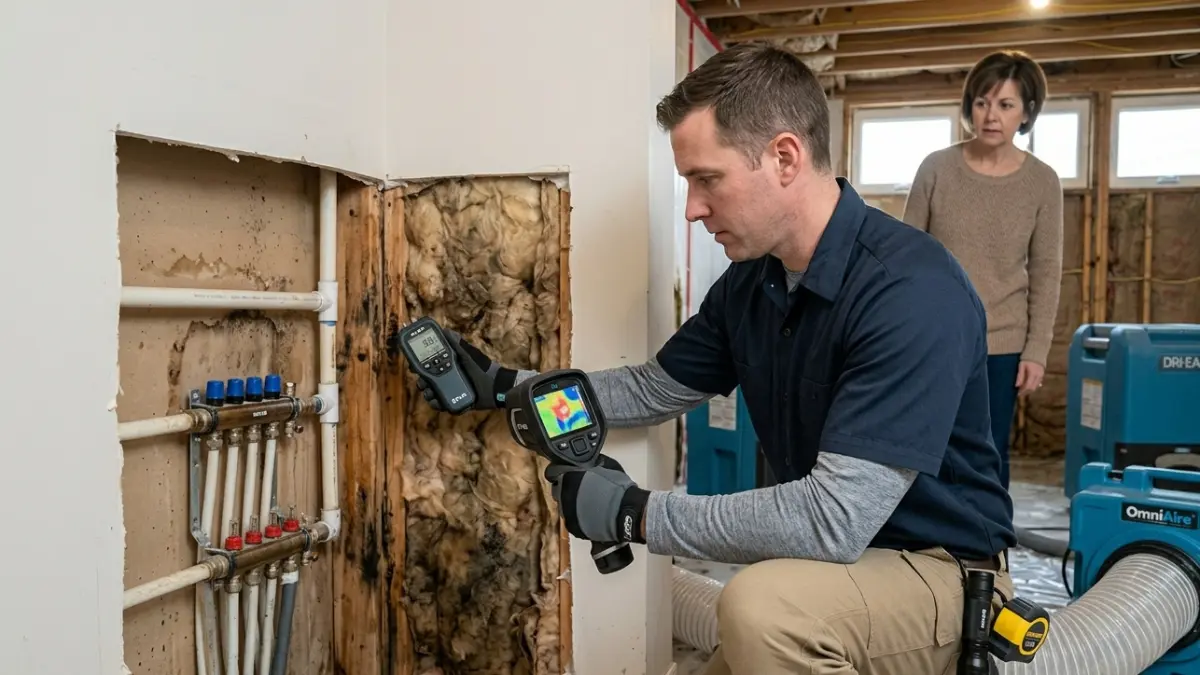
Size and location of the affected area
Square footage drives the timeline more than anything, but where the mold sits matters just as much.
Mold on an open drywall surface clears quickly. Mold in an HVAC system, behind tile, in a crawl space, where reaching and drying it takes longer, or under flooring stretches the job because crews must open up the structure.
Type of mold and material damage
Porous materials are the timeline-killers. Insulation, ceiling tile, and drywall that have absorbed mold usually get removed and replaced rather than cleaned, which adds demolition time.
Carpet is a common judgment call — our guide on whether to clean or replace mold-damaged carpet walks through it. Black mold doesn’t necessarily take longer to remove, but it raises the bar on containment and gear.
Moisture source and drying conditions
Every job stalls until the water source is fixed. A remediator who cleans mold without correcting the leak is setting you up for a repeat visit — exactly what keeps bringing mold back after remediation.
The EPA scales its containment requirements by the size of the affected area, so larger jobs need fuller setups; see the EPA’s mold remediation guidance for larger areas. High indoor humidity also slows drying, especially in basements during humid months.
The mold remediation process, step by step
Knowing the order of operations tells you why the timeline is what it is — and where delays come from.
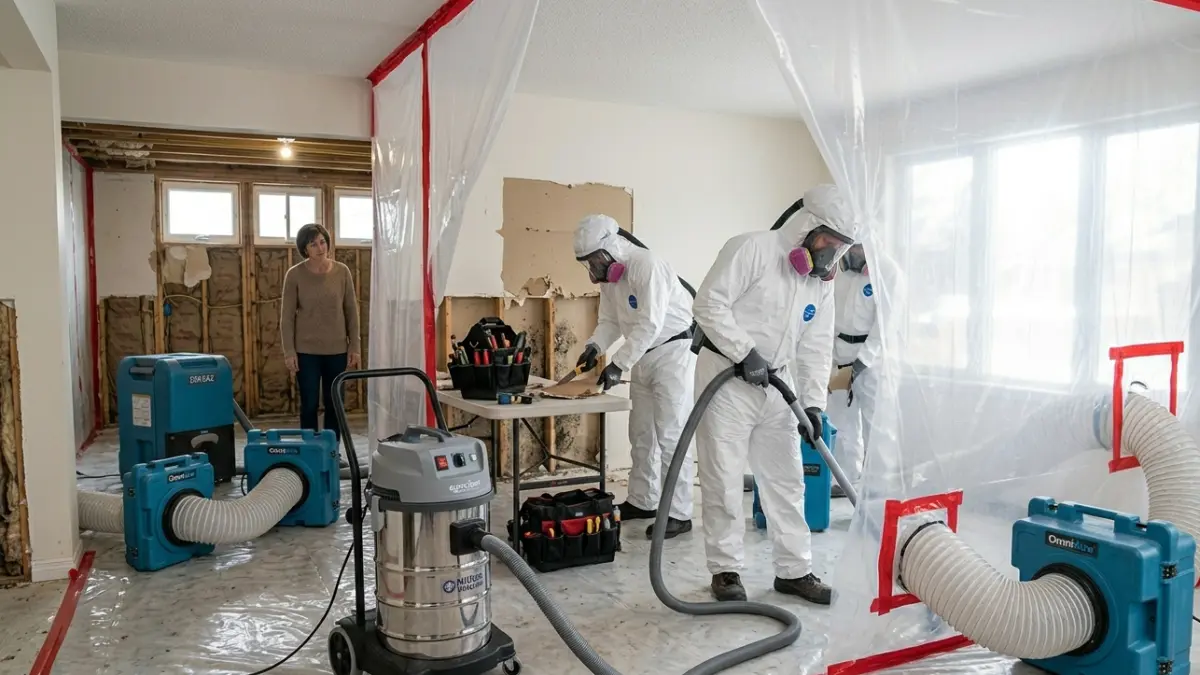
Inspection and assessment (1–2 days)
Before anyone touches the mold, a professional finds its full extent and the moisture feeding it. This mold inspection, which carries its own cost, takes a day or two — longer if the mold is hidden behind walls.
Professionals work to the IICRC S520 standard, the industry benchmark for mold remediation.
Containment and removal (1–3 days)
Crews seal the area with 6-mil plastic sheeting and negative air pressure, then remove moldy materials and HEPA-vacuum the space.
This is the core of remediation and usually runs one to three days, depending on how much material comes out.
Cleaning, drying, and clearance testing (1–4 days)
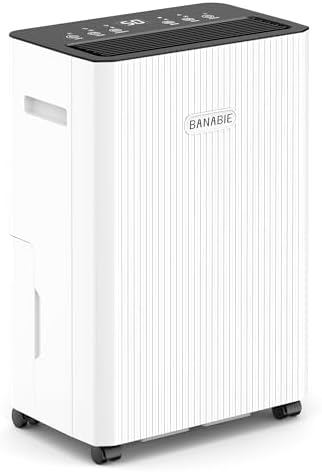
- 2,500 SQ. FT. COVERAGE & 32-PINT MOISTURE REMOVAL – Designed for spaces up to 2,500 sq. ft., this BANABIE dehumidifier r…
- FLEXIBLE DRAINAGE OPTIONS – Choose between continuous drainage and manual tank drainage to suit different spaces and dai…
- SMART HUMIDITY CONTROL & 3 OPERATING MODES – The BANABIE dehumidifier uses a built-in humidity sensor to monitor room hu…
After removal, surfaces get an antimicrobial treatment and the structure dries to a normal moisture level — several days with commercial air movers, longer when drying out after flooding.
Then a clearance test confirms the air is safe, and lab results take one to two days; here’s how post-remediation testing confirms the work succeeded.
💡 Expert Note: Don’t schedule the rebuild until clearance passes. Rebuilding over damp or still-contaminated framing is the single most common reason a “finished” job fails inspection — and it doubles the cost.
Reconstruction and rebuild (separate timeline)
Replacing drywall, flooring, and insulation is its own project on its own schedule — days for a small area, weeks for extensive damage.
This is why your “back to normal” date often lands well after the remediation crew leaves.
What mold remediation costs and how it ties to time
Bigger and more hidden jobs cost more and take longer for the same reason: more material to remove, contain, and dry.
Most homeowners pay between $1,200 and $3,750 for professional mold remediation, with a national average around $2,300. Pricing usually runs $10 to $25 per square foot of affected area.
That square footage is the contaminated surface — not your home’s total size, a distinction that trips up a lot of first quotes.
| Affected area | Typical cost range |
|---|---|
| Small (under 10 sq ft) | $500–$1,500 |
| Moderate (10–100 sq ft) | $1,000–$2,500 |
| HVAC system | $2,000–$10,000 |
| Whole house | $10,000–$30,000+ |
What drives the cost up
Hard-to-reach mold costs the most. Removing it from an HVAC system, attic, or behind finished walls adds labor and containment — our breakdown of mold remediation costs room by room shows where the money goes.
Mold testing and inspection are usually separate line items, running $250 to $800.
Is it covered, and is it worth it?
Insurance sometimes helps when mold follows a sudden, covered event like a burst pipe — but gradual leaks and flooding are commonly excluded, as our guide to when homeowners insurance covers mold remediation explains.
If you’re weighing the bill against doing it yourself, our breakdown of what DIY mold removal actually costs versus hiring a pro shows where the line falls.
DIY versus a pro, and when it’s safe to go back
The size of the problem decides whether this is a weekend task or a professional one.

- TRIPLE FILTRATION: The triple filtration system helps clean the air that passes through the filters in three ways. First…
- ACTIVE CLEANING: Beyond triple filtration, our FPK50UW features Plasmacluster Ion Technology for an active cleaning proc…
- LONG LIFE FILTERS: Includes an Activated Carbon Deodorizing Filer and a Long Life, True HEPA Filter that may last up to …
When you can DIY and when to call a pro

- cloth
- Made in the USA and Imported
- NIOSH APPROVED for at least 95 percent filtration efficiency against certain non-oil based particles
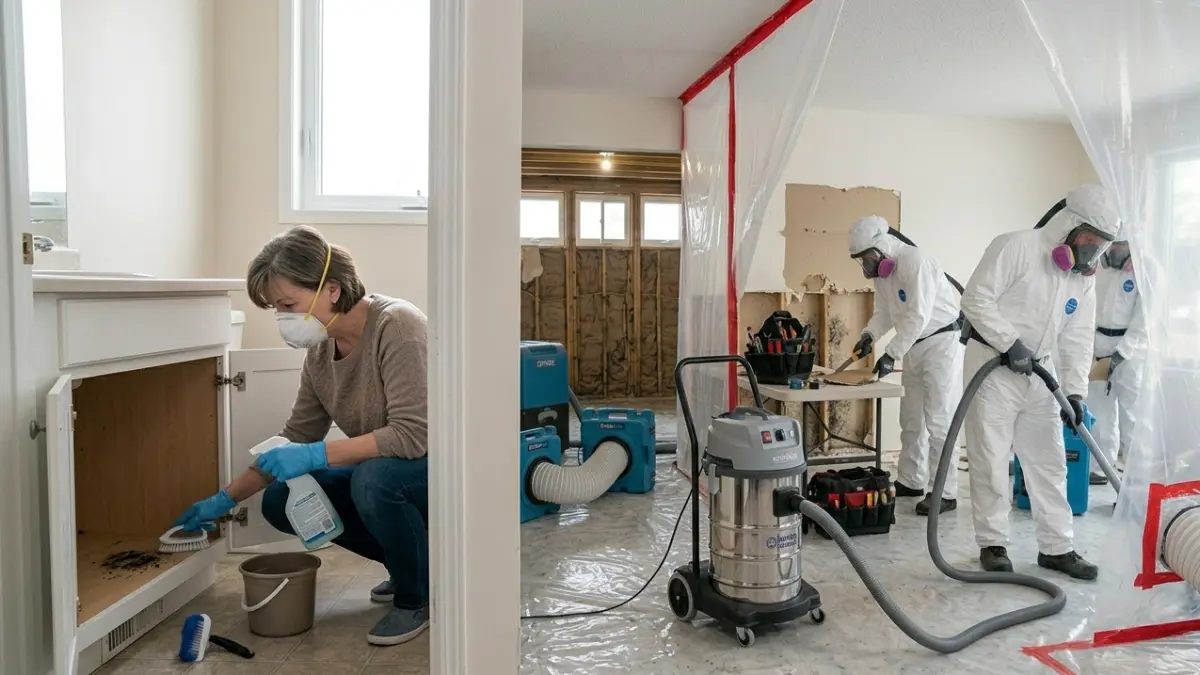
The EPA’s rule of thumb is simple: mold under about 10 square feet on a hard, non-porous surface is usually a safe DIY mold removal job when done with proper protection — see the EPA’s guidance on cleaning up mold yourself.
Above that — or with hidden mold, HVAC involvement, sewage, or anyone in the home who’s pregnant, elderly, or has asthma — it’s time to find a mold remediation company you can trust.
⚠️ Warning: Disturbing more than about 10 square feet of mold without containment can spread spores through your whole house. When in doubt, get a professional assessment before you tear anything out.
How long until it’s safe to return
It’s generally safe to return to a remediated space 24 to 48 hours after the work finishes, once airborne spores settle and clearance testing confirms the air is clean.
That assumes the moisture source is fixed and the area has dried. If anyone develops symptoms after returning — the kind the CDC links to mold exposure — that’s a sign to re-test.
Frequently asked questions about mold remediation timelines
Short, direct answers to the questions homeowners ask most about how long the process really takes.
1. How long does mold remediation take on average?
On average, mold remediation takes 1 to 5 days for a typical residential job. Small, contained patches finish in a day, while larger infestations or homes needing extensive drying and rebuilding can run one to three weeks. The size of the affected area is the biggest factor in your timeline.
2. How long does it take to remediate black mold?
Removing black mold doesn’t take longer than other molds of the same size, but it demands stricter containment and protective gear, which adds setup time. Most jobs still fall in the 1-to-5-day range. Learn the steps for removing black mold by surface type and the symptoms you shouldn’t dismiss.
3. Can mold be removed in one day?
Yes, mold can be removed in one day when the affected area is small — under 10 square feet — and on a hard, non-porous surface. Wear proper protective gear for even a quick job. Larger areas, porous materials, and hidden mold all push it past a single day.
4. How long after mold remediation is it safe to return?
It’s generally safe to return 24 to 48 hours after mold remediation finishes, once airborne spores settle and clearance testing confirms clean air. The exact timing depends on the size of the job and whether the area has fully dried. Wait for a passed clearance test when one was performed.
5. How long until mold grows back after remediation?
Mold can grow back within 24 to 48 hours if the moisture source isn’t fixed, which is why correcting leaks and humidity matters more than the cleanup itself. Properly remediated areas with the water problem solved stay clear. Here’s how to stop mold from returning for good.
6. Do you have to leave your house during mold remediation?
For small, contained jobs you can usually stay home, since the work area is sealed off with plastic and negative air pressure. For large infestations, HVAC contamination, or whole-house remediation, temporary relocation is common — sometimes for several days while the air clears and the structure dries out completely.
7. How long does whole-house mold remediation take?
Whole-house mold remediation typically takes one to three weeks, and occasionally longer. It usually follows a flood, hurricane, or long-hidden leak, and involves removing large amounts of material, extensive drying, and often HVAC cleaning. Reconstruction afterward adds its own timeline on top of the remediation work itself.
8. How long does drying take after mold removal?
Drying after mold removal usually takes 2 to 5 days with commercial air movers and dehumidifiers, though saturated materials after flooding can take a week or more. The structure must reach a normal moisture level before rebuilding begins. A dehumidifier helps keep indoor humidity below 50% afterward.
9. How long does post-remediation clearance testing take?
Clearance testing itself takes under an hour on-site, but lab analysis of the air or surface samples usually takes 1 to 2 days to return. Schedule any reconstruction for after you have those results, since rebuilding before a passed clearance test is a common and costly mistake.
10. Why is my mold remediation taking so long?
Mold remediation runs long when crews find hidden mold inside walls, under flooring, or in insulation after work begins, expanding the original scope. Heavy water damage, high humidity, and HVAC contamination also stretch it. Saturated drywall often has to be removed rather than cleaned.
11. How long does basement mold remediation take?
Basement mold remediation usually takes 2 to 5 days, longer when humidity is high or porous materials like carpet and drywall are involved. Poor ventilation slows the drying stage. See the proven method for basement mold removal, and note that attic jobs follow a similar timeline.
12. How long does HVAC mold remediation take?
HVAC mold remediation typically takes 1 to 3 days, depending on how far mold has spread through the ductwork and air handler. Because the system circulates spores through the whole house, it often needs fuller containment. Don’t run the system until mold in your air ducts is treated.
13. Is mold remediation worth it?
Yes, mold remediation is worth it — unaddressed mold damages your home’s structure and can affect health, and it rarely resolves on its own. It also matters for resale; here’s how to plan mold remediation before selling so it doesn’t derail a sale.
14. How long does the smell last after mold remediation?
A musty smell should fade within a few days of remediation as the area dries and air filtration runs. If the odor lingers past a week, it usually means residual moisture or mold was missed, and the space should be re-inspected before you assume the job is finished.
15. Can you speed up the mold remediation process?
You can speed up mold remediation by acting fast — drying wet materials within 24 to 48 hours stops mold before it spreads. Once growth starts, the most effective accelerator is fixing the moisture source immediately and running dehumidifiers, so the drying stage doesn’t drag out the whole timeline.
16. How long does mold remediation take in an apartment?
Mold remediation in an apartment usually takes 1 to 3 days for a contained area, similar to a house of the same size. In rentals, timing also depends on your landlord acting; know your rights when a landlord won’t fix mold and who’s responsible by state.
17. What happens if mold remediation isn’t done properly?
If mold remediation isn’t done properly, mold returns — often within weeks — because the moisture source or hidden growth was missed. You may face repeat costs, lingering odor, and ongoing health complaints. Mold left in wood framing and studs is a frequent culprit behind a failed job.
The bottom line on mold remediation timelines
Most homes are looking at 1 to 5 days of active mold remediation — but “back to normal” depends on drying and any rebuild, which can push the finish line a week or more past the day the crew leaves.
The single thing that decides whether this happens once or repeats is the moisture source. Fix the leak, keep humidity below 50%, and the cleanup holds.
If you’re at the start of this, get two or three quotes and confirm clearance testing is included. For the full method from diagnosis to prevention, lean on our full mold remediation playbook — and use it to make sure this is the last time you deal with it.