
Understanding Landlord Mold Responsibility in Your Rental

Landlord mold responsibility hinges on what caused the mold. Know when your landlord must pay, the 7-to-30-day repair window, and how to push back.
Table of Contents
Finding a dark patch spreading across your bathroom ceiling raises one urgent question. Is this your landlord’s problem to fix, or yours?
The answer decides who pays, and it hinges on a detail most guides skip. Landlord mold responsibility usually turns on what caused the mold, not just the fact that it appeared.
There is no federal law that spells out a landlord’s duty over mold. Your protection comes instead from each state’s habitability rules and, in a few states, mold-specific statutes.
This guide gives you the verdict for your situation, then breaks the rules down state by state. You will learn who pays, how long your landlord has to act, and the exact steps to take if they stall.
For the full picture on testing, cleanup, and prevention, start with our complete mold remediation guidance.
ℹ️ Disclaimer: This article is informational and not legal advice. Mold and landlord-tenant laws vary by state and change over time, so confirm your local rules and consult a licensed attorney before acting.
Who is legally responsible for mold in a rental?
In most cases, your landlord is responsible for mold that grows from a maintenance or structural failure they are required to fix.
That covers a leaking roof, burst or sweating pipes, a failed window seal, or ventilation that never worked right. When the water source is the building’s fault, the mold is the landlord’s to remove.
When the tenant may be liable
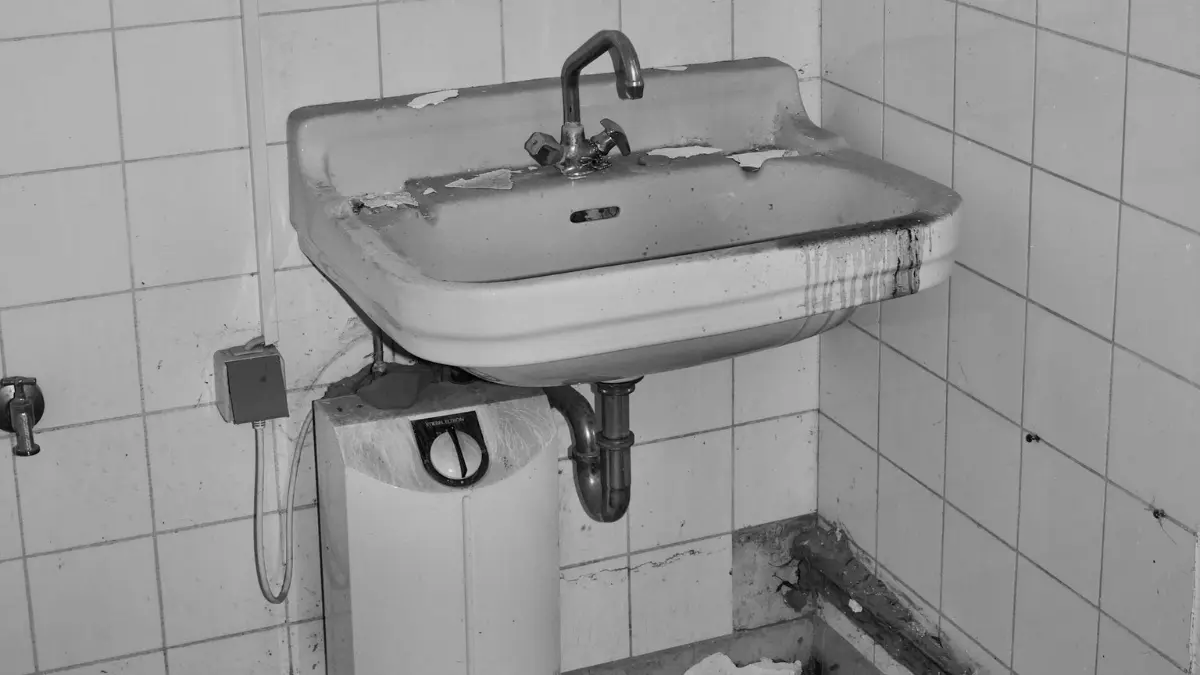
Responsibility can shift when mold grows from a tenant’s own neglect. Leaving windows open during a storm, never running the bathroom fan, or ignoring a spill until it spreads can move the cost to you.
In those cases, a landlord may deduct cleanup from your security deposit. If you catch mold in soft surfaces early, our guide on what to do when you find mold in carpet helps you act before it spreads.
Is there a federal mold law?
No. There is no federal statute setting mold standards or landlord duties for rental housing.
Your rights come from your state’s implied warranty of habitability, which requires rentals to be safe and livable. The EPA’s guide to mold, moisture, and your home confirms the real fix is always controlling the moisture source, not just wiping the surface.
💡 Expert Note: Mold that keeps returning after cleaning almost always points to an unresolved water problem behind the wall. That underlying leak is typically the landlord’s duty to repair, not yours.
Landlord mold responsibility by state
Only a handful of states have passed mold-specific laws, including states like California, Texas, Virginia, New Jersey, Indiana, and Maryland. Every other state relies on the broader habitability standard to hold landlords accountable.
That distinction matters less than renters fear. Even with no mold statute on the books, a landlord must keep the unit habitable, which courts have repeatedly read to include serious mold.
States with mold-specific or disclosure rules
A few states require landlords to disclose known mold or follow set cleanup standards. California, for example, ties mold to its habitability law under Civil Code sections 1941.1 and 1942.
These rules generally require written disclosure of a known mold problem before you sign, plus prompt repair once you report one.
States that rely on habitability law
Most states fold mold into the general duty to repair. The chart below shows how the two approaches compare.
| Approach | What it means for renters | Example states |
|---|---|---|
| Mold-specific statute | Set disclosure and/or cleanup duties written into law | CA, TX, VA, NJ, IN, MD |
| Habitability only | Mold covered under the general duty to keep the unit livable | Most other states |
| Local code overlay | City housing codes may add inspection and enforcement | Varies by city |
Source: State landlord-tenant statutes and state health department guidance, including Washington State’s renters and landlords mold page.
⚠️ Warning: Statutes and repair timelines change. Confirm your own state and city rules through your state health department or a local legal aid office before withholding rent or breaking a lease.
How long does a landlord have to fix mold, and what to do if they don’t
Most states require a landlord to act within a reasonable time after you give written notice, commonly 7 to 30 days, with faster action expected for severe hazards like toxic black mold.
The clock usually starts at written notice, not a phone call you cannot prove. In California, landlords generally get about 30 days for a non-emergency repair once notified.
Can I withhold rent or repair and deduct?
Some states let you withhold rent, pay rent into court escrow, or use repair and deduct. The rules are strict and vary widely, and done wrong, these moves can expose you to eviction.
The Minnesota Department of Health’s renters mold guidance is a solid model for putting your request in writing and keeping copies.
If your landlord won’t fix it
When repairs stall, escalate in order:
- Document the mold and the water source with dated photos and humidity readings.
- Send written notice that states the problem and requests repair by a specific date.
- Wait the repair window your state law or lease requires.
- Report the condition to your local housing or health code enforcement office.
- Contact a tenant attorney or legal aid about remedies available in your state.
For a deeper walkthrough, see our guide to your renter’s rights when a landlord won’t fix mold.
✅ Pro Tip: Send notice in a way that creates a record, like certified mail or an email you keep, so you can prove exactly when the repair clock started.
What mold remediation costs and what insurance covers

- Powerful 11 amp motor for excellent wet and dry cleaning
- 6 gallon capacity to get the job done whether big or small
- Includes a blowing function, for clearing dirt and debris from porches, garages and doorways or even to blow up inflatab…
Professional mold remediation usually runs from a few hundred dollars for a small, contained patch to several thousand for whole-room or structural work.
Price climbs with the size of the affected area, whether it reached framing or HVAC, and how hidden the moisture source is. Our room-by-room mold remediation cost breakdown shows typical ranges by space.
What drives the price
Certain areas cost more because they are harder to reach and dry. The most expensive jobs tend to be in these spaces:
- Attics: Removal often involves insulation and roof sheathing, detailed in our attic mold removal cost guide.
- Crawl spaces: Tight access and ground moisture raise labor, covered in our crawl space mold removal cost guide.
- Basements: Standing water and porous surfaces complicate work, addressed in our basement mold removal method.
If you are choosing a contractor, our guide to finding a mold remediation company you can trust explains which credentials to require.
Does renters or landlord insurance cover mold?
Coverage is usually limited, and many policies exclude mold unless it results from a sudden, covered water event like a burst pipe.
Owners weighing a claim should read when homeowners insurance covers mold remediation before filing anything.
💡 Expert Note: Ask any company whether their quote includes fixing the moisture source. A cleanup that ignores the leak almost guarantees the mold returns within a few months.
Black mold, health risks, and when a rental is uninhabitable

- NIOSH-APPROVED: NIOSH, a USA federal government regulatory agency, has tested and approved the 6300 with 3M cartridges, …
- COMFORTABLE: Soft, lightweight facepiece with easy-to-adjust head straps for a customized fit
- DURABLE AND REUSABLE: Respirator can be disassembled, cleaned, and reused. Supplied with reclosable storage bag

- MOLD ARMOR Rapid Clean Remediation kills, cleans, and prevents mold and mildew with visible results in 1 minute.
- MOLD ARMOR Rapid Clean Remediation is a proven one-step house disinfectant, sanitizer, fungicide, mildewstat* (effective…
- This mold and mildew inhibitor has a non-abrasive formula effective on hard non-porous surfaces.
Black mold deserves attention, but the panic around it is often overstated. Real risk depends on the amount, the location, and who is breathing it in.
Health effects of mold exposure
For many people, mold exposure brings congestion, coughing, eye irritation, or worsened asthma. Effects can hit harder for infants, older adults, and anyone with a weakened immune system.
Parents can learn what to watch for in our guide to your child’s mold exposure symptoms by age, and expecting mothers should review what mold exposure during pregnancy can mean. If the reaction feels stronger than seasonal allergies, our piece on black mold symptoms you should never dismiss explains the warning signs.
When mold makes a rental uninhabitable
Widespread mold tied to an ongoing leak can cross into a habitability violation, especially when it reaches living areas or affects vulnerable occupants.
Whether cleanup is a tenant task or a job for pros depends on the surface and the spread. These guides cover the safe method for each:
- Removing mold from wood and studs without spreading spores.
- Treating mold on drywall so it does not come back.
- Clearing mold on concrete floors the proven way.
- Handling mold in air ducts and the HVAC system.
- Fixing bathroom grout, caulk, and walls.
- Following black mold removal steps by surface type.
Knowing when DIY mold removal is the right call keeps you from taking on a job that really needs a professional.
⚠️ Warning: Never disturb large areas of black mold without protection. For anything beyond about 10 square feet, the EPA recommends professional remediation rather than DIY cleaning.
The bottom line on landlord mold responsibility
Most mold in a rental is your landlord’s to fix, because it traces back to a leak, poor ventilation, or another repair they owe you. The main exception is mold you caused through clear neglect.
Your fastest, strongest move is the same in every state. Send dated written notice with photos, then give your landlord the repair window your state requires.
Even where no mold-specific law exists, the duty to keep your home habitable still protects you. When repairs stall, code enforcement and legal aid are real leverage.
For the full method on diagnosing and fixing the problem itself, return to our step-by-step mold remediation plan.
Frequently asked questions
1. Is my landlord responsible for mold?
Usually yes. Your landlord is responsible for mold when it grows from a problem they must repair, such as a leak, roof damage, or failed ventilation. Responsibility shifts to you only when the mold results from your own neglect, like ignoring spills or blocking airflow.
2. How long does a landlord have to fix mold?
Most states require repair within a reasonable time after written notice, commonly 7 to 30 days. Severe hazards like toxic black mold may demand faster action. The exact window depends on your state and lease, so confirm the timeline that applies where you live.
3. Who pays for mold removal, the landlord or tenant?
The landlord usually pays for mold removal when the cause is a building defect they must repair. A tenant may pay, or see costs deducted from their deposit, when the mold grew from their own negligence, such as unreported leaks or poor ventilation habits.
4. Can I withhold rent for mold?
Sometimes, but only under strict conditions that vary by state. Many states require written notice, a waiting period, and paying rent into court escrow rather than simply stopping payment. Withholding rent incorrectly can lead to eviction, so get legal advice before you try it.
5. Can I sue my landlord for mold?
Yes, tenants can sue a landlord over mold that caused property damage, health problems, or an uninhabitable unit. Success depends on proof: documented notice, the landlord’s failure to repair, and evidence linking the mold to harm. Talk to a tenant attorney about your specific case first.
6. Does black mold make a rental legally uninhabitable?
It can. Widespread black mold tied to an ongoing water problem may breach the warranty of habitability, especially in living areas or homes with vulnerable occupants. Small, surface mold usually does not. Severity, cause, and location together decide whether the unit is legally uninhabitable.
7. Do landlords have to disclose mold before signing a lease?
In some states, yes. A few states require landlords to disclose known mold in writing before a tenant signs. Most states have no mold-specific disclosure law, though landlords still cannot hide a known hazard. Check your state’s rules carefully before you sign the lease.
8. What states have mold-specific laws?
Only a handful, including states like California, Texas, Virginia, New Jersey, Indiana, and Maryland. These laws may set disclosure or cleanup duties. Every other state relies on the implied warranty of habitability, which still requires landlords to keep rentals safe and free of serious mold.
9. Is there a federal law on mold in rentals?
No. There is no federal law setting mold standards or landlord mold responsibility for rental housing. Protection comes from state habitability laws and, in some states, mold-specific statutes. Federal agencies like the EPA offer guidance, but that guidance is advisory rather than a legal mandate.
10. Can a landlord evict me for reporting mold?
No. Retaliatory eviction for reporting mold or requesting repairs is illegal in most states. If your landlord raises rent, refuses to renew, or files to evict soon after your complaint, document the timing carefully, since it may support a retaliation defense in court.
11. Can I break my lease because of mold?
Possibly. If mold makes the unit uninhabitable and the landlord fails to fix it after written notice, you may have grounds to break the lease through constructive eviction. The legal standard is high, so document everything and confirm your state’s rules before you move out.
12. Does renters insurance cover mold?
Usually only in limited situations. Many renters policies exclude mold unless it stems from a sudden, covered event like a burst pipe. Coverage rarely extends to gradual mold from an ongoing leak. Review your policy’s mold or fungi clause to see exactly what applies to you.
13. Can a landlord deduct mold cleanup from my security deposit?
Yes, if the mold resulted from your negligence rather than a building defect. A landlord cannot charge you for mold caused by their own failure to repair. Keep dated photos and written notice to prove the source if a deposit dispute later arises.
14. Is the landlord responsible for mold caused by tenant negligence?
Generally not for the cost, though the landlord must still keep the unit habitable. If you created the mold by ignoring leaks or skipping ventilation, you may owe for removal. The landlord still remains responsible for any underlying structural or plumbing defect behind it.
Related Articles
 Mold Remediation
Found Mold After Flooding? Here’s Exactly What to Do Now
June 15, 2026 Mold Remediation
Here’s Exactly When DIY Mold Removal Is the Right Call
May 8, 2026 Mold Remediation
Here’s What Your Tenant Rights for Mold Actually Are
May 30, 2026 Mold Remediation
Mold Remediation Guidance for Your Exact Situation
May 3, 2026 Mold Remediation
What DIY Mold Removal Really Costs—and When to Call a Pro
June 18, 2026 Mold Remediation
Your Attic Mold Removal Guide: Costs, Causes, Safe Fixes
May 20, 2026 Mold Remediation
The Safe Way to Remove Mold from Wood and Studs
May 23, 2026 Mold Remediation
What a Mold Inspection Really Costs for Your Home
June 2, 2026 Mold Remediation