
Here’s the Proven Way to Finally Get Rid of Mold on Concrete

Mold on concrete won’t go away with bleach alone. Learn the TSP method pros use, location protocols for basements, and the EPA’s 10 sq ft threshold.
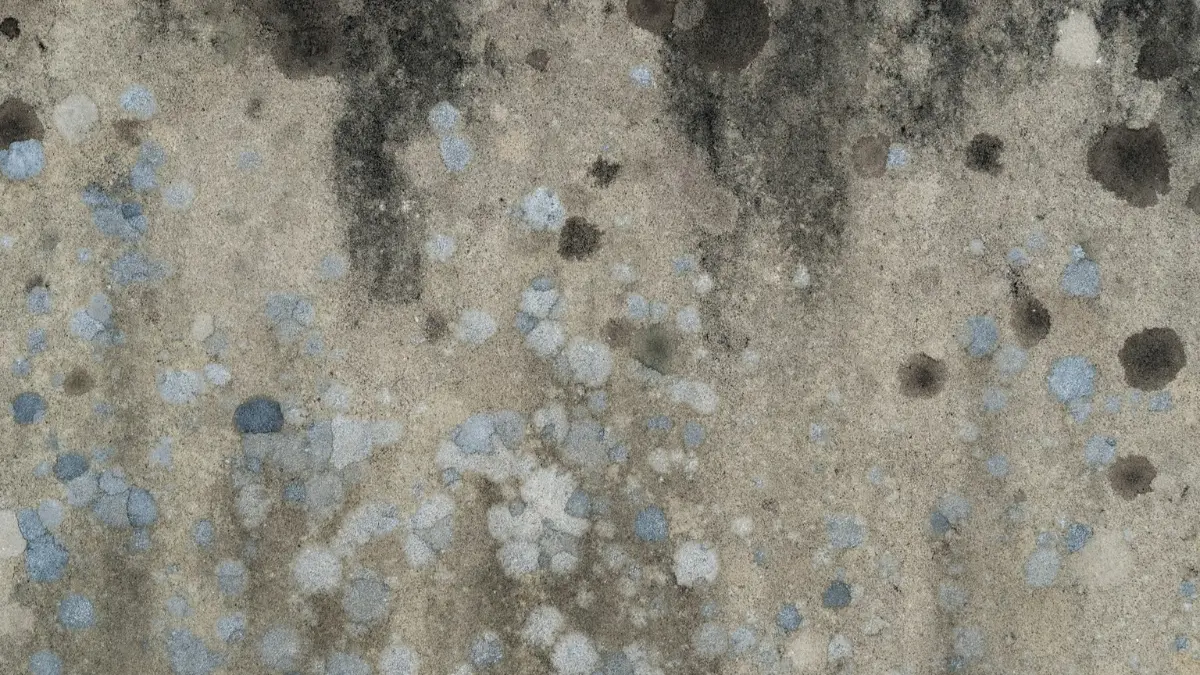
Table of Contents
Mold on concrete floors: what you’re dealing with
That dark patch on your basement or garage floor is not going away on its own — and the longer it sits, the deeper it roots.
Mold on concrete feeds on dust, skin cells, and organic debris trapped inside the slab’s pores, and it will keep spreading as long as moisture remains.
Is it actually mold?
Confirm what you are dealing with before treating anything — two common concrete problems look like mold but require completely different solutions.
| What You See | Color | Texture | What It Is |
|---|---|---|---|
| Fuzzy or powdery patches | Black, green, gray | Slightly raised | Mold or mildew |
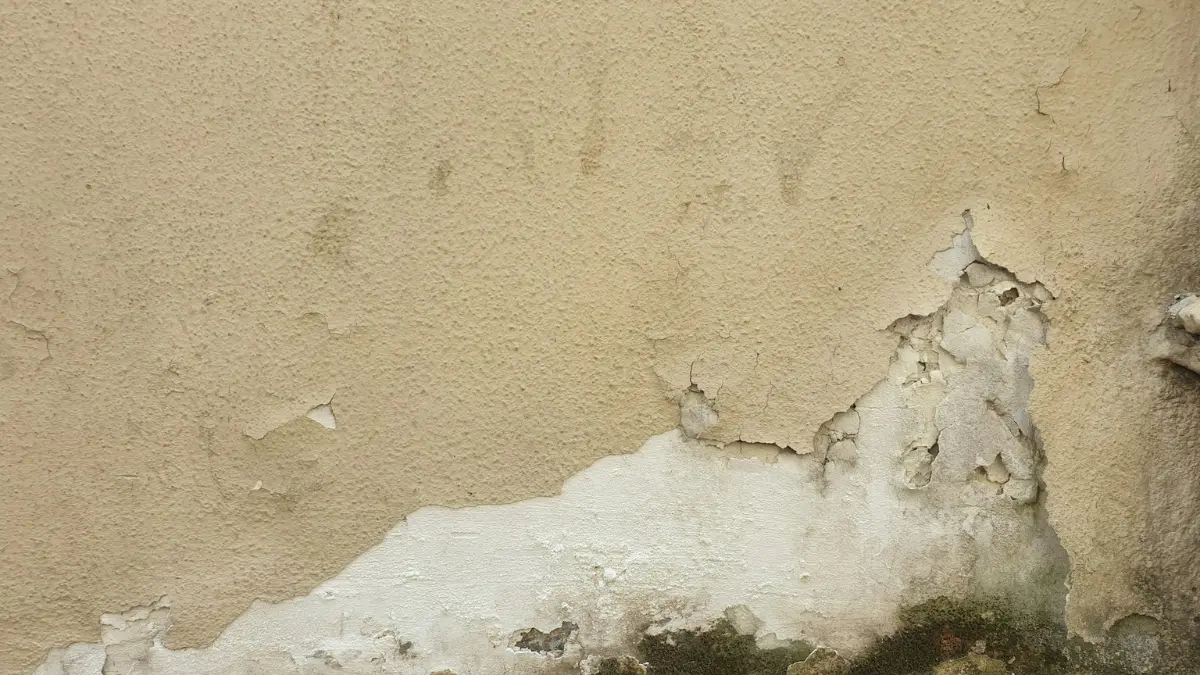
| White crusty deposits | White or gray | Chalky, crystalline | Efflorescence (mineral salts) |
| Slimy film | Bright green | Slick | Algae (outdoor only) |
Efflorescence is a salt deposit driven by water moving through the slab — treating it with a mold killer does nothing, and treating mold with an acid wash makes it worse.
Why concrete is especially vulnerable
Concrete’s porous surface absorbs and holds moisture in a way that sealed tile or hardwood simply cannot, giving mold spores a protected anchor point that scrubbing alone may not reach.
Raw, unsealed slabs are the most susceptible — and basements, garages, and crawl spaces provide exactly the low-light, high-humidity conditions mold needs to establish within 24 to 48 hours of a moisture event.
Start your full home assessment with our mold remediation diagnostic plan, which covers every affected surface type.
Why mold grows on concrete floors
Every concrete mold problem has exactly one root cause — and it is never the concrete itself.
Moisture is the only variable that matters, and identifying its specific source before you clean is what separates a one-time fix from a recurring problem.
Moisture is the only real cause (and its three sources)
Moisture reaches concrete floors through three distinct pathways:
- Hydrostatic pressure — groundwater pushes upward through the slab from below; most common in basements and crawl spaces with poor exterior drainage
- Condensation — warm humid air contacts a cooler concrete surface and deposits liquid water; typical in garages and unheated spaces during spring and summer
- Surface water intrusion — plumbing leaks, flooding, or rain runoff that is not fully dried within 24 to 48 hours
The third pathway is the most underestimated.
Concrete that feels dry at the surface can retain measurable internal moisture for weeks after a water event.
Basement vs. garage vs. outdoor: different risks
Where your mold is growing changes both the cause and the correct protocol.
Basement slab mold driven by hydrostatic pressure returns after cleaning unless the source below is fixed — treating mold in a basement requires sealing and drainage work alongside surface remediation.
Crawl space concrete is a different challenge entirely; crawl space mold removal protocols and costs differ significantly from above-grade slab work and often require professional containment.
The humidity threshold mold needs to grow
Mold spores require relative humidity above 60% to germinate on most surfaces, including concrete.
The EPA’s moisture and mold guidance for homeowners recommends keeping indoor humidity between 30% and 50% year-round as the most effective preventive measure available.
A $20 to $30 hygrometer placed in the affected room tells you within minutes whether ambient humidity is your primary driver.
How to remove mold from concrete floors: step by step
To remove mold from concrete floors, follow these steps:
- Put on full PPE before entering the space — respirator, gloves, goggles
- Ventilate the room — open windows and run an exhaust fan pointed outward
- HEPA-vacuum loose debris (never dry-sweep — it aerosolizes spores directly into breathing air)
- Apply your cleaning solution and allow a full 10 to 15 minute dwell time
- Scrub with a stiff-bristle nylon brush using firm circular pressure
- Rinse thoroughly and extract all standing liquid with a wet/dry vac
- Dry completely — fans and a dehumidifier running for a minimum of 24 hours
Skipping the dwell time is the single most common DIY mistake, and the one most likely to make mold return.
A solution wiped off in under five minutes sits only on the surface; the full dwell time allows active ingredients to penetrate the slab’s pores where hyphae are anchored.
Safety first: PPE and ventilation setup

- Professional Chemical Gloves – The ergonomically shaped reusable work gloves are made of premium nitrile, have excellent…
- Comfortable and Durable – With 15Mil (0.38 millimeter) thickness flocked liner, these heavy duty gloves are very soft, e…
- Great Grip – The non-slip particle textured palm chemical resistant gloves offer good grip to grab the wet and greasy pa…

- cloth
- Made in the USA and Imported
- NIOSH APPROVED for at least 95 percent filtration efficiency against certain non-oil based particles
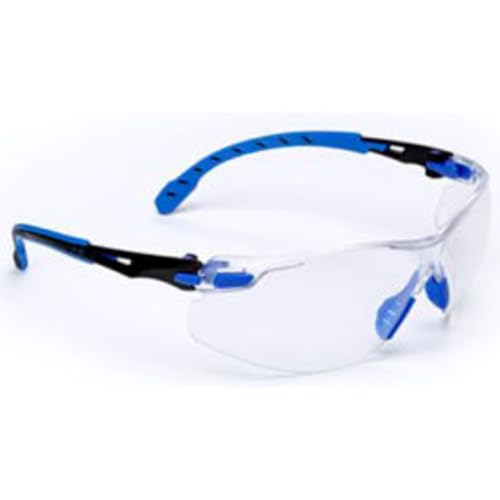
- SCOTCHGARD ANTI-FOG COATING has an active ingredient that bonds to the lenses to help keep them clear longer than regula…
- DESIGNED FOR CHALLENGING SITUATIONS such as hot and humid conditions, indoor and outdoor work, physically demanding task…
- COMFORT: Low profile protective eyewear provides soft nose bridge and padded temples for added comfort
Protective gear is non-negotiable — every time you scrub mold, you send spores airborne.
⚠️ Warning: At minimum, wear an N95 respirator, chemical-resistant gloves, and safety goggles. If you suspect black mold, upgrade to a P100 half-face respirator. Cover all skin with old clothing you can wash immediately afterward, and never eat, drink, or touch your face during the job.
OSHA’s mold safety standards for residential remediation work specify this PPE framework — it is the same protocol certified crews follow.

The 5-step mold removal process
Supply list: HEPA shop vac, stiff-bristle nylon scrub brush, pump sprayer, cleaning solution (see Section 4), N95 respirator, chemical-resistant gloves, safety goggles, box fan, wet/dry vac.
Estimated time: 1 to 3 hours depending on area size.
The numbered process above is the complete method — execute every step in order, including the full dwell time and the 24-hour dry.
Protocol variations by location (basement / garage / crawl space / outdoor)
Location determines which steps to add and which to avoid.
- Basement: Do not pressure wash — flooding risk in enclosed spaces; use TSP or a commercial fungicide; seal the slab after full drying
- Garage: Wire brush works for stubborn staining on heavier slabs; pressure washing is acceptable if floor drainage is adequate; dry under vehicles first
- Crawl space: Confined space work demands full PPE compliance; limit time below; refer to dedicated crawl space mold removal protocols before starting
- Outdoor: Pressure washing at 1,500 to 2,000 PSI is the most effective first pass; follow with a mold inhibitor spray
If the concrete mold is accompanied by visible growth on nearby walls, check whether it has migrated — removing black mold from each surface type requires a different approach than slab work.
Still deciding whether to DIY or call someone? Here is exactly when DIY mold removal is the right call based on scope, location, and household risk factors.
💡 Expert Note: After scrubbing, the floor may appear clean but still fail a moisture meter test. Certified Home Inspector David Harrington recommends a 24-hour re-test before sealing — applying any sealer over residual moisture traps it below the surface and restarts the mold cycle within weeks.
Best products to kill mold on concrete
The most effective way to permanently kill mold on concrete is to use a cleaner that penetrates the slab’s pores — not one that bleaches the surface stain while leaving hyphae alive in the substrate beneath.
Bleach vs. TSP vs. commercial mold killers: which actually penetrates concrete
This is where most homeowners make a costly mistake, and it explains why bleach-treated mold returns within weeks.
| Product | Penetrates Concrete? | Kills at Root? | Best Location | Key Limitation |
|---|---|---|---|---|
| Household bleach (1:10 dilution) | No | No | Surface staining only | Water-based; diluted instantly by slab moisture |
| Trisodium phosphate (TSP) | Yes | Yes | Basement, garage | Must be rinsed fully; wear gloves |
| Hydrogen peroxide (3%) | Partial | Partial | Light surface mold | Less effective on established growth |
| Commercial fungicide (RMR-86, Concrobium) | Yes | Yes | All interior concrete | Most reliable for recurring mold |
TSP works because its high alkalinity disrupts mold cell walls at the microscopic level and follows moisture pathways several millimeters into the slab — bleach, being water-based, is immediately diluted by the concrete’s own moisture content and never gets there.
Top 3 products for concrete mold removal
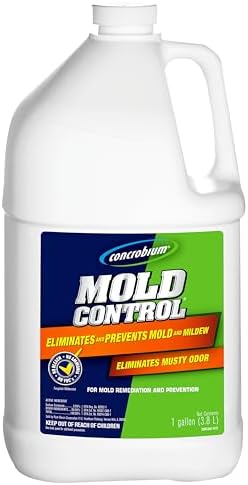
- Use to eliminate mold, mildew, musty odors and prevent regrowth
- EPA-registered formula crushes mold spores as it dries and leaves an invisible barrier
- Odorless solution cleans between 800-1,600 sq. ft. per gallon
Top 3 products for concrete mold removal
- RMR-86 Instant Mold Stain Remover — best for heavy staining; hydrogen peroxide and surfactant formulation reaches into pores; results visible in 15 seconds on most slabs
- Concrobium Mold Control — best for recurring mold; leaves an EPA-registered antimicrobial barrier after drying; odorless and safe for indoor use
- TSP (trisodium phosphate) — best professional-grade option; mix 1/2 cup per gallon of warm water; rinse thoroughly after 15-minute dwell
If mold has spread to adjacent drywall, removing mold from drywall without it coming back requires a different protocol — do not treat both surfaces with the same product.
If wood framing or studs near the concrete show growth, review the safe way to remove mold from wood and studs before treating the area as a single job.
When to use encapsulating sealer after cleaning
An encapsulating sealer applied after the mold is fully dead and the slab is bone dry creates a physical barrier that mold cannot penetrate on a properly prepared surface.
Apply it over live mold or damp concrete and you will trap moisture below, creating the perfect sealed habitat for re-growth — wait for the 24-hour dryness confirmation before any sealer touches the floor.
Is mold on concrete dangerous? Know your risk level
Mold on concrete can pose genuine health risks — but the severity depends on the species, the area affected, and who is in your household.
Most residential concrete mold is manageable with standard DIY precautions, and most of it is not the species most people fear.
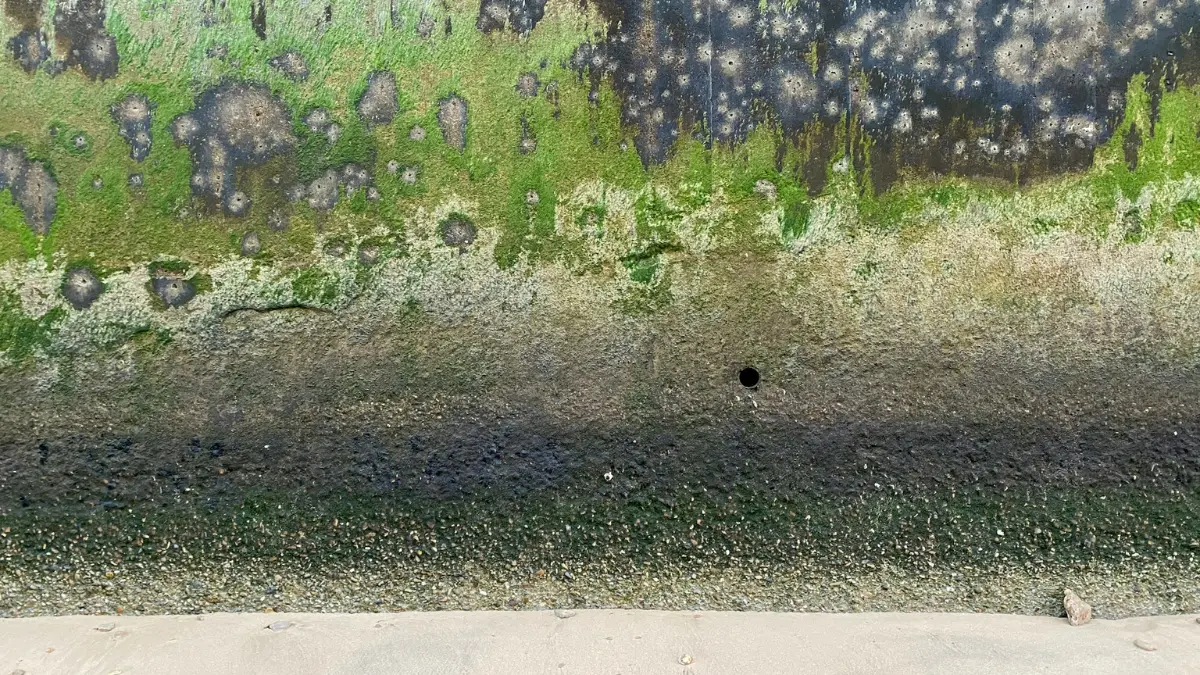
Common mold types found on concrete and their risks
The majority of mold found on residential concrete floors is Cladosporium, Penicillium, or Aspergillus — all capable of triggering respiratory irritation and allergic reactions, but not the mycotoxin-producing species most associated with serious illness.
Stachybotrys chartarum (black mold) is the species linked to more severe effects, but it requires prolonged water damage and is among the least common found on concrete — and its color alone cannot confirm its identity.
ℹ️ Disclaimer: Black mold cannot be confirmed by visual inspection. Color does not reliably indicate species. Lab testing by a certified inspector is required for confirmation — do not assume the worst, but do not assume the best either.
If mold has spread to your HVAC system, the risk profile changes significantly — mold in air ducts requires an entirely different remediation path and carries airborne exposure risk throughout the whole home.
Symptoms of mold exposure to watch for
Mold spore inhalation causes nasal congestion, throat irritation, coughing, eye irritation, and skin rashes in otherwise healthy adults.
People with asthma, allergies, compromised immune systems, or infants and elderly household members face higher risk of more serious reactions — the CDC’s guidance on mold-related health effects covers the full clinical picture.
If any household member develops symptoms after entering the affected space, stop all work and consult a physician before continuing.
The 10 sq ft rule: when DIY becomes a health hazard
The EPA recommends that homeowners handle mold patches of 10 square feet or less independently, and consult a professional remediation company for anything larger.
The EPA’s mold cleanup guide for homeowners states this threshold explicitly — it reflects the point at which spore volume during disturbance becomes difficult to control without professional containment equipment, not a marketing figure from remediation companies.
If the affected area covers more than roughly a 3-foot by 3-foot section, read Section 7 before disturbing the mold further.
How to stop mold from coming back on concrete
Cleaning mold without addressing its moisture source is the most reliable way to see it return within four to six weeks.
The fix comes before the sealer — always.
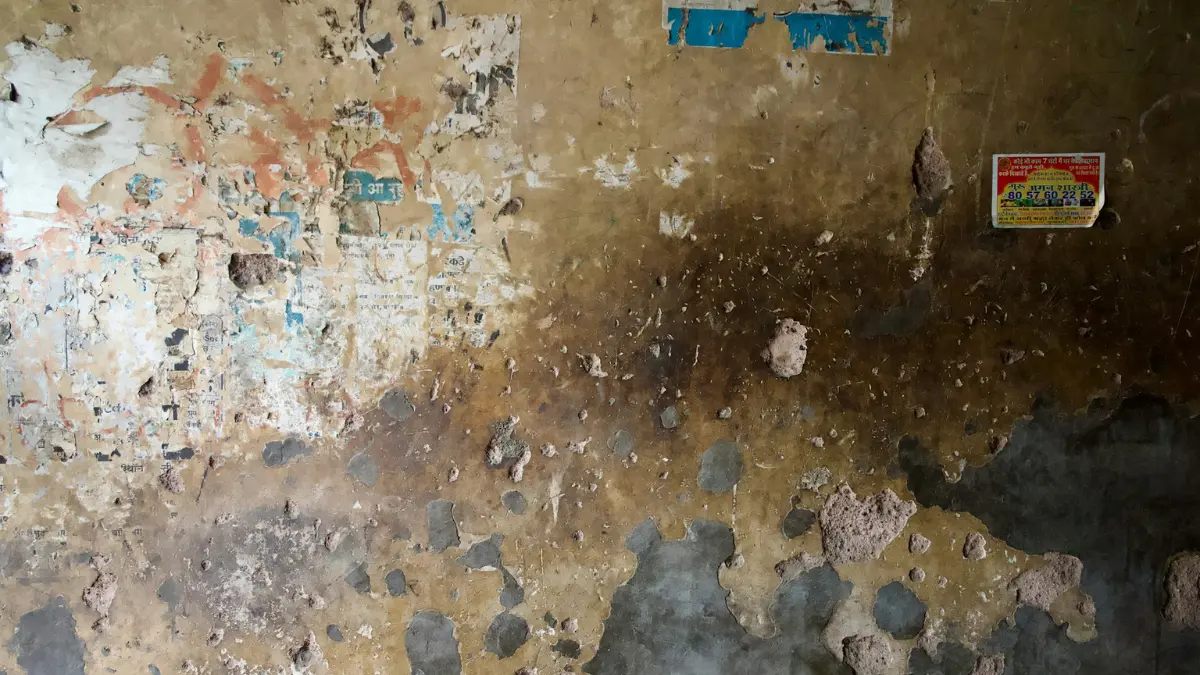
Fix the moisture source first (the only rule that matters)
Recurring concrete mold is almost always a moisture control failure, not a cleaning failure.
Use the plastic sheet test before spending anything on sealers: tape a 12-inch square of plastic to the dry floor, seal all edges, and wait 24 hours — moisture on top means humid air is the source; moisture trapped underneath means water is coming through the slab from below.
Each source demands a different fix, and only a proper waterproofing solution resolves hydrostatic pressure permanently.
Sealing concrete: does it actually prevent mold?
A penetrating sealer — one that bonds within the slab’s pores rather than forming a film on top — significantly reduces moisture absorption and makes future mold growth far less likely.
Surface coatings like paint or topical sealers can trap moisture below, peel under hydrostatic pressure, and create a far better mold habitat than bare concrete.
RadonSeal penetrates up to 4 inches into the concrete matrix; most topical products reach 1/8 inch — that difference matters on a slab with moisture coming from below.
Ventilation and humidity control by room type
Keeping indoor relative humidity below 50% year-round is the lowest-cost, highest-impact mold prevention available.
A dehumidifier sized to your space — matched by pint capacity to square footage — combined with cross-ventilation holds humidity in the safe range for most basement and garage environments.
If mold appears simultaneously in multiple areas of your home, review attic mold removal causes and costs — multiple simultaneous outbreaks signal a whole-home humidity problem, not isolated moisture intrusion.
✅ Pro Tip: Run your dehumidifier continuously during summer months in humid climates rather than on a timer. Humidity spikes during the off cycles, and that intermittent window is enough for mold to begin establishing on damp concrete.
When to call a professional for concrete mold
Most concrete mold falls within DIY range — but five specific conditions change that answer, and ignoring them carries real health and financial consequences.
5 signs the mold problem is beyond DIY
Call a professional if any of the following apply:
- The affected area exceeds 10 square feet — the EPA’s recommended DIY limit
- Mold returns within weeks after two or more thorough cleanings
- A musty odor persists after the floor is fully dry
- Any household member has developed unexplained respiratory symptoms
- An immunocompromised person, infant, or elderly adult lives in the home
If two or more conditions apply simultaneously, do not disturb the mold further before calling.
What to expect from professional mold remediation
A qualified crew sets up physical containment barriers, runs negative-air HEPA machines throughout the job, applies EPA-registered biocides, and provides written clearance test results at completion.
Always verify that any contractor holds IICRC mold remediation certification — it is the industry’s primary standard and a baseline any reputable company should show on request.
Use our guide to finding a mold remediation company you can actually trust to vet every contractor before signing anything.
How much does concrete mold remediation cost?
Professional mold remediation on concrete floors typically runs $500 to $3,000 for contained areas and rises to $6,000 or more for widespread basement infestations, depending on square footage, accessibility, and whether post-remediation air testing is included.
Check your policy before paying out of pocket — whether homeowners insurance covers mold remediation depends heavily on the documented cause of moisture intrusion.
For a full breakdown of what remediation costs across every room type, mold remediation costs by room provides current national averages.
You can beat mold on concrete — here’s your next step
You now have everything you need to assess, treat, and prevent concrete floor mold at any level of severity.
The path is straightforward: confirm it is mold, identify the moisture source, use the right product for your location, follow the full removal process, and seal before mold spores can re-establish.
Your mold removal action plan in three sentences
Match your risk level to the right solution — small patch in low-humidity garage versus recurring basement growth require different responses.
Use the location-based protocols in Section 3 and the product table in Section 4 together — the process without the right chemistry, or the chemistry without the correct process, delivers incomplete results.
Fix the moisture source before or immediately after cleaning, or everything else is temporary.
For a complete picture of mold across every material and space in your home, our full mold remediation guide is the central resource to bookmark and return to.
Mold on concrete floors: frequently asked questions
1. What causes mold to grow on concrete floors?
Mold grows on concrete floors when moisture and organic debris combine on a porous surface. The three primary sources are hydrostatic pressure pushing water upward through the slab, condensation from humid air contacting cooler concrete, and surface water from leaks or flooding that is not dried within 24 to 48 hours.
2. Is bleach or vinegar better for mold on concrete?
Neither bleach nor vinegar penetrates concrete’s pores, which is why both allow mold to return. TSP (trisodium phosphate) or a commercial fungicide such as Concrobium Mold Control reaches deeper into the slab and kills mold at the root. Use bleach only for surface stain removal after the mold is already dead.
3. Does sealing concrete prevent mold?
A penetrating concrete sealer significantly reduces mold risk by limiting moisture absorption within the slab. Surface coatings offer less protection and can trap moisture below them. Sealing only works as prevention — it must be applied after mold is fully removed and the surface is completely dry.
4. Can mold grow back after cleaning concrete?
Yes, if the moisture source is not corrected. Mold will return to concrete within four to six weeks of cleaning when humidity stays above 60%, water continues entering the slab from below, or ventilation remains inadequate. Cleaning without fixing the source is temporary.
5. What is the black stuff on my concrete floor?
Black growth on concrete is most likely mold or mildew, but it could also be tire marks, oil staining, or algae on outdoor slabs. Black mold on concrete cannot be confirmed by color alone — species identification requires lab testing. Treat any black fuzzy or powdery growth as mold until confirmed otherwise.
6. Is mold on concrete in a basement dangerous?
Basement concrete mold carries higher risk than above-grade locations because basements are enclosed, poorly ventilated, and often hold higher humidity. Most basement mold is manageable at the DIY level for areas under 10 square feet. Recurring mold, persistent odor, or household members with respiratory symptoms warrant professional assessment.
7. How do I know if mold is inside my concrete?
Surface cleaning that produces recurring mold within weeks is the most reliable sign that mold has penetrated below the surface. A moisture meter reading above 4% on a visually dry slab also signals internal moisture that mold can continue feeding on. A certified inspector can confirm depth of penetration.
8. What household products kill mold on concrete?
The most effective household option is TSP (trisodium phosphate), mixed at 1/2 cup per gallon of warm water. Hydrogen peroxide at 3% concentration works on light surface mold. Bleach removes staining but does not kill mold roots in porous concrete. Commercial fungicides like Concrobium outperform all household alternatives.
9. How long does it take for mold to grow on wet concrete?
Mold begins growing on wet concrete within 24 to 48 hours under favorable conditions — temperatures between 40°F and 100°F and relative humidity above 60%. Speed varies by mold species, organic debris present on the surface, and how deeply moisture has penetrated. This is why complete drying within 24 hours of any water event is non-negotiable.
10. Can I use a pressure washer to remove outdoor concrete mold?
Yes — pressure washing at 1,500 to 2,000 PSI is effective on outdoor concrete and is the recommended first step for patios, driveways, and walkways. Always follow with a mold inhibitor spray to prevent rapid re-growth. Never pressure wash indoor basement concrete due to flooding and containment risks.
11. Is it safe to be in a room with moldy concrete?
Brief, incidental exposure to a small mold patch on concrete is unlikely to cause harm in healthy adults. Extended time in an enclosed space with active mold growth — especially a basement or crawl space — carries real respiratory risk from airborne spores. If you must enter before treating, wear at minimum an N95 respirator.
12. What PPE do I need to clean mold off concrete?
At minimum: an N95 respirator, chemical-resistant gloves, and safety goggles. For areas larger than 10 square feet or suspected black mold, upgrade to a P100 half-face respirator. Cover all skin with old clothing. These are not optional precautions — scrubbing aerosolizes spores directly into breathing air.
13. Why does my garage floor keep getting mold?
Recurring garage floor mold is almost always caused by condensation — warm humid air enters when the door opens and contacts the cooler concrete slab, depositing moisture. Vehicles parked on the floor also trap condensation beneath them. Improving garage ventilation and running a dehumidifier in humid months resolves most recurring cases.
14. Does dry concrete still have mold?
Yes. Mold on dry concrete does not disappear when moisture drops — it goes dormant. Dormant mold spores remain viable on the surface and resume growth when moisture returns. Visually clean, dry concrete that previously had mold still requires treatment with an appropriate fungicide before sealing.
15. How much does professional mold remediation cost?
Professional concrete mold remediation typically costs $500 to $3,000 for contained areas and can exceed $6,000 for widespread basement or crawl space infestations. Scope, accessibility, containment requirements, and post-remediation testing all affect price. Mold remediation costs by room provides current national averages by space type.
16. Do I need a professional to remove concrete mold?
Most concrete mold under 10 square feet is safe to treat yourself with the right products and PPE. A professional is needed when the affected area exceeds 10 square feet, mold has returned after two cleanings, a musty odor persists after drying, or an immunocompromised person lives in the home. When in doubt, a certified inspection costs far less than a full remediation.
17. Can mold grow through concrete?
Mold does not grow through concrete, but it can penetrate several millimeters into the slab’s pore structure. The concrete itself is not consumed — mold feeds on organic debris within the pores, not the mineral matrix. This is why surface bleaching fails: the mold below the surface survives and continues growing.
Related Articles
 Mold Remediation
Find the Right Mold Removal Products for Your Surface
June 6, 2026 Mold Remediation
What a Mold Inspection Really Costs for Your Home
June 2, 2026 Mold Remediation
How to Tell Mold From Mildew and What to Do Next
June 14, 2026 Mold Remediation
Here’s When Homeowners Insurance Covers Mold Remediation
May 12, 2026 Mold Remediation
Here’s Exactly When DIY Mold Removal Is the Right Call
May 8, 2026 Mold Remediation
What an Air Purifier Can and Can’t Do About Your Mold
June 19, 2026 Mold Remediation
Here’s What Your Tenant Rights for Mold Actually Are
May 30, 2026 Mold Remediation
Find a Mold Remediation Company You Can Actually Trust
May 9, 2026 Mold Remediation