
Black Mold Symptoms You Should Never Dismiss as Allergies

Black mold symptoms worsen indoors and ease outside — the clearest sign your home is the source. Know when 10 square feet crosses the professional threshold.

Table of Contents
Is black mold making you sick?
You’ve been getting persistent headaches at home, sleeping poorly for no clear reason, or coughing through a season that should have cleared weeks ago — and nothing explains it.
Black mold symptoms don’t announce themselves clearly.
Why symptoms are so easy to miss
They arrive gradually, mimicking seasonal allergies or general fatigue until the real source goes unnoticed for months.
The most revealing pattern — feeling noticeably worse indoors and better within hours of leaving — is the one most people write off as stress, weather, or coincidence.
What this guide covers
This article delivers two things no other resource on this topic combines: a complete symptom map organized by body system and a severity-based action ladder that tells you exactly what to do based on what you find.
Whether your symptoms are mild or you’ve spotted dark growth in your home, you’ll leave this page knowing your situation and your next step.
ℹ️ Disclaimer: This article is for informational purposes only and does not constitute medical advice. For personal health concerns related to mold exposure, consult a licensed physician.
Common black mold symptoms to know
Black mold exposure most commonly causes respiratory irritation, chronic fatigue, persistent headaches, and skin reactions — with symptoms typically worsening during time spent indoors and improving when away from the affected space.
That single pattern is your most important diagnostic signal.
Respiratory and breathing symptoms
Mold spores from Stachybotrys chartarum are small enough to penetrate deep into the airways, producing coughing, wheezing, nasal congestion, and shortness of breath that standard cold remedies don’t touch.
If respiratory symptoms consistently worsen at night or in certain rooms and ease outdoors, mold is worth investigating before assuming any other cause.
Skin, eye, and throat reactions
Allergic reactions to mold often surface on skin before the lungs are involved — redness, unexplained rashes, or persistent itching that clears within 24 hours of leaving the home.
Red, watery eyes and throat irritation that track with your location rather than the season are consistent signs of an indoor air quality problem.
Headaches and fatigue — the overlooked signs
A recurring low-grade headache — not a migraine, just a dull morning pressure that returns without explanation — is one of the most underreported health effects of mold.
According to the CDC’s mold and health resource page, mold affects people differently based on sensitivity, age, and immune status — which explains why the same home can make one family member significantly ill while another shows no symptoms at all.
How to tell if you have black mold at home

- cloth
- Made in the USA and Imported
- NIOSH APPROVED for at least 95 percent filtration efficiency against certain non-oil based particles

- Nitrile
- Imported
- 【Heavy-Duty Chemical Resistance】High-end nitrile gloves possess excellent chemical resistance, providing a tough barrier…

- FRESH AIR QUALITY SENSOR: Track the changes in VOC (airborne chemicals) levels in a room’s air to identify the sources a…
- ALWAYS-ON AIR QUALITY SENSORS: Bluetooth connected indoor air quality monitor measuring VOCs (airborne such as kitchen g…
- WATCH AS YOUR AIR IMPROVES: When you elimante the sources of VOCs or improve a room’s airflow, you can watch as the VOCs…
To determine whether your home has black mold, check these high-risk areas in order:
- Bathroom tile grout and caulk lines
- Under-sink cabinets in kitchens and bathrooms
- Basement walls, especially near floor joints
- HVAC vents and air handler returns
- Window sills with persistent condensation
- Crawl spaces, attic insulation, and subfloor framing
Most black mold discoveries happen in one of these six locations.
What black mold looks like (and what it doesn’t)
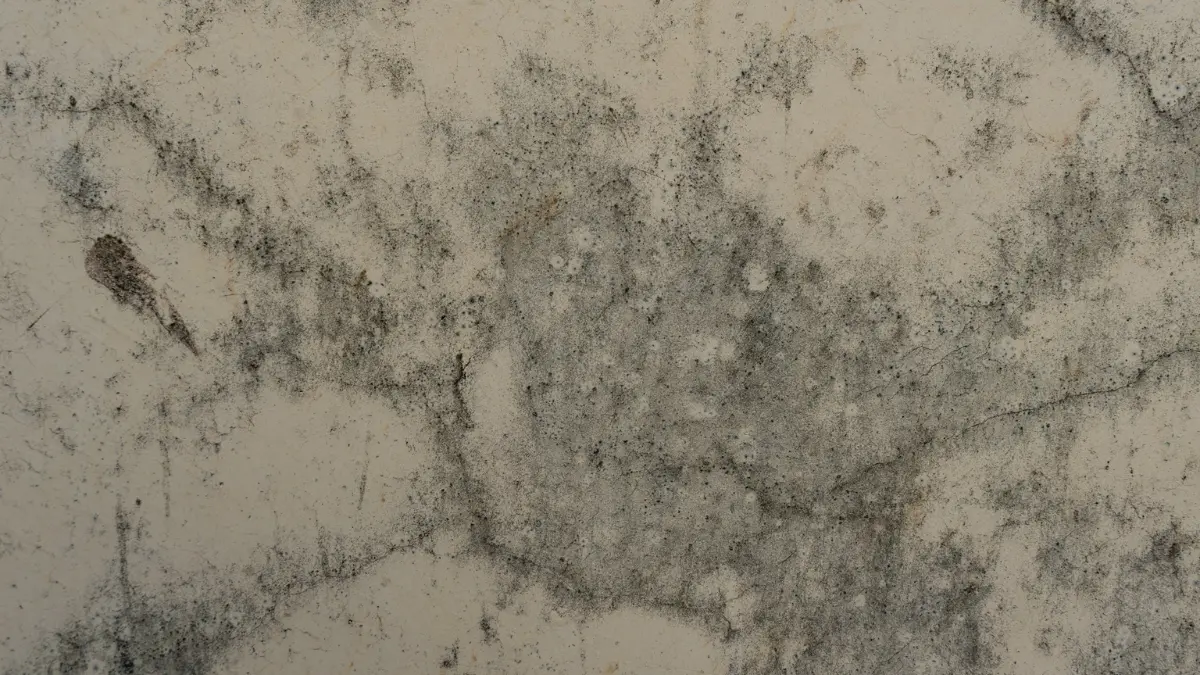
Stachybotrys chartarum presents as dark greenish-black patches — slimy when actively wet, powdery when dry — frequently mistaken for common mildew, which is white-gray and sits on the surface rather than penetrating it.
Visual ID alone is unreliable; if you find growth on walls, our guide to removing mold from drywall without it spreading covers the right approach by wall type, and our black mold identification and removal guide by surface helps confirm what you’re dealing with before you act.
The musty smell test: what to sniff for
Musty odor from mold is produced by microbial volatile organic compounds (MVOCs) — a wet, earthy, distinctly stale smell that intensifies in enclosed spaces like under-sink cabinets, closets, and HVAC returns.
If the smell concentrates near registers or vents, mold inside your air duct system can push spores into every room simultaneously — treat it as a priority, not a cosmetic issue.
High-risk rooms to check first
The bathroom is the most common discovery site; our bathroom mold removal guide for grout, caulk, and walls walks through the right treatment for every surface.
For a systematic whole-home assessment, start with our mold remediation diagnostic plan — it maps mold types by location and guides you through the correct response for each.
⚠️ Warning: Do not open walls, pull up flooring, or probe duct interiors to investigate suspected mold without a minimum N95 respirator and eye protection. Disturbing a large hidden colony without containment can dramatically increase airborne spore counts throughout the home in minutes.
How long does black mold exposure take to affect you?
Acute black mold exposure can trigger symptoms within a few hours in sensitive individuals, while chronic low-level exposure may take weeks or months before recognizable health effects emerge — making it one of the most commonly missed sources of persistent household illness.
The cumulative dose matters far more than a single event.

Acute exposure: symptoms in hours
High-concentration mold spore contact — from disturbing a hidden colony during a renovation — can produce throat burning, eye irritation, and respiratory distress within two to four hours in sensitive individuals.
Homeowners who discover mold during a basement project or mold in a crawl space are among the most common acute exposure cases, since both spaces often harbor large, long-undisturbed colonies.
Chronic exposure: when damage builds quietly
Chronic mold exposure suppresses immune response gradually — the body adapts, symptoms become a new baseline, and the connection between health and home environment grows nearly invisible.
A year of low-level exposure in a damp home routinely produces more severe health effects than a single afternoon near a visible patch; if you’ve been symptomatic for months, the source may have been present far longer than you realize.
What black mold does to your lungs and airways
When inhaled, black mold spores release mycotoxins that trigger an inflammatory response in the airways — leading to symptoms ranging from persistent coughing and wheezing to, in prolonged cases, hypersensitivity pneumonitis, a serious condition frequently misdiagnosed as chronic asthma.
This mechanism explains why standard allergy medication provides only partial, temporary relief.
How mold spores trigger airway inflammation
Pulmonary symptoms begin when mycotoxins activate the immune system’s mast cells, producing histamine and cytokine responses that inflame the bronchial lining and restrict airflow.
The pattern — swelling, mucus production, and narrowed airways — is physiologically identical to asthma, which is why treating the symptoms without identifying a mold source rarely resolves the problem.
Serious conditions linked to long-term exposure
Hypersensitivity pneumonitis is a progressive lung inflammation caused by repeated inhalation of organic particles including mold spores — one that can advance to permanent scarring if the exposure source is not removed.
According to NIOSH indoor environmental research on mold exposure, workers in water-damaged buildings show significantly elevated rates of new-onset asthma and respiratory disease — findings that apply equally to homeowners in moisture-compromised homes. Structural mold in wood framing warrants particular caution; our guide to mold removal from wood and studs covers the respiratory risks during cleanup, and attic mold removal addresses the concentrated spore hazard near disturbed insulation.
Who is most vulnerable to lung damage
Immunocompromised individuals, the elderly, infants, and anyone with pre-existing asthma or COPD face faster and more severe pulmonary onset from the same level of exposure as a healthy adult.
For these groups, even moderate visible growth warrants immediate professional assessment — not a wait-and-monitor approach.
Neurological and whole-body symptoms of black mold
The neurological effects of mold-related illness are the most underreported — real enough to affect daily function, complex enough to be routinely misattributed to anxiety, burnout, or aging.
What the evidence consistently shows is that cognitive and mood symptoms frequently resolve after the mold source is removed and the home is properly remediated.
Brain fog, memory issues, and concentration problems
Brain fog from mold exposure typically presents as difficulty completing thoughts, short-term memory lapses, and concentration problems that worsen on high-humidity days or after extended indoor time.
It is distinct from tiredness — thoughts feel present but unreachable, a pattern consistent with neuroinflammatory mechanisms currently under investigation in occupational health research.
Mood changes: anxiety, depression, and irritability
Some people with confirmed chronic mold exposure report unexplained anxiety, low mood, and irritability that began without an identifiable stressor and improved measurably after leaving the affected home.
The direct causal mechanism is not yet fully established; a physician referral to environmental medicine is the appropriate step when mood symptoms accompany respiratory or cognitive signs.
Children and elderly: why they’re hit hardest
Children face disproportionate risk because their airways are narrower, their immune systems are still maturing, and they spend more time near floors where Stachybotrys chartarum spore concentrations are highest.
Hidden sources like mold in carpet and mold on basement concrete floors are often discovered only after a child or elderly family member develops unexplained symptoms — which is why any new symptom pattern in a vulnerable person warrants a home inspection alongside a medical evaluation.
When to see a doctor — and when to call a pro
Call a licensed mold remediation company when any of the following conditions are present:
- Mold growth covers more than 10 square feet of any surface
- Mold is confirmed inside HVAC systems or air handlers
- Anyone in the home has active respiratory symptoms or immune compromise
- Growth is located inside walls, under flooring, or in structural cavities
- A musty smell persists after all visible mold has been cleaned
These five conditions represent the point where amateur remediation consistently makes the problem worse.
Medical red flags: symptoms that need a doctor now
Seek medical evaluation immediately if symptoms include shortness of breath at rest, blood in mucus, recurring low-grade fever, or cognitive changes — memory loss, confusion — that appeared after moving into or renovating a home.
These indicate a mold-related illness progressing beyond simple sensitivity that requires clinical diagnosis, not over-the-counter allergy treatment.
The EPA threshold: when DIY isn’t enough
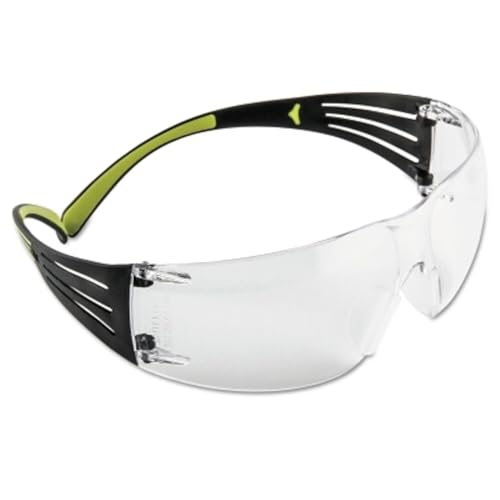
- SELF-ADJUSTING COMFORT: Features 3M Pressure Diffusion Temple Technology which allows the temples to flex and self-adjus…
- ALL DAY WEARABILITY: Soft, adjustable nose pads to reduce slippage and dual-injected padded temple touchpoints for added…
- ANTI-FOG LENS COATING makes this protective eyewear ideal for humid environments.
The EPA’s brief guide to mold, moisture, and your home recommends professional remediation for any mold area larger than 10 square feet — approximately a 3×3-foot patch.
For smaller, contained patches in accessible areas, our DIY mold removal guide covers the correct containment, cleaning, and verification process step by step.

Finding a licensed mold inspector
Look for contractors certified under the IICRC S520 standard — the industry benchmark for professional mold remediation and post-clearance testing.
Our guide to hiring a mold remediation company you can trust includes a full vetting checklist, and mold remediation costs by room gives you realistic price benchmarks before any contractor conversation. Before committing, check whether homeowners insurance covers mold remediation in your situation — coverage depends on the moisture source, not simply the presence of mold.
✅ Pro Tip: Always request a post-remediation clearance air sample before paying a contractor’s final invoice. Without independent third-party verification, you have no confirmation the problem has been fully resolved.
Black mold symptoms — frequently asked questions
1. What are the first signs of black mold exposure?
The first signs of black mold exposure typically include nasal congestion, persistent coughing, watery or irritated eyes, and unexplained skin irritation. Many people also notice recurring headaches or unusual fatigue. These early signs are easy to confuse with seasonal allergies or a cold — the key distinction is that they worsen at home and ease when you leave.
2. Can black mold make you sick immediately?
Yes — black mold can cause symptoms within a few hours in sensitive individuals, particularly after disturbing a large hidden colony. Most healthy adults experience gradual onset over days to weeks of sustained exposure. People with asthma, allergies, or compromised immune function are most likely to react quickly and severely to even brief contact.
3. How do you know if your house has black mold?
Dark greenish-black patches in moisture-prone areas combined with a persistent musty smell are the primary indicators. High-risk locations include bathroom grout, under-sink cabinets, basement walls, and HVAC vents. For a room-by-room assessment framework, our mold remediation diagnostic plan provides a structured approach before you invest in professional services.
4. What does black mold smell like?
Black mold produces a distinctly damp, earthy, musty odor caused by microbial volatile organic compounds (MVOCs). The smell intensifies in enclosed spaces — under sinks, inside closets, and in HVAC ducts — and is often described as old wet wood with a faintly sour edge. It does not smell like ordinary dust or surface dirt.
5. Is black mold dangerous to breathe?
Yes. Inhaling black mold spores introduces mycotoxins into the respiratory tract, triggering inflammation and coughing that can progress to serious conditions with prolonged exposure. According to the CDC’s mold health resource page, mold is especially dangerous for individuals with asthma, lung disease, or weakened immune systems. Brief exposure rarely causes lasting harm in otherwise healthy adults.
6. Can black mold cause headaches?
Yes — persistent, low-grade headaches are among the most commonly reported mold symptoms. They typically present as dull morning pressure rather than a sharp or throbbing pain, worsen after extended indoor time, and ease within hours of leaving the home. This location-dependent pattern is the most reliable early indicator that a home source may be involved.
7. What are the neurological symptoms of black mold?
Neurological symptoms associated with black mold exposure may include brain fog, short-term memory difficulty, slowed concentration, and unexplained mood changes including anxiety and irritability. The evidence linking these directly to mycotoxins is still developing. If neurological symptoms accompany respiratory signs, consult a physician who specializes in environmental or occupational medicine for a thorough evaluation.
8. How long does it take to recover from black mold exposure?
Recovery depends on exposure duration, symptom severity, and whether the source has been removed. Mild symptoms from brief exposure often resolve within days to weeks after remediation. Chronic exposure over months may require medical treatment and several months for full recovery. Consult a physician for any symptoms that persist beyond two weeks after source removal.
9. Can you have black mold and not know it?
Yes — black mold frequently grows inside walls, under flooring, in crawl spaces, and behind appliances, remaining hidden for years. Many homeowners discover it only during renovation. Low-level exposure from a hidden colony can cause persistent symptoms without any visible growth in living areas, making a professional inspection the only reliable way to confirm or rule it out.
10. Should I see a doctor for black mold exposure?
Yes — if you have persistent respiratory symptoms, recurring headaches, unusual fatigue, or any symptoms that worsen at home and improve elsewhere, medical evaluation is warranted. Tell your doctor specifically about your home environment and any visible mold you’ve found. A physician can test for mold sensitivity and rule out other causes before symptoms progress further.
11. What does black mold look like?
Stachybotrys chartarum appears as dark greenish-black or black patches — slimy when wet, powdery when dormant. It is frequently confused with other dark molds and common mildew. Visual identification alone is unreliable; professional air sampling or a targeted surface test is the only way to confirm the species. Never assume a dark patch is harmless without testing.
12. Can black mold cause anxiety or depression?
Some individuals with confirmed chronic mold exposure report anxiety, low mood, and irritability that resolved after remediation. A direct causal mechanism has not been fully established, though neuroinflammatory responses to mycotoxins are under active investigation. If mood symptoms accompany physical signs of exposure, raise both with your physician — they may share the same source.
13. Does black mold affect children differently?
Yes — children are significantly more vulnerable because their airways are narrower, their immune systems are still developing, and they spend more floor-level time where spore concentrations are highest. Research links early-life mold exposure to increased rates of asthma and respiratory illness. Any unexplained respiratory or developmental symptoms in a child living in an older or damp home warrant prompt investigation.
14. What happens if you breathe in black mold spores?
Inhaled mold spores and their mycotoxins trigger an immune response in the airways, causing inflammation, mucus production, coughing, and restricted airflow. A single brief exposure rarely causes lasting damage in healthy adults. Repeated or prolonged inhalation — especially in enclosed, poorly ventilated spaces — can progress to serious respiratory conditions and warrants both source removal and medical evaluation.
15. How is black mold exposure diagnosed?
There is no single definitive test for black mold exposure. Physicians typically evaluate symptoms, review home history, and may order allergy panels or pulmonary function tests. Environmental testing — air sampling or surface cultures by a certified industrial hygienist — confirms mold presence at home. A combination of medical and environmental assessment provides the clearest and most actionable picture.
16. Does opening windows help with black mold?
Opening windows improves ventilation and temporarily dilutes airborne mold spore concentrations, which can reduce symptom intensity. However, it does not address the source and is not a substitute for remediation. In humid climates, outside air can actually raise indoor moisture levels and worsen mold conditions. Ventilation is a short-term management measure only — source removal is the only permanent solution.
17. When should I call a mold remediation company?
Call a licensed remediation company immediately if mold covers more than 10 square feet, is present inside HVAC systems, or is located inside walls or structural cavities. Also call if anyone in the home has respiratory symptoms or immune compromise, or if visible mold returns after cleaning. Verify contractor credentials — IICRC-certified professionals are the recognized industry standard for this work.
Take black mold symptoms seriously — then take action
You now have a complete picture: the symptoms organized by body system, the exposure timeline, what mold does to the lungs and mind, and exactly when a situation requires a doctor, a contractor, or both.
Your next step
If you recognized symptoms in this article, assess your home for a source — then match what you find to the right level of response.
Start with our step-by-step black mold removal guide by surface type if you’ve confirmed visible growth, or download our free Black Mold Home Safety Checklist to walk every room before deciding your next move.
ℹ️ Disclaimer: The information in this article has been reviewed by a licensed, IICRC-certified home inspector. For personal medical concerns, consult a qualified physician. Last reviewed: May 2026.
Related Articles
 Mold Remediation
What DIY Mold Removal Really Costs—and When to Call a Pro
June 18, 2026 Mold Remediation
Your Child’s Mold Exposure Symptoms Explained by Age
May 28, 2026 Mold Remediation
Understanding Landlord Mold Responsibility in Your Rental
May 31, 2026 Mold Remediation
Find the Right Mold Removal Products for Your Surface
June 6, 2026 Mold Remediation
Here’s How Post Mold Remediation Testing Confirms It Worked
June 3, 2026 Mold Remediation
What’s Bringing Your Mold Back After Remediation
June 18, 2026 Mold Remediation
Here’s Exactly When DIY Mold Removal Is the Right Call
May 8, 2026 Mold Remediation
If You’ve Spotted Garage Mold, Here’s Your Fix
June 16, 2026 Mold Remediation