
Here’s Your Plan for Mold Remediation Before Selling

Mold remediation before selling comes down to three paths—remediate, sell as-is, or credit—and the EPA’s 10-square-foot rule decides if you even need a pro.
Table of Contents
You are getting your home ready to list, and there it is — a dark bloom in the closet corner or a musty patch under the bathroom vanity. Your stomach drops, and one question takes over: is the sale dead?
It isn’t. Mold remediation before selling your home is a manageable problem with a clear decision behind it, not a dealbreaker.
The real choice is which of three paths fits your situation: remediate before listing, disclose and sell as-is, or offer a buyer credit at closing. Each carries its own cost, timeline, and legal footing.
This guide walks through all three with current 2026 numbers and the disclosure rule stated plainly. You will leave knowing exactly what to do next.
We cover when remediation pays off, what the process involves, what it costs, your disclosure duties, and how to handle the work yourself or hire it out. Start with the bigger picture in our complete mold remediation guidance before you commit to a path.
Should you remediate mold before listing, or sell as-is?
You are not legally required to remediate mold before selling, but you must disclose it — and in most cases, remediating before listing protects your sale price more than it costs.
The right path depends on three things: how bad the mold is, your finances, and your buyer’s loan type.
When remediating before listing makes sense
Remediation wins when the mold is fixable and the cost is small next to your home’s value.
Spending roughly $2,000 to $5,000 to clear a contained problem usually beats the much larger discount buyers demand for a known issue. A clean, documented home also keeps financed buyers in your pool.
💡 Expert Note: Homes showing visible mold often draw lowball offers far above the actual repair cost. Buyers price in their worst-case fear, not the real invoice.
When selling as-is or offering a credit makes sense
Selling as-is or crediting the buyer fits when remediation would stall your timeline or the home is already priced for investors.
Cash buyers and flippers take mold in stride; most retail buyers will not. A buyer credit lets the deal close while the buyer arranges their own cleanup — you disclose, agree on a dollar amount, and move on.
When black mold changes the math
Not all mold carries the same weight at the negotiating table.
Black mold (Stachybotrys) signals chronic moisture and alarms both buyers and lenders, so it almost always needs professional remediation before a financed sale. If testing confirms it, plan to remediate — tactics differ by surface, and our guide to black mold removal for each surface type breaks down the approach.
The health stakes drive that reaction, which is why black mold symptoms you should never dismiss as allergies matter to buyers as much as to you.
How to remediate mold before listing your home
Follow these steps to remediate mold before listing your home:
- Find and fix the moisture source — a leak, poor drainage, or humidity — because mold returns without it.
- Contain the work area with plastic sheeting so spores don’t drift into clean rooms.
- Remove and bag porous materials that can’t be saved, such as soaked drywall and carpet.
- Scrub salvageable surfaces, run HEPA filtration, and apply an antimicrobial treatment.
- Repair what you removed, including new drywall, paint, and trim.
- Get clearance testing to confirm spore levels are back to normal.
Fix the moisture source first
Mold is a symptom; water is the disease.

- HUMIDITY SENSOR: Our handy meter tool can quickly determine what level of remediation is needed to keep your family safe…
- WATER LEAK DETECTOR: Finding the moisture content in your wood or drywall is the first step in early prevention. Continu…
- MOISTURE READER: The mold test features large 0.3″ high digits in a backlit LCD for quick and easy detecting. Our mildew…
Drying a wet area within 24 to 48 hours is the window to stop new growth, per the EPA’s guide to mold, moisture, and your home. Trace the water before you touch the mold — a slow supply line, failed grade, or a missing bathroom fan.
Removal vs. remediation: what’s actually different
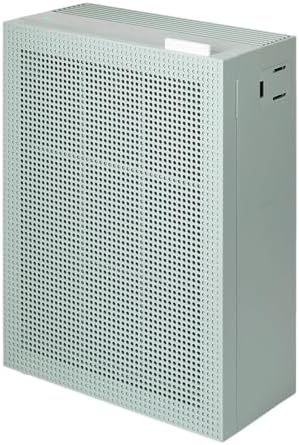
- [Coverage] Designed to clean spaces up to 518 sq. ft. in 30 minutes or 1,035 sq. ft. in 60 minutes.
- [HyperCaptive Filtration System] Combination of a HEPA Filter, Carbon Filter, Washable Filter effectively reduces 99.97%…
- [Cartridge Design] Some purifiers make a dusty mess when trying to replace or clean your filters. With Coway’s cartridge…
People use the words interchangeably, but they mean different things to a buyer’s inspector.
Removal is wiping mold off a surface. Mold remediation is removal plus containment, filtration, and verification that levels are safe — and that verification is the documentation buyers trust.
Different surfaces call for different methods. Mold in carpet usually means replacement, mold on concrete floors can often be scrubbed, and mold on wood framing and studs needs careful cleaning rather than demolition. For finished spaces, see removing basement mold the proven way, bathroom mold in grout and caulk, and how to remove mold from drywall so it stays gone.
⚠️ Warning: Never run your HVAC system if you suspect mold in the ducts — it spreads spores through every room in the house. Shut it off until a professional has assessed it.
How long mold remediation takes
Most sellers want a timeline they can build a listing around.
A small job runs one to three days; larger or whole-house projects take a week or more once repairs and re-testing are included. Build a buffer before your target list date.
✅ Pro Tip: Want this as a printable to-do list? Grab our free Pre-Listing Mold Remediation Checklist before you call a single contractor.
How much does mold remediation cost before selling?
Mold remediation costs $1,200 to $3,750 on average in 2026 — roughly $10 to $30 per square foot — though the scope of the problem swings the total widely:
| Scope | Typical 2026 cost |
|---|---|
| Small spot (under 10 sq ft) | $500–$1,500 |
| Single room | $1,500–$4,500 |
| Black mold (added premium) | +25–50% |
| HVAC / air ducts | $2,000–$10,000 |
| Whole-house | $10,000–$30,000 |
| Pre-listing inspection | $300–$650 |
Source: aggregated 2026 national mold remediation cost data.
Here is the seller math that cost guides miss. Spending a few thousand dollars to remediate usually costs far less than the price cut buyers demand for a disclosed, unaddressed mold problem.
Costs shift with where the mold lives. Compare figures in our room-by-room mold remediation cost breakdown, plus dedicated guides to attic mold removal costs and safe fixes and crawl space mold removal costs.
Why HVAC contamination costs the most
Duct mold is the priciest surprise because spores ride the airflow into every room.
That is why mold in your air ducts is treated as its own job and why a positive duct test pushes the bill toward the top of the range.
Will insurance cover it?
Sometimes — but not as often as sellers hope.
Homeowners policies may cover mold from a sudden, covered event like a burst pipe, while gradual leaks and flooding are usually excluded. Check the fine print in our guide to when homeowners insurance covers mold remediation.
Mold disclosure laws and your legal obligations
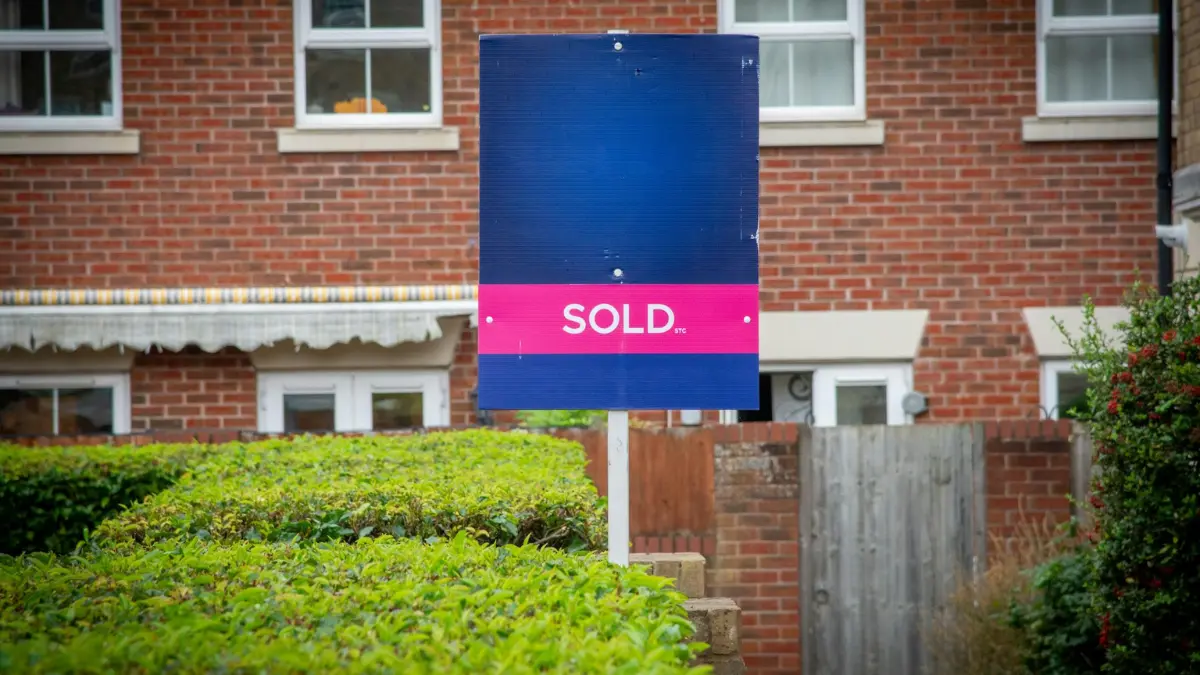
In nearly every state, you must disclose known mold and the moisture problems behind it on your seller’s disclosure statement — even if you already cleaned it up.
ℹ️ Disclaimer: This is general information, not legal advice. Disclosure rules vary by state, so confirm your obligations with a real estate attorney before listing.
Do you have to disclose mold when selling?
Disclosure is not optional, but remediation often is.
You generally must reveal what you know; hiding a known mold problem is treated like hiding any other defect and invites lawsuits. You usually are not required to physically remove it first.
FHA, VA loans, and visible mold
Your buyer’s financing can force your hand.
FHA and VA loans typically will not fund a home with visible mold, so if your buyer is financed, remediation may be mandatory to close. Cash buyers face no such rule.
Documentation that protects you
The right paperwork turns a red flag into a green one.
Keep your inspection report, the remediation invoice, and the certificate of clearance from post-remediation testing. Handing buyers proof builds trust instead of fear.
💡 Expert Note: Selling a tenant-occupied rental? Your duties differ — review landlord mold responsibility by state and your tenants’ rights when a landlord won’t fix mold before you list.
Mold’s health risks are exactly why buyers scrutinize it, especially for sensitive groups — including mold exposure during pregnancy and mold exposure symptoms in children by age.
DIY vs. hiring a pro, and how to choose a company
The size of the mold tells you whether this is a weekend job or a contractor’s call.
When DIY is okay (and when it isn’t)
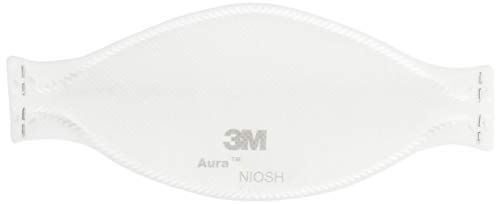
- NIOSH APPROVED: N95 for at least 95% filtration efficiency against certain non-oil based particles like dust and smoke.
- REDUCED EYEWEAR FOGGING: Designed to direct exhaled air away from the nose panel, helping reduce eyewear fogging
- COMFORTABLE: Braided headbands help keep respirator securely in place and minimize pulling of hair
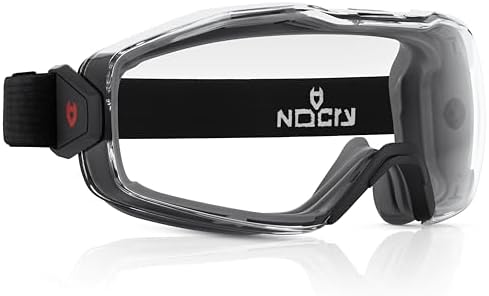
- SMOOTH FIT OVER YOUR PRESCRIPTION EYEGLASSES — Want to wear your safety goggles over eyeglasses? These safety goggles fi…
- CLEAR FIELD OF VIEW — Treated with our premium UltraShield coating, these goggles are 5x more fog-resistant and 2x more …
- SO COMFORTABLE YOU CAN WEAR THEM ALL DAY — In addition to being adjustable, the wide, soft headband and pivoting buckles…
Small, surface-level mold on hard materials is fair game for a careful homeowner.
The EPA’s mold cleanup guidance for homeowners draws the line at about 10 square feet — below that, DIY mold removal is reasonable; above it, call a pro. Our guide to when DIY mold removal is the right call goes deeper.
⚠️ Warning: Wear an N95 respirator, gloves, and eye protection, and never dry-brush mold — disturbing it sends spores airborne. Stop and hire a professional if the mold came from sewage or contaminated water.
✅ Pro Tip: A basic DIY kit covers most small jobs: an N95 respirator, a HEPA air scrubber, a moldicide spray, and a moisture meter to confirm the area stays dry afterward.
What to look for in a remediation company
The best protection is hiring someone whose work a buyer’s inspector will respect.
Look for IICRC certification to the S520 professional mold remediation standard, proof of licensing where your state requires it, and checkable references. Our guide to finding a mold remediation company you can trust covers vetting step by step.

Questions to ask before you hire
A few questions separate real pros from spray-and-pray operators.
Ask whether they perform containment, whether they provide post-remediation clearance testing, and whether they fix the moisture source or just the mold. Get every line itemized in writing.
Frequently asked questions about selling a home with mold
1. Do you have to disclose mold when selling a house?
Yes. In almost every state you must disclose known mold and the moisture issues that caused it on your seller’s disclosure statement, even after remediation. Failing to disclose mold when selling a house is treated like hiding any defect and can trigger lawsuits, so transparency protects you.
2. Can you sell a house with mold?
Yes, you can sell a house with mold. Your options are to remediate before listing, disclose and sell as-is at a discount, or offer the buyer a credit at closing. Cash buyers accept mold readily, while most financed buyers expect it resolved before the deal closes.
3. Is mold remediation required before selling?
No law requires mold remediation before selling in most states — you must disclose it, not remove it. However, remediation often becomes practically necessary because FHA and VA lenders won’t fund homes with visible mold, and retail buyers frequently demand it before they will close.
4. Does mold lower a home’s value?
Yes, disclosed mold typically lowers a home’s value because buyers discount for both repair costs and uncertainty. An undocumented problem costs you more than a professionally remediated one with paperwork. Remediating before listing and providing clearance documentation usually removes the discount and keeps your sale price intact.
5. Will FHA or VA loans approve a house with mold?
Generally no. FHA and VA loans will not approve a house with visible mold because appraisers flag it as a health and safety issue. If your buyer is using either loan, you will likely need to complete mold remediation before the sale can close successfully.
6. What’s the difference between mold removal and remediation?
Mold removal means wiping or scrubbing visible growth off a surface. Mold remediation is the fuller process: containing the area, removing affected materials, HEPA filtration, antimicrobial treatment, and clearance testing to confirm safe spore levels. For a home sale, remediation matters because it produces the documentation buyers and lenders trust.
7. Do I need a mold inspection before listing?
A mold inspection before listing isn’t legally required, but it’s wise if you’ve had water damage, a musty smell, or visible spots. An inspection costs roughly $300 to $650 and gives you documentation, a clear scope, and the chance to fix problems before buyers find them.
8. How long does mold remediation take?
Mold remediation usually takes one to three days for a small, contained area. Larger jobs or whole-house contamination can run a week or more once you add repairs and post-remediation testing. Build a buffer into your timeline before your target listing date so the work doesn’t rush.
9. Does homeowners insurance cover mold remediation?
Sometimes. Homeowners insurance may cover mold remediation when it results from a sudden, covered event like a burst pipe or appliance overflow. Gradual leaks, poor maintenance, and flooding are usually excluded. Read your policy carefully and document the cause, since the source determines whether your claim is approved.
10. Can I do mold remediation myself before selling?
You can handle small mold yourself if it covers less than about 10 square feet of hard, non-porous surface. Beyond that, the EPA recommends a professional. For a sale specifically, a pro’s clearance documentation reassures buyers far more than DIY work, even when you’ve cleaned the area well.
11. What documentation should I keep after remediation?
Keep four things after remediation: the original mold inspection report, the remediation contractor’s itemized invoice, the certificate of clearance, and the post-remediation air-quality test results. This paper trail proves the problem was handled professionally and turns a buyer’s worry into confidence during negotiations and the final inspection.
12. Will a buyer’s inspector find mold I already cleaned up?
Possibly. A buyer’s inspector can detect lingering moisture, staining, or elevated spore levels even after surface cleaning, especially if the moisture source remains. This is why true remediation with clearance testing matters — it gives you proof the mold is gone, rather than a cosmetic fix that resurfaces later.
13. Is black mold a dealbreaker when selling?
Black mold isn’t an automatic dealbreaker, but it’s the most serious type and scares buyers and lenders. Stachybotrys signals chronic moisture and possible hidden damage, so financed sales almost always require professional remediation first. With documented cleanup and a fixed moisture source, you can still sell successfully.
14. Can I offer a buyer credit instead of remediating?
Yes. A buyer credit lets you disclose the mold, agree on a dollar amount at closing, and let the buyer handle remediation themselves. It keeps the deal moving without delaying your timeline, though financed buyers may still need the mold resolved before their lender will approve the loan.
The bottom line on mold remediation before you sell
Mold doesn’t have to derail your sale — it just demands a decision.
Match the path to your situation: remediate when the fix is small next to your price, sell as-is or credit when investors are your market, and disclose either way. Documented remediation usually beats an as-is discount, both in dollars and in buyer trust.
Your next step is simple. Book a mold inspection, gather two or three quotes, and you will know exactly which path fits your home.
ℹ️ Disclaimer: When in doubt, get a professional mold inspection and talk to your agent or a real estate attorney about your state’s specific disclosure rules.
Related Articles
 Mold Remediation
Found Mold in Carpet? Here’s Exactly What to Do First
May 25, 2026 Mold Remediation
Your Real Mold Remediation Cost Room by Room
May 5, 2026 Mold Remediation
If You’ve Spotted Garage Mold, Here’s Your Fix
June 16, 2026 Mold Remediation
Bathroom Mold Removal: Grout, Caulk, and Walls Fixed
May 13, 2026 Mold Remediation
Here’s How Post Mold Remediation Testing Confirms It Worked
June 3, 2026 Mold Remediation
The Mold Removal Safety Gear That Keeps You Protected
June 5, 2026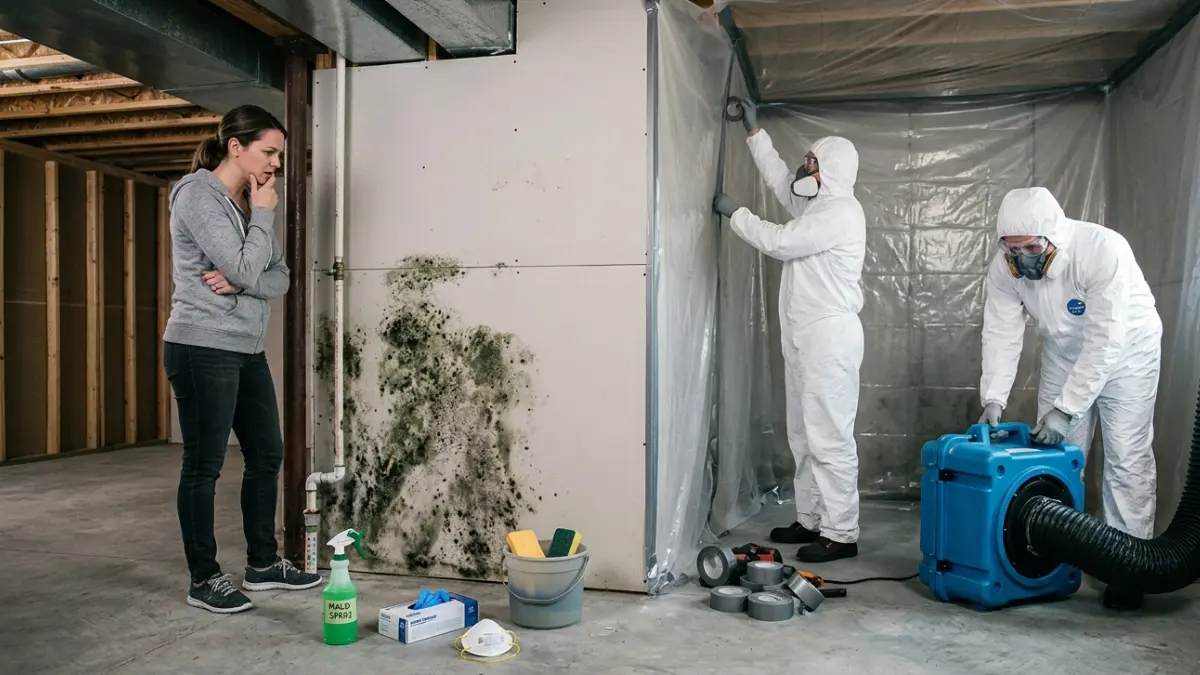 Mold Remediation
What DIY Mold Removal Really Costs—and When to Call a Pro
June 18, 2026 Mold Remediation
Crawl Space Mold Removal Costs and Safe Next Steps
May 18, 2026 Mold Remediation