Keep Your Vacation Home Mold-Free While You’re Away

Mold in a vacation home thrives in the weeks no one is watching—here’s the close-up routine, the 50% humidity target, and the spots to check first.
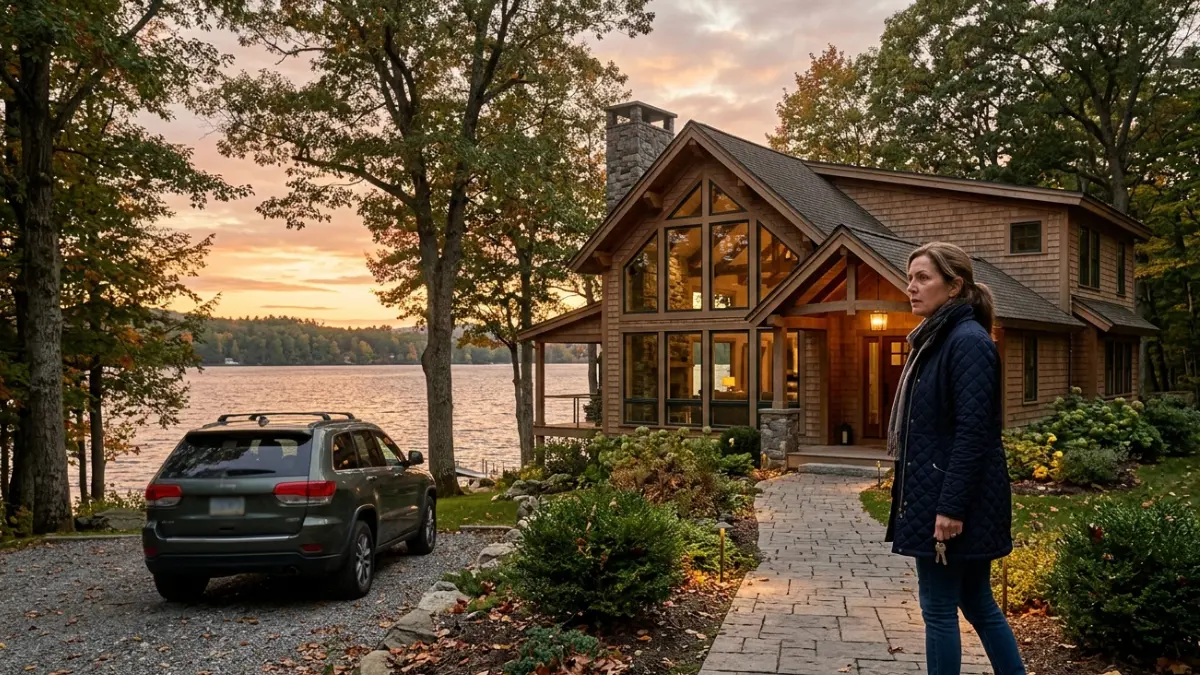
Table of Contents
You locked the door, drove away, and somewhere around the second hour the thought arrived: what if I come back to mold?
That worry is well-founded. Mold in a vacation home is one of the most common and expensive surprises a seasonal homeowner faces, and an empty house is uniquely defenseless against it.
Mold needs only two things — moisture and time — and a closed-up home quietly supplies both. Nobody is there to wipe a damp windowsill, run a bathroom fan, or notice a slow leak for weeks.
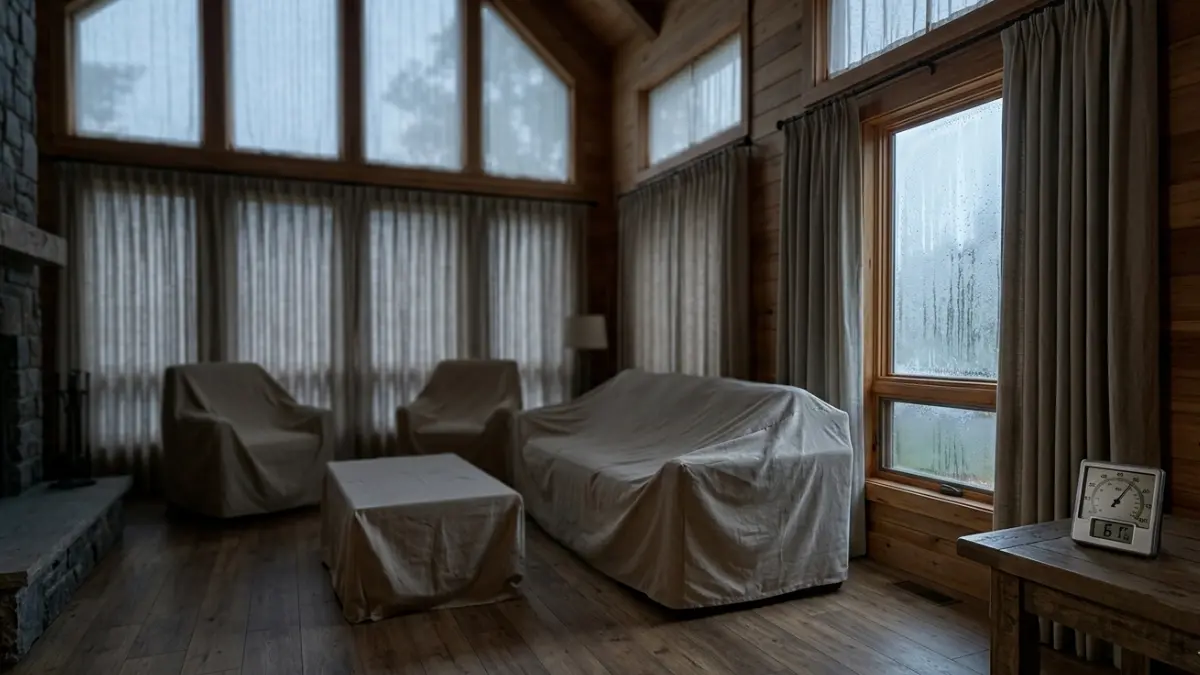
This guide gives you one humidity number to hold, a checklist to run before you leave, and a clear decision on whether to keep systems running. Everything here is built for someone protecting their own home, not a rental business.
Get these right and you walk back into the home you left, not a cleanup project. For whole-house strategy beyond the seasonal scenario, start with our room-by-room mold remediation diagnostic plan.
Why empty seasonal homes are mold magnets
An unoccupied home grows mold faster than a lived-in one for a simple reason: no one is there to interrupt it.
The Environmental Protection Agency recommends keeping indoor relative humidity below 60%, ideally between 30% and 50%, to prevent mold growth. Hold that range and mold spores, which are always present in the air, have nowhere to take root.
The moisture-plus-time equation
Mold doesn’t need a flood — it needs dampness and a day or two of neglect.
Once a surface stays wet, mold can begin growing within 24 to 48 hours, according to the EPA’s brief guide to mold, moisture, and your home. In an occupied home you’d notice and dry it; in a closed-up house that window passes unwatched.
The usual culprits in a vacant house are condensation, a small roof or plumbing leak, and humid outdoor air seeping in. Warm, moist air meeting a cool wall produces condensation, and that thin film of water is all a colony needs.
Worried it’s only surface staining? Learning how to tell mold from mildew and what to do next helps you judge whether you’re facing a quick wipe-down or a deeper problem.
Why the health stakes rise when no one is watching
Mold isn’t only a cosmetic or structural problem — it affects the people who eventually breathe the air.
The Centers for Disease Control and Prevention notes in its overview of mold and your health that exposure can cause stuffy noses, coughing, wheezing, and irritated eyes, and that people with asthma, allergies, or weakened immune systems may react more severely. That matters most for the family and guests a vacation home tends to host.
ℹ️ Disclaimer: This is general home-maintenance guidance, not medical advice. If anyone in your household develops symptoms you suspect are mold-related, consult a healthcare professional.
Parents should know that your child’s mold exposure symptoms explained by age can look different from an adult’s, and the same is true during pregnancy — here’s what mold exposure during pregnancy means for your baby. Because one strain draws outsized fear, it also helps to know the black mold symptoms you should never dismiss as allergies.
Your vacation home close-up checklist
The single most important habit is controlling moisture before you walk out the door.
To prevent mold in an unoccupied vacation home, run this sequence before you leave:
- Set the thermostat or humidistat to hold indoor humidity between 30% and 50%.
- Empty and restart your dehumidifier, ideally with a hose that drains continuously.
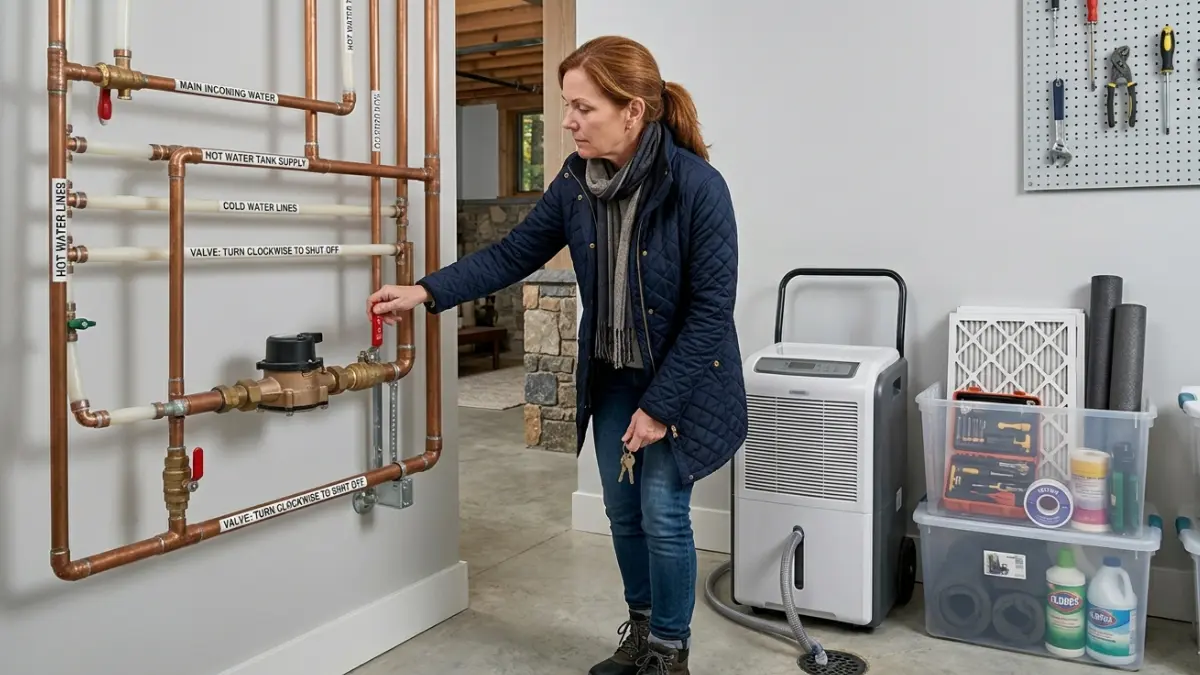
- Shut off the main water supply, and drain the lines if freezing is possible.
- Clear gutters and downspouts so rainwater drains well away from the foundation.
- Open interior doors, closet doors, and cabinets so air can circulate freely.
- Remove all perishable food, damp laundry, and standing water from sinks and tubs.
- Take out the trash and wipe down any visibly damp surfaces.
Then do one slow final walk-through, nose included.
Why shutting off the water matters most
Of every step above, closing the main valve protects you from the worst-case scenario.
A supply line that fails in an occupied home is a frustrating afternoon; the same failure in an empty house can run for weeks, soaking floors and walls until mold is unavoidable. If you ever return to standing water, knowing exactly what to do after flooding keeps a bad day from becoming a gutted room.
✅ Pro Tip: Label your main water shut-off valve now, before your next trip. Hunting for an unlabeled valve in a dark basement while you’re rushing is exactly how this step gets skipped.
The humidity tools that do the real work

- 【*REQUIRES Tapo Hub】To utilize Tapo motion sensor T310, a Tapo hub H100 (sold separately) and a secured 2.4 GHz Wi-Fi ne…
- 【Real-Time & Accurate Monitoring】Featuring the Swiss-made sensor, Tapo T310 provides high accuracy and real-time data up…
- 【Free Data Storage & Visual Graphics】Records temperature and humidity data and generates periodic data summaries. 2 Year…

- Wi-Fi Enabled: Effortlessly control your portable dehumidifier from anywhere with the Frigidaire app or connect it to yo…
- Indoor Air Quality Monitoring: Easily monitor your room’s air quality with the built-in sensor, which provides updates v…
- Convenient Drainage Options: Choose between two hassle-free water drainage methods – use the easy-carry water bucket for…
Holding the right humidity is what actually stops mold, and one appliance does most of that job.
A properly sized dehumidifier in the dampest part of the house — usually a basement or crawl space — keeps the whole structure drier. Understanding how your dehumidifier prevents mold without killing it helps you set it correctly rather than just plugging it in and hoping.
Should you leave the AC, a dehumidifier, or the power on?

- Breakthrough 1804 ft Connectivity: Engineered with advanced Sub-1G long-range wireless tech, our leak detector maintains…
- Multiple Reminder Methods: Our water leak sensor supports multiple remote alarm. It can instantly send SMS, APP, and Ema…
- Feature-Rich App: Receive instant push notifications. Use the “Find Device” feature to quickly trigger audible beeps to …
Whether to keep systems running trips up most second-home owners, and the answer depends on your climate.
In warm, humid regions, leaving an air conditioner or dehumidifier running is the most reliable defense — cooling an empty house is cheap insurance against an expensive problem. In freezing regions the priority flips: you run heat to keep pipes from bursting, not to fight humidity.
| Climate | Power on? | Recommended setup |
|---|---|---|
| Hot and humid | Yes | AC at ~78°F on “auto” fan, or dehumidifier at 45–50% |
| Cold winter | Yes | Heat no lower than 55°F; shut off and drain water |
| Mixed / coastal | Yes | Dehumidifier on a humidistat; monitor remotely |
| No power available | No | Drain water, seal up, add absorbers, frequent check-ins |
General guidance; adapt to your home and local conditions.
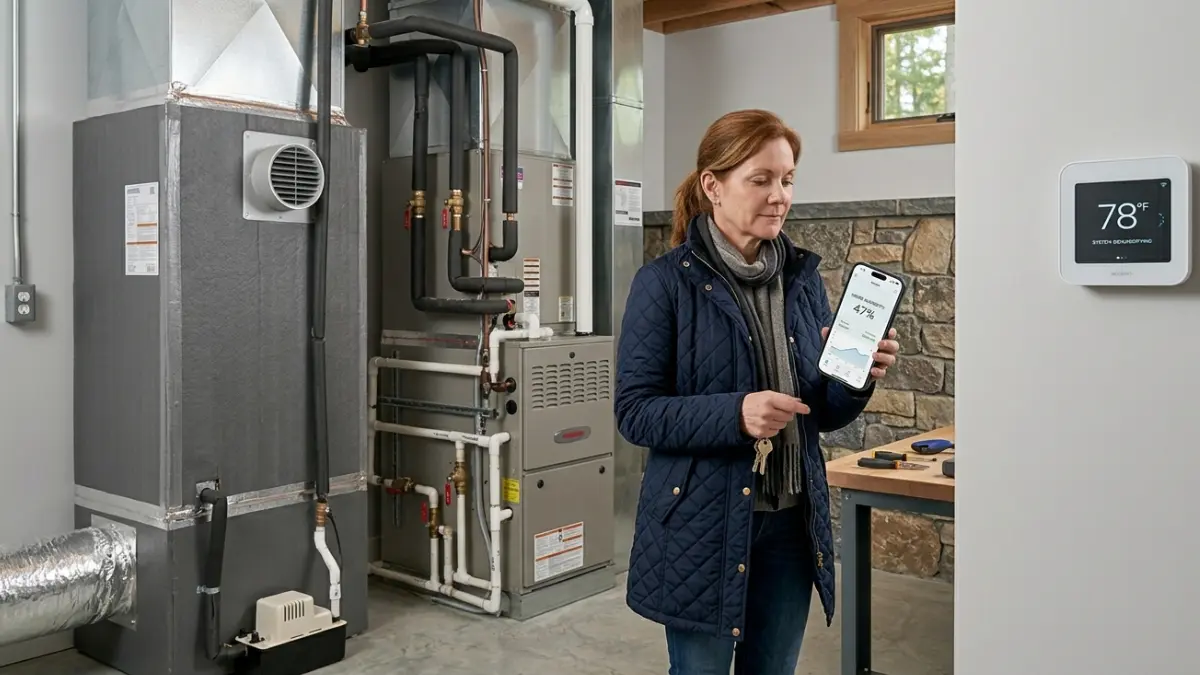
Set the fan to “auto,” not “on”
One thermostat setting quietly undoes the work of running your AC.
The constant “on” fan keeps circulating air even when the system isn’t cooling, which can return moisture to the house; the “auto” setting runs the fan only during cooling cycles. That small distinction is the difference between dehumidifying and just redistributing damp air.
💡 Expert Note: If your HVAC has ever smelled musty, deal with it before you leave — a closed-up house concentrates that odor fast. Here’s the proven path for treating mold in air ducts.
When a person beats any gadget
No device fully replaces a trusted neighbor with a key.
A check-in every two to four weeks catches leaks, pests, and humidity spikes while they’re still small. A smart humidity sensor is the remote-monitoring upgrade, texting you the moment levels climb — but a real person walking the house is still the gold standard.
Winterizing a cabin versus closing a summer home
Two very different scenarios hide inside the phrase “seasonal home,” and each needs its own routine.
A cold-climate cabin shut for winter and a warm-climate house left through a humid summer face nearly opposite risks. Match your close-up to your season and your climate zone, not to a generic list.
Closing a cold-climate cabin for winter
Winter’s danger isn’t humidity so much as freezing — and a frozen pipe becomes a flood becomes mold.
Set the heat low rather than off, shut off and drain the water supply, and ventilate the crawl space to release trapped condensation. Tuck moisture absorbers into closets and cabinets where air goes stale.
⚠️ Warning: Never switch the heat fully off in a freezing climate to save money. Burst pipes from frozen water cause some of the most destructive — and moldiest — damage a seasonal home can suffer.
Closing a warm-climate home for summer
Summer’s enemy is humidity, plain and simple.
Keep an air conditioner or dehumidifier holding 50% or below, leave interior doors open, and confirm gutters carry water away from the house. Coastal and lakefront homes start with higher ambient moisture, so these steps matter even more.
The spots mold finds first when you return
When you come back, inspect the places a closed-up home hides mold before it spreads.
Check these trouble spots in rough order of how often they hide a problem:
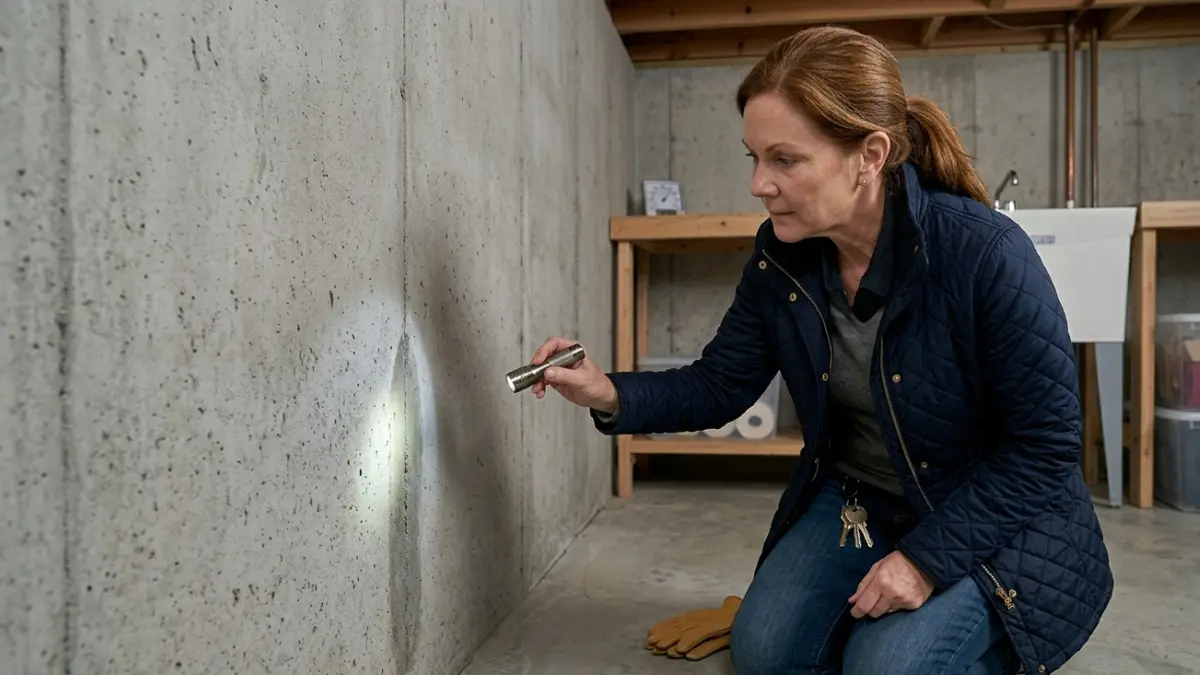
- Crawl space and basement: ground-level dampness rises here first — see crawl space mold removal costs and safe next steps and the proven method for treating basement mold.
- Attic: roof leaks and weak ventilation show up overhead — here’s your attic mold removal guide covering costs and safe fixes.
- Bathrooms: grout, caulk, and walls trap moisture for months — this covers bathroom mold removal for grout, caulk, and walls.
- Carpet and flooring: soft materials hold water you can’t see — learn whether to clean or replace mold in carpet and how to finally get rid of mold on concrete.
- Framing and walls: moisture wicks into structure — here’s the safe way to remove mold from wood and studs and how to remove mold from drywall without it coming back.
ℹ️ Renting it out? If guests stay in your seasonal home, mold becomes a shared legal responsibility — review landlord mold responsibility by state, and tenants should know their rights when a landlord won’t fix mold.
The gear that keeps an empty home dry — and when to call a pro
A short list of equipment does almost all the prevention work, and knowing its limits keeps you safe.
Here’s what actually earns its place, and what’s merely cheap insurance:
| Tool | Best for | Power needed |
|---|---|---|
| Dehumidifier (with humidistat) | Whole-home humidity control | Yes |
| Smart humidity sensor | Remote monitoring of a second home | Yes |
| Moisture absorbers (e.g. DampRid) | Closets, cabinets, stagnant pockets | No |
| Wi-Fi water-leak detector | Catching a burst pipe early | Yes |
If you come back to mold, here’s your path
Sometimes prevention falls short, and what you do next decides how far it spreads.
For a small, contained patch on a hard surface, a careful DIY cleanup is reasonable:
- Confirm it’s the right job for you with exactly when DIY mold removal is the right call.
- Protect yourself first using the mold removal safety gear that keeps you protected.
- Pick the correct cleaner with the right mold removal products for your surface, or learn how to use vinegar for mold removal without the guesswork.
- For darker growth, follow black mold removal steps for each surface type.
- Then keep it gone by understanding why mold keeps returning and how to prevent it.
⚠️ Warning: Never mix bleach with ammonia or other cleaners — the fumes are dangerous. Wear an N-95 respirator, gloves, and goggles, and follow the CDC’s mold cleanup safety guidance.
When it’s bigger than a weekend project
Past a certain point, mold stops being a chore and becomes a health-and-structure problem.
Call a professional when growth exceeds about 10 square feet, returns after cleaning, follows flooding, or appears in your HVAC. Start by finding a mold remediation company you can actually trust, then set price expectations with what a mold inspection really costs and mold remediation cost room by room.
Two more situations deserve a paper trail.
Your policy may help, so check when homeowners insurance covers mold remediation, and after the work confirm it succeeded with post-mold-remediation testing. If you’re getting ready to list the place, here’s your plan for mold remediation before selling.
Lock up with confidence
Everything here reduces to three moves you control completely.
Hold indoor humidity between 30% and 50%, run the close-up checklist before you leave, and let your climate decide whether systems stay on. Do that, and the empty months pass without leaving a mark.
Prevention costs a fraction of remediation, in both money and heartache. The hour you spend closing up well is the cheapest home repair you will ever make.
Walk back in to the home you left — fresh, dry, and exactly as you remember it.
Frequently asked questions
1. How do you prevent mold in a vacation home?
To prevent mold in a vacation home, control moisture before you leave. Keep indoor humidity between 30% and 50%, shut off the water supply, clear gutters, leave interior doors open for airflow, and run an air conditioner or dehumidifier in humid climates while the house sits empty.
2. What humidity level prevents mold growth?
The humidity level that prevents mold growth is below 60% relative humidity, ideally between 30% and 50%, according to the EPA. Mold spores are always in the air, but they cannot establish colonies when moisture stays in that range. An inexpensive hygrometer lets you confirm your numbers.
3. Should I leave the air conditioner on when I’m away?
In warm, humid climates, yes — leaving the air conditioner on is one of the most reliable ways to prevent mold while you’re away. Set it around 78°F on the “auto” fan setting so it dehumidifies. In freezing climates, prioritize heat to protect pipes instead.
4. Can mold grow in a house that is closed up?
Yes, mold can grow in a house that is closed up, and a sealed home is often more vulnerable. Without ventilation, humidity and condensation build on cool surfaces, and no one is present to dry small leaks. Stagnant, damp air is exactly the environment mold colonies prefer.
5. How long does it take for mold to grow in an empty house?
Mold can begin growing within 24 to 48 hours of a surface becoming wet, according to the EPA. In an empty house, that window passes unnoticed, so a single leak or condensation event can seed a colony. Controlling humidity below 50% removes the moisture mold needs.
6. Should I leave a dehumidifier running while away?
Leaving a dehumidifier running while away is smart in damp or humid regions, especially basements and crawl spaces. Choose a unit with a built-in humidistat and a hose that drains continuously, so the tank never overflows. Set it to hold 45% to 50% relative humidity.
7. How do I keep my cabin mold-free over the winter?
To keep a cabin mold-free over the winter, set the heat low rather than off to prevent frozen pipes, shut off and drain the water supply, and place moisture absorbers in closets and cabinets. Ventilate the crawl space, and arrange for someone to check in periodically.
8. Does DampRid actually prevent mold?
DampRid and similar calcium chloride absorbers reduce humidity in small, enclosed spaces like closets, but they cannot prevent mold across a whole house. Think of them as cheap insurance for stagnant pockets, not a replacement for an air conditioner or dehumidifier holding the home’s overall humidity down.
9. Should I shut off the water in my vacation home?
Yes, shutting off the water in your vacation home before you leave is one of the best mold-prevention steps. A burst pipe or slow supply-line leak in an empty house can flood rooms for weeks undetected. Close the main valve, and drain the lines in cold climates.
10. How do I get rid of a musty smell in a vacation home?
To get rid of a musty smell in a vacation home, find and fix the moisture source first, then ventilate by opening windows and running fans. Wipe hard surfaces, wash fabrics, and run a dehumidifier. A lingering musty odor usually signals hidden mold that needs locating and removing.
11. Is mold in a vacation home dangerous?
Mold in a vacation home can be dangerous to health, especially for people with asthma, allergies, or weakened immune systems, who may have stronger reactions. The CDC advises removing any visible mold regardless of type rather than testing it. Large infestations warrant professional remediation and protective equipment.
12. Do I need a smart humidity sensor for a second home?
A smart humidity sensor is worth it for a second home you cannot check often. It sends humidity and temperature readings to your phone and alerts you when levels climb, so you can act before mold starts. Pair it with a smart thermostat for remote climate control.
13. How often should someone check on an unoccupied home?
Someone should check on an unoccupied home at least every two to four weeks, and more often during humid or stormy seasons. A quick visit catches leaks, pests, and humidity spikes early. If no one is nearby, a smart humidity sensor provides remote monitoring between physical check-ins.
14. What temperature should I set the thermostat when away?
Set the thermostat around 78°F to 80°F in summer so the air conditioner still dehumidifies, and no lower than 55°F in winter to prevent frozen pipes. Avoid shutting the system off entirely in extreme climates. The goal is steady temperature that limits condensation and moisture buildup.
15. Can I prevent mold without leaving the power on?
You can reduce mold risk without power by shutting off and draining the water, sealing the home against humid air, clearing gutters, and placing moisture absorbers in enclosed spaces. Without a dehumidifier or air conditioner, though, prevention is weaker in humid climates, so schedule regular check-ins as backup.
16. How do I prepare a lake house for the off-season?
To prepare a lake house for the off-season, control humidity with a dehumidifier or absorbers, shut off and drain the water, clean gutters, and remove damp items and food. Lakefront homes face high ambient moisture, so ventilation and a held humidity target matter even more than usual.
17. When should I call a professional about mold?
Call a professional about mold when it covers more than about 10 square feet, returns after cleaning, follows flooding, or grows inside HVAC systems. Also call one if anyone has health symptoms. A certified remediation specialist contains the area and removes mold safely without spreading spores through the home.