What’s Bringing Your Mold Back After Remediation

Mold coming back after remediation usually traces to one missed leak—and under about 10 square feet, you can often fix it yourself.
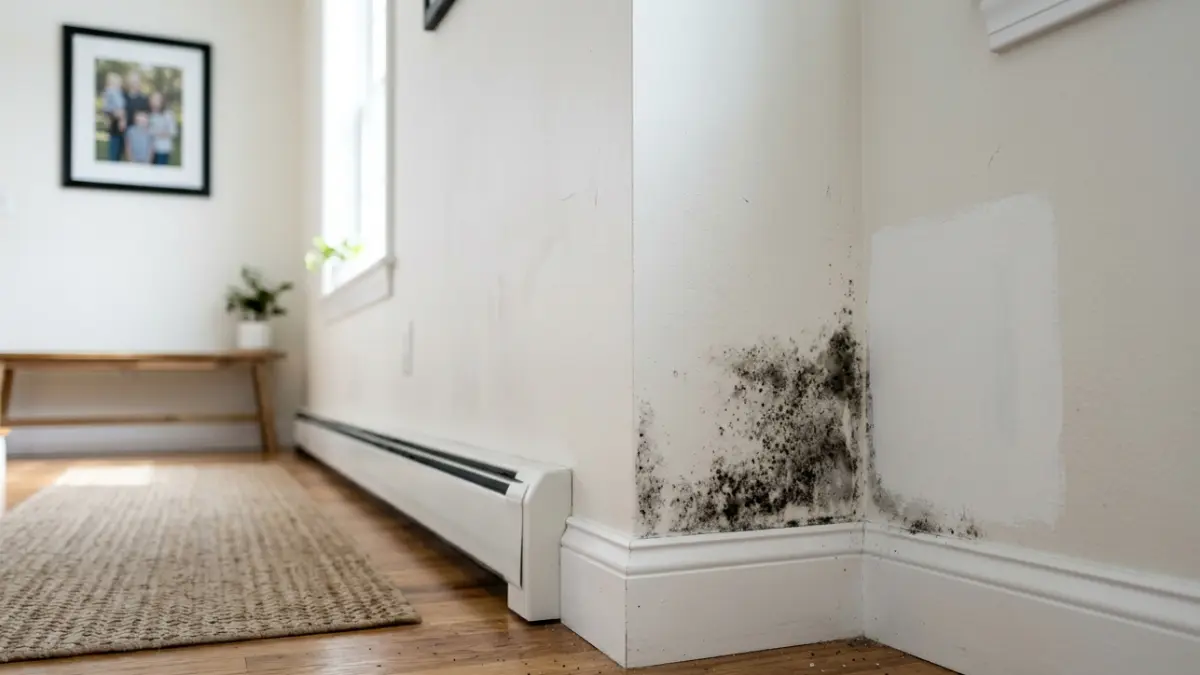
Table of Contents
You cleaned the mold — or paid someone to — and weeks later it’s back in the same spot.
That return isn’t bad luck, and it usually doesn’t mean you did everything wrong. Mold comes back for one core reason: the moisture that fed it never left.
Here’s the part most homeowners never hear. Remediation removes the mold you can see, not the microscopic mold spores floating through every room of your house.
Those spores stay harmless until they land on something damp. Give them moisture and the right surface, and growth restarts — sometimes within days.
This guide covers the six fixable reasons mold returns, how to stop it for good, what a repeat job really costs, and when recurring mold is worth worrying about for your health. If you want the full system behind every decision here, start with our step-by-step mold remediation diagnostic plan.
Can mold come back after remediation?
Yes — mold can return after remediation, but only when the underlying moisture source isn’t fixed. Remediation strips out visible growth; it doesn’t remove the airborne spores or the damp conditions that let them regrow.
💡 Expert Note: Spores germinate fast. On a consistently damp surface, new growth can take hold within 24 to 48 hours.
Why removal alone never lasts
Cleaning treats the symptom, not the cause. The visible patch is the result of a water problem, so removing it without fixing the moisture leaves the exact conditions that grew it.
The EPA is blunt about this. According to the EPA’s guide to mold, moisture, and your home, if you clean up the mold but don’t fix the water problem, the mold will most likely come back. Moisture control is the whole game.
The role mold spores always play
Spores aren’t an infestation — they’re normal. They drift through indoor and outdoor air constantly, which is why no remediation can ever leave a home truly spore-free.
That’s also why “we’ll kill every spore” promises are a red flag. The realistic goal is denying spores the moisture they need. If you’re not even sure you’re looking at mold, our guide on how to tell mold from mildew clears it up, and why your mold keeps returning and how to prevent it goes deeper on the cycle.
The 6 reasons your mold remediation failed
Mold keeps coming back for six fixable reasons:
- The moisture source was never found or fixed.
- Hidden mold behind walls, under floors, or in the HVAC system was missed.
- Porous materials that absorbed mold were cleaned instead of removed.
- No containment was used, so spores spread during cleanup.
- Indoor humidity stayed too high after the job.
- Surface bleaching was mistaken for real remediation.
Almost every repeat problem traces back to one of these.
Moisture source never fixed
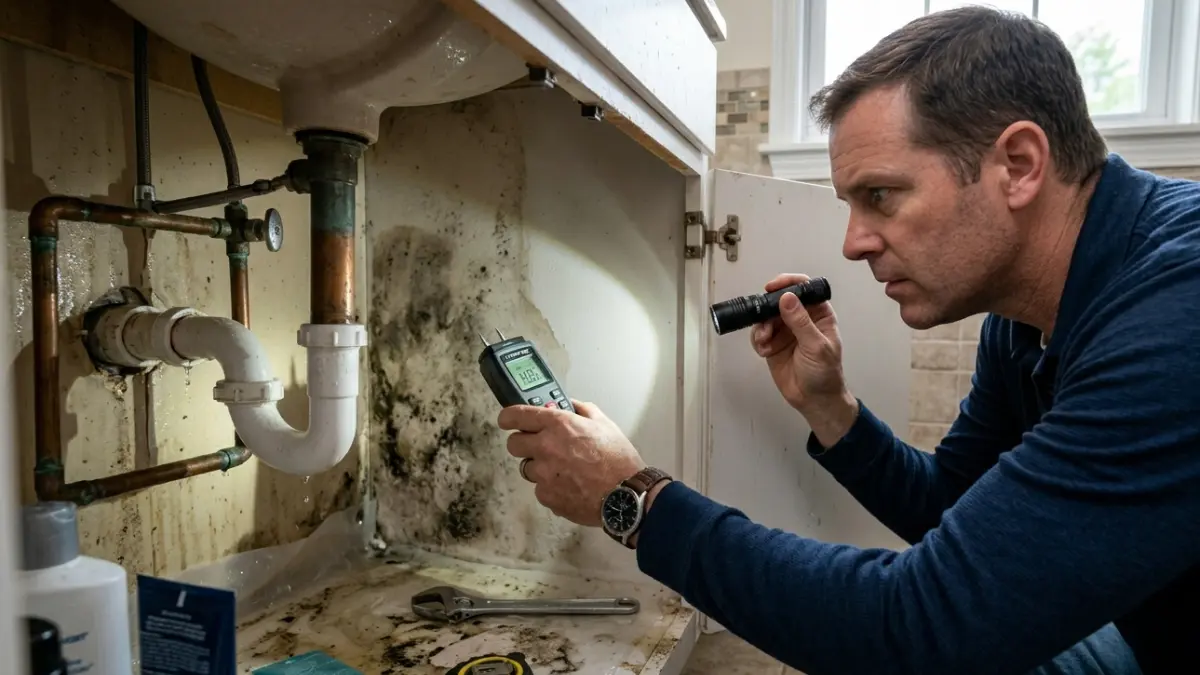
The clearest tell is mold returning in the exact same place. A roof leak, plumbing drip, or damp foundation is still feeding it — and after a flood, the right cleanup steps for water damage matter even more.
Hidden mold behind walls, floors, and HVAC
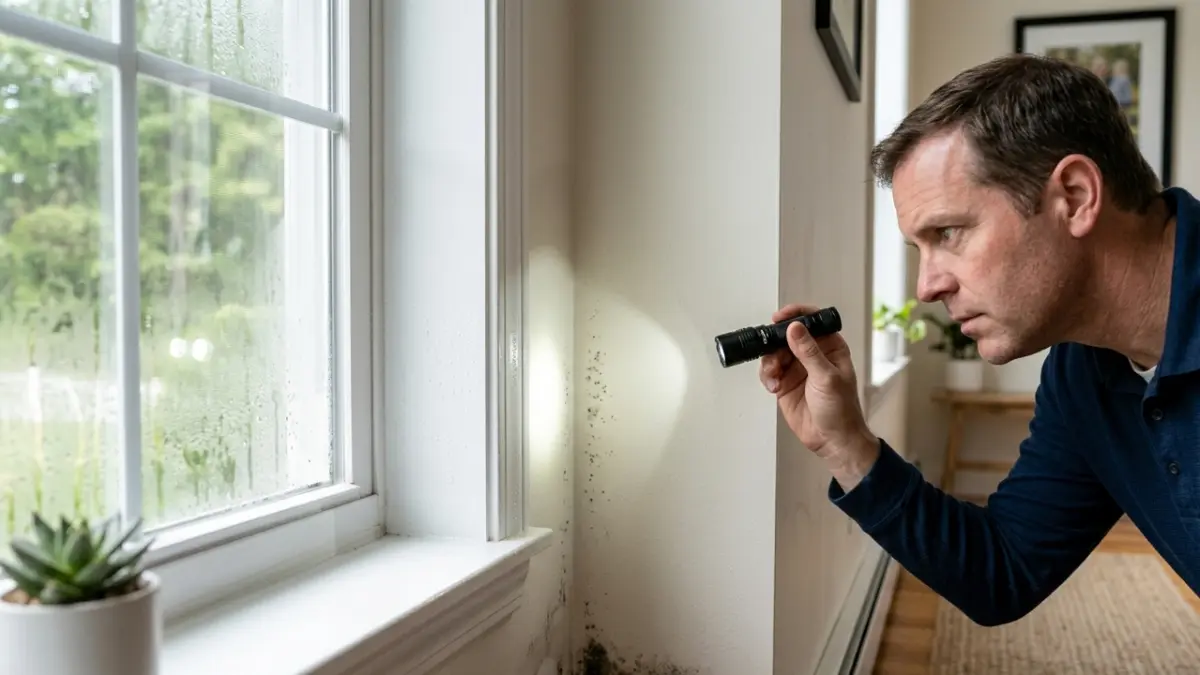
A musty smell with no visible mold points to growth you can’t see. It often hides inside wall cavities, under flooring, or in ductwork — and mold in your air ducts can reseed the whole house through the vents.
Porous materials that should have been removed
Mold roots into porous materials, so wiping the surface leaves the roots behind. Saturated drywall usually has to be removed, not just cleaned, and the same goes for mold in framing lumber and studs.
No containment during cleanup
Disturbing mold without sealing off the area sends spores everywhere. That’s why new growth often shows up in a different room — soft, absorbent surfaces like mold in carpet catch the drifting spores first.
Humidity left too high

When mold returns across whole surfaces instead of one spot, the air itself is too damp. A dehumidifier that lowers the humidity feeding mold fixes that without any chemicals at all.
The bleach-only mistake
Bleach lightens surface stains but doesn’t kill mold rooted in porous material. Matching the right mold removal product to each surface — or using vinegar correctly on hard surfaces — works far better.
⚠️ Warning: Never mix bleach with ammonia or other cleaners. The combination releases toxic fumes that are dangerous to breathe in an enclosed space.
Recognizing why your mold came back at a glance:
| What you see | Likely cause | The fix |
|---|---|---|
| Same spot, every time | Moisture source still active | Find and repair the water source first |
| Musty smell, no visible mold | Hidden mold in walls or ducts | Inspect cavities and HVAC; remove affected material |
| Returns right after wiping | Porous material kept, not removed | Replace saturated drywall, carpet, or wood |
| New growth in a nearby room | Spores spread during cleanup | Contain and HEPA-clean the work area |
| Spreads across whole surfaces | Indoor humidity too high | Hold humidity at 30–50% |
How to stop mold from coming back for good
Stopping mold for good comes down to four moves, done in order. Skip the first and the rest won’t hold.
Step 1: Find and fix the water source
Nothing else matters until the water stops. Trace the leak, condensation, or drainage issue first — persistent basement mold often points to a foundation or grading problem, and recurring mold on concrete floors usually signals moisture wicking up from below.
Step 2: Dry everything within 24 to 48 hours
Wet materials left longer than two days are prime mold territory. That 24-to-48-hour window is the stretch before dormant spores take hold on a damp surface — beat it, and you starve the problem.
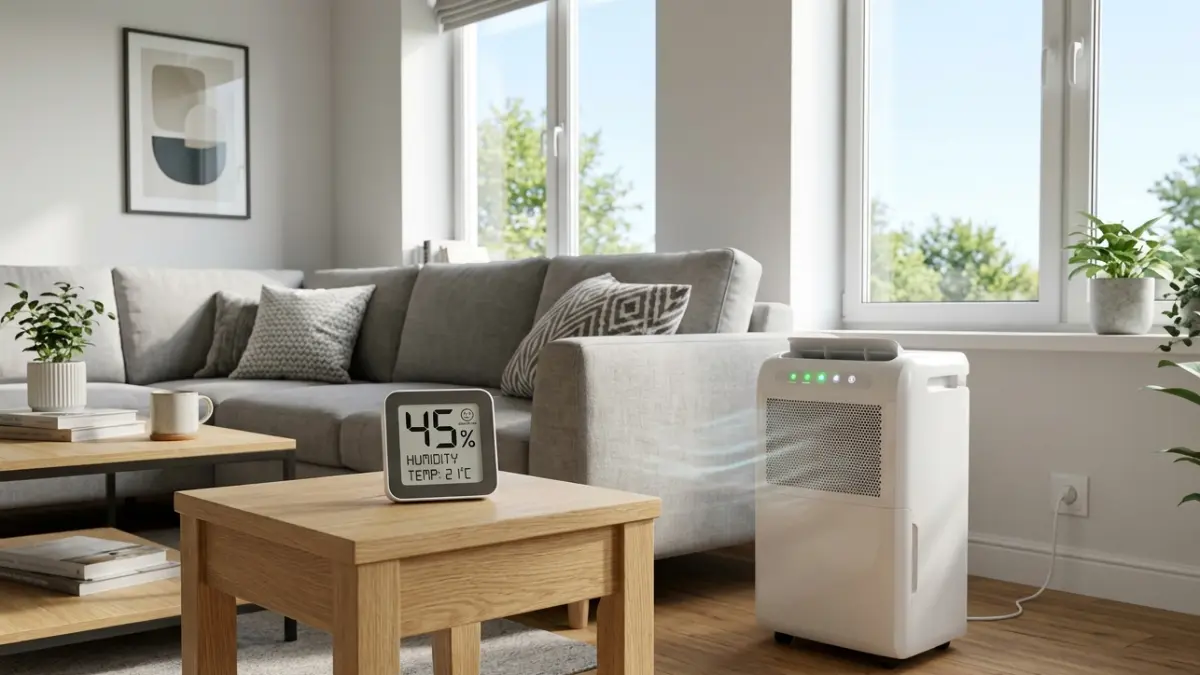
Step 3: Hold indoor humidity at 30 to 50 percent
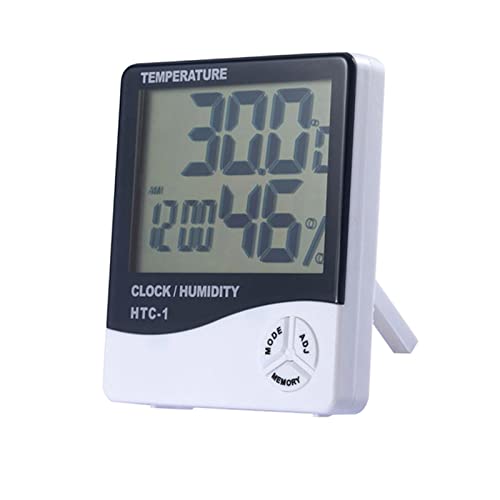
- 【Multi Function】Accurate hygrometer digital thermometer displays high and low temperature & humidity;At the same time, r…
- 【Easy to Use and Install】This indoor room thermometer features a kickstand and hanging hole, can be placed in vertical o…
- 【12/24 Hour, °F/°C Selector】12/24 hour display switching function; ℃ /℉ switching function. Measuring Temperature Range:…
Keep indoor relative humidity below 60 percent, ideally between 30 and 50 percent, to prevent mold from returning. Above that range, damp air alone can feed regrowth.
A cheap hygrometer tells you where you stand, and the EPA’s recommendations for controlling indoor moisture back up that range.
✅ Pro Tip: A $10–$15 digital hygrometer pays for itself fast. Put one in each damp-prone room and act the moment readings climb past 50 percent.
Step 4: Ventilate the high-risk rooms
Damp, still air is where mold restarts. Vent bathroom and kitchen exhaust fans to the outside — never into the attic — and stay on top of bathroom grout, caulk, and walls where steam collects every day.
Attics and crawl spaces need airflow too. Watch for attic mold from blocked soffit vents and crawl space dampness under the floor.
Garages and empty properties are easy to forget. Garage mold tends to come from humid storage, and keeping a vacation home mold-free means controlling humidity even while you’re away.
What recurring mold really costs — and when to call a pro
Paying for remediation twice is the real cost of skipping the moisture fix. Here’s what the numbers look like, and how to make sure you only pay once.
DIY versus professional: the 10-square-foot rule
Under about 10 square feet of mold, most homeowners can handle cleanup themselves; beyond that, or after heavy water damage, call a professional. That threshold comes straight from the EPA’s guidance on who should do mold cleanup.
Small jobs are mostly supplies — gloves, an N-95, and the right cleaner often run under $50 to $150. Knowing exactly when DIY mold removal is the right call keeps you from overpaying for work you could do yourself.
What drives the cost
Most professional mold remediation cost lands between about $1,100 and $3,750, with a national average near $2,400.
| Job size or location | Typical 2026 cost |
|---|---|
| Small spot (under 10 sq ft) | $500–$1,500 |
| Single room (e.g. a basement) | $1,500–$4,500 |
| HVAC / ductwork | $3,000–$10,000 |
| Whole house | $10,000–$30,000+ |
| Mold inspection (separate) | $250–$800 |
Source: 2026 national pricing data from Angi, HomeGuide, and LendEDU.
Location drives much of it — bathrooms are cheapest, ductwork and whole-house jobs the priciest. Our room-by-room cost breakdown shows where your situation likely lands, and a standalone mold inspection typically runs $250 to $800 before any work begins.
How to know it was done right
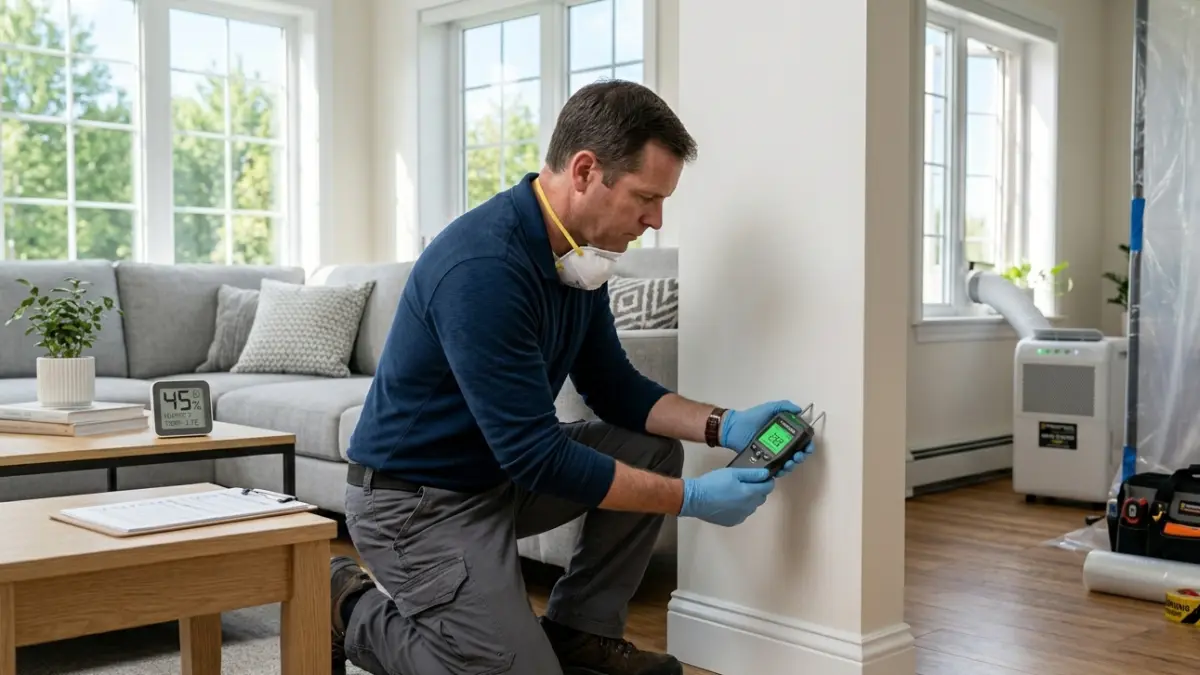
A real job fixes the water, removes ruined materials, and verifies the space is dry — not just wiped clean. Confirm results with post-remediation testing that proves it worked, which also gives you documentation if you’re handling mold remediation before selling your home.
Vetting the contractor protects you most. Our guide to finding a mold company you can actually trust walks through the questions that separate honest bids from upsells.
ℹ️ Disclaimer: Costs vary widely by region, mold type, and how much rebuilding is needed. Get two or three written quotes before committing.
Renters follow a different path. In many states your landlord is responsible for fixing mold, and you have options when a landlord won’t act.
When recurring mold becomes a health concern
Most healthy people won’t get seriously ill from household mold — but it isn’t nothing, and some groups need to be careful.
Real symptoms and who’s most at risk
For some people, mold triggers a stuffy nose, sore throat, coughing or wheezing, burning eyes, or a skin rash. People with asthma or a mold allergy can react more strongly, and those with weakened immune systems or chronic lung disease can develop lung infections.
The CDC’s overview of mold and your health lays these effects out clearly. Symptoms that ease when you leave the house are worth taking seriously, and black mold symptoms you shouldn’t dismiss as allergies deserve a closer look.
What “toxic black mold” claims get wrong
Mold color doesn’t determine how dangerous it is — black mold is mostly a marketing scare. Widely shared claims that ordinary household mold causes brain fog, memory loss, or whole-body illness aren’t well supported by evidence.
That doesn’t mean ignore it. Removing it properly still matters, and black mold removal varies by surface type.
When to call a doctor — or stop cleaning it yourself

- cloth
- Made in the USA and Imported
- NIOSH APPROVED for at least 95 percent filtration efficiency against certain non-oil based particles
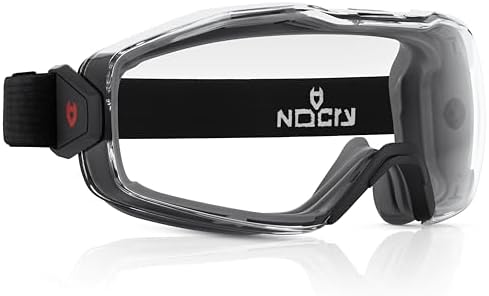
- SMOOTH FIT OVER YOUR PRESCRIPTION EYEGLASSES — Want to wear your safety goggles over eyeglasses? These safety goggles fi…
- CLEAR FIELD OF VIEW — Treated with our premium UltraShield coating, these goggles are 5x more fog-resistant and 2x more …
- SO COMFORTABLE YOU CAN WEAR THEM ALL DAY — In addition to being adjustable, the wide, soft headband and pivoting buckles…
See a doctor if symptoms persist, worsen, or include shortness of breath. Children and pregnant women warrant extra care — read up on mold exposure symptoms in children by age and what mold exposure during pregnancy means for your baby.
⚠️ Warning: If you have a weakened immune system or chronic lung disease, don’t clean up mold yourself or enter heavily affected areas. The CDC advises leaving that work to someone else.
Protect yourself on any DIY job. At minimum, wear the safety gear that keeps you protected during mold removal — an N-95 respirator, gloves, and goggles.
ℹ️ Disclaimer: This is general information, not medical advice. For symptoms you’re worried about, talk to a licensed healthcare provider.
The bottom line on keeping mold gone
Mold doesn’t return to punish you — it returns because moisture did. Fix the water, and the mold has nothing to grow on.
To stop mold from ever coming back:
- Find and repair the moisture source before you clean anything.
- Dry wet materials fully within 24 to 48 hours.
- Hold indoor humidity between 30 and 50 percent year-round.
- Remove porous materials that mold has rooted into.
Your next 3 moves
Start by pinpointing your cause with the six-reason breakdown above. Then measure your humidity today, fix the water source this week, and call a professional if growth covers more than about 10 square feet.
Frequently asked questions about recurring mold
1. Can mold come back after remediation?
Yes, mold can come back after remediation if the moisture source that caused it isn’t fixed. Remediation removes existing growth, but spores remain in the air everywhere. Once they meet dampness again, mold regrows — often in the same spot within weeks.
2. Why does mold keep coming back in the same spot?
Mold keeps coming back in the same spot because the water feeding that area is still there. A hidden leak, condensation, or poor drainage keeps the surface damp. Until you find and repair that specific moisture source, cleaning the spot only buys temporary time.
3. How soon can mold come back after remediation?
Mold can come back within days if moisture returns, since spores germinate in roughly 24 to 48 hours on a damp surface. With the water source unresolved, visible regrowth usually appears within two to four weeks. Fixing moisture is what prevents that.
4. Does professional mold remediation get rid of mold permanently?
Professional mold remediation isn’t permanent on its own — it removes current growth but can’t eliminate airborne spores. Permanence comes from fixing the moisture problem and controlling humidity afterward. A good contractor addresses the water source; the lasting result depends on ongoing moisture control.
5. Why did mold come back after I used bleach?
Mold came back after bleach because bleach lightens surface stains without killing mold rooted in porous materials like drywall or wood. It also leaves the moisture untouched. Bleach treats appearance, not the cause, so regrowth from the surviving roots is common.
6. How do I know if mold remediation was done correctly?
You know mold remediation was done correctly when the water source is fixed, ruined porous materials were removed rather than cleaned, the area was contained, and post-work testing confirms dryness. A musty smell or fast regrowth signals the job missed the underlying moisture.
7. Can mold grow back after it dries out?
Mold can grow back after it dries out because drying makes mold dormant, not dead. Dormant spores reactivate the moment moisture returns. That’s why a temporary dry spell isn’t a fix — only removing the growth and controlling humidity stops it for good.
8. Is it normal to still smell mold after remediation?
A lingering mold smell after remediation isn’t normal and usually means hidden growth remains — often inside walls, under floors, or in ductwork. Musty odors come from active mold releasing compounds. Persistent smell warrants inspecting concealed areas and rechecking the moisture source.
9. How long should mold remediation last?
Mold remediation should last indefinitely when the moisture source is fully fixed and humidity stays controlled. There’s no built-in expiration date. If mold returns within months, the issue isn’t the remediation’s lifespan — it’s an unaddressed leak, condensation, or humidity problem feeding new growth.
10. Can mold come back in a different room of the same house?
Yes, mold can come back in a different room, usually because spores spread during cleanup or a shared moisture problem like high humidity or an HVAC system affects multiple areas. Containment during remediation and whole-home humidity control prevent this kind of spread.
11. What humidity level stops mold from coming back?
Keeping indoor relative humidity below 60 percent, ideally between 30 and 50 percent, stops mold from coming back. Above that range, damp air alone can feed regrowth. A simple hygrometer lets you monitor levels and run a dehumidifier when readings climb too high.
12. Do I need to test for mold after remediation?
Testing for mold after remediation isn’t always required, but it helps verify a large or hidden job, or create records for real estate and insurance. For visible mold, the EPA notes testing is usually unnecessary — confirming the area is dry matters more than identifying the species.
13. Why does mold keep coming back in my bathroom?
Mold keeps coming back in the bathroom because daily moisture and poor ventilation create constant dampness. Steam settles into grout, caulk, and walls faster than they dry. Running an exhaust fan during and after showers, plus regular cleaning, breaks that cycle.
14. Can mold come back inside the walls?
Yes, mold can come back inside walls when moisture from a leak or condensation lingers in the cavity. Surface treatment doesn’t reach it, and a musty smell may be the only clue. Confirming the wall is dry and leak-free is the only reliable fix.
15. Is recurring mold dangerous to my health?
Recurring mold can affect health, mainly for people with asthma, allergies, or weakened immune systems, causing congestion, coughing, or irritated eyes and skin. Most healthy people have mild symptoms or none. Claims of severe whole-body illness from ordinary household mold aren’t well supported by evidence.
16. Should I get a refund if mold came back after remediation?
Whether you get a refund if mold came back depends on your contract and warranty — many reputable companies guarantee their work for a set period. Document the regrowth, contact the contractor promptly, and check whether your homeowners insurance covers the mold remediation.
17. How do I stop mold from ever coming back?
To stop mold from ever coming back, fix the moisture source first, dry wet materials within 24 to 48 hours, hold humidity at 30 to 50 percent, and remove porous materials mold has rooted into. Moisture control is the single deciding factor in whether it returns.