Found Mold After Flooding? Here’s Exactly What to Do Now

Mold after flooding starts in as little as 24 hours. Floodwater is Category 3 black water, so most soaked drywall and carpet must be torn out, not cleaned.
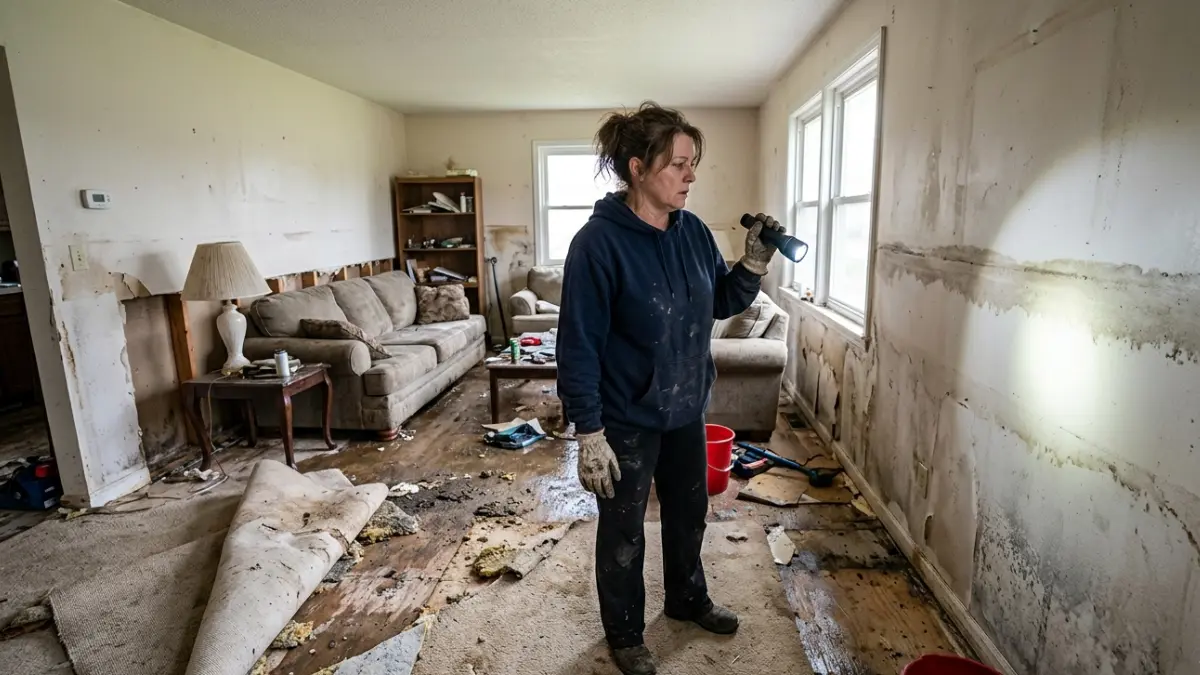
Table of Contents
The water is gone, but the smell tells you the problem isn’t over.
That musty, earthy odor is a sign that mold spores have already settled into wet drywall, carpet, and the wood framing behind your walls. After a flood, the clock starts immediately.
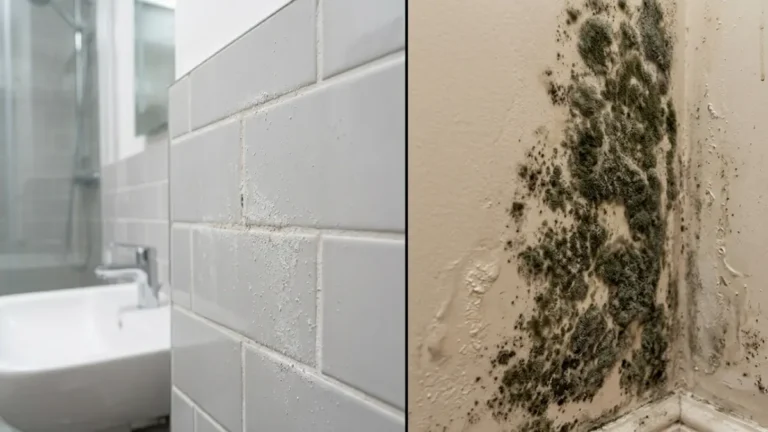
Mold after flooding is a different animal from the patch you scrub off a shower corner. Floodwater carries contamination that changes what you can clean and what has to be torn out and bagged.
You don’t have to sort this out alone or all at once. This guide gives you the exact order of operations, and our complete mold remediation guidance covers the wider picture when you’re ready.
Here’s what you’ll get: what to save, what to discard, how to dry your home fast, and the clear line between a job you can handle and one that needs a professional. Move quickly, work safely, and you can come through this with your home and your health intact.
Why flood mold is different — and how fast it spreads

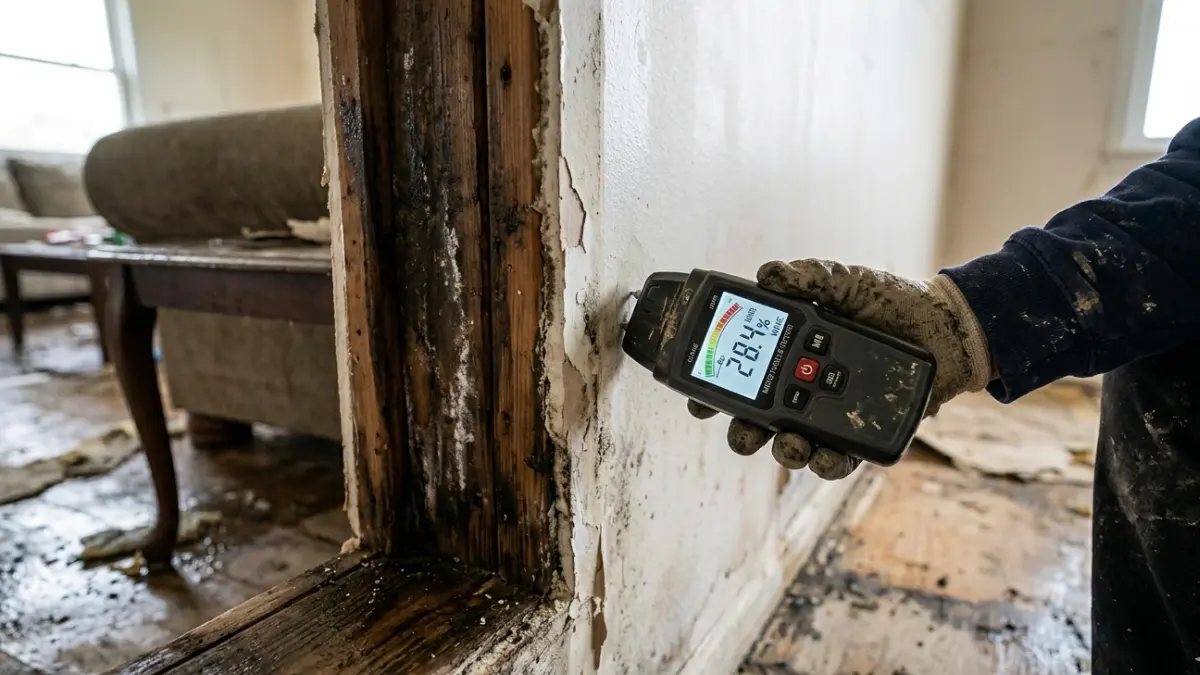
- HUMIDITY SENSOR: Our handy meter tool can quickly determine what level of remediation is needed to keep your family safe…
- WATER LEAK DETECTOR: Finding the moisture content in your wood or drywall is the first step in early prevention. Continu…
- MOISTURE READER: The mold test features large 0.3″ high digits in a backlit LCD for quick and easy detecting. Our mildew…
Floodwater isn’t clean water, and that one fact changes everything.
How long until mold grows after a flood?
Mold can begin growing within 24 to 48 hours of a flood, whenever materials stay damp and temperatures sit between 60 and 80°F — the same drying window the EPA’s guidance on cleaning up mold in your home emphasizes. The longer water lingers, the deeper spores push into porous surfaces.
A wall that looks dry on the outside can stay soaked inside for days. That’s why telling mold from mildew matters less here than moving fast.
What Category 3 (black) water means for your home
Category 3 water — “black water” — is grossly contaminated with bacteria, sewage, and chemicals. Under restoration-industry standards, the porous materials it touches must be removed, not just wiped down.
Most soaked drywall, carpet, and insulation can’t be saved, no matter how much bleach you own. If you see dark, spreading patches, learn the black mold symptoms worth taking seriously and how black mold removal differs by surface.
💡 Expert Note: A stud can feel dry to the touch while still holding high moisture inside for a week or more. Use a moisture meter, not your hand, to confirm a wall cavity is truly dry.
Mold after flooding: your step-by-step response
Work the problem in order, because skipping ahead is how hidden moisture gets missed.
- Make the area safe — cut the power and put on protective gear.
- Dry it out fast — remove standing water and run a dehumidifier.
- Remove what can’t be saved — bag contaminated porous materials.
- Clean and disinfect the hard surfaces that remain.
Step 1: Make the area safe before you touch anything
Never wade into standing water until the power to that area is shut off. Floodwater can hide sharp debris and carry an electrical charge.
⚠️ Warning: Put on an N-95 respirator, goggles, and waterproof gloves before disturbing mold. Disturbed spores go airborne quickly and are easy to breathe in.
Step 2: Dry it out fast
Pull standing water out with a wet/dry vacuum or pump, then keep air moving. Run fans and a dehumidifier that pulls moisture from the air until materials read dry — ideally within that first 48 hours.

- ❤【LARGER CAPACITY】Stanley SL18116P Wet / Dry Vacuum has a larger capacity over 22 L, makes small clean-up jobs a breeze …
- ❤【VERSATILE & POWERFUL】Thanks to the 4 peak HP motor, this vac offers powerful enough suction needed to almost any clean…
- ❤【3 in 1 FUNCTION】With this versatile vac you can vacuum both wet liquid spills and dry debris, dust, saw, dirt or blow …
Step 3: Remove what can’t be saved
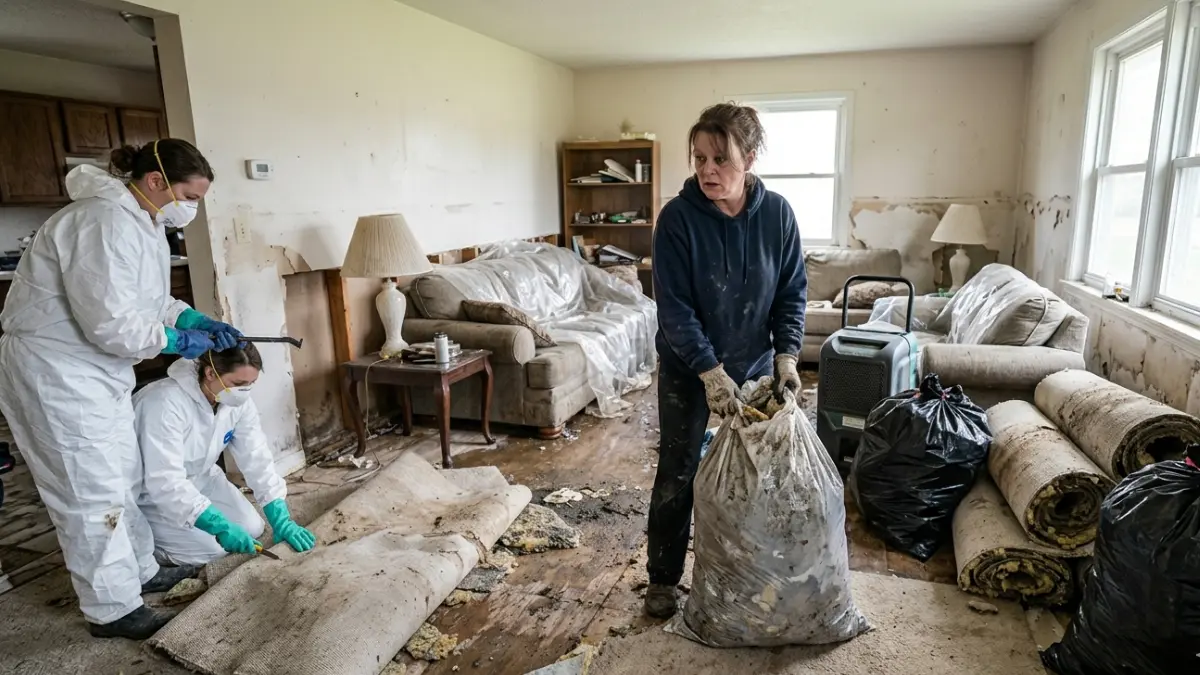
Porous materials soaked by floodwater usually have to go. Per FEMA and the EPA’s disaster cleanup guidance, items not dried within 48 hours should be discarded.
| Throw out (porous) | Clean and keep (non-porous) |
|---|---|
| Drywall below the waterline | Glass, metal, hard plastic |
| Carpet and padding | Tile and sealed concrete |
| Insulation and ceiling tiles | Sealed hardwood and trim |
Bag wet drywall and soaked carpet and padding — both are usually unsalvageable. Damp wood studs that won’t dry have to come out too, while hard concrete floors can usually be cleaned in place.
Step 4: Clean and disinfect what can
Wash non-porous surfaces with soap and water, then disinfect. Match the cleaner to the surface with our guide to mold removal products, and for light mold elsewhere, vinegar can handle the job.
Should you DIY or call a professional?
The honest answer comes down to three things: how much area is affected, how contaminated the water was, and who lives in your home.
The size rule: when DIY is reasonable
If the moldy area is under about 10 square feet — roughly a 3-by-3-foot patch — you can usually handle it yourself, according to the EPA’s mold cleanup recommendations. Small, accessible spots on cleanable surfaces are fair game for a careful DIY approach.
But floodwater raises the bar. Because it’s black water, even a modest area across porous walls and floors often calls for a pro.
The red flags that mean stop and call a pro
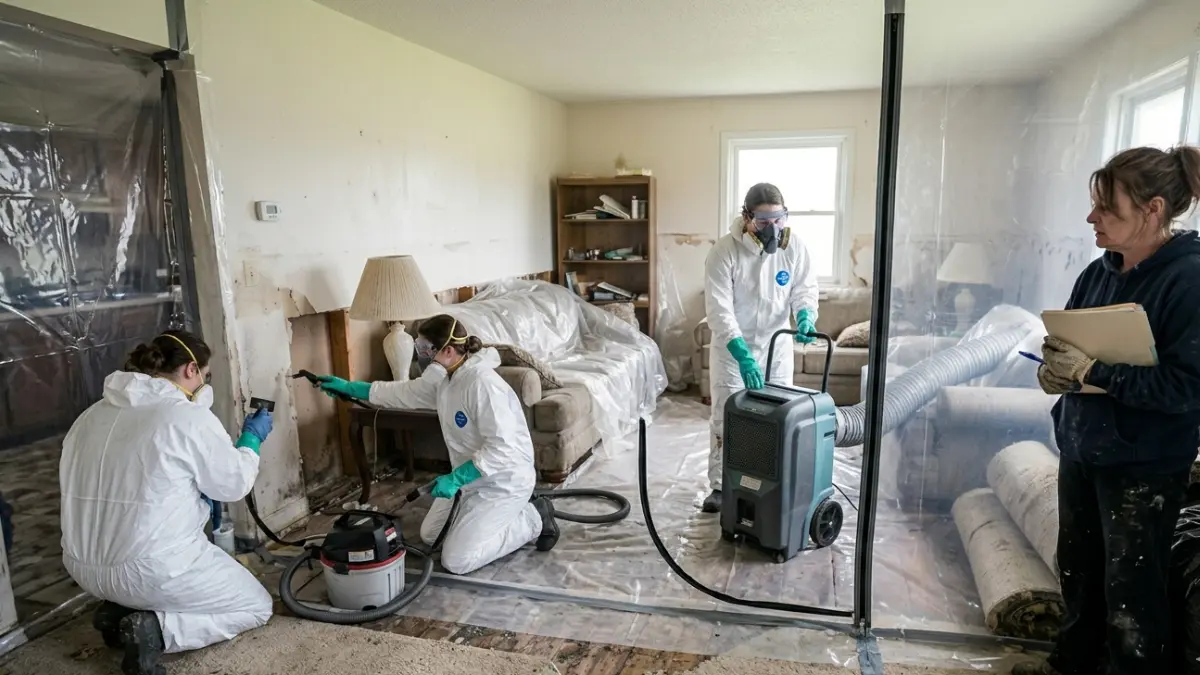
Some situations aren’t worth the risk. Hire a qualified remediation company if any of these apply.
- The affected area is larger than about 10 square feet of porous material
- Floodwater reached your HVAC system or ductwork
- Sewage or known contaminants were in the water
- Anyone in the home is pregnant, elderly, or immunocompromised
ℹ️ Disclaimer: This guide is general information, not a substitute for a professional assessment. If anyone in your home has asthma, allergies, or a weakened immune system, bring in a pro before starting.
What flood mold remediation costs — and what insurance covers
Two questions hit at once after a flood: what will this cost, and will my policy pay for it?
Typical remediation cost ranges
Costs swing widely based on the affected area, the water category, and how much material has to be demolished. Floodwater jobs sit at the high end because porous materials must be torn out and hauled away.
| Water type | Typical remediation range |
|---|---|
| Clean water (Cat 1) | $1,300–$3,000 |
| Gray water (Cat 2) | $2,500–$5,000 |
| Black water / flood (Cat 3) | $4,000–$8,000+ |
Source: Industry restoration cost data, 2024–2025.
For a closer estimate, our breakdown of mold remediation cost room by room helps you scope your space. A separate mold inspection carries its own cost if you want testing first.
Will homeowners insurance pay for it?
This is where flood victims get blindsided. Standard homeowners policies often cover sudden water damage but exclude flood damage from rising water.
That gap usually requires separate flood insurance. Learn when homeowners insurance covers mold remediation, and if you’re selling soon, review your plan for mold remediation before listing.
✅ Pro Tip: Photograph everything before you remove a single item. Documentation is what turns a denied claim into an approved one.
Health risks and how to protect yourself
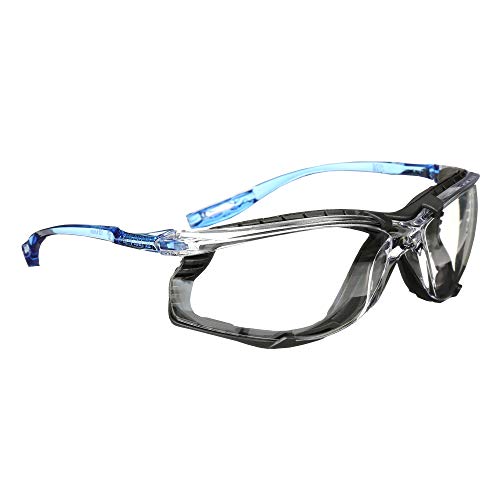
- DUST DEFENSE: Foam removable gasket helps limit eye exposure to nuisance dust and other particles while providing additi…
- WRAP AROUND DESIGN provides extended eye protection and unobstructed viewing
- ANTI-FOG LENS COATING and removable foam-lined gasket with airflow vents make this protective eyewear ideal for humid en…
Mold isn’t only a property problem — it’s a health one, especially for the most vulnerable people in your household.
Who’s most at risk from mold exposure
Mold exposure can trigger asthma attacks, wheezing, sore throat, and itchy eyes and skin. The EPA advises that children and anyone with asthma or a weakened immune system stay out of moldy spaces entirely.
Two groups need extra care. Read up on mold exposure symptoms in children by age and what mold exposure during pregnancy can mean.
The protective gear you actually need
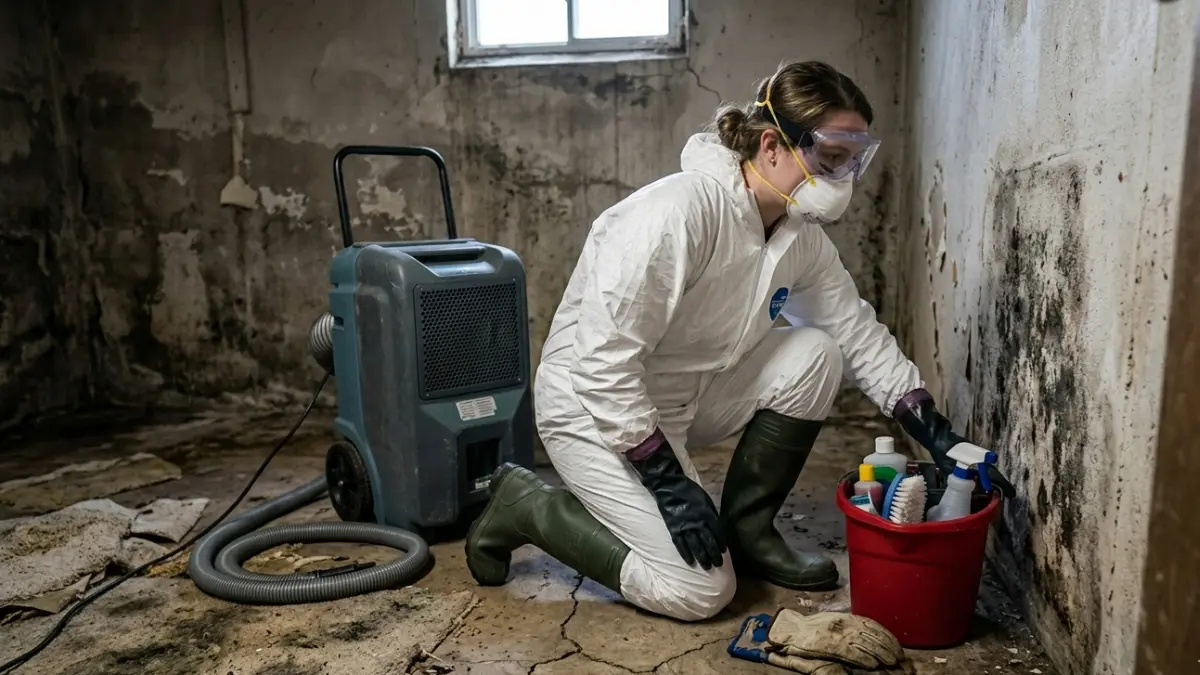
Don’t disturb mold without the right gear on. At a minimum, the CDC’s mold cleanup supply and safety list calls for an N-95 respirator, goggles, and protective gloves.
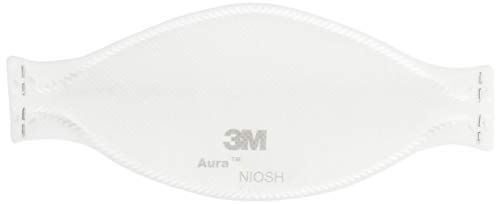
- NIOSH APPROVED: N95 for at least 95% filtration efficiency against certain non-oil based particles like dust and smoke.
- REDUCED EYEWEAR FOGGING: Designed to direct exhaled air away from the nose panel, helping reduce eyewear fogging
- COMFORTABLE: Braided headbands help keep respirator securely in place and minimize pulling of hair
Build out a full kit with our mold removal safety gear checklist:
- An N-95 respirator (or better) that seals to your face
- Waterproof gloves and rubber boots
- Goggles without vent holes
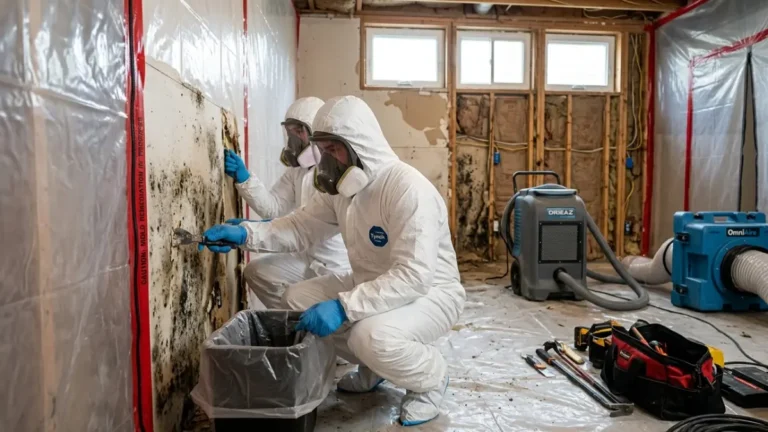
- Disposable coveralls for larger jobs
⚠️ Warning: If you have a respiratory condition or are pregnant, do not do this work yourself. The combination of mold and cleaning chemicals can be genuinely dangerous.
Recovery, fast — when minutes matter
The two ideas that matter most: move within the first 48 hours, and treat floodwater as the contaminated black water it is.
Dry everything fast, discard the porous materials that can’t be cleaned, and disinfect what remains. Match the size and severity to the right responder — a small, clean patch can be yours, while widespread black-water damage belongs to a pro.
Your health comes first at every step. If anyone in your home is vulnerable, or the damage is extensive, make the call to a professional without second-guessing it.
For the full process from inspection to rebuild, lean on our step-by-step mold remediation plan as your next read.
Mold after flooding: frequently asked questions
Quick, straight answers to the questions homeowners ask most about mold after flooding.
1. How long until mold grows after a flood?
Mold can start growing 24 to 48 hours after a flood whenever surfaces stay damp and warm, which is exactly why fast drying matters so much. Remove standing water and run dehumidifiers right away to slow growth before it spreads deep into walls and flooring.
2. Is mold after flooding dangerous to your health?
Yes, mold after flooding can be dangerous, especially for children, older adults, and people with asthma or weakened immune systems, who may develop coughing, wheezing, congestion, or skin and eye irritation. It is riskier than ordinary household mold because the floodwater itself is contaminated.
3. Can I remove flood mold myself or do I need a professional?
You can remove flood mold yourself if the area is under about 10 square feet, the surfaces are cleanable, and no one in the home is high-risk. Larger areas, contaminated black water, or HVAC involvement call for a professional, so have an expert assess it whenever you’re unsure.
4. What should be thrown away after a flood?
Throw away porous items soaked by floodwater that can’t be dried within 48 hours, including drywall, carpet and padding, insulation, ceiling tiles, mattresses, and upholstered furniture. Non-porous items like glass, metal, tile, and sealed surfaces can usually be cleaned, disinfected, and kept instead.
5. Does bleach kill mold on drywall?
No, bleach does not reliably kill mold on drywall, because it can’t penetrate porous materials and only treats the surface while the roots survive inside. Soaked, moldy drywall after a flood should be removed and replaced, with disinfectants saved for hard, non-porous surfaces.
6. How much does flood mold remediation cost?
Flood mold remediation typically costs $4,000 to $8,000 or more, higher than clean-water jobs because contaminated porous materials must be removed and replaced. The final price depends on the affected area, contamination level, and structural repairs, so get multiple written estimates before hiring anyone.
7. Does homeowners insurance cover mold after flooding?
Standard homeowners insurance often covers mold from sudden water damage but usually excludes flooding from rising water, which typically needs separate flood insurance. Read your policy carefully, document everything with photos, and file your claim promptly to improve your odds of coverage.
8. What actually kills mold after a flood?
After a flood, removing contaminated materials and drying the space is what truly stops mold — not any single cleaner. For hard surfaces that remain, soap and water followed by a disinfectant works well, and EPA-registered antimicrobial products help on non-porous surfaces once everything is dry.
9. How do you dry out a house after flooding?
Dry out a house after flooding by removing standing water with a pump or wet/dry vacuum, then running fans, air movers, and dehumidifiers continuously while opening windows when outdoor humidity is low. Keep drying until moisture meters confirm materials are dry, ideally within the first 48 hours.
10. What PPE do I need to clean mold safely?
To clean mold safely, wear an N-95 respirator at minimum, plus goggles without vent holes, waterproof gloves, rubber boots, and disposable coveralls for larger jobs. Wash your hands and change clothes afterward, and skip the work entirely if you have respiratory problems.
11. Can mold come back after flood cleanup?
Yes, mold can come back after flood cleanup if any moisture or hidden growth remains, so fix the water source, dry thoroughly, and keep humidity below 50 percent. Our guide on why mold keeps returning and how to prevent it covers the steps that keep it gone for good.
12. How do I know if mold is hiding behind my walls?
You may have hidden mold behind walls if you notice a persistent musty smell, discoloration bleeding through paint, warped drywall, or unexplained allergy symptoms, and a moisture meter can reveal damp wall cavities. When the signs point inside the wall, a professional inspection confirms how far it has spread.
13. Is it safe to stay in a house with mold after a flood?
Staying in a house with mold after a flood is risky, particularly for vulnerable people, though small contained mold may be manageable. Widespread growth or strong musty odors warrant staying elsewhere until cleanup is done, so treat headaches or breathing trouble as clear signals to leave.
14. What is Category 3 (black) water?
Category 3 water, or black water, is grossly contaminated water containing bacteria, sewage, or chemicals, and floodwater, storm surge, and sewage backups all qualify. Because it’s hazardous, the porous materials it touches must be removed rather than cleaned, and protective gear is required for any contact.
15. How long does flood mold remediation take?
Flood mold remediation usually takes three to seven days, covering demolition, decontamination, and structural drying, with drying alone often needing 72 hours or more. Larger floods or extensive hidden mold take longer, and rebuilding the removed walls and floors afterward adds still more time.
16. Should I pay for a mold test after a flood?
Usually not — if you can already see or smell mold after a flood, a test rarely changes what you need to do, which is remove it. Testing makes more sense to confirm cleanup worked, and our guide to post-remediation testing explains when verification is worth it.
17. Can I save carpet, drywall, and furniture after a flood?
Most soaked carpet, drywall, and upholstered furniture can’t be saved after a flood and should be discarded, because these porous materials trap contamination that cleaning can’t reach. Solid wood and non-porous items may survive if dried quickly, and renters should review landlord mold responsibility and tenant rights when a landlord won’t fix mold.
Related mold guides for other areas of your home
If water or humidity reached beyond the flood line, these guides cover the spots worth checking next:
- Treating mold in a basement after water intrusion
- Handling mold in a crawl space and what it costs
- Removing attic mold if moisture traveled upward
- Clearing mold from your air ducts and HVAC system
- Fixing bathroom mold in grout, caulk, and walls