
Here’s How Post Mold Remediation Testing Confirms It Worked

Post mold remediation testing proves the job actually worked. See the 6-point self-check and why the crew should never run the clearance test.
Table of Contents
The crew just pulled the plastic off your doorway, handed you an invoice, and drove away. Now you’re standing in a room that looks clean — and wondering if it actually is.
That gap between “looks done” and “is done” is where most homeowners get stuck. Post mold remediation testing exists to close it.
Here’s the uncomfortable part. A job can look spotless and still fail, because the spores you’re worried about are invisible and the water that fed them may still hide behind a wall.
This guide gives you two things. First, free checks you can run yourself today.
Second, an honest look at professional testing — what it proves, who should do it, and when it’s worth paying for.
ℹ️ Disclaimer: Gladewick is independent and not affiliated with any mold testing or remediation company. This article is general guidance, not a substitute for a licensed assessor or your physician.
You don’t need a science degree to judge this. You need the right yardstick and the confidence to ask for a retest if something feels off.
What a successful mold remediation actually looks like
A successful job isn’t a mold-free home — it’s a home where mold is back to normal levels and the water that caused it is gone.
The real definition of “done”
Three things have to be true before any remediation counts as finished.
- The moisture source is fixed — the leak, flood, or humidity problem that fed the mold is repaired, not just dried.
- The visible mold and mold-damaged materials are gone, with no staining left on porous surfaces.
- The air and surfaces test back to normal, with no lingering musty odor.
The EPA’s benchmark for a finished cleanup is plain: fix the moisture, remove the mold, confirm no visible growth or smell remains. If you skipped the earlier steps, our full mold remediation process from diagnosis to clearance walks them.
Why zero spores is the wrong goal
Mold spores drift through every home and every outdoor breeze, so “zero” isn’t a real target.
The goal is normal fungal ecology — indoor spore types and counts that match or fall below the outdoor air around your house. Even after a textbook job on black mold, ordinary spores remain, which is why our guide to black mold removal by surface type focuses on the material, not a count of zero.
How to check if mold remediation worked yourself
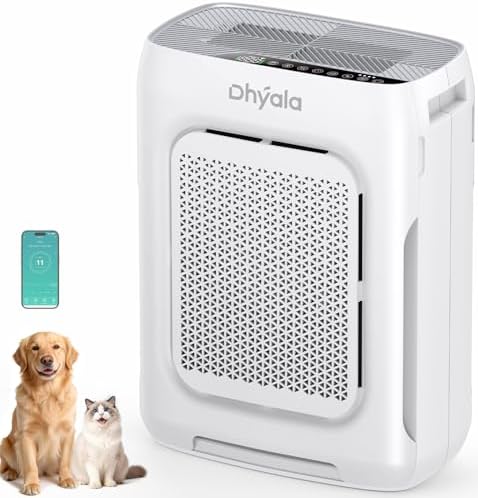
- 𝐇𝐢𝐠𝐡𝐞𝐫 𝐀𝐢𝐫𝐟𝐥𝐨𝐰 & 𝐋𝐚𝐫𝐠𝐞𝐫 𝐂𝐨𝐯𝐞𝐫𝐚𝐠𝐞: This latest air purifier features a front and rear dual-sided, left and right dual-sid…
- 𝐃𝐮𝐚𝐥 𝐅𝐢𝐥𝐭𝐞𝐫𝐬 & 𝟑-𝐒𝐭𝐚𝐠𝐞 𝐃𝐞𝐬𝐢𝐠𝐧: Equipped with dual filters, each air filter uses a 3-stage filtration system (pre-filter …
- 𝐒𝐦𝐚𝐫𝐭 𝐖𝐢-𝐅𝐢 & 𝐀𝐮𝐭𝐨 𝐌𝐨𝐝𝐞: No longer limited by distance, you can remotely control your home air purifier via a mobile app…
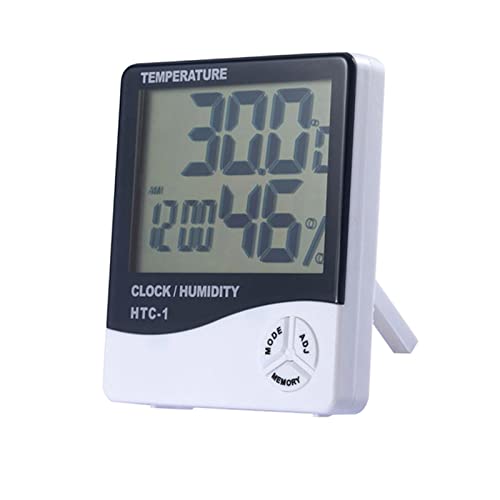
- 【Multi Function】Accurate hygrometer digital thermometer displays high and low temperature & humidity;At the same time, r…
- 【Easy to Use and Install】This indoor room thermometer features a kickstand and hanging hole, can be placed in vertical o…
- 【12/24 Hour, °F/°C Selector】12/24 hour display switching function; ℃ /℉ switching function. Measuring Temperature Range:…

- NIOSH P100 RATED PROTECTION: The P100 Half-Mask respirator with replaceable filters offers reliable protection against d…
- ENHANCED VISIBILITY: Lightweight and compact design ensures minimal interference with safety eyewear, providing maximum …
- QUICK FACE SEAL VALIDATION: The respirator features a simple push-in fit check mechanism, allowing for quick and easy va…
You can verify a lot with nothing but your eyes, your nose, and ten minutes.
How do you know if mold remediation worked? You can tell mold remediation worked when the space passes these checks:
- No visible mold or fresh staining remains on any surface, including corners and seams.
- There is no musty or earthy odor when you enter, especially at floor level.
- Every surface is dry to the touch and the moisture source has been repaired.
- A finger run along baseboards and ledges comes back clean, with no gritty dust.
- Indoor humidity reads below 60 percent on a basic hygrometer.
- Any professional clearance test has passed in writing.
The visual and smell check
Walk the room slowly and get close to the work, not just eye level.
Mold regrows first in the seam where drywall meets the floor, so crouch down — that’s where a musty smell pools, too. On one basement job I checked, the walls looked perfect at standing height but the bottom two inches behind a baseboard were still damp and graying, the exact pattern our basement mold removal method is built to catch.
Bathrooms hide it in grout and caulk lines that look merely “dirty.” Our walkthrough of bathroom mold removal in grout, caulk, and walls shows what regrowth there actually looks like.
The white-glove dust test
Settled dust is a record of your air, and a sloppy job leaves it behind.
Run a clean fingertip across a high ledge or door frame inside the work zone. If it comes back with visible grit, the area wasn’t HEPA-cleaned properly — the same red flag we flag for mold in carpet that should be cleaned or replaced and for porous slabs in our mold on concrete floors removal guide.
The moisture check
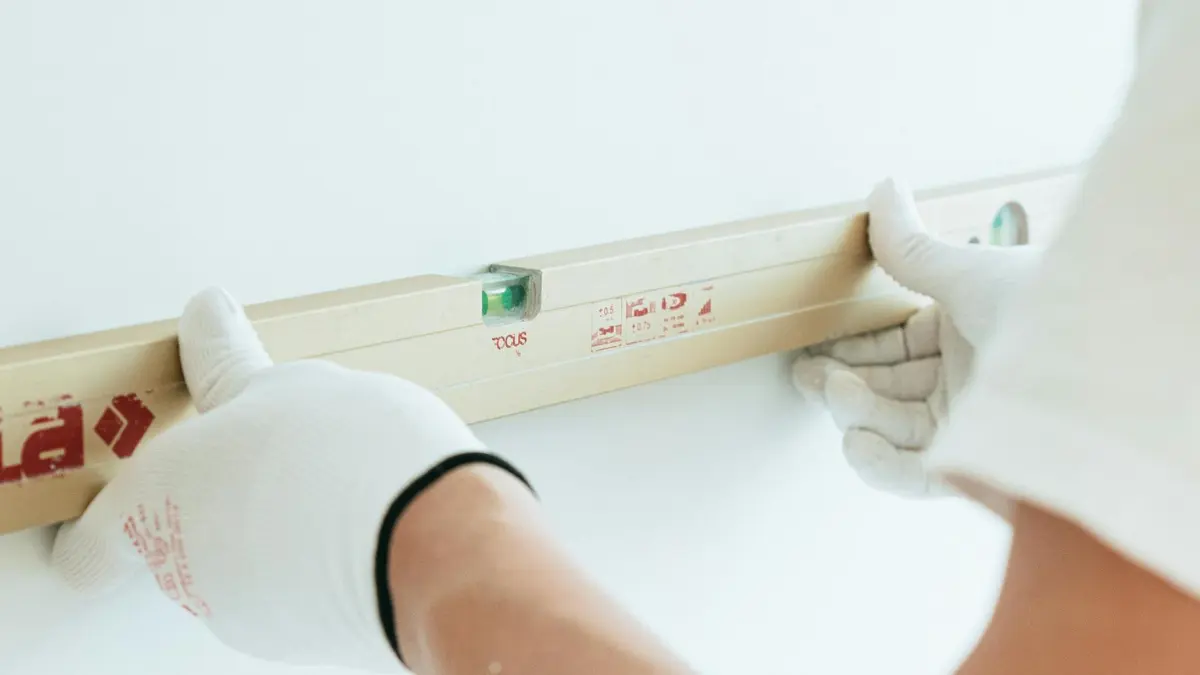

- Tired of moisture meters leaving ugly holes on walls and furniture? Our pinless moisture tester performs non-destructive…
- Equipped with improved sensor for stable, fast moisture readings on walls, wood, concrete and drywall. Keep the tool fla…
- Catch hidden dampness triggered by pipe leaks, flooding or humid environments early, an essential helper for home inspec…
Mold can’t return without water, so this check predicts the future.
A cheap moisture meter on repaired drywall should read close to untouched walls elsewhere. Wood framing should test at or below roughly 16 percent — if you’re verifying studs, our guide to removing mold from wood and studs explains safe targets, and our breakdown of when DIY mold removal is the right call covers the tools worth owning.
✅ Pro Tip: Run these checks before the crew removes containment and before furniture comes back. It’s far easier to point at a damp baseboard while the plastic is still up than to argue a week later.
💡 Expert Note: A musty smell with no visible mold almost always means hidden moisture or mold inside a wall, floor, or duct — not a harmless leftover odor.
Post mold remediation testing: what a clearance test verifies
Some jobs need more than your eyes can give, and that’s where independent testing earns its cost.
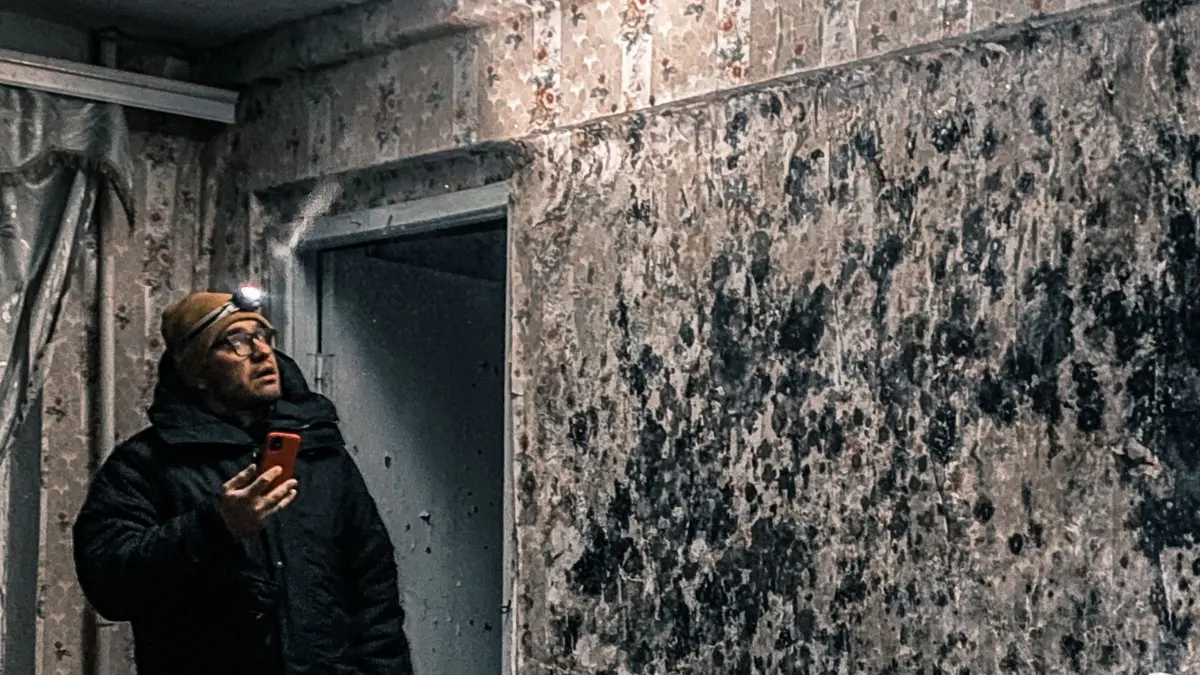
What is post-remediation verification? Post-remediation verification (PRV), also called a clearance test, is an independent inspection plus air and surface sampling that confirms a remediated area has returned to a normal fungal condition comparable to unaffected indoor and outdoor air. It’s the objective proof a visual check can’t provide.
What the test actually measures
A real clearance test has three parts, and skipping any one weakens the result.
| Test component | What it checks | What a pass looks like |
|---|---|---|
| Visual inspection | Remaining mold, moisture, dust | No visible growth or debris |
| Air sampling | Airborne spore counts | Indoor at or below outdoor control |
| Surface sampling | Settled spores on surfaces | Comparable to a clean reference area |
Source: methods consistent with EPA and IICRC S520 industry guidance.
Inspectors collect an outdoor control sample so your indoor numbers have a fair comparison. If your HVAC was involved, sampling should include the system, which is why mold in air ducts is its own clearance challenge.
Why your remediator shouldn’t grade their own work
The company that did the work has an obvious incentive to call it finished.
⚠️ Warning: A clearance test should be done by an independent third party, not the company that performed the remediation. A remediator verifying their own work is a conflict of interest, and many states bar one firm from doing both on jobs above a set size.
Vet the tester the way you’d vet the crew — our guide to finding a mold remediation company you can trust applies to assessors too. This matters most when someone vulnerable lives there, like kids, whose mold exposure symptoms by age can be easy to mistake for allergies.
Worth knowing: the CDC does not recommend routine mold testing for deciding whether to clean, since no safe spore threshold exists — but clearance testing after a known job answers a narrower, useful question.
Pass or fail: what your results mean and what to do next
Results in hand, your job is one decision: accept, investigate, or push back.
What a passing result means
A pass means your indoor spore profile matches clean reference air and nothing visible or damp remains.
You’re cleared to reoccupy and to rebuild. Only now should new drywall go up — installing it over a failed area just hides the problem, the opposite of how our guide to removing mold from drywall so it doesn’t return approaches it.
What to do if the test fails
A failed clearance test is more common than the industry admits, and it isn’t yours to fix for free.
- Do not let the crew take down containment or start the rebuild.
- Ask for the lab report and the specific reason for the failure.
- Require the original company to re-remediate the flagged areas at no extra charge under their warranty.
💡 Expert Note: A reputable contractor investigates a failed result without defensiveness. If yours gets combative or pressures you to sign off anyway, that reaction tells you more than the lab report does.
If you’re testing for a home sale, a failure shifts your timeline and disclosures — our plan for handling mold remediation before selling a home maps the next moves.
Cost, timing, and when to reoccupy
Two questions decide what you do tonight: what testing costs, and when it’s safe to go back in.
How much a clearance test costs
A standalone post-remediation clearance test usually runs a few hundred dollars, with regional labor and licensing moving the number.
| Service | Typical 2025 U.S. range |
|---|---|
| Post-remediation clearance test | $200–$500 |
| Independent third-party add-on | up to $400–$800 |
| Professional mold inspection | $300–$600 |
| DIY air-sampling kit | from ~$179 |
Source: aggregated 2025 industry pricing data; verify locally.
DIY kits give a directional read, not a certification — see how that differs in what a professional mold inspection really costs.
Costs also swing by location. Confined spaces like attic mold removal and crawl space mold removal run higher per square foot.
For a whole-home picture, our room-by-room remediation cost guide breaks down each space.
When it’s safe to reoccupy
- 𝐇𝐢𝐠𝐡𝐞𝐫 𝐀𝐢𝐫𝐟𝐥𝐨𝐰 & 𝐋𝐚𝐫𝐠𝐞𝐫 𝐂𝐨𝐯𝐞𝐫𝐚𝐠𝐞: This latest air purifier features a front and rear dual-sided, left and right dual-sid…
- 𝐃𝐮𝐚𝐥 𝐅𝐢𝐥𝐭𝐞𝐫𝐬 & 𝟑-𝐒𝐭𝐚𝐠𝐞 𝐃𝐞𝐬𝐢𝐠𝐧: Equipped with dual filters, each air filter uses a 3-stage filtration system (pre-filter …
- 𝐒𝐦𝐚𝐫𝐭 𝐖𝐢-𝐅𝐢 & 𝐀𝐮𝐭𝐨 𝐌𝐨𝐝𝐞: No longer limited by distance, you can remotely control your home air purifier via a mobile app…
How long after remediation is it safe to reoccupy? Most homeowners can safely reoccupy 24 to 48 hours after remediation is complete, once the air has settled and any clearance test has passed. Residual odors should fade within days; if they don’t, treat it as a sign of hidden moisture.
If your insurer funded the work, confirm what paperwork they need first — our breakdown of when homeowners insurance covers mold remediation covers clearance-letter requirements.
⚠️ Warning: If anyone in your home has asthma, a weakened immune system, or another respiratory condition, wait for a passed clearance test before reoccupying. These groups face higher risk from any residual spores.
Post mold remediation testing FAQ
The short, direct answers to what homeowners ask after the crew leaves.
1. What is post mold remediation testing?
Post mold remediation testing is the inspection and sampling done after a mold job to confirm it worked. It combines a visual check, air sampling, and surface sampling, comparing indoor spore levels against outdoor air to verify the space has returned to a normal, healthy condition.
2. How do you know if mold remediation worked?
You know mold remediation worked when no visible mold or staining remains, there’s no musty odor, every surface is dry, the moisture source is repaired, and any professional clearance test passed in writing. Run these checks before containment comes down and before moving furniture back.
3. What is post-remediation verification (PRV)?
Post-remediation verification is the formal, independent clearance process confirming a remediation succeeded. A qualified assessor inspects the area, then collects air and surface samples for lab analysis. PRV passes when indoor spore counts match or fall below outdoor levels and no visible mold or moisture remains.
4. Should the remediation company do its own clearance test?
No. The remediation company should not perform its own clearance test, because verifying its own work is a conflict of interest. Hire an independent third-party assessor instead. Many states legally separate the two roles on larger jobs, and insurers often require independent verification before paying.
5. How long after remediation should you test?
You should test once cleaning and drying finish but before containment is removed, usually within a few days of completion. Testing while containment still stands keeps conditions controlled and catches problems early. Most remediators specify a maximum window, often 3 to 14 days, for clearance testing.
6. How much does a post-remediation clearance test cost?
A post-remediation clearance test typically costs $200 to $500, though an independent third-party assessment can add $400 to $800. Prices vary with your region, the number of samples, and lab analysis. Confirm whether your contractor’s quote already includes clearance testing or treats it separately.
7. What does a clearance test check for?
A clearance test checks three things: a visual inspection for remaining mold, moisture, or dust; air samples measuring airborne spore counts against an outdoor control; and surface samples for settled spores. Passing requires all three to indicate normal conditions, not visual cleanliness alone.
8. What does “Condition 1” mean?
Condition 1 means normal fungal ecology — an indoor environment whose mold spore types and amounts resemble clean outdoor air, with no active growth. It’s the passing standard for clearance testing. Condition 2 indicates settled spores from past contamination, and Condition 3 indicates active mold growth still present.
9. Can I test for mold myself after remediation?
You can use a DIY air-sampling kit for a rough read, but it isn’t a substitute for professional clearance testing. Home kits lack a controlled outdoor comparison and certified interpretation. For real estate, insurance, or health concerns, hire an independent assessor whose results carry documented weight.
10. What happens if the clearance test fails?
If the clearance test fails, the remediation isn’t finished. The company should re-clean the flagged areas at no extra cost under warranty before containment comes down. Request the lab report, confirm the failure reason, and never allow rebuilding over an area that hasn’t passed.
11. Is a musty smell after remediation normal?
A musty smell after remediation is not normal and shouldn’t be dismissed. Lingering odor usually signals hidden moisture or mold still inside a wall, floor, or duct. Faint cleaning-product smells may fade within days, but an earthy, damp odor warrants reinspection before you reoccupy.
12. How long after remediation is it safe to reoccupy?
It’s generally safe to reoccupy 24 to 48 hours after remediation finishes, once airborne spores settle. Wait for a passed clearance test first if anyone is pregnant, has asthma, or has a weakened immune system — see what mold exposure during pregnancy can mean for your baby.
13. Do I need a clearance test for a small mold job?
For a small job under about 10 square feet that you cleaned yourself, the EPA says testing usually isn’t required. A clearance test matters most for larger jobs, hidden or HVAC mold, real estate sales, insurance claims, or when someone in the home has health concerns.
14. Does passing a clearance test mean zero mold?
No. Passing a clearance test never means zero mold, because spores exist in all indoor and outdoor air. A pass means your indoor levels match or fall below outdoor air and no active growth or moisture remains — a normal, healthy condition rather than a sterile one.
15. How long does a clearance test take to get results?
The on-site inspection and sampling usually take one to three hours. Lab analysis typically returns results within one to three business days, though some assessors offer faster turnaround. Ask upfront, since you’ll often hold off rebuilding until the clearance report confirms a pass.
16. Can mold come back after a successful remediation?
Yes, mold can return after successful remediation if the moisture source isn’t permanently fixed, since spores only need water to regrow. Keep humidity below 60 percent and repair leaks fast. Catch a recurrence early with our guide to black mold symptoms you shouldn’t dismiss as allergies.
17. Who pays for the clearance test?
Who pays for the clearance test depends on your contract. Homeowners often cover it, but it may be built into the quote or required by an insurer. Renters generally aren’t responsible — see landlord mold responsibility by state and your rights when a landlord won’t fix mold.
The bottom line on verifying your remediation
You now have the same yardstick the pros use, minus the sales pitch.
Trust your own checks first: no visible mold, no musty smell, dry surfaces, a fixed leak. When the stakes are high — a sale, an insurance claim, a health-sensitive household, or hidden mold — bring in an independent assessor and insist the people who did the work aren’t the ones grading it.
The single rule worth remembering is simple. Fix the water, then verify it independently.
Do those two things and a recurrence becomes far less likely — and you’ll know, not just hope, that your home is clean.
Related Articles
 Mold Remediation
Here’s How to Remove Mold from Drywall Without It Coming Back
May 22, 2026 Mold Remediation
Why Your Mold Keeps Returning and How to Prevent It
June 15, 2026 Mold Remediation
Find the Right Mold Removal Products for Your Surface
June 6, 2026 Mold Remediation
Here’s the Proven Way to Finally Get Rid of Mold on Concrete
May 24, 2026 Mold Remediation
How to Tell Mold From Mildew and What to Do Next
June 14, 2026 Mold Remediation
Here’s Your Plan for Mold Remediation Before Selling
June 1, 2026 Mold Remediation
Here’s What Your Tenant Rights for Mold Actually Are
May 30, 2026 Mold Remediation
If You’ve Spotted Garage Mold, Here’s Your Fix
June 16, 2026 Mold Remediation