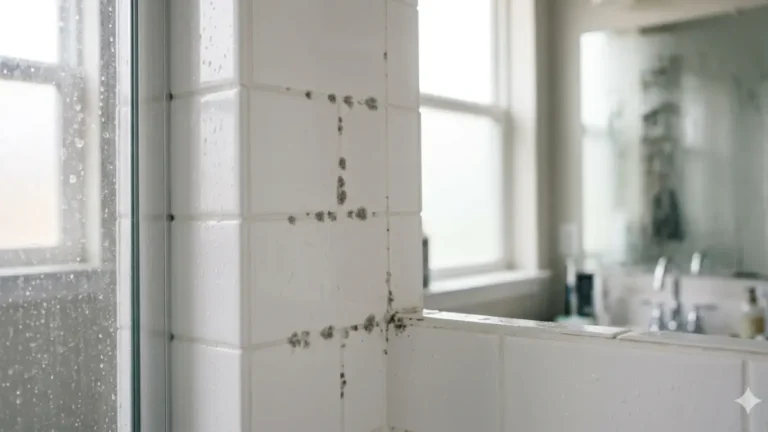
How to Tell Mold From Mildew and What to Do Next

Mold and mildew look nearly identical, yet one roots into walls while the other wipes off, and a simple bleach-swab test tells you which in minutes.
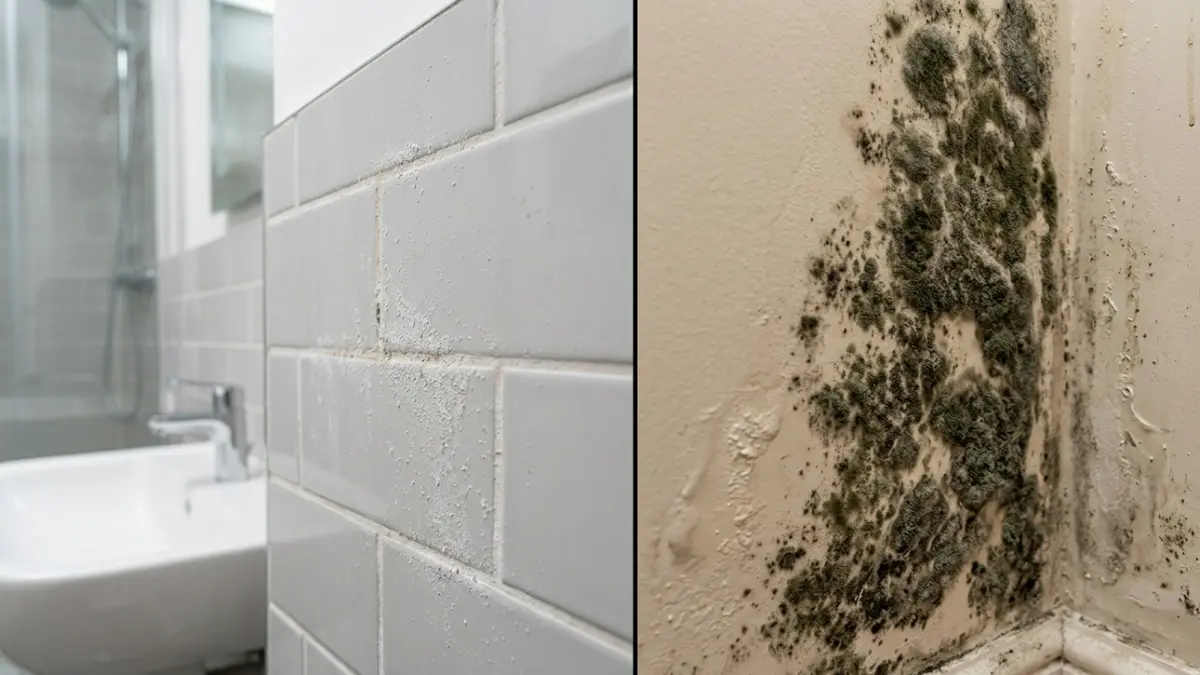
Table of Contents
You spotted a patch on the grout, the windowsill, or a basement wall, and now you want to know what it is. The real question underneath is simpler: is this the harmless kind, or the kind you should worry about?
Mold vs. mildew confusion is common because both are fungi that thrive in the same damp corners of a home. But they look different, behave differently, and call for very different responses.
This guide gives you the fast way to tell them apart by sight, smell, and a quick at-home test. You’ll also learn which one carries a real health risk and exactly when a patch is small enough to clean yourself.
It all ties back to our complete plan for diagnosing and removing household mold. Start with identification, and the right next step becomes obvious.
Mold vs. mildew: the core difference
Here’s the distinction in one breath. Mildew is a surface-level fungus that stays flat and powdery and wipes away with cleaner; mold penetrates the surface it grows on, looks raised and fuzzy or slimy, and carries greater health and structural risk.
That one difference — surface versus penetrating — drives everything else, from how dangerous it is to how hard it is to remove.
The simplest way to tell them apart
The fastest tells are texture, height, and color, lined up side by side.
| Trait | Mildew | Mold |
|---|---|---|
| Appearance | Flat, powdery, or downy | Raised, fuzzy, or slimy |
| Color | White, gray, or pale yellow | Green, black, blue, red, or mixed |
| Growth | Stays on the surface | Roots into the material |
| Smell | Mild, musty | Strong and pungent |
| Health risk | Generally mild irritation | Greater; varies by person |
Trait comparison adapted from EPA and CDC homeowner mold guidance.
Is mildew just early-stage mold?
In practical terms, yes. Mildew is a type of mold that grows in a flat pattern, which is why it stays easy to clean while other molds dig in and spread.
How to identify each by color, texture, and pattern
Match what you’re seeing to one category before you ever touch it.
What mildew looks like
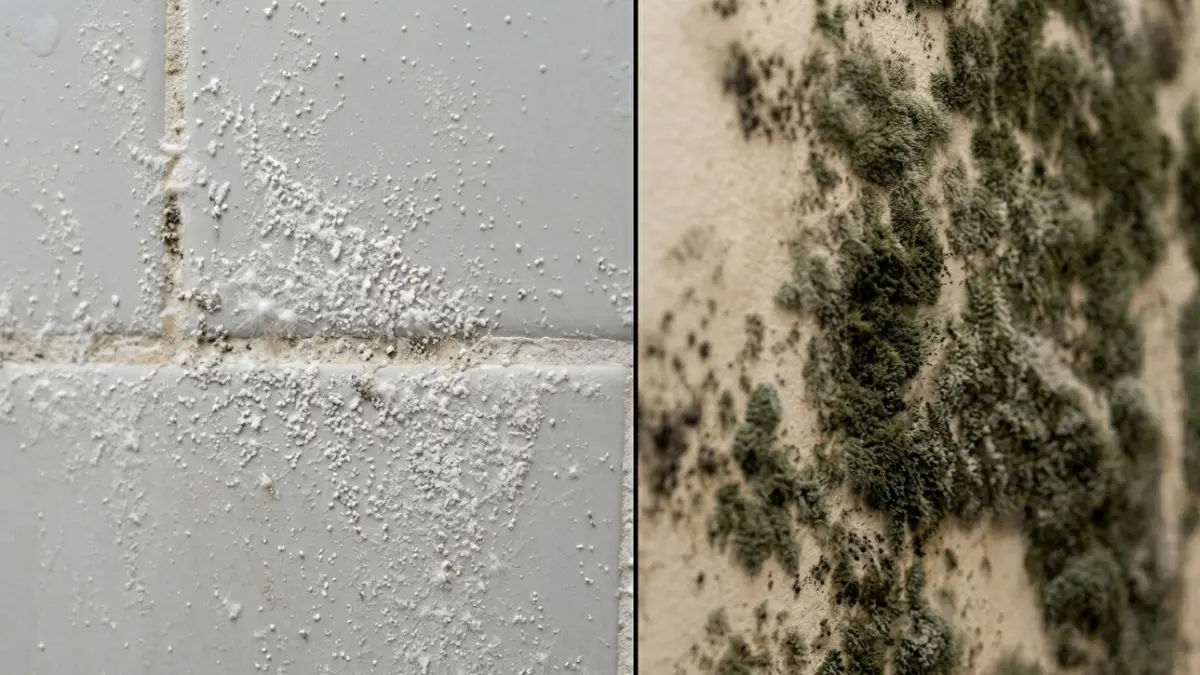
Mildew usually shows up as a thin, dry film lying flat against a surface. It’s most often white or gray, sometimes pale yellow, with a powdery or shallow fuzzy texture.
You’ll find it on shower tile, windowsills, and fabric. A quick wipe lifts the top layer, your first clue it hasn’t penetrated, though bathroom mold on grout, caulk, and walls can hide deeper than it looks.
What mold looks like, including black mold
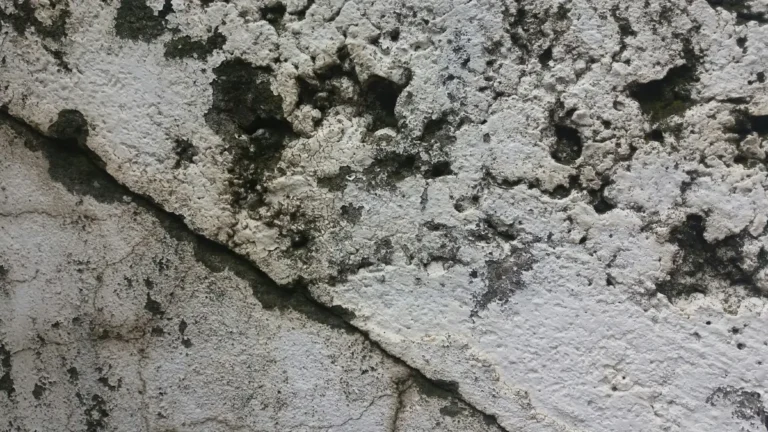
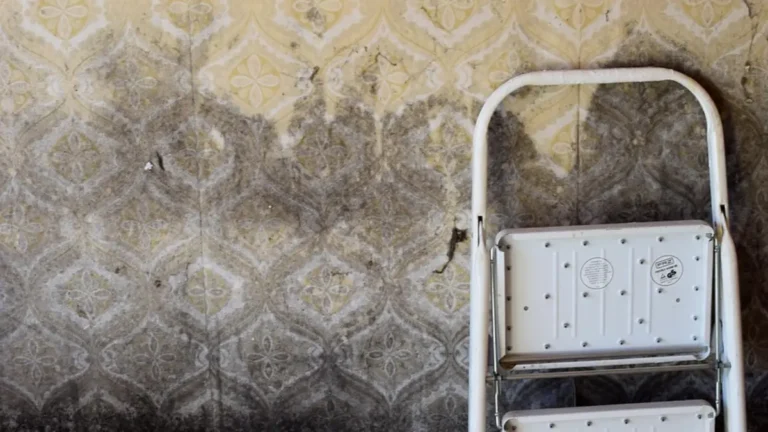
Mold looks raised and three-dimensional, with a fuzzy or slimy surface. It appears green, black, blue, red, or a blotchy mix, usually in an irregular, spreading pattern.
Color alone won’t tell you how dangerous it is, since the CDC notes a mold’s color doesn’t indicate how harmful it is. For dark patches that might be black mold, our guide on black mold symptoms you shouldn’t write off as allergies covers what to watch for.
The smell test and the bleach-swab test
Two quick checks confirm what your eyes already suspect.
The smell difference
Mildew gives off a mild, musty smell, the damp-towel odor in a closed-up bathroom. Mold smells stronger and more pungent, releasing microbial volatile organic compounds as it grows.
If a room smells aggressively earthy or rotten, you’re likely facing mold, not mildew.
The bleach-swab test, step by step
This at-home test separates surface growth from something deeper.
- Mix one part household bleach with three parts water and dip a cotton swab into it.
- Dab the swab onto the discolored spot and let it sit for two to three minutes.
- If the patch lightens, it’s likely mildew or surface mold; if it stays dark, it’s more likely penetrating mold.
ℹ️ Disclaimer: The swab test is a quick indicator, not a lab diagnosis. It doesn’t work on every surface or species, so treat a dark result as a reason for caution, not a final verdict.
Are mold and mildew dangerous?
This is the question driving most of these searches, so here’s the straight answer.
Is mildew harmful?
Mildew is generally the milder of the two, but milder isn’t harmless. It can trigger coughing, irritated eyes, a stuffy nose, and a lingering odor, especially for anyone sensitive to it.
Health risks of mold exposure
According to the CDC’s overview of mold and your health, mold can cause a stuffy nose, sore throat, wheezing, burning eyes, or skin rash, and people with asthma or mold allergies may react more severely. Immune-compromised people and those with chronic lung disease face higher risk and can develop lung infections.
The CDC’s bottom line is blunt: no matter the type or color, if you can see or smell mold, remove it.
⚠️ Warning: Some groups should avoid disturbing mold themselves, including young children, older adults, pregnant individuals, and anyone immune-compromised. If symptoms appear, step away from the area and talk to a doctor.
For families, our guides on mold exposure symptoms in children by age and what mold exposure during pregnancy can mean go deeper than this overview can.
How to remove them, and when to call a pro

- NIOSH APPROVED: For at least 95 percent filtration efficiency against certain non-oil based particles
- COMPATIBLE: With a variety of protective eyewear and hearing protection
- ADJUSTABLE NOSECLIP: Reduces potential for eyewear fogging and helps provide a custom and secure seal
Size decides almost everything about your next move.
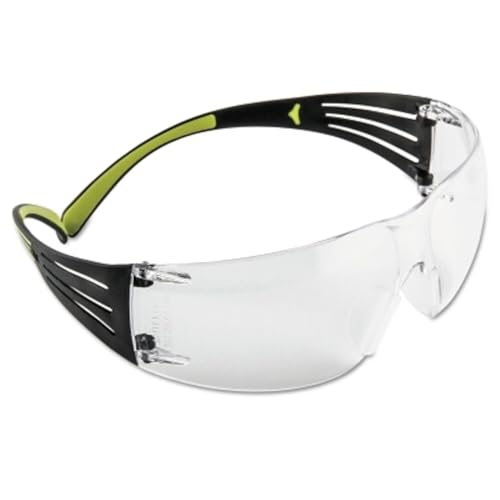
- SELF-ADJUSTING COMFORT: Features 3M Pressure Diffusion Temple Technology which allows the temples to flex and self-adjus…
- ALL DAY WEARABILITY: Soft, adjustable nose pads to reduce slippage and dual-injected padded temple touchpoints for added…
- ANTI-FOG LENS COATING makes this protective eyewear ideal for humid environments.
DIY removal for small areas

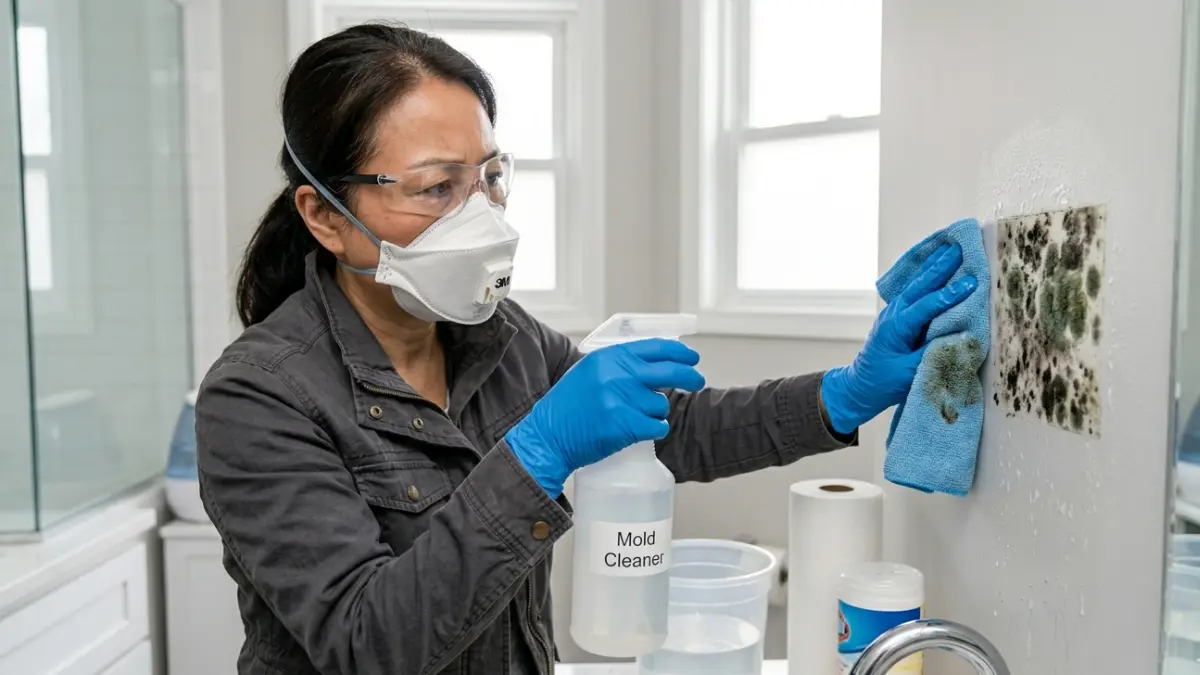
For a small patch, you can usually handle removal yourself with the right method and protection. Many homeowners start with removing mold with vinegar without the guesswork, and matching the right mold removal product to your surface matters as much as the cleaner.
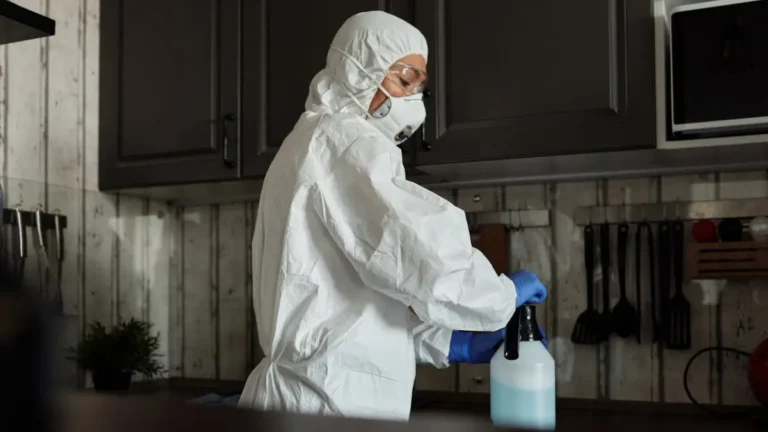
Gear up first, because the safety gear that actually keeps you protected is non-negotiable. Surface guides help whether the problem sits on drywall, wood and studs, concrete floors, or carpet, and dark patches may call for black mold removal steps tailored to each surface.
When to call a professional, the 10-square-foot rule
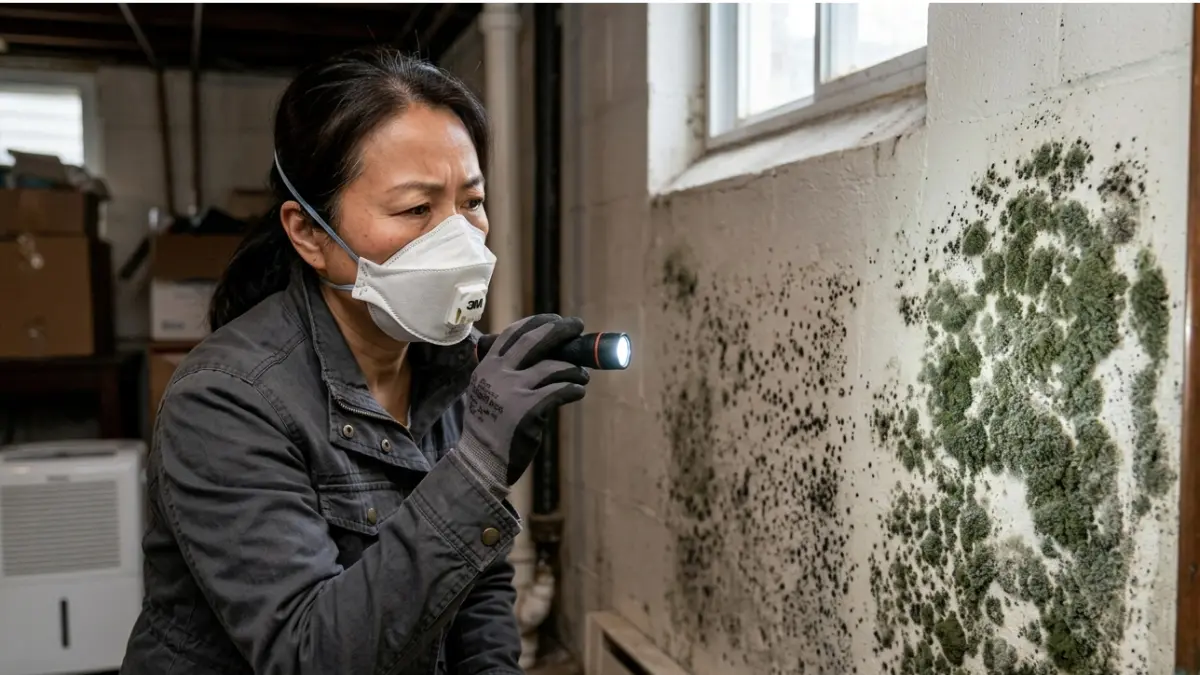
The EPA’s homeowner mold guide draws a clear line. If the moldy area is less than about 10 square feet — roughly 3 feet by 3 feet — most homeowners can clean it safely with an N95 respirator, gloves, and goggles; anything larger, or growth after water damage, calls for a professional.
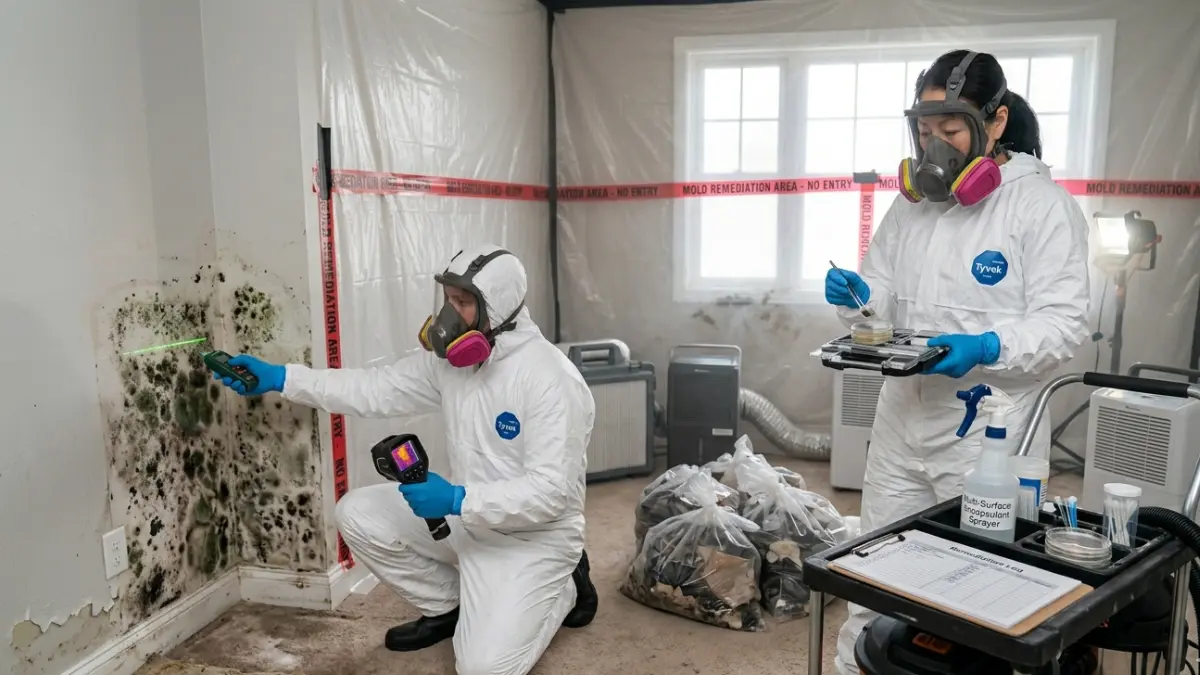
Larger or hidden growth in air ducts, an attic, a crawl space, or a basement usually needs trained help. Knowing when DIY mold removal is the right call versus when to hire a remediation company you can trust saves money and risk.
Mold sometimes overlaps with bigger decisions. Renters should know a landlord’s responsibility for mold and their rights when a landlord won’t fix it.
Buying or selling raises other questions. Review a plan for remediation before listing a home and when homeowners insurance covers remediation.
Before hiring out, get the numbers straight with what a mold inspection really costs and how post-remediation testing confirms the work succeeded.
💡 Expert Note: Removal without moisture control is temporary. A dehumidifier prevents mold without killing what’s already there, so pair every cleanup with a humidity fix.
The bottom line on mold vs. mildew

- ✔ EASY TO USE: This mini dehumidifier is spill and mess free. Just hang and go! Non-toxic, child and pet safe! Your smal…
- ✔ MINI DEHUMIDIFIER GOES A LONG WAY: Super dry dehumidifier unit lasts 20-30 days before recharging the silica gel beads…
- ✔ SMALL, SLEEK DESIGN: This portable small design lets you hang or conveniently place the dehumidifier anywhere to fight…
You can now tell these two apart in seconds and judge how seriously to take what you’ve found.
Mildew sits on the surface, stays pale and powdery, and usually wipes away; mold digs in, looks raised and dark, and deserves more caution. The deciding factor for action is size — a small patch is a confident DIY job, while anything past roughly 10 square feet or tied to water damage belongs with a professional.
Whatever you’re facing, fix the moisture that fed it, or it returns. For numbers on the work ahead, see our room-by-room breakdown of mold remediation costs.
Mold vs. mildew: frequently asked questions
1. Is mildew just early-stage mold?
Mildew is a type of mold, not a separate organism, describing mold that grows in a flat, surface-level pattern instead of penetrating the material. Because it stays shallow, mildew wipes away more easily than molds that root deeper into walls and wood.
2. What color is mold versus mildew?
Mildew is usually white, gray, or pale yellow, while mold appears green, black, blue, red, or a blotchy mix. Color is a useful first clue, but it does not indicate danger, since many mold species shift color as they age.
3. What does mold smell like compared to mildew?
Mold smells strong, pungent, and earthy, while mildew gives off a milder, musty odor from the microbial volatile organic compounds mold releases as it grows. A sharp, rotten smell with no visible source often points to mold hidden behind a wall.
4. How do you test if it’s mold or mildew at home?
To test at home, dab the spot with diluted bleach, one part bleach to three parts water, and wait two to three minutes. If the patch lightens it is likely mildew or surface mold, but if it stays dark it is probably penetrating mold.
5. Is mildew dangerous?
Mildew is generally less dangerous than mold but not harmless, causing coughing, a stuffy nose, irritated eyes, and odors, especially for people with allergies or asthma. Unchecked mildew also signals excess moisture that can invite more aggressive mold, so remove it promptly.
6. Can mold make you sick?
Mold can make some people sick, causing a stuffy nose, sore throat, wheezing, burning eyes, or skin rash, with stronger reactions for those who have asthma or mold allergies. Immune-compromised people and those with chronic lung disease can develop lung infections.
7. Is black mold the same as mildew?
Black mold is not the same as mildew, since mildew is a flat surface fungus that wipes away easily while black mold often penetrates materials and may pose greater risks. Because color does not reliably indicate danger, treat any dark, raised, fuzzy growth cautiously.
8. How fast does mold grow?
Mold can begin growing on a wet surface within 24 to 48 hours when moisture and a food source are present, developing quickly in humid, poorly ventilated spaces. Mildew stays surface-bound and spreads more slowly, so drying wet areas fast stops growth early.
9. Does mildew turn into mold?
Mildew is already a form of mold, so it does not become a different organism, but the damp conditions that let mildew thrive can support more aggressive molds nearby. Treating mildew quickly and controlling moisture prevents a small surface problem from becoming a deeper one.
10. What kills mold and mildew, vinegar or bleach?
Both vinegar and bleach kill mold and mildew differently: white vinegar penetrates porous surfaces and is gentler for daily use, while bleach suits hard, non-porous surfaces like tile. For porous materials such as wood or drywall, vinegar or a dedicated mold cleaner works better.
11. Does bleach actually kill mold?
Bleach kills mold on hard, non-porous surfaces like tile, glass, and countertops, but on porous materials such as wood or drywall it cannot reach the roots beneath, so mold returns. For those materials, a penetrating cleaner or professional treatment delivers lasting results.
12. When should you call a professional for mold?
Call a professional when the affected area exceeds about 10 square feet, roughly a 3-foot by 3-foot patch, as the EPA advises. Also call a pro after major water damage, when mold keeps returning, or when it grows inside HVAC systems.
13. Can you remove mildew yourself?
You can usually remove mildew yourself because it stays on the surface, using a household cleaner or diluted vinegar, a scrub brush, and gloves and a mask. Ventilate the area, dry the surface completely afterward, and fix the moisture source so mildew does not return.
14. What causes mold and mildew in the home?
Mold and mildew are caused by excess moisture plus a food source like wood, drywall, fabric, or paper, with leaks, high humidity, poor ventilation, and condensation creating ideal conditions. Bathrooms, basements, and areas with past water damage are the most common trouble spots.
15. How do you prevent mold and mildew?
Prevent mold and mildew by controlling moisture and airflow: fix leaks promptly, run exhaust fans in bathrooms and kitchens, and keep indoor humidity below about 50 percent with a dehumidifier. Wipe down damp surfaces, dry wet materials within 48 hours, and check hidden spots.
16. Is it safe to sleep in a room with mildew?
Sleeping in a room with mildew is not ideal, especially for people with allergies, asthma, or respiratory conditions, because even mild mildew can irritate airways and disrupt sleep. Clean visible mildew, improve ventilation, fix the moisture source, and see a doctor if symptoms persist.
17. Can mold come back after you clean it?
Mold can return after cleaning if the moisture that caused it remains, because removing visible growth treats the symptom, not the cause. To stop it coming back, fix leaks, lower humidity, and improve airflow, since lasting prevention depends on moisture control more than the product.