Rodent Proofing Your House, and the Rules Most People Overlook

Rodent proofing starts with a material choice: extension research lists foam, vinyl and wood as ineffective against mice. Then there’s the legal half.
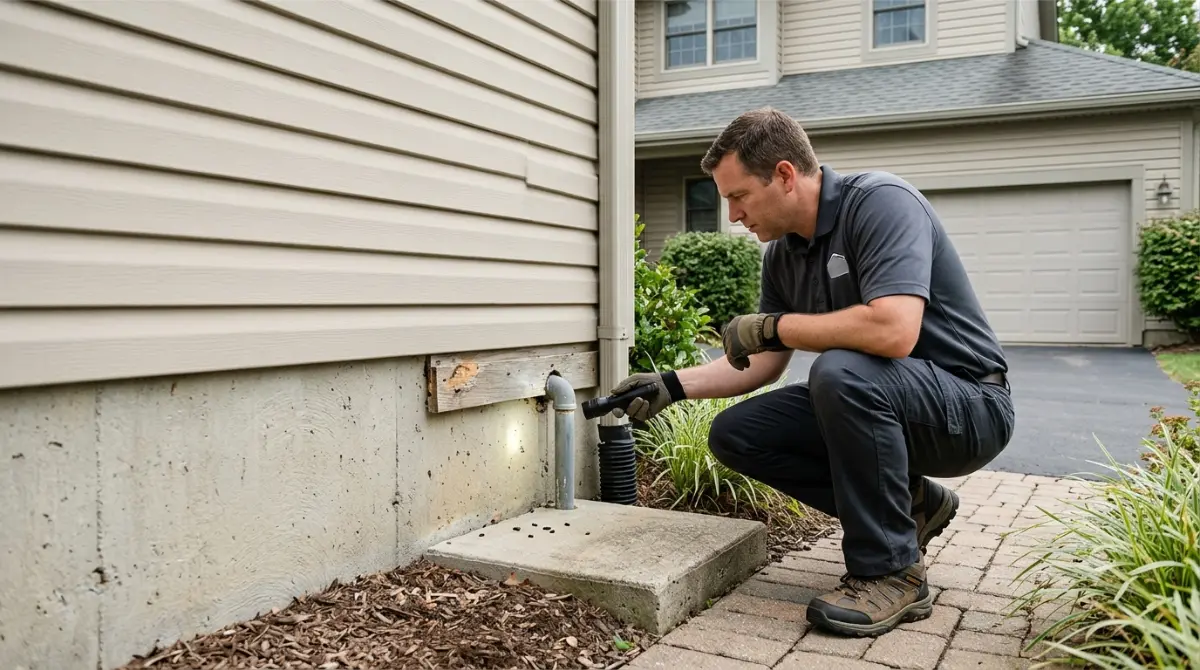
Table of Contents
Rodent proofing is two jobs, not one. There’s the physical job — finding every gap and closing it with something a mouse can’t chew. And there’s a second job most guides skip entirely: checking what you’re actually allowed to use where you live, because the rules on poisons and traps have moved fast in the last few years.
If you’ve just heard scratching and nothing is sealed yet, start with the section on where rodents get in.
If you’ve already trapped a few and want it to stop for good, go to the materials section — the fix that fails is almost always a material choice.
If you rent and your landlord won’t act, skip to the legal section.
If you have young children or pets in the house, read the traps and baits section before you buy anything.
And if you’re staring at a contractor’s quote, the cost section covers what should be itemised on it.
ℹ️ Safety Note: This work involves several real hazards: disease exposure when handling droppings or nesting material, poisoning risk to children, pets and wildlife from rodent baits, falls when sealing at the roofline, and confined-space risk in attics and crawl spaces. Treat the sealing steps here as general understanding. For roofline work, structural repairs, or any use of rodenticide, hire a licensed pest control operator or contractor and follow your local code. The legal section explains what categories of law apply and how to check your own jurisdiction — it is not legal advice, and the rules differ by state and city.
Where rodents are actually getting in
Start with the quarter-inch rule, because it decides everything else. University of California IPM guidance is direct about the threshold: seal all gaps and openings larger than ¼ inch to exclude both mice and rats.
House mice can squeeze under gaps ¼ inch tall and through openings ⅜ inch wide, per UC IPM’s Pest Notes on the house mouse. That’s roughly the width of a pencil. Most houses have dozens of openings at or above that size, and almost none of them look like a hole.
📊 Spec: Mice squeeze under ¼-inch gaps and through ⅜-inch openings. Rats leave gnaw marks about 1/6 inch across; mice leave finer marks around 1/12 inch. Source: UC IPM Pest Notes, House Mouse (Pub 7483) and Rats (Pub 74106).
The ground-level route
Walk the full perimeter slowly, at ground level, before you look up. You’re checking foundation cracks, the gaps where water pipes, electrical lines and sewer pipes pass through the wall, drain spouts, weep holes at the base of brick veneer, and the threshold under every exterior door and the garage door. It’s the same methodical perimeter inspection you’d run in a walk-around for termites, and the same principle applies about keeping wood clear of soil contact — anything that gives a rodent cover against the foundation makes the gap behind it easier to use.
The overhead route
Then do the whole perimeter again, looking up. Roof rats are excellent climbers, so UC IPM notes that openings above ground level have to be plugged as well, and that finding roof rat entry points usually takes longer than finding those used by Norway rats.
House mice climb too. They can run up any rough vertical surface, travel along wire cables and ropes, and jump 12 inches from the floor onto a flat surface. Check soffit-to-fascia joints, gable vents, ridge vents, and where the roofline meets an adjoining wall.
💡 Pro Tip: UC IPM recommends thinning or removing plants growing next to or up the side of a building, since house mice climb well. Vegetation against a wall is both cover and a ladder.
What tells you they’re already inside
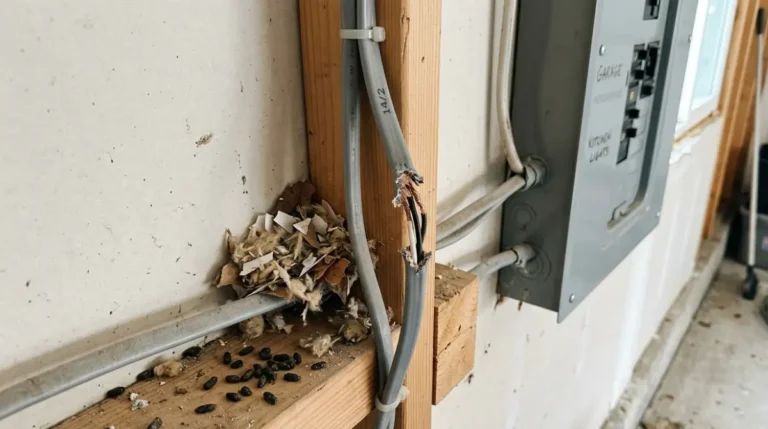
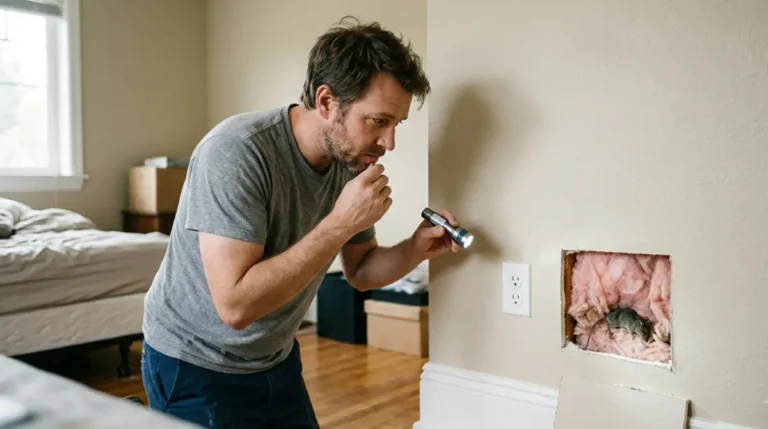
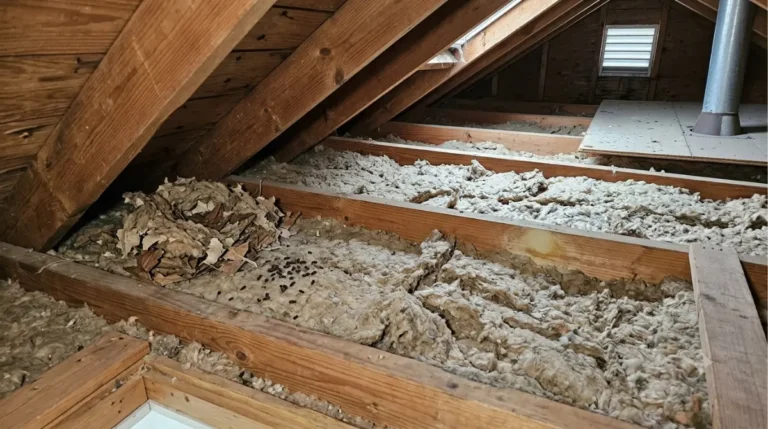
Look for droppings, fresh gnaw marks, and nests of finely shredded paper or fibrous material behind boxes, in drawers, in garages, or around woodpiles. A musky odour is common in large or long-running infestations. Mice are mostly active at night but will appear in daylight when food is available.
What actually holds, and what gets chewed through
The most common rodent proofing failure isn’t a missed gap. It’s a sealed gap filled with the wrong material.
UC IPM is unambiguous on this: plastic screening, rubber, vinyl, insulating (expanding) foam, wood, and other gnawable materials are ineffective for plugging holes used by house mice. Caulk and spray foam feel like a fix, look like a fix, and do not last.
🔍 Why It Works: A rodent’s incisors struggle against a flat, hard surface but make short work of anything that gives them a rough edge to bite into. That’s why metal works and why foam doesn’t — foam offers an edge on contact. Metal first, sealant second, always in that order.
What to use instead
| Gap type | Material | Key detail |
|---|---|---|
| Cracks in foundations; openings for pipes, vents, utility cables | Metal or concrete | UC IPM specifies metal or concrete for these penetrations, not sealant alone |
| Small structural cracks and openings | Wire screen or coarse steel wool | Steel wool scouring pads work as plugs but may rust over time — treat as temporary |
| Vent grills and covers | Galvanised expanded metal mesh | UC IPM’s rat guidance specifies heavier-gauge, ½-inch mesh for ventilator grills |
| Door and window edges being gnawed | Sheet metal covering | UC IPM: cover edges with metal where gnawing is a problem |
| Doors, windows, screens generally | Tight fit, no daylight | If you can see light under a door, the gap is large enough |
Sourced from UC IPM Pest Notes: House Mouse (Pub 7483, updated 07/2025) and Rats (Pub 74106). No hands-on testing was performed for this table.
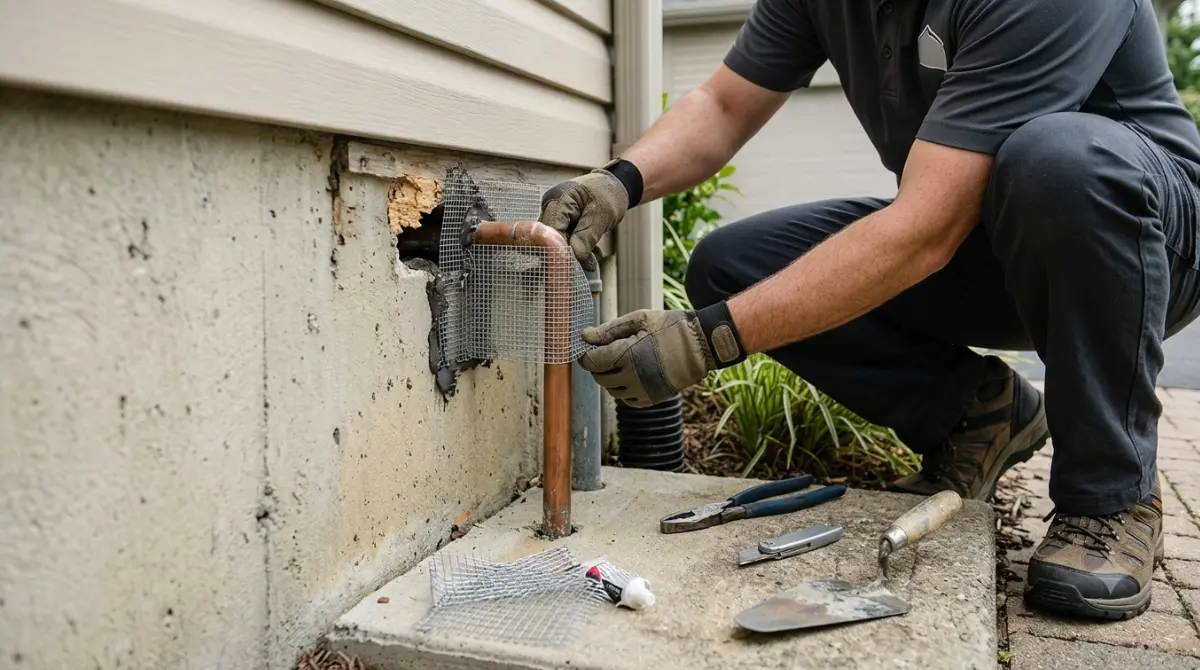
⚠️ Watch Out: Steel wool rusts. If you pack a penetration with a steel wool pad and leave it, you’re building a seal with an expiry date. Copper or stainless alternatives don’t corrode the same way — but either way, back the packing with metal or mortar rather than relying on it alone.
Sealing your house, ground level to roofline
Exclusion is the most effective and most permanent form of rodent control there is — UC IPM describes it as the most successful and longest-lasting strategy for rats around structures, and the most successful and permanent form of house mouse control.
That said, sealing is one part of a management approach, not the whole of it. UC IPM’s guidance combines exclusion with sanitation and some form of population reduction, because mice already inside won’t leave because you closed the door behind them.
Sequence: reduce the population, then close it up
There’s a practical reason to deal with what’s already inside rather than sealing around it. UC IPM notes that mice seldom venture more than 30 feet from their nest, so control carried out inside a structure often results in rodents dying inside it — and that trapping has an advantage over baiting precisely because it lets you remove and dispose of the animal, avoiding the odour problem.
Run traps and sealing together. Don’t treat sealing as the finish line.
Foundation, penetrations and vents
Seal cracks in the foundation and every opening for water pipes, vents, drain spouts, sewer pipes and utility cables using metal or concrete. Enclose ventilator grills with galvanised expanded metal mesh rather than plastic or fibreglass screening. Where you’re working under the house, the same crawl space access and moisture conditions that matter for termites apply here — a damp, cluttered crawl space is harborage as well as an entry route.
Doors and thresholds
Make sure every exterior door, window and screen fits tightly. Where rodents are gnawing at an edge, cover it with metal. The garage door threshold and the gap under a side door are the two openings most often left as-is, and they’re at ground level where a mouse is already travelling.
The roofline
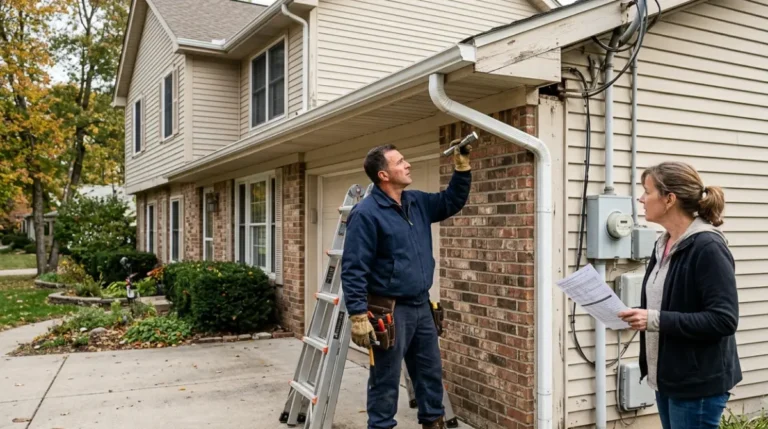
This is where a homeowner falls off a ladder. Gable vents, soffit joints and ridge vents all need checking, and roof rats reach them easily. If roof rats are travelling along overhead utility wires, UC IPM directs you to contact a pest professional or the utility company rather than handling it yourself.
✅ Do This: Stop at the roofline if you’re working from a ladder alone or the pitch is steep. Hire a licensed pest control operator or contractor, and ask three things: are you licensed in this state for both exclusion and pest control, is the sealing work warrantied, and does the quote itemise each entry point you’re closing?
What rodent proofing costs: DIY vs. hiring out
Published cost figures for professional rodent exclusion are unusually unreliable, and it’s worth knowing that before you judge a quote against something you read online. Ranges circulating on cost-aggregator sites for the same service span from a few hundred dollars to several thousand, and most publish no methodology at all for how the figure was reached.
We haven’t run our own priced project, so we’re not adding another unsourced number to that pile.
What actually drives the price
Four things move the total: how many entry points the house has, how accessible they are, the age and construction of the building, and whether any structural repair is needed before sealing. A single-storey house with easy attic access and six obvious gaps is a different job from a pre-war house with a tight crawl space and twenty.
What a quote should show
Ask for the entry-point count, the materials specified for each, the labour hours, whether trapping is included or priced separately, whether a follow-up inspection is included, and what the warranty covers. A lump-sum bid with none of that detail can’t be compared against anything.
✅ Do This: Get three itemised quotes before deciding, and treat any quote that won’t list entry points as incomplete. The DIY-versus-professional maths on another pest problem follows the same logic: DIY wins on cost, loses on the gaps you can’t see or reach.
What’s legal where you live — and what’s changed
This is the half of the question most guides skip, and it’s moved considerably in the last few years. Four layers of rule can apply to a rodent problem at your house: federal pesticide restrictions, state pesticide and wildlife law, local ordinance, and your own obligations as an owner or the landlord’s as a lessor.
Federal: what the EPA restricts
At the federal level, the EPA restricts what a consumer can buy. Second-generation anticoagulants — brodifacoum, bromadiolone, difenacoum and difethialone — are no longer registered for consumer products and are available only to pest control professionals. Consumer rodenticide products must be sold with a bait station, must contain block or paste bait rather than loose pellets, and are limited to one pound of bait or less.
⚠️ Watch Out: You may see claims online that the EPA imposed sweeping new rodenticide mandates in 2026. As of the agency’s most recent update to its rodent control pesticide safety review, the 2022 measures — including classifying all second-generation anticoagulants as restricted use — remain proposed interim decisions, not final rules. Check the EPA page directly rather than a pest blog.
State: how far restrictions can go
States can go considerably further than the federal floor, and one has. California has progressively restricted anticoagulant rodenticides across several statutes, and the practical effect for a California homeowner is visible in the extension guidance: UC IPM notes there are now a limited number of chemical control options available for house mouse management in California because of recent legislation, with residential rodenticides sold only as ready-to-use bait stations containing cholecalciferol or bromethalin.
That’s a worked example, not a national rule. What’s on the shelf in your state depends on your state’s own pesticide regulator.
State: relocation and trapping
Relocating a live rodent is regulated separately from poisons, and the answer surprises people. In California, UC IPM states it is illegal to relocate live wildlife — house mice included — away from the property where they were captured without a special permit from the California Department of Fish and Wildlife.
The same source notes that California’s Fish and Game Code doesn’t regulate house mouse control itself, and no trapping licence is needed. So the mouse can be controlled; it just can’t be driven somewhere else and let go.
📊 Spec: Relocation doesn’t work either. UC IPM reports house mice removed from their home range by as much as half a mile can navigate back to the nest site, and released mice are likely to face aggression from resident mice, predation, or death from exposure. Source: UC IPM Pest Notes, House Mouse.
Local: ordinances on traps
A small but growing number of US municipalities have banned the sale and use of adhesive glue traps outright, beginning in California and now under consideration in several other jurisdictions including New York City. There is currently no statewide or federal ban.
This is genuinely a street-level question — a few miles can be the difference between a legal purchase and a fineable one. Check your own city, not your state.
Your own obligation, and your landlord’s
If you own, adopted property maintenance codes commonly require structures and exterior property to be kept free of rodent harborage and infestation, with steps taken after elimination to prevent reinfestation. Whether that applies to you depends on whether your jurisdiction has adopted such a code — ask your local code enforcement office.
If you rent, the general doctrine in most states is an implied warranty of habitability that makes the landlord responsible for infestation, with exceptions where tenant conduct caused it. The specifics are set by your state’s statute and your lease. The structure of that argument is the same one that applies to landlord responsibility for pests in a rental, and the escalation path when a landlord won’t act on a habitability problem works the same way here.
The five-question jurisdiction check
Run these five in order and you’ll have your answer for your address, whatever changes next:
- What does your state pesticide regulator currently restrict? Search your state’s department of pesticide regulation or agriculture, not a retailer.
- Does your city or county have an ordinance on traps or baits? Ask the city clerk or check the municipal code directly.
- Has your jurisdiction adopted a property maintenance code? Your code enforcement office will tell you, and it determines whether harborage is your violation.
- Who is responsible under your lease, HOA rules, or state landlord-tenant statute? Read the lease, then the statute.
- Does the work you’re planning require a licence? Doing it on your own property is generally different from doing it for hire — confirm with your state licensing board.
✅ Do This: For anything involving a rodenticide, verify current restrictions with your state pesticide regulatory agency before you buy, and ask any professional you hire which active ingredient they’re placing, where, and whether it’s permitted for that use in your jurisdiction. For anything about your own tenancy, consult a lawyer or a local tenant service — this article is not legal advice.
Traps and baits: what works and what to avoid
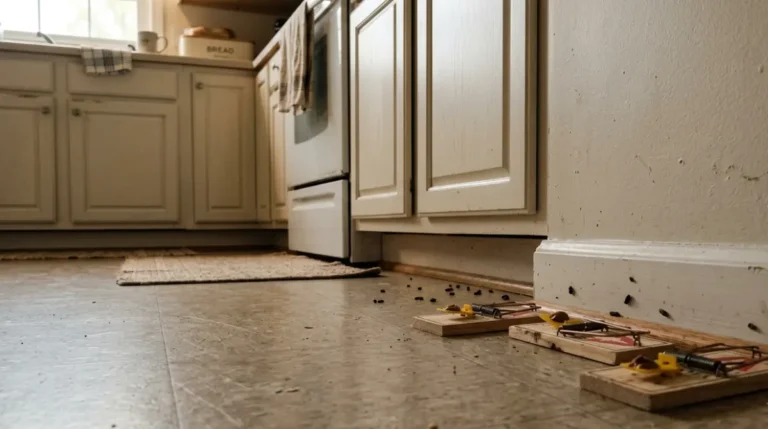
For most household situations, trapping is the first step worth taking. UC IPM describes snap traps as working well and being the preferred method in homes, garages and other structures where only a few mice are present, with the advantage that it avoids hazardous rodenticides and lets you remove the carcass rather than leaving it in a wall.
Trap placement is most of the result
Set traps behind objects, in dark corners, and where you’ve found droppings, positioned close to walls so the rodent passes over the trigger. Because mice rarely travel more than 30 feet from the nest, UC IPM advises spacing traps no more than about 10 feet apart in active areas, and notes that pairs of traps set 1 to 2 inches apart improve capture rates for mice that jump obstacles.
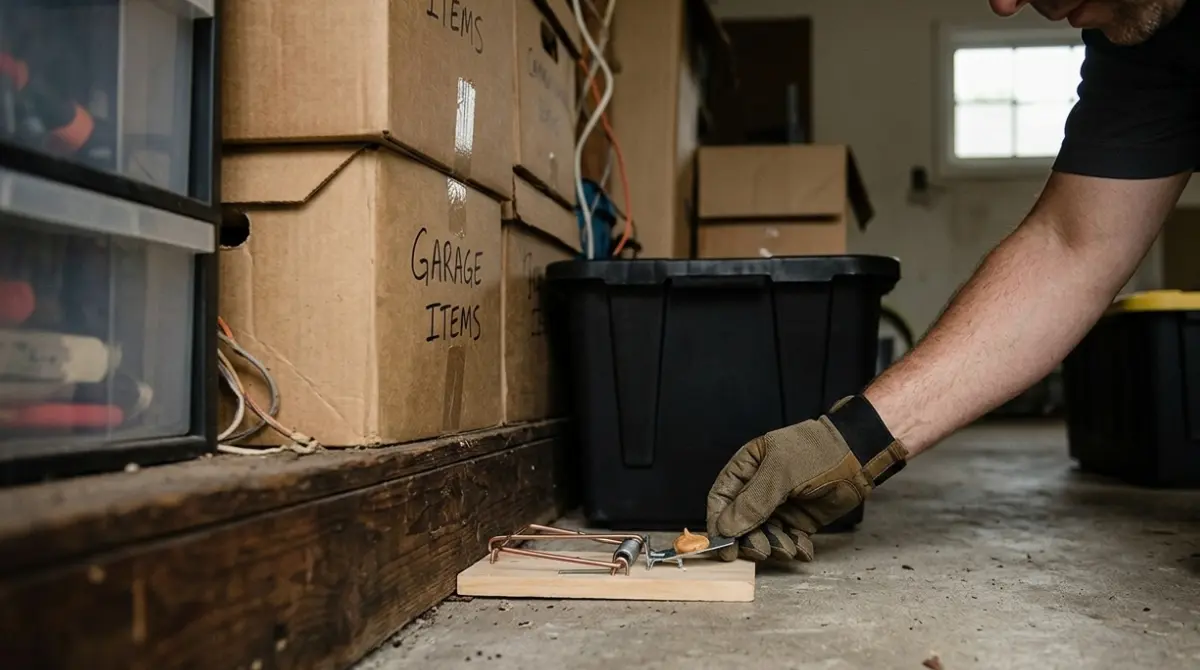
Traps with a wide trigger plate catch better, and triggers should be set lightly. Use a small amount of bait — too much and the mouse can take it without springing the trap.
Baits and bait station
All rodenticides are toxic to people, pets and wildlife. Consumer products must come as ready-to-use bait stations, and UC IPM’s guidance is to place baits in tamper-proof stations out of reach of children, pets and wildlife, and to always follow the product label.
⚠️ Watch Out: Secondary poisoning is real and it’s what drove the recent legislation. UC IPM notes evidence that bromethalin can pass through the food chain to predators that consume a poisoned mouse. If you have pets that hunt, or you care about local raptors, that’s the trade-off to weigh before choosing bait over traps.
Glue boards
Beyond the ordinance question, UC IPM raises two practical problems: adult rodents often detect and avoid the glue, so captures skew toward juveniles, and animals caught on them may not die quickly and will need to be euthanised. The same guidance advises against using them anywhere children, pets or desirable wildlife could make contact.
What doesn’t work
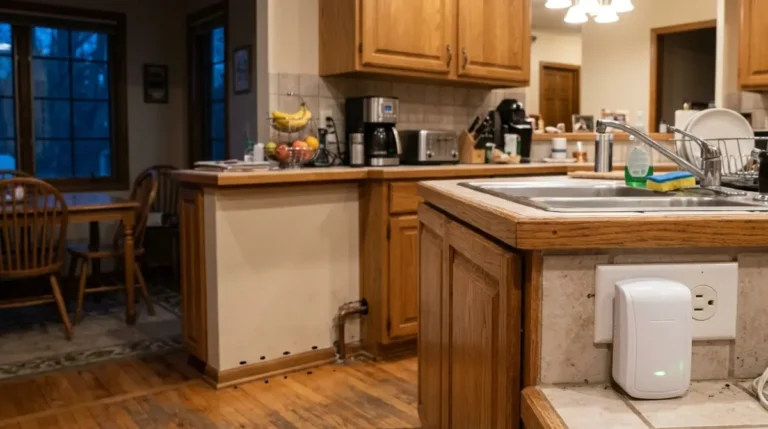
📊 Spec: UC IPM: there is little evidence that sound, magnetic or vibrational devices of any kind will drive established mice or rats from buildings, or provide any prevention or control. Ultrasonic sound is directional, doesn’t penetrate behind objects, and loses intensity quickly with distance. Source: UC IPM Pest Notes, House Mouse.
Cats and dogs aren’t a solution either. UC IPM notes that predators rarely control a rodent population around a structure, and their presence can make rodents more cryptic — which reads as success without being it.
Cleaning up safely after rodents
Do not vacuum or sweep rodent urine, droppings or nesting materials. The CDC is explicit that rodent-borne diseases mainly spread to people through contaminated air, and that sweeping or vacuuming sends tiny virus-carrying droplets into it.
If you already vacuumed, follow the wet cleaning guidance below rather than assuming the damage is done.
The CDC protocol
For a home or an outbuilding like a cabin or shed, the CDC’s cleanup guidance is to open all doors and windows for 30 minutes first and leave the area during that time. Then:
- Put on rubber or plastic gloves.
- Spray urine and droppings with bleach solution or an EPA-registered disinfectant until very wet, and let it soak 5 minutes or per the label.
- Wipe up with paper towels.
- Put the towels in a covered garbage can that’s emptied regularly.
- Mop or sponge the area with disinfectant, covering all hard surfaces — floors, countertops, cabinets, drawers.
- Wash gloved hands with soap and water or disinfectant before removing the gloves.
- Wash hands with soap and warm water afterwards.
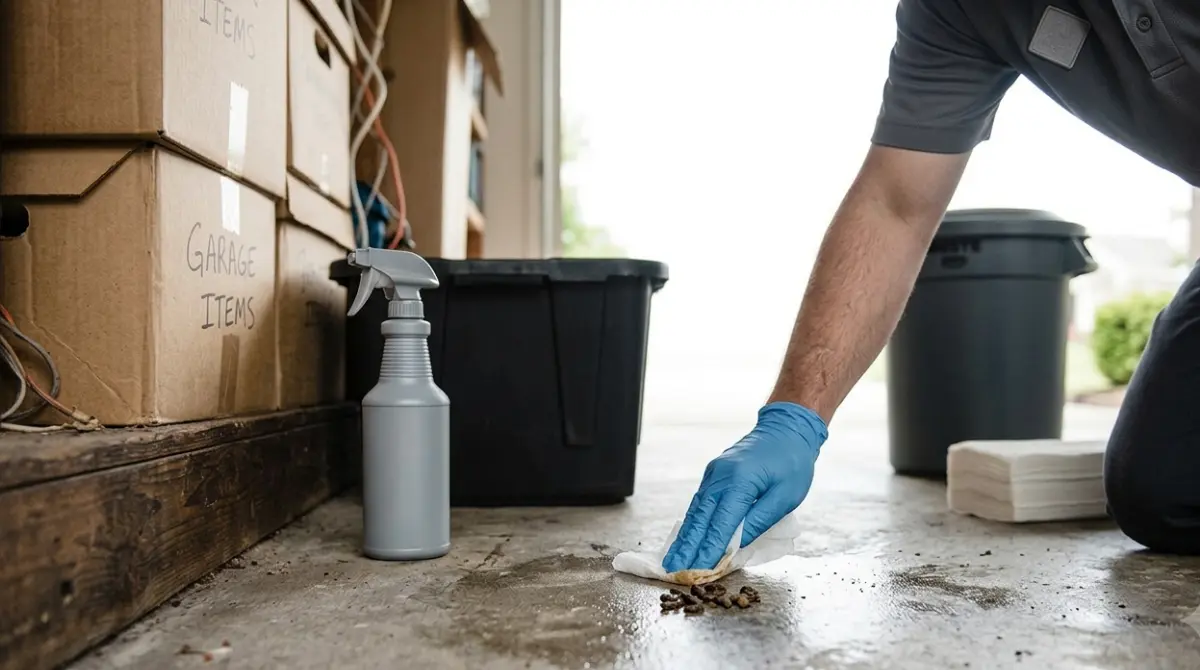
📊 Spec: CDC bleach solution: 1.5 cups of household bleach in 1 gallon of water, or 1 part bleach to 9 parts water. Make it fresh before use. Source: CDC, How to Clean Up After Rodents (last reviewed April 8, 2024). Older 1:10 figures circulating online come from an archived version of that page.
When it isn’t a DIY job
The CDC sets out separate precautions for heavy infestations, vacant dwellings with large numbers of rodents, and structures with confirmed rodent-borne disease — including coveralls, goggles, and a half-mask air-purifying respirator with a HEPA filter or a powered equivalent, subject to local fit-testing requirements. The PPE checklist we use for contaminated-space work covers the same equipment categories.
Where there’s evidence rodents have got into heating and cooling ductwork, the CDC directs you to a professional rodent exterminating service rather than cleaning it yourself.
✅ Do This: Contact your local health department if you have questions about your specific situation, and talk to a healthcare provider if you think a recent illness might be rodent-related — tell them about the exposure.
Rodent proofing questions people actually ask
1. Can mice chew through expanding foam?
Yes. UC IPM lists insulating foam, rubber, vinyl, plastic screening and wood as ineffective for plugging holes used by house mice.
2. Does steel wool keep mice out?
Coarse steel wool works as a plug, but scouring pads may rust over time. Back it with metal or concrete rather than relying on it.
3. Can I seal mice inside my house?
Sealing alone doesn’t remove rodents already inside, and they may die in the structure. Run trapping alongside sealing rather than after it.
4. Is it illegal to relocate a mouse?
In California, yes — relocating live wildlife off the capture property requires a state permit. Rules vary elsewhere; check your state wildlife agency before trapping live.
5. Is my landlord responsible for mice?
Usually yes, under the implied warranty of habitability, with exceptions where tenant conduct caused it. Your state statute and lease set the specifics — confirm both.
6. Do ultrasonic repellents work?
No. UC IPM finds little evidence that sound, magnetic or vibrational devices drive established rodents from buildings or provide prevention or control.
7. When’s the best time of year to seal?
Late summer to early autumn. UC IPM notes house mice frequently enter homes in autumn as night-time temperatures drop.
8. How long after sealing until they’re gone?
There’s no fixed timeline. Keep trapping and monitoring after sealing until captures stop, then recheck the perimeter seasonally.
Your next step
If you’ve read this far, you probably already know roughly where the problem is — most people do. The gap between knowing and fixing is usually one afternoon with a torch and a willingness to look at the boring parts of the house.
Walk the perimeter at ground level first, before you buy anything. Mark every opening larger than a quarter inch, then walk it again looking up. That list is the actual job, and it’s the thing a contractor’s quote should match if you decide to hire out.
The single most important thing to verify before you spend money: confirm with your state pesticide regulatory agency what’s currently permitted where you live, and ask any professional you hire which active ingredient they intend to place and whether t’s legal for that use at your address. That one question protects you legally and protects whatever hunts in your neighbourhood.
Next in this cluster: how to vet a pest control company before you sign · whether mulch against the foundation is working against you · who pays when pests turn up in a rental