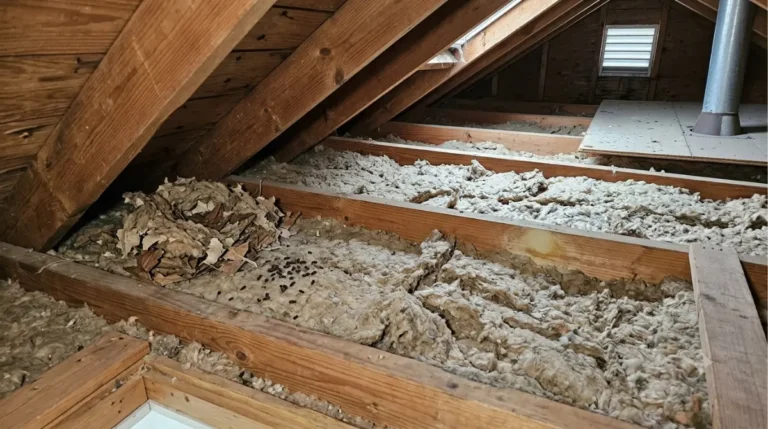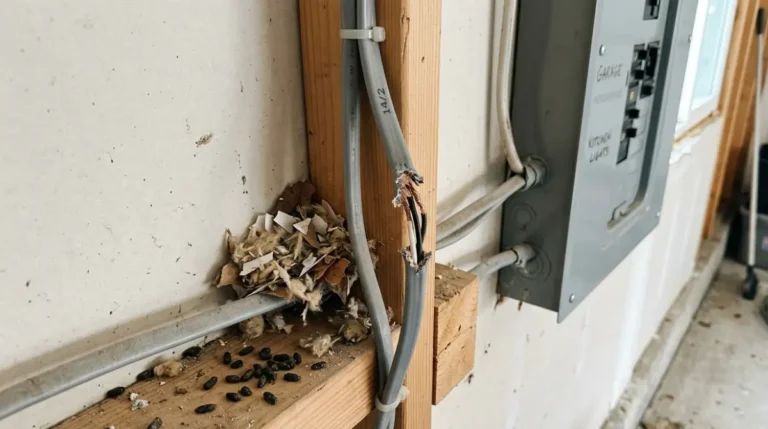
Do ultrasonic pest repellers work, and what stops mice instead

Ultrasonic pest repellers do produce a real reaction from rodents. USDA testing of six commercial units found it gone within three to seven days.
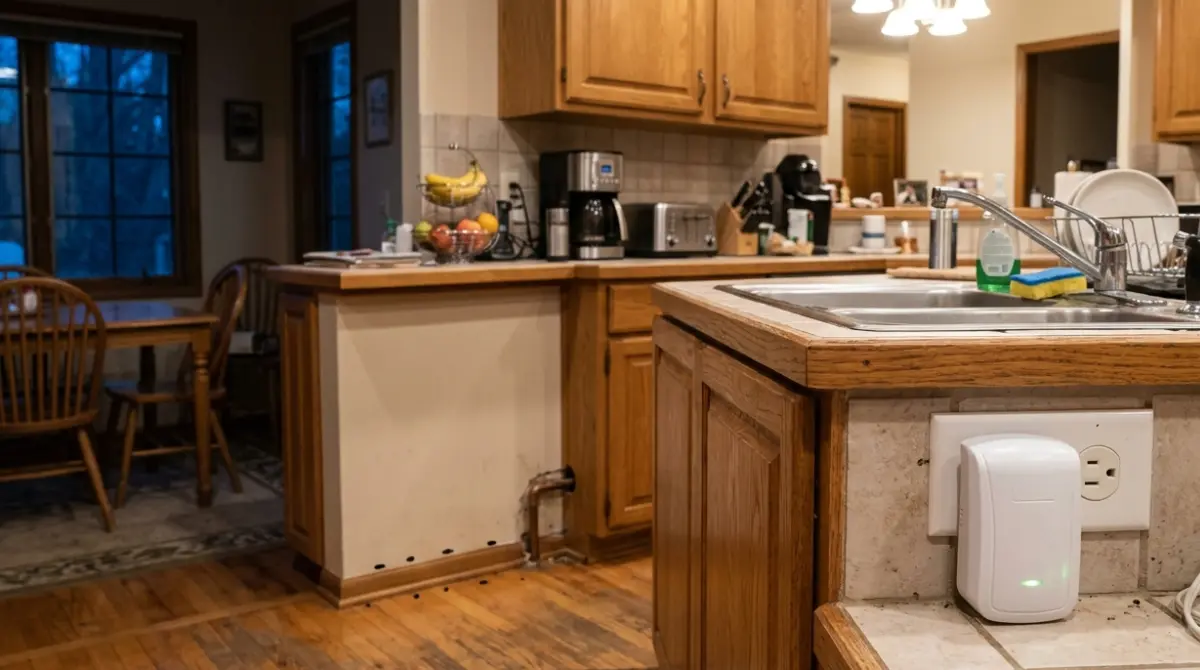
Table of Contents
No. Ultrasonic pest repellers do not control mice or rats on their own. Controlled testing found a real short-term effect that faded within about a week.
That gap, between a few days of avoidance and real rodent control,
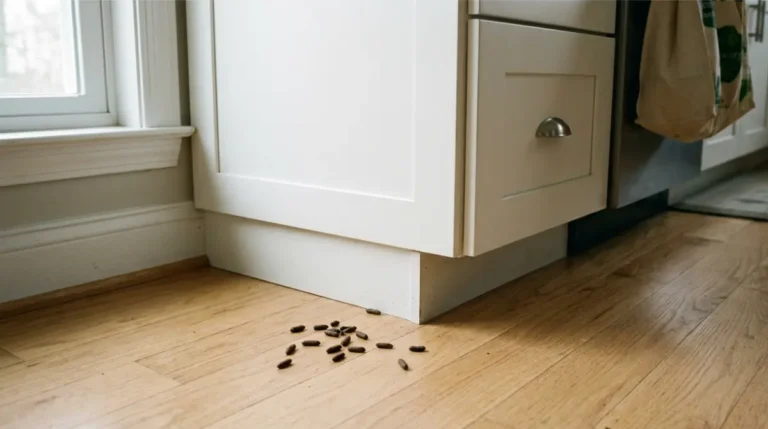
If you’re deciding whether to buy one, start with what the boxes claim and what the testing found. If you already have one plugged in and still see droppings, the reason is usually that the sound never reaches the mouse. If you’re not yet certain rodents are the problem, confirm that first, because scratching in the walls at night has several causes.
We also recorded what these devices claim on US shelves.
ℹ️ Safety Note: An active rodent infestation is a health matter, not only a nuisance. Rodent urine, droppings and nesting material need careful handling, and the guidance here is for general understanding. If the infestation is established, if you cannot find where the animals are living, or if anyone in the household is immune-compromised, hire a licensed pest management professional and follow CDC cleanup guidance.
What these devices actually claim on the box
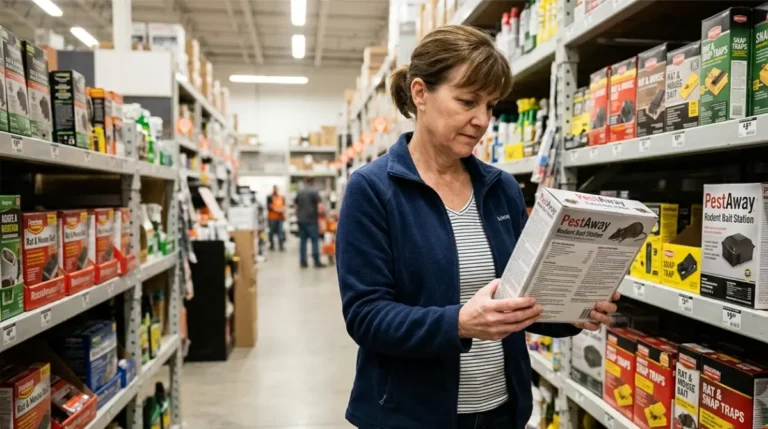
Every argument about these devices happens in the abstract, so we went and read the packaging.
Coverage areas, frequency ranges and “pet safe” labels
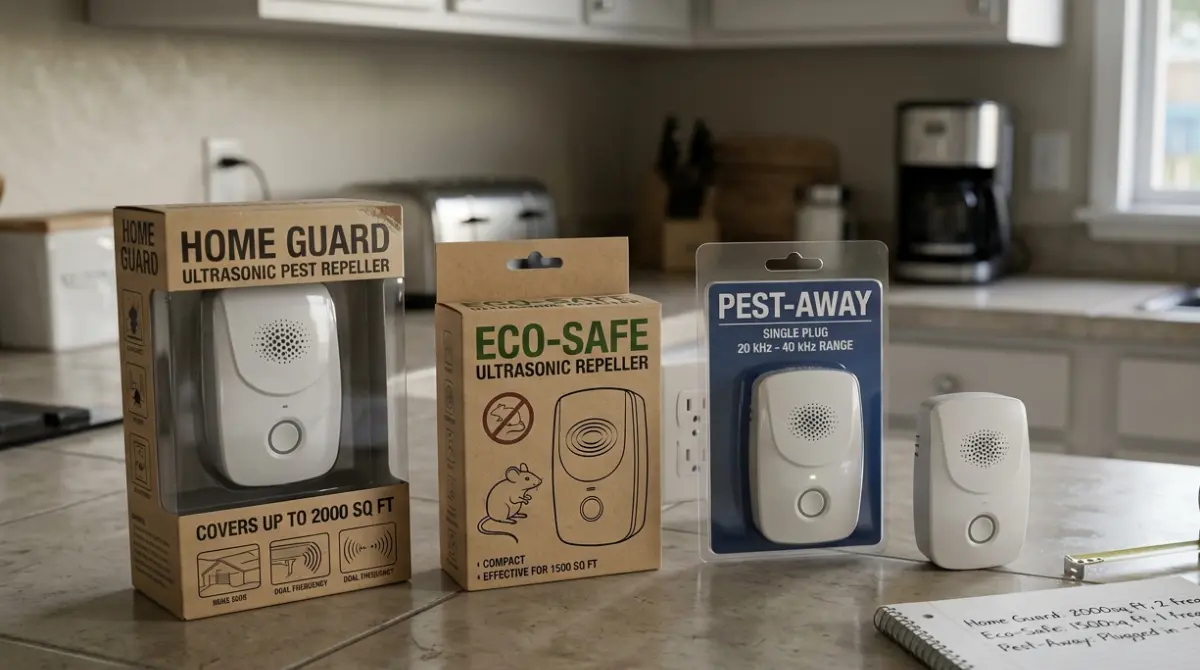
Populate from your capture. Columns are fixed; do not add a rating column. Note the capture date and retailers in the row beneath the table.
The claim almost every box makes about walls
Retail listings commonly instruct buyers to install one unit per room, because the ultrasonic sound will not pass through walls or furniture.
That instruction sits directly beside a coverage figure of several hundred square feet. Read together, the packaging describes a device whose stated range assumes a room nobody actually lives in.
What controlled testing found when rodents met these devices
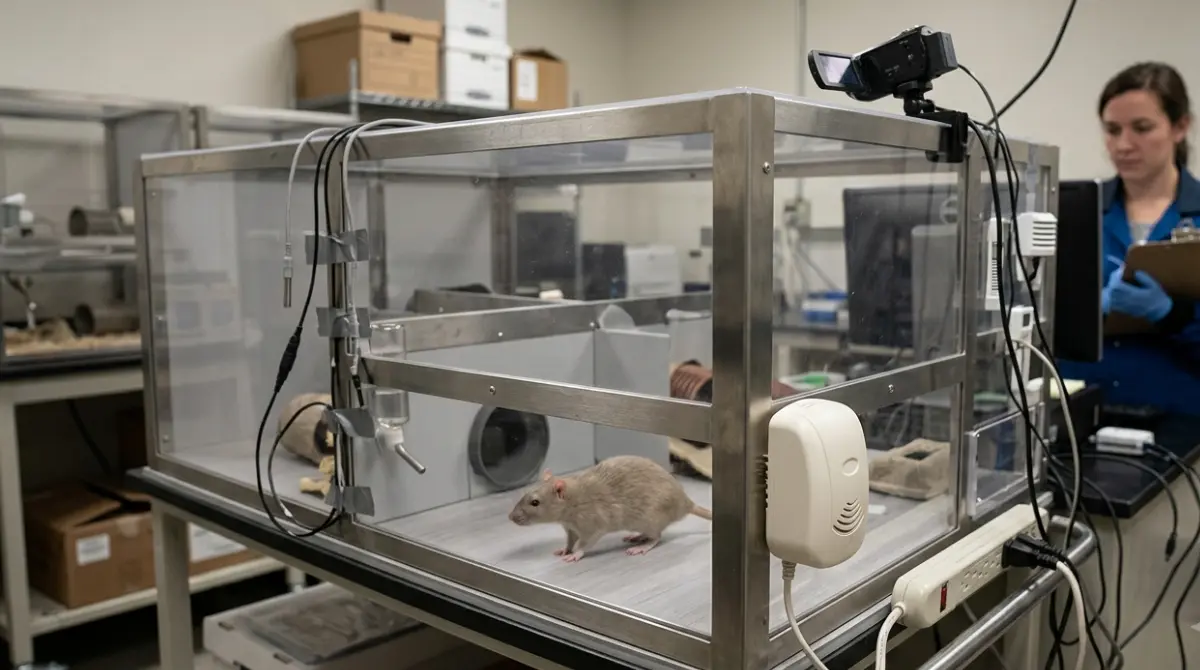
The most thorough public record comes from the USDA National Wildlife Research Center’s review of rodent repellent device testing, which put six commercial ultrasonic units through enclosure and field protocols in rodent-infested structures.
The short-term effect that is real
Rodents did react at first. Movement activity dropped by roughly 30 to 50 percent, and only during about the first three days.
📊 Sourced: Across six commercial ultrasonic devices, USDA testing recorded no significant repellency beyond three to seven days of exposure.
Why it stops working within a week
Habituation is the mechanism. A mouse treats an unfamiliar sound as a possible threat, learns within days that nothing follows it, and resumes feeding and nesting.
The same review found the devices offered too little repellency to be useful for preventing or correcting an infestation, including when combined with baits, traps or glue boards.
Why some people are certain theirs worked
Rodent numbers rise and fall on their own. Most people also plug in a device during a seasonal push indoors, then clean more carefully and store food better in the same week.
Any of those changes can end the sightings without the device doing anything.
Why the sound never reaches most of your house
The behaviour explains half of it. Physics explains the rest.
Intensity drops fast with distance
Ultrasound loses strength with the square of the distance from the device. USDA testing puts this in plain terms: a point twelve feet from the unit receives roughly a quarter of the intensity measured at six feet.
Furniture, doors and soft surfaces absorb it
🔍 Why It Works: High-frequency sound travels in a straight line and does not bend around corners the way lower-frequency sound does. Cloth, insulation and even paper or cardboard absorb it quickly, so a sofa or a closed cabinet door removes most of what reaches behind it.
That is why a mouse living inside a wall cavity or behind the stove is effectively out of range, however loud the device is at the socket.
Before you take a coverage claim at face value, measure the actual square footage of the room and compare it to the number on the box.
Why “EPA” on the packaging doesn’t mean it was tested
Most buyers assume some agency checked these before they reached the shelf. None did.
Pesticides are registered. Devices are not.
A pesticide must be registered with the EPA before sale. A device works by physical means instead of a chemical, and the EPA’s classification of pesticide devices names ultrasonic units in that second group.
Devices require no registration and receive no required premarket review of whether they work. That is not a loophole anyone is hiding; it is simply what the category means.
What the FTC has actually done about these claims
Advertising is policed separately. The FTC brought six enforcement actions against ultrasonic device sellers between 1985 and 1997, each resolved by consent order.
In 2001 it sent warning letters to more than 60 manufacturers and retailers, stating that efficacy claims must be supported by scientific evidence.
What the same $30 buys that actually works
You were about to spend roughly thirty dollars. Here is where that money does measurable work instead.
| Item | What it does | Price | Key detail |
|---|---|---|---|
| [exclusion / trapping / tools] | [function] | [$] | [size, quantity, or fit note] |
Seal the way in
Exclusion is the only step that ends the problem rather than managing it. Working out where mice are getting into the house comes first, and the full method is in our guide to sealing the gaps rodents use to get in.
🛒 Our Pick: Stainless or copper mesh fill fabric plus an exterior-grade sealant, for gaps around pipe and cable entries.
Trap what’s already inside
Sealing alone traps the current residents indoors, so trapping runs alongside it. The CDC’s trapping guidance recommends snap traps and advises against glue and live traps, which can cause a frightened rodent to urinate and increase exposure risk.
🛒 Our Pick: Snap traps in the correct size for your rodent, since mouse and rat traps are not interchangeable.
Take away the food and water
Store pantry food in hard containers, lift pet bowls overnight, and fix any slow leak under a sink. A sealed house with a food source still beats a device every time.
✅ Do This: If you cannot locate the entry points, call a state-licensed pest management professional and ask two questions before booking. Do they perform exclusion work or only treatment, and does the quote include finding and sealing entry points rather than trapping alone?
Pets in the house, and the cost of waiting
Two questions come up often enough to answer directly.
Homes with pet rodents or rabbits
Published behavioural audiograms put guinea pig hearing at roughly 86 Hz to 46.5 kHz, well above the human ceiling of about 20 kHz, with domestic rabbits, hamsters and chinchillas also hearing into ultrasonic frequencies (Heffner and Heffner, Journal of the American Association for Laboratory Animal Science, 2007).
So a device aimed at wild rodents is plainly audible to pet ones.
⚠️ Watch Out: Before running an ultrasonic device in a home with a pet rodent, rabbit or chinchilla, ask your veterinarian whether the unit’s stated frequency range overlaps that species’ hearing and what behavioural signs to watch for.
The risk that matters most: lost time
The thirty dollars is the small loss. Three weeks of a growing population while a plug-in glows in the wall is the large one, which is why placing mouse traps safely around pets and children is worth sorting out now.
For an infestation already underway, handling an active infestation safely matters more than any repellent decision.
Common questions about ultrasonic rodent repellers
1. Do ultrasonic pest repellers really work on mice?
No. USDA field testing of six ultrasonic pest repellers found the effect on rodent activity faded within about a week.
2. How long do ultrasonic repellers take to work?
Any effect appears immediately, not gradually. Controlled testing recorded reduced rodent movement in roughly the first three days, then nothing measurable.
3. Do mice get used to ultrasonic sound?
Yes. Controlled testing found no significant repellency beyond three to seven days, because rodents learn the ultrasonic sound carries no actual threat.
4. Do ultrasonic repellers work through walls?
No. Ultrasonic sound does not bend around corners and is absorbed by soft furnishings, so walls and doors block most of it.
5. Are ultrasonic pest repellers EPA approved?
No. The EPA classifies ultrasonic pest repellers as devices, which require no registration and no premarket review of whether they work.
6. Has the FTC taken action on ultrasonic pest repellers?
Yes. The FTC brought six enforcement actions between 1985 and 1997, then sent warning letters to over 60 sellers in 2001.
7. What actually keeps mice out of a house?
Sealing entry points, trapping what is already inside, and removing food and water. The CDC recommends snap traps over glue or live traps.
8. Are ultrasonic repellers safe for pets?
Guinea pigs and similar pets hear well into ultrasonic frequencies, so the sound is audible to them; the welfare effect is untested. Ask your vet before running one near a pet rodent or rabbit.
9. Why do some people say ultrasonic repellers worked for them?
Rodent numbers rise and fall seasonally, and buyers usually clean and store food better at the same time, which changes the outcome.
10. Should I unplug the one I already bought?
Leaving it plugged in costs little, but treating it as your rodent control delays the sealing and trapping that actually work. For an established infestation you cannot locate, contact a licensed pest management professional.
Where to put your effort instead
The evidence on ultrasonic pest repellers has pointed the same direction since the mid-1980s, and no consumer device has changed it. The sound is real, the rodents stop caring, and the infestation continues on its own schedule.
Tonight, take a flashlight outside after dark and walk the foundation looking for daylight or gaps at pipe entries. That list is where the actual fix starts.