Where mice get into a house, and the gaps most people overlook

Mice get into a house through openings over a quarter inch — and the
twelve that matter are mostly structural, not the visible hole you’re
picturing.
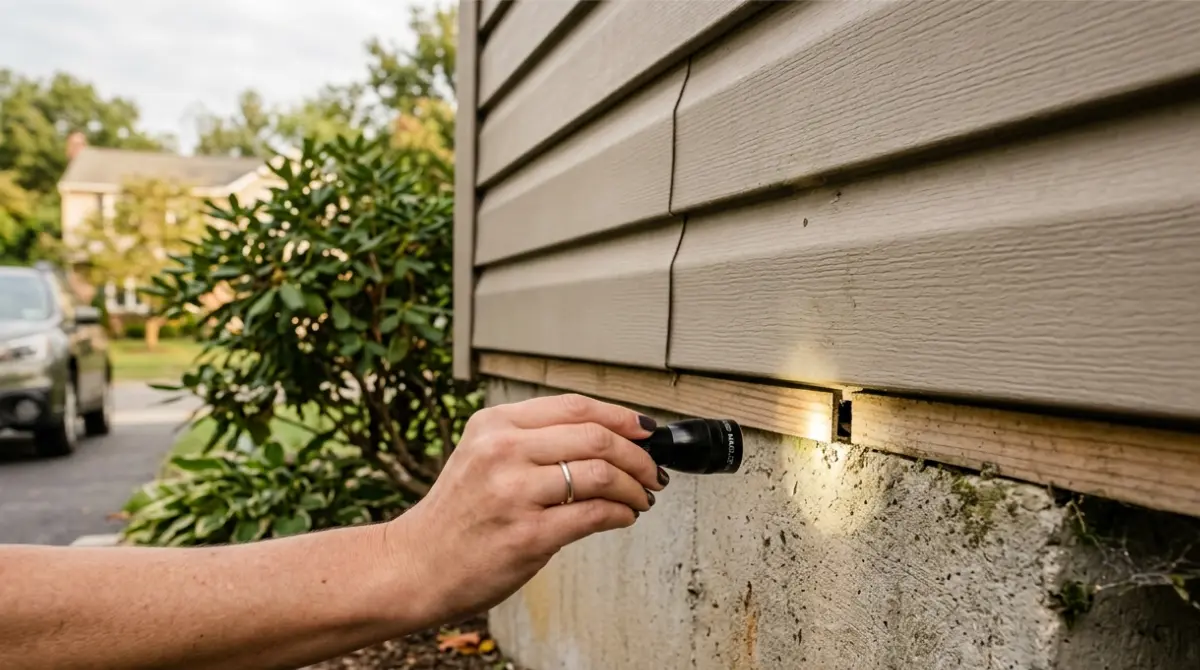
Table of Contents
Mice get into a house through any opening larger than a quarter inch — usually somewhere structural, not a visible hole. That threshold comes from UC IPM, and most houses have dozens of openings that qualify.
Heard noises but confirmed nothing yet? Start with what’s causing a scratching sound in your walls at night.
Sealed gaps before and they came back? The material was almost certainly wrong — that’s covered further down.
Renting? Don’t cut into your landlord’s structure. The full rodent-proofing walkthrough, including what’s legal where you live covers who is responsible.
Every location below is one the CDC or Cooperative Extension names. Nothing here was hands-on tested.
ℹ️ Safety Note: This inspection touches four real hazards. Disturbing droppings, urine or nesting material can expose you to rodent-borne disease — don’t sweep or vacuum them, and follow the cleanup guidance in the pillar article. Roofline, soffit and chimney checks are work at height: look from the ground, and hire a licensed pest control operator or roofing contractor for anything above ladder reach. Never fit a screen to a dryer vent, and never seal a brick weephole shut — both are explained below. This article is general guidance, not a substitute for a licensed professional or your local code.
The measurement that decides what counts as a gap
House mice squeeze under gaps a quarter inch tall and through openings ⅜ inch wide, per UC IPM’s house mouse guidance. Seal everything larger than ¼ inch and you’ve covered both.
Why ¼ inch beats “the size of a dime”
A coin comparison fails at the moment you actually need it. Standing at a door threshold or a siding seam, you aren’t looking at a round hole — you’re looking at a slot, and a slot ¼ inch tall is enough. The CDC frames the same threshold as the width of a pencil, which you can hold against a real gap.
The rat number is different
Rats need an opening greater than ½ inch, so sealing to the mouse threshold covers both. If you’re unsure which you have, the differences worth checking tonight settle it.
📊 Spec: Mice squeeze under ¼-inch gaps and through ⅜-inch openings. Rats enter through openings greater than ½ inch. Sources: UC IPM Pest Notes, House Mouse (Pub 7483, updated 07/2025); Cooperative Extension rodent exclusion guidance. No measurements were taken by us.
The six gaps to check at ground level
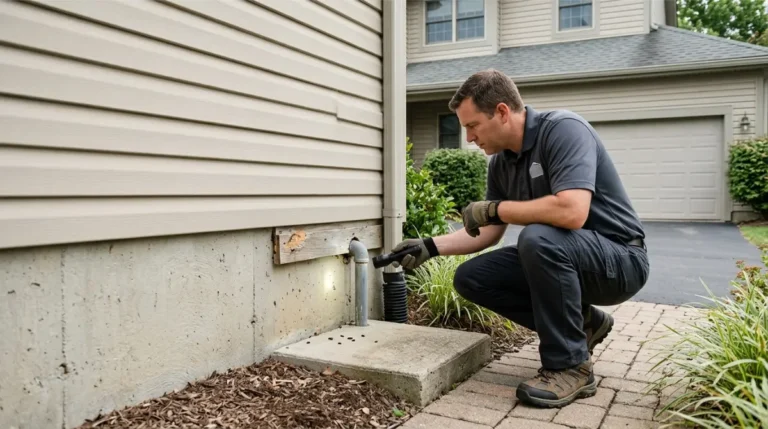
Walk the whole perimeter at ground level before you look up once. These six account for most mouse entry points on a typical house.
Start at the sill plate seam
1. The framing-to-foundation seam. Cooperative Extension flags gaps where wall framing or siding meets the foundation as easy entry. Run a torch along it in low light and watch for daylight from inside.
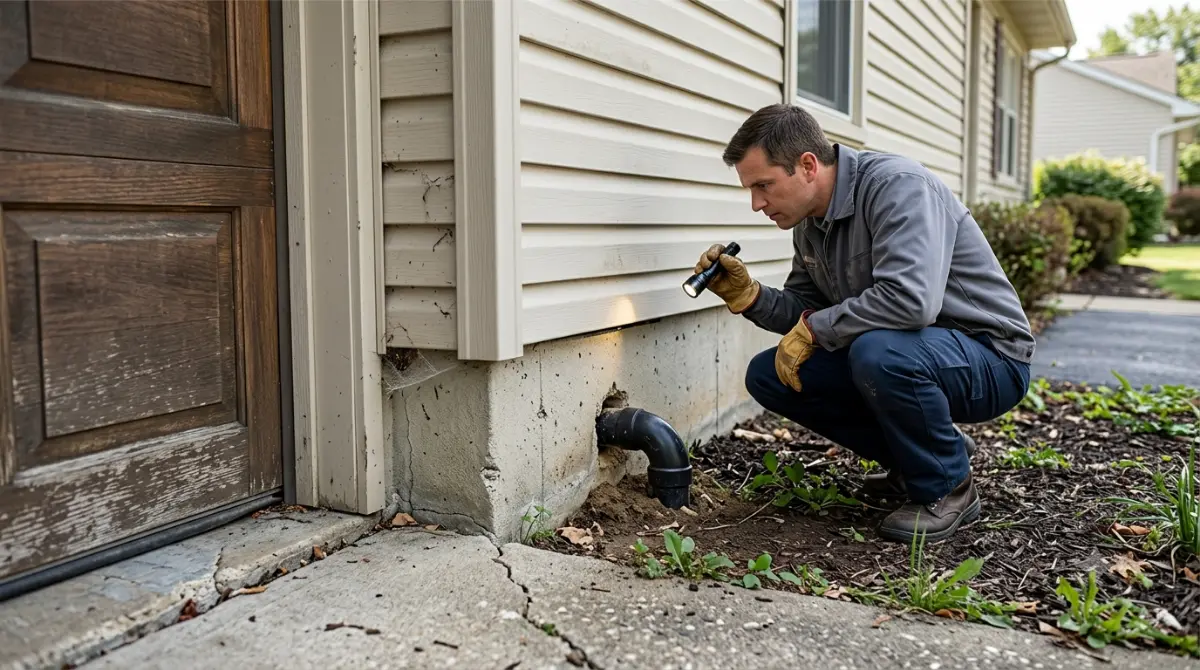
2. Foundation cracks and abandoned utility holes. Old openings where a line used to enter are commonly left open and forgotten.
Every pipe, wire and cable
3. Ground-level utility penetrations. Water, gas, electrical conduit and cable all leave a gap, and even new construction routinely has large ones.
4. Weepholes in brick veneer. These sit at ground level by design, directly on the path a mouse already travels.
Doors and the garage
5. Door thresholds and worn sweeps. Rubber and vinyl weather stops get gnawed through.
6. The garage door — the bottom seal, both side jambs, and the top corners.
Check inside too. The CDC’s room-by-room list of where to look includes under sinks, behind appliances, and around the pipes feeding water heaters and furnaces.
The six gaps above eye level
Mice climb. UC IPM records that they run up any rough vertical surface, travel along wire cables, and jump 12 inches onto a flat surface — so an opening at roofline height is as live a route as one at your ankle.
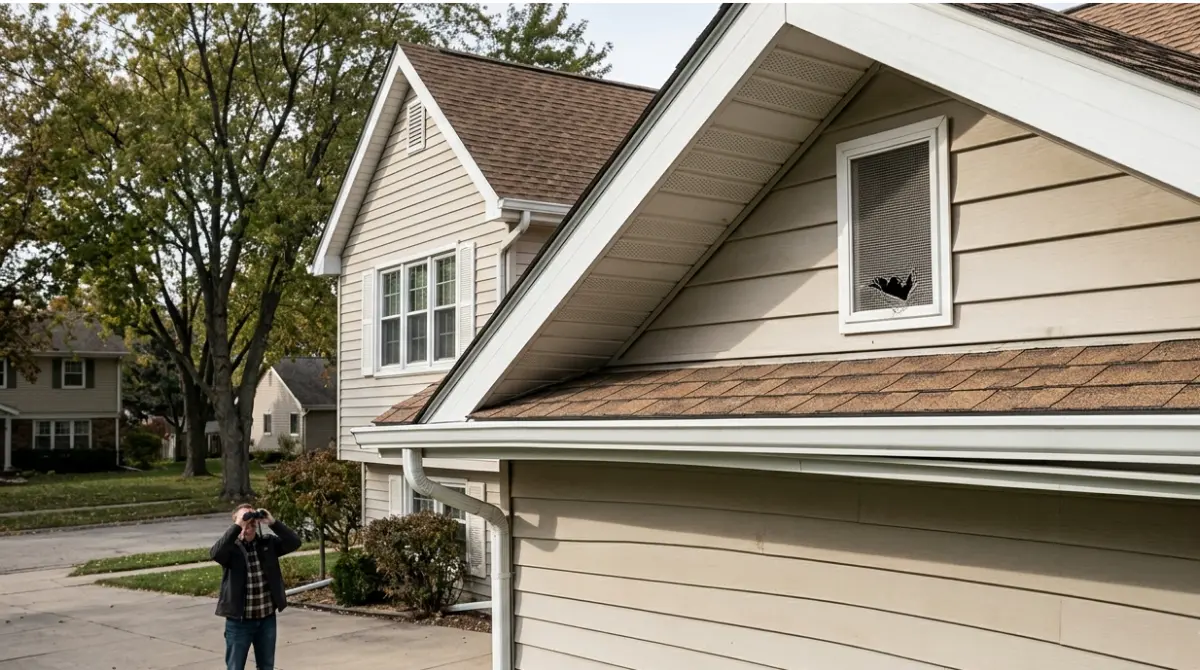
Soffits, vents and the roofline
7. Crawl space and foundation vent screens, which tear and go unnoticed for years.
8. The soffit-to-fascia joint and soffit vents.
9. Gable vents, particularly where the screening has come loose from the frame.
Chimney, flashing and utility runs
10. Roof-to-wall joints, missing flashing and roof jacks.
11. The chimney and the fireplace chase. Cooperative Extension’s breakdown of entry points in houses describes the hollow space left between the outside wall and a zero-clearance fireplace, entered via the roof joint, the siding-to-corner-trim gap, or around gas pipes.
12. The dryer vent and the AC line-set penetration.
Where to stop and call someone
Check these six from the ground with binoculars or a phone camera zoom. That’s enough to find them and enough to price the job.
✅ Do This: Stop at the roofline. If you’re working alone, the pitch is steep, or the gap is above single-storey height, hire a licensed pest control operator or roofing contractor. Ask three things: are you licensed in this state for exclusion work, is the sealing warrantied, and does the quote itemise every entry point you’re closing?
Three gaps almost everyone seals the wrong way
Three of the twelve are routinely closed with a fix that creates a new problem. This is where most sealing jobs fail.
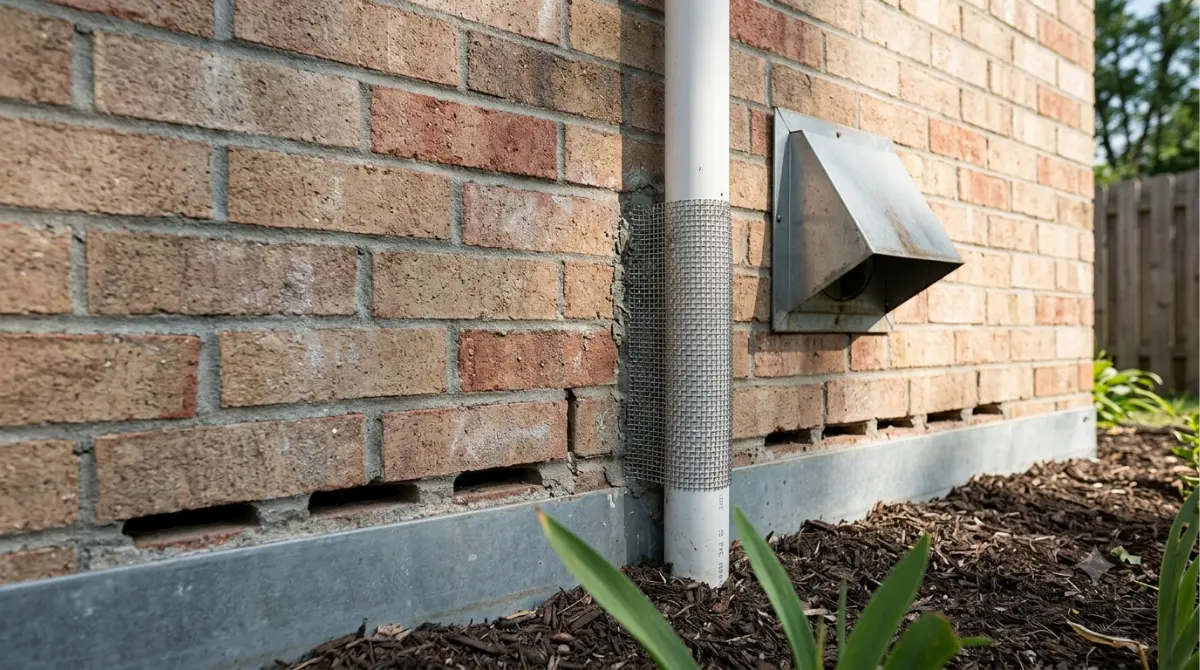
The dryer vent: never screen it
No — don’t mesh a dryer vent. The residential code section covering dryer exhaust terminations requires a backdraft damper and states that screens shall not be installed at the termination, because trapped lint chokes airflow. Fit a damper hood that closes when the dryer isn’t running.
Weepholes: never seal them
Weepholes aren’t a builder’s oversight. IRC R703.8.6 requires them in masonry veneer at a maximum of 33 inches on centre, immediately above the flashing, to drain the wall cavity. Use a breathable cover that blocks the opening without closing it.
Foam and caulk hold; they don’t stop
UC IPM lists expanding foam, rubber, vinyl, plastic screening and wood as ineffective against house mice.
🔍 Why It Works: A rodent’s incisors curve inward, which makes a flat, hard surface difficult to bite into — but give them a rough edge and they gnaw through most materials quickly. That’s the whole reason metal works and foam doesn’t. Source: Cooperative Extension rodent exclusion guidance.
⚠️ Watch Out: The CDC’s seal-up page says to fill small holes with steel wool and hold it with caulk or spray foam, while UC IPM lists expanding foam among materials that don’t work. Both are right, read carefully: the metal does the excluding and the foam only holds it in place. Never treat foam as the seal itself.
What actually closes each gap
Buy to a spec, not to a description. These figures come from the recommended materials table for rodent-proofing.
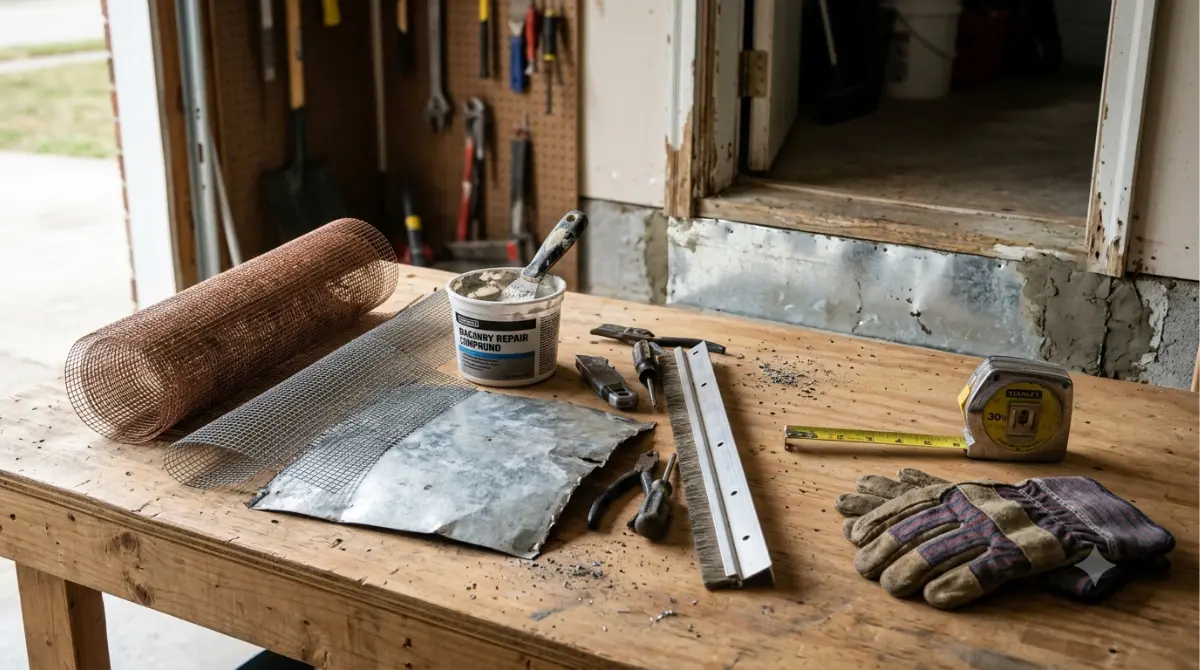
| Gap type | Material | Key detail |
|---|---|---|
| Irregular pipe and cable openings | Copper or stainless mesh, packed tight | A temporary plug unless backed with patching compound |
| Vents, larger openings | Hardware cloth, 24-gauge, ¼ x ¼-inch mesh | ½-inch mesh excludes rats only |
| Wall and pipe barriers | Galvanised sheet metal, 24-gauge or heavier | 22-gauge or heavier for door edging |
| Foundation cracks | Concrete or masonry grout | Back holes over 3 inches with ¼-inch hardware cloth first |
| Exterior doors | Metal-edged sweep or built-up threshold | Gap to threshold must not exceed ¼ inch |
Sourced from Cooperative Extension rodent-proofing guidance. No materials were bench-tested by us.
⚠️ Watch Out: Mesh finer than ½ inch significantly reduces airflow. In a crawl space that’s already marginally ventilated, or where fine mesh will clog with dust or freeze over, ½-inch mesh is the sensible compromise — you don’t want to fix a mouse problem and start a moisture one.
🛒 Our Pick: For utility penetrations, buy copper or stainless mesh fill fabric rather than steel wool scouring pads, which rust and stain.
Seal too early and you trap them in the wall
Seal and trap together — not sealing first. Closing every gap while mice are still inside leaves them in the structure with nowhere to go.
Confirm before you close
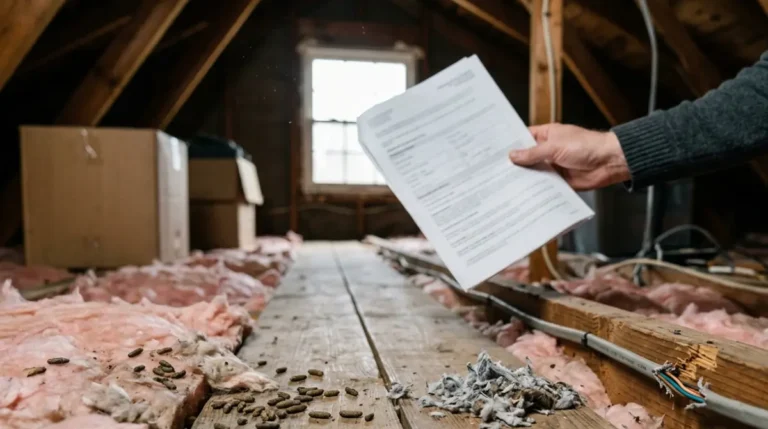
Check whether the droppings are fresh first; one real measurement settles what you’re dealing with. Don’t sweep or vacuum them.
Run trapping and sealing together
UC IPM notes house mice seldom venture more than 30 feet from the nest, so control inside a structure often means they die inside it. Trapping lets you remove the animal instead.
✅ Do This: Call a licensed pest control operator if droppings are widespread, or if anything has got into your ductwork — the CDC directs duct contamination to a professional rather than a DIY cleanup.
Questions people ask about where mice get in
1. How small a hole can a mouse fit through?
Mice squeeze under gaps a quarter inch tall and through openings ⅜ inch wide. Seal anything larger than ¼ inch.
2. Where do mice get into a house?
Twelve places: the sill plate seam, foundation cracks, utility penetrations, weepholes, doors, garage door, vents, soffits, gables, roof joints, chimney and dryer vent.
3. How do I find where mice are coming in?
Walk the full perimeter at ground level first, marking every opening over a quarter inch, then walk it again looking up.
4. Can mice get in through weepholes?
Yes — they sit at ground level on a mouse’s travel path. Cover them with something breathable; never seal them shut.
5. Can mice come in under the garage door?
Yes. Check the bottom seal, both side jambs and the top corners, where gaps are common and often missed.
6. Do mice get into a house through the roof?
Yes. Mice climb rough vertical surfaces and travel wire cables, so soffits, gables and roof joints all qualify. Inspect from the ground and hire a licensed operator for work at height.
7. Can mice chew through expanding foam?
Yes. UC IPM lists expanding foam, rubber, vinyl and plastic screening as ineffective against house mice. Use metal, backed by foam if needed.
8. Should I put steel wool in a weephole?
No. Steel wool rusts, which stains the brick and blocks the drainage the weephole exists to provide. Use a breathable cover.
9. What size hardware cloth keeps mice out?
Extension guidance specifies 24-gauge hardware cloth in a ¼ x ¼-inch mesh for mice. Half-inch mesh only excludes rats.
10. Should I seal mouse holes before or after trapping?
Run both together. Sealing first traps mice inside the structure, where they’ll die in the walls. Confirm activity first, and call a licensed operator if it’s widespread.
Your next step
Walk the perimeter before you buy anything. Mark every opening over a quarter inch at ground level, then walk it again looking up, and you’ll have the list a contractor’s quote should match.
The one thing to get right: don’t seal until you know what’s already inside. Closing the last gap on a house with mice in it doesn’t end the problem — it relocates it into your walls.