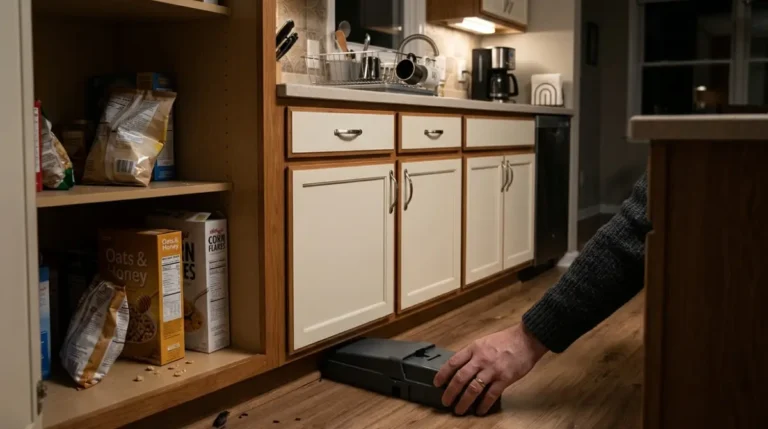
A Bird Feeder Attracting Rats Is a Common, Fixable Problem

A bird feeder attracting rats can often stay up. Public health guidance puts it 4 feet up and 8 feet from anything a rat could jump from.
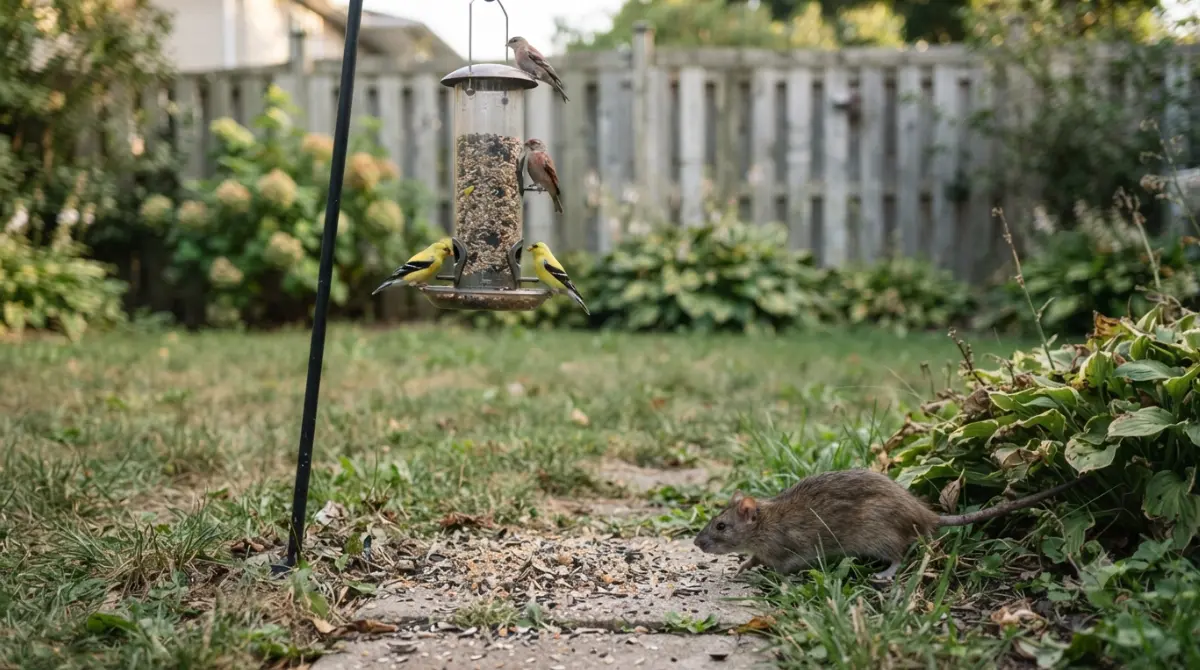
Table of Contents
Do bird feeders attract rats? Yes — here’s the order to fix it
Yes. Bird feeders attract rats mainly through the spilled bird seed that lands underneath them. Public Health – Seattle & King County tells people who feed birds to expect more rats around the home. The feeder itself is rarely the whole problem — the seed on the ground, left out overnight, is.
You don’t have to stop feeding the birds to fix it. Start where you are.
If you’ve already seen a rat
Read the signs section first, then go straight to cleanup and the take-it-down decision — droppings under a feeder change the rules. If you have pets or small children, read the take-it-down section before you buy any bait.
If you’re setting up a feeder and want to avoid this
Seed choice and placement do most of the work.
ℹ️ Safety Note: Rodent droppings can carry disease, and every rodent bait is toxic to birds, pets, wildlife and children. The cleanup steps here follow CDC guidance and are meant for small outdoor messes. For heavy droppings, rats near or inside the house, or any use of rodenticide, hire a state-licensed pest control operator and follow your state’s pesticide rules.
Why rats keep coming back to your feeder
Rats return because a feeder is a steady food source.
It’s the seed on the ground, and it’s at night
King County notes bird seed spills easily and can’t all be removed. Rats are mostly active at night, per UC IPM’s guide to rats, so seed left out after dark feeds them.
Roof rat or Norway rat changes the fix
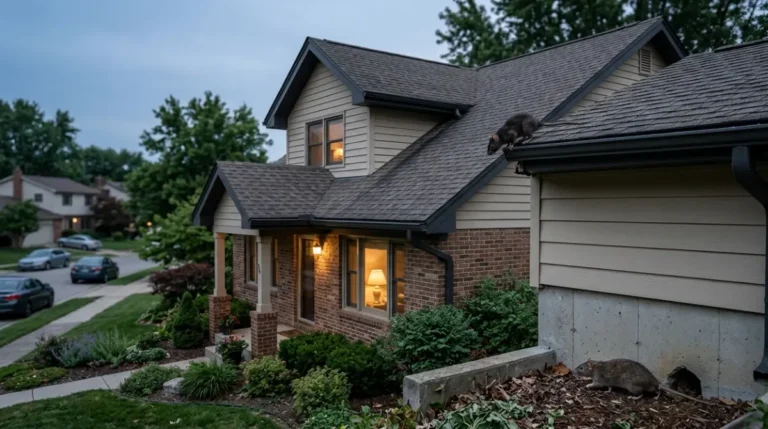
A roof rat climbs, nests in trees and dense shrubs, and may eat young birds and eggs — keep feeders far from launch points. A Norway rat burrows and favors cereal grains, so spilled seed is its draw. The 30-second tail test tells you which you have.
Your rats may be commuting from next door
UC IPM puts Norway rats’ foraging at 100 to 500 feet from the nest, and roof rats travel 300 feet or more. Yours may nest next door.
How to tell rats are using your feeder
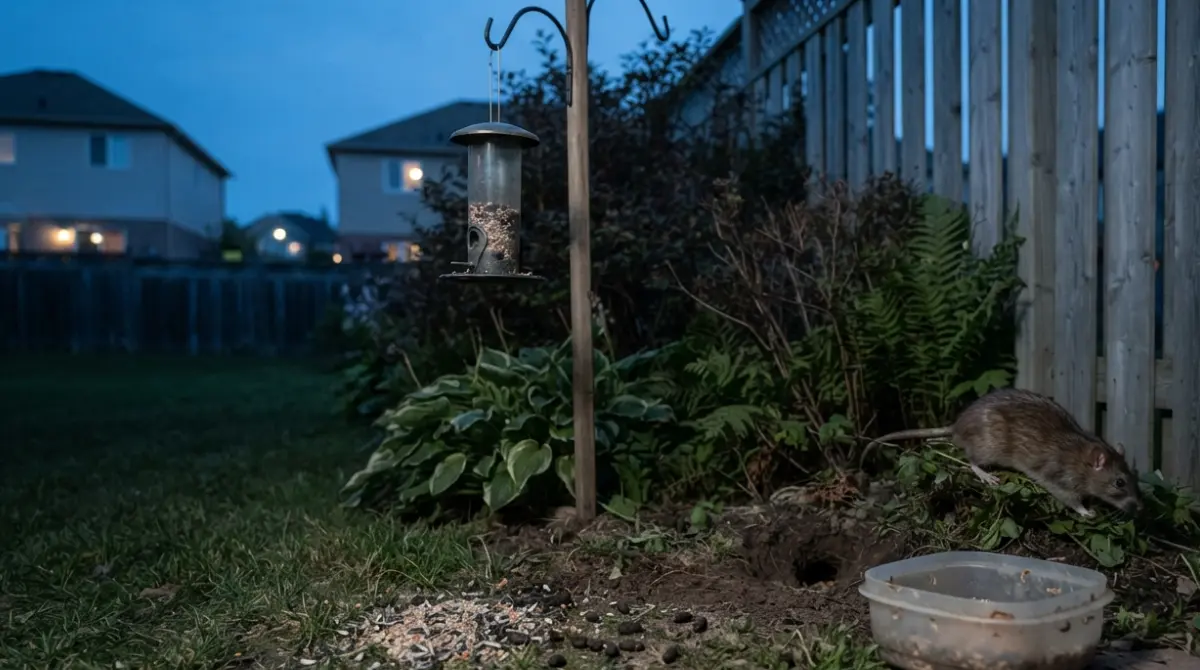
A quiet check at dusk usually tells you whether rats are the ones feeding.
The dusk check
UC IPM lists rats traveling along utility lines or fence tops at dusk as a sign of infestation. Watch quietly from a window; unfamiliar noises scare rats off.
What’s under and around the feeder
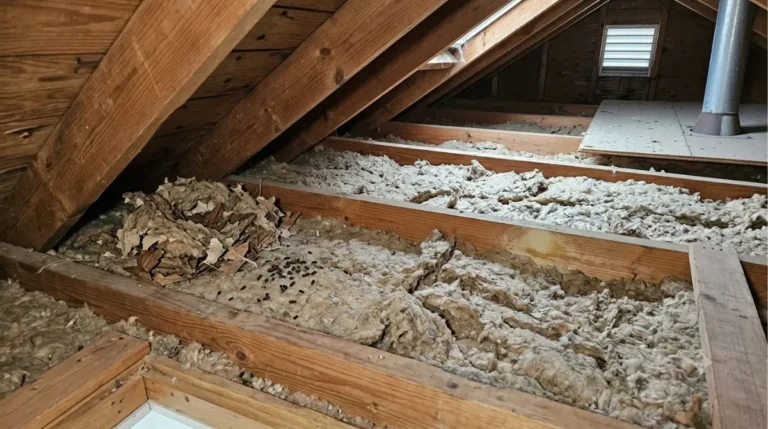
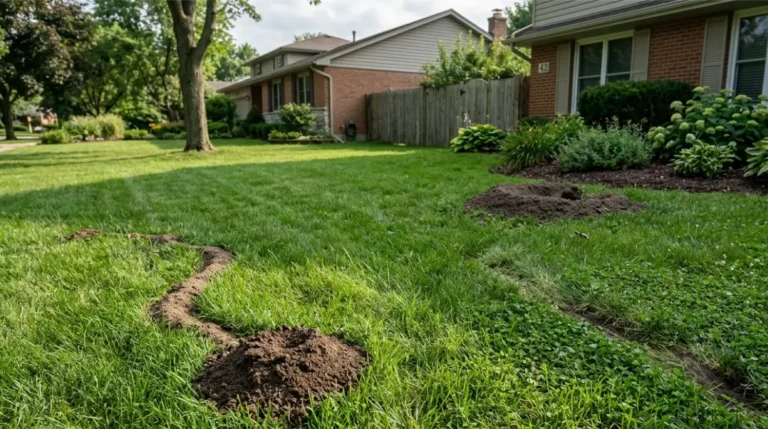
Look for burrows near the feeder, compost pile or garbage cans, and for droppings mixed into the hulls — look, don’t touch. Seed that’s gone by morning, when you filled only a day’s worth, points to something feeding at night.
What your seed bin is telling you
King County warns that rats chew easily through plastic containers. Gnaw marks on a plastic seed bin or bag suggest the feeder isn’t their only supply.
Seed and feeder choices that leave less for rats
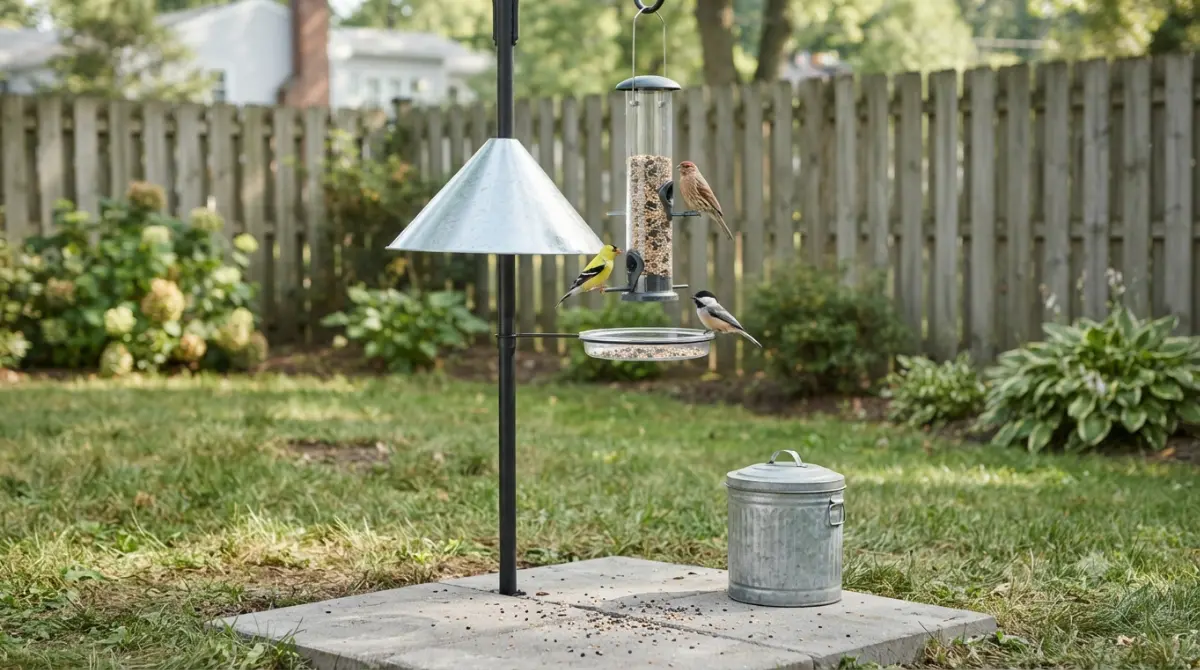
Less seed on the ground means less for rats, and no seed is fully rat-proof.
Skip the filler seed
King County notes that blends heavy in millet, milo or sorghum filler tend to end up on the ground. Cornell Lab of Ornithology recommends hulled seed, with the shell already removed, to cut the mess below the feeder.
🛒 Our Pick — hulled, no-filler seed: Picked because it matches King County’s and Cornell’s guidance on filler and hulls, not because we tested it.
Trays, baffles and “squirrel-proof” feeders
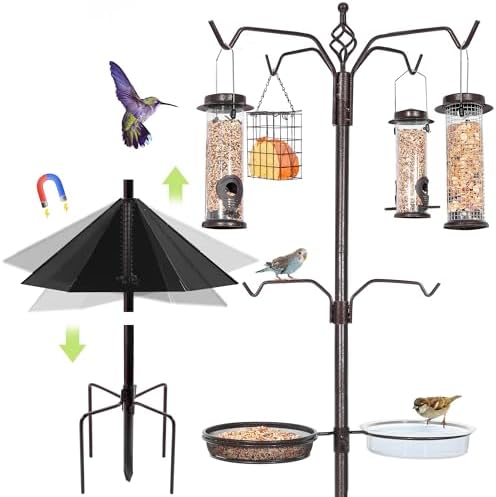
- Metal Squirrel Baffle: The newly designed squirrel baffle is 19 inches in diameter and is wider and larger. With the add…
- High-quality: The bird feeding station kit for outside is the 94 inches in height, made of heavy-duty metal material. Th…
- Multi-purpose: Bird feeder pole comes with tube feeders, melon seed feeder with tube, suet feeder, 4-large top hooks, me…
King County recommends a squirrel-proof feeder with a tray and baffle to keep seed off the ground. Its rule of thumb: if a squirrel can reach the feeder, so can a rat.
🛒 Our Pick — tray feeder with a pole baffle: Look for an integrated seed tray and a baffle sized to your pole; we haven’t tested specific models.

- Effective Cleaning Solution: Safely cleans birdhouses, feeders, and baths made of plastic, vinyl, wood, fiberglass, and …
- Natural Soy-Based Formula: Utilizes the power of soybeans to effectively clear organic matter, mineral deposits, and bir…
- Non-Toxic & Bird-Safe: This spray is non-toxic to birds and animals, promoting a safe environment around your outdoor sp…
Store seed in metal, not plastic
Keep bulk seed in a lidded metal can, as King County advises.

- Pest Protection: keep your birdseed fresher for longer with our airtight bird seed storage container; Featuring locking …
- Stainless Steel Design: built from stainless steel, this bird seed storage container is rust-proof and designed for dura…
- Convenient Transparent Window: never run out of seeds unexpectedly with our bird seed container’s clear side window; Eas…
🛒 Our Pick — galvanized metal seed can: A lidded metal container is King County’s storage advice for bird seed and pet food.

- HULLED SUNFLOWER KERNEL BIRD FOOD – Sunflower chips provide high energy feeding without shells or hull debris.
Where to hang a bird feeder so rats can’t reach it
Hang the feeder 4 feet off the ground and 8 feet away from branches, fences or anything else a rat could jump from, per Seattle & King County’s bird feeder guidance.
Use the 4-and-8 spacing
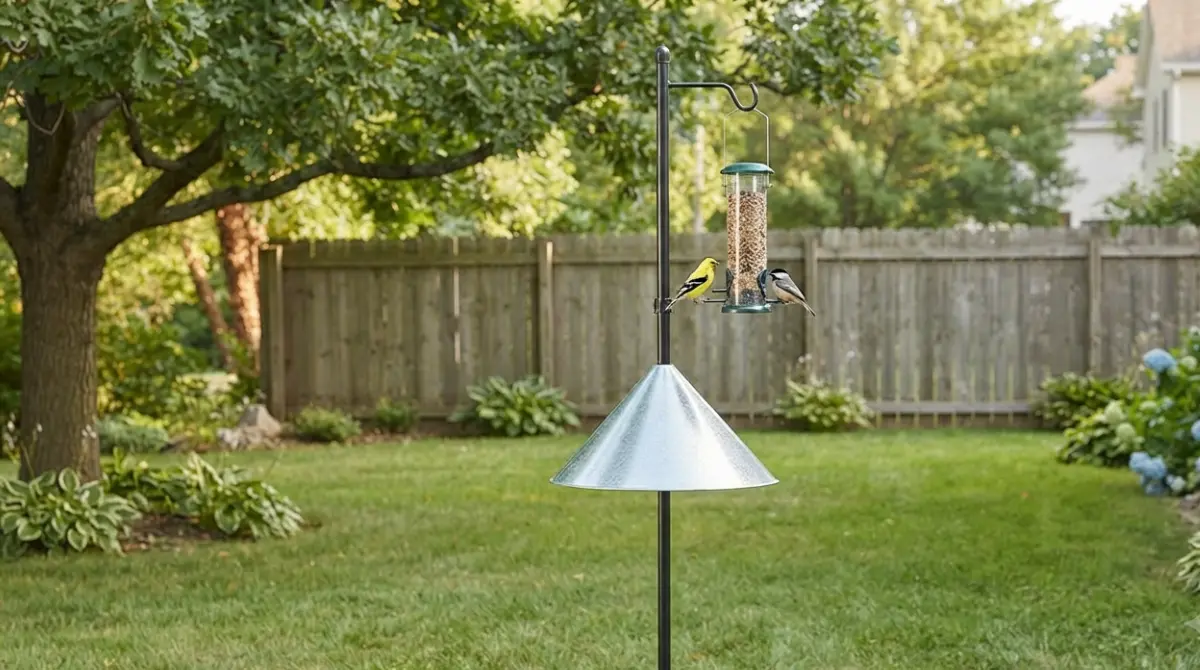
Measure from the nearest fence, deck edge, shrub or overhanging limb. Roof rats climb well, so one launch point inside 8 feet can undo the height.
Pole, baffle and open ground
Mount it on a smooth metal pole with a baffle, in open ground. UC IPM notes that thinning dense vegetation makes a yard less appealing, since rats use cover to travel unseen.
Put a hard surface underneath
King County suggests a hard surface underneath so spilled seed is easy to clean. Pavers beat mulch, ivy or long grass.
Cleaning under the feeder once rats have been there
Cleanup depends on one thing: whether droppings are in the mess.
No droppings? The daily routine
Project FeederWatch’s feeding advice is to rake or sweep the ground under feeders regularly, since scattered food can attract rodents. Fill only a day’s worth and leave no seed in the feeder overnight, as King County advises.
Droppings? Soak first, never sweep
Once droppings appear, CDC’s rodent cleanup steps say never sweep or vacuum — it can put virus-carrying droplets in the air.
- Put on rubber or plastic gloves.
- Spray the droppings with an EPA-registered disinfectant or fresh bleach solution (1.5 cups bleach per gallon of water) until very wet; soak 5 minutes.
- Wipe up with paper towels, put the towels in a covered garbage can, then wash gloved hands and wash again after removing gloves.
⚠️ Watch Out: Rake-or-sweep advice is right for seed and hulls, but droppings change the rule. For heavy droppings or nests, call a licensed pest control operator or your local health department; the full wet-cleaning method covers the rest.
When to take the feeder down and call a pro
If rats are established, take the seed away while you deal with them.
Pull the seed while you trap
King County is direct: with an active infestation, bird seed must be removed for trapping to succeed. No source we checked sets a number of weeks; wait until rat signs stop.
Outdoors, UC IPM advises setting snap traps inside boxes or stations and trapping at night to reduce bird encounters.
Why bait near a feeder is a bad trade
All rodenticides are toxic to nontarget animals and pets, per UC IPM, and bait generally must sit in tamper-resistant bait stations wherever birds could reach it. Glue boards should never go outdoors.
✅ Do This: Hire a state-licensed pest control operator if rats persist, and ask how traps or stations will be kept away from birds and pets. If rats are reaching the house, rodent proofing your house is the bigger job.
Bird feeder and rat questions people actually ask
1. Do bird feeders attract rats?
Yes. Bird feeders attract rats mainly through spilled seed, and King County says to expect more rats.
2. How high should a bird feeder be to keep rats away?
Hang a bird feeder 4 feet off the ground and 8 feet from branches, fences or other jump-off points.
3. Can rats climb bird feeder poles?
Yes, especially roof rats. Put a baffle on the bird feeder pole; if squirrels can reach it, rats can.
4. What bird seed attracts rats the least?
No bird seed is rat-proof, but hulled seed without millet, milo or sorghum filler leaves less on the ground.
5. Should I leave bird seed in the feeder overnight?
No. Rats are mostly active at night, so fill the bird feeder with only a day’s worth.
6. Should I take my bird feeder down if I see rats?
If rats are established, take the bird feeder down: King County says seed must go for trapping to work. No source sets a timeline. Call a licensed pest control operator if rats persist.
7. How do I clean rat droppings under a bird feeder?
Never sweep or vacuum rat droppings under a bird feeder. Wear gloves, soak them with disinfectant for 5 minutes, then wipe up. Heavy mess? Call your local health department.
8. Is it safe to use rat poison near a bird feeder?
Rat poison near a bird feeder risks birds and pets; UC IPM says all rodenticides are toxic to nontarget animals. Leave baiting to a licensed professional.
9. Do rats eat bird eggs?
Roof rats can. UC IPM lists young birds and bird eggs among the foods roof rats prefer.
10. What should I store bird seed in?
Store bird seed in a lidded metal can; King County warns rats chew easily through plastic.
Your next step tonight
Tonight, bring the feeder in or let it run empty by dusk, then check the fence line from a window. Tomorrow, measure 4 feet up and 8 feet out, and move the feeder if anything’s closer. Then proofing your house before winter helps keep discouraged rats from moving indoors.