The Common Gaps in a Rodent Exterminator Cost Quote

Rodent exterminator cost splits by phase, and the strongest baits a technician uses aren’t sold to consumers — EPA restricts them to the trade.

Table of Contents
What you’re actually paying a rodent exterminator for
Two companies can quote the same house $250 and $1,400 without either being dishonest. Rodent exterminator cost scatters that far because the quotes price different work, not the same work at different markups.
If you’re already holding a quote
Read the phase breakdown below, then check your quote against the five-item list. Most disputes trace back to a quote that prices trapping only.
If you haven’t called anyone yet
Start with the phase ranges, then read where the DIY path helps and where it stops.
ℹ️ Safety Note: Rodent work involves disease exposure, restricted pesticides, and confined spaces. This explains cost structure, not cleanup or pesticide use. Follow CDC guidance for rodent waste, follow every product label, and hire a licensed pest control operator for attic, crawl space, HVAC, or heavy-infestation work.
What a rodent control quote is actually made of
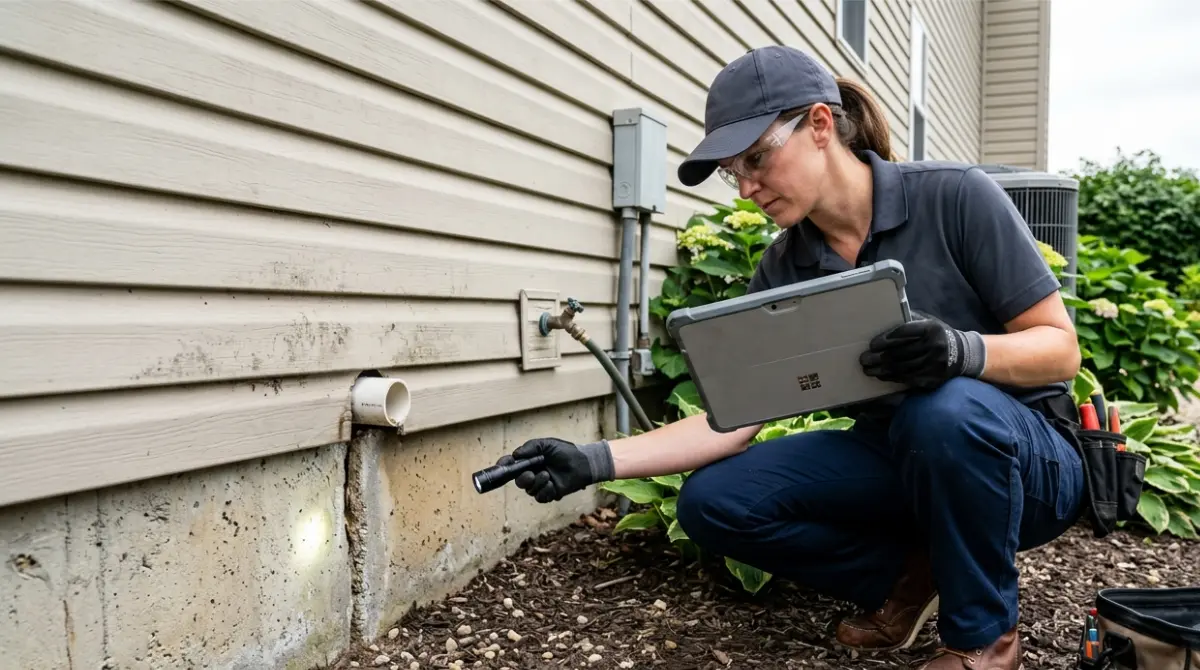
Nearly every rodent control quote breaks into phases, and a legitimate quote can cover one, two, or all of them.
| Phase | What it buys | Published range | Key detail |
|---|---|---|---|
| Inspection | Species ID, entry-point survey, written scope | $75–$150 | Often credited against the job |
| Trap-out | Traps, placement, follow-up visits | $150–$650 | Cuts the population, not the entry |
| Exclusion | Sealing gaps, vents, sweeps, roofline | Adds $200–$1,100 | Decides whether they return |
| Sanitation | Waste removal, disinfection, insulation | $600–$1,000 | Priced by area, quoted separately |
Why two honest quotes differ by hundreds
A quote spread of several hundred dollars usually reflects scope rather than markup.
The four variables that move the number
- Species: rat work runs above mouse work; larger traps, heavier damage.
- Access: crawl spaces and rooflines bill as harder labour hours than baseboards.
- Exclusion scope: sealing eight penetrations is a different job from sealing thirty.
- Sanitation: waste removal and replacing attic insulation after rodents are priced by area and quoted separately.
What a low quote leaves out
The cheapest number on your desk is often trapping with two follow-up visits and no sealing. Ask which phases a price covers before comparing numbers.
What the DIY path covers, and what it doesn’t
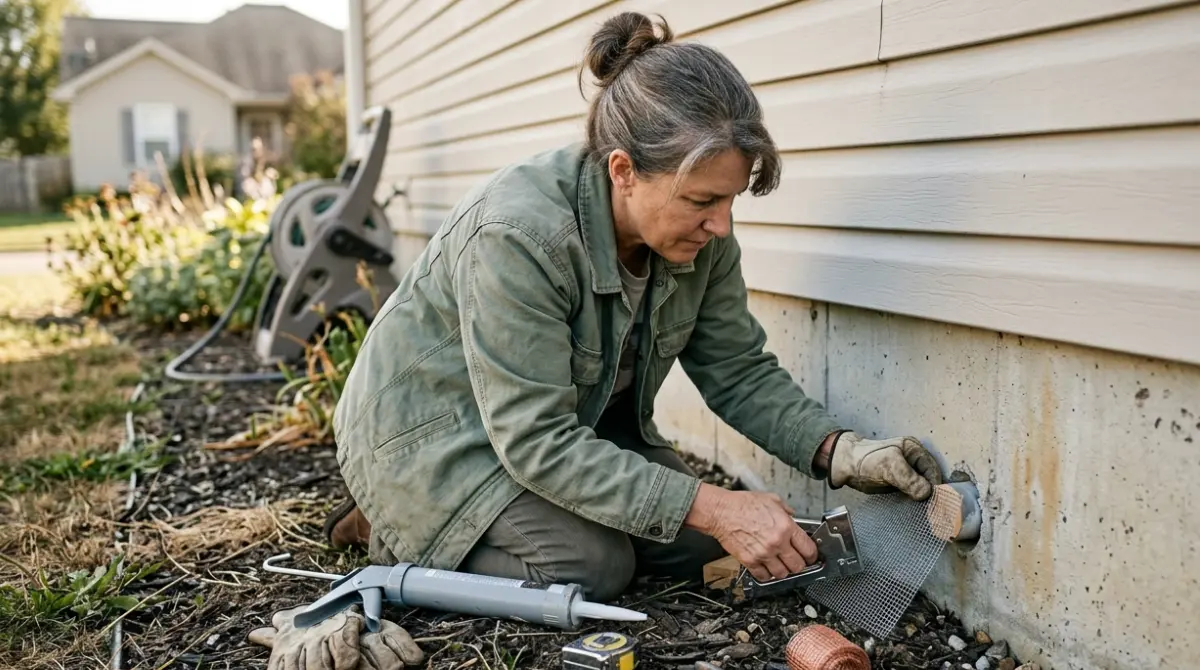
DIY rodent control covers a real slice of this work, and not the slice most people expect.
Where it genuinely saves money
Setting traps and sealing accessible ground-level entry points are within reach for most homeowners with a caulk gun and an afternoon. Materials are cheap: quarter-inch hardware cloth, copper mesh, door sweeps.
📊 Spec: UC IPM’s house mouse guidance calls for sealing openings larger than a quarter inch, roughly a pencil’s width. Rats need a modestly larger gap.
Where it quietly doesn’t
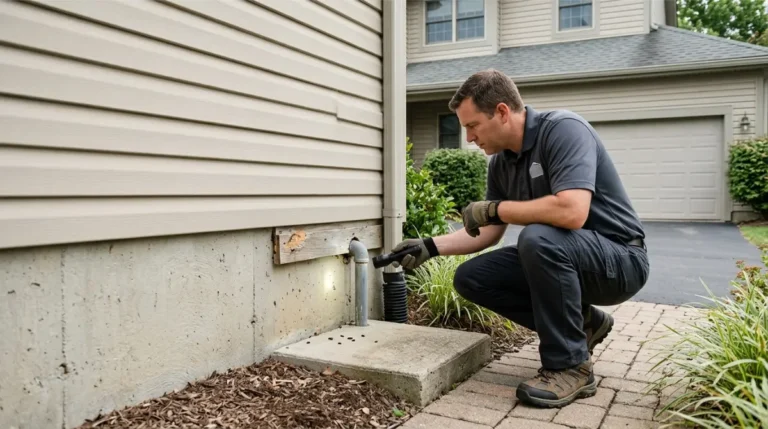
What DIY rarely covers is finding entries you cannot see: soffit lines, roof-to-wall junctions, crawl-space penetrations behind stored boxes. A sealed front door means little if the roofline is open.
When DIY stops being an option
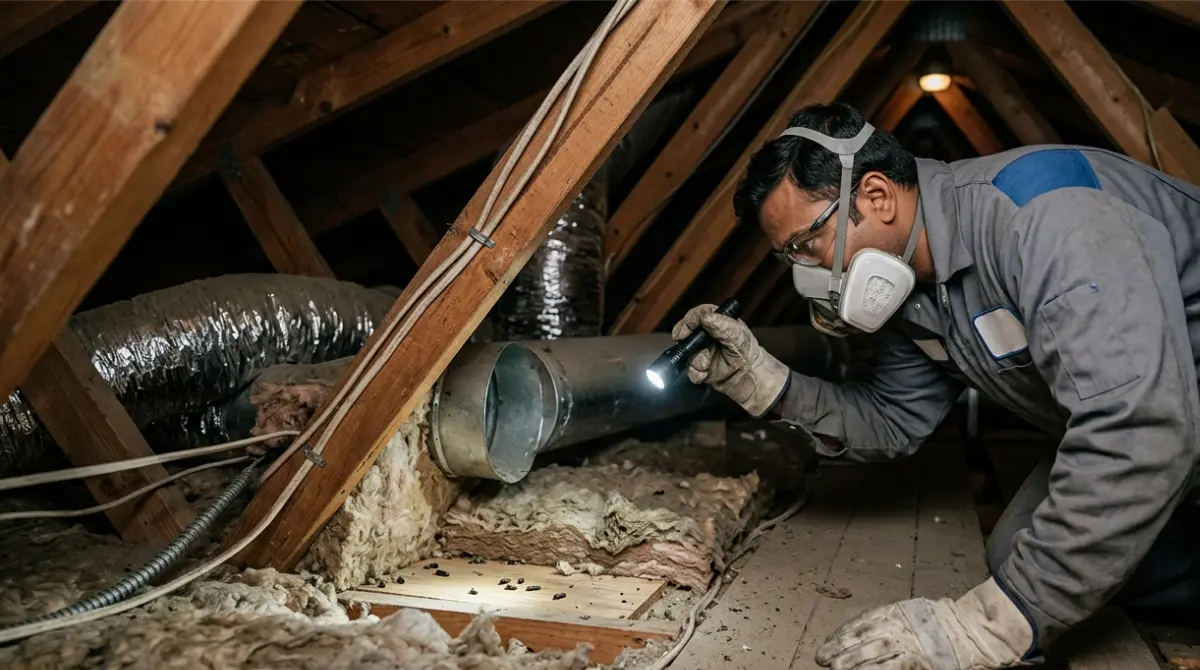
Three situations move this out of cost comparison territory.
- Rodents in the ductwork. Where there is evidence they have reached heating and cooling systems, CDC directs homeowners to a professional service.
- Heavy infestation. CDC’s guidance specifies coveralls, goggles, and a HEPA-filter respirator, with fit testing under local requirements.
- Contaminated insulation, which is bagged and replaced rather than cleaned.
⚠️ Watch Out: Never vacuum or sweep rodent droppings, urine, or nesting material. CDC’s cleanup guidance calls for wetting the area with disinfectant and letting it soak first, because sweeping puts particles into the air. Our safe droppings cleanup guide has the method.
UC IPM treats exclusion as the durable fix. Trapping alone reduces the population and leaves the door open.
Five things a complete quote should name
A complete rodent exclusion quote names five things; the missing ones are where disputes start.
- The species, confirmed by inspection rather than assumed.
- How many entry points were found, and which the price covers.
- The sealing materials, and whether roofline work is included.
- How many follow-up visits, and over what period.
- What the guarantee covers, for how long, and what voids it.
Why the technician’s bait isn’t on the shelf
EPA’s restrictions on rodenticide products keep second-generation anticoagulants out of consumer products, registering them only for commercial and structural pest control. Consumer bait is capped at one pound in ready-to-use stations. State rat poison rules add another layer, covered in the rules most homeowners overlook.
Questions to ask before you sign
Four questions separate a quote you can compare from a number you cannot.
- Is this trapping only, or does the price include sealing, and which gaps?
- How many follow-up visits are included, and over what period?
- Is sanitation in this price or quoted separately?
- What does the guarantee cover, and what voids it?
✅ Do This: Verify the operator holds a current licence with your state’s pest control authority before signing, and ask which products will be applied and where.
Ask all four in writing, and two quotes become comparable.
Rodent exterminator cost: quick answers
1. How much does a rodent exterminator cost?
Published estimates put one-time treatment near $150–$650, inspection at $75–$150, and exclusion adding several hundred.
2. Why is exclusion pricier than trapping?
Exclusion is labour priced by access and penetrations sealed. Trapping is a fixed return visit.
3. Is DIY rodent control cheaper?
For traps and accessible ground-level gaps, usually. For rooflines, crawl spaces, and cleanup, the savings vanish.
4. Is the inspection fee credited?
Often, but not always. Ask before booking, because a standalone fee changes what a low price costs.
5. Why can’t I buy the exterminator’s bait?
EPA does not register second-generation anticoagulants for consumer products, and consumer bait is capped at one pound. Follow every product label.
6. Can I clean up mouse droppings myself?
Small amounts, following CDC’s wet-clean method. Never vacuum or sweep. For heavy contamination or ductwork, hire a professional.
7. How small a gap do mice use?
UC IPM calls for sealing openings larger than a quarter inch, about a pencil’s width.
8. Does trapping alone fix it?
No. Trapping cuts the population inside. Without sealing, the entry stays open and the problem returns.
9. Is sanitation included in the quote?
Usually not. Waste removal and insulation replacement are priced by area and quoted separately.
10. Do I still need a pro after sealing?
If activity continues, or droppings reach an attic, crawl space, or duct, call a licensed operator.
Before you sign anything
The number on a rodent quote means nothing until you know which phases it covers. Check it against the five-item list, ask the four questions, and compare like with like. Then close the gaps, because that decides whether you pay for this once or every year.