Choosing and Fitting Hardware Cloth for Raised Beds

Hardware cloth under a raised bed has to match the burrower. A 4×8 bed with a 4-inch rise needs a 56 × 104-inch cut, wider than a 48-inch roll.
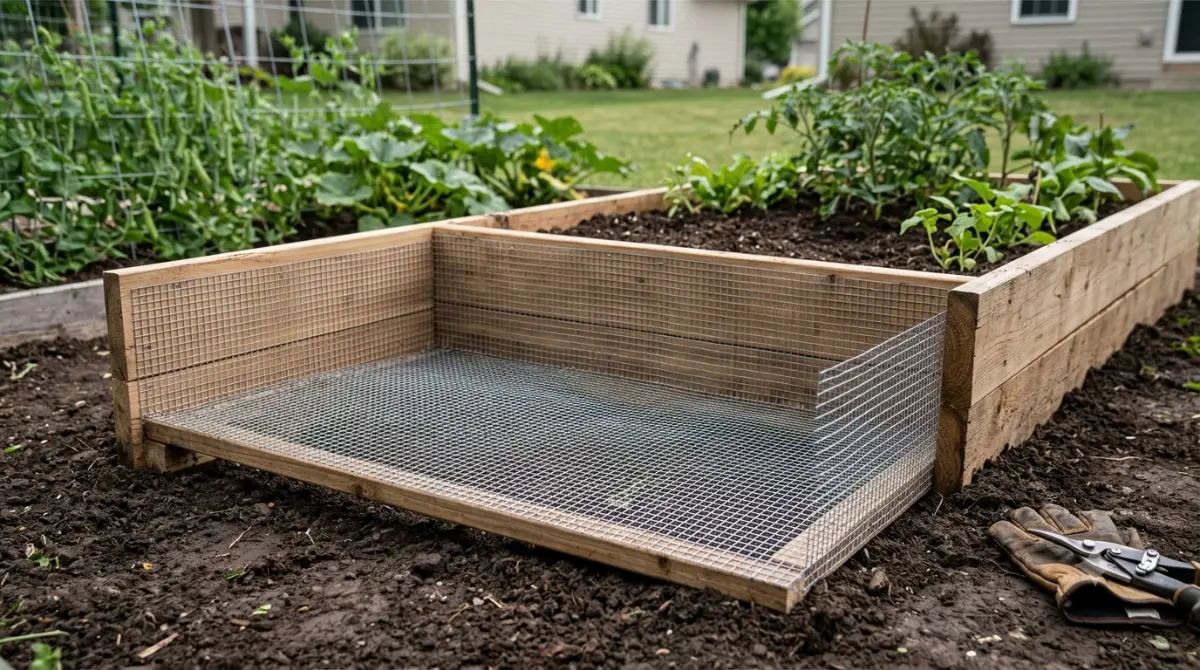
Table of Contents
Lining the bottom with hardware cloth for raised beds stops gophers, voles and moles from reaching roots from below. UC IPM’s advice for gophers is to lay it under the bed before planting.
- Not sure what’s digging? Start with mesh size.
- Building a new bed? Go to the step-by-step.
- Soil already in? Skip to retrofitting.
- Worried about zinc near vegetables? Read the food-safety section.
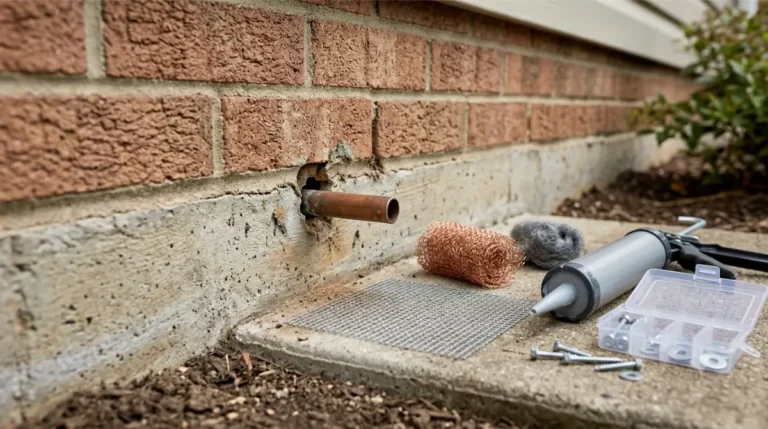
It’s the same exclusion logic that keeps rodents out of a house, applied underground.
ℹ️ Safety Note: Cut hardware cloth leaves sharp wire ends, so wear gloves and eye protection. Galvanized coatings can carry trace metal impurities; for soil concerns, ask your local Cooperative Extension office about a soil test.
Which pest you’re stopping decides the mesh size
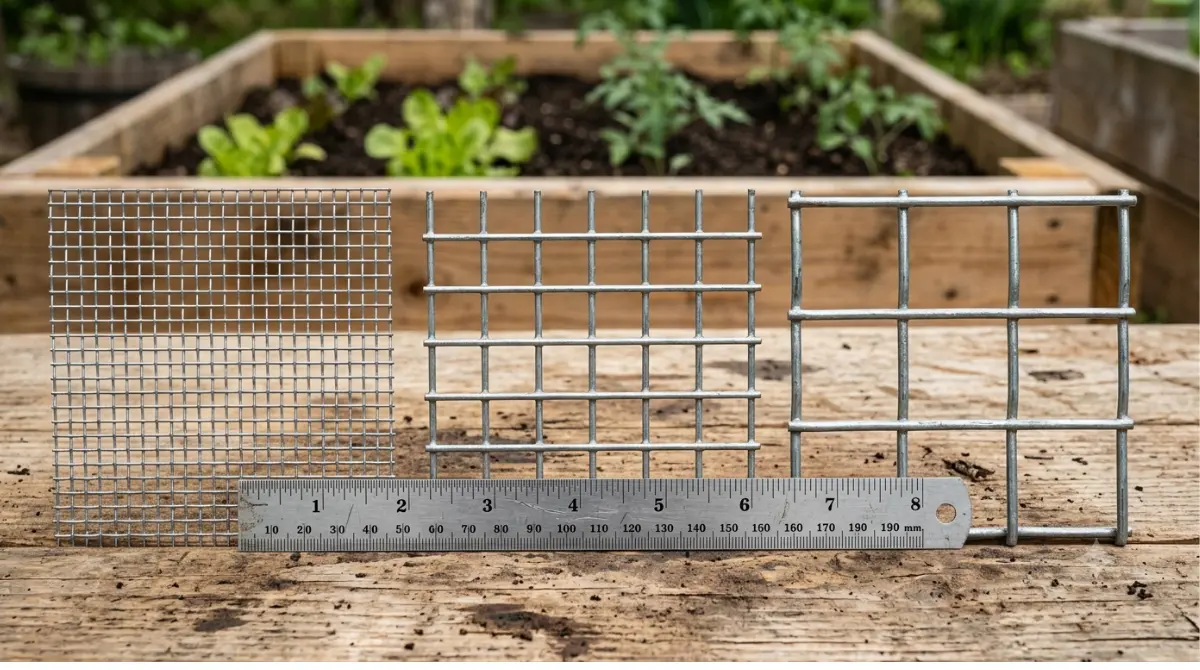
Match the mesh size to the burrower; these figures come from UC IPM, not roll packaging.
| Pest | Mesh | Key detail |
|---|---|---|
| Pocket gophers | Hardware cloth or ¾-inch poultry wire | Lay before planting |
| Voles | ¼ inch or smaller | Figure written for fences |
| Moles | Any wire mesh bottom | Totally excludes moles |
Source: UC IPM Pest Notes; not hands-on tested.
Gophers: hardware cloth or ¾-inch poultry wire
UC IPM’s pocket gopher guidance lists both. If a poultry wire roll’s openings are bigger than ¾ inch, it isn’t what UC IPM lists.
Voles: ¼ inch or smaller
UC IPM’s vole exclusion advice sets that figure for fences; using it under a bed is our extension. If voles and gophers share your yard, a ¼-inch roll covers both.
Moles: a wire bottom keeps them out
UC IPM on mole exclusion confirms mesh bottoms work. Moles are insect eaters, not rodents; if you’re unsure, tell which burrower you actually have first.
How much hardware cloth you need, and what else to buy

- 1. Superior Materials & Rust Protection – SEBOSS 19 gauge hardware cloth is made from low-carbon steel wire for high str…
- 2. Eco-Friendly & Precise Manufacturing – Manufactured using advanced, Eco-conscious technology, each step—from material…
- 3. Reinforced Packaging + Bonus Accessories – Our wire fence rolls are heavy-duty and can be damaged during shipping. To…

- Premium Heavy-Duty Construction: Crafted from high-quality low-carbon steel wire with hot-dip galvanized coating applied…
- Superior Weather & Corrosion Resistance: Features waterproof, rust-proof construction that withstands harsh environments…
- Ultimate Garden Protection System: Effectively safeguards vegetables, flower roots, bulbs and rhizomes from burrowing pe…

- Straight-cut aviation tin snip with high-leverage design and serrated-edge blade for efficient cutting
- Easily cut up to 18 gauge (1.2 mm) cold-rolled steel and 22 gauge (0.8 mm) stainless steel. They are versatile enough to…
- Made of premium chrome vanadium steel processed with a high-frequency heat treatment
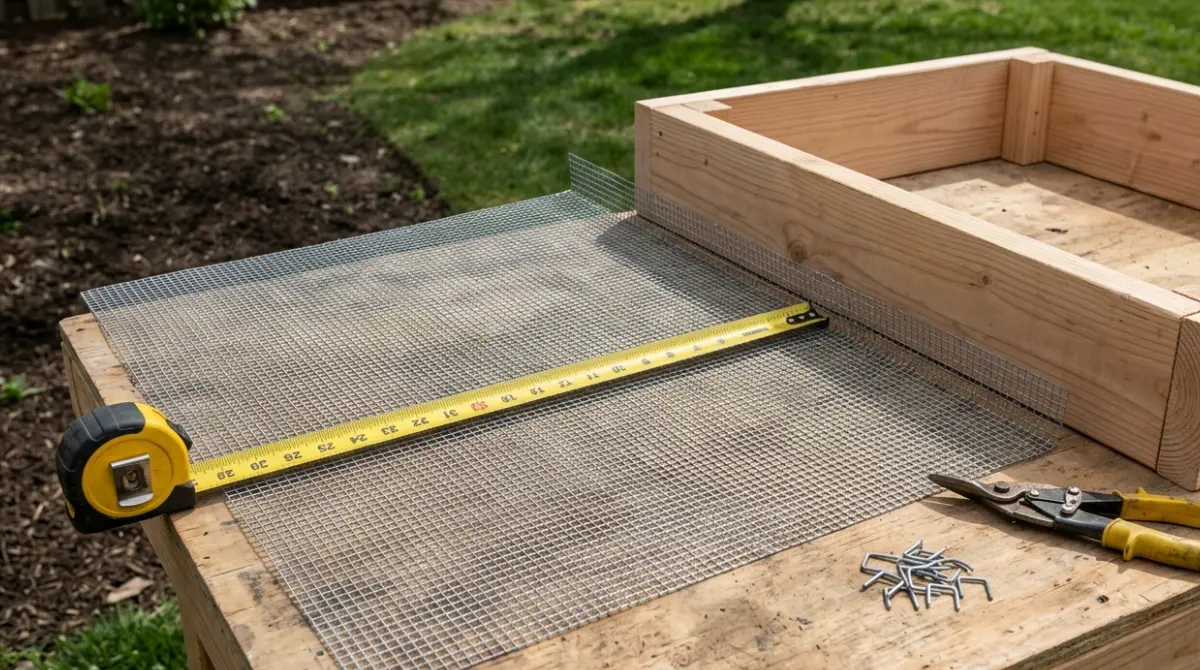
Buy by cut size, because the mesh turns up the walls.
Cut size: footprint plus the sidewall rise
Add the sidewall rise twice to each dimension.
| Bed size | Cut size (4-inch rise) | Key detail |
|---|---|---|
| 3 × 6 ft | 44 × 80 in | Fits one 48-inch-wide strip |
| 4 × 4 ft | 56 × 56 in | Needs two strips, seamed |
| 4 × 8 ft | 56 × 104 in | Needs two strips, seamed |
Our arithmetic with a 4-inch rise; roll widths vary.
Roll width and seams
Overlap strips generously and tie the seam every few inches with hog rings.
The short tool list
- Aviation snips for cutting
- A staple gun and galvanized staples
- Hog ring pliers and rings
- Gloves and eye protection
🛒 Our Pick: For gophers, a ½-inch, 19-gauge galvanized roll; for voles, a ¼-inch galvanized roll. Matched to UC IPM’s figures, not hands-on tested.
Is galvanized hardware cloth safe under vegetables?
Extension says yes, with one soil caveat.
What Extension says about zinc
Asked about galvanized hardware cloth under a raised bed, University of Maryland Extension knew of no research showing harm to plants or animals from metals leaching out of the wire. Its 2025 answer called galvanized beds generally safe for food crops.
The soil condition that raises it
More zinc can be released when soil pH is below 6.0, that answer adds. A basic soil test tells you where you stand.
When stainless or an SDS check is worth it
Very low levels of lead can be present, depending on the maker. Stainless steel hardware cloth costs more but carries the lowest heavy-metal risk, per the same Extension answer.
✅ Do This: Before buying, check the roll’s Safety Data Sheet or ask the manufacturer about impurities. Worried about your soil? Ask your local Cooperative Extension office about testing pH and metals.
Lining a new raised bed before you fill it
Lay the mesh before any soil goes in, as UC IPM advises.
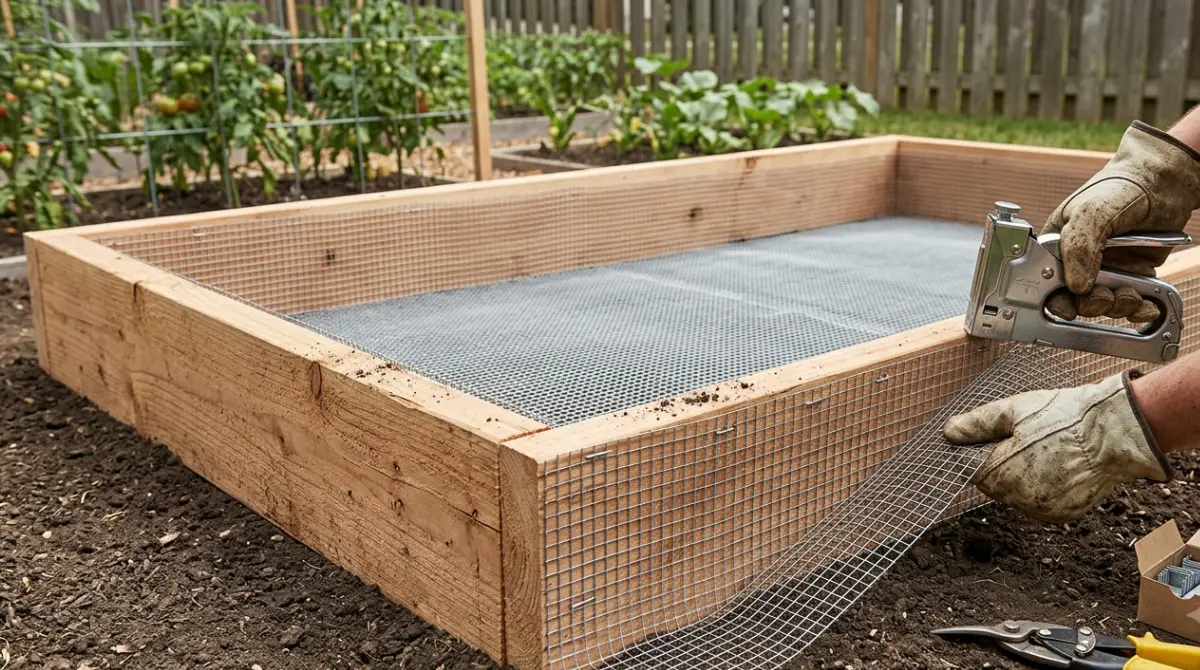
Level the ground and set the frame
- Level the footprint so the mesh lies flat.
- Set the empty bed frame in place.
Lay, seam and turn up the mesh
- Lay the cut mesh under the frame; overlap and tie any seams.
- Turn the edges up the inside walls, past the joint where the bottom board meets the ground.
Fasten, then fill
- Staple the edges every few inches.
- Fill; the Raised Bed Soil Calculator tells you how much soil to buy.
🔍 Why It Works: Burrowers enter from below or through the gap at the frame’s base. A mesh floor with turned-up edges closes both routes, while water and soil life still pass through.
Bed already full? Retrofitting without starting over
You don’t have to empty the bed, just half of it at a time.
The half-and-half shovel method
Shovel the soil to one end and line the exposed half. Move the soil back onto the new mesh, repeat on the other side, then overlap and tie the center seam. Expect a retrofit to take far longer than lining an empty bed.
Where burrowers still get in
- Overlapped seams that were never tied
- A gap where the mesh meets the frame’s base
- The top edge, since UC IPM notes gophers also move overland
Skip vibrating stakes as a shortcut: UC IPM says they haven’t worked in research trials, the same verdict on ultrasonic plug-ins indoors.
How long it lasts, and when a bed bottom isn’t enough
UC IPM notes galvanized or stainless wire extends life underground, but no reliable source we found gives a lifespan in years.
Rust, soil and replacement
Check the mesh whenever you dig deep, and patch sections that have rusted through. University of Maryland Extension notes electrogalvanized wire corrodes faster than hot-galvanized.
Trees, shrubs and deep roots
Keep permanent mesh away from trees and shrubs: UC IPM warns wire can restrict tree roots and suggests light-gauge, non-galvanized ¾-inch baskets that rust away. If burrowers persist, trapping comes next; start with backup control that doesn’t put pets at risk.
Hardware cloth for raised beds: common questions
1. What size hardware cloth for raised beds?
Match hardware cloth to the pest: UC IPM lists hardware cloth for gophers, while voles need ¼ inch or smaller.
2. Can I use chicken wire instead of hardware cloth?
UC IPM lists ¾-inch-mesh poultry wire for gophers; chicken wire with bigger openings isn’t listed, and voles need ¼ inch.
3. Is galvanized hardware cloth safe for vegetables?
University of Maryland Extension considers galvanized generally safe for food crops, though more zinc can release in soil below pH 6.0. Check the product’s Safety Data Sheet if you’re unsure.
4. Does hardware cloth keep moles out?
Yes. UC IPM says wire mesh bottoms in raised beds totally exclude moles, which are insect eaters, not rodents.
5. How far up the sides should hardware cloth go?
Turn hardware cloth up the inside walls, past the joint between the bottom board and the ground.
6. Can I add hardware cloth to a bed that’s already full?
Yes. Move the soil to one half, line it, repeat on the other half, and tie the center seam.
7. Will hardware cloth block drainage or earthworms?
No. Water and soil life still pass through the openings, so hardware cloth doesn’t seal the bed’s base.
8. How long does hardware cloth last underground?
No reliable source we found gives a lifespan in years; UC IPM notes galvanized or stainless wire lasts longer underground.
9. Will hardware cloth hurt tree or shrub roots?
It can. UC IPM warns wire can restrict tree roots and suggests non-galvanized baskets that rust away for young trees.
10. Do vibrating stakes work instead of hardware cloth?
No. UC IPM says vibrating stakes and ultrasonic devices haven’t been effective against gophers in research trials.
Your next step
Measure the bed, confirm what’s digging, and buy the roll matching the smallest mesh your worst pest needs. Add the rise twice to each dimension, lay the mesh before the soil goes in, and tie every seam. Soil already in? The half-and-half method still gets you there.