Pet safe rodent control and the mistake most pet owners make

Pet safe rodent control changed when the EPA barred consumer baits from the strongest
anticoagulants — what replaced them has no antidote.
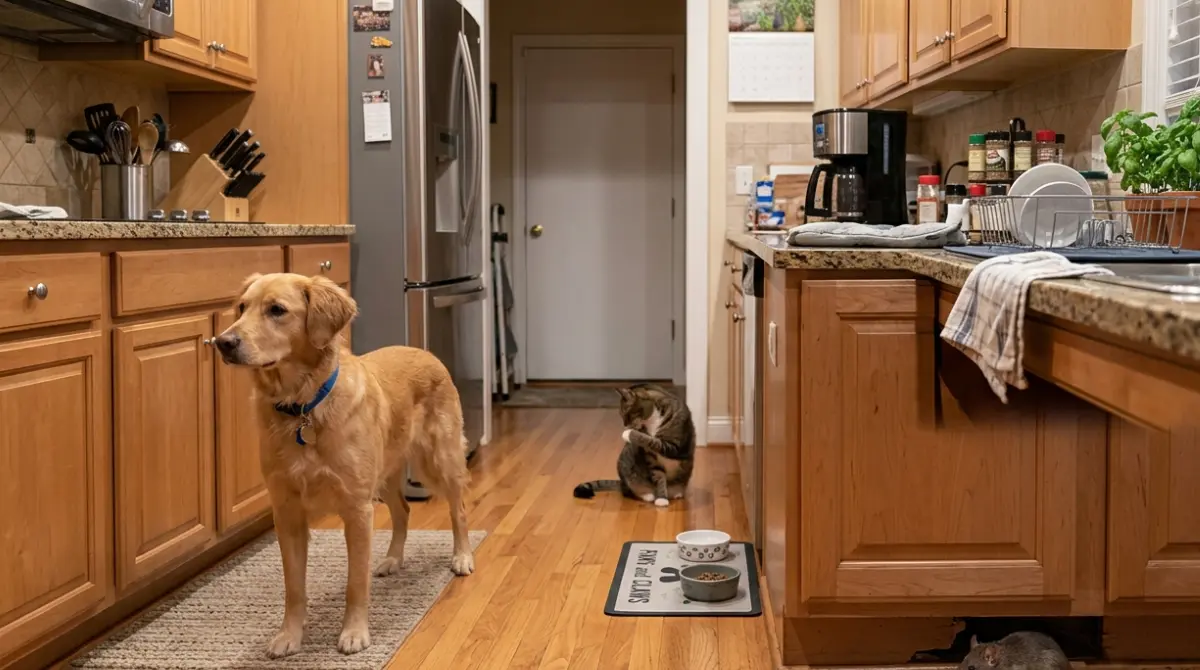
Table of Contents
Mice in a house with a cat or a dog change the math. The fastest methods are usually the ones most likely to hurt the animal you were protecting.
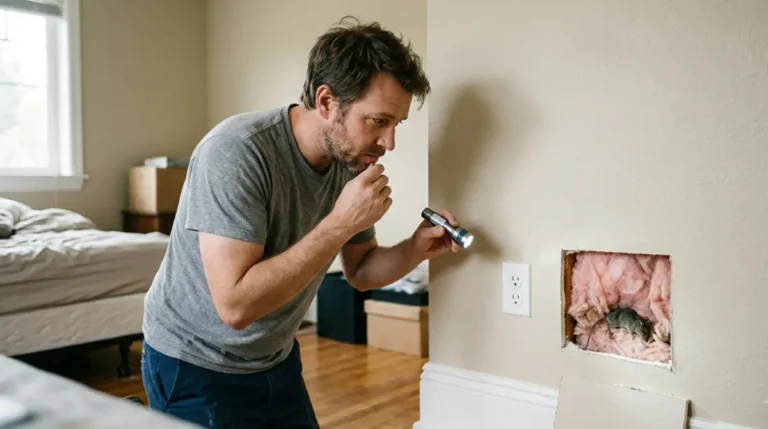
Route yourself first. If your pet already ate bait or a poisoned rodent, skip to the last section and call your veterinarian now. If you’ve found fresh droppings and want to act tonight, start at trap placement, then read the attractant section.
Still choosing between poison and snap traps? The next two sections settle it. Pet safe rodent control isn’t a product you buy — it’s a set of decisions about what enters the house, where it sits, and what you stop leaving out.
ℹ️ Safety Note: Rodenticides poison cats and dogs, and rodent traps can injure them. Everything here is general guidance for setting up a household, not veterinary or pest-control advice. If your pet is exposed to any bait or poisoned rodent, contact a veterinarian or ASPCA Poison Control immediately, and follow the label directions on any product you use — the label is the law.
Why rodent poison is the one method pets can’t be kept away from
Rodenticide is the one option where keeping it away from your pet doesn’t keep your pet away from it.
What secondary (relay) poisoning actually means
A poisoned rodent dies slowly and often in the open, which makes it unusually easy prey. Secondary poisoning — also called relay toxicosis — is what follows when your cat or dog eats that rodent.
Why a bait station doesn’t close the loop
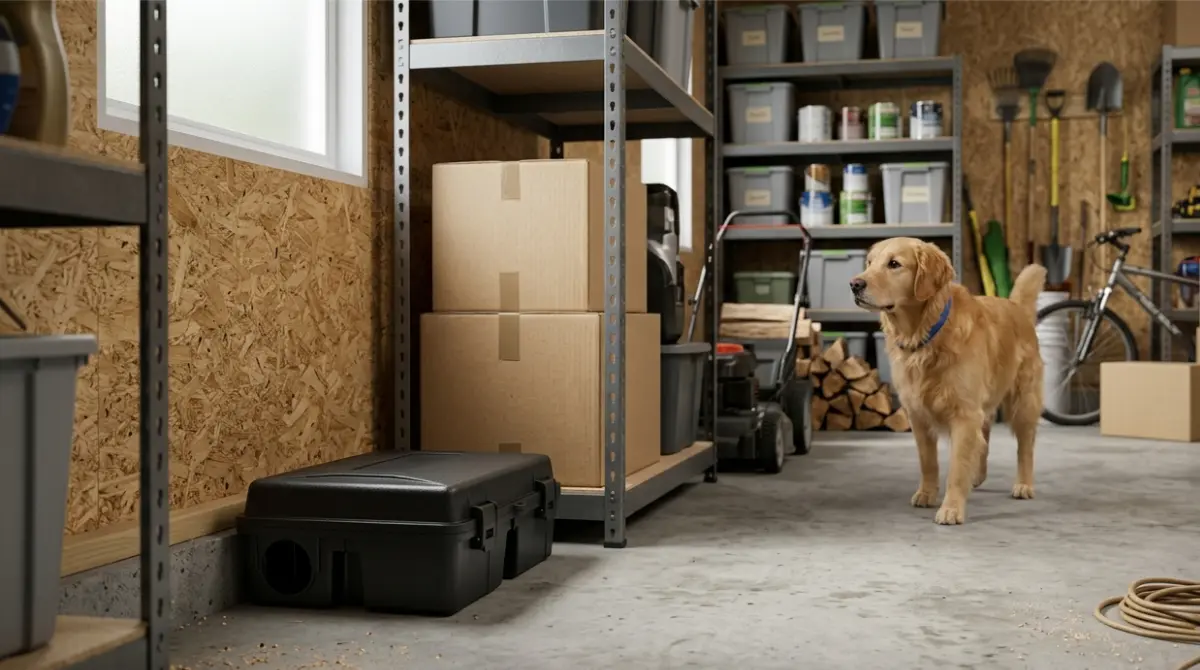
A locked station closes the bait route and does nothing about the carcass route. The National Pesticide Information Center names chlorophacinone, diphacinone, bromadiolone and brodifacoum among the rodenticides posing the greatest secondary-poisoning risk to dogs and cats.
🔍 Why It Works: Anticoagulant baits are slow by design — a rodent keeps feeding for days before it dies. That delay is exactly what puts a loaded carcass out in the open where a pet can reach it.
Why cats and dogs are at different levels of risk
Cats are more sensitive to bromethalin; dogs are more sensitive to anticoagulant baits. Cats also hunt, which puts them on the carcass route far more often — and some of these baits have no antidote at all.
What “pet safe” actually means on a rodent product label
It means nothing in particular. Pet-safe is a marketing phrase, not a category the EPA recognises.
What the EPA restricts in consumer rodenticides
📊 Sourced: The EPA states that second-generation anticoagulants — brodifacoum, bromadiolone, difenacoum and difethialone — are no longer registered for consumer products and are limited to commercial and structural pest control.
What remains on a consumer shelf includes bromethalin and cholecalciferol. Neither has a specific antidote, which is the opposite of reassuring.
Why bait stations reduce risk without removing it
A tamper-resistant bait station stops a paw and a nose. It does not stop a rodent from carrying bait out, and it does not stop your dog from finding the animal three days later.
The “natural” and “non-toxic” baits, honestly
Low-toxicity corn-gluten baits exist, but colour and shape tell you nothing — the ASPCA warns that these pellets look much like far more dangerous ones. State rules also stack on top of federal ones, so check how rodenticide law differs from state to state.
Where to put traps when a cat or dog has the run of the house
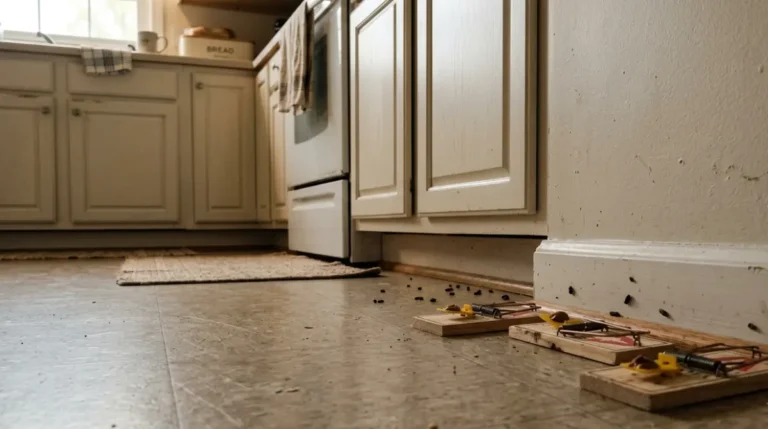
Ranked for a pet household: enclosed snap traps in spots your pet can’t reach, then electronic traps, then live traps, then nothing else.
The pet-access audit: testing a placement before you arm it
Set the trap unarmed in the spot you’re considering. Leave your pet loose with it for a full day and watch whether they nose it, paw it, or drag it. If they reach it once, that placement fails — no matter how good it looks.
Enclosed traps versus open snap traps
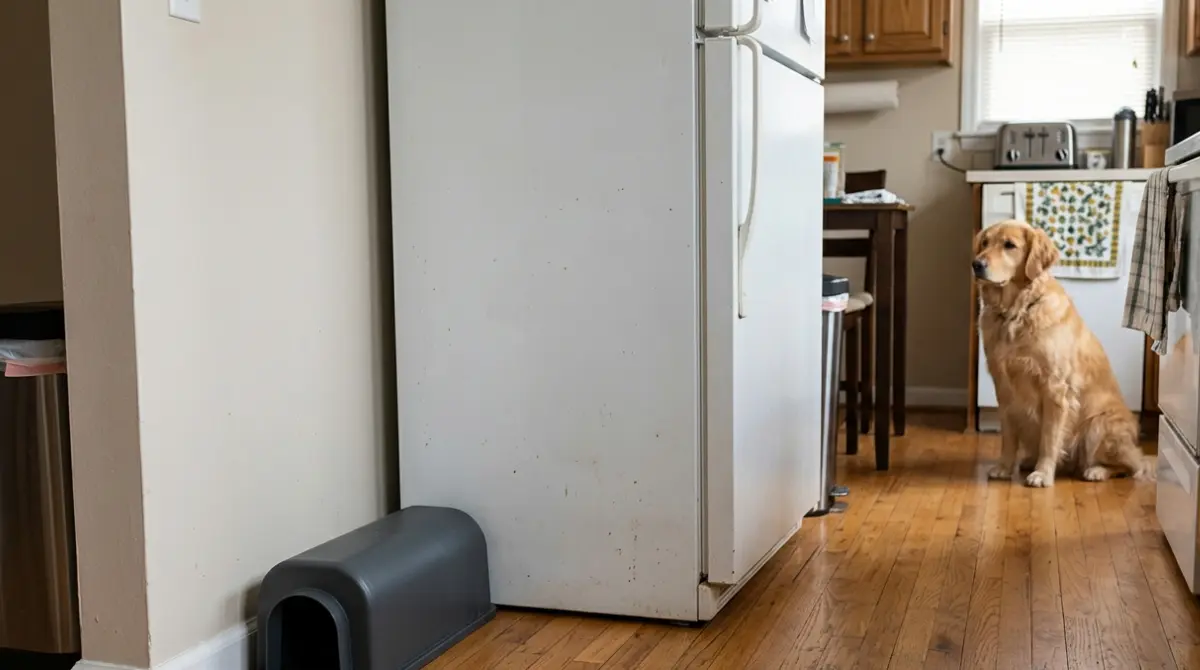
An open snap trap can close on a paw or a nose. A tunnel-style or covered trap admits a mouse and excludes a Labrador, which is the whole design brief.
Rooms and spots that pass
- Behind and beneath large appliances, flush to the wall
- Inside cabinets that latch, especially under sinks
- Along garage wall studs above pet height
- Inside a closed utility closet your pet doesn’t enter
Then get the siting right, because a safe trap that catches nothing solves nothing — the placement rules that actually catch mice still apply.
Glue traps and live traps: what to know first
⚠️ Watch Out: Glue boards catch pets as readily as rodents, fur and paws stick fast, and freeing an animal is difficult and injurious. Some US cities have banned their sale and use outright — check your local ordinance before buying any.
Live traps need checking every few hours, and relocating a rodent is restricted in many states. Confirm the rules with your state wildlife agency before you release anything.
✅ Do This: If trapping isn’t keeping up after two weeks, hire a licensed pest management professional — they can use products not sold to consumers. The EPA’s guidance on what to ask a rodent control company before hiring covers the questions worth asking.
The pet-owner habits that keep bringing rodents back
Yes, pet food attracts mice and rats — it’s often the single most reliable food source in the house.
Pet food storage that actually holds
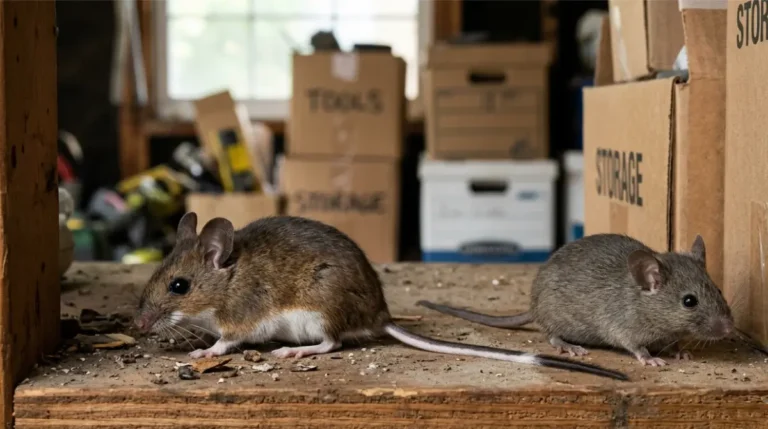
Rodents chew through paper, cardboard and thin plastic without much trouble. Move dry food into a rigid sealed container, and treat the garage bin as the highest-risk spot, not the safest.
The free-feeding bowl problem
A bowl left down overnight is an open invitation, and so is spilled kibble under the bowl. Feed on a schedule, lift the bowl within the hour, and sweep beneath it.
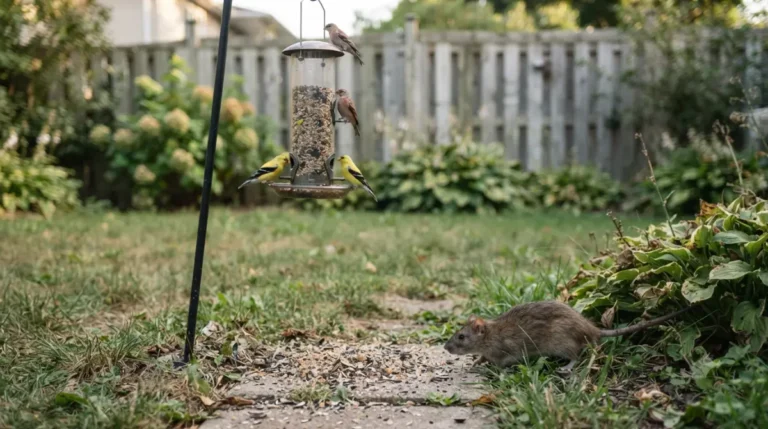
Yard waste, birdseed and water sources
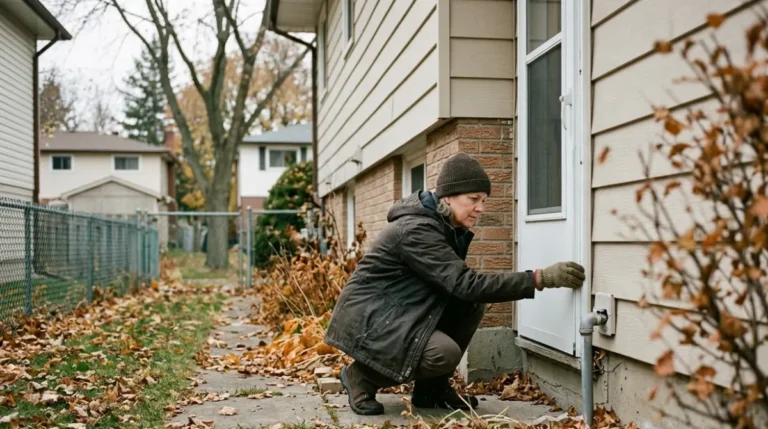
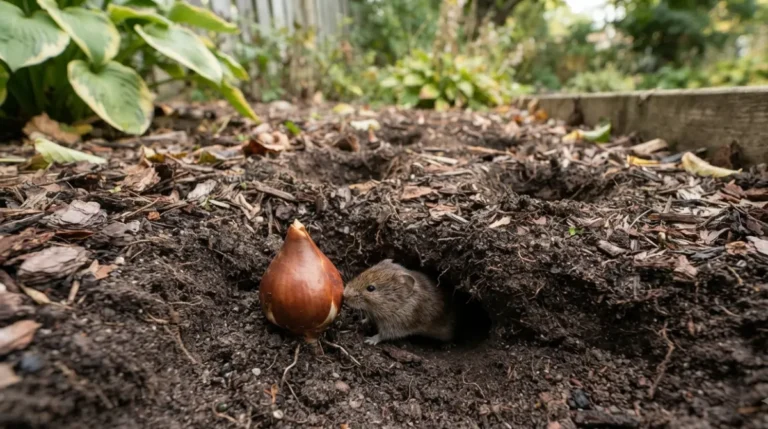
Dog waste, spilled birdseed and standing water bowls all feed the population outside before it moves in. Clear all three, then close the way in — the same work covered in sealing the gaps rodents are actually using.
Will your cat or dog just take care of it?
Probably not, and the attempt carries its own cost.
What the research found about cats and rats
A 2018 study by Fordham University researchers, published in Frontiers in Ecology and Evolution, tracked feral cats and a rat colony at a Brooklyn waste facility across 79 days of video. The cats killed two rats. Mice are a different matter — but no study supports cats as rat control.
What a hunting pet can pick up
Rodents carry disease and can bring in fleas, ticks and mites, as the CDC sets out in its guidance on the diseases rodents spread in and around homes. Mention any hunting habit to your vet.
Ultrasonic repellers and peppermint oil
Ultrasonic devices have never held up well in practice. Peppermint oil is worse than useless here: veterinary pharmacists list it as toxic to cats by ingestion or inhalation, with no established safe threshold — more on what peppermint oil does and doesn’t do to mice.
If your pet already got into the bait or ate a poisoned rodent
Treat it as an emergency even if your pet looks fine. Anticoagulant signs can take days to appear.
What to do in the first hour
Call your veterinarian or the ASPCA’s 24-hour animal poison control line at (888) 426-4435 now — a consultation fee may apply. Do not induce vomiting unless a professional tells you to.
What to bring or have ready
✅ Do This: Bring the packaging. Bait colour and shape do not identify the active ingredient, and the treatment differs completely between an anticoagulant and a neurotoxin. Note the time and rough amount if you can.
Common questions about rodent control with pets
1. Is rat poison safe around dogs?
No. Even in a locked station, a dog can reach a poisoned rodent that carried the dose out. Call your vet if exposure is suspected.
2. Can my cat get sick from eating a poisoned mouse?
Yes. That’s secondary poisoning, and cats hunt, so they meet poisoned rodents far more often than dogs. Contact your veterinarian.
3. Is there a rat poison that’s safe for pets?
No. Pet safe rodent control is a marketing phrase, not an EPA category, and no bait is safe once eaten. Call a vet after any exposure.
4. Are bait stations safe with a dog in the house?
Safer, not safe. Stations block paws and noses, not the poisoned rodent that walks out carrying the dose. Call your veterinarian if exposed.
5. Can a snap trap hurt my cat or dog?
Yes. An open snap trap can catch a paw or nose, which is why enclosed tunnel traps suit pet households better.
6. Are glue traps dangerous to pets?
Yes. Paws and fur stick fast, removal is difficult, injuries are common, and some cities have banned their sale outright.
7. Where should I put mouse traps if I have pets?
Behind appliances, inside latching cabinets, and along walls your pet cannot reach — and test every spot unarmed first.
8. Does dog food attract mice and rats?
Yes. Open bags, free-fed bowls and garage storage are among the most dependable food sources rodents find in a home.
9. Is peppermint oil safe to use around cats?
No. Veterinary pharmacists list peppermint oil as toxic to cats by ingestion or inhalation, with no safe threshold. Ask your vet first.
10. What should I do if my dog ate rat poison?
Take the packaging, note the time and amount, and get to a veterinarian — do not wait for symptoms. Call ASPCA Poison Control on the way.
Start tonight with the two things that cost nothing
Run the unarmed placement test in the three spots you were going to use, and get the pet food into a sealed container before bed. Both take twenty minutes and neither requires buying anything. Sealing the entry points is the next job, and it’s the one that ends the cycle.