
The Best Bed Bug Traps and Monitors, and How to Use Them

Bed bug traps work best when left in place about a week — see which interceptors research backs, how to place them, and when to call a pro.
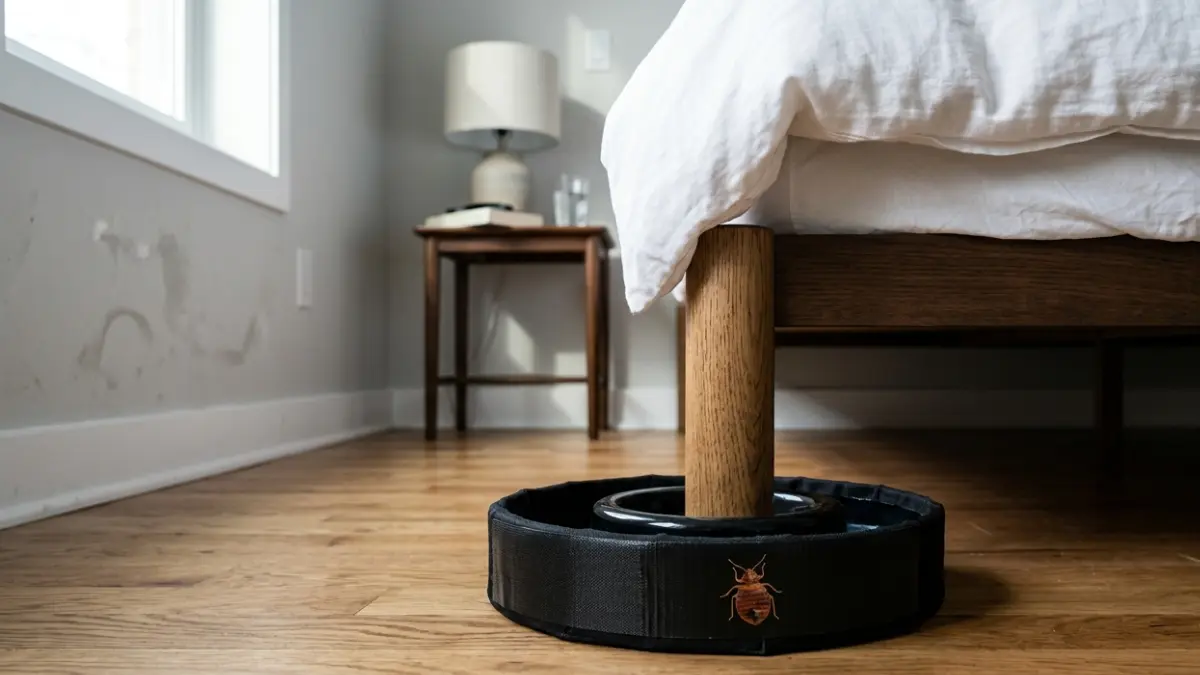
Table of Contents
Bed bugs are stressful in a way few household pests are — the bites, the not-knowing, the worry about spreading them. If you’ve spotted a bug, woken up with unexplained bites, or want to confirm a treatment worked, the right trap gives you answers. Here’s how to find yours fast:
- Not sure you have them? A pitfall interceptor under each bed leg confirms activity within about a week.
- Just treated, DIY or pro? Monitors tell you whether anything survived.
- Renting or on a budget? A cheap interceptor — or a homemade one — does the core job.
- Living in an apartment? Ongoing monitoring catches bugs migrating between units.
One thing up front, because most roundups skip it: bed bug traps detect and monitor bed bugs — they do not eliminate an infestation on their own. From the EPA to university entomologists, every credible source agrees. Use traps to find and track the problem, then pair them with a full plan for getting rid of bed bugs.
📣 Disclosure: This guide contains affiliate links. If you buy through them, we may earn a small commission at no extra cost to you. Our picks are based on published research and product specifications, not commissions — and we tell you plainly where each recommendation comes from.
ℹ️ Safety Note: Traps and monitors help you find and track bed bugs, but they won’t clear an infestation by themselves — for that, follow a full treatment plan or hire a licensed pest-control professional. Skip dangerous folk remedies: the EPA warns that rubbing alcohol, kerosene, and gasoline can harm you and easily catch fire. If you try a do-it-yourself carbon-dioxide trap, handle dry ice carefully — in a ventilated space, with gloves, never sealed in a closed container.
How bed bug traps and monitors actually work
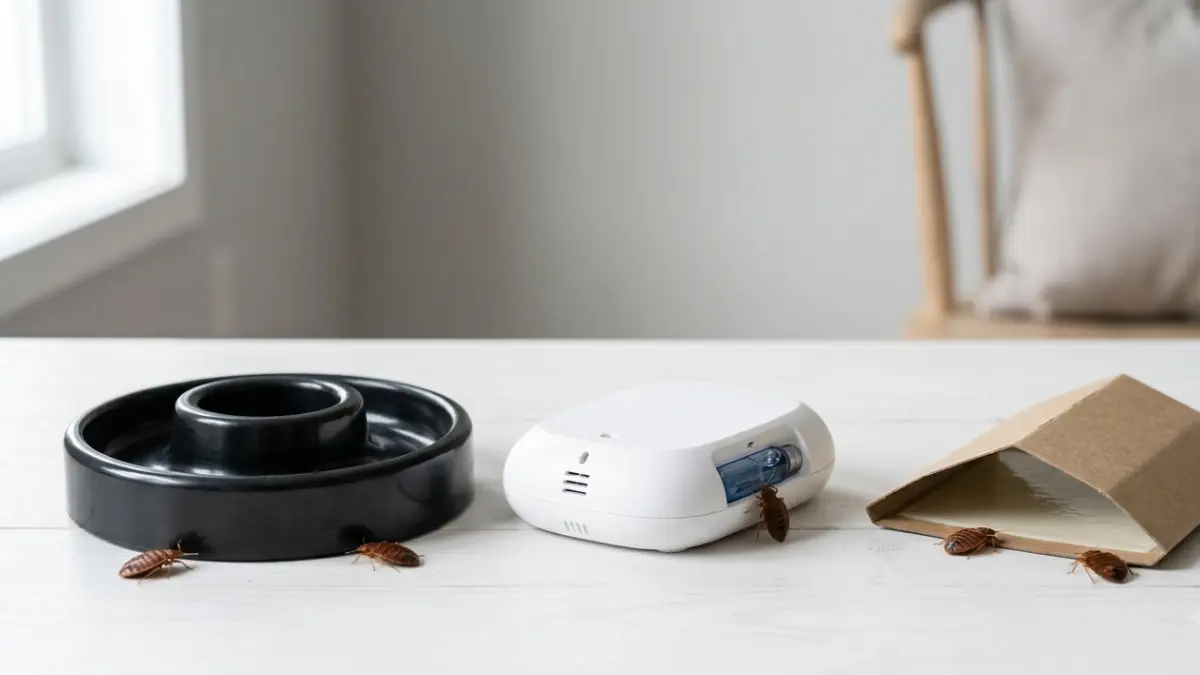
Bed bug traps work in two ways: passive interceptors sit under furniture legs and catch bugs trying to climb up, while active monitors lure bugs out of hiding with carbon dioxide, heat, or pheromones.
Passive interceptors: the pitfall under your bed legs
Bed bugs can’t fly; they crawl up bed and furniture legs to reach you at night. A pitfall interceptor is a two-walled dish that traps them in a slick moat they can’t climb out of. Researchers at Rutgers found fabric-taped interceptors like the ClimbUp especially effective, and more reliable than a visual inspection for spotting low-level activity — learning the signs of bed bugs helps, but a trap catches what your eyes miss.
📊 Sourced: Rutgers found pitfall-style interceptors the most cost-effective monitor for detecting bed bugs.
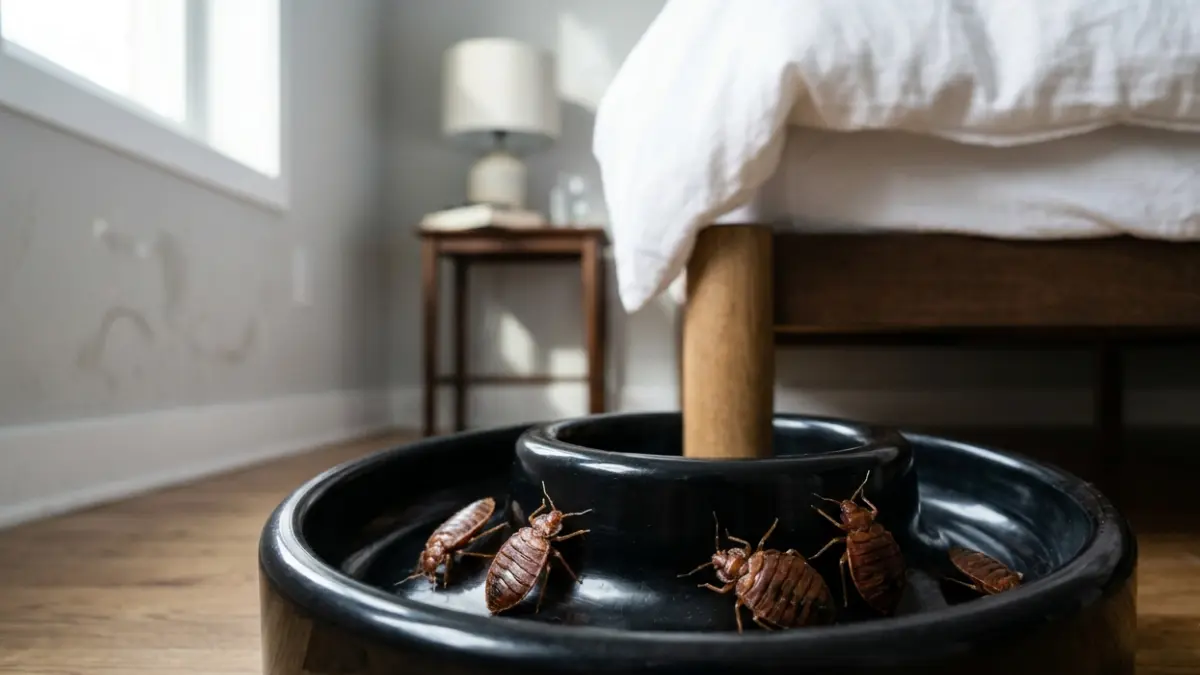
Active monitors: CO2, heat, and pheromone lures
Active traps mimic a sleeping person. Carbon dioxide is the main draw — studies show CO2 traps catch significantly more bed bugs than traps without it — and some add heat or a pheromone lure. They shine in rooms that aren’t always occupied, where there’s no sleeping human to act as bait.
Where glue traps fit (and don’t)
Sticky glue traps are the cheapest option, but the EPA notes they aren’t really made for bed bugs — they’re better at catching spiders and roaches. Treat them as a rough something-is-here confirmation, not a primary monitor.
The best bed bug traps and monitors by situation
For most people, a black, fabric-taped pitfall interceptor under every furniture leg is the best bed bug trap for detection — it’s inexpensive, needs no refills, and research backs it. Here’s what to reach for by situation.
💡 Pro Tip: These picks are based on published efficacy research (Rutgers, EPA) and product specifications, not our own lab testing. Where the research points clearly to one design — fabric-taped, dark-colored interceptors — we say so.
Best overall interceptor. A black, fabric-taped pitfall interceptor. Bed bugs gravitate toward darker colors, and research found black interceptors catch more than white ones. The ClimbUp Insect Interceptor is the research-validated original; several similar cups perform the same job. You can compare which interceptors catch the most before you buy.
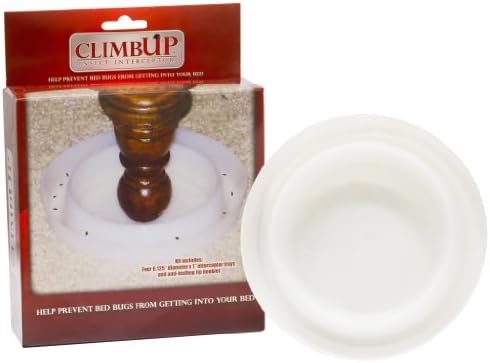
- Pesticide-Free Monitor: Talc-coated monitor traps live bugs for early detection.
- Dual-Well Design: Shows you which direction bedbugs are crawling.
- Aids Pest Control Professionals: Gives clues as to which direction bedbugs are coming from.
🛒 Our Pick: A fabric-taped black interceptor (four-pack, one per leg). We may earn a commission from this link, at no extra cost to you.
Best for heavy or large beds. Standard cups can crack under a heavy platform bed. A heavy-duty interceptor built for larger furniture holds up better and seats wider legs.

- SLEEP EASY! 24/7 BEDBUG DETECTION AND PROTECTION — Easily monitor your problem 24/7 and rest easy knowing that your bed …
- EFFECTIVE, HEAVY DUTY, VERSATILE DESIGN — Eliminate your infestation once and for all. The Bed Bug Blocker (XL) intercep…
- USE UNDER BED POSTS AND FURNITURE LEGS — In addition to use in homes and apartments, the Bed Bug Blocker (XL) can be use…
🛒 Our Pick: A heavy-duty interceptor rated for large furniture. We may earn a commission, at no extra cost to you.
Best active monitor. For a vacant room or a home you’re not always in, a CO2/lure monitor such as the SenSci Volcano — paired with the Rutgers-developed Activ lure — draws bugs out without a sleeping host.

🛒 Our Pick: A CO2/pheromone monitor with a compatible lure. We may earn a commission, at no extra cost to you.
Whatever you choose, check current price and availability before buying, since models and stock change. Interceptors also pair well with encasements — pair them with a mattress encasement to seal off the bed itself.
How to choose the right trap (and what it really costs)
The right trap comes down to three things: fit, design, and cost.
Match the interceptor to your furniture leg
Measure your bed and furniture leg diameter first — oversized or oddly shaped legs won’t seat in a standard cup, so check each product’s stated maximum before buying. A leg that doesn’t fit means the trap can’t do its job.
Black vs white, pitfall depth, and durability
Research favors black interceptors over white, since bed bugs are drawn to darker colors. Beyond color, look for a deep, slick moat and sturdy plastic — polypropylene resists cracking, while cheap, shallow cups let bugs escape or split under weight.
Cost by trap type
| Trap type | How it works | Effectiveness (per research) | Typical cost | Best for |
|---|---|---|---|---|
| Pitfall interceptor | Passive; traps climbers under legs | Most cost-effective detector (Rutgers) | $ | Most households; ongoing monitoring |
| Active CO2/lure monitor | Lures with CO2, heat, or pheromone | Catches more, faster (CO2 studies) | $$–$$$ | Vacant or unoccupied rooms |
| Glue/sticky trap | Adhesive catches passing insects | Weakest for bed bugs (EPA) | $ | Rough confirmation only |
| DIY interceptor | Homemade pitfall (containers + talc) | Works for detection (EPA method) | Cheapest | Renters, tight budgets |
Effectiveness reflects published research (Rutgers; EPA). Costs are relative tiers — verify current pricing before you buy.
How to place and check bed bug interceptors correctly
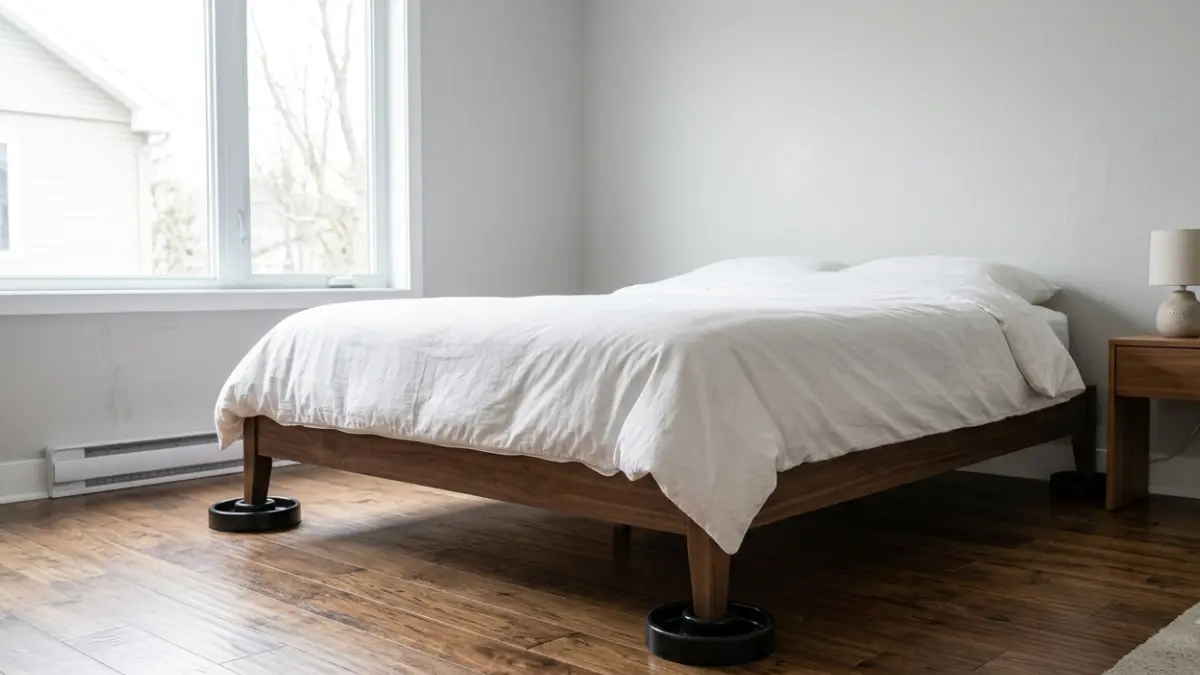
Place one interceptor under every leg of the bed and any infested furniture, then pull the bed away from the wall so bugs can’t bypass the traps.
Place one under every leg, and make the bed an island
- Put an interceptor under each bed and furniture leg.
- Pull the bed at least a few inches from the wall.
- Keep bedding and skirts from touching the floor.
- Remove anything stored under the bed.
This “bed as island” setup forces bugs through the traps instead of around them, cutting off the spots bed bugs travel from.
How often to check them, and for how long
Inspect interceptors daily at first, then at least every seven days. Rutgers notes they need to stay in place a week or more to catch bugs at very low numbers, and the EPA suggests keeping them for about a year for post-treatment monitoring — the surest way to confirm the bugs are actually gone.
📊 Sourced: EPA guidance — inspect interceptors daily at first, then at least every 7 days.
Keeping interceptors working
Some cups, like the ClimbUp, need an occasional light dusting of talcum powder to stay slick. Texas A&M’s extension guidance is that the talc should be barely visible — more is not better — and it’s non-toxic; it simply stops bugs from climbing out.
Can you make your own bed bug trap?
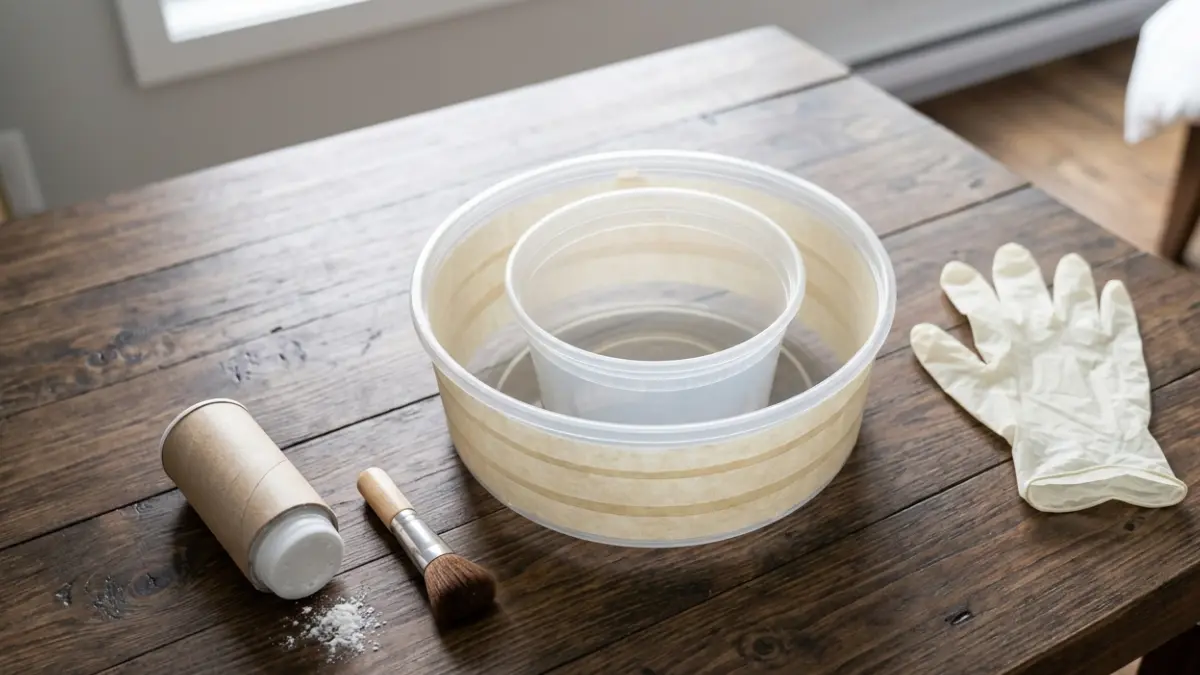
You can make a bed bug interceptor from two plastic containers, rough tape on the outer wall, and a little talcum powder inside.
DIY passive interceptor: containers, tape, and talc
Following the EPA’s do-it-yourself method: take two smooth containers, a small one that fits inside a larger one (repurposed deli tubs work well). Wrap rough masking tape around the outside of the larger container so bugs can climb up it, then dust a little talcum powder inside so they can’t climb back out. Set a bed or furniture leg in the inner cup, and you’ve built a working monitor — a genuine way to tackle bed bugs yourself on a budget.
DIY active traps: possible, but handle dry ice with care
A carbon-dioxide source boosts what a trap catches, and researchers have used dry ice or a sugar-yeast mix to make one. This is more involved, and dry ice carries real risk.
⚠️ Watch Out: Dry ice can cause frostbite and can build up dangerous carbon dioxide in an enclosed space. Handle it in a ventilated area, wear gloves, and never seal it in a closed container. Rutgers publishes the full protocol if you decide to try it.
When store-bought is worth it
DIY passive interceptors are fine for detection, but commercial cups are more durable, easier to clean, and hold their shape. For long-term monitoring, the few dollars are usually worth it.
What your traps are telling you (and when to call a pro)
Bed bug traps don’t get rid of bed bugs; they confirm and track them. What you do next depends on what your monitors show.
You’re catching bugs
A catch confirms the problem and gives you a baseline. Start or continue a full treatment plan — heat, targeted products, encasements — and keep the interceptors in place to measure progress over the following weeks.
You’re bitten but catching nothing
Empty traps plus bites usually means placement, not absence. Pull furniture fully off the wall, add traps under other seating, and check thoroughly for bed bugs in seams, joints, and headboards.
When to call a licensed professional
Traps are one part of an integrated pest management plan; full elimination usually needs targeted treatment and follow-up. If an infestation is spreading or your own efforts aren’t working, a licensed pest-control professional is the reliable path.
Bed bug traps: frequently asked questions
1. Do bed bug traps actually work?
Yes, for detection and monitoring. Pitfall interceptors and CO2 monitors reliably catch bed bugs, and research shows they’re more accurate than a visual inspection at spotting low-level activity. What they don’t do is eliminate an infestation — they catch only a fraction of the population while bugs keep breeding, so pair traps with a full treatment plan.
2. What is the best bed bug trap?
For most people, a black, fabric-taped pitfall interceptor under every furniture leg is the best bed bug trap. It’s cheap, needs no refills, and research backs it. If a room isn’t always occupied, an active CO2 or lure monitor works better, since there’s no sleeping person to draw bugs toward the trap.
3. How do bed bug interceptors work?
Interceptors are two-walled dishes placed under bed and furniture legs. Bed bugs can’t fly, so they crawl up the legs to reach you, then fall into a slick moat they can’t climb out of. Placed under every leg with the bed pulled off the wall, they catch bugs coming and going.
4. Where should I put bed bug traps?
Put one interceptor under every leg of the bed and any infested furniture, then pull the bed a few inches from the wall and keep bedding off the floor. This “bed as island” setup forces bugs through the traps instead of around them. Add monitors near other seating and sleeping areas.
5. How long does it take a bed bug trap to work?
Leave interceptors in place at least a week. Rutgers found they need seven days or more to catch bed bugs at very low numbers, since bed bugs feed only every few days and may not cross a trap right away. For post-treatment monitoring, keep them running for about a year.
6. Do glue traps work for bed bugs?
Not well. The EPA notes sticky traps aren’t really designed for bed bugs — they’re better at catching spiders and cockroaches. A glue trap might confirm something is crawling, but a pitfall interceptor is far more reliable for detecting and monitoring bed bugs, so use interceptors as your primary tool.
7. Can I make my own bed bug trap?
Yes. The EPA describes a DIY interceptor: two plastic containers, rough tape around the outside, and a little talcum powder inside so bugs can’t climb out. It works for detection and costs almost nothing. A homemade CO2 trap is possible too, but only with careful dry-ice handling in a ventilated space.
8. Are bed bug traps safe for pets and children?
Interceptors and their talc dusting are non-toxic, and most glue traps use no chemicals. Still, keep talcum powder and adhesive traps out of reach of children and pets, and place traps where they won’t be knocked over. If you attempt a dry-ice CO2 trap, keep pets and kids well away.
9. Do bed bug traps get rid of bed bugs?
No. Traps detect and monitor bed bugs and can reduce bites by catching some, but they don’t eliminate an infestation — bugs keep breeding in hiding spots the traps never reach. Getting rid of bed bugs takes a full plan of heat, targeted products, and encasements, or a licensed professional.
10. Are black or white bed bug interceptors better?
Black. Research found bed bugs are drawn to darker colors, and black interceptors catch more than white ones. If you’re choosing between otherwise similar cups, pick the darker one — and prioritize a deep, slick moat and sturdy plastic, which matter even more than color for holding bugs once they fall in.
The bottom line on bed bug traps
A well-chosen interceptor or monitor, placed under every leg and checked on a real schedule, does one thing extremely well: it tells you exactly what you’re dealing with. For most people, a black, fabric-taped pitfall interceptor is the smartest, cheapest starting point, while a CO2 monitor earns its price in rooms without a sleeping host. Just hold onto the honest truth threaded through this guide — traps find and track bed bugs, they don’t cure them. Once your monitors confirm activity, move to the full plan for getting rid of bed bugs, or bring in a licensed professional if it’s spreading.
Related Articles
 Bed Bugs Treatment
How Do You Get Bed Bugs When Your Home Is Spotless?
June 26, 2026 Bed Bugs Treatment
Bed Bugs in Your Apartment and Whether Your Landlord Is Right
July 13, 2026 Bed Bugs Treatment
How to Check for Bed Bugs the Right Way
June 27, 2026 Bed Bugs Treatment
Where Bed Bugs Hide When the Mattress Looks Clean
June 25, 2026 Bed Bugs Treatment
How to Hire a Bed Bug Exterminator and Avoid Costly Mistakes
July 9, 2026 Bed Bugs Treatment
What Kills Bed Bugs, and How to Use Each Method Safely
July 5, 2026 Bed Bugs Treatment
Choosing a Bed Bug Steamer That Gets Hot Enough
July 4, 2026 Bed Bugs Treatment
Build the Right Bed Bug Treatment Kit for Your Home
July 6, 2026 Bed Bugs Treatment