Choosing a bed bug steamer that gets hot enough

Consumer bed bug steamers matched a commercial machine in Rutgers lab tests. Speed, the attachment and leather covers decided what survived.
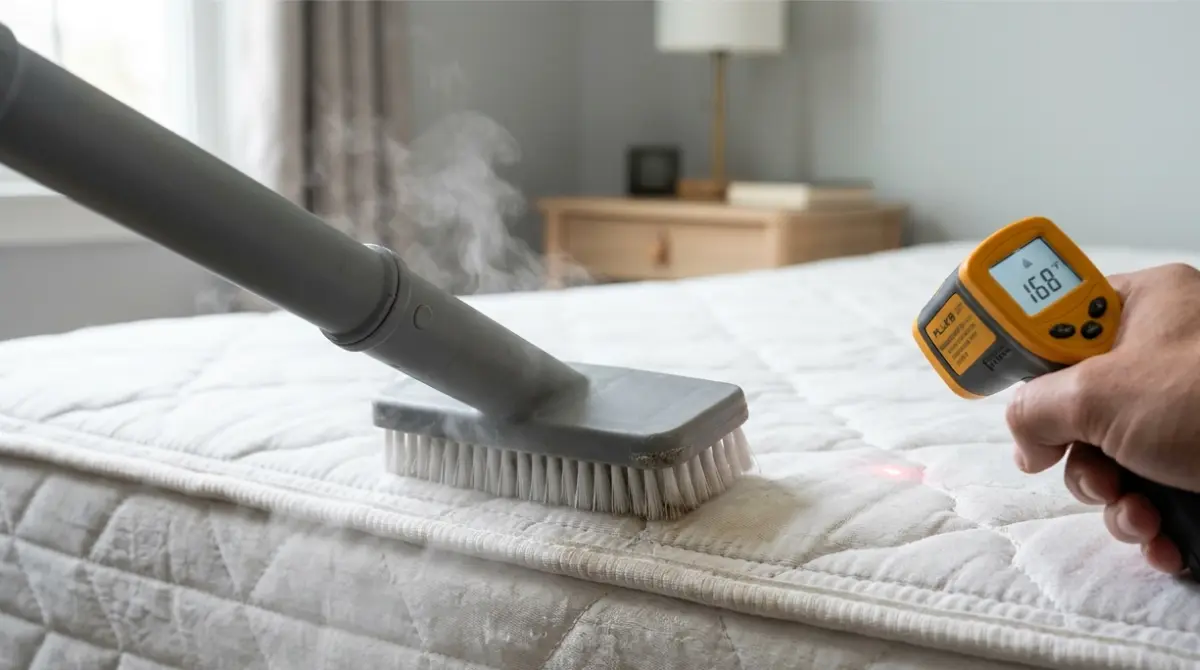
Table of Contents
A bed bug steamer is hot enough when the fabric reads 160 to 180°F the moment the steamer head has passed, measured with an infrared thermometer (University of Minnesota and Minnesota Department of Agriculture fact sheet). Price matters less than technique: in a Rutgers lab study, a $75 handheld and a $102 canister steamer, priced at the time of the study, killed bed bugs as well as a $1,259 commercial machine (Wang et al. 2018).
When steam misses bed bugs, the research points to how it was applied. Moving the head too fast and steaming over leather both leave survivors, as does steam forceful enough to knock bugs off the surface before they heat up (full text of the Rutgers study).
Three temperatures that get mixed up
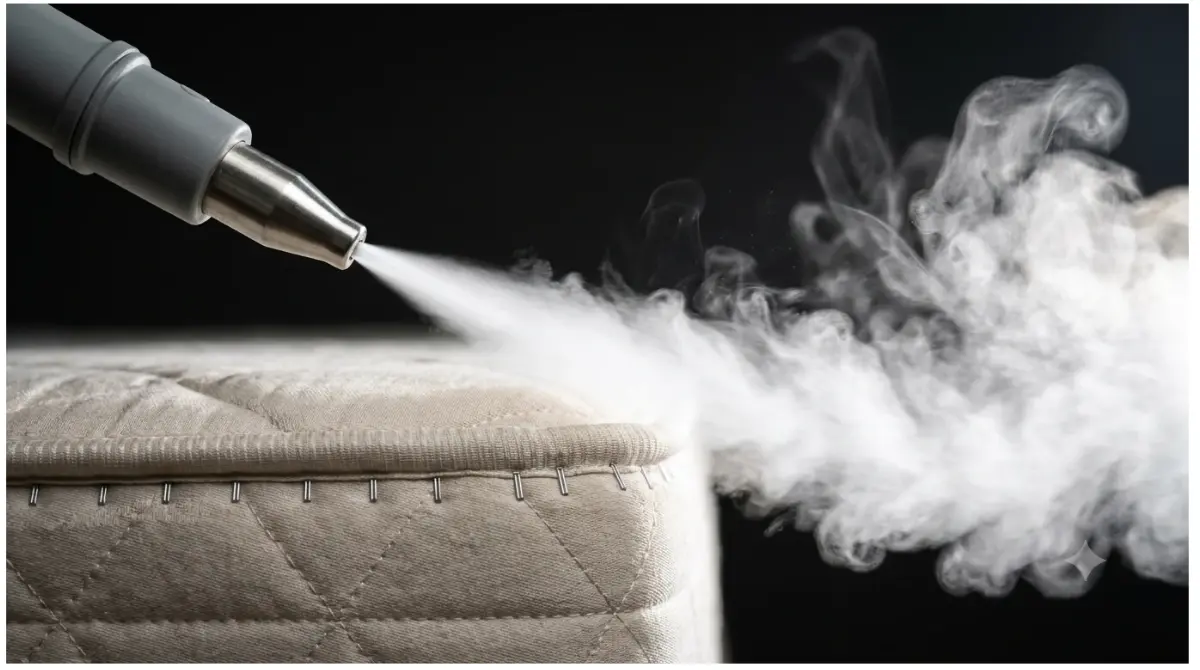
The temperature printed on a steamer’s box describes steam leaving the machine, and the bug is always somewhere cooler.
| Reading | What it tells you |
|---|---|
| 113°F | Adults need about 90 minutes to die and eggs about 7 hours |
| 118°F for adults, 122°F for eggs | Death is close to immediate |
| 130°F | EPA’s minimum for the steam itself |
| 160–180°F | Target on the cloth just after the steamer head has passed |
Sources: Kells, EPA National Bed Bug Summit presentation (first two rows); EPA do-it-yourself bed bug control (130°F); Minnesota steam guidance (160–180°F).
A steamer kills bed bugs only if enough heat survives the trip from nozzle to bug. That is why the working target is a non-contact thermometer reading taken right after the head passes, not the number on the box (University of Minnesota steam guidance). In one Rutgers experiment, steam measured 186°F leaving the device and only 125°F where it reached the bugs (steam dose study, Journal of Medical Entomology).
That dose killed only about 28% of the adult bugs. Why heat works at all, and the other ways to use it at home, is covered in does heat kill bed bugs.
Cheap and costly steamers did equally well in lab tests
In 2018, Rutgers entomologists ran three machines side by side on small mattresses, under fabric covers and inside wooden cracks (Rutgers steamer comparison). On the mattress surface, every egg died with every machine. Between 91 and 95% of nymphs and adults died when only the mattress was steamed, and all of them died once the floor underneath it was steamed as well.
Under a bed sheet or sofa fabric, the temperature beneath the cover reached 136 to 180°F depending on machine and time (cover temperatures, Table 3).
The two consumer steamers in that study, a small handheld and a mid-size canister, did as well as the pro machine on every surface tested (study abstract). More than 89% of bugs hidden under fabric died, and every bug tucked into a wooden crack died after a few seconds of steam. No machine got heat through leather.
A separate Texas A&M study placed bed bug eggs on mattress material under a commercial steamer head. None hatched at any of the three speeds tested, from about a foot every 10 seconds to a foot every 30 (Puckett et al. 2013). Both studies had help from manufacturers, who donated or funded the equipment.
Bed bug steamers compared on published specs
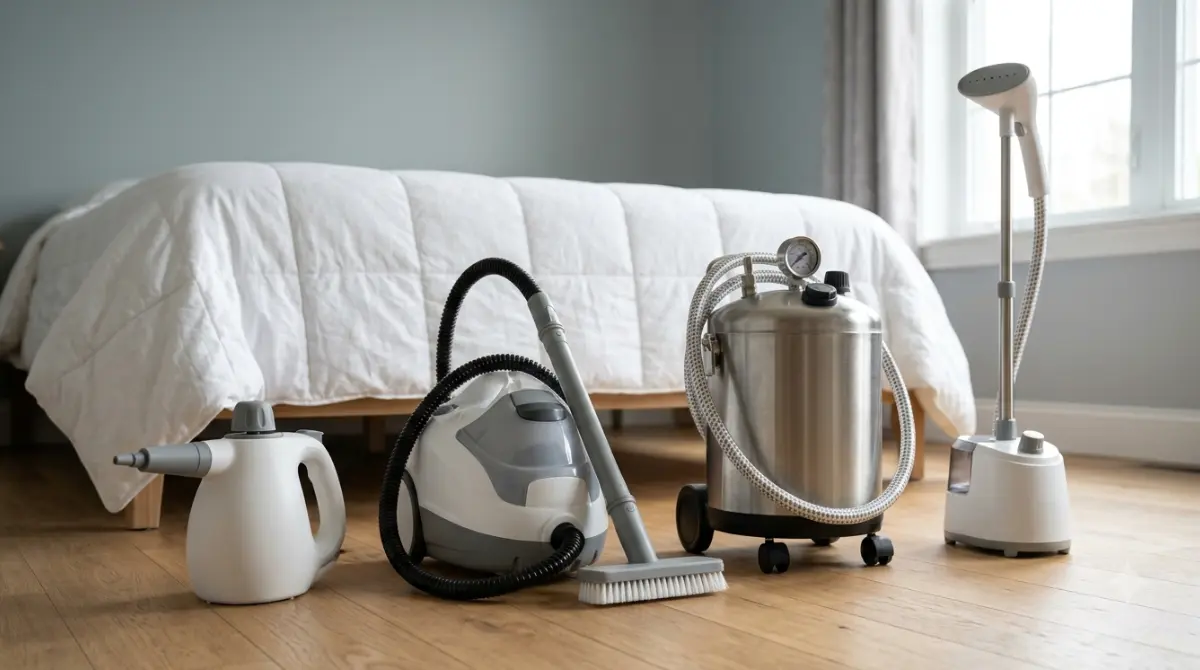
No steamer is “EPA-registered.” EPA does not register pest control devices or review their labels before sale, and the EPA establishment number printed on a device only identifies where it was made, not an EPA endorsement (EPA Pesticide Registration Manual, chapter 13; EPA device compliance advisory).
| Machine (type) | Water tank | Heat-up / run time | Tested in | Result |
|---|---|---|---|---|
| HAAN HS-20R (handheld) | 200 mL (6.8 fl oz) | Under 3 min / 15 min | Rutgers lab, 2018 | Matched the commercial unit |
| Steamfast SF-370WH (canister) | 1,420 mL (48 fl oz) | 8 min / 45 min | Rutgers lab, 2018 | Matched the commercial unit |
| Amerivap Steamax STM-BASIC (commercial) | 2,400 mL (81 fl oz) | 14 min / 90 min | Same 2018 study | Comparison baseline |
| Polti Cimex Eradicator (superheated steam) | Not given in the maker’s brochure | Not given in the maker’s brochure | Rutgers simulated field test, 2023 | About 1 live bug per furniture item at 28 days, against 83 on untreated items |
| Garment steamer or steam mop | Varies by model | Varies by model | No published bed bug test found | Check the fabric reading before relying on it |
Sources: specs for the first three rows are the manufacturers’ figures reproduced in the 2018 Rutgers comparison; Polti results from Ramos et al. 2023.
The Minnesota fact sheet recommends a commercial steamer holding at least 1 gallon, preferably with a volume control. No Rutgers machine held a gallon, and all three killed bed bugs in the lab; the bigger tanks ran longer between refills.
Polti’s brochure claims steam up to 356°F at the tip, a flow adjustable up to 3.9 ounces per minute and pressure up to 58 psig (Polti Cimex Eradicator brochure). In the 2023 test, which Polti funded, researchers moved its nozzle about 4 inches per second, and steaming took 1.7 times as long as spraying the same furniture with insecticide. Both wet and dry steam cleaners appear on EPA’s do-it-yourself list of non-chemical methods (EPA).
Which steamer fits your home?
If the bugs are still confined to one bed, a small handheld can do the job. On the model Rutgers tested, a 15-minute run time means stopping often to refill and wait for it to heat again.
A bedroom plus an upholstered chair or couch is canister territory. For frequent use or large areas, a 2019 Rutgers Cooperative Extension fact sheet points to a high-capacity machine and prices that class at $100 to $1,300 (Rutgers fact sheet FS1251).
Several rooms, or bugs in the apartments next door, change the question. Once more than a few units in a building are infested, a building-wide approach is needed and will most likely take a pest management professional (FS1251). Weighing the two routes is the subject of DIY or professional bed bug treatment.
Check the surface temperature before you trust it
Test the machine on the mattress you plan to treat before you work through the room.
- Fit the wide floor or upholstery brush, which lets steam into fabric without blowing bed bugs away (UMN guidance). A diffuser helps too, since forceful airflow can scatter bugs (EPA).
- Pass the head slowly along one seam, then point an infrared thermometer at the strip you just covered. The reading should land in the 160–180°F band.
- If it reads low, slow down. Slow movement matters most where bugs hide in cracks or behind fabric (FS1251).
- Over cracks and crevices, hold the steam in place. In the Rutgers crack test, 4 seconds killed eggs and adults and 6 seconds killed nymphs (2018 crack results).
- Work from the bottom of the furniture up, then steam the floor underneath, so bugs that drop off are treated too (FS1251).
A towel over the head is where the guidance splits. Rutgers suggests one if bugs are being blown off by the steam, while Kells measured that towels reduce how far steam penetrates and that nozzle shape made no difference to penetration (Kells presentation).
Safety: Steam leaves the nozzle near 212°F (FS1251) and can cause burns (UMN guidance). Raising the whole room’s temperature with a thermostat or space heater does not kill bed bugs and is dangerous (EPA). Whole-room heat is professional work with dedicated equipment, and what bed bug heat treatment costs covers that route.
Where steam can’t reach
Under artificial leather, temperatures stayed between 87 and 112°F in the Rutgers tests, and the bugs beneath did not die in significant numbers (leather results).
- Leather covers, because steam cannot pass through them.
- Deep inside cushions and box springs. Reasonable penetration is about ¾ inch through fabric and 2⅜ inches into gaps, depending on the fabric and how dense the fill is (Kells presentation).
- Bugs that run or fall before they heat up, which the Rutgers team saw in its early trials (discussion section).
Survivors keep breeding. Bed bugs given a mild dose of steam fed less for a while, but they mated and laid eggs at normal rates afterward (steam dose study). Couch seams and cushions have their own limits, set out in treating bed bugs in a couch.
Stop and call a professional if: bed bugs turn up in more than a few apartments in your building, the point where a building-wide approach is needed (FS1251). Look up the company’s pesticide applicator license through your state pesticide regulatory agency, and ask how many follow-up visits the quoted price includes.
Two more questions come up before buying
Clothes steamers and bed bugs
None of the studies cited here tested a garment steamer. If you use one, hold it to the same standard and rely on it only if the treated spot reaches the target.
Can steam damage a mattress or couch?
Steamed mattress material in the Texas A&M test gained almost no water weight and showed no mold after 30 days (Puckett et al. 2013). Steam can damage finished furniture surfaces and some fabrics such as microfiber (FS1251).
Steam again in a few days, then watch the traps
One pass of steam kills only what it reaches, and it leaves no residue behind for the bugs it missed (Ramos et al. 2023).
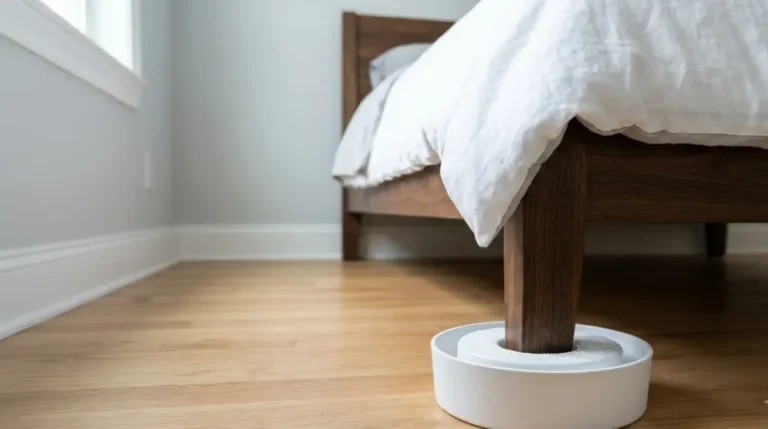
Steam again every few days until neither traps nor a visual check turn up bed bugs, and stop only after a month in which you find none (FS1251). Inspect at least every 7 days in the meantime (EPA). Cups under the bed legs do much of that checking for you, and which bed bug interceptors catch the most compares them. Steam is one part of the plan laid out in how to get rid of bed bugs.