
How Heat Kills Bed Bugs, and Where It Falls Short

Heat kills bed bugs at every stage—but 120°F is a floor, not a guarantee. Eggs survive in cracks the heat never reaches. Here’s what actually clears them.
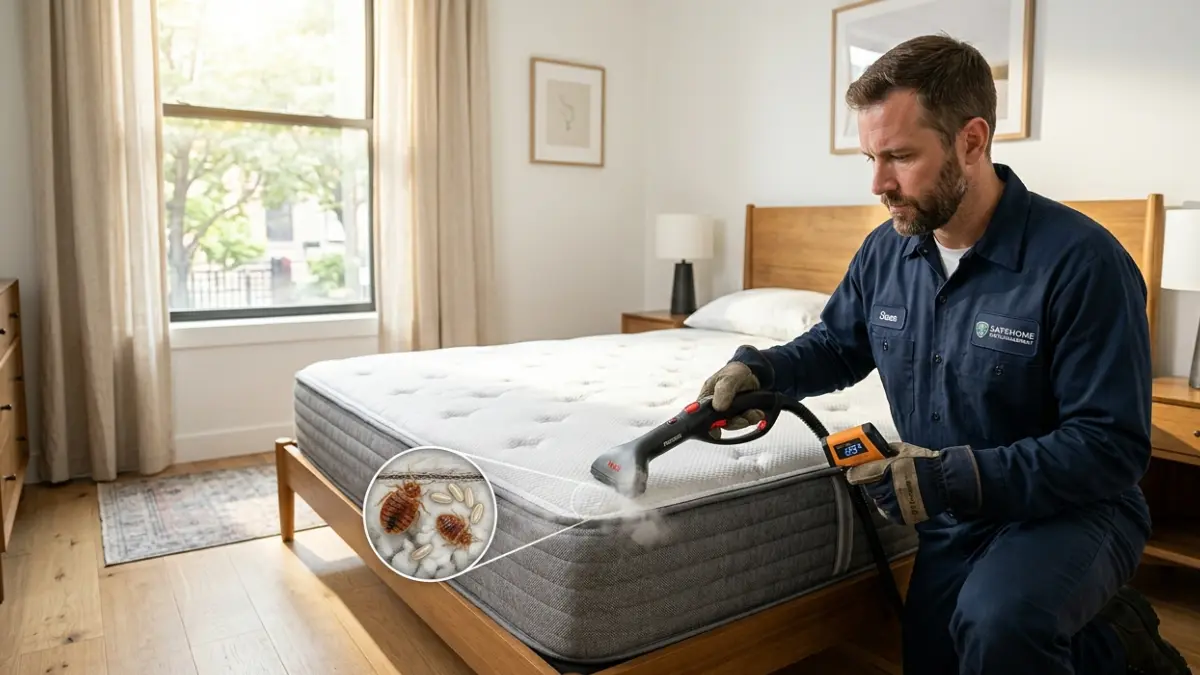
Table of Contents
Yes — heat kills bed bugs at every life stage, including their eggs — but only when it climbs high enough and holds long enough to reach them where they hide. That second half is where most attempts fail.
Where you’re standing decides your move: for infested clothing or bedding, use the dryer method below; for a room-wide infestation, DIY heat has real limits and a pro is often the smarter spend. Before you “cook” bugs with a space heater, read the safety section — that shortcut causes house fires.
Heat is your strongest tool inside the larger plan to get rid of bed bugs.
ℹ️ Safety Note: Reaching bed-bug-lethal temperatures carries real fire and carbon-monoxide risk. Never heat a room with a fireplace, oven, or space heater; for whole-home heat, hire a licensed professional and keep children and pets out.
What temperature kills bed bugs — and their eggs?
Adult bed bugs die at around 118°F, but their eggs are tougher and need roughly 122°F held long enough to reach them. That gap is why DIY heat so often fails.
| Life stage | Dies at (direct heat) | How long | Key detail |
|---|---|---|---|
| Adults & nymphs | ~118°F (48°C) | ~20 min at 118°F | Easiest stage to kill |
| Eggs | ~122°F sustained | up to ~90 min; near-immediate near 130°F | Heat-resistant stage that restarts infestations |
| Practical target | 120°F+ at every surface | held until cracks catch up | Room air must run hotter — cracks lag 20–30°F |
Temperatures reflect University of Minnesota research and Virginia Tech Extension guidance; figures are for direct exposure.
📊 Sourced Spec: Peer-reviewed University of Minnesota research puts the temperature for 99% kill at 118.9°F for adults and 130.6°F for eggs; Virginia Tech Extension lists thermal death points of 118°F and 122°F.
Treat “120°F” as a floor, not a guarantee — every surface must reach and hold it, not just the air mid-room. Because bed bug eggs are cemented into cracks and can’t flee the heat, they survive wherever it falls short.
How to kill bed bugs with heat at home (methods that actually work)
Four home methods genuinely reach lethal temperatures; the clothes dryer is the workhorse.
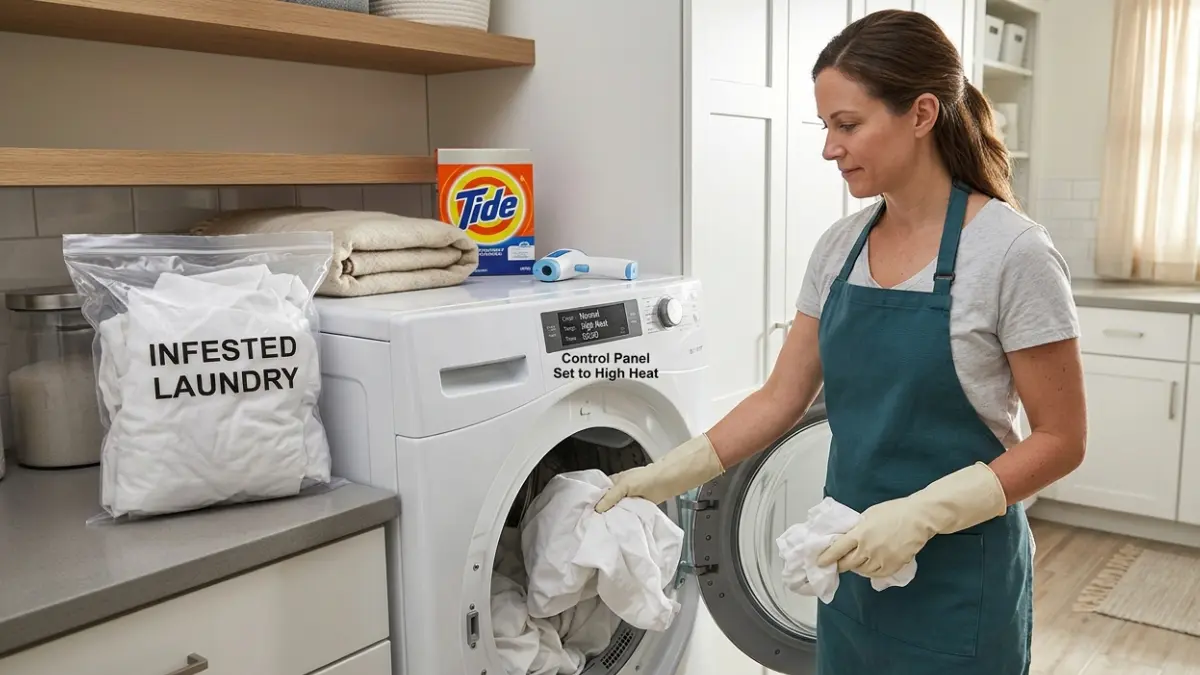
A household dryer on high heat kills all bed bug life stages, including eggs, in about 30 minutes. University of Minnesota Extension notes drying above 122°F does the job, with bulky items needing 45 to 60 minutes. Dry items first, and load the drum only partway.

- Easy to Connect: Simply download the Govee Home app, search for and select H5075, and pair it successfully within minute…
- Accuracy: Built-in Swiss-made smart hygrometer sensor, the temperature is accurate to ±0.54°F while humidity is ±3%RH. I…
- Large LCD Display: It offers realtime temp/humidity readings with large numbers and max/min records on 3 inch LCD screen…
🛒 Our Pick — a remote dryer thermometer. “High” on an older dryer can run cooler than you’d expect; a probe confirms the drum clears 122°F. (Affiliate link — we may earn a commission at no extra cost.)
Hot-water washing helps, but water needs about 140°F to kill eggs — hotter than many home heaters run. The full routine is in our guide to getting rid of bed bugs yourself.
A garment or floor steamer kills bed bugs on contact at 160–200°F, reaching seams a dryer can’t. Because it kills only what it touches, move it slowly over frames and baseboards.

- COMMERCIAL USE – Ideal for commercial and home use
- LONG LASTING – The removable 3 liter water tank provides over 90 minutes of continuous steam
- EASE – Safely smooth clothes, drapes, upholstery and hang any garment with the multifunctional hanger!
🛒 Our Pick — a heavy-duty steamer. A concentrator nozzle holds a lethal surface temperature better than a light handheld. (Affiliate link — we may earn a commission at no extra cost.)
For books, shoes, luggage, and electronics rated for it, a portable heat chamber holds an interior above 120°F.

- Efficient: Heats large items above 120℉ 50℃
- Quality bed bug heat treatment equipment, No mixing, measuring, odors, or stains, just heat.
- Easy to use: One person set-up, load with items, and press on, no need to bag items
🛒 Our Pick — a portable heat chamber. A ZappBug- or PackTite-style chamber safely treats items that won’t survive a dryer; check the manual before heating electronics. (Affiliate link — we may earn a commission at no extra cost.)
What doesn’t work — and what’s dangerous
The popular DIY shortcuts for heating a whole room are either useless or genuinely hazardous — the part heater ads skip.
The EPA’s do-it-yourself bed bug guidance is blunt: don’t try to kill bed bugs by raising indoor temperature with a thermostat, propane heater, or fireplace, because it doesn’t work and is dangerous. A thermostat can’t get hot enough, and combustion heaters bring flame and carbon monoxide indoors.
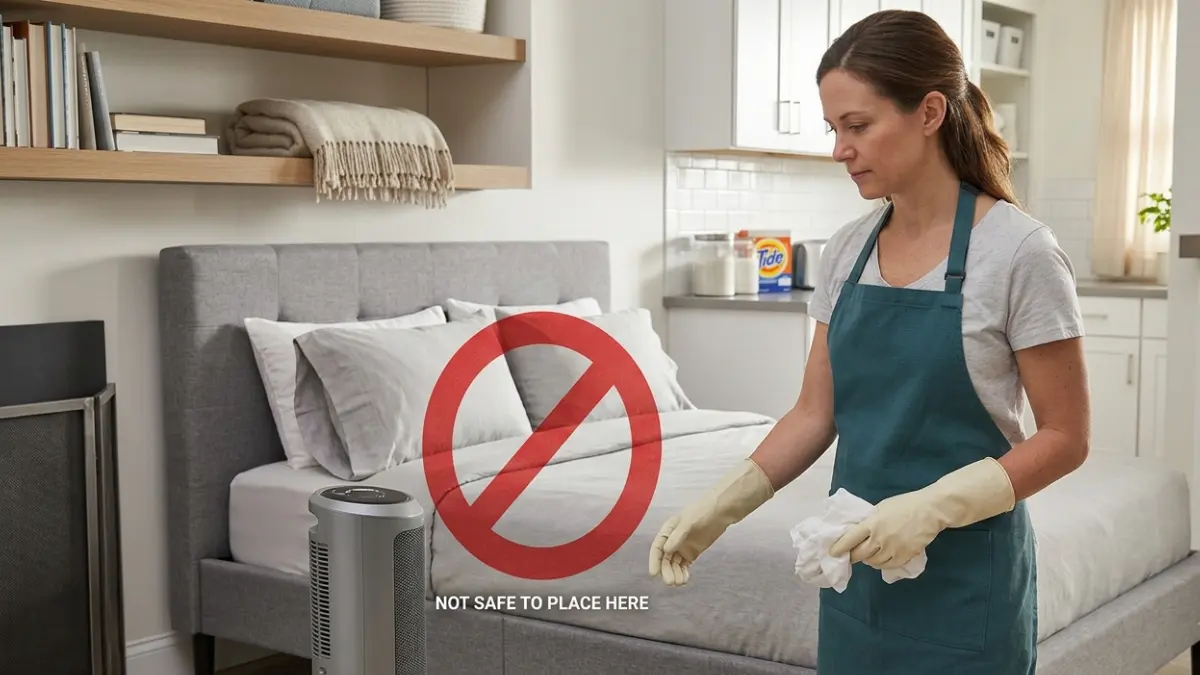
⚠️ Watch Out: Propane and kerosene heaters run indoors are a fire and carbon-monoxide risk, and their labels warn against confined-space use. Electric space heaters top out below the temperature that kills eggs. One is useless, the other can be deadly.
An oven can’t heat items evenly and is a fire hazard; a hair dryer disperses heat too fast to stay lethal. Black bags in a hot car are inconsistent — solarization often fails as bugs retreat to cool spots. Foggers (“bug bombs”) don’t reach the cracks where bed bugs hide and can cause a fire or explosion.
When to call a professional for whole-room heat treatment
When bed bugs have spread beyond what you can bag and dry, professional heat treatment becomes the reliable option.
Technicians raise a room’s air to roughly 125–140°F for several hours, using fans to push heat into cracks and wall voids. Sensors ring the space because cracks where bugs hide can lag room air by 20 to 30°F, and each must reach about 122°F. The EPA’s guidance on heat-treatment safety stresses monitoring those hard-to-heat spots, not open air.
A treatment typically runs 6 to 8 hours and starts around $1,200, rising with room size. Many are handled in one visit, but drop ceilings and wall voids give bugs cold refuges, and roughly 10 to 20% fall short from poor prep, too little time, or cold spots.
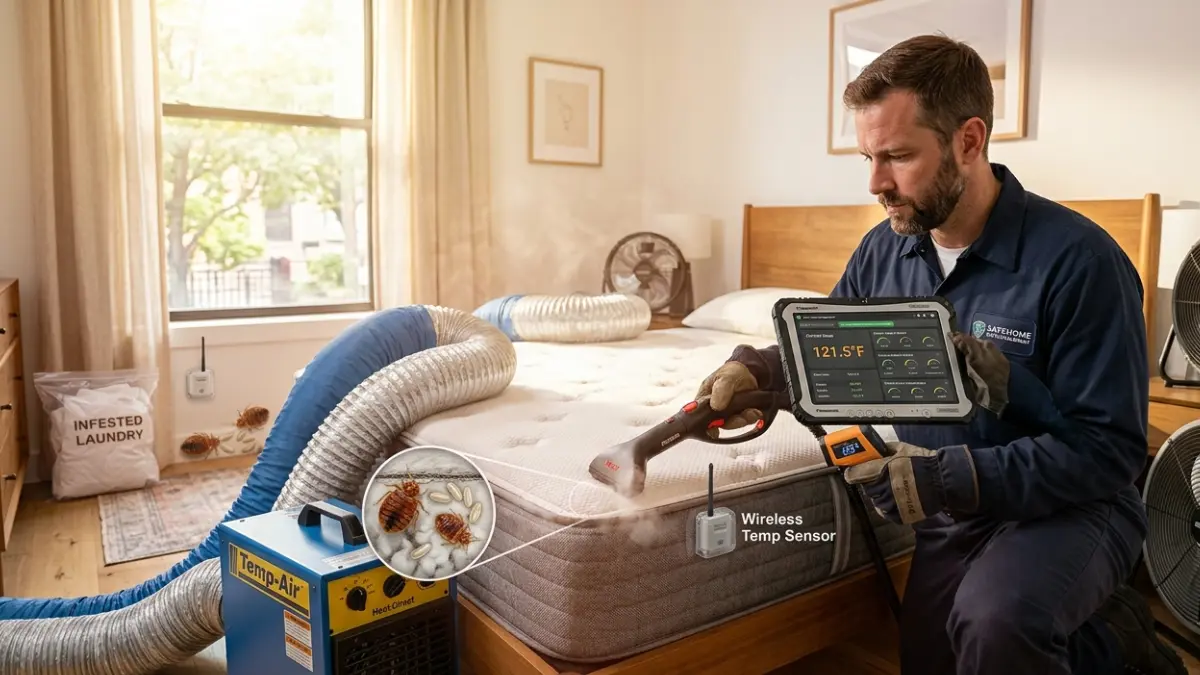
💡 Pro Tip: Ask a heat-treatment company two things before hiring: whether they monitor temperature with sensors at floor-wall junctions and voids, and whether they apply a residual product afterward, since heat alone leaves nothing behind to catch survivors.
Heat’s biggest weakness: it leaves no protection behind
Here’s the catch no heater ad mentions: heat kills the bugs present and leaves zero residual. The instant a room cools, bed bugs can walk back in from an adjacent unit, a bag, or used furniture.
So one treatment won’t hold if the source is still active nearby. Lock in results: encase the mattress and box spring, place interceptor traps under furniture legs to catch stragglers, seal cracks, and keep checking for bed bugs for at least a year.
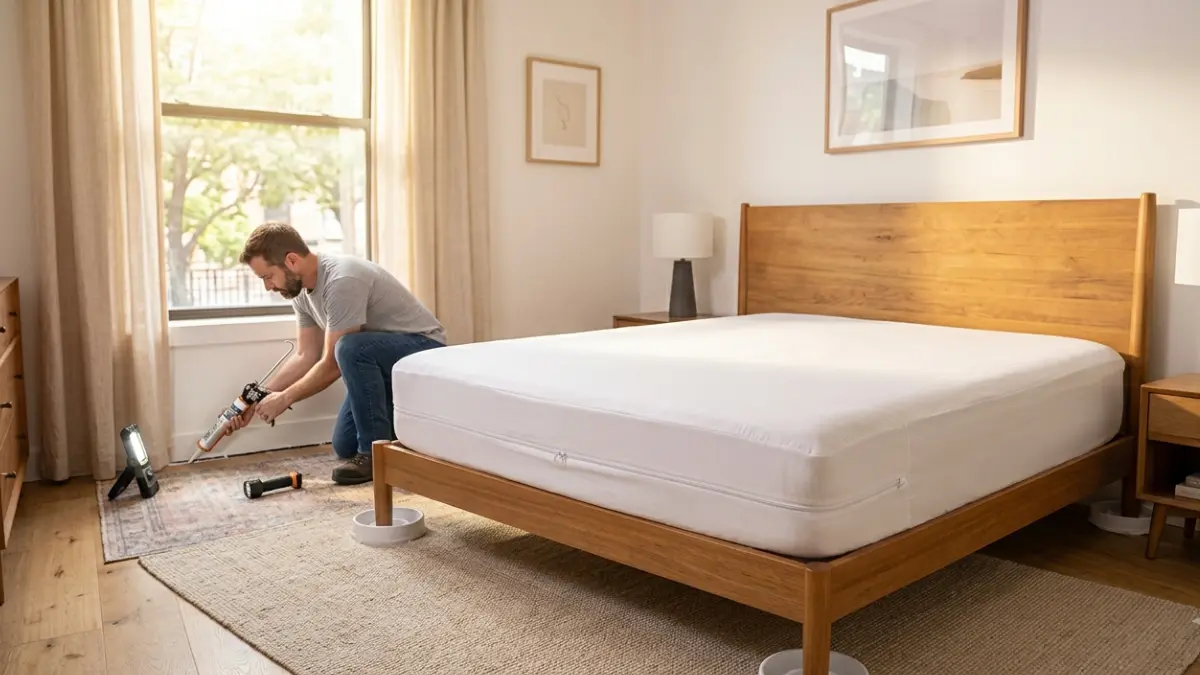
⚠️ Watch Out: If you use a desiccant dust, choose an EPA-registered product made for pest control, such as silica aerogel, and follow its label. Do not substitute pool- or food-grade diatomaceous earth — the EPA warns it can harm your lungs when inhaled.

- Box spring cover is independently lab-tested
- Stretchable 100% polyester knit fabric makes installation a breeze – includes Installation Kit
- Queen size (60” x 80”) fits box spring depths of 9″- 11″

- 100% Waterproof – Six-sided premium protection against everyday liquids and stains; 10-year quality guarantee
- Bed Bug Proof – Super fine zipper with Invisi-Zip and SureSeal technology completely seals off the box springs from bed …
- Hypoallergenic – Keeps Your Box Springs Clean & Fresh – Blocks dust mites, mold, mildew, pollen and pet dander on all si…
🛒 Our Pick — mattress and box-spring encasements. Sealing your bed traps anything you missed and denies bed bugs their favorite harborage. (Affiliate link — we may earn a commission at no extra cost.)
Why heat treatments fail — and how to avoid it
If a heat attempt didn’t work — or you want it right the first time — failures almost always trace to a few fixable mistakes.
- Overloading the dryer or chamber, which blocks hot air so items never reach temperature.
- Hitting target air temperature but missing the cracks, where bugs and eggs ride out the heat.
- Washing instead of drying, or using a low setting, which leaves heat-resistant eggs alive.
- Treating one item instead of the whole infestation, so survivors elsewhere recolonize.
- Skipping follow-up, which lets bed bugs return through the residual-free window heat leaves.
Success isn’t the absence of bites for a few days — bed bugs can go weeks between meals. Keep interceptors in place, inspect regularly, and check our guide on how to know if bed bugs are gone for signals the infestation is truly cleared, not just quiet.
Does heat kill bed bugs? Frequently asked questions
1. Does heat kill bed bug eggs?
Yes, heat kills bed bug eggs, but they’re the toughest stage — needing roughly 122°F held long enough to reach the cracks where they’re cemented. A dryer set too low, or a treatment missing one hidden crack, leaves eggs alive to hatch and restart the infestation within a week or two.
2. What temperature kills bed bugs instantly?
No temperature works truly instantly at the popular “120°F” figure — temperature and time work together. Adults die after about 20 minutes at 118°F, while a near-immediate kill of the tougher eggs needs heat closer to 130°F. Treat 120°F as a floor every surface must reach and hold, not just the room air.
3. Will a space heater kill bed bugs?
No, and it’s dangerous to try. The EPA warns that raising a room’s temperature with a space heater, thermostat, or fireplace does not work and is dangerous, adding fire and carbon-monoxide risk. Electric heaters also stay below the temperature that kills eggs. Use a clothes dryer for launderable items and a professional for a whole room.
4. Does putting infested items in a hot car work?
Sometimes, but it’s unreliable and shouldn’t be your main method. Sealed black bags in a hot car can reach lethal temperature in the right climate, but success depends on weather, timing, and placement, and the heat is uneven. A clothes dryer on high heat is far more dependable for the same items.
5. Can I use my oven to kill bed bugs?
No — an oven can’t heat household items safely or evenly and is a serious fire hazard for whatever you place inside, from shoes to books. The temperature is hard to control and easily ignites belongings. For items you can’t wash, use a dryer or a portable heat chamber instead.
6. Does steam kill bed bugs?
Yes, steam kills bed bugs and their eggs on contact. A garment or floor steamer producing roughly 160–200°F surface heat destroys bed bugs it touches — useful for mattress seams, frames, and baseboards. It treats only the surface it contacts, so move the nozzle slowly, about one foot every 30 seconds.
7. How long should items stay in the dryer?
Run the dryer on high heat at least 30 minutes for a normal load, and 45 to 60 minutes for bulky items like comforters. Dry items first rather than washing them, since a soaking-wet load struggles to reach lethal temperature, and don’t overload the drum — crowding blocks the hot air.
8. Does heat kill bed bugs permanently — can they come back?
Heat kills the bed bugs present during treatment but leaves no residual protection, so they can return once a space cools if a source is active nearby — an adjacent unit, luggage, or infested furniture. Make results permanent with encasements, interceptors, sealed cracks, and monitoring for at least a year.
9. Is heat or chemical treatment better for bed bugs?
Neither alone is complete, which is why professionals often combine them. Heat’s strength is that bed bugs never resist it and it leaves no residue; its weakness is that same lack of any lasting effect once things cool. Chemicals and desiccants add the lasting residual protection that heat alone can’t provide.
The honest verdict on heat and bed bugs
Heat works at every life stage, including the stubborn eggs — as long as it’s high enough and holds long enough to reach them. A dryer and steamer handle clothing and surfaces, a chamber covers items you can’t launder, and a licensed pro is the right call for a whole room. The fast-fix shortcuts — space heaters, ovens, foggers — fail or start fires.
The piece most people miss is follow-up: heat leaves nothing behind, so pair it with encasements, interceptors, and monitoring. Put it together with our safe step-by-step plan to get rid of bed bugs, and you’ll treat the problem once, not for months.
Related Articles
 Bed Bugs Treatment
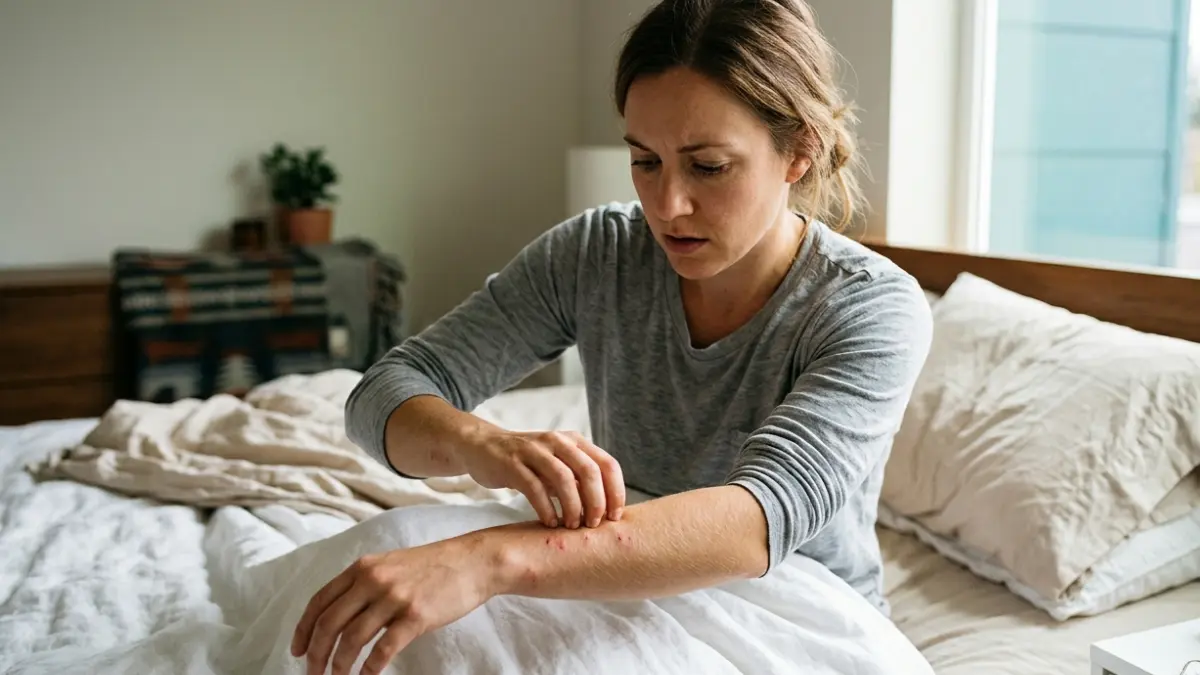
What Bed Bug Bites Look Like, and How to Be Sure
June 23, 2026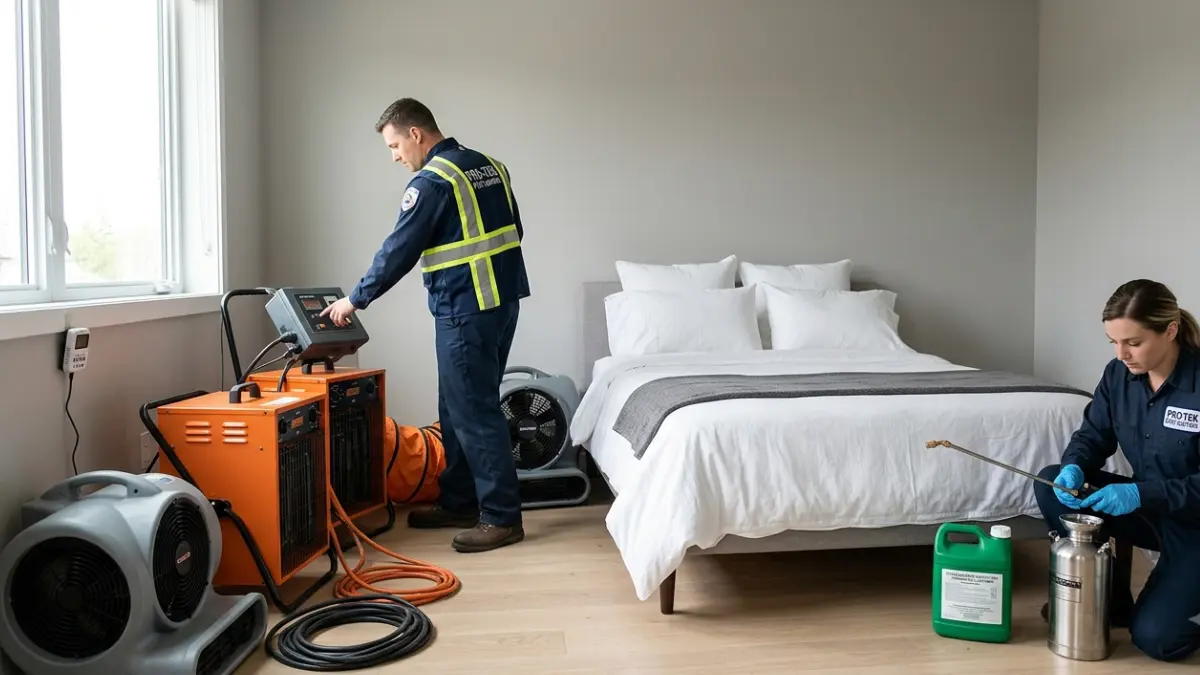 Bed Bugs Treatment
How Bed Bug Heat Treatment Costs Compare to Chemical
July 8, 2026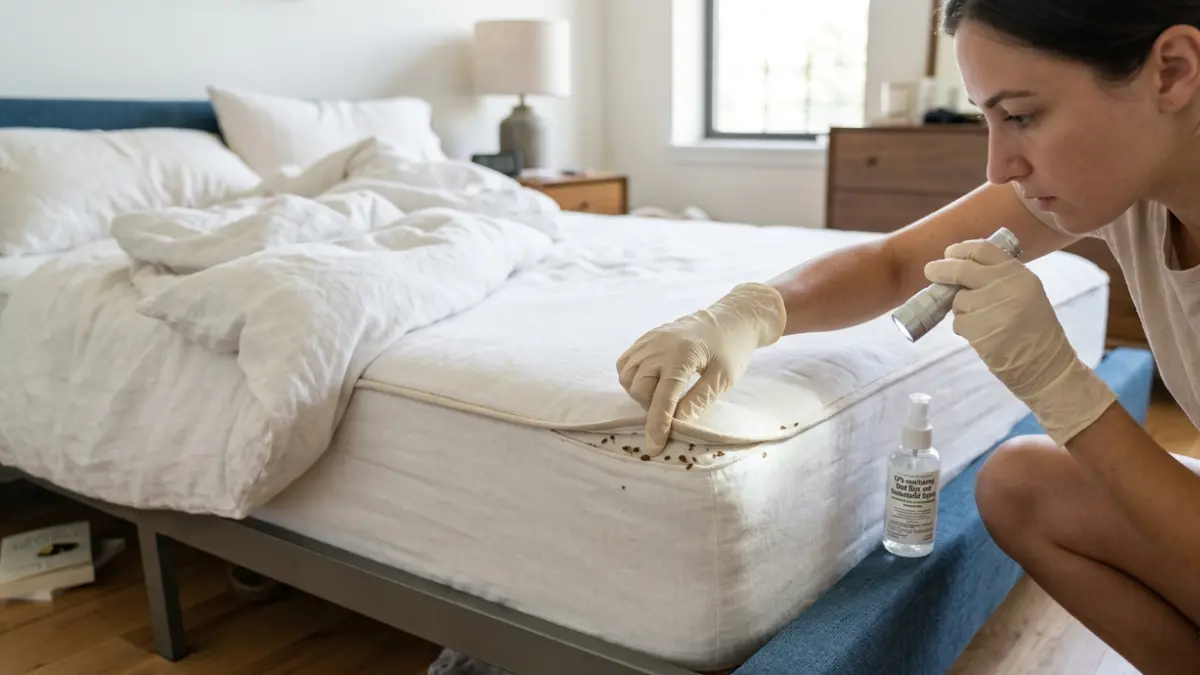 Bed Bugs Treatment
The Smart Way to Choose and Use a Bed Bug Spray
July 1, 2026 Bed Bugs Treatment
How to Hire a Bed Bug Exterminator and Avoid Costly Mistakes
July 9, 2026 Bed Bugs Treatment
An Easy Way to Tell Bed Bug Bites From Flea and Mosquito Bites
June 24, 2026 Bed Bugs Treatment
Choosing DIY or Professional Bed Bug Treatment the Smart Way
July 9, 2026 Bed Bugs Treatment
How Do You Get Bed Bugs When Your Home Is Spotless?
June 26, 2026 Bed Bugs Treatment
Build the Right Bed Bug Treatment Kit for Your Home
July 6, 2026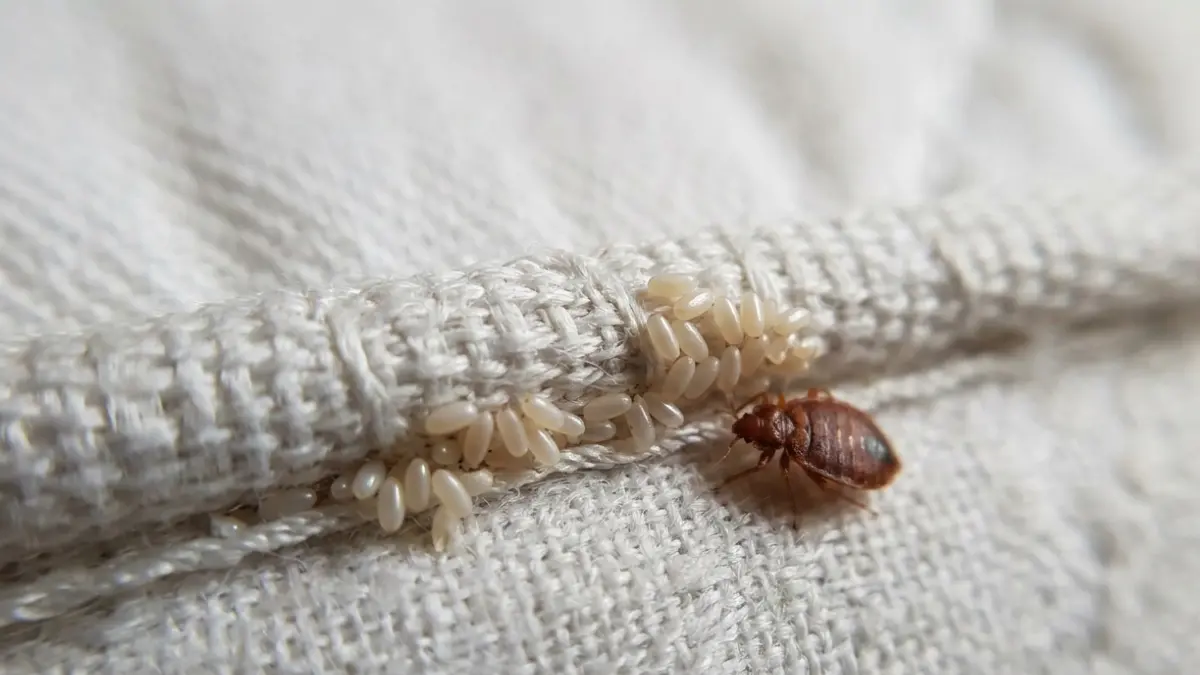 Bed Bugs Treatment