
Clearing Bed Bugs From a Couch You Want to Keep

Bed bugs in a couch are almost always treatable—you rarely have to toss the sofa. Here’s how to confirm, contain, and clear them the safe way.
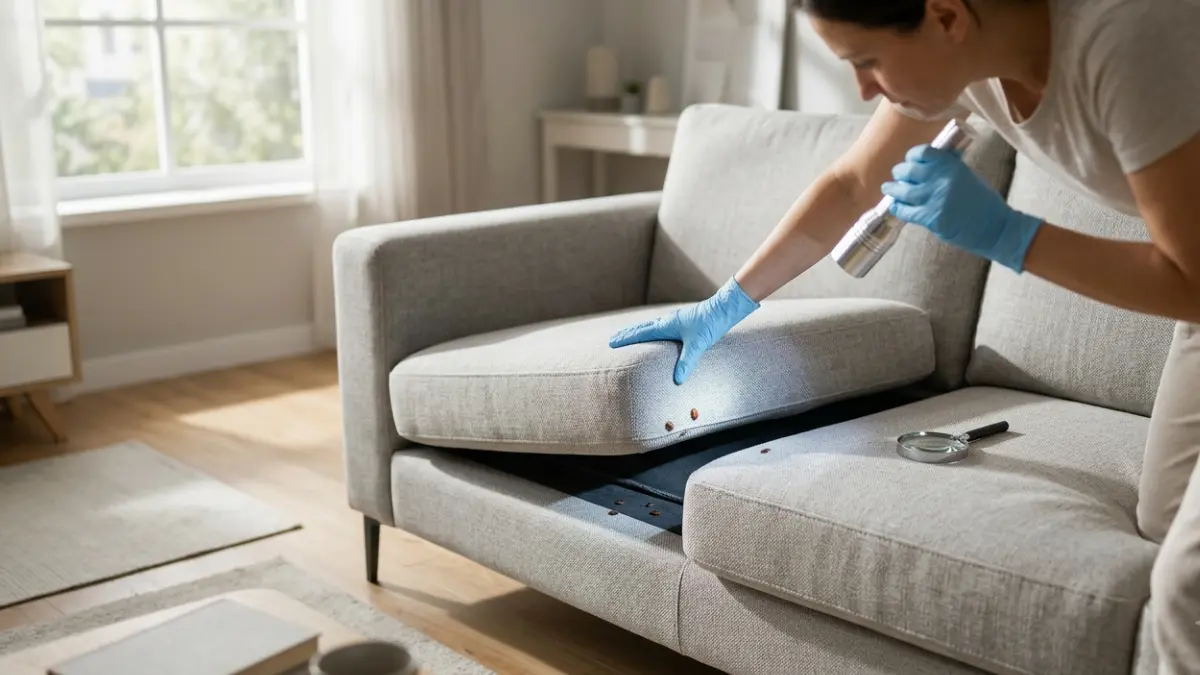
Table of Contents
Finding bed bugs in your couch is unsettling, but a sofa is almost always treatable — you rarely have to throw one out. Where you start depends on your situation.
If you just brought home a used couch and spotted bugs, contain it before they reach the room. If you’ve traced bites or live bugs to a couch you own, you likely have activity elsewhere too, so treat it as one part of our complete plan to get rid of bed bugs. If you’re checking the couch as a suspect after finding bugs in another room, you’re in the right place.
The honest catch this guide solves: a couch is harder to clear than a mattress because bugs burrow deep into cushion foam and the frame, where steam and spray don’t always reach. The fix is a layered sequence — confirm, contain, then treat with heat and the right products, in order.
ℹ️ Safety Note: Getting bed bugs out of a couch involves heat, steam, and pesticides that can burn, start a fire, or harm your health if misused. This is general guidance — read and follow the product label, never rely on a fogger, keep children and pets away from treated areas, and hire a licensed pest control professional for heavy infestations or anything you’re unsure about.
How to tell if your couch actually has bed bugs
Confirm it’s bed bugs and find where they’re living before you treat, or you’ll waste effort and product.
Where bed bugs hide in a couch
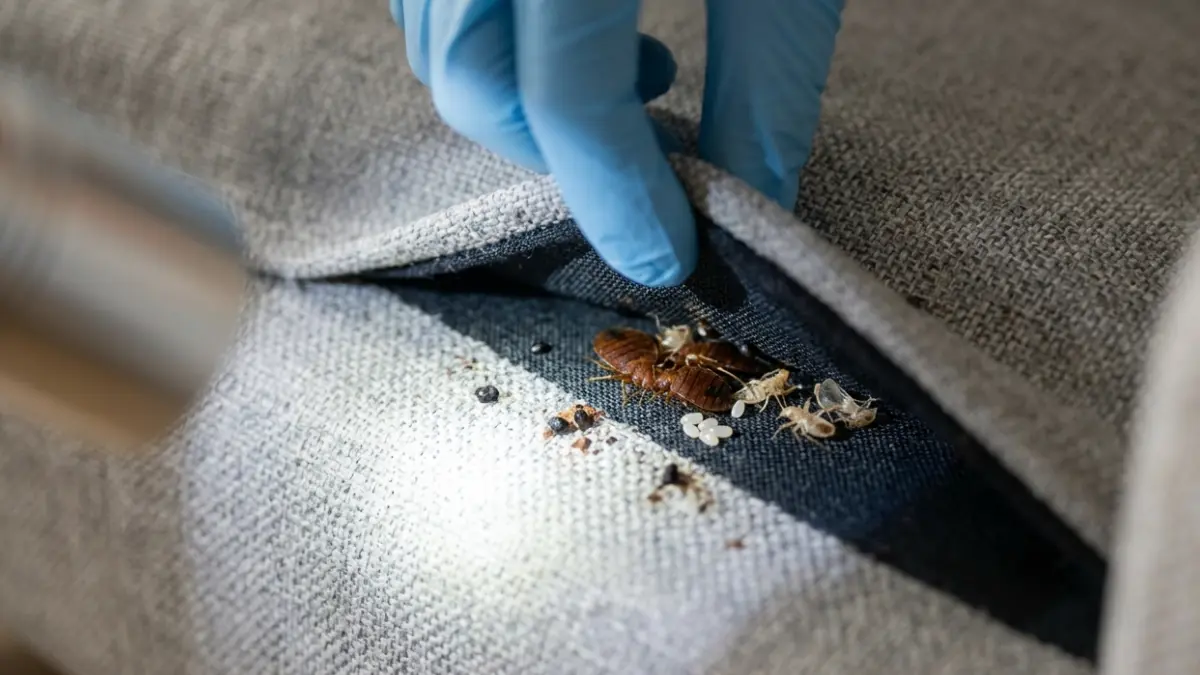
Bed bugs tuck into tight, dark spaces near where people sit. On a couch that’s the seams and tufts, folds and piping, under and between cushions, cushion zippers, and the frame joints. Fold-out couches add a hiding zone in the mechanism, so check it open and closed, and see where bed bugs hide for more.
Signs to look for
Adults are apple-seed size and reddish-brown. Look also for pale shed skins, dark fecal spots like marker dots, and rusty blood smears; heavy infestations can smell musty. Eggs are pale and cling tightly, so they’re hard to vacuum off, per Purdue Extension entomology. Bites alone aren’t proof — confirm a physical sign of bed bugs or a live bug.
First, contain the couch so bed bugs don’t spread
The step most people skip is containment, and skipping it turns a couch problem into a whole-house one.
Isolate the couch and stop the traffic
Pull the couch a few inches from walls and furniture so bugs can’t bridge across. Don’t drag infested cushions through the house or move the couch to another room — that seeds a new area, and bed bugs spread fast. Put interceptors under each leg to catch climbers and monitor activity.
Vacuum and prep before you treat
Go slowly over seams, tufts, folds, under-cushion areas, and the frame with a crevice tool; a HEPA vacuum captures fine debris. Seal the contents in a bag and bin it outdoors immediately. Vacuuming clears a lot fast but won’t lift tightly-stuck eggs, so it’s a first pass, not the whole job.
Kill bed bugs in the couch with heat and steam
Heat is the bed bug’s biggest weakness and the safest place to start, since it uses no chemicals.
What temperature kills bed bugs
Bed bugs die at 113°F (45°C), but the couch has to get hotter so heat reaches every crack. It takes about 90 minutes at 113°F but only 20 minutes at 118°F. You can’t do this with your thermostat, an oven, or a space heater — it won’t get hot enough and is dangerous, per the EPA’s DIY bed bug guidance. Whole-room heat treatment needs special equipment, so a whole-couch job is a licensed pro’s work.
⚠️ Watch Out: Never try to kill bed bugs by cranking the thermostat, running a space heater, or heating the couch in an oven. Home heating can’t reach lethal temperatures where bugs hide and creates a real fire risk.
Steam the couch the right way
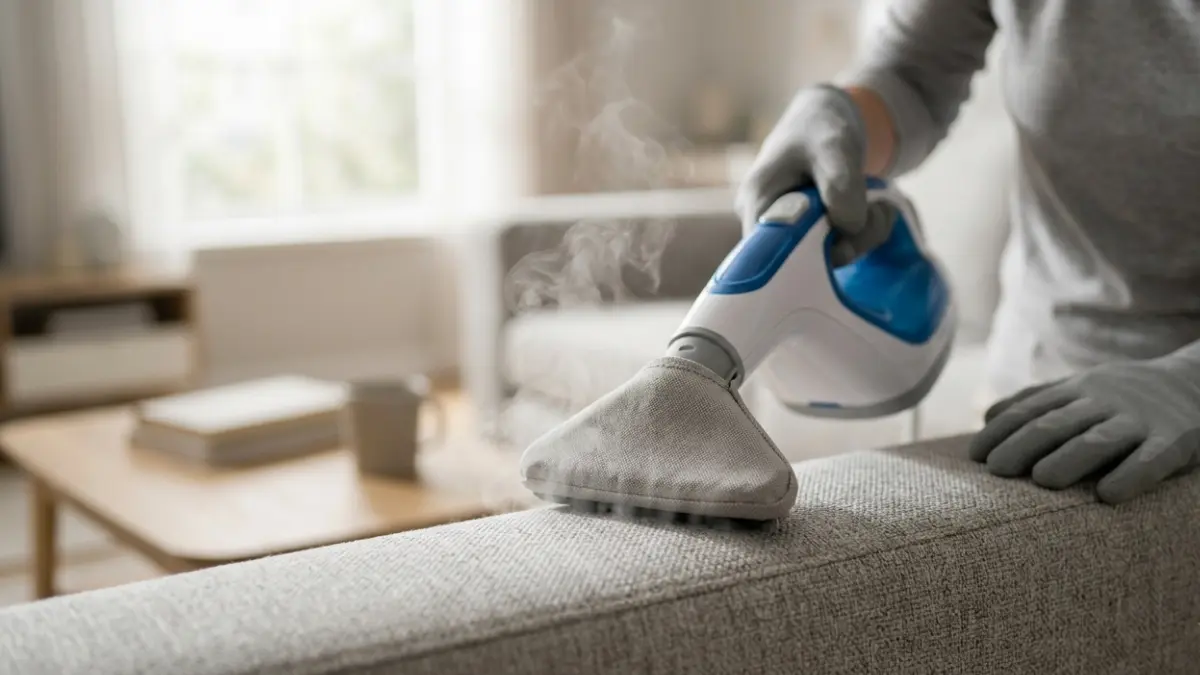
Steam kills bugs and eggs on contact but may not reach deep foam, so treat it as one layer. Use a steamer that outputs at least 130°F, move slowly over seams and folds, and keep airflow low with a diffuser so bugs don’t scatter. Retail steamers often can’t sustain enough heat deep in padding; pros use commercial units over 180°F, which also scald.
Laundering and dryer for cushion covers
If covers unzip, wash hot and dry them — hotter than 122°F for 20 minutes (medium-high) kills all life stages, per the University of Minnesota Extension. Bag them before the laundry so nothing escapes. The couch body can’t go in a dryer, so heat, steam, and products handle it.
Using bed bug sprays and powders on a couch safely
When heat and steam can’t reach everywhere, the right EPA-registered products fill the gaps — used correctly, and skipping the ones that backfire.
EPA-registered sprays: where and how to apply
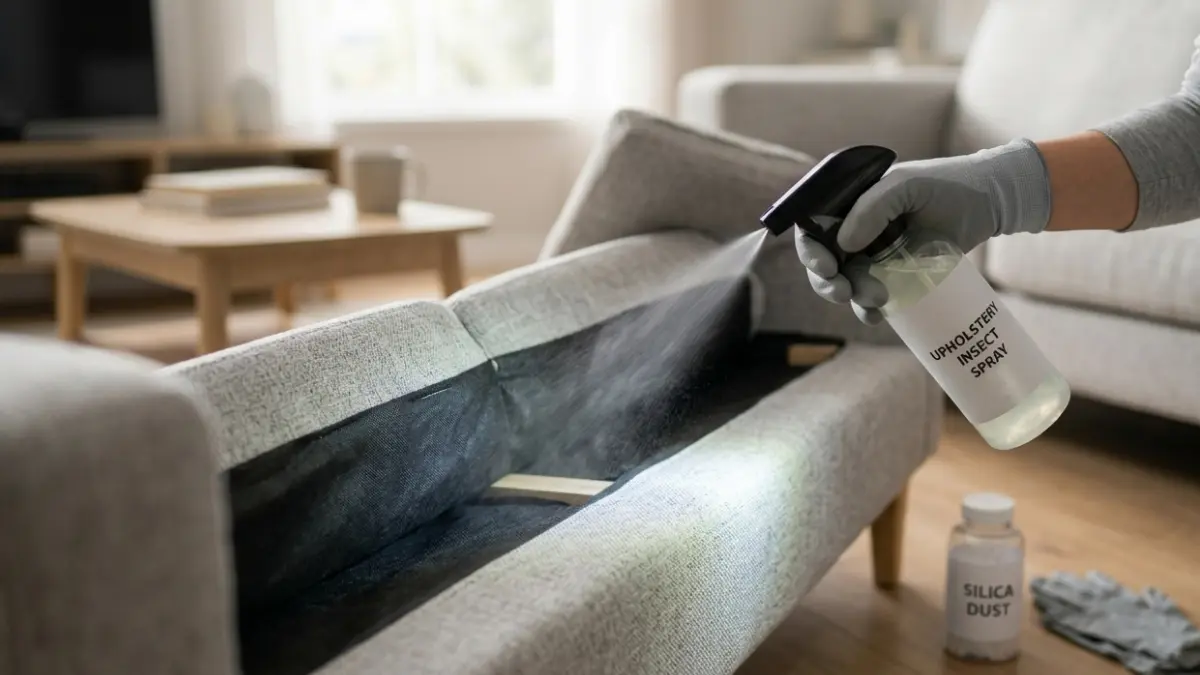
Use only a product that lists bed bugs on the label and is upholstery-safe, and read the label first. Apply an EPA-registered pesticide into tufts, seams, folds, edges, and the underside — not where you sit. Spot-test a hidden area first. Since some bugs resist pyrethroids, spray works best with heat and a desiccant, not alone.
Desiccant dust (and the diatomaceous earth mistake)
Yes, diatomaceous earth kills bed bugs — but only an EPA-registered version, never food-grade or pool grade. Registered desiccants dry out the bug’s coating (no resistance possible) but take weeks, per EPA guidance on desiccants. Apply a light film into cracks; a thick pile gets avoided. See diatomaceous earth for bed bugs.
⚠️ Watch Out: Don’t use food-grade or pool diatomaceous earth for bed bugs indoors — it’s an inhalation hazard, and only the EPA-registered version uses a particle size made for this job.
Skip the bug bomb
Bug bombs backfire on bed bugs: the spray misses the cracks where bugs hide, foggers push bugs deeper, and the flammable propellant can cause a fire, per the EPA on foggers. With kids, pets, or a heavy infestation, hire a licensed pest pro instead.
Best products to get bed bugs out of a couch
The right product depends on the job, not the marketing. Match the tool to the task instead of buying one thing and hoping.
By job: steamer, spray, desiccant, covers, interceptors
A steamer handles surface bugs in seams; a contact spray targets cracks; a desiccant works slowly in voids; encasement covers isolate; interceptors monitor.
| Product | What it does | Limit | Best for |
|---|---|---|---|
| Steamer (≥130°F) | Kills bugs/eggs on contact in seams | Can’t reach deep foam or frame | Seams, tufts, folds |
| EPA-registered spray | Kills bugs it contacts in cracks | Misses hidden bugs; some resist | Cracks, edges, underside |
| EPA-registered desiccant | Dehydrates bugs; no resistance | Slow (weeks) | Long-term kill in voids |
| Encasement / covers | Traps bugs; blocks hiding spots | Won’t kill fast alone | Isolating, monitoring |
| Interceptors | Catch and reveal bugs at legs | Won’t treat the couch | Detecting activity |
| HEPA vacuum | Removes many bugs fast | Won’t lift stuck eggs | First-pass knockdown |
We selected these by EPA registration, label fit, and specs — not lab-tested. Confirm a product is EPA-registered, labeled for bed bugs, and available before buying.
What each does — and what it can’t
No single product clears a couch alone. A steamer and vacuum knock the population down but miss the deep and the stuck; a spray reaches cracks but not sealed-off bugs; a desiccant finishes slowly. Layering them is what works — for sprays, compare the best bed bug sprays.

- Powerful Steam Cleaner: This steam cleaner heats up in just 15 seconds, releasing 221°F (105°C) high-temperature steam w…
- 6-Level Touch Control Adjustable: Simply press the“+”or“-”button on the handheld steam cleaner to effortlessly switch be…
- Portable Handheld Steam Cleaner Design: Comfortable handle and intuitive water tank design make filling and emptying eff…
🛒 Our Pick: A continuous-output fabric steamer for seams and folds. We may earn a commission at no extra cost; confirm the model’s temperature spec before buying.

- Cimexa insecticide Dust is the newest product available in the battle against bed bugs, fleas, ticks and other insects. …
- Ants, crazy ants, cockroaches, firebrats, silverfish
- Spiders, mites, bed bugs, lice, fleas, chinches de cama
🛒 Our Pick: An EPA-registered silica desiccant labeled for bed bugs, for long-term kill in voids. We may earn a commission at no extra cost; verify registration and stock first.
Should you save the couch, call a pro, or replace it?
Most couches can be treated and saved — you rarely have to throw one out. Replace it only when the infestation is severe, bugs are deep in the frame, or repeated treatment has failed.
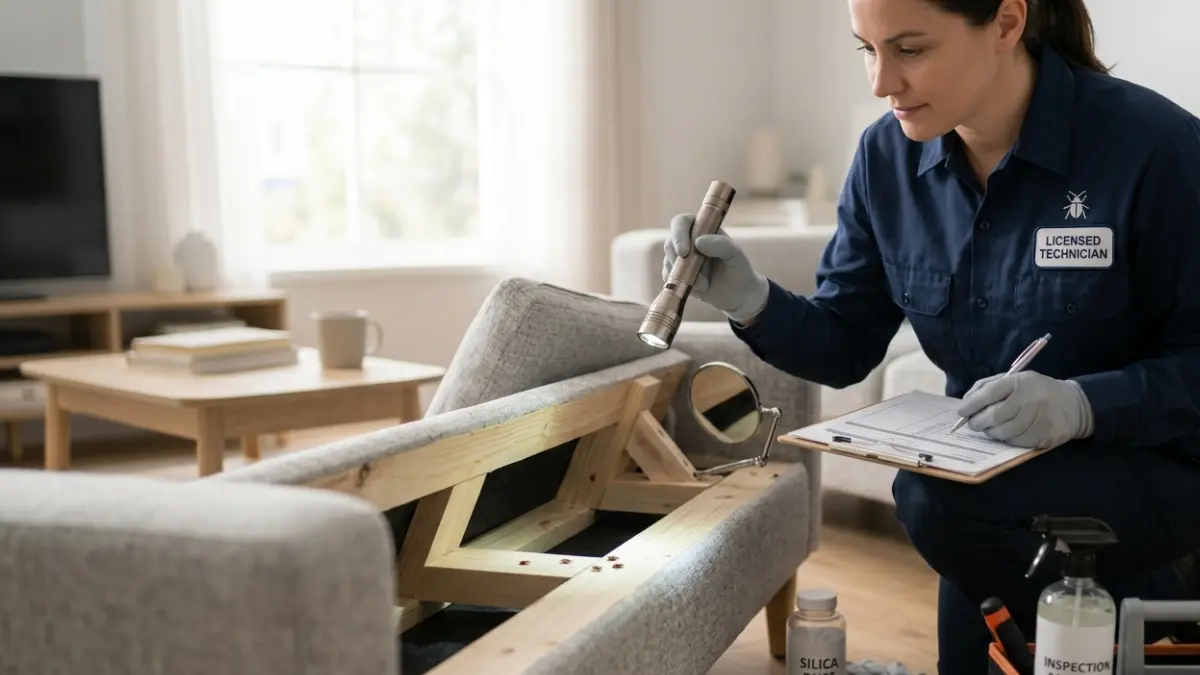
When a couch is worth saving
Light, accessible activity caught early, on a couch you value and can reach with heat, steam, and products, is worth saving. Don’t wait it out — adult bed bugs live up to a year without feeding, so a sealed sofa won’t starve them. Check your bed and nearby furniture too, since bed bugs in a mattress often accompany a couch problem.
| Your situation | Best move |
|---|---|
| A few bugs, caught early, couch you value | Treat it (heat + steam + EPA-registered products) |
| Bugs deep in frame or foam, or two failed rounds | Call a licensed pro (heat often clears it in one visit) |
| Severe infestation + old or low-value couch + budget | Replace it, and discard responsibly |
What it costs (national estimates — get local quotes): DIY supplies run roughly $100–$300; professional chemical treatment about $200–$400 per room, often multiple visits; professional heat treatment about $400–$900 per room, often one visit; whole-home treatment about $1,000–$5,000 by severity.
When to call a pro or replace it (and how to discard it responsibly)
Call a licensed pest pro for a heavy or spreading infestation, a rental or multi-unit building (tell your landlord — bugs travel between units), or when DIY has failed, since a failed attempt drives bugs deeper and raises the bill. To discard: destroy it so no one takes it — slash the covers, mark it “Bed Bugs,” seal it, and arrange fast outdoor pickup, as the EPA advises.
✅ Do This: For a stubborn or spreading infestation, get quotes from licensed pros. Ask whether they use heat or chemical treatment, how many visits are included, and whether follow-up inspection is part of the price.
Bed bugs in a couch: frequently asked questions
1. How do I know if my couch has bed bugs?
Check the seams, tufts, folds, under the cushions, and the frame for live bed bugs (apple-seed size, reddish-brown), pale shed skins, dark fecal spots, or rusty blood smears. Bites alone aren’t proof. If you find a sign or a live bug, treat the couch as infested and start with containment.
2. What temperature kills bed bugs in furniture?
Bed bugs die at 113°F (45°C), and higher heat kills faster — about 20 minutes at 118°F. The couch has to get hotter so heat reaches every hiding spot. Turning up your thermostat or using an oven won’t work and is dangerous; only proper equipment reaches lethal temperatures throughout.
3. Does steam cleaning kill bed bugs in a couch?
Steam kills bed bugs and eggs on contact when it’s at least 130°F, so it helps on seams, tufts, and folds. But it often can’t reach bugs deep in cushion foam or the frame. Treat steam as one layer alongside vacuuming and EPA-registered products, not a complete fix.
4. Does diatomaceous earth kill bed bugs on a couch?
Yes, but only an EPA-registered desiccant version — never food-grade or pool diatomaceous earth, which is an inhalation hazard indoors. Registered desiccants dry out the bug’s coating, and bugs can’t build resistance, though they take weeks. Apply a light film into cracks, not a thick pile.
5. Can I use a bug bomb on my couch?
It’s not recommended. Foggers don’t reach the cracks where bed bugs hide, they can push bugs deeper, and the flammable propellant can cause a fire or explosion. Any pesticide has to contact the bug to work. Use targeted heat, steam, and EPA-registered products, or hire a professional.
6. Do I have to throw away a couch with bed bugs?
Usually not. Most couches can be treated and saved with heat, steam, and EPA-registered products. Replace it only if the infestation is severe, bugs are deep in the frame, or repeated treatment has failed. If you discard it, destroy and mark it “Bed Bugs” so no one takes it.
7. Can bed bugs live in a leather couch?
Yes. Even on leather, bed bugs hide in the seams, stitching, cushion gaps, and frame, though smooth leather offers fewer footholds than fabric. Inspect the same places — folds, zippers, and joints — and treat any signs the same way, with heat, steam, and EPA-registered products in the cracks.
8. How long can bed bugs live in a couch without feeding?
Adult bed bugs can survive up to about a year without a blood meal, so you can’t wait out an infestation in a stored or unused couch. An infested sofa needs active treatment or a decision to replace it, not to be sealed up hoping the bugs starve.
9. How long does it take to get bed bugs out of a couch?
Expect weeks, not a day. Bed bugs hide well and eggs hatch over the following days, so most treatments need repeating and monitoring. Combine containment, heat or steam, and EPA-registered products, then keep checking with interceptors. If activity continues after a couple of rounds, call a pro.
10. Will bed bug spray ruin my couch fabric?
It can, so spot-test first. Apply a little EPA-registered, bed-bug-labeled spray to a hidden area, let it dry, and check for staining before treating the whole couch. Confirm the label says it’s upholstery-safe, and treat cracks and seams rather than the surfaces you sit on.
Getting your couch — and your home — bed-bug-free
Getting bed bugs out of a couch is about order: confirm the bugs, contain the couch, then treat with heat, steam, and EPA-registered products while you monitor with interceptors. Skip the shortcuts that backfire — no bug bombs, no cranking the heat, no food-grade diatomaceous earth indoors.
This usually takes a few weeks and often a repeat round, so be patient. Keep checking until you’re sure the bugs are gone, and treat the couch as one piece of your whole-home plan. If the infestation is heavy or won’t quit, a licensed pest professional is the safe call.
Related Articles
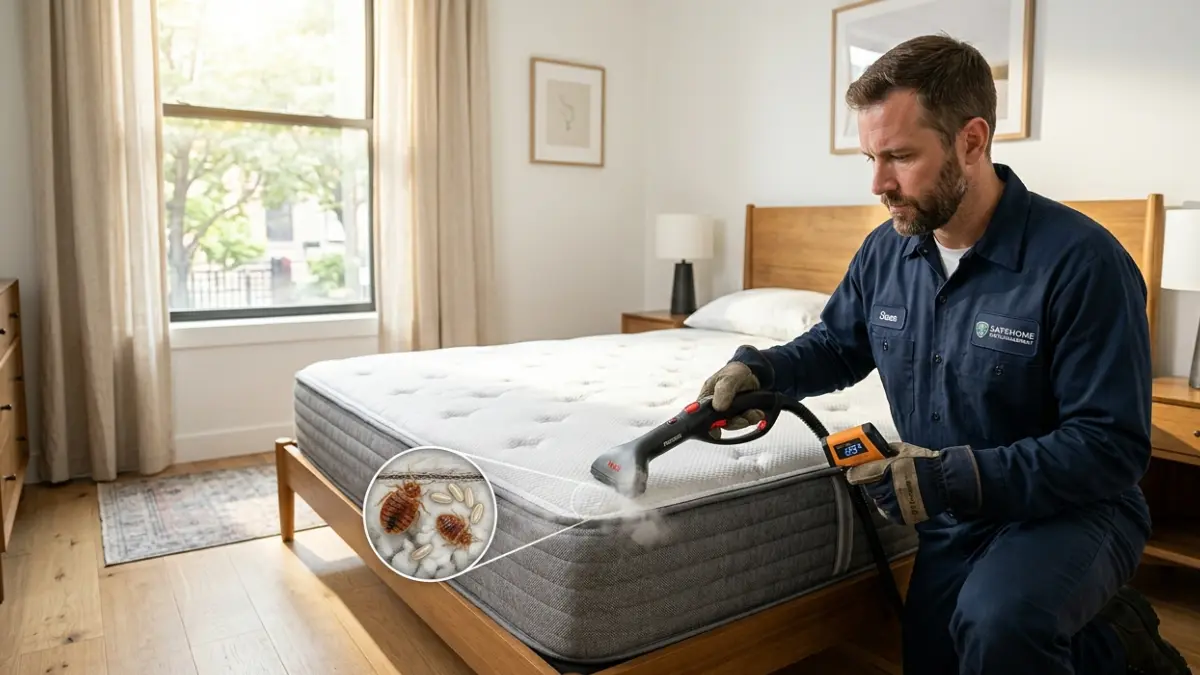 Bed Bugs Treatment
How Heat Kills Bed Bugs, and Where It Falls Short
July 1, 2026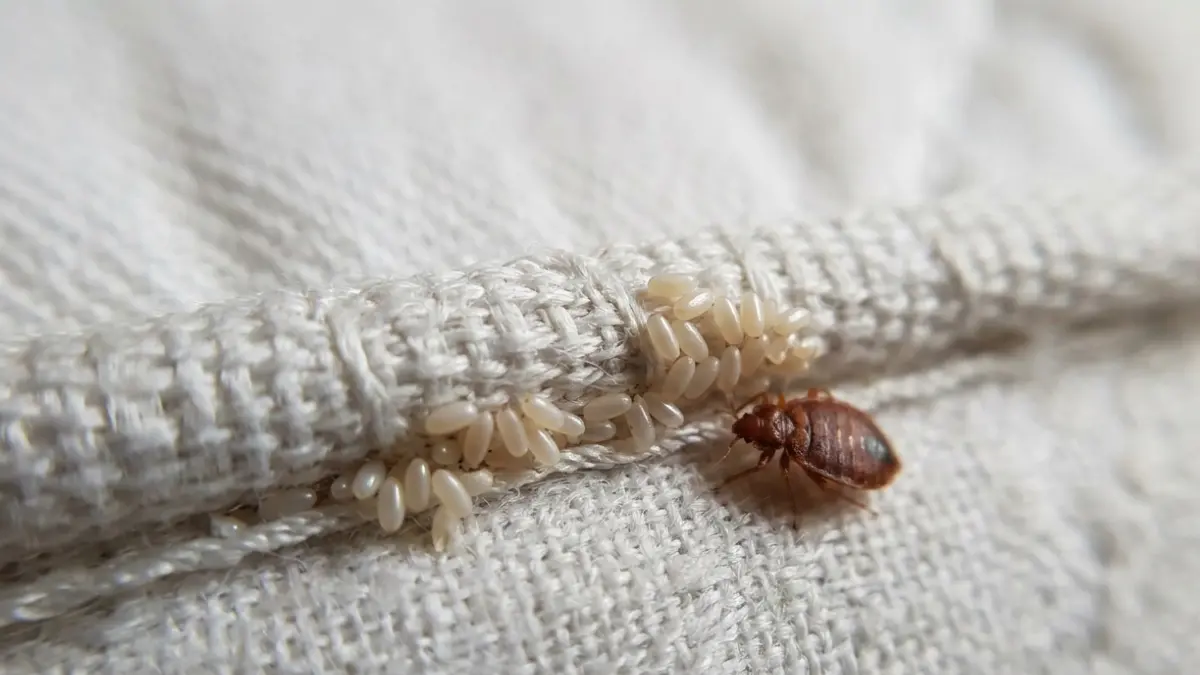 Bed Bugs Treatment
How to Spot Bed Bug Eggs and Stop Them Hatching
June 24, 2026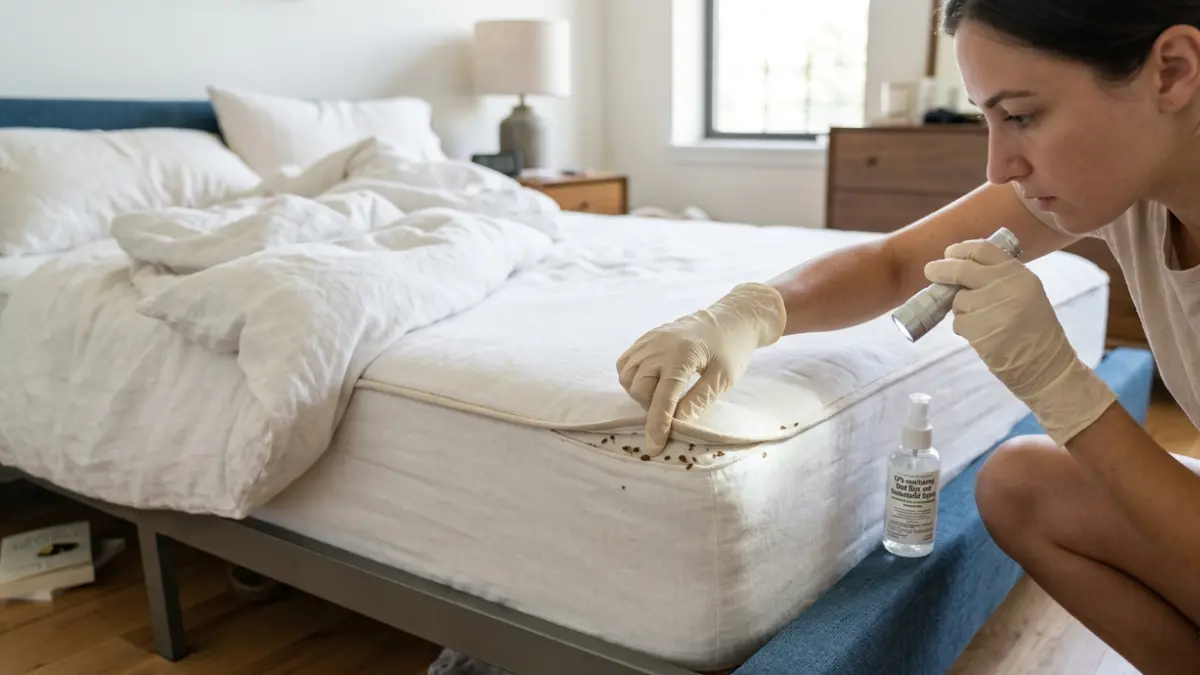 Bed Bugs Treatment
The Smart Way to Choose and Use a Bed Bug Spray
July 1, 2026 Bed Bugs Treatment
How to Spot the Signs of Bed Bugs Before You Ever See One
June 23, 2026 Bed Bugs Treatment
Check Your Hotel Room for Bed Bugs Before You Unpack
July 10, 2026 Bed Bugs Treatment
Getting Rid of Bed Bugs at Home Without the Risk
June 20, 2026 Bed Bugs Treatment
Why Bug Bombs Don’t Work on Bed Bugs (+ What Does)
July 2, 2026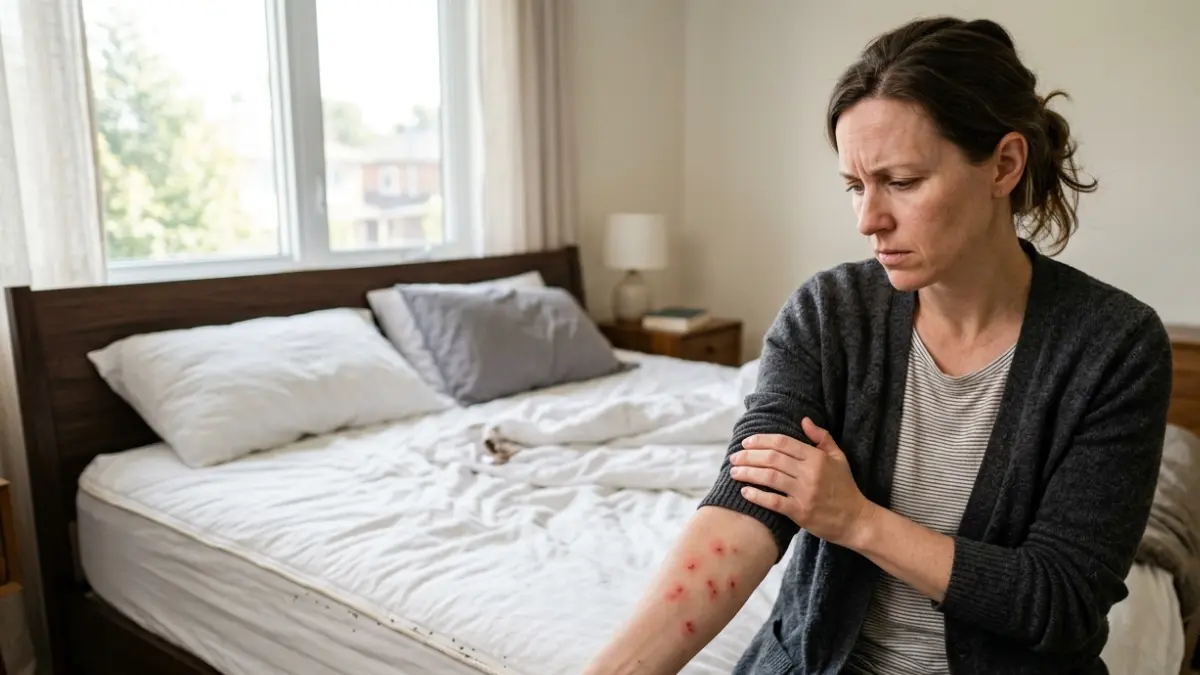 Bed Bugs Treatment
Are Bed Bugs Dangerous? The Health Risks People Overlook
June 26, 2026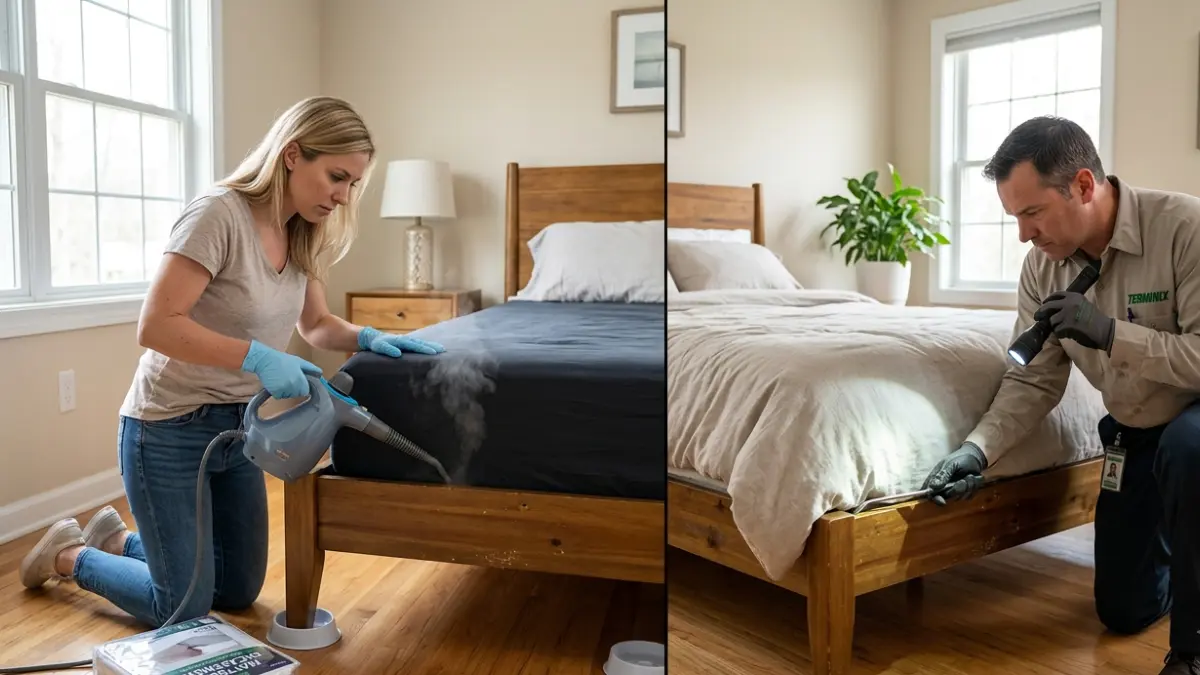 Bed Bugs Treatment