
How Fast Bed Bugs Spread, and How to Get Ahead of It

How fast bed bugs spread surprises most people: a single female lays eggs daily, and her offspring mature to breeding adults in about a month.
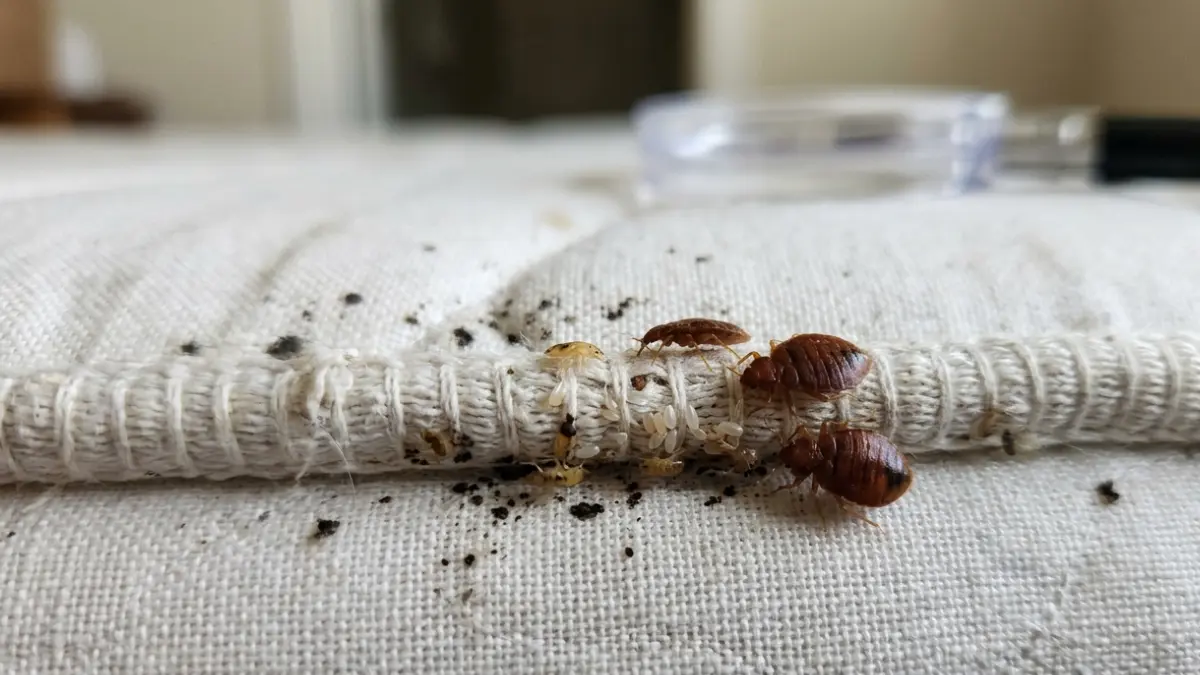
Table of Contents
If you’re asking how fast bed bugs spread, the short answer is: quickly enough to take seriously, but not so fast that early action stops mattering. A single mated female can seed an infestation that becomes noticeable in roughly four to six weeks and well established within a few months. That’s the realistic pace — not the overnight, whole-house nightmare most people picture.
How you use this guide depends on where you are right now. Just found a bug or woke up to itchy welts? Start with the timeline below to gauge how much runway you have. Renting and worried about neighbors? Skip to how bed bugs move between units. Deciding whether to treat it yourself or call in help? The last section draws that line and hands you to our safe 5-step plan to get rid of bed bugs.
The rest explains how quickly they reproduce, how they travel, and what actually slows them down.
Why bed bugs multiply so quickly
A female bed bug lays one, two, or more eggs a day and can produce hundreds over a lifespan of roughly ten months. Those eggs are sticky, pale, and smaller than a pinhead, which is why they’re so easy to miss along a mattress seam. At room temperature, they hatch in about a week.
Newly hatched nymphs look like smaller, paler adults and must take a blood meal before each of their five molts. The EPA tracks this progression through five nymph stages, from about 1.5 mm up to 4.5 mm, before they reach breeding size. You can see what each stage looks like in our guide to what bed bugs look like.
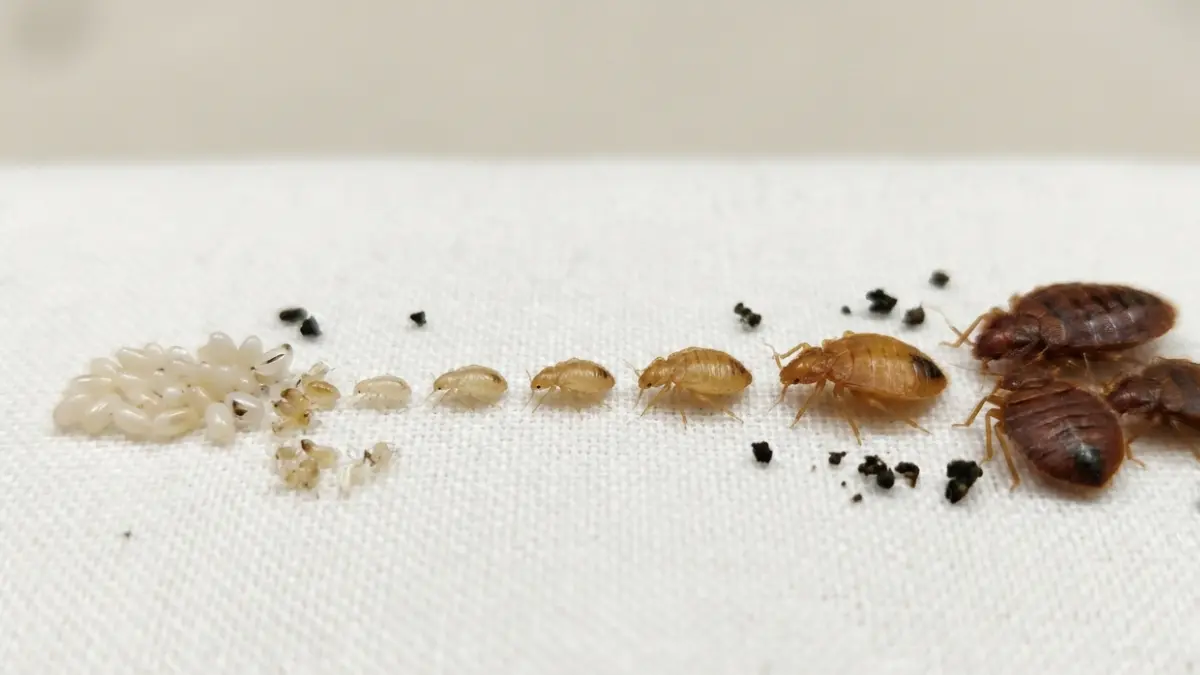
📊 Sourced: Under favorable conditions — 70–80°F with regular feeding — bed bugs can develop from egg to breeding adult in as little as a month, then run through multiple generations in a single year. — University of Kentucky entomology guidance on bed bugs; corroborated by Virginia Tech’s bed bug biology overview (about 37 days to adult above 72°F).
The compounding is the real driver. Once that first nymph matures, more than one female is laying at the same time, and generations begin to overlap. For more on the egg stage specifically, see our breakdown of bed bug eggs.
🔍 Why It Works: Each new female multiplies the daily egg output, so growth isn’t steady — it accelerates as overlapping generations stack up. That’s why a problem that looked like “a couple of bites” can become a visible infestation within a couple of months.
A realistic bed bug infestation timeline
Here’s roughly how an untreated bed bug infestation unfolds, translated from the reproduction figures above into a calendar you can actually use. The early weeks are quiet, which is exactly why so many infestations grow before anyone notices.
| Time since arrival | What’s happening biologically | What you might notice |
|---|---|---|
| Week 1 | One mated female hides near where you sleep and lays a few eggs a day | Usually nothing at all |
| Weeks 2–3 | First eggs hatch; tiny nymphs feed and begin molting | A few faint bites, often blamed on mosquitoes |
| Weeks 4–6 | First nymphs reach breeding age; more than one female now laying | Occasional bites; maybe a few dark specks on sheets |
| Months 2–3 | Generations overlap; numbers climb steadily | Clusters of bites, fecal spotting along seams, shed skins |
| Months 4–6 | Population well established; may spread beyond the bedroom | Obvious signs most people can no longer ignore |

- Kills bed bugs and their eggs on contact
- Kills bed bugs on surfaces for up to 4 weeks
- Foam expands into hard to reach indoor places, and is easy to see where you sprayed
📊 Sourced: This timeline is modeled from reproduction and development data published by University of Kentucky entomology and the EPA’s bed bug life cycle overview, under favorable conditions. It’s a general projection, not a controlled study — actual speed shifts with temperature, host access, and clutter.
Because bites are painless and often delayed — and because roughly a third of people barely react at all — infestations routinely go unnoticed until they’re large. Learning the early signs of bed bugs is what shortens that quiet window.
How bed bugs spread from room to room
Bed bugs spread through a home in three ways, and only one of them is the bug’s own legwork:
- Crawling — they move on their own across floors, walls, and ceilings, squeezing into any crack as thin as a toothpick.
- Structural pathways — they travel room to room and floor to floor through gaps around baseboards, wiring, and openings in walls.
- Hitchhiking — they ride along on clothing, bedding, and furniture you carry from one room to the next.
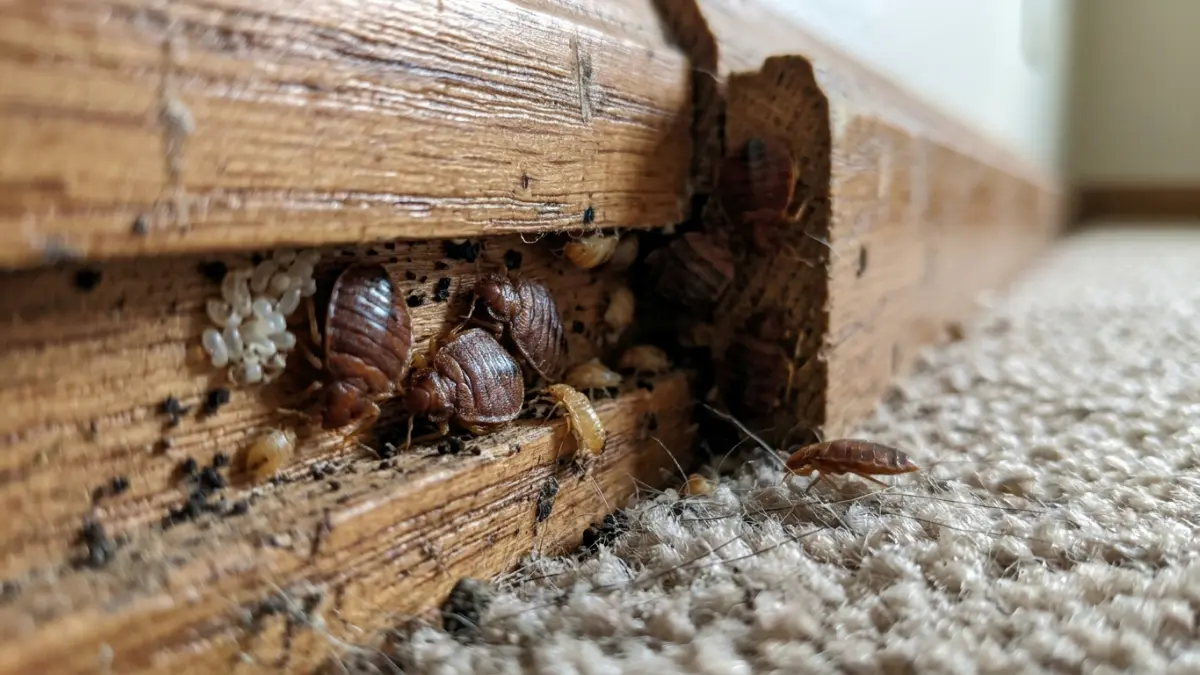
A key fact cuts through a lot of fear: bed bugs can’t fly and can’t jump. They prefer to stay close to where they feed, but they’ll crawl farther when they have to. As numbers grow, they push out from the bed into new harborage — the hidden spots covered in our guide to where bed bugs hide.
🔍 Why It Works: Since they can’t fly or jump, bed bugs depend on crevices and on items you move. That second route is why dragging a mattress to another room, or sleeping on the couch to escape bites, usually relocates the bugs instead of leaving them behind.
✅ Do This: If you suspect bed bugs, stop moving belongings between rooms immediately. Keep clothing, bedding, and bags out of unaffected areas until you’ve inspected and contained the problem.
Do bed bugs spread between apartments and homes?
Yes — and in multi-unit buildings they’re notably good at it. Bed bugs usually arrive by hitchhiking on luggage, clothing, or used furniture, then wander between units once established. There is no link between bed bugs and cleanliness, so a spotless apartment is just as vulnerable as a cluttered one.
When an infestation is neglected, bugs migrate through shared walls, floors, and ceilings to nearby units. Entomologists at the University of Kentucky advise inspecting the apartments on either side, above, below, and across the hall from a known case — because undetected units quietly become the building’s source of spread.

💡 Pro Tip: Extension specialists note that when an infested unit sits vacant, bed bugs don’t starve out — they disperse toward occupied neighbors. That’s why “just wait it out” rarely works in shared housing. (UK ENTFACT-636)
If you rent, the most effective move isn’t a solo chemical battle in shared walls — it’s prompt reporting. Tell your landlord or property manager in writing so a professional can inspect adjacent units, since building-wide control depends on coordination, not on one tenant.
What makes bed bugs spread faster (or slower)
Your timeline isn’t fixed — a handful of variables speed it up or slow it down.
What speeds spread up:
- Warmth — at 70–80°F, bugs mature in about a month; warmer rooms mean faster generations.
- Steady blood access — a female needs to feed to keep laying, so a regularly used bedroom feeds growth.
- Clutter — piles of clothing, boxes, and papers create endless hiding spots and slow detection.
- Delay — the longer bugs go unnoticed, the more they disperse, which makes them harder to corner.
What slows it down:
- Cooler temperatures — they lengthen the time between generations.
- Early detection — catching bugs while they’re confined to the bed is the single biggest brake on spread.
One stubborn myth deserves correcting: you can’t starve them out quickly. In a temperature-controlled home, bed bugs commonly survive one to four months without feeding, and far longer in cold conditions — so leaving a room empty isn’t a fix.
How to slow the spread and when to call a pro
You have real leverage here, even before a professional arrives. The goal tonight is containment — stop spreading behaviors and shrink the population’s edge.

- 80% Cotton, 20% Polyester
- Imported
- WATERPROOF PROTECTION: Safeguard your mattress with our queen size mattress protector, perfect for keeping your bed dry …

- Box spring cover is independently lab-tested
- Stretchable 100% polyester knit fabric makes installation a breeze – includes Installation Kit
- Queen size (60” x 80”) fits box spring depths of 9″- 11″
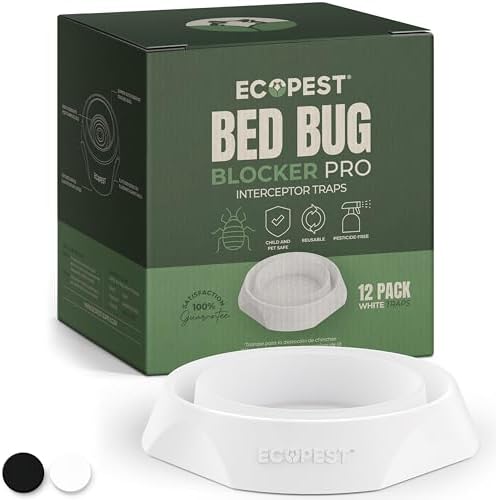
- SLEEP EASY WITH 24/7 BED BUG PROTECTION – Set it, forget it. Place one Bed Bug Blocker interceptor trap under each bed p…
- LAB-TESTED AND PROVEN TO TRAP BED BUGS – Tested by entomologists, trusted by the pros. Bed Bug Blocker interceptor traps…
- BED BUGS CLIMB IN BUT CANNOT CLIMB OUT – Simply place the traps under bed posts and furniture legs. Bed bugs cannot jump…
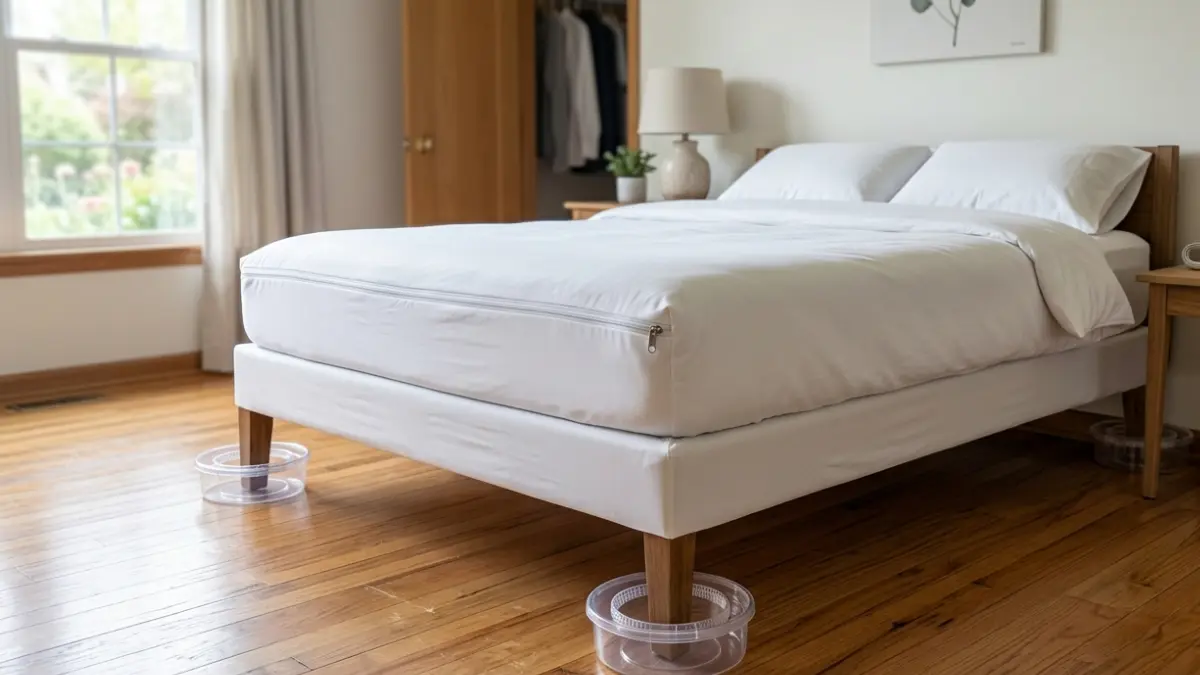
✅ Do This: Stop moving belongings between rooms. Encase your mattress and box spring in a bed-bug-rated cover. Run washable bedding and clothing through a hot dryer for at least 20 minutes — enough heat to kill bed bugs at every life stage.
🛒 Our Pick: A bed-bug-rated mattress and box-spring encasement plus ClimbUp-style interceptor traps are the two tools extension specialists most consistently endorse for early control and monitoring.
⚠️ Watch Out: Don’t reach for a fogger or “bug bomb,” and never use outdoor pesticides indoors. University of Kentucky entomologists report foggers are ineffective against bed bugs and can cause fires, and the CDC and ATSDR have documented illnesses — including one death — from pesticide misuse during bed bug treatment. These products scatter bugs into new hiding spots instead of killing them.
On health: the reassuring news is that bed bugs are not known to spread disease to people. According to the CDC’s bed bug health overview, bites can cause itching, lost sleep, and — rarely — allergic reactions, and heavy scratching can lead to a secondary skin infection. The EPA likewise classifies them as a public health pest mainly for those effects, including anxiety and insomnia. If you’re not sure what’s biting you, compare bed bug bites on skin and bed bug bites versus flea bites, and see a healthcare provider for any reaction.
Call a licensed pest control professional once an infestation is established, spans multiple rooms, or involves a shared building — then follow our full bed bug removal plan to finish the job.
Bed bug spread: frequently asked questions
1. How fast do bed bugs spread?
How fast bed bugs spread depends on conditions, but the pattern is consistent: a single female can produce a noticeable infestation in about four to six weeks and a well-established one within a few months. Under favorable warmth and feeding, they mature from egg to breeding adult in as little as a month and run through multiple generations a year.
2. How quickly do bed bugs multiply?
Bed bugs multiply fast because each female lays one, two, or more eggs daily — hundreds over her lifetime — and those eggs hatch in about a week. Nymphs then mature in roughly a month under good conditions. Because several females soon lay at once and generations overlap, the population accelerates rather than growing at a steady rate.
3. Can one bed bug cause an infestation?
A single bed bug can cause an infestation, but only if it’s a mated female. She can lay eggs without another bug present, and those offspring eventually breed among themselves. A lone male, or a single nymph that never finds a mate, cannot start a population on its own — though one bug is reason enough to inspect carefully.
4. How do bed bugs spread from room to room?
Bed bugs spread room to room three ways: by crawling through cracks as thin as a toothpick, by traveling through gaps around baseboards and wiring, and by hitchhiking on items you carry. They can’t fly or jump. Moving a mattress or sleeping elsewhere often relocates them, which is why containment matters more than escape.
5. Can bed bugs spread through walls or outlets?
Yes. Bed bugs move between rooms and floors through cracks and openings in walls, floors, and ceilings, including gaps around outlets and wiring. Their flat bodies fit into spaces no wider than a toothpick. In apartments, this is how they reach neighboring units, which is why inspecting adjacent apartments is part of any serious response.
6. Do bed bugs spread between apartments?
Bed bugs spread between apartments readily once established, wandering through shared walls, floors, and ceilings toward occupied units. Cleanliness has nothing to do with it. Undetected units become a source of building-wide spread, so units on either side, above, below, and across the hall should be inspected — and the right first step is reporting it to your landlord.
7. How long before you notice bed bugs?
Many people don’t notice bed bugs for weeks. Bites are painless and sometimes delayed, and roughly a third of people barely react, so early signs are easy to miss. Visible clues — fecal spotting along seams, shed skins, and clustered bites — usually become obvious around the two-to-four-month mark, by which point the infestation has grown.
8. Do bed bugs spread disease?
Bed bugs are not known to spread disease to people, according to the CDC. Their main impact is itching, lost sleep, and — in rare cases — allergic reactions, while intense scratching can cause a secondary skin infection. They’re considered a public health pest mostly for these effects, including anxiety. See a healthcare provider for any concerning reaction to bites.
9. Do bed bugs spread faster in summer or heat?
Warmth speeds bed bugs up. At 70–80°F with regular feeding, they mature in about a month and cycle through generations quickly, so a heated home keeps them active year-round. Cooler temperatures lengthen development. You can’t cool or starve them out fast, though — indoors, they often survive one to four months between meals.
10. How far do bed bugs travel at night?
Bed bugs prefer to hide close to where they feed, typically within a sleeping or resting area, and crawl out at night to find a host. They’ll travel farther when they have to — across a room or beyond — especially as numbers grow and nearby hiding spots fill. They don’t attach to people; they feed, then return to hiding.
The bottom line on how fast bed bugs spread
How fast bed bugs spread comes down to one practical truth: the early weeks are quiet, the middle months are not, and early detection is the whole game. A few bugs caught at week two are a far smaller problem than the same infestation at month four. If you’ve confirmed bed bugs — or you’re close to sure — move now: contain the spread, inspect thoroughly, loop in your landlord if you rent, and work through our safe 5-step plan to get rid of bed bugs. Caught early, this is a problem you can get ahead of.
Related Articles
 Bed Bugs Treatment
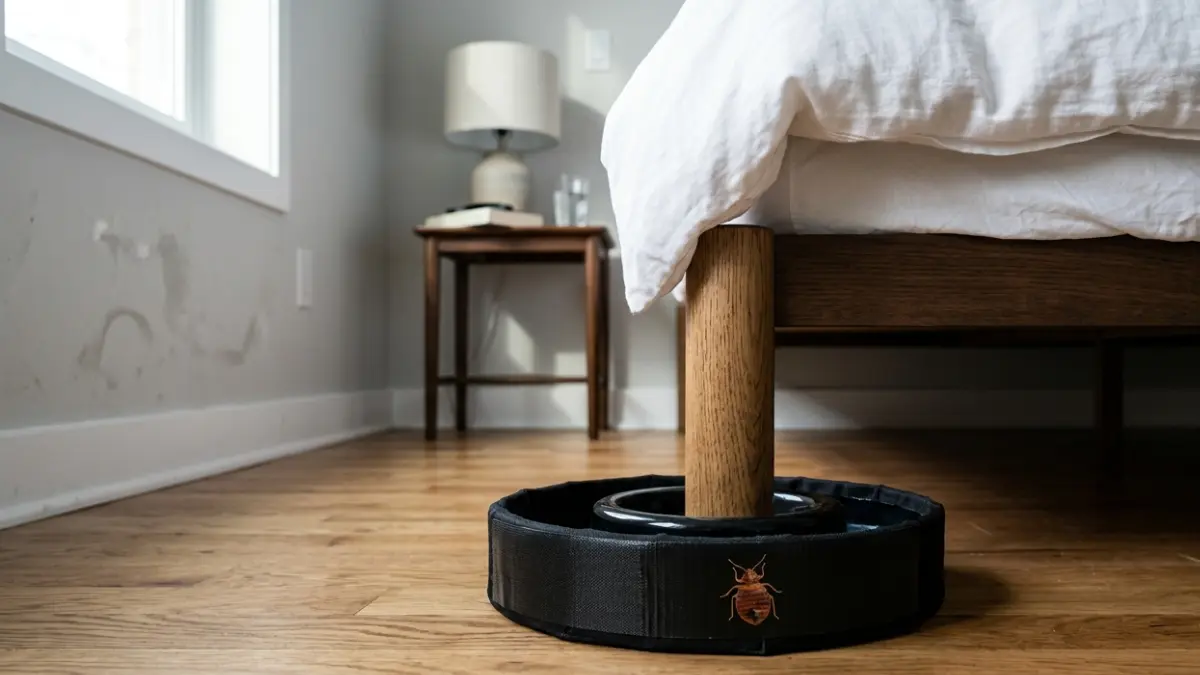
The Best Bed Bug Traps and Monitors, and How to Use Them
July 5, 2026 Bed Bugs Treatment
Getting Rid of Bed Bugs at Home Without the Risk
June 20, 2026 Bed Bugs Treatment
The Smart Way to Prevent Bed Bugs at Home
July 10, 2026 Bed Bugs Treatment
Why Bug Bombs Don’t Work on Bed Bugs (+ What Does)
July 2, 2026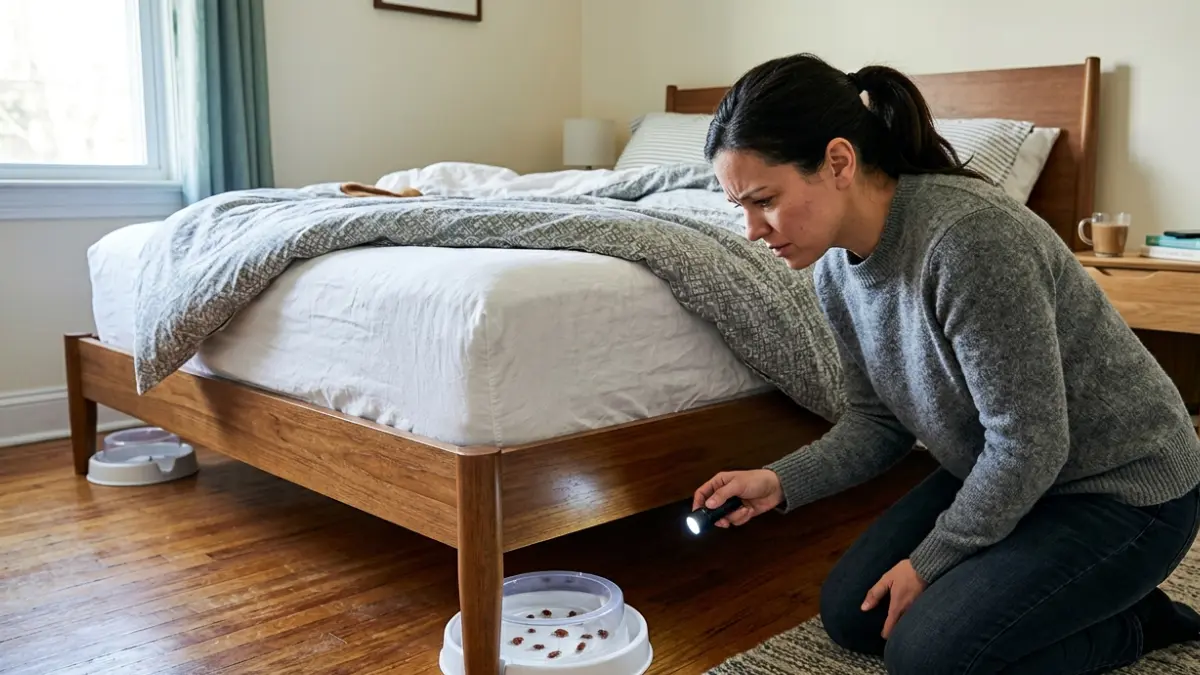 Bed Bugs Treatment
How the Right Bed Bug Interceptors Catch the Most Bugs
June 29, 2026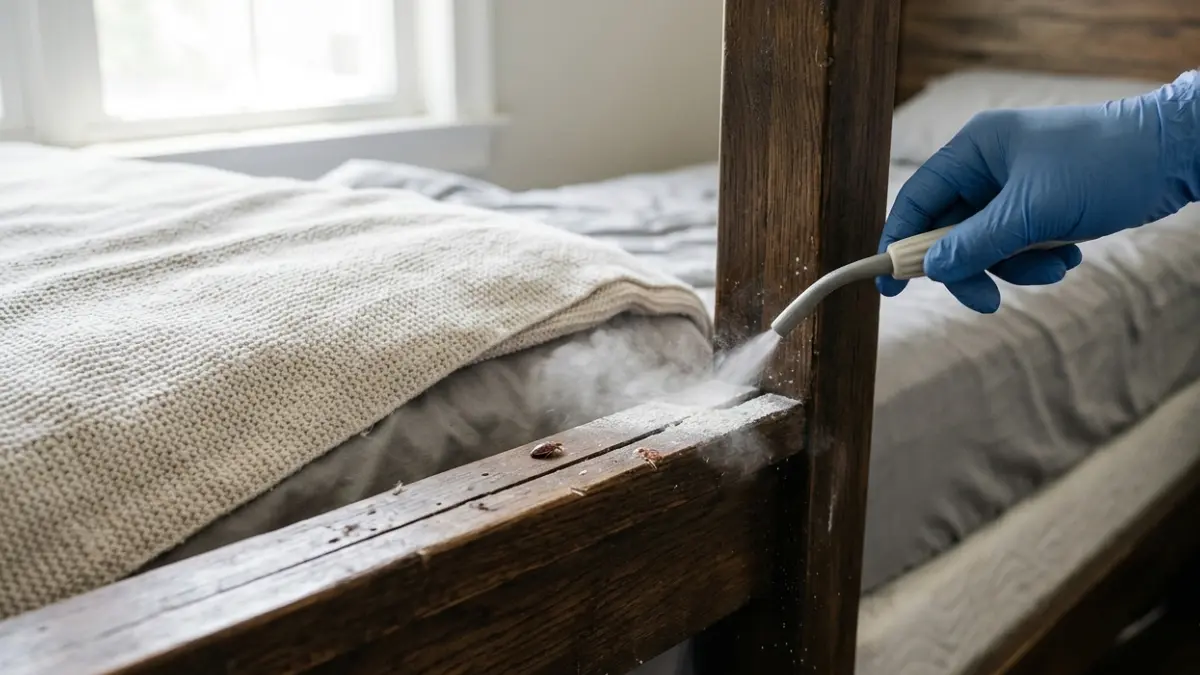 Bed Bugs Treatment
How Diatomaceous Earth Kills Bed Bugs and the Grade to Avoid
June 30, 2026 Bed Bugs Treatment
How Heat Kills Bed Bugs, and Where It Falls Short
July 1, 2026 Bed Bugs Treatment
An Easy Way to Tell Bed Bug Bites From Flea and Mosquito Bites
June 24, 2026 Bed Bugs Treatment