How to Get Bed Bugs Out of a Mattress and Keep It

Bed bugs in a mattress rarely mean replacing it. See which step reaches the seams, which misses glued eggs, and how weekly checks confirm it worked.
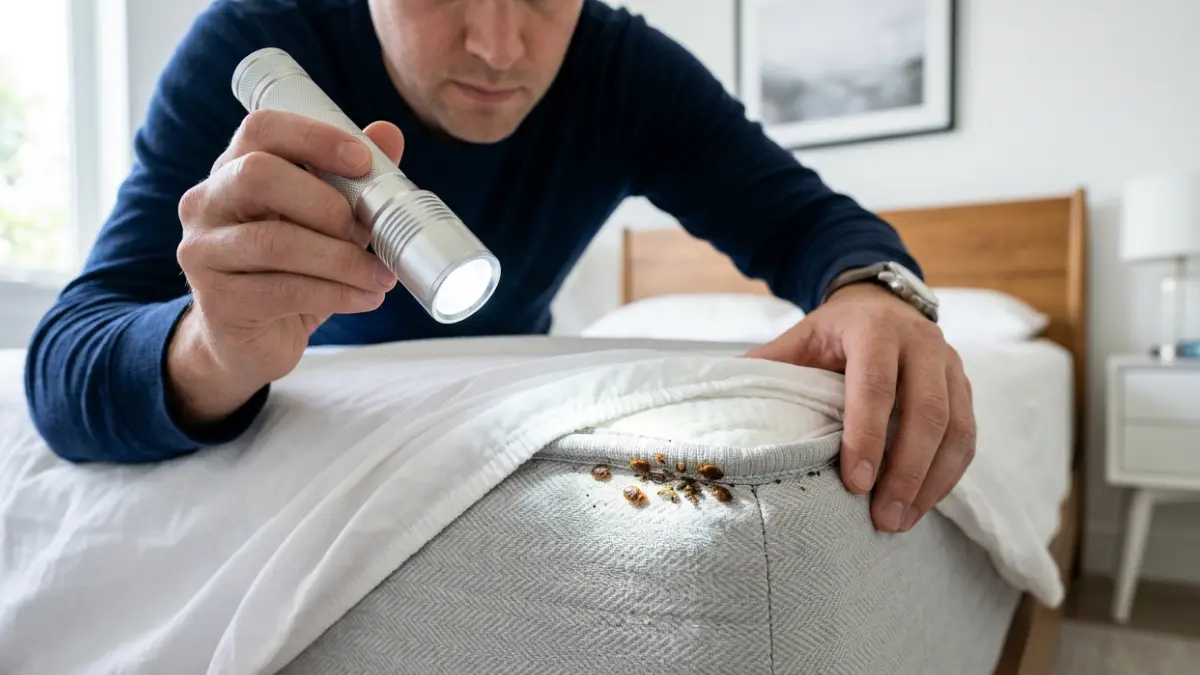
Table of Contents
Most mattresses with bed bugs can be kept. Vacuum and steam the seams where the bugs hide, then zip the mattress and box spring into bed bug encasements and leave them sealed for a year (EPA top ten tips). Nothing has to leave the house tonight, and the first job is stripping the bed where it stands.
Most belongings can be treated and saved. Throwing a mattress out costs money and can carry the bugs to other people’s homes (EPA top ten tips). Moving to the couch won’t help either. Bed bugs can live for months in an empty room, and they follow the carbon dioxide you breathe out to wherever you sleep, which spreads them further (Rutgers Cooperative Extension). If the mattress is torn or worn out anyway, whether to replace it instead is a separate decision.
Bed bugs on a mattress stay in the seams
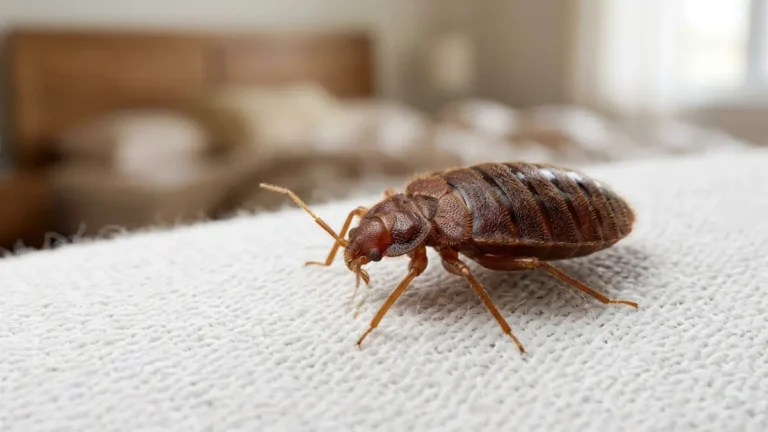
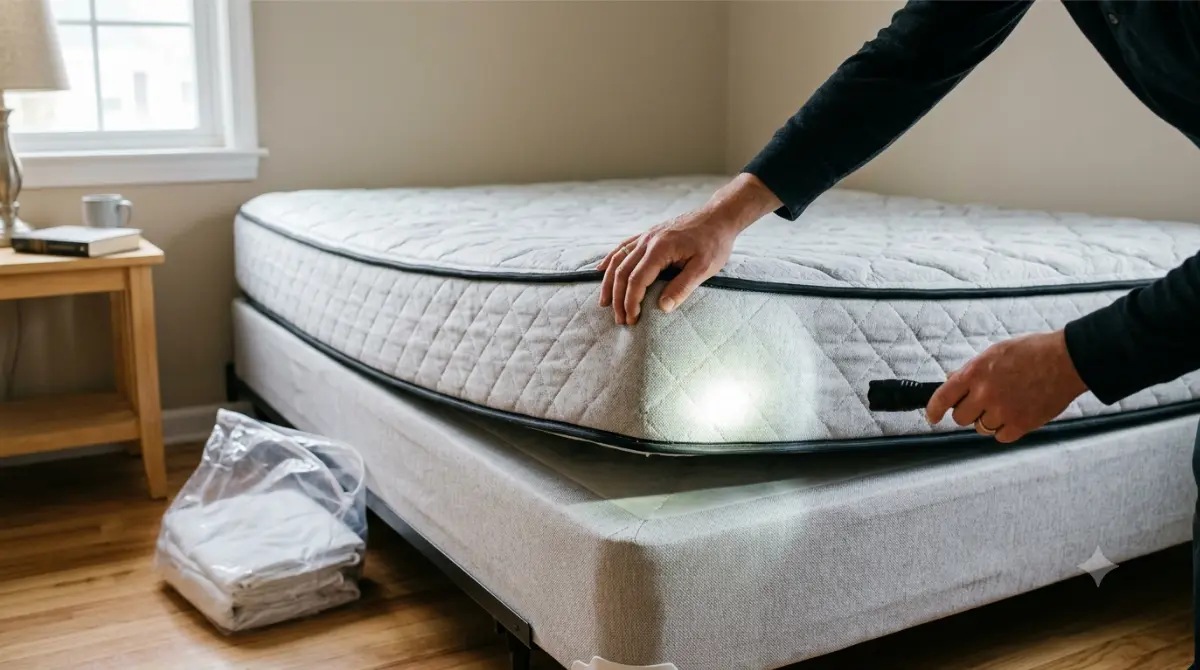
The flat top panel rarely holds many bugs. They pack into the creases: the seams, tufts, trim and zipper of the mattress, and the edges of the box spring underneath (Rutgers; Purdue Extension).
Lift the mattress off the box spring so you can reach both pieces.
Their eggs are glued to the fabric and hard to pull free (Purdue Extension). That is why each step below handles only part of the problem.
Before you start: strip the bed in place
Pull the bedding, including the mattress pad, straight into a plastic bag at the bedside. Seal the bag before you carry it anywhere (EPA DIY bed bug control).
A hot wash with detergent, followed by at least 20 minutes in the dryer on high heat, kills bed bugs at every stage (Purdue Extension). Clean laundry can pick up bugs again, so keep it in a sealed bag or plastic tub until the mattress is treated and covered.
Vacuum first, and expect eggs to stay behind
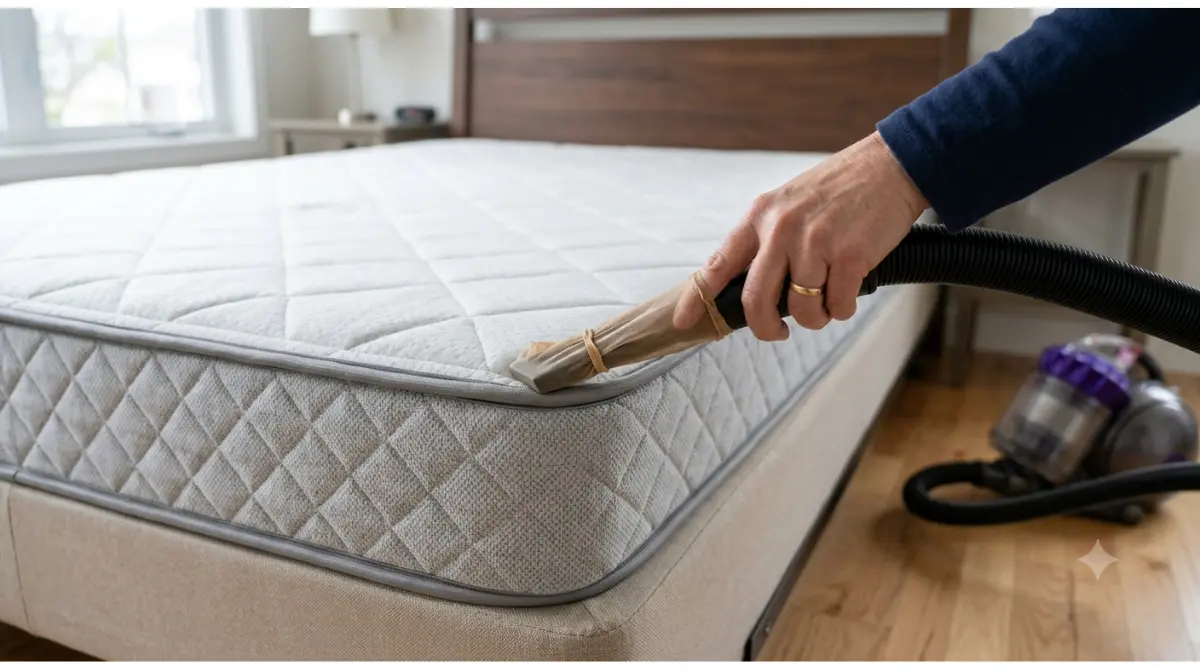
Suction lifts exposed bugs and shed skins, but the eggs cling on. Scraping the crevice tool along each seam dislodges some of them (Purdue Extension).
You can stop bugs from getting inside the vacuum. Stretch a knee-high stocking over the end of the vacuum tube, hold it with a rubber band, and fit the attachment over it. Go slowly over the tufts, seams, zipper and trim, then drop the stocking into a sealed plastic bag (Rutgers).
Afterward, seal the vacuum bag tightly and put it straight into an outdoor trash can (EPA DIY bed bug control). Bugs and eggs wedged deep in a crack may stay put however slowly you go (Rutgers).
Steaming the seams without soaking the mattress
Steam kills the bed bugs and eggs it touches. EPA’s DIY guidance sets the steam at 130°F or hotter, without a forceful airflow that could scatter the bugs, and with a diffuser on the nozzle (EPA DIY bed bug control). Purdue Extension adds that a dry or vapor steamer puts less water into the fabric. It recommends a slow pass of about one foot every 10 to 15 seconds along each seam (Purdue Extension).
Use a wide head wrapped in a small towel. A small or brush-tipped head can knock bugs off the fabric onto the floor (Purdue Extension).
Repeat the steaming every few days until your checks stop finding bugs (Rutgers). Picking a unit that runs hot enough is covered in how to choose a bed bug steamer.
Safety: Commercial steamers often run well above 180°F and can scald the person using them if handled improperly, so follow the machine’s own operating instructions (Purdue Extension). Test a hidden patch first, because steam can damage some fabrics, microfiber among them (Rutgers).
Can you spray a mattress?
Only with a product whose EPA label lists mattresses, and only on the parts that label names. A pesticide used on a bed should be labeled for bed bugs and, where needed, for mattresses. Using one against its label breaks the law (Purdue Extension).
Mattress directions on EPA-accepted labels are narrow. One label (EPA Reg. No. 499-540) tells users to remove the bed linens and to apply only to edges, tufts, folds, sides and seams, not to the entire mattress (EPA-stamped label). Another (EPA Reg. No. 2724-804) is marked for pest management professionals. It limits mattress and box spring use to seams, edges and tufts, warns against saturating them, and requires the spray to dry before the bed is used (EPA-stamped label). Before buying anything, look the product up in EPA’s Bed Bug Product Search Tool and read the mattress section of its label.
Rubbing alcohol, kerosene and gasoline do not belong on a bed. They can harm the people in the house and ignite from a spark (EPA DIY bed bug control). Alcohol also kills poorly: direct sprays killed at most half the bugs in Rutgers lab tests (Rutgers).
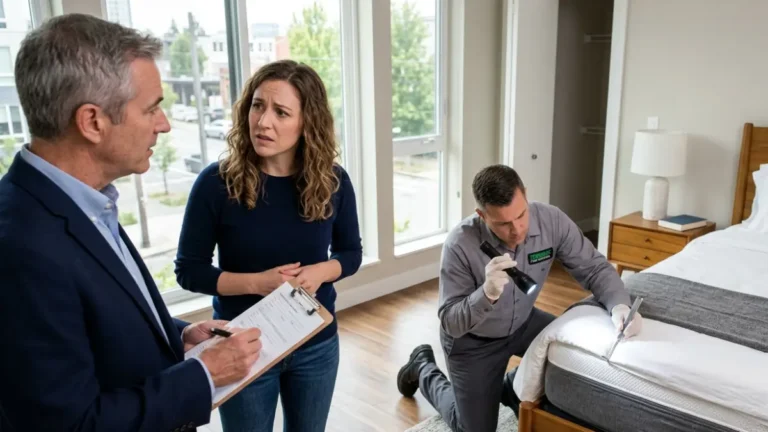
If the product you have doesn’t list mattresses, leave the spraying to a licensed pest control applicator. Confirm the license with your state pesticide regulatory agency, and ask: “Which product will you use on the mattress, and does its label allow that use?”
Seal the mattress and box spring for a year
One year is the minimum. Leave bed bug encasements zipped on both pieces for a year, and buy covers that have been tested for bed bugs and are tough enough to last that long without tearing (EPA top ten tips). Purdue Extension gives the same one-year minimum unless a pest control professional advises otherwise. It also notes that covers work best once the mattress has been treated (Purdue Extension).
Trapped bugs can’t feed through a sealed cover, and they die inside it (EPA DIY bed bug control). Newly hatched nymphs can’t get out to bite either (Purdue Extension). Which cover to buy, and how to fit it so the zipper end stays shut, is covered in choosing a mattress encasement for bed bugs.
The smooth surface also makes every later inspection much easier (Rutgers).
What each step reaches and what it misses
No single step gets every bug on a mattress. Each one covers a gap the previous one left.
| Step | What it reaches | What it leaves behind | Source |
|---|---|---|---|
| Vacuum with a crevice tool | Exposed bugs and shed skins on seams and box spring edges | Eggs glued to fabric; bugs deep in cracks | Purdue, Rutgers |
| Steam at 130°F or hotter | Bugs and eggs the steam touches directly | Anything outside its path; bugs blown off by strong airflow | EPA, Purdue |
| Spray labeled for mattresses | The parts of the mattress the label names | Linens and areas the label excludes; pyrethroid-resistant bugs | EPA-stamped labels, Rutgers |
| Encasement | Every bug and egg sealed inside | Bugs on the bed frame and elsewhere in the room | EPA, Purdue |
| Hot wash and dryer | Bedding and the mattress pad | The mattress itself | Purdue |
Sources: EPA DIY bed bug control, Purdue Extension, Rutgers FS1251, labels 499-540 and 2724-804.
Putting the cover on last matters. It seals in whatever survived the vacuum and steam, and it keeps bugs from the rest of the room out of the seams (Purdue Extension).
Weekly checks tell you whether it worked
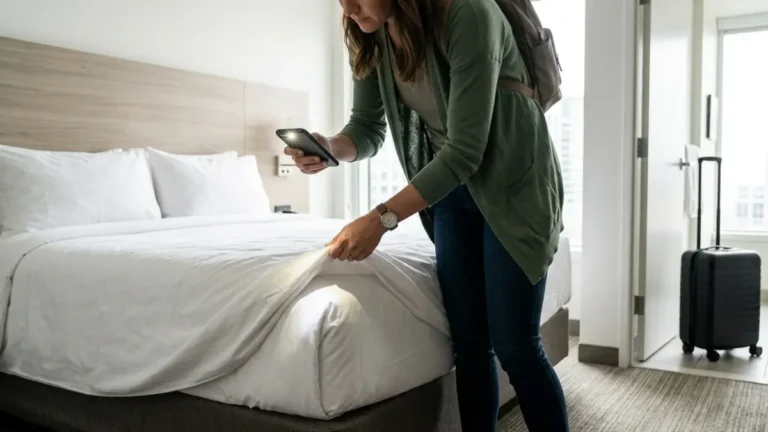
Plan on checking the bed at least every seven days, and keep it up for at least a year (EPA DIY bed bug control). Do a follow-up inspection 10 to 21 days after each round of treatment and look for these signs (Purdue Extension):
- live bugs
- new shed skins, after you’ve cleared away the old ones
- fresh dark fecal spots on sheets or seams
- eggs that haven’t hatched
Interceptor cups under each bed leg catch bugs that try to climb up. Empty and clean them weekly (EPA DIY bed bug control).
Stop treating only after a month in which your checks and traps turn up nothing (Rutgers). The encasement still stays on for its full year. The signs that the whole room is free are laid out in how to tell when bed bugs are gone.
Other questions about the mattress
Will leaving the mattress in the sun kill bed bugs?
No. Setting items out under the hot summer sun is listed as an ineffective control method in a Rutgers presentation archived by EPA. Black plastic bags in the sun might work for luggage or small items if the contents get hot enough, which a mattress won’t fit (EPA top ten tips).
When can you sleep on a mattress after spraying it?
When the label allows it. The professional label with mattress directions shown above requires the spray to dry before the bed is used (EPA Reg. No. 2724-804). Follow the drying and re-entry directions on your own product.
If bugs turn up outside the cover, treat the frame next
Finding bugs on the bed frame or headboard during your weekly checks means the mattress was one hiding place among several. The room then needs its own round of work, set out in the room-by-room plan for getting rid of bed bugs.
In an apartment, tell your landlord once the bugs are confirmed, since the units near yours should be inspected too (EPA DIY bed bug control). Who treats and who pays depends on state and city housing rules (EPA’s bed bug laws and regulations). What landlords are responsible for covers the state differences.
Stop and call a professional if: you live in a multi-unit building where more than a few apartments have bed bugs (Rutgers), or the only product you have isn’t labeled for mattresses. Hire an experienced pest control company, check its standing with your state pesticide agency, and ask whether it uses an integrated pest management approach (EPA top ten tips).
Before anyone treats the room, start a written log: the date and exact spot of every bug or sign you find. That record shows where to aim each round and whether the numbers are falling (EPA DIY bed bug control).