
Check Your Hotel Room for Bed Bugs Before You Unpack

Checking a hotel for bed bugs takes about five minutes—if you know the four signs and the exact spots to inspect, from mattress seams to the luggage rack.
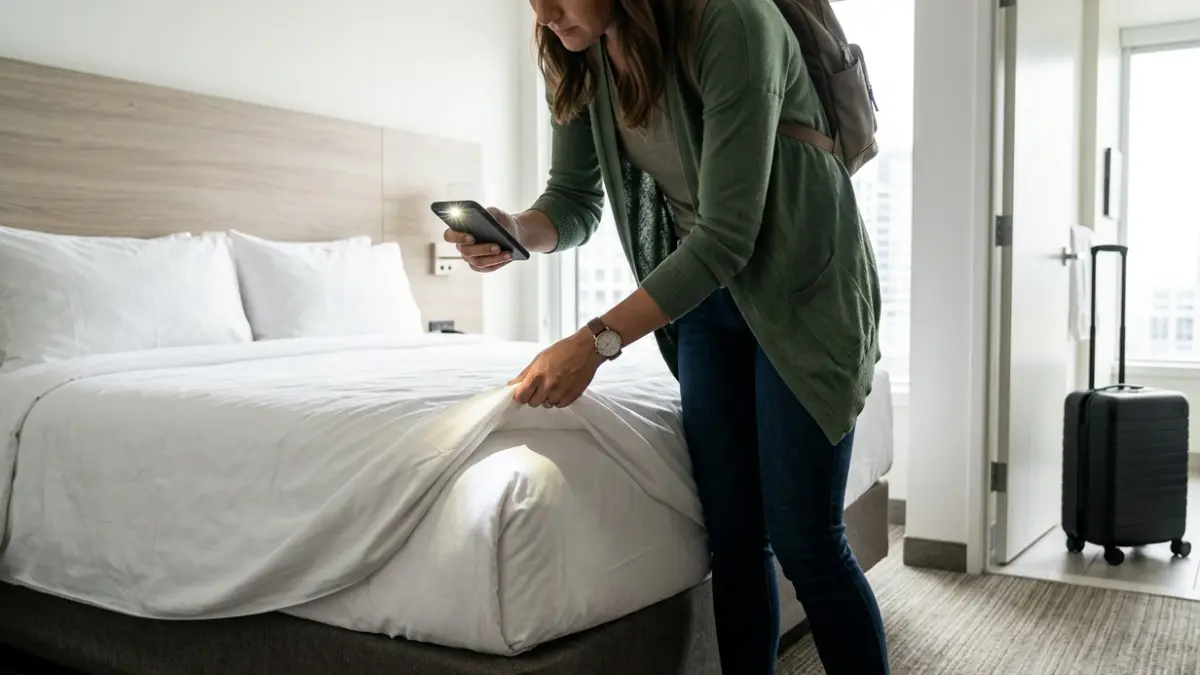
Table of Contents
You’ve just walked into your hotel room, and somewhere in the back of your mind sits the worry every traveler knows: what if there are bed bugs? A five-minute check before you unpack is the best way to answer that question — and to stop anything from following you home.
Here’s how to use this guide. If you’re standing in the room right now and want the fastest path, skip to the five-minute inspection. If you’re not sure what a bed bug or its droppings even look like, start with the signs to look for. And if you’ve already spotted something — or woke up with bites — jump ahead to what to do if you find them.
Two things are worth knowing first. Bed bugs have nothing to do with how clean or pricey a hotel is; they hitchhike in on luggage and show up in one-star motels and five-star resorts alike. And while the bites itch, bed bugs are not known to spread disease — so this is a nuisance to avoid, not an emergency. If you suspect some already made it home, our full plan to get rid of bed bugs walks through the fix.
What bed bugs and their signs actually look like
Before you start looking, it helps to know exactly what you’re hunting for — most people picture the wrong thing.
What a bed bug looks like
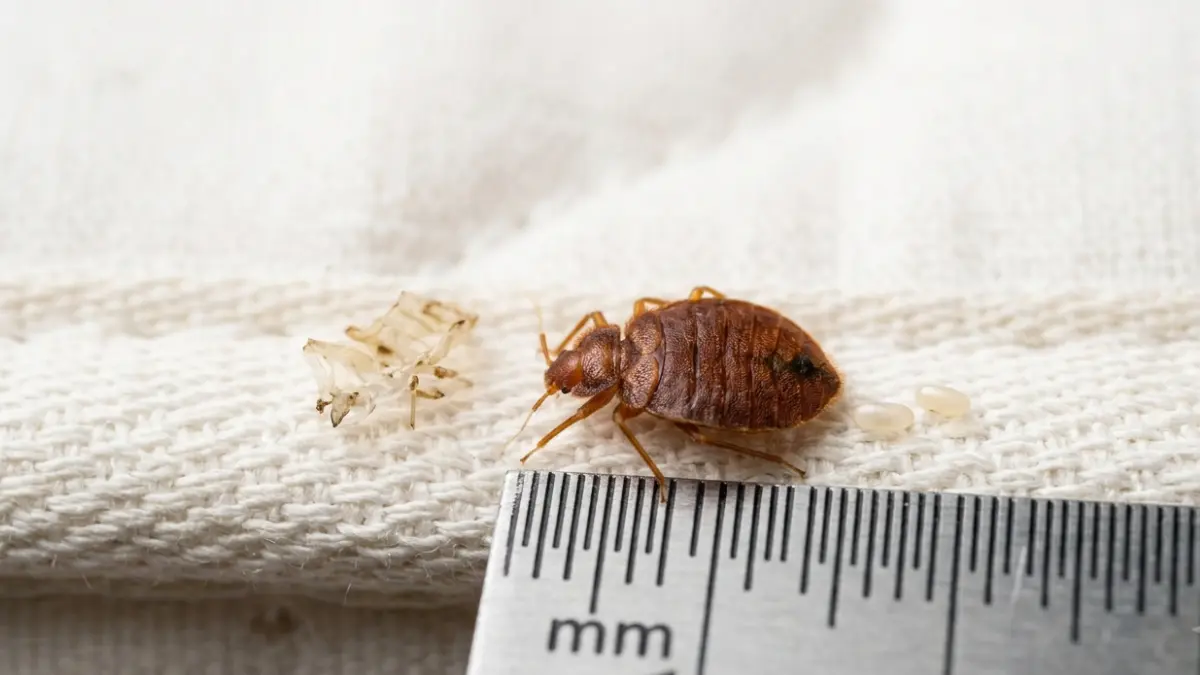
An adult bed bug is oval, flat, and reddish-brown, roughly the size and shape of an apple seed. After feeding it swells and darkens to a purplish red. Young bed bugs, called nymphs, are much smaller and nearly translucent, so they’re easy to overlook.
📊 Spec: Adult bed bugs measure about 5–9 mm — around a quarter-inch — per University of Minnesota Extension. Nymphs start near 1.6 mm.
The four signs to look for
Live bugs are only one clue, and often not the first you’ll notice. Look for rusty or reddish smear stains on the sheets (crushed bugs) and small dark dots that resemble marker ink and can smear — those are droppings. You may also find pale, one-millimeter eggs and empty, translucent shed skins tucked into seams, which is exactly what the EPA’s guide to finding bed bugs describes.
💡 Pro Tip: To tell droppings from ordinary grime, remember they’re digested blood — the EPA describes bed bug spots smearing into fabric like marker ink rather than flaking off like dust.
Is it a bed bug — or something else?
Don’t panic at the first speck. Most samples people submit as “bed bugs” turn out to be something else, often carpet beetles, and confirmation really comes from finding actual bugs, which is the point the CDC’s identification page makes as well. If you’re unsure, our guide on what bed bugs look like shows close-ups to compare.
The 5-minute hotel room bed bug check, step by step
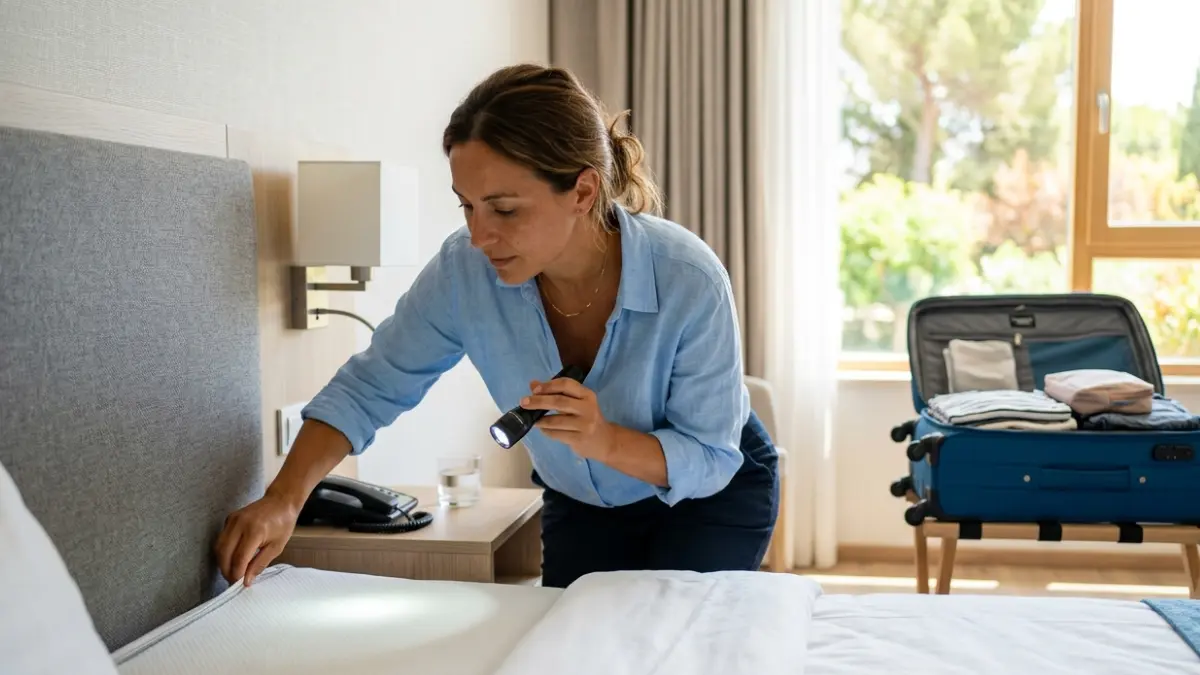
Do this five-minute inspection the moment you walk in, before you set anything down. Work top to bottom and use your phone flashlight — University of Minnesota Extension recommends bringing a small light to make it easier.
Step 1: Park your luggage on a hard surface
Set your suitcase in the bathroom, in the tub, or on a hard-tiled floor — not on the bed or a padded chair. These spots are the least likely to harbor bugs while you check the rest of the room.
Step 2: Check the mattress seams and corners
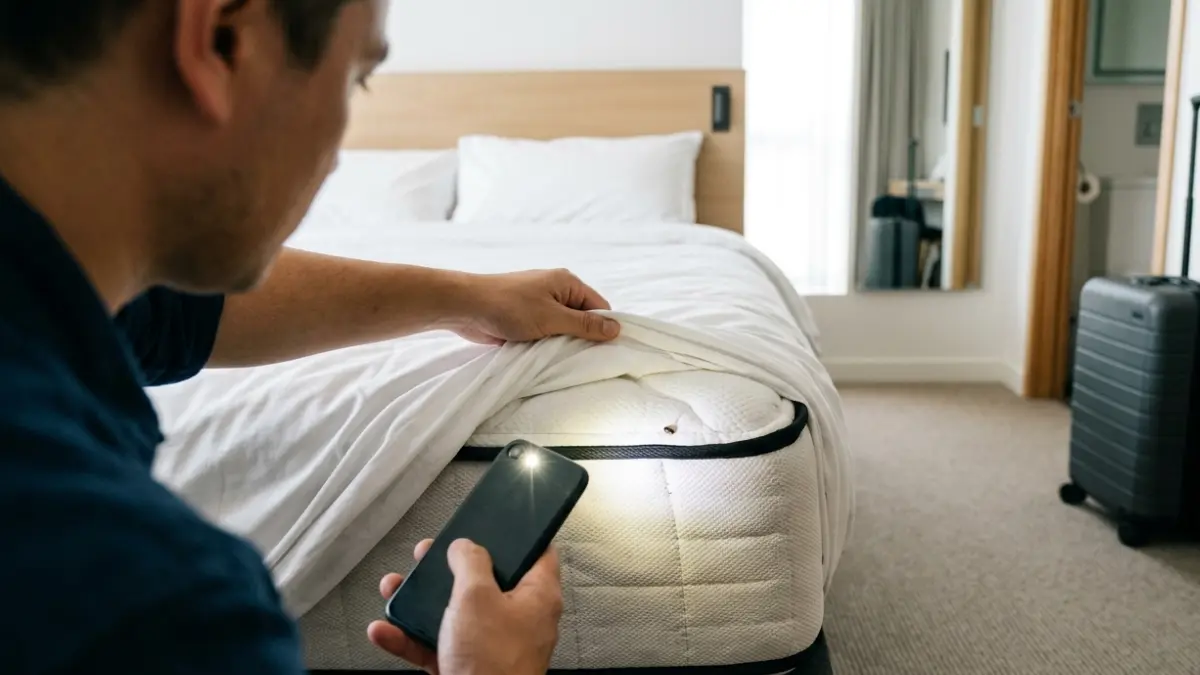
Pull back the sheet at each corner and run your eye and light along the piping, seams, and tags of the mattress. This is the most common place bed bugs hide, so start here.
Step 3: Inspect the box spring, frame, and headboard
Look along the box spring edges and into any cracks in the bed frame. Peek behind the headboard where it meets the wall — a favorite daytime hiding spot.
Step 4: Scan the nightstand, outlets, and luggage rack
Check the nightstand joints, the outlet cover nearest the bed, and the folding luggage rack. Bugs can arrive on other travelers’ bags and wait there for the next guest.
Step 5: Do the odor and final gut-check
Take a breath — a strong musty, sweet smell can signal a heavy infestation. If everything looks and smells clean, you’re clear to unpack.
✅ Do This: Found nothing? Still keep your suitcase closed and off the bed for the whole stay. It’s the cheapest insurance there is.
Where bed bugs hide in a hotel room (the spots people miss)
The five-minute check covers the high-odds spots, but a low-level infestation can tuck itself into places most guests never think to look.
Around and behind the bed
Beyond the mattress and box spring, bed bugs favor cracks in the bed frame, the headboard, and the joints of the nightstand.
🔍 Why It Works: Bed bugs are drawn to tight, dark cracks close to where people sleep, because they feed at night and don’t want to travel far to reach you.
Beyond the bed
In a heavier infestation they spread outward — into the seams of upholstered chairs, the folds of curtains, drawer joints, and even behind wall art or loose outlet covers near the bed. Our guide on where bed bugs hide maps these out in detail.
The credit-card rule
Here’s a simple test the EPA uses: bed bugs are about as wide as a credit card. If a crack or seam is wide enough to slip a card into, it’s wide enough to hide a bug — so that’s exactly where your flashlight should go.
Protect your luggage so nothing hitchhikes home
Even a spotless room isn’t a guarantee, so how you handle your bags matters more than a perfect inspection. This is the step that actually keeps bed bugs in luggage from becoming bed bugs in your house.
Where to put your suitcase
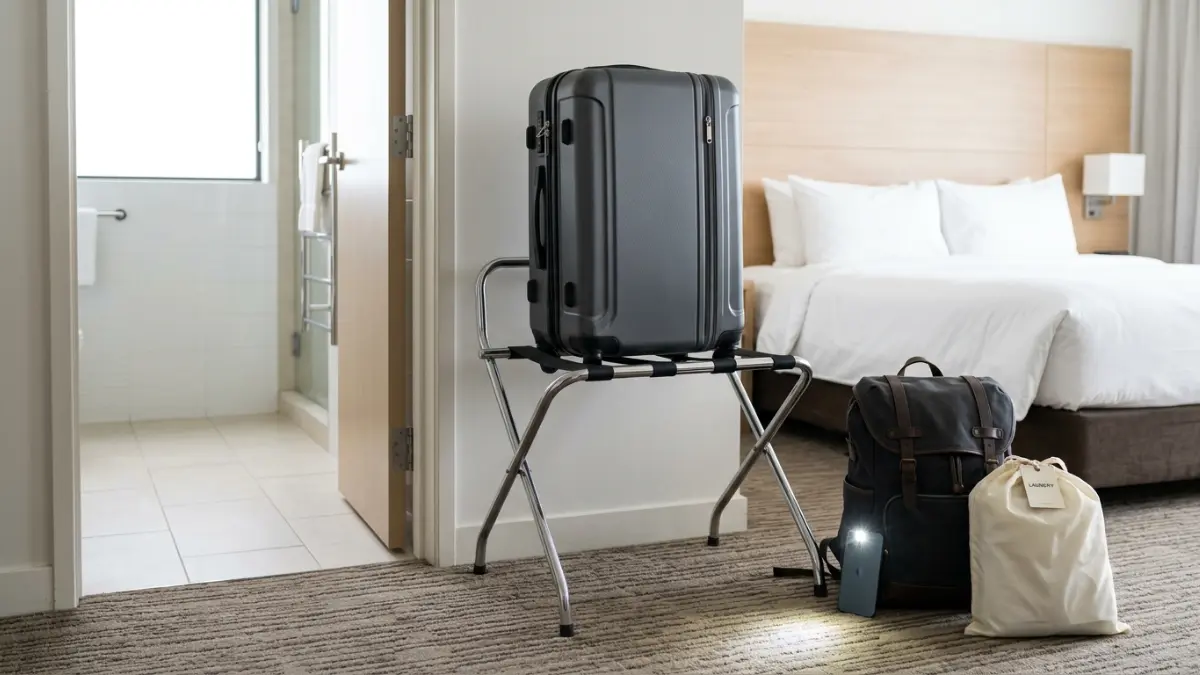
Keep luggage on a hard surface — the bathroom or an inspected luggage rack — and away from the bed. The National Pesticide Information Center’s travel guidance recommends inspecting the rack first and never storing bags near where you sleep.
⚠️ Watch Out: Tossing your suitcase or clothes on the bed “just for a minute” is the most common way travelers carry bed bugs home. Don’t do it, even once.
Keep it closed and elevated
Zip your bag shut when you’re not in it, and keep it off both the floor and the bed. A hard-shell case with fewer seams gives bugs fewer places to hide, though it doesn’t remove the risk entirely.
Handling dirty laundry
Seal worn clothes in a plastic bag rather than letting them pile on a chair. A few habits now save you from an infestation — and from needing a bed-bug-proof mattress encasement at home later. Building a simple routine to prevent bed bugs is far easier than removing them.
What to do if you find bed bugs (or wake up with bites)
If your check turns up signs, don’t spiral — you have clear options, and none of them involve trying to treat the room yourself.
If you spot signs in your room
Stop unpacking and don’t sleep there. Photograph what you found, tell the front desk, and ask to change rooms — ideally to one that isn’t next door or directly above or below, since bugs travel between adjacent rooms. Never spray a hotel room with pesticide yourself.
If you wake up with bed bug bites
Itchy welts alone don’t confirm anything — bites look like plenty of other things, and some people don’t react at all. The EPA notes bed bugs are not known to spread disease, so bites are mostly an itchy nuisance; see a doctor if you have a severe reaction or signs of infection. Our guide on whether bed bugs are dangerous covers this in more depth.
Before you head home
Repack carefully, keep the suitcase sealed, and plan to deal with your luggage the moment you’re home rather than in the bedroom.
Your before-you-go and after-you’re-home routine
A little prep turns all of this into a habit you barely think about.
Before you leave: a two-minute pack list
Toss a small flashlight and a couple of large sealable bags into your suitcase. Learn the four signs so you can inspect any room in minutes, whether it’s a hotel, a rental, or a friend’s guest bed.
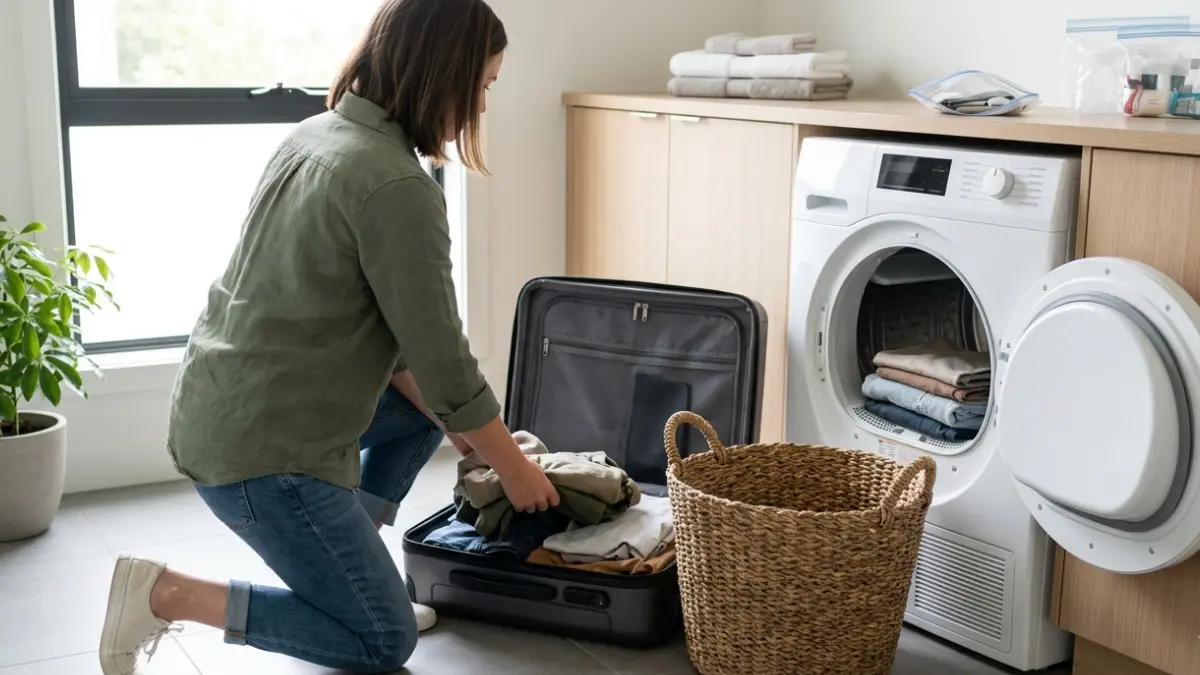
The moment you get home
Unpack in the garage, laundry room, or bathroom — not the bedroom. Run your travel clothes through a hot dryer cycle, which reliably kills any hitchhikers, so it’s worth knowing how heat kills bed bugs to trust this step.
📊 Spec: Bed bugs die once their body temperature reaches about 45 °C (113 °F), per the EPA — and a household dryer on high heat clears that easily.
Then store your luggage away from where you sleep. For extra peace of mind, interceptor traps under your bed legs act as an early-warning tripwire, and if you’re worried about what you wore, here’s how to handle bed bugs in your clothes.
Hotel bed bug check: frequently asked questions
1. Can you see bed bugs with the naked eye?
Yes. Adult bed bugs are about the size of an apple seed — roughly 5–9 millimeters — and reddish-brown, so they’re visible if you know where to look. Young nymphs are much smaller and nearly translucent, which makes them harder to spot. Their dark droppings and shed skins are often easier to see than the bugs themselves.
2. Where do bed bugs hide in a hotel room?
Bed bugs hide in tight cracks close to the bed: the mattress seams and piping, the box spring, the bed frame, and behind the headboard. In heavier infestations they also move into upholstered chairs, curtain folds, nightstand drawers, outlet covers, and the folding luggage rack. If a crack fits a credit card, it can hide a bed bug.
3. Do clean or expensive hotels get bed bugs?
Yes. Bed bugs have nothing to do with cleanliness or price — they hitchhike in on luggage and clothing, so they turn up in budget motels and luxury resorts alike. A five-star rating is no guarantee a room is bed-bug-free, which is exactly why a quick check on arrival is worth doing wherever you stay.
4. Do bed bugs come home in your luggage?
Often, yes. Bed bugs are hitchhikers: they ride home in suitcases, bags, and clothing rather than on your body. That’s why keeping your luggage off the bed and inspecting it before you bring it inside matters more than almost anything else. Careful bag handling is the main thing that keeps them out of your house.
5. Can bed bugs live in a suitcase?
Yes. A suitcase gives bed bugs what they like — dark seams and folds to tuck into — and they can survive there a long time between meals. Keep your bag zipped and elevated during your stay, inspect it before it comes indoors, and store it away from your bedroom afterward to be safe.
6. How do I know if a hotel has bed bugs?
Run the five-minute check: peel back the sheets and inspect the mattress seams, box spring, headboard, and luggage rack for the four signs — live bugs, dark droppings that smear like ink, rusty blood stains, and pale eggs or shed skins. A strong musty odor can also signal a heavy infestation.
7. Are bed bug bites dangerous or do they spread disease?
Bed bugs are a nuisance, not a serious health threat. They’re considered a public-health pest, but they are not known to transmit disease. Bites usually cause itchy welts, and some people don’t react at all. See a doctor only if you have a severe allergic reaction or signs of a skin infection from scratching.
8. Should I put my luggage in the bathtub?
It’s a reasonable move. Bathrooms and bathtubs are hard, smooth surfaces with few cracks, so they’re among the least likely spots for bed bugs to be hiding. Parking your suitcase there while you inspect keeps your bag away from the highest-risk areas — the bed and upholstered furniture.
9. Does a hot dryer kill bed bugs?
Yes. Bed bugs die once their body temperature reaches about 45 °C (113 °F), and a household dryer on high heat easily exceeds that. Running your travel clothes through a hot dryer cycle when you get home is one of the simplest, most reliable ways to kill any bugs or eggs that hitchhiked back in your luggage.
10. What should I do if I find one bed bug?
Don’t panic, and don’t try to treat the room yourself. Stop unpacking, photograph what you found, and tell the front desk. Ask to move to a room that isn’t next to, above, or below the affected one, since bed bugs travel between adjacent rooms. If you’d rather leave, that’s a reasonable call too.
Your five-minute habit
That’s the whole system: park your bags on a hard surface, spend five minutes checking the mattress, frame, and luggage rack for the four signs, and keep your suitcase off the bed for the rest of the stay. Do that, and you’ve handled the single biggest way bed bugs travel home with people.
The habit that matters most is the simplest one — never put your luggage or clothes on the bed. Everything else is a bonus layer on top of it.
If you suspect some already made the trip back with you, don’t lose sleep over it. Walk through our step-by-step plan to get rid of bed bugs and take it one step at a time — this is a very solvable problem.
Related Articles
 Bed Bugs Treatment
Are Bed Bugs Worse in Summer? What the Data Shows
July 13, 2026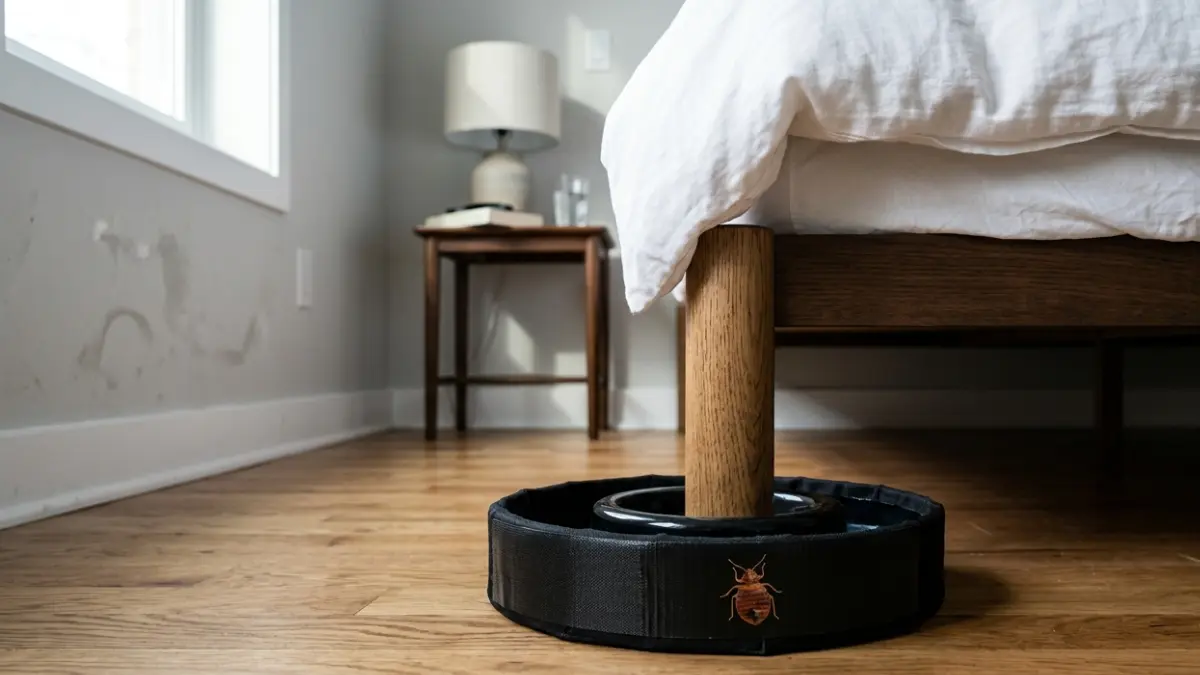 Bed Bugs Treatment
The Best Bed Bug Traps and Monitors, and How to Use Them
July 5, 2026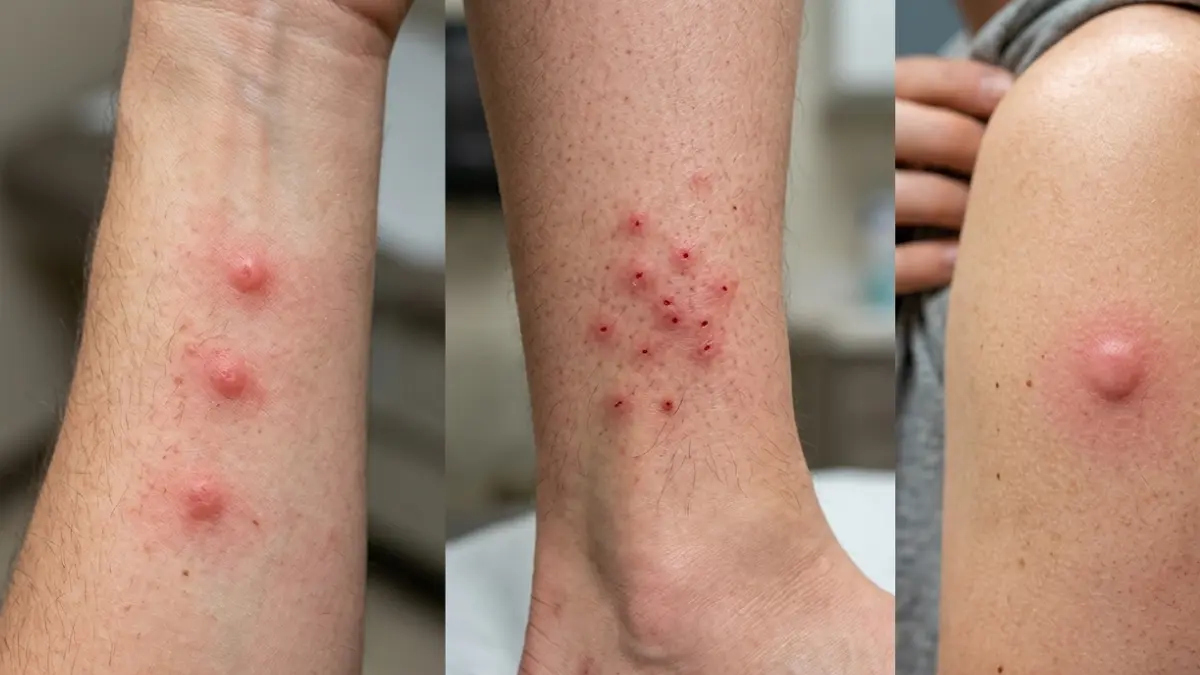 Bed Bugs Treatment
An Easy Way to Tell Bed Bug Bites From Flea and Mosquito Bites
June 24, 2026 Bed Bugs Treatment
Clearing Bed Bugs From a Couch You Want to Keep
July 3, 2026 Bed Bugs Treatment
Why Bug Bombs Don’t Work on Bed Bugs (+ What Does)
July 2, 2026 Bed Bugs Treatment
How Bed Bug Heat Treatment Costs Compare to Chemical
July 8, 2026 Bed Bugs Treatment
How to Spot the Signs of Bed Bugs Before You Ever See One
June 23, 2026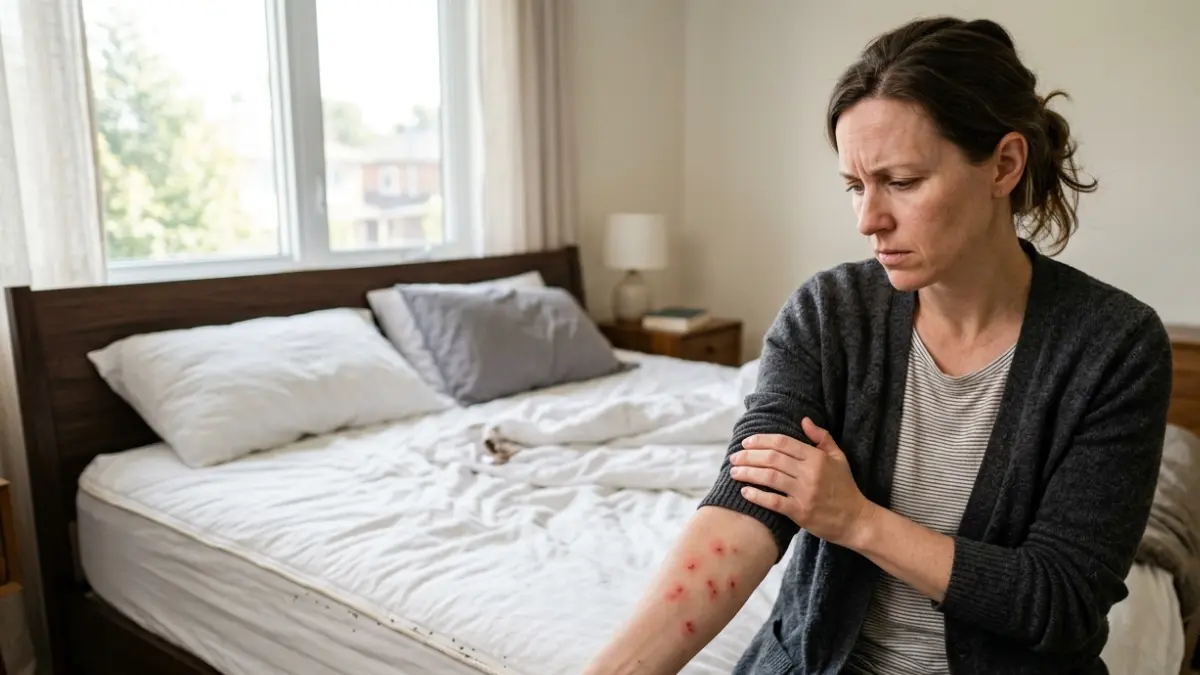 Bed Bugs Treatment
Are Bed Bugs Dangerous? The Health Risks People Overlook
June 26, 2026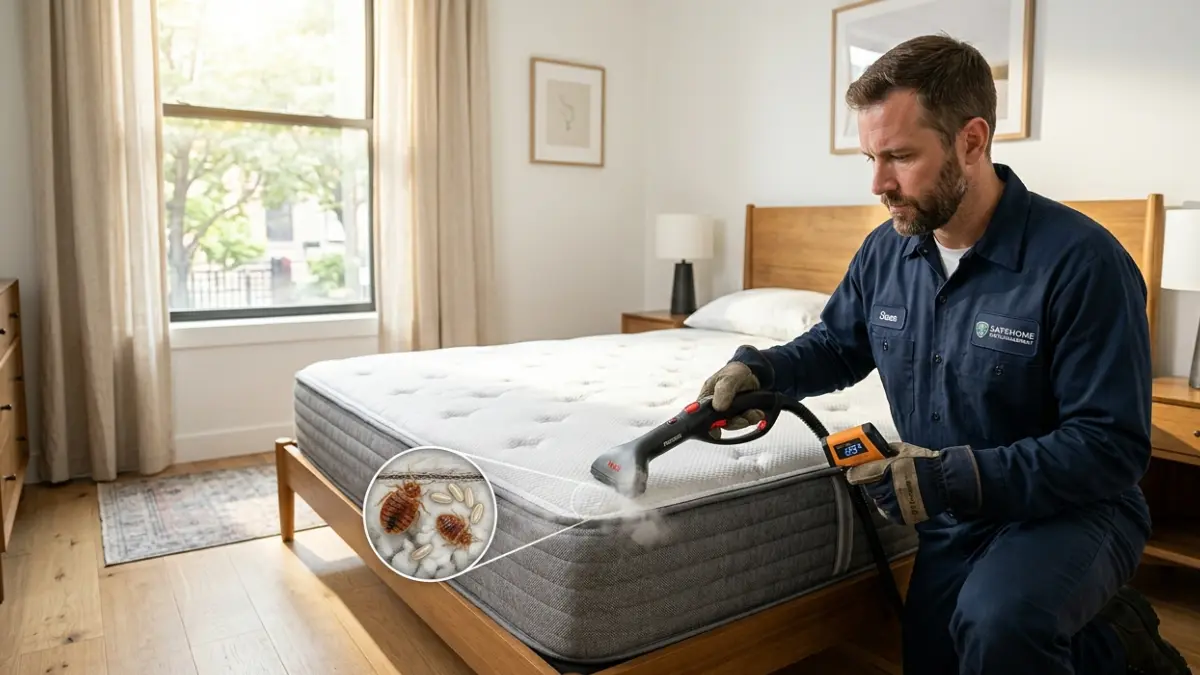 Bed Bugs Treatment