Are bed bugs dangerous? The health risks people overlook

Bed bug risks beyond the bite: CDC counted 111 illnesses from bed bug insecticides in seven states, and rare anemia cases trace to long infestations.
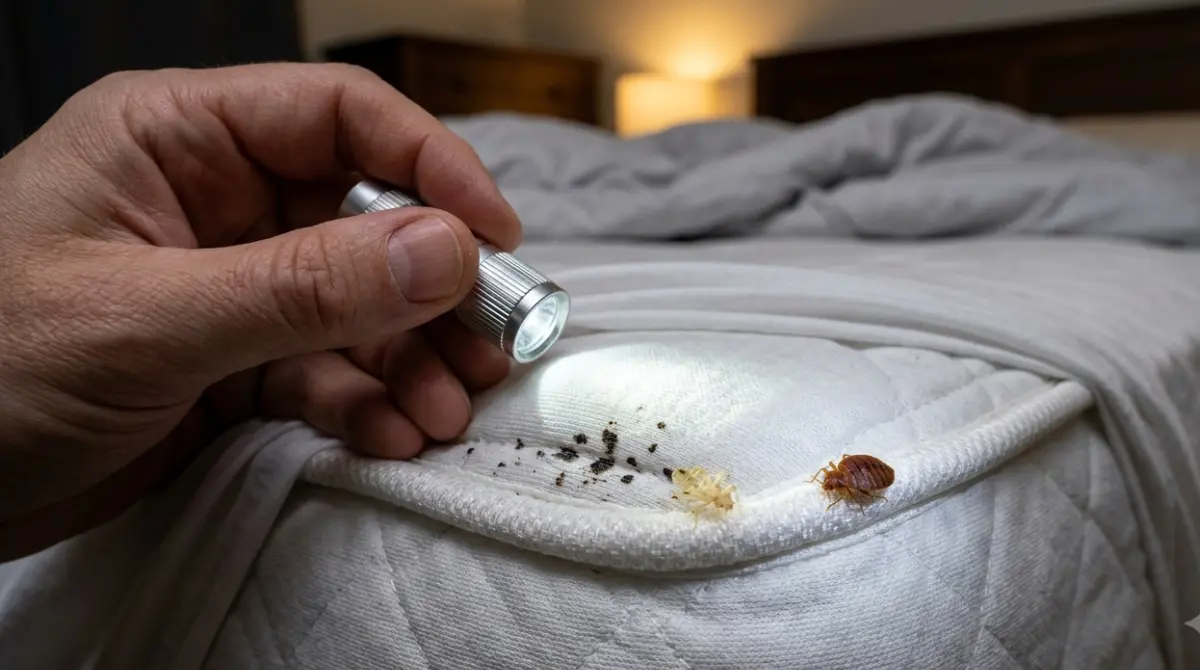
Table of Contents
Bed bugs are not known to spread disease to people, though their bites can itch and, rarely, cause an allergic reaction (CDC). The risks people overlook are rarer: anemia when a heavy infestation runs for months, and injuries from treating bed bugs the wrong way. Confirm what you found before you buy any product.
That mix of effects is why EPA, CDC and USDA classify bed bugs as a public health pest even though they don’t transmit disease (EPA). The second of EPA’s top ten tips is two words long: don’t panic (EPA tips).
How the risks compare
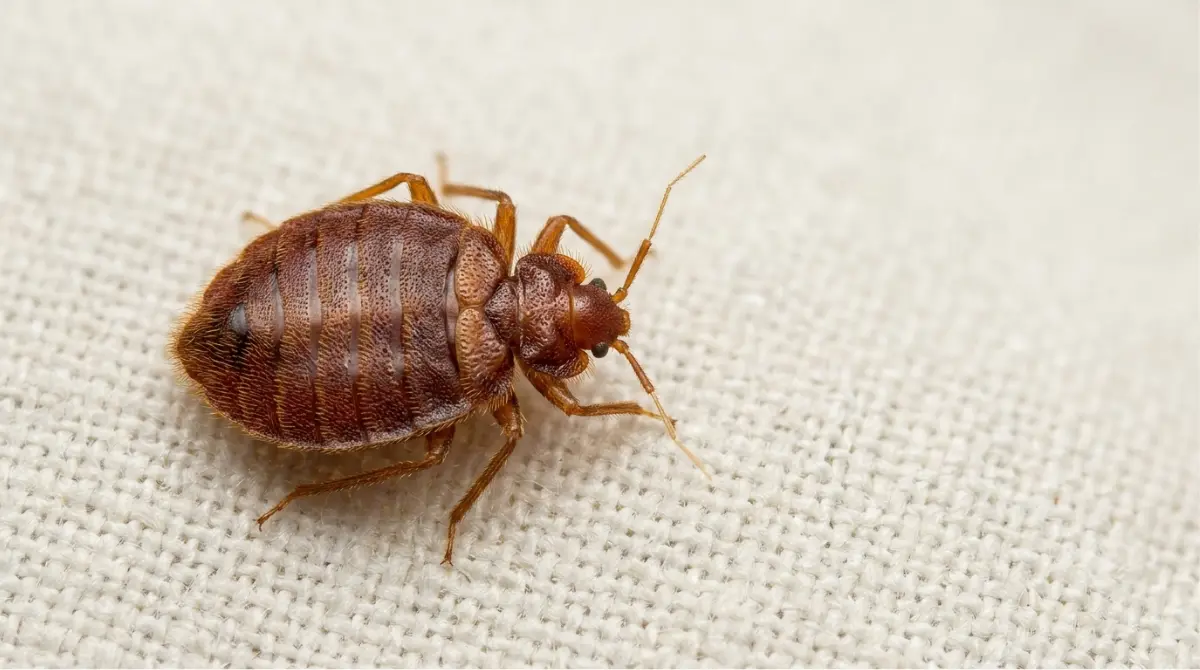
Read each row as one risk, with how often it shows up and who it affects most. The last two rows are caused by treatment mistakes.
| Risk | How often | Who it affects most | Source |
|---|---|---|---|
| Disease spread | No known cases in people | No one, on current evidence | CDC |
| Itchy bites | Expected with bites; some people show no reaction | People who react strongly to bites | EPA |
| Skin infection | Possible after scratching | People who scratch bites open | EPA |
| Allergic reaction | Uncommon; anaphylaxis is rare | People sensitive to the bites | CDC |
| Sleep loss and anxiety | Strongly linked in one study | Tenants in a building with an ongoing infestation | BMJ Open study |
| Anemia | Rare; seven case reports and one ER study | Older, homebound or isolated people in heavy, long-running infestations | AJEM study, EJCRIM case report |
| Pesticide illness | 111 cases in 7 states, 2003 to 2010; 1 death | Homes overusing or misusing insecticides | CDC MMWR |
| Fire or explosion | Reported with rubbing alcohol and foggers | Do-it-yourself treatment | EPA |
Sources: CDC, EPA public health page, BMJ Open, American Journal of Emergency Medicine, EJCRIM case report, CDC MMWR, EPA treatment safety page
Do bed bugs spread disease?
Headlines about Chagas disease have kept this question alive, and the evidence still points one way. Bed bugs are not known to spread disease to people (CDC). Researchers have detected more than 40 pathogens in bed bugs, without definitive evidence that any of them reach humans (2012 clinical review). A 2015 lab study did show the Chagas parasite passing between bed bugs and mice in both directions (AJTMH study). Even so, transmission from bed bugs to people has never been demonstrated (2021 case-control study).
For a person to be infected this way, a bed bug would first have to feed on someone who already carries the parasite. Some mice in the experiment were also infected by eating the bugs, a route that doesn’t apply to people (Scientific American).
Itching, infection and allergic reactions
Your own skin decides most of this. Reactions run from no mark at all, to a small bite mark, to anaphylaxis (a severe whole-body reaction) in rare cases (EPA). Bites scratched open can lead to skin infections such as impetigo and lymphangitis.
CDC advises speaking with a healthcare provider if you think you’re having an allergic reaction to the bites (CDC). For the look and timeline of the bites themselves, see what bed bug bites look like on skin.
A child with bed bug bites can stay in school (DC Health fact sheet).
Lost sleep and anxiety can outlast the bugs
A Montreal study looked at 91 tenants. Those in infested homes had about five times the odds of sleep disturbance, and of anxiety symptoms, compared with tenants who had no bed bugs (BMJ Open study). The sample was small and not chosen at random. Anxiety and insomnia also appear on EPA’s list of reported effects (EPA).
The bugs leave a chemical trace as well. Bed bugs release histamine in their droppings as a signal that draws others to gather (PLOS ONE study). NC State researchers compared household dust in infested Raleigh apartments with dust from homes without bed bugs. Histamine levels in the infested apartments were at least 20 times higher, and heat treatment barely lowered them three months later (NC State).
Dead bed bugs don’t bite, yet their droppings can keep histamine in the dust after treatment. What that level means for the people living there hasn’t been worked out; the researchers said long-term, low-level exposure was the next thing they would study.
Who should treat it as urgent
The serious cases in medical journals share a pattern. They involve a long-running infestation in the home of someone who is isolated or needs help with daily living (case report). In that 2025 report, an 82-year-old woman who depended on others for daily care had lived with bed bugs for three to four years. Her anemia improved after a transfusion, iron, and getting rid of the bugs.
A Mayo Clinic study of emergency room patients points the same way. Anemia showed up in 59.5% of the 332 infested patients versus 36.9% of 4,952 patients without bed bugs. Severe anemia showed up in 4.4% versus 0.7% (American Journal of Emergency Medicine). Because the study compared groups, it shows a link between the two and can’t prove the bugs caused each case.
Move faster if:
- someone in the home is older, homebound or alone with the problem
- someone has reacted strongly to bites before
- the infestation has lasted for months
If that person sees a doctor, mention the bugs. The case authors urge a check of the patient’s clothing and living space when anemia has no obvious cause.
The bigger danger: do-it-yourself pesticides
Between 2003 and 2010, 111 people in seven states got sick from insecticides used against bed bugs, and one person died (CDC MMWR report). Most cases were mild. Many traced back to overusing insecticides or failing to wash or change treated bedding (CDC podcast on the report). Federal health officials warn that outdoor pesticides should never be used indoors under any circumstances (CDC health advisory).
Home remedies add a fire risk. Rubbing alcohol has caused numerous house fires when people used it on bed bugs. A pesticide labeled for outdoor use can leave a home dangerous and unlivable (EPA). Kerosene and bleach belong on the same do-not-use list because they can cause fires or explosions (CDC health advisory).
Foggers shouldn’t be the only method, and setting one off in a small enclosed space such as a closet can make it explode (EPA). They also tend to miss bed bugs hiding in cracks (NPIC). Whether bug bombs do anything at all gets its own look in do bug bombs work on bed bugs.
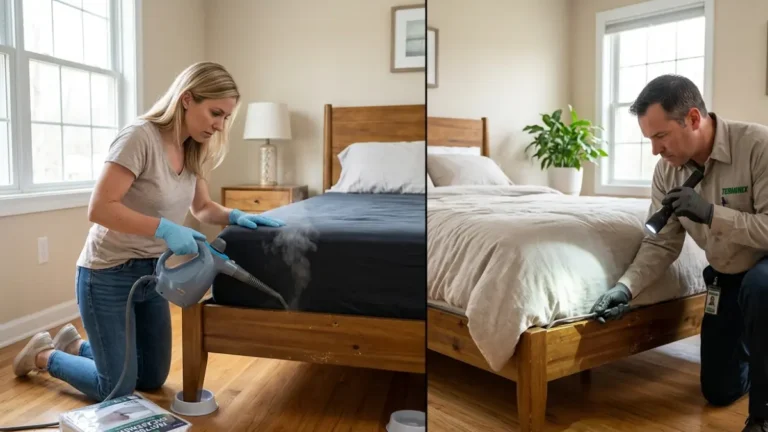
Applying any spray, dust, fogger or heat device is work for a state-licensed pest control company. Before treatment, ask the company for:
the company’s state license number, the product name and its EPA registration number, whether the label lists bed bugs and allows use on mattresses, how long everyone stays out of the room, and what to do with bedding afterward. How to hire a bed bug exterminator walks through vetting a company.
Safety: Outdoor pesticides used indoors can make a home unsafe to live in, and alcohol and foggers can ignite. If someone is exposed to a pesticide, move them to fresh air and call a doctor or Poison Control at 800-222-1222 (NPIC).
Confirm it’s bed bugs before you buy anything
Work through these first steps in order, before any treatment starts.
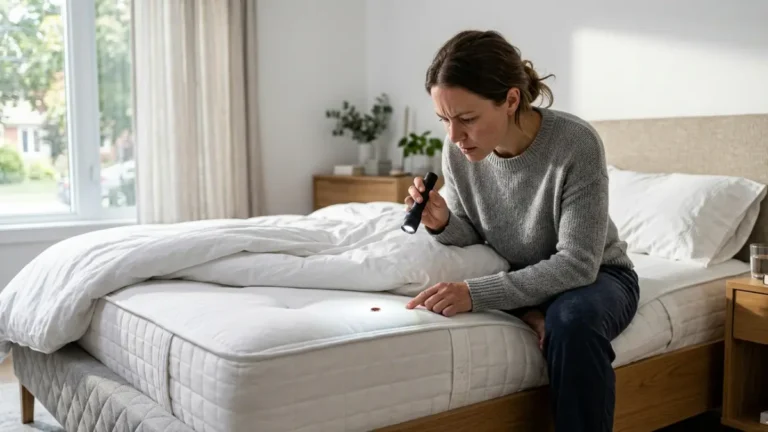
- Make sure it’s a bed bug and not a flea or tick. Compare it with EPA’s photos, or show it to your county extension office (EPA top ten tips). The signs of bed bugs to check around the mattress help confirm it.
- Keep your belongings. Most can be treated and saved, and throwing them out can spread bed bugs to other people’s homes.
- Keep sleeping in your own bed. Moving to another part of the house can lead the bugs to follow you and spread through the home (NPIC).
- Settle on a treatment plan before buying any product. EPA’s tips put the spray can after other options.
The treatment options themselves are in how to get rid of bed bugs.
For renters: Tell your landlord or building manager as soon as you confirm bed bugs. About 21 states have some bed bug law or regulation, and some cities, such as Chicago, add their own, so your state or city’s rules decide what applies to your unit (EPA state list). If the response falls short, NPIC suggests contacting your city’s code enforcement or buildings department. More on that in landlord responsibility for bed bugs in an apartment.