
5 Treatments, 3 Real Costs, No Sales Pitch

Termite treatment quotes hide a third cost — the one in the warranty. Five methods, honest ranges, and the EPA’s own list of contractor red flags.
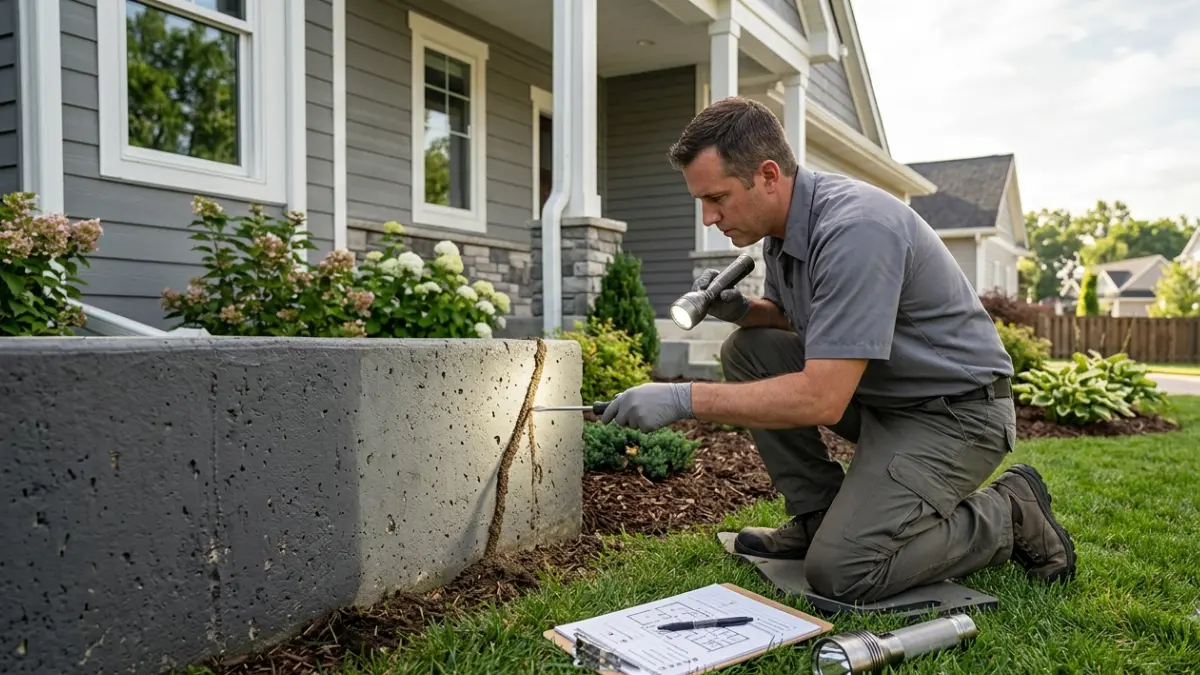
Table of Contents
Start here: what you’re dealing with, and what it’ll cost
Every article you’ll read about termite treatment was written by someone selling something — a treatment, a sales lead, or a bottle of spray. This one wasn’t.
We’ve never treated a house for termites. What we did was read the EPA’s own list of pest control contractor red flags, the state regulators’ rules for what a termite contract must contain, the pesticide labels, and the warranty fine print. Then we turned all of it into something you can hold up against your estimate.
Here’s the shape of the whole problem. Five treatment methods exist, and which one you need is decided almost entirely by which termite you have.
What it costs is decided by your foundation, your perimeter, and your region. And the number that will actually hurt you is not on the estimate at all — it’s in the warranty section.
You just saw a swarm or a mud tube
Don’t panic and don’t call the first number you find. Read the species section next, then the treatment section. You have days, not hours.
You’ve got a quote and it doesn’t smell right
Skip to the three cost sections and then the quote decoder. You’ll finish knowing more about that estimate than the person who wrote it expects you to.
You’re buying or selling and the termite report came back dirty
Go to the real estate section, but read the warranty section first. A closing deadline is the single most common reason people sign a bond they haven’t read.
You want to stop them before they start
The prevention section is the one that matters to you, and almost none of it costs money.
You’ve been paying a bond for years and you’re wondering why
Read the third cost section. There are two words in your contract that decide whether that money is buying you anything at all.
ℹ️ Safety Note: This article covers four things that carry real risk. Termiticide application is licensed work in most states, and the EPA warns that an improperly applied soil treatment can contaminate your home and your drinking water well while still failing to stop the termites. Whole-structure fumigation uses a restricted-use gas that has killed people — never re-enter a fumigated home until the certified applicator has tested the air and given you written clearance.
Structural damage from termites is a question for a licensed contractor or structural engineer, not a pest company. And the contract and money guidance here is general education, not legal or financial advice. For any active infestation, hire a licensed pest control professional and verify their licence with your state’s pesticide regulatory office before they touch your house.
Which termite you have decides everything else
Everything downstream of this section — the method, the price, whether you have to leave your house, whether a warranty even applies — is determined by one thing: the species. Get this wrong and you can spend thousands on a treatment that was never going to work.
There are four groups that matter to a US homeowner.
Subterranean termites (the ones most Americans have)
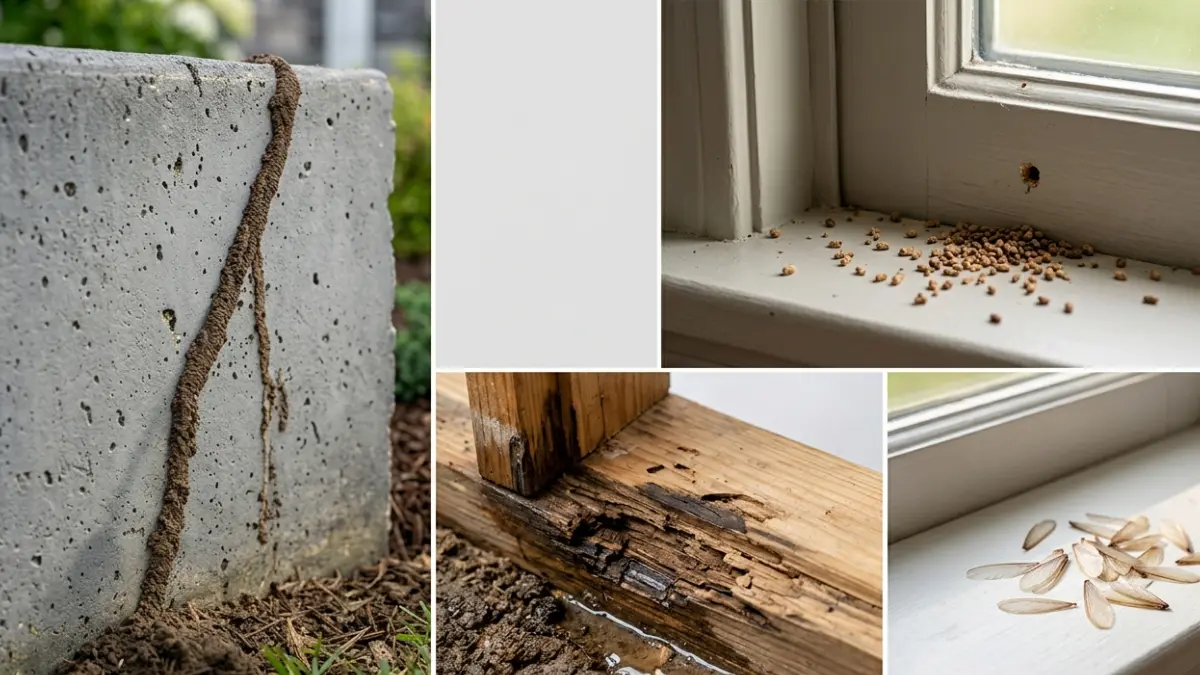
Subterranean termites live in the soil and come up into your house looking for wood. They need soil contact and moisture, which is why they build the mud tubes you see running up a foundation wall — those tubes are a covered highway between the dirt and your joists.
They are the reason most termite treatments exist. The University of Kentucky’s entomology department notes that subterranean colonies can run from hundreds of thousands to millions of individuals across an area up to half an acre — and that the colony eating your house may physically be located in your neighbour’s yard.
That last detail explains a lot about why treatment is priced the way it is, and why “just spray where you see them” is not a plan.
🔍 Why It Works: Subterranean termites dry out fast. They tunnel through soil and build mud tubes specifically to stay in a humid environment. That dependence on soil moisture is the weakness every soil-based treatment is built around — cut them off from the ground, and the ones already inside your walls usually die off on their own.
Formosan termites (the aggressive subterranean variant)
Formosans are a subterranean species, but a far more destructive one. Their colonies are dramatically larger than native subterranean colonies, they eat faster, and unlike native species they can sometimes maintain above-ground nests without soil contact.
They are concentrated along the Gulf Coast, in Florida, Louisiana, Texas, parts of coastal California and Hawaii. If you’re in Formosan territory, treat any evidence as more urgent than this article’s general timelines suggest, and say the word “Formosan” to every company you call — it changes what they quote.
Drywood termites
Drywood termites need no soil contact at all. They live entirely inside the wood they’re eating — your rafters, your window frames, your furniture — and they can start a colony anywhere a swarmer lands.
This is the fork in the road. A soil treatment cannot reach a colony living twelve feet up inside a rafter. Drywood infestations are why fumigation, heat, and localized injection exist as categories at all.
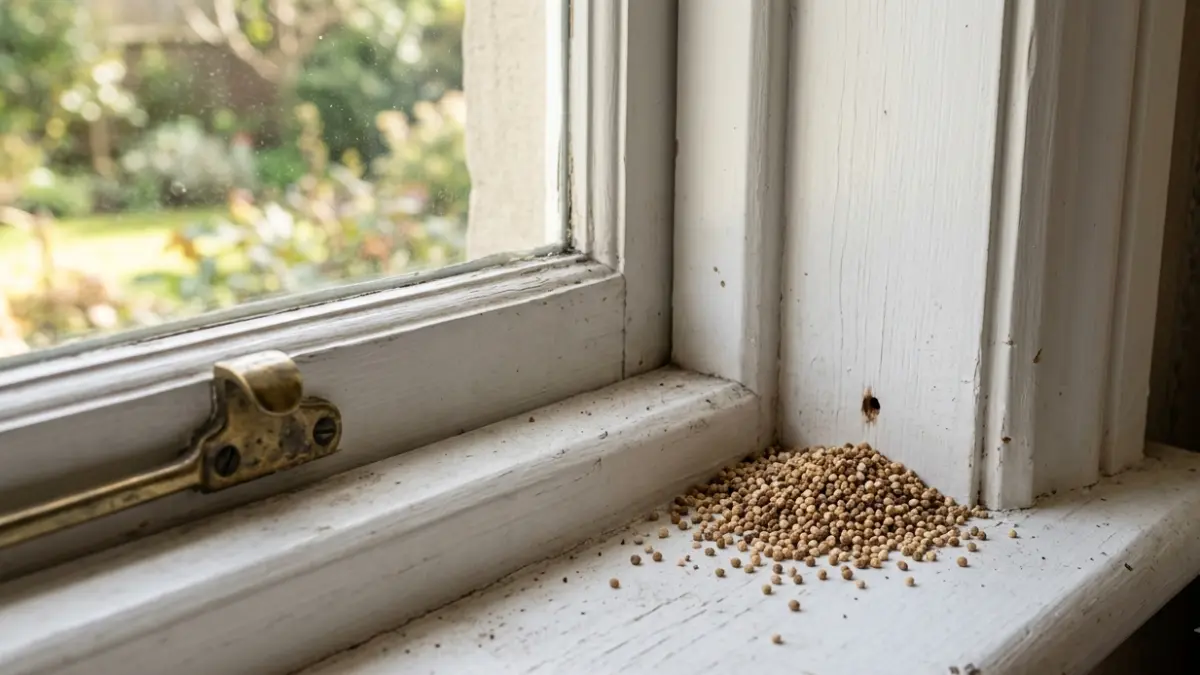
Their calling card is frass — small, hard fecal pellets that look like coarse sand or coffee grounds, usually in a little pile below a pinhole in the wood.
Dampwood termites
Dampwood termites go after wood with high moisture content — rotting sills, leaking window frames, wood in contact with wet soil. They’re mostly a Pacific Coast and Pacific Northwest problem, and they’re the least destructive of the four.
They are also the one group where the treatment is often not a pesticide at all. Fix the water problem and remove the rotten wood, and you’ve usually fixed the termite problem.
How to tell which one you have in 60 seconds
| What you found | Where you found it | Most likely |
|---|---|---|
| Mud tubes — pencil-width earthen tunnels | Foundation walls, piers, crawlspace joists | Subterranean (or Formosan) |
| Frass — sand-like pellets in a small pile | Below a pinhole in trim, rafters, furniture | Drywood |
| Discarded wings in a pile | Windowsills, door frames, spider webs indoors | Either — see swarm timing below |
| Wood that sounds hollow when tapped | Baseboards, sills, floor joists | Any species; means damage is already done |
| Soft, wet, crumbling wood | Leaking sills, wet crawlspace | Dampwood — or rot, which looks similar |
The EPA suggests probing suspect wood with a flathead screwdriver to check for hollow spots. That’s the whole test, and you can do it tonight.
Two things worth knowing about swarms, both from the University of Kentucky’s homeowner guidance. Finding winged termites inside your home almost always means an infestation that warrants treatment. But a swarm out in the yard, coming from a stump or a woodpile, is not automatically a problem for your house — though swarmers emerging right next to the foundation, or from an abutting porch or patio, are a strong sign the building is infested too.
Termite or flying ant?
People confuse these constantly, and the difference decides whether you spend two thousand dollars or nothing at all.
- Termite swarmer: straight antennae, a thick waist with no pinch, and four wings all roughly the same size.
- Flying ant: elbowed antennae, a sharply pinched waist, and forewings noticeably longer than the hind wings.
✅ Do This: If you find winged insects indoors, collect a few in a jar or a piece of tape before you sweep them up. Your county cooperative extension office will identify them, usually free. That single step is the difference between an accurate quote and a salesperson’s guess.
The 5 termite treatments, and what each one can’t do
Here are all five methods, what each one does, and — the part nobody’s brochure includes — what each one structurally cannot do.
| Method | For which termite | What it does | Residual protection | Typical range (sourced) | What it can’t do |
|---|---|---|---|---|---|
| Liquid soil termiticide | Subterranean | Treated zone in the soil around the foundation | Yes — years | $3–$20 per linear foot; $500–$2,000+ whole-home (HomeGuide) | Reach a drywood colony inside a rafter; work through a gap in the treated zone |
| Bait system | Subterranean | Slow-acting bait carried back to the colony | Only while monitored | $7–$12 per linear foot; $1,000–$2,500 install + $200–$400/yr (HomeGuide) | Work fast; work at all until termites find the stations |
| Whole-structure fumigation | Drywood | Gas penetrates all wood in the structure | None | $1–$4 per sq ft; $2,000–$8,000 (HomeGuide) | Stop them coming back the day after; be done without you leaving |
| Whole-structure heat | Drywood | Structure heated until termites die | None | $1–$3 per sq ft; $2,000–$6,000 (HomeGuide) | Reliably reach cold spots — see the research below |
| Spot / localized | Drywood, small jobs | Injection into the galleries you can find | Localized only | Varies widely | Treat the colonies you didn’t find |
Cost note: every figure above is sourced from HomeGuide’s published cost data, not from us. We have not commissioned or paid for a termite treatment. Cross-check against your own quotes — and read the cost sections below, because these ranges are wider than they look.
1. Liquid soil termiticide (the chemical barrier)
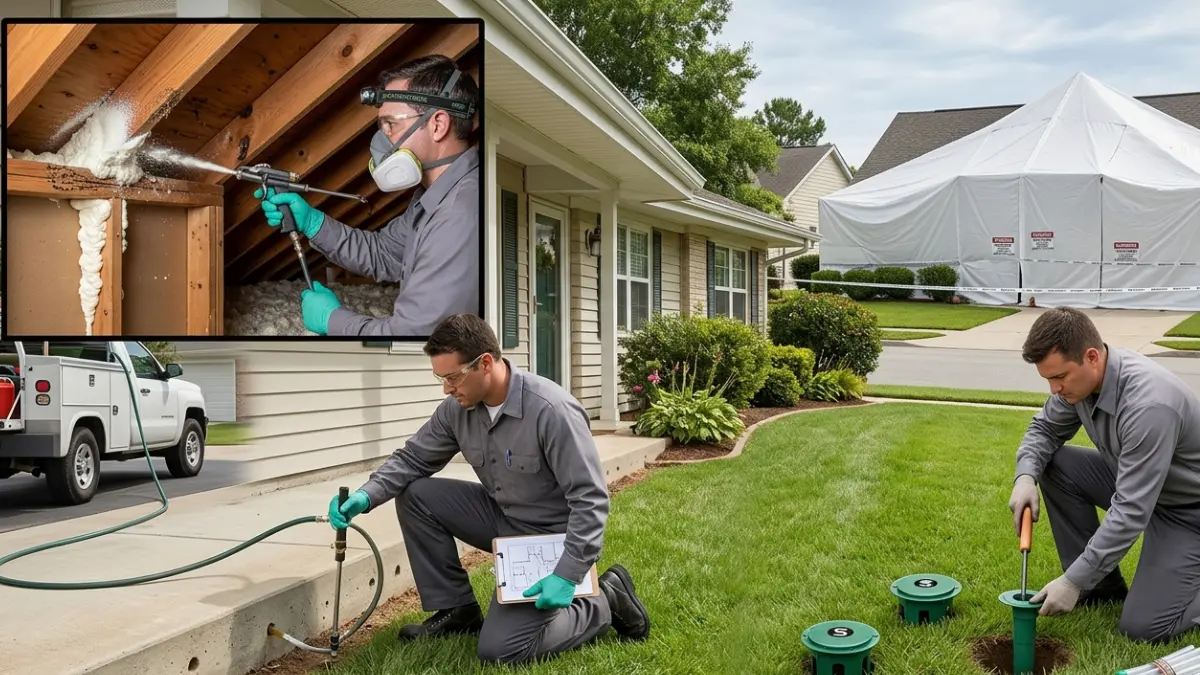
This is the workhorse. A licensed applicator establishes a continuous treated zone in the soil around and under the foundation, so that termites tunnelling toward your house pass through it.
The chemistry changed significantly, and it matters. Older products were repellent — termites detected the treated soil and simply went around, looking for a gap. The current generation is non-repellent: the termites can’t detect the treated soil, tunnel straight through it, pick up a dose, and carry it back through the colony via grooming and feeding.
The University of Kentucky names the current non-repellent products by their active ingredients: Termidor and Taurus (fipronil), Premise (imidacloprid), and Altriset (chlorantraniliprole). Their assessment is that these non-repellent products are usually more reliable at controlling an infestation on the first attempt than the older repellent chemistry.
🔍 Why It Works: A repellent termiticide is a wall — and a wall only works if it has no holes. A non-repellent termiticide isn’t a wall at all; it’s a trap the termites walk into voluntarily because they can’t sense it. That’s why a small gap in a non-repellent treatment is far less catastrophic than a small gap in an old-style repellent one.
What it can’t do: it cannot touch drywood termites. It also cannot fix a treatment that was applied badly. And this is where the EPA’s warning belongs: an improperly conducted barrier treatment can contaminate the home and nearby drinking water wells and fail to protect against termites — both at once. The EPA’s own guidance on how to identify and control termites is blunt that this is work for a trained, licensed professional.
How long it lasts: the EPA requires soil-treatment termiticides to demonstrate at least five years of efficacy before it will register them at all. Five years is a floor, not a promise about your specific soil.
2. Bait systems (colony elimination)
Instead of treating the soil, you put stations in it. Termites find the bait, eat it, and carry a slow-acting compound back to the colony. Done properly, this can eliminate the colony rather than just excluding it from your house.
Stations go in at fixed intervals around the entire perimeter — the University of Kentucky’s homeowner guide describes typical spacing of 10 to 15 feet, with extras near known activity, woodpiles, stumps and previous damage.
What it can’t do: work quickly, and work without monitoring. Kentucky’s entomologists are direct that the biggest challenge in baiting is getting the termites to find the bait, and that the timetable for discovery varies enormously from property to property depending on colony size, foraging intensity, soil moisture and time of year.
That is the honest trade-off. Baits can eliminate the colony; liquids usually just exclude it. But baits are slow, and they only keep working as long as somebody keeps servicing the stations — which is a subscription, and we’ll come back to that in the third cost section.
3. Whole-structure fumigation (tenting)
The house goes under a gas-tight tarp and is filled with a fumigant that penetrates every piece of wood in the structure, including the parts no inspector can see.
The gas is sulfuryl fluoride. The EPA classifies it as a restricted-use pesticide — it can only be purchased and applied by a certified applicator — and it is the only structural fumigant registered for residential use in the United States. It is colorless and odorless, so a separate chemical called chloropicrin is released first as a warning agent, because it stings your eyes and you cannot miss it.
What it can’t do — and this is the single most misunderstood fact in termite control: fumigation leaves zero residual protection. It kills every termite in the structure on the day it’s done, and provides no defence whatsoever against a swarmer landing on your fascia board the following week.
You are buying a reset, not a shield. Anyone who implies otherwise is selling.
4. Whole-structure heat
Same concept as fumigation, no chemicals. The house is tented and heated until the wood core reaches a lethal temperature, then cooled. You can go home much sooner and nothing toxic was introduced.
What it can’t do: reliably heat everything. Research from University of California Cooperative Extension found that in wood near the concrete foundation wall — where the concrete acts as a heat sink — heat treatment alone killed only 36% to 44% of drywood termites, while adding a volatile essential oil to the same heat treatment pushed mortality to between 92% and 100%.
📊 Sourced: University of California Cooperative Extension trials on simulated whole-house heat treatment reported 36–44% drywood termite mortality with heat alone in cold spots near the concrete foundation wall, rising to 92–100% when a volatile essential oil was added to the treatment. This is published research, not a Gladewick test.
That’s not an argument against heat. It’s an argument for asking any company quoting heat exactly how they handle the cold spots — because the cold spots are where the research says the failures happen.
5. Spot and localized treatments (borates, foams, dusts, orange oil)
This category covers everything applied directly to a specific piece of infested wood: injected foam, dust, borate solutions, and orange oil (d-limonene).
Borates are a genuinely useful product in the right place. The EPA lists them as commonly used as a spray application during new-home construction, to protect the wood before the walls close up. Applied to bare, accessible framing, they work.
Orange oil is the one that generates the most marketing heat and the most confusion. The California Structural Pest Control Board has had to remind pest control companies that orange oil is a localized treatment tool against drywood termites, and is not an alternative to all-encompassing methods such as fumigation.
What none of them can do: treat what you didn’t find. Every localized treatment shares one fatal assumption — that the technician found every colony. In a house where the vast majority of the framing is behind drywall, plaster, stucco and insulation, that assumption is doing an enormous amount of work.
⚠️ Watch Out: If a company proposes a localized or spot treatment for an active, established infestation and calls it a whole-house solution, that is the moment to ask a single question: “Will you warrant it?” The next section explains why the answer is usually no.
How long does each one actually last?
- Liquid barrier: years, with the EPA’s five-year efficacy floor as the registration standard. Degrades over time and can be breached by landscaping, excavation, or new construction against the foundation.
- Bait system: as long as the stations are monitored and serviced. Stop paying, stop protecting.
- Fumigation: one day. Zero residual.
- Heat: one day. Zero residual.
- Spot treatment: localized and temporary; borate in dry, bare wood is the exception and can last a long time as long as the wood stays dry.
Which treatment is actually right for your house
Now narrow it. In most cases there are only one or two defensible answers, and knowing which before a salesperson arrives is worth more than any negotiation tactic.
If you have subterranean termites
Your real choice is liquid barrier or bait system, and the honest summary is that both work when done properly.
Liquid is faster, is a one-time cost with an optional renewal, and gives you a defended perimeter. Bait is slower, can eliminate the colony rather than exclude it, and carries a mandatory ongoing fee. Neither is a scam and neither is universally superior.
Pick liquid if you want the problem stopped quickly and you don’t want a subscription. Pick bait if you have a slab that would need extensive drilling, if you’d rather not have hundreds of gallons of termiticide injected around your foundation, or if you want ongoing monitoring built in.
If you have drywood termites
Your choice is between whole-structure (fumigation or heat) and localized (injection, foam, borate).
The deciding variable is not price. It’s access.
If the infestation is confined to a single accessible beam or window frame that a technician can see, probe and inject, localized treatment is reasonable. If it’s scattered, or you don’t know how far it’s spread, or the house has a stucco exterior and a tile roof, you are betting on the technician having found every gallery — and the odds get worse the bigger the house.
If your house is on a slab, a crawlspace, or a basement
Foundation type is the largest single driver of a liquid treatment’s price and difficulty.
- Crawlspace: easiest access. The technician can get to the sills, piers and joists. Usually the cheapest per linear foot and the easiest to inspect afterwards.
- Basement: moderate. Some drilling, some interior work.
- Slab-on-grade: hardest. Reaching the soil under a slab means drilling through concrete at intervals — through your garage floor, your patio, sometimes your finished flooring. A slab quote that is dramatically cheaper than the others deserves a very specific question about how they intend to treat under the slab.
Attached patios, porches, decks and hardscaping all add cost for exactly the same reason: they sit between the technician and the soil.
If a company recommends spot treatment only — read this first
This is the most expensive paragraph in this article, so read it twice.
The University of Kentucky’s guidance for homeowners states that for subterranean termites, localized spot treatments are usually a gamble, except in the case of warranty-related retreatment — and that most reputable pest control firms will not warrant a spot treatment, because it is likely the termites will eventually find another way in.
That’s not our opinion. That’s the extension service.
The reason it matters so much is that a spot treatment is always the cheapest number on the table. A homeowner staring at a $2,400 estimate and a $600 estimate has no way of knowing that the cheap one comes with no guarantee for a structural reason, not a paperwork one.
💡 Pro Tip: University of Kentucky extension guidance notes that a subterranean colony can forage across an area up to half an acre — and that the colony eating your house may physically sit in your neighbour’s yard. That single fact explains why treating only the spot where you found mud tubes is a gamble: you are treating one doorway into a building with many, and the colony is not where you’re standing.
What reputable firms typically offer instead, per the same guidance, is a perimeter treatment of the entire exterior plus spot treatment of infested or high-risk interior areas — and that they will warrant. You can read the University of Kentucky’s full termite answers for homeowners yourself; it takes ten minutes and it is written for you, not for the industry.
✅ Do This: When any company proposes a treatment, ask one question before you ask about price: “Is this treatment covered by your warranty, in writing?” If a proposed treatment isn’t warranted, the company is telling you they don’t expect it to hold — and they’re telling you in the only language that’s legally binding.
If nobody can tell you which species you have
Then nobody should be quoting you a treatment. An inspector who cannot name the species — from mud tubes, frass, damage pattern, or a collected swarmer — has not done an inspection. Send the swarmers to your county extension office and get a second opinion.
Real cost #1: the inspection, and why “free” isn’t free
There are three costs in a termite job. Almost every article online covers the second one. Here are all three, starting with the one that decides everything after it.
The free inspection is a sales channel, and that’s fine — as long as you know it
A free termite inspection is not charity and it isn’t fraud. It’s customer acquisition, and it’s a completely normal business model.
But understand the structure you’re standing in. The person deciding whether you have termites is employed by the company that will bill you if you do.
That is a structural incentive, not an accusation — most termite inspectors are competent professionals doing an honest job. It’s simply a conflict you should price in rather than pretend away.
The way you price it in is the same way you’d handle any other trade: you don’t let the person who found the problem be the only person who quotes the fix.
What a paid inspection costs, and when you need one
Published ranges vary. HomeGuide puts a termite inspection at $0 to $250, with many companies offering it free when it isn’t tied to a real estate transaction. Real estate inspections — the ones a lender needs — are typically quoted somewhere in the region of $75 to $400 depending on your market and the size of the house.
Pay for one when you want a report you can rely on rather than a sales visit, when you’re buying, or when you’ve had a free inspection you don’t fully trust and want an independent read.
What an inspector is legally required to write down
This is the bar, and most homeowners have no idea it exists.
North Carolina’s Department of Agriculture and Consumer Services requires that every contract for the control of wood-destroying organisms be in writing, and that it include the licensee’s number and company name, a foundation diagram showing whether the infestation is active or inactive and marking the location of any visibly damaged timbers, and a statement of whether re-inspections will be made and at what interval.
Requirements vary state to state. But that’s a reasonable bar to hold any company to, anywhere. A verbal “yep, you’ve got termites, here’s the price” is not an inspection report — it’s a sales call with a clipboard.
✅ Do This: Before anyone quotes you, ask for the inspection findings in writing, with a diagram. If a company won’t produce one, you’ve learned something important about them for free.
Why the company inspecting you shouldn’t be the only one quoting you
The EPA’s guidance on hiring pest control is explicit that most pest problems can wait a few days, that you should obtain several estimates, and that you should check for complaints against the company or its applicators with the Better Business Bureau, your State Department of Agriculture, or your State Attorney General.
Read that first clause again, because it’s the one the sales process is designed to make you forget: you have a few days. Termites have been in your house for months or years. They will not finish the job this weekend.
How often to have your house checked
Annually is the common professional recommendation, and it’s what a bond typically buys you. If you’re not under a bond, an annual paid inspection in a high-risk region is a defensible expense; twice-yearly self-checks (in the prevention section below) are free and catch most of what matters.
Real cost #2: what termite treatment actually costs
Here is the money question, and here is the answer nobody else will give you: nobody can quote you a meaningful national average for termite treatment, and everybody does it anyway.
The honest answer: nobody can quote you a national average
Look at what the major cost sites currently publish for the same job:
| Source | Published range | Published “average” |
|---|---|---|
| Angi | $75 – $1,750 | $621 |
| HomeAdvisor | $263 – $1,033 | ~$621 |
| HomeGuide | $225 – $2,500 (up to $8,000 for tenting) | — |
| ConsumerAffairs | $1,000 – $3,000 | — |
| Today’s Homeowner | $450 – $2,000 | — |
Key detail: these figures are published by the sources named, not measured by us. They are quoted here to demonstrate the spread, which is itself the finding.
One of these says the typical job is $621. Another says the typical job starts at $1,000.
They cannot both be describing your house — and neither of them is describing your house, because termite treatment is not priced by the job. It’s priced by the foot.
How a termite quote is actually built
A termite quote has four inputs, and once you know them you can reverse-engineer almost any estimate you’re handed.
1. Linear feet of perimeter. Not your square footage — the distance around the outside of your house. Today’s Homeowner walks through the arithmetic: a house with a 40 ft × 40 ft footprint has 1,600 square feet on the ground floor and 160 linear feet of perimeter. That perimeter number is what most liquid and bait quotes are actually multiplied against.
2. The method’s rate. From HomeGuide’s published data: liquid soil treatment runs roughly $3 to $20 per linear foot; bait systems roughly $7 to $12 per linear foot; fumigation and heat are priced per square foot of the whole structure instead, at roughly $1–$4 and $1–$3 respectively.
3. Species. Drywood forces you into a whole-structure method priced by square footage, which is a completely different cost curve from a subterranean perimeter job. Formosan pressure raises the stakes and often the price.
4. Access. Slab drilling, attached patios, decks, tile roofs, finished basements, hardscaping. Everything between the technician and the soil costs money.
🔍 Why It Works: The reason the same house gets a $700 quote and a $2,400 quote is almost never greed. A liquid treatment involves injecting a large volume of termiticide into the soil along the foundation, under slabs and inside foundation walls — the University of Kentucky notes a typical job can involve hundreds of gallons and specialised equipment. Two companies pricing at $4 and $12 per linear foot are usually describing two genuinely different amounts of work.
Worked example: one 2,000 sq ft house, four legitimate quotes
Take a single-storey 2,000 sq ft house with a 40 ft × 50 ft footprint. Perimeter: 180 linear feet.
Now apply the published rates. Every number below is arithmetic on sourced rates — it is an illustration, not a quote, and not a treatment we purchased.
| Scenario | The maths | What you’d pay |
|---|---|---|
| A. Liquid, crawlspace, easy access, low end | 180 ft × $4/ft | ~$720 |
| B. Liquid, slab + attached patio, drilling required | 180 ft × $12/ft + interior spot work | ~$2,160–$2,600 |
| C. Bait system | 180 ft × $9/ft install, + $300/yr monitoring | ~$1,620 up front; ~$4,320 over ten years |
| D. It’s drywood, so tenting instead | 2,000 sq ft × $1–$4/sq ft | $2,000–$8,000, plus 2–3 nights out of the house |
Key detail: rates from HomeGuide’s published cost data; the arithmetic is ours. Read this as a model of how quotes are built, not as a prediction of your bill.
Look at what that table actually shows. The gap between $720 and $8,000 on the same house is not four companies with different levels of honesty. It’s four genuinely different jobs — and three of the four variables driving that gap have nothing to do with the company at all.
Which means the useful question is never “why is this quote higher than that one.” It’s “which of these four inputs are you assuming, and why?”
What makes a cheap quote cheap
There are legitimate reasons and illegitimate ones, and you can usually tell them apart with one question.
Legitimate: a crawlspace instead of a slab. A smaller perimeter than you thought. A regional market with more competition. A company with lower overheads than a national brand.
Worth questioning: a spot treatment quoted as a whole-house solution. A perimeter treatment that quietly excludes the garage, the attached porch or the addition. A bait quote that omits the annual monitoring fee from the headline number.
And one more, straight from the EPA’s contractor guidance: be wary of any company that quotes you a per-gallon price. Termite control can require several hundred gallons of diluted termiticide, and a per-gallon quote is a number designed to look small at the door and grow on the invoice.
Real cost #3: the renewal, the bond, and the repair bill
This is the section the industry does not want written, and it is the reason this article exists.
The price on your estimate is not your exposure. Your exposure is in the warranty section, and it usually comes down to two words.
The annual renewal nobody mentions in the first meeting
Almost every termite treatment comes attached to an ongoing agreement — a termite bond, sometimes called a warranty or a service agreement.
The University of Kentucky describes the standard structure: if termites return, the company will come back and re-treat the affected areas at no additional charge, provided the annual renewal is maintained. Miss the renewal, and the guarantee is gone.
The EPA’s own guidance on hiring pest control makes the same point from the consumer’s side: termite work is customarily guaranteed for one to five years, and you should make sure you know exactly what the guarantee covers and whether there’s a separate yearly inspection charge on top.
Published renewal figures vary widely — HomeGuide puts bonds at $500 to $2,000 and bait monitoring at $200 to $400 a year; other sources put basic retreatment bonds lower. Get your own number in writing, because this is a cost that compounds for as long as you own the house.
Retreat-only vs. retreat-and-repair: the most expensive two words in the contract
Here is the distinction almost nobody explains to homeowners before they sign.
A retreat-only bond obligates the company to do exactly one thing when termites come back: treat again. That’s it. If, in the meantime, the termites have eaten through your floor joists and your subfloor, the carpentry bill is yours. Every dollar of it.
A retreat-and-repair bond obligates the company to treat again and pay for the structural repair, up to a stated dollar cap.
The two contracts can look nearly identical. They can be presented in the same meeting, by the same person, with a modest difference in annual price. And the difference in what they actually protect can be tens of thousands of dollars.
You do not have to take our word for any of this, because the EPA says it directly in its own homeowner guidance: find out if the pest control company is responsible for structural damage if the treatment fails to control the termite infestation. A federal agency put that sentence in a consumer fact sheet because it is the question homeowners don’t think to ask.
⚠️ Watch Out: “Guaranteed,” “warrantied,” “protected” and “covered” are marketing words with no fixed legal meaning. The only words that matter are the ones describing what the company must do and pay when termites return. Find those words in the document. If you can’t find them, that’s your answer.
And one more line from the same EPA guidance, worth taping to your fridge: the guarantee is only as reliable as the company that offers it. A million-dollar damage cap from a company that won’t exist in six years is a number on a page.
What voids your bond
Bond conditions are contract terms, not laws, so they vary. The ones that come up repeatedly across published agreements are worth checking for by name:
- Missing an annual renewal payment or a scheduled inspection.
- Landscaping or grading changes that disturb the treated soil.
- Structural alterations, additions, or new hardscaping that make areas inaccessible to inspection.
- Creating wood-to-soil contact after treatment.
- Damage classified as pre-existing — which is why the inspection diagram from cost #1 matters so much. If the original report didn’t record what was already damaged, the company gets to decide later.
Damage caps, exclusions, and “pre-existing damage”
Repair bonds carry caps. Caps are set by the individual contract, not by any statute, and they vary enormously between companies and regions.
They also carry exclusions. Detached structures, decorative wood, inaccessible wall voids, and areas the inspection couldn’t reach are commonly outside coverage. Read the exclusions before you read the cap — a large cap with broad exclusions can be worth less than a modest cap with narrow ones.
Does homeowners insurance cover termite damage?
No. Standard homeowners policies almost universally exclude termite damage, on the reasoning that it’s a maintenance issue rather than a sudden accidental loss.
This is the gap that makes the bond decision matter. There is no insurer standing behind you on this. If you want financial protection against termite damage, the pest control contract is the only place it can come from — which is a strange and uncomfortable fact, and it puts an enormous amount of weight on two words in a document most people never read.
If you’re working through what your policy does and doesn’t pay for on related home damage, our guide to when a homeowners policy actually covers remediation work walks through the same exclusion logic in a different context.
What termite damage actually costs to fix
Published repair figures spread as widely as treatment figures. Angi puts termite damage repair at $250 to $6,000 for wood and drywall replacement.
HomeAdvisor suggests budgeting $600 to $3,000 for structural wood repair after the colony is eliminated. Severe structural damage to load-bearing framing runs well into five figures.
Key detail: those are published third-party ranges, not measured by us, and repair cost depends almost entirely on what the termites reached. Cosmetic trim is cheap. A compromised floor joist system is not.
Is a bond worth it where you live?
The arithmetic is genuinely regional, and we’re not going to pretend otherwise.
In a high-pressure state — the Gulf Coast, the Southeast, Hawaii, much of California — you are in a place where re-infestation is a question of when, insurance won’t help you, and a repair bond is often defensible on expected value alone.
In a low-pressure northern region, the annual renewal may cost more over a decade than the expected risk it covers. That’s a real calculation, and the honest answer for some homeowners is that a bond is not worth it.
What is never defensible is paying for a retreat-only bond for eight years while believing you’re insured against damage. That’s the outcome this section exists to prevent.
What termite treatment actually exposes you to
Termite treatment is safe when it’s done by a licensed professional following the label. It is one of the more dangerous things that can happen to your house when it isn’t.
Liquid termiticides: the risk is a bad application, not the chemical
The EPA’s position is worth quoting closely because it cuts in an unexpected direction. An improperly conducted soil barrier treatment can contaminate the home and surrounding drinking water wells — and fail to protect against termites.
That is the whole risk in one sentence. The danger isn’t that the product is registered and used correctly; the danger is a badly done job that poisons your well and leaves the termites in place.
The EPA also notes plainly that many termiticides are highly toxic, which makes following the label directions critical, and that this is precisely why the work belongs with a professional who has the equipment and training the label requires.
Fumigation: the one that has actually killed people
This is the fact that belongs at the top of every article about termite tenting and appears in almost none of them.
The EPA’s Office of Inspector General investigated residential fumigation after at least 11 deaths and two serious injuries in California and Florida since 2002. The detail that matters: those deaths and injuries occurred after the homes had been “cleared” for re-entry.
In response, the EPA approved amended product labels in July 2024 adding protective measures — longer active and passive aeration times for residential fumigations, clearly posted warning signs, site-specific fumigation logs, additional stewardship training, and changes to how clearance devices are validated.
⚠️ Watch Out: Do not re-enter a fumigated home for any reason — not to grab a phone charger, not to check on the house, not for five minutes — until the certified applicator has tested the air and given you written clearance. People have died doing exactly that in homes that had already been declared safe. This is the single most important sentence in this article.
Why you can’t smell the gas, and what they add so you can
Sulfuryl fluoride is colorless and odorless. You cannot smell it, taste it, or feel it, and you will not know you are in a dangerous concentration.
Because of this, chloropicrin is required as a warning agent in residential fumigations. It is released before the fumigant and it makes your eyes sting and water — it is deliberately unpleasant, and it is there so that a human being who walks into a home that isn’t clear will react and leave.
Product labels require sulfuryl fluoride levels to be measured and confirmed below 1 part per million before anyone re-enters. That measurement is taken by the certified applicator with a clearance device, and it is the only thing that makes a fumigated house safe.
Not the calendar. Not how long the tarp’s been off. The reading.
You can read the EPA’s own page on sulfuryl fluoride and its residential restrictions if you want the regulatory detail.
Pets, children, fish tanks and houseplants
For a fumigation, everything living leaves — people, pets, plants. Fish tanks are a particular hazard and need specific instruction from the fumigator, not from an article.
For a liquid soil treatment, the exposure profile is completely different and much lower, but the same principle applies: the applicator’s label carries a re-entry interval, and that interval is not a suggestion.
Ask the applicator, in advance, for the re-entry interval in writing and for the product’s Safety Data Sheet. A professional will hand it over without blinking.
What to get in writing before anyone treats your home
This is your paper trail, and it costs nothing:
- The product name and its EPA registration number. Every registered pesticide has one. If a company won’t give you the registration number of what they’re putting in your soil, that is disqualifying.
- The applicator’s licence number and category — and confirmation it’s the correct category for termite work.
- The re-entry interval, from the label.
- For fumigation: the written clearance certificate, before you go home.
- A treatment diagram showing what was treated where.
✅ Do This: Save the EPA registration number of anything applied to your home. If you or a pet ever have a reaction, the first question you’ll be asked — by Poison Control at 800-222-1222, or by the National Pesticide Information Center at 800-858-7378 — is what the product was. Having the number turns a panicked guess into a clear answer.
When you can go back inside
For a liquid treatment: per the label’s re-entry interval, given to you by the applicator.
For fumigation: only after the certified applicator has tested the air and issued written clearance. Never before. Never on your own judgment. Never because the tarp is off and it looks fine.
How to read a termite quote without getting sold
You now know more about termite treatment than the salesperson expects. Here’s how to use it.
Before anything else, one point of fairness: most termite companies are legitimate businesses employing licensed professionals doing skilled work. This section is not an argument that the industry is crooked. It’s an argument that you are the only person in the room without independent information — and that’s fixable in about twenty minutes.

The red flags the EPA itself publishes
You don’t need our judgment on this. The EPA publishes its own list of warning signs when choosing a pest control company, and it is remarkably specific.
Be wary of any company that:
- Quotes you a per-gallon price. Termite control can require several hundred gallons.
- Claims to have a secret formula. Every pesticide sold in the US must be registered with the EPA and state agencies, and every registered label lists its active ingredients. There are no secrets.
- Pressures you into signing immediately by suggesting your house is structurally unsound and may collapse if it isn’t treated now.
- Claims to have excess material left over from a previous job and offers you a reduced price for immediate treatment.
- Claims to be endorsed by the EPA, a State Department of Agriculture, or any other government agency. Government agencies do not endorse any service company or pesticide product. Full stop.
That last one is the tell. It’s a lie that only works on people who don’t know it’s a lie — and now you do. The full guidance is on the EPA’s page on tips for selecting a pest control service.
What a legitimate written proposal must contain
Pulled from state regulator requirements — this is North Carolina’s standard, and it’s a fair bar anywhere:
- The company’s full name and licence number.
- A foundation diagram marking where activity was found and whether it’s active or inactive.
- The location of visibly damaged timbers.
- Whether re-inspections will be made, and at what interval.
Add to that, from the EPA’s guidance and basic sense: the product name and EPA registration number, the total price with a breakdown of what’s included, and the warranty terms in writing.
The Termite Quote Decoder: 20 checks before you sign
This is the checklist. Hold it against your estimate, line by line. Every item comes from a federal or state regulator source, not from us.
Before you let anyone inspect
- Verify the company’s licence number with your state’s pesticide regulatory office or Department of Agriculture — not on the company’s own website.
- Confirm the company has at least one certified, licensed commercial pesticide applicator in the correct service category for termite work.
- Check for complaints with the Better Business Bureau, your State Department of Agriculture, or your State Attorney General.
- Get at least three estimates. The EPA’s guidance is explicit that most pest problems can wait a few days.
What the written proposal must contain
- Full company name and licence number.
- A foundation diagram or sketch of where activity was found.
- Whether the infestation is recorded as active or inactive.
- The location of any visibly damaged timbers — get this recorded now, because “pre-existing damage” is the standard exclusion later.
- The specific product name and its EPA registration number.
- The treatment method and exactly which areas will be treated.
- Whether re-inspections are included, and at what interval.
- The total price, and what is billed separately.
What the warranty section must say
- Retreat-only, or retreat-and-repair? In writing, in plain words.
- If repair is included: what is the dollar cap?
- What is excluded — detached structures, inaccessible areas, decorative wood, pre-existing damage?
- What voids it — missed renewal, landscaping changes, structural alterations, wood-to-soil contact?
- The annual renewal fee, and whether there is a separate yearly inspection charge.
- Is it transferable if you sell the house, and at what fee?
- How long does the guarantee run? (Termite work is customarily guaranteed for one to five years.)
- Ask the EPA’s question, in these words: “Are you responsible for structural damage if this treatment fails to control the infestation?” Then get the answer in writing.
✅ Do This: Print the twenty checks and take them to the meeting. You do not need to be an expert on termites to use this list — you only need to be the person in the room holding it. The questions do the work.
Door-to-door, “we were treating your neighbour,” and other pressure tactics
State attorneys general issue consumer warnings about door-to-door pest control every summer for a reason. The recurring complaints are hidden fees, automatic renewals, and high cancellation charges buried in contracts signed on a doorstep.
The pattern to recognise is urgency. Every legitimate part of this process — inspection, several estimates, reading the contract — takes days. Every fraudulent part of it needs you to decide in the next ten minutes.
If a sales pitch is making you uncomfortable, you are allowed to end it. That’s not rudeness; that’s the correct response.
How to verify a licence in your state
Call or search your state pesticide regulatory office — usually a division of the Department of Agriculture, though in some states it’s a structural pest control board. Ask them to confirm the licence number, the category, and whether there are recent violations or unresolved complaints against the company. The National Pesticide Information Center’s guidance on selecting a pest control company walks through the same verification steps and lists what to ask.
It’s one phone call. It is the highest-return twenty minutes in this entire article.
The same discipline applies to any contractor you let into your house — the process we lay out for vetting a remediation company you can actually trust is the same shape: verify the licence independently, get it in writing, and never sign under time pressure.
DIY termites: what works, and what’s a waste of money
You want to know if you can handle this yourself. Here’s the honest answer, and then the part that will actually help you.
Why the spray from the hardware store doesn’t work
The University of Kentucky’s homeowner guidance is direct: DIY termite products sold at retail stores or over the internet will seldom eradicate an existing termite problem.
The reasons are structural, not chemical. Treating a house for termites requires knowledge of building construction to find the hidden entry points, and it requires equipment homeowners don’t have — masonry drills, large-capacity tanks, and long injection rods. A typical professional treatment can involve hundreds of gallons of termiticide injected along the foundation, beneath concrete slabs, and inside foundation walls.
🔍 Why It Works — or rather, why it doesn’t: The termites you can see are a rounding error. The colony is underground or inside your framing, and a surface spray kills the foragers in front of you while the colony carries on. That’s not a product problem. It’s a geometry problem, and no consumer product solves it.
The one exception (and it’s small)
Kentucky’s guidance allows one: a small wooden object not attached to the house — a mailbox post, a fence picket — can reasonably be handled yourself.
Everything attached to your house is a professional job. That’s not us being cautious; that’s the extension service, which has no product to sell you.
What actually prevents termites, and it’s free
Here’s the good news, and it’s better than you’d expect. The measures that make your house genuinely unattractive to termites are mostly free, and they’re the ones you fully control.
Straight from the University of Kentucky’s prevention guidance:
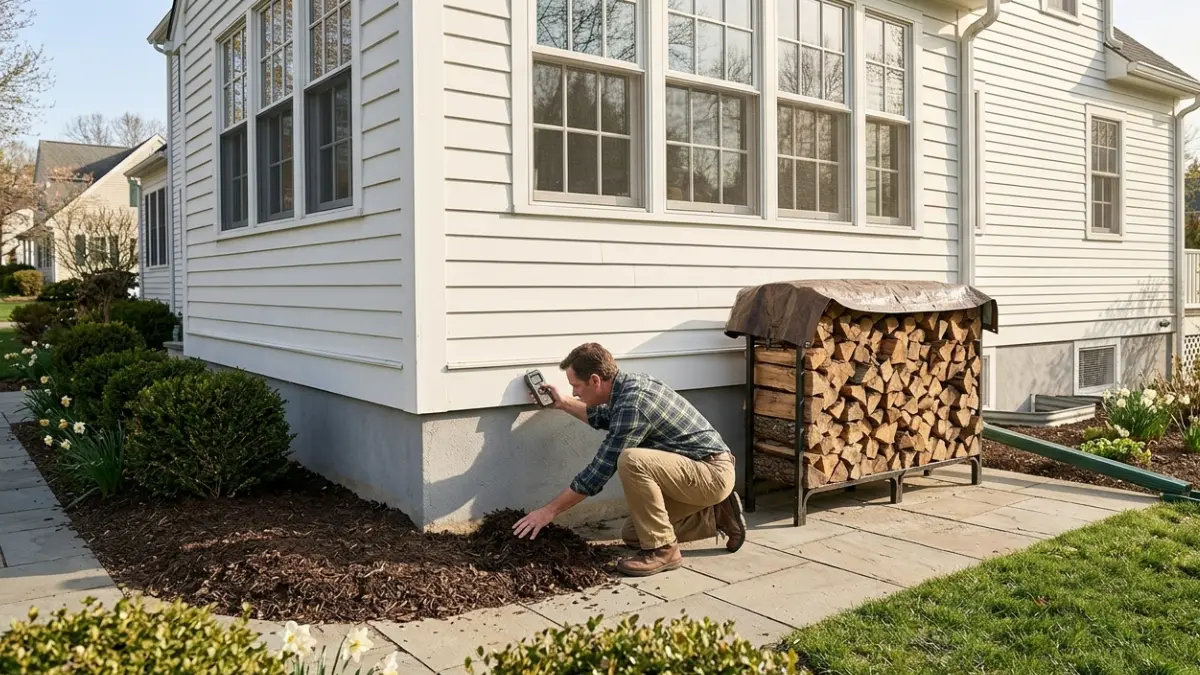
- Eliminate wood-to-soil contact. Wood siding, door frames and window frames should sit at least six inches above ground level. Earth-to-wood contact is a hidden, direct highway into the building.
- Never store firewood, lumber or cardboard against the foundation or inside a crawlspace. It’s food, it’s shelter, and it lets termites bypass treated soil entirely.
- Use mulch sparingly. Termites are drawn to it primarily for its moisture-retaining properties. Keep it off wood siding and away from the foundation.
- Divert water away from the foundation. Downspout extensions and correctly-aimed splash blocks. Aimed the right way — the extension’s own photo caption points out one aimed backwards, which is a mistake more common than you’d think.
- Reduce crawlspace moisture, typically with a plastic vapor barrier over the soil.
- Keep vines, ivy and dense plantings off the house, and remove stumps, dead roots and leftover form boards from around and under the building.
Moisture: the lever you fully control
If you do one thing from this article, do this one. Moisture control is the single highest-leverage, lowest-cost thing a homeowner can do about termites, and it happens to also be the single highest-leverage thing you can do about rot and mold.
A wet crawlspace is an invitation. A dry one is a deterrent. And the equipment to find out which one you have costs about the price of a takeaway.

- HUMIDITY SENSOR: Our handy meter tool can quickly determine what level of remediation is needed to keep your family safe…
- WATER LEAK DETECTOR: Finding the moisture content in your wood or drywall is the first step in early prevention. Continu…
- MOISTURE READER: The mold test features large 0.3″ high digits in a backlit LCD for quick and easy detecting. Our mildew…
🛒 Our Pick — a pin-type moisture meter. We may earn a commission from this link, at no extra cost to you. We have not bench-tested moisture meters, and we won’t pretend otherwise — so here’s the spec that matters instead of a fake verdict: get a pin-type meter (not a pinless surface reader) that measures wood moisture content, and check your sill plates, crawlspace joists, and any wood near a downspout or a leaking fixture. Wood consistently reading high is wood you have a problem with — before you ever see a termite.
If your crawlspace or basement is running wet, a dehumidifier does the structural work that no pesticide can. Our guide to how a dehumidifier actually controls moisture explains the mechanism and the sizing.

- Enhanced Durability & Weather Resistance: Made with 6mil/0.15mm heavy-duty polyethylene, this garden plastic sheeting is…
- Large Coverage Design: With a size of 10ftx100ft (3.05m x 30.48m), this crawl space vapor barrier offers extensive cover…
- Versatile Applications: Ideal for barrier protection, thermal insulation, and seepage resistance, and light-blocking ent…
🛒 Our Pick — crawlspace vapor barrier and downspout extensions. We may earn a commission from these links, at no extra cost to you. Again — not tested by us; recommended because the extension guidance says the job needs doing. A 6-mil polyethylene vapor barrier over crawlspace soil and a set of downspout extensions that carry water at least a few feet from the foundation are the two cheapest structural improvements you can make. Neither kills a termite. Both make your house a worse place to be one.
And while you’re down there: if you find mold — and in a crawlspace wet enough to attract termites, you often will — what crawl space moisture problems actually cost to fix covers the other half of the same problem.
Wood-to-soil contact, mulch, and firewood
These three are worth restating because they are the three most common conducive conditions found on inspection reports, and all three are free to fix on a Saturday.
Pull the mulch back from the siding. Move the woodpile away from the house. Cut the bottom off any wooden lattice that runs into the dirt, and get your deck posts up onto concrete.
The five-minute check to do twice a year
Do this in early spring, before swarm season, and again in autumn.
- Walk the foundation. Look for mud tubes running up the concrete, or up piers, or up the inside of the crawlspace wall.
- Probe suspect wood. The EPA’s suggestion: a flathead screwdriver. Sills, rim joists, the bottom of door frames, anything near a downspout. You’re feeling for softness or hollowness.
- Check windowsills and spider webs indoors for discarded wings.
- Look for frass — small sandy pellet piles under trim, rafters or furniture.
- Check your gutters and downspouts. Water pooling at the foundation is the condition every other item on this list depends on.

- BRIGHT & RECHARGEABLE – The S1000 delivers powerful illumination with 5 modes and a zoomable beam. Powered by CREE LED a…
- DUAL-BUTTON DESIGN – Features two power buttons—one on the side and one on the tail—for convenient operation in any grip…
- USB-C FAST CHARGING – Equipped with two built-in 3.7V 2000mAh lithium-ion batteries, this flashlight charges quickly via…
🛒 Our Pick — a bright flashlight and a telescoping inspection mirror. We may earn a commission from these links, at no extra cost to you. Not tested by us; recommended because you cannot inspect a crawlspace or the back of a sill plate without them. This is the least glamorous $25 in home maintenance and one of the most useful.
✅ Do This: If you find anything on that list — mud tubes, frass, soft wood, wings — do not buy a product. Call a licensed pest control professional, and use the twenty-check decoder before you sign anything.
Termites where you live: risk zones and swarm season
How much of this applies to you depends heavily on your region, and any article that gives you a single national answer about termite season is guessing.
The four termite risk zones, and which one you’re in
The US has a long-standing system for this, and it has more teeth than most homeowners realise.
Termite Infestation Probability (TIP) zones originated from US Forest Service mapping. They matter because they’re not just informational: HUD uses them in setting mortgage-related property requirements, and the International Code Council uses them in the International Residential Code to determine building code requirements for subterranean termite prevention in new construction.
The four levels are Very Heavy, Moderate to Heavy, Slight to Moderate, and None to Slight.
In broad terms: the Southeast, the Gulf Coast, much of California and Hawaii sit at the heavy end. The upper Midwest, northern New England and the Great Lakes sit at the light end. Almost everywhere else is somewhere in between — and “in between” still means termites.
Your zone changes two things: whether a bond is worth the money, and whether a lender will require an inspection when you buy.
When termites swarm in your region
Swarming is when winged reproductives leave a mature colony to start new ones, and it is when most homeowners first discover they have a problem.
The timing is species-specific and regional, and there is no national date.
- Native subterranean termites generally swarm during the day in late winter through spring, often on a warm day after rain.
- Formosan termites swarm at dusk. The LSU AgCenter reports their Louisiana swarm season running from April through June, peaking in early-to-mid May, on warm, humid, windless evenings — and notes they’re strongly attracted to lights, which is why people see them clouding a floodlight or a street lamp.
- Drywood termites typically swarm in late summer and autumn.
📊 Sourced: The LSU AgCenter reports that Formosan subterranean termites in Louisiana swarm April through June, peaking in early to mid-May, flying at dusk on warm, humid, windless evenings — unlike native Louisiana subterranean species, which swarm during the day. Swarm timing varies by state and species; check your own state’s cooperative extension service.
The single most useful distinction, from the same source: a few swarmers drifting in through a vent is not the same thing as swarmers emerging inside your house, or a large pile of shed wings on an indoor windowsill. The second one means an active colony in the structure.
Formosan territory, and drywood country
If you’re on the Gulf Coast, in Florida, Louisiana, coastal Texas, parts of California or Hawaii, you are potentially dealing with Formosan pressure — larger colonies, faster damage, and a shorter window before the damage gets structural.
Coastal California, the Gulf South and Hawaii are also where drywood termites are most common, which is why tenting is a routine sight in those markets and a rarity elsewhere.
What changes about your treatment choice by region
Heavy-pressure regions push the arithmetic toward a repair bond and toward annual professional inspection. Light-pressure regions make a strong case for prevention, self-inspection, and skipping the subscription.
And in mixed regions — much of the South and the Mid-Atlantic — the species you have decides everything, which is why the identification step at the top of this article is worth more than any regional generalisation we could give you.
Buying or selling a house with termites
A termite finding during a real estate transaction is a different problem from a termite finding in a house you already own, because there’s a clock on it and there’s a lender involved.
When a lender actually requires a termite report
It depends on your loan type and your zone, not on national rule.
VA loans require a wood-destroying insect inspection in areas the VA classifies as “Moderate to Heavy” or “Very Heavy” probability, and where the appraiser observes evidence of a possible problem. Because of how the TIP zones fall, that covers a large share of the country.
FHA and USDA loans typically trigger an inspection when the appraiser flags evidence.
Conventional loans generally don’t require one unless the lender or appraiser asks.
That last line is worth pausing on. On a conventional purchase in a heavy-termite region, nobody is legally obliged to look — which means the only person protecting you is you.
What the WDO report is, and what it doesn’t guarantee
The report goes by several names — WDO (wood-destroying organism) or WDI (wood-destroying insect) — and the standard national form is the NPMA-33, though a number of states use their own equivalent.
The report is typically valid for a limited window, commonly cited around 90 days, though this varies by state. Check your state’s rule rather than assuming.
Here’s the part buyers misread: the WDO report records evidence found on the day of inspection. It is not a guarantee against future infestation, and it is not a structural survey.
A clean report means an inspector didn’t find evidence in the accessible areas. It does not mean the house is termite-proof.
Who pays — and what changed for VA buyers
Historically, VA borrowers were not permitted to pay for the termite inspection. That changed: per VA Circular 26-22-11, effective June 2022, the veteran borrower is now permitted — not required — to pay for the inspection, and may also pay for repairs required to meet the VA’s property standards.
Permitted is not the same as obliged. Who actually pays remains a negotiation between buyer and seller, and in most markets the seller still handles treatment because the loan cannot close until it’s done.
What happens if the report comes back dirty
A dirty report does not usually kill the deal. It changes the negotiation.
The lender will typically require treatment, and often repair, to be completed and documented before closing. That means a treatment company gets hired, on a deadline, by someone under pressure.
And that is precisely the moment when people sign a retreat-only bond they haven’t read — because the closing date is in nine days and the pest company’s paperwork is in front of them.
⚠️ Watch Out: Do not let a closing deadline choose your termite contract. Run the twenty-check decoder even in escrow — particularly checks 13 through 20, on the warranty. You are about to own this house for years. The bond outlives the closing.
If mold is also in the picture — and in houses with the moisture conditions termites like, it often is — our guide to handling remediation before you list covers the disclosure side of the same problem.
Whether the seller’s bond transfers to you
Sometimes. Transferability is a contract term, not a legal default, and transfer fees vary.
If the house comes with an existing bond, ask three things before you value it: is it transferable, is it retreat-only or retreat-and-repair, and is the annual renewal current? An expired bond is worth nothing. A retreat-only bond is worth exactly what a retreat is worth.
Termite questions people actually ask
1. How much does termite treatment cost?
Published ranges vary enormously — from Angi’s $75 to $1,750 to ConsumerAffairs’ $1,000 to $3,000 — because termite treatment isn’t priced by the job, it’s priced by the linear foot of your foundation perimeter, adjusted for species, foundation type and region. HomeGuide puts liquid treatment at $3 to $20 per linear foot and tent fumigation at $1 to $4 per square foot. Get three written quotes.
2. What is the best termite treatment?
There is no single best termite treatment, because the species decides the method. Subterranean termites are handled with either a liquid soil barrier or a bait system, both of which work when done properly, while drywood termites cannot be reached through the soil at all and require whole-structure fumigation, heat, or localized injection. Identify the species before you accept any quote.
3. How long does termite treatment last?
It depends entirely on the method. The EPA requires soil-applied termiticides to demonstrate at least five years of efficacy before registration, so a liquid barrier is a multi-year product, while bait systems protect only as long as the stations are monitored and serviced. Fumigation and heat both offer zero residual protection — they kill what is there on the day and nothing after.
4. Can I treat termites myself?
For a home infestation, no — the University of Kentucky’s guidance is that retail and internet DIY termite products will seldom eradicate an existing problem, because the work needs building-construction knowledge to find hidden entry points and equipment homeowners don’t have. The one allowed exception is a small wooden object not attached to the house, like a mailbox post. Prevention, though, is entirely DIY, and it’s the part that matters most.
5. Does homeowners insurance cover termite damage?
No. Standard homeowners policies almost universally exclude termite damage, treating it as a maintenance issue rather than a sudden accidental loss. This is why the termite bond decision matters so much: the pest control contract is the only place financial protection against termite damage can come from, and only if it’s a retreat-and-repair bond rather than a retreat-only one.
6. What is a termite bond, and is it worth it?
A termite bond is an ongoing service agreement — the company inspects annually and re-treats free if termites return, provided you maintain the annual renewal. Whether it’s worth it depends on your regional termite pressure and, above all, on whether the bond is retreat-only or retreat-and-repair. A retreat-only bond buys you re-treatment, not repair, so read that clause before you value the bond at anything.
7. How much does a termite inspection cost?
HomeGuide puts termite inspections at $0 to $250, with many companies offering them free when not tied to a real estate transaction. Inspections for a home purchase, which produce a lender-accepted report, are typically quoted in the region of $75 to $400. A free inspection is customer acquisition, not charity — which is fine, as long as you don’t let the inspector be your only source of quotes.
8. Do I have to leave my house for termite treatment?
For a liquid soil treatment or a bait installation, usually not — but the pesticide label carries a re-entry interval, and you should get it in writing from the applicator. For whole-structure fumigation, yes: everyone and everything living leaves, and you cannot return until the certified applicator has tested the air and issued a written clearance certificate. Never re-enter before that.
9. Is tenting for termites safe?
It is safe when performed correctly and catastrophic when it isn’t — sulfuryl fluoride is a restricted-use pesticide usable only by certified applicators. The EPA’s Inspector General investigated residential fumigation after at least 11 deaths and two serious injuries in California and Florida since 2002, all occurring after the homes had been cleared for re-entry. Never re-enter a fumigated home without written clearance from the applicator.
10. Do termites come back after treatment?
They can, which is exactly why warranties exist. The University of Kentucky notes that re-infestation can happen even when a treatment was performed correctly, and that the standard remedy is free re-treatment provided the annual renewal is maintained. Fumigation and heat carry a particular risk here, because neither leaves any residual protection at all once the job is done.
11. Is spot treatment for termites effective?
For subterranean termites, usually not. The University of Kentucky’s guidance is that localized spot treatments are generally a gamble, and that most reputable firms will not warrant a spot treatment because the termites will likely find another entry point. The standard reputable alternative is a full perimeter treatment plus spot treatment of infested interior areas — and that, companies will warrant.
12. What time of year do termites swarm?
It varies by species and region, and there is no national date. Native subterranean termites generally swarm during the day in late winter and spring, often after rain; the LSU AgCenter reports Formosan termites swarming at dusk from April through June in Louisiana, peaking in early-to-mid May; drywood termites typically swarm in late summer and autumn. Check your own state’s cooperative extension service for local timing.
Before you sign anything
If you’ve read this far, you found something in your house you didn’t want to find, and you’re about to spend real money on it. That’s a bad week, and there’s no way to make it a good one.
But you are now in a genuinely unusual position: you know how the quote is built, you know which two words in the contract decide who pays for the joists, and you have a twenty-item checklist written by federal and state regulators rather than by anyone with something to sell you.
The single most important next step: get three written quotes, and read the warranty section of all three before you read the price. The cheapest treatment attached to a retreat-only bond can turn out to be the most expensive decision you make on this house.
And for anything active, hire a licensed pest control professional and verify their licence directly with your state’s pesticide regulatory office. One phone call. It’s the highest-return twenty minutes in this whole process.
Where to go next
- If you’re still not certain what you’re dealing with, start with identification — the species decides everything else.
- If you’re weighing a bond renewal, re-read the third cost section and find the words “retreat” and “repair” in your own contract tonight.
- If you’re in escrow, run checks 13 through 20 before the closing date runs your decision for you.
Get the Termite Quote Decoder. We’ve put all twenty checks — every one sourced from the EPA or a state regulator — into a one-page PDF you can print and take to the meeting. It’s free, and it’s the version of this article you can hold in your hand while someone is talking.
What we did not do: we did not treat a house, test a product, or perform an inspection. We have no clinical or pest-control credentials, we are not a licensed pest control operator, and we take no money from pest control companies. Where we’ve given you a number, we’ve told you whose number it is. Where we’ve given you a judgment — like the one about retreat-only bonds — we’ve shown you the federal guidance it rests on.
Related Articles
 Termite Treatment
How to Identify Termite Frass and Drywood Droppings
July 15, 2026 Termite Treatment
Termite-resistant wood works only when you buy the right grade
July 25, 2026 Termite Treatment
What termite stakes actually do, and the mistake buyers make
July 24, 2026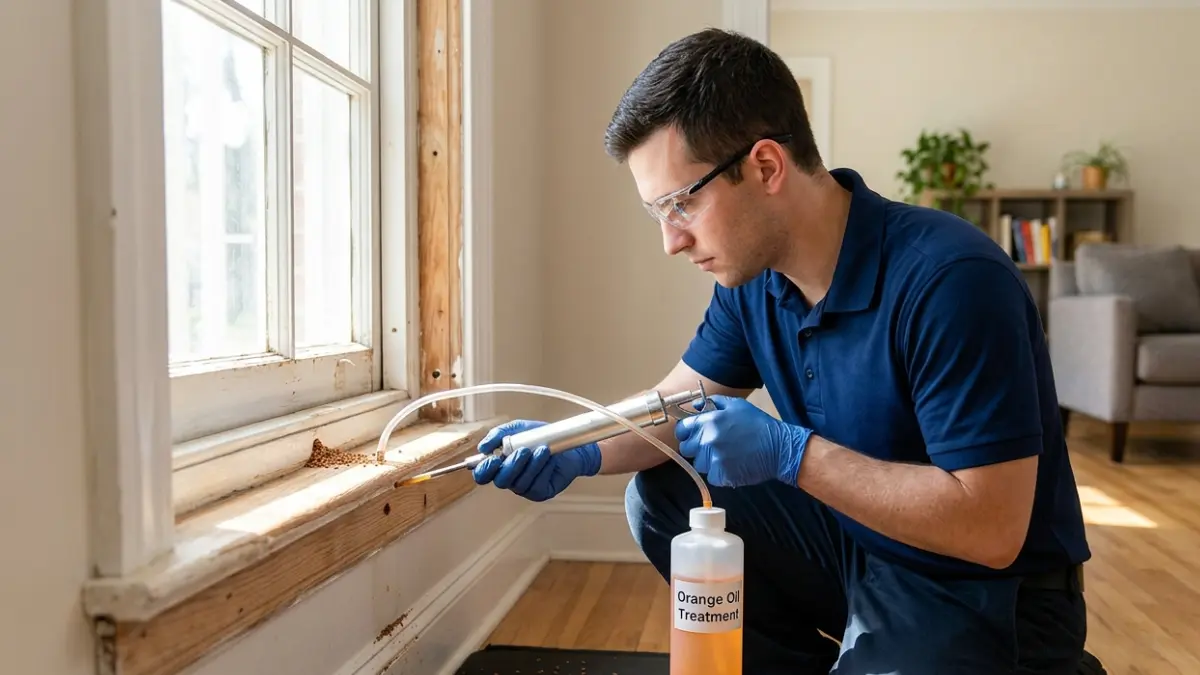 Termite Treatment
What Orange Oil Can and Can’t Do About Termites
July 22, 2026 Termite Treatment
Where Termite Heat Treatment Goes Wrong, and When to Use It
July 22, 2026 Termite Treatment
Crawl space termites and moisture share one common cause
August 1, 2026 Termite Treatment
The overlooked clauses in a termite bond that cost you later
July 27, 2026 Termite Treatment
Termite Swarmers Indoors Often Signal an Active Colony
July 18, 2026 Termite Treatment