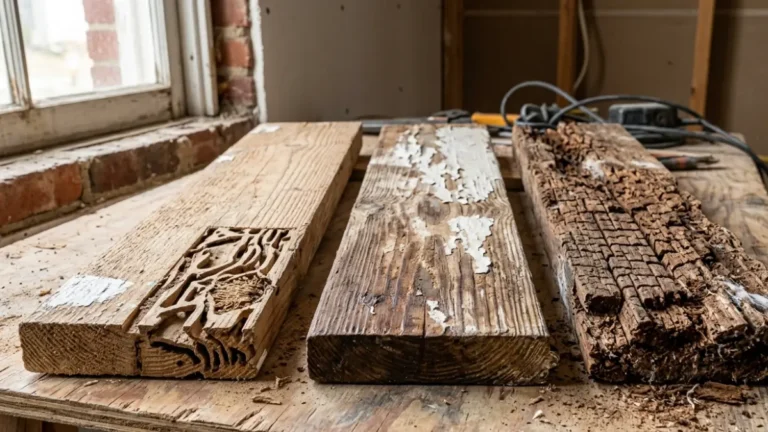
How long does termite treatment take? Hours to months

Termite treatment timelines by method: fumigation kills drywood termites within several days, and termites may take weeks or months to find bait stations.
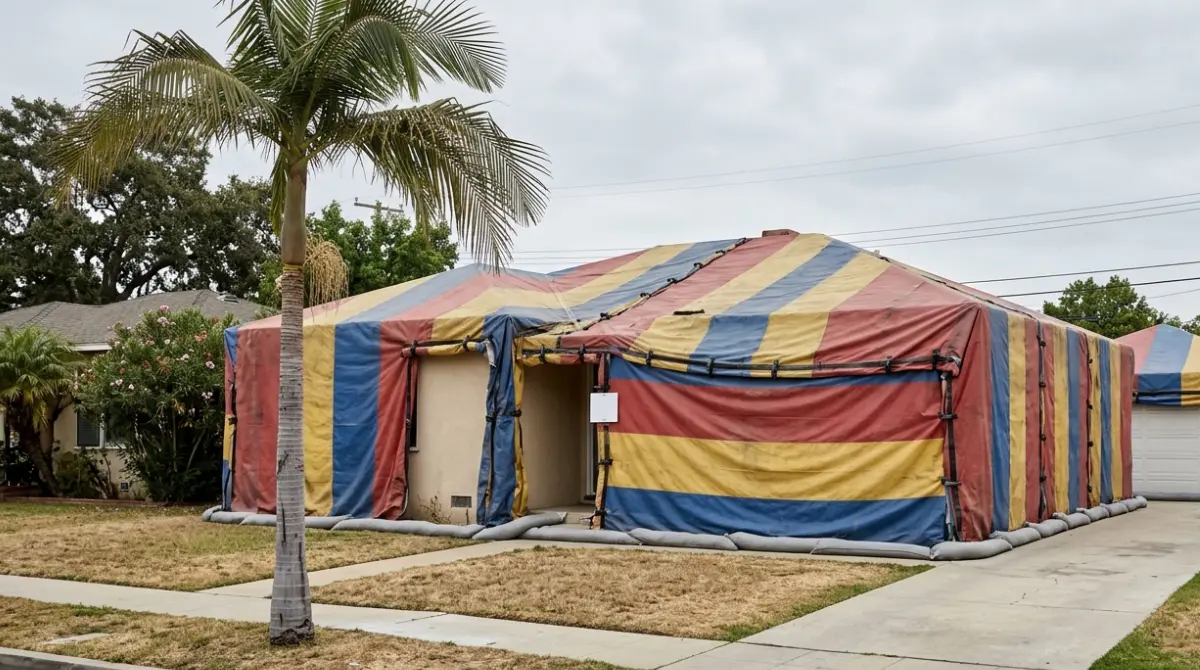
Table of Contents
Termite treatment takes anywhere from a few hours to many months, and the method decides where you land. Heat treatment keeps you out for hours and tent fumigation for days (UC IPM). Bait stations can take months to bring a colony under control (University of Kentucky). A liquid soil treatment sits in between, giving quicker control with fewer service visits than baits alone (Mississippi State Extension).
Which of these you get depends on the termite. Subterranean termites live in the soil and travel up into the house (UK Entomology). Drywood termites nest inside the wood itself and need no soil contact (UC IPM drywood termite notes). Prices for each method are covered in what termite treatment costs and who to call.
The four timelines people mix up
A quote usually tells you how long the crew will be on site. What most people want to know is how long they’ll be away from home and how long until termites stop turning up. Those two numbers sit much further apart than the first one.
| Method (termite) | On the day | Time out of the house | Until activity stops | Protection afterward |
|---|---|---|---|---|
| Liquid soil treatment (subterranean) | Trenching and rodding along the foundation; drilling under adjoining slabs | The label sets no hour count; ask the applicator | Termites inside usually die off once cut off from soil moisture; no day count published | At least 5 years when applied as labeled |
| Bait stations (subterranean) | Stations set in the soil 2 to 4 feet from the foundation, no more than 20 feet apart | None set; the stations are outdoors | Weeks or months for termites to find stations, then months more | Lasts while the stations are serviced under contract |
| Tent fumigation (drywood) | Fumigation runs 6 hours to 1 week (California figure) | Several days, until air checks show 1 ppm or less | Several days | None |
| Heat (drywood) | All infested wood held at 120°F or more for at least 33 minutes | Hours | Once the core of the infested wood reaches lethal temperature | None |
Sources: Kentucky’s termite factsheet, NC State Extension, UC IPM Pest Notes: Drywood Termites, NPIC structural fumigation, California Structural Pest Control Board, Termidor SC label, EPA Reg. No. 7969-210.
How long termite treatment takes to work depends on the method. Fumigation kills drywood termites within several days, and heat keeps the house empty for hours instead of days (UC IPM). With a soil treatment, termites tunneling into treated soil are killed, and those already inside usually die off without soil moisture (ENTFACT-604). Baits are slowest. Termites can take weeks or months to find the stations, then months more before control.
Liquid treatments kill termites as they tunnel through soil
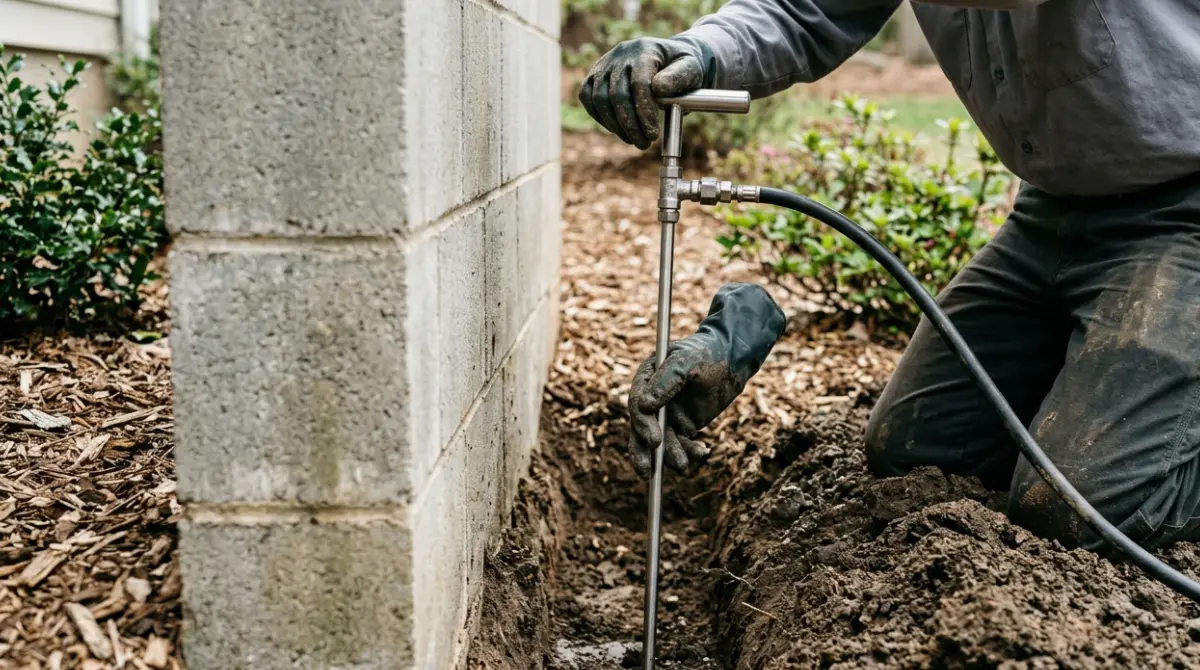
Liquid termiticides in common use today, including fipronil and imidacloprid, are non-repellent. Termites tunneling into the treated soil are killed. Termites already in the building usually die off because they can no longer get back to soil moisture (Kentucky extension). Some of these products kill slowly, and termites that touched them may pass the chemical along to nestmates (NC State). Neither extension source puts a day count on the die-off.
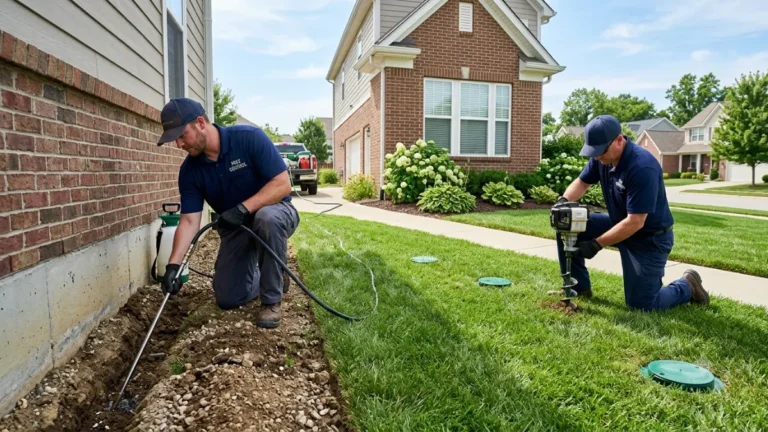
The visit itself is earthwork. The applicator trenches and rods soil along the foundation, then drills through adjoining patios and porches to inject beneath them.
The Termidor SC label (fipronil, EPA Reg. No. 7969-210) allows only protected applicators in the immediate area during application. In crawl spaces, air circulation to untreated rooms stays off until the soil has absorbed the treatment, and drill holes in lived-in rooms must be plugged. The label gives no hour count for coming back in, so ask the applicator which rooms to stay out of and for how long. Other products carry their own labels with their own instructions.
If you are still choosing between this and baits, how liquid treatment and bait stations compare covers the trade-offs. Liquid termiticides are meant to control termites for at least five years when applied as labeled (UKY). The Termidor SC label bars yearly retreatment unless there is evidence of reinfestation or of a disturbed or broken-down treated zone.
Why do bait stations take months?
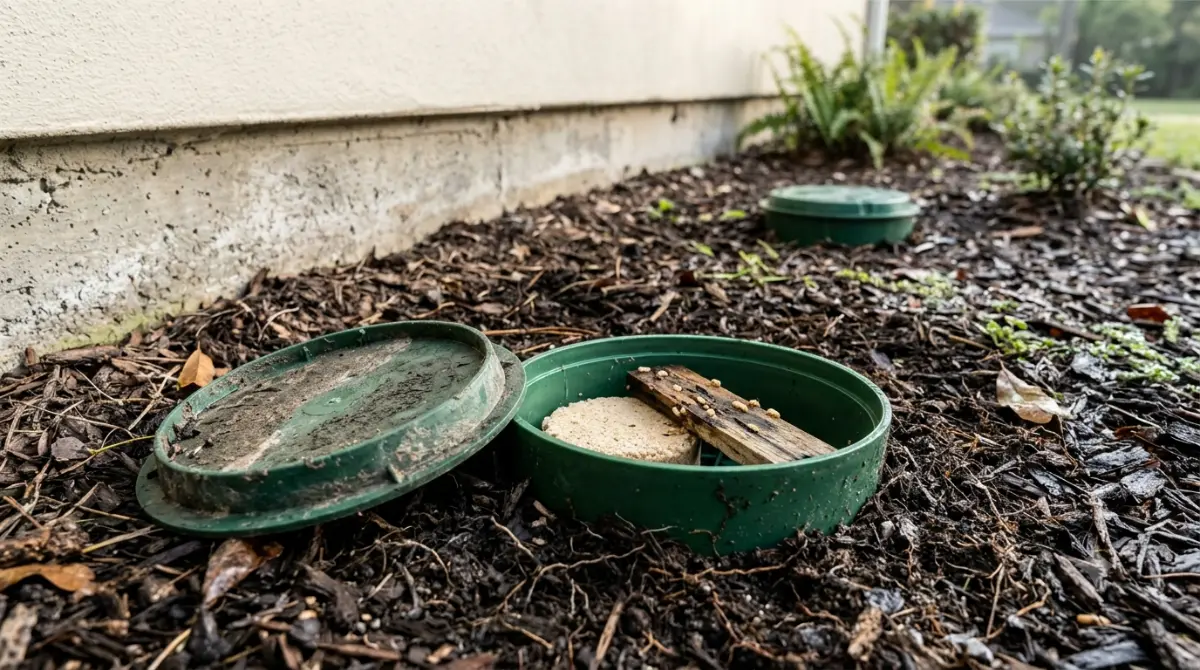
Bait stations don’t attract termites. Workers find them by chance while foraging, and there is no way to predict when that will happen (NC State’s baiting guide). Once workers feed, the slow-acting growth regulators in the bait are meant to spread through the colony. It may take several months before the colony is substantially reduced. Drought slows the start, since termites move deeper or toward moister ground when the soil dries out.
University of California researchers measured the wait. In field plots at a UC Berkeley research station, termites took an average of 367 days to find and feed on newly installed stations. At the study’s homes, no colony recovered from the stations was ever detected again (UC IPM Green Bulletin, Fall 2023). The researchers point to California’s hot, dry summers as one possible reason for the delay, so read that number as a California result.
The company services the stations on a schedule the product label sets, which may be monthly or quarterly. The program runs as long as the contract does (same guide).
Tent fumigation keeps you out for days
California’s Structural Pest Control Board puts a fumigation at six hours to one week, depending on the infestation, dosage, temperature and building size (fumigation Q&A). Sulfuryl fluoride is the main fumigant used in homes (NPIC). It kills drywood termites within several days, and you leave with pets and houseplants while the house is fumigated and then aired out (UC IPM).
After the tarp comes off, fans air the house. The applicator then tests until sulfuryl fluoride is at or below the EPA limit of 1 part per million, and nobody reenters before those checks are finished (NPIC’s fumigation page).
Safety: Sulfuryl fluoride is an odorless, highly toxic gas. That is why fumigators release a warning agent at the start and keep the house secured with posted signs (NPIC). Do not go back inside before the notice of re-entry is posted, even for a minute (California Structural Pest Control Board).
Only certified applicators may use sulfuryl fluoride. Check the company’s license with your state’s structural pest control or pesticide agency. Ask whether the job will be a monitored fumigation, with gas-monitoring lines run inside the house, since that kind has the highest success rate (UC IPM drywood notes). Fumigation leaves nothing behind that protects the wood later. Getting the house ready, from bagging food to opening cabinets, is its own job: what to do before tenting.
Heat treatment for drywood termites
A heat treatment brings all infested wood to at least 120°F and holds it there for at least 33 minutes. The house stays empty for hours rather than days (UC IPM drywood notes). Large beams can take many hours or days to heat through, and wood resting on concrete or tile can stay below lethal temperature. Heat leaves no residual protection either. The trade-offs between heat and tenting are covered separately.
Winged termites after treatment don’t mean it failed
Swarmers that emerge indoors can’t damage wood and live only about a day. A broom or vacuum is enough to clear them (Kentucky’s homeowner FAQ).
Winged termites can still appear after a treatment that is working. NC State Extension notes that a bait system installed in fall against an active infestation may still see swarmers in spring. Part of the reason is that the growth regulators in many baits don’t affect adult swarmers. The same can happen after a liquid treatment done very late in the year (NC State’s baiting guide).
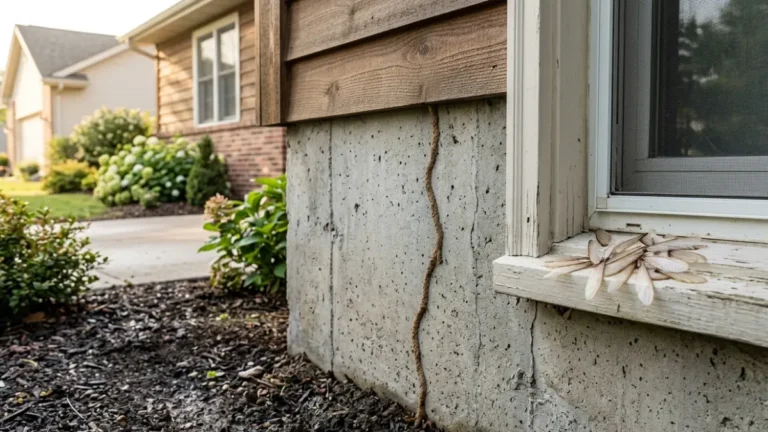
A different pattern deserves a call. If termites swarm and keep infesting the house the year after treatment, the usual cause is an untreated gap in the chemical barrier. Most companies retreat the affected area at no extra charge while the warranty is kept up (UK Entomology). More on what indoor swarmers mean for your house.
Stop and call a professional if: mud tubes reappear on foundation walls or piers, or winged termites keep emerging indoors the season after treatment.
Questions to ask before the treatment date
Termites damage wood slowly. Taking extra time to compare companies generally makes little difference to the damage (ENTFACT-604). Start by checking that the company is licensed by your state’s department of agriculture or whichever agency regulates termite control there. Then ask the person who will do the work:
- Which termite did you find, and why does this method fit it?
- How many visits will this take, and do we need to leave the house? For how long?
- If it’s baits, how often will you check the stations, and will I get a report after each visit?
- When will you check whether the treatment worked?
- What happens under the contract if termites come back?
Get the answers in writing. Retreatment and repair terms come from the contract you sign. The clauses worth reading line by line are in questions to ask before signing a termite bond.