
How to Identify Termite Frass and Drywood Droppings

Termite droppings look like tiny six-sided pellets, not sawdust. Learn the quick roll test that tells them apart—and why a pile isn’t always active.
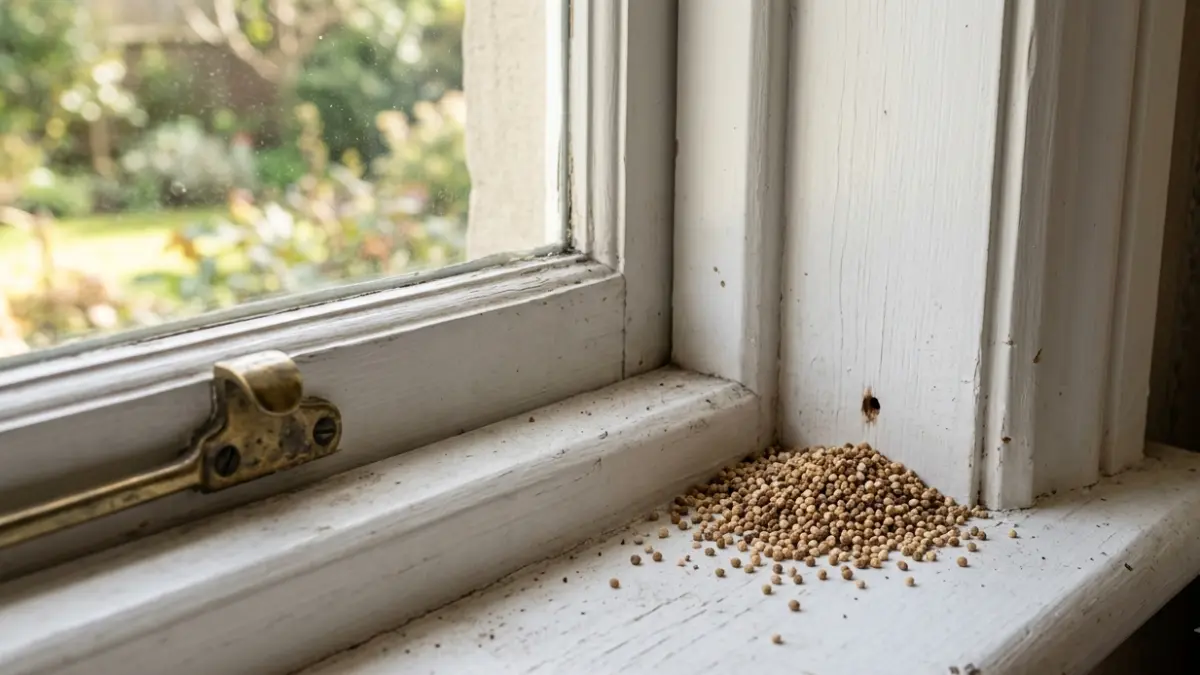
Table of Contents
Those tiny pellets on your windowsill probably aren’t sawdust. If they’re uniform, gritty, and about the size of a grain of sand, you may be looking at termite frass — the droppings drywood termites push out of the wood they’re eating.
This guide is written for a few different readers. If you just found a small pile and want to know what it is, start with the section on what frass looks like. If you’re trying to rule out sawdust or ant debris, jump to the comparison. And if you already know it’s frass and want to know whether the infestation is active — and what to do next — that’s covered too, honestly, without a sales pitch.
The short version: drywood termite droppings are hard, six-sided pellets roughly a millimeter long, ranging from light tan to nearly black. They collect in small piles beneath the wood, and finding them means it’s time for a closer look — not necessarily panic.
What termite frass actually is
Frass is the term for termite droppings — specifically the fecal pellets drywood termites produce as they tunnel through wood. Because these termites live sealed inside the wood they eat, they can’t leave to get rid of their waste the way most insects do.
Why drywood termites push it out
To keep their tunnels (called galleries) clean, drywood termites chew small openings called kick-out holes and shove their waste through them. The pellets then fall and collect on whatever surface sits below.
🔍 Why It Works: A drywood colony lives entirely within a sealed network of galleries. Rather than letting waste pile up in their living space, they push it out through pinhole-sized openings — which is exactly why frass ends up in a neat pile that points you to the infested wood.
Why subterranean termites don’t leave visible frass
Not every termite leaves droppings you can see. Subterranean termites — the most common type in the US — mix their waste into the mud tubes they build to travel between soil and wood, so they don’t leave neat pellet piles.
If you’re seeing mud tubes running along a foundation instead of pellets, you’re likely dealing with a different termite entirely, and one that calls for a different treatment.
What drywood termite frass looks like

- Premium Aluminium Alloy & Glass Lens: Folding magnifying glass with light made of high-quality aluminum alloy material, …
- 10X Magnification & Size: The visual diameter of the lens is 28 mm (1.1inch) with 10X magnification times, folding and s…
- Foldable Magnifier with 2 Led Lights: If you’re eyes are easily strained, but you still want to do some fabric project b…
Up close, drywood termite frass has a distinctive look that separates it from ordinary household debris.
Size and shape
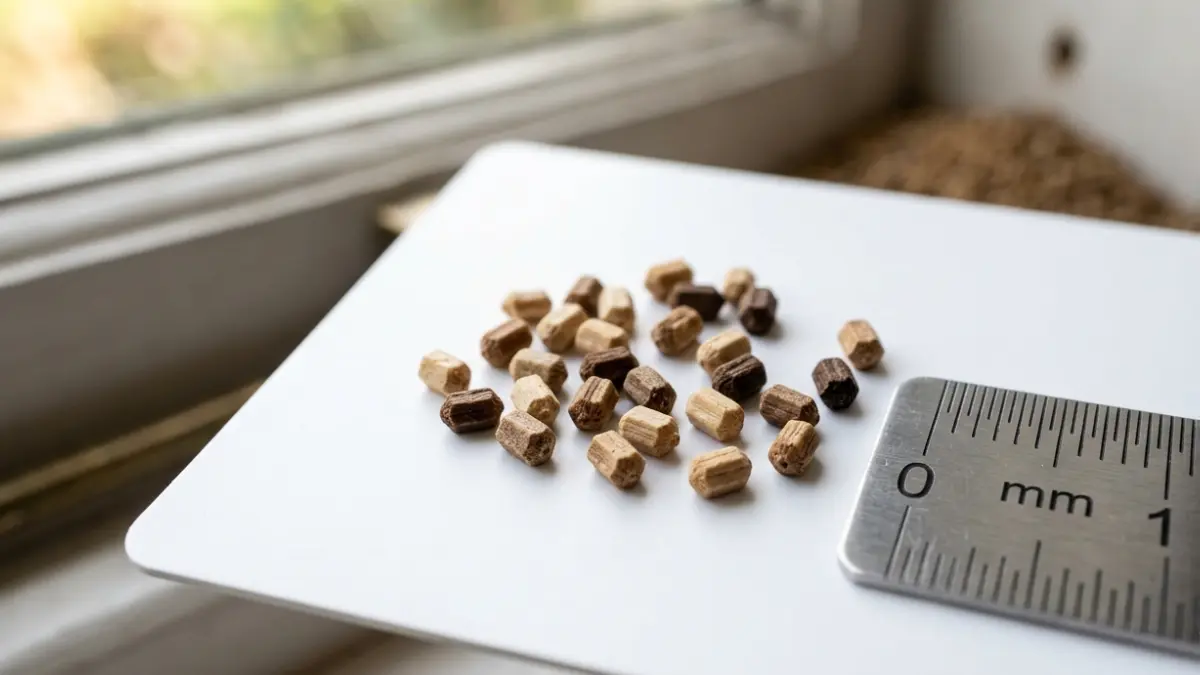
Each pellet is about one millimeter long — roughly a coarse grain of sand — with six flattened sides and rounded ends, giving it a six-sided cross-section. According to the University of California IPM program, these six-sided pellets are diagnostic for drywood termites, meaning the shape alone is enough for an expert to identify them.
📊 Spec: Drywood termite pellets measure roughly 1 mm long with six distinct sides — a shape UC IPM describes as diagnostic for the species. The kick-out holes they come from are typically smaller than 2 mm across.
Color
Frass takes on the color of the wood the termites are eating, so it ranges from pale tan and beige to dark brown and nearly black. A single pile can contain pellets of several shades if the colony is feeding through different layers or types of wood. Color alone won’t confirm frass — shape and texture matter more.
Texture: the roll test
Fresh frass is bone-dry and gritty. Roll a few pellets between your fingers and they behave like fine sand rather than smearing or clumping. That dryness is one of the easiest ways to separate frass from look-alikes like damp coffee grounds.
Where you’ll find termite droppings
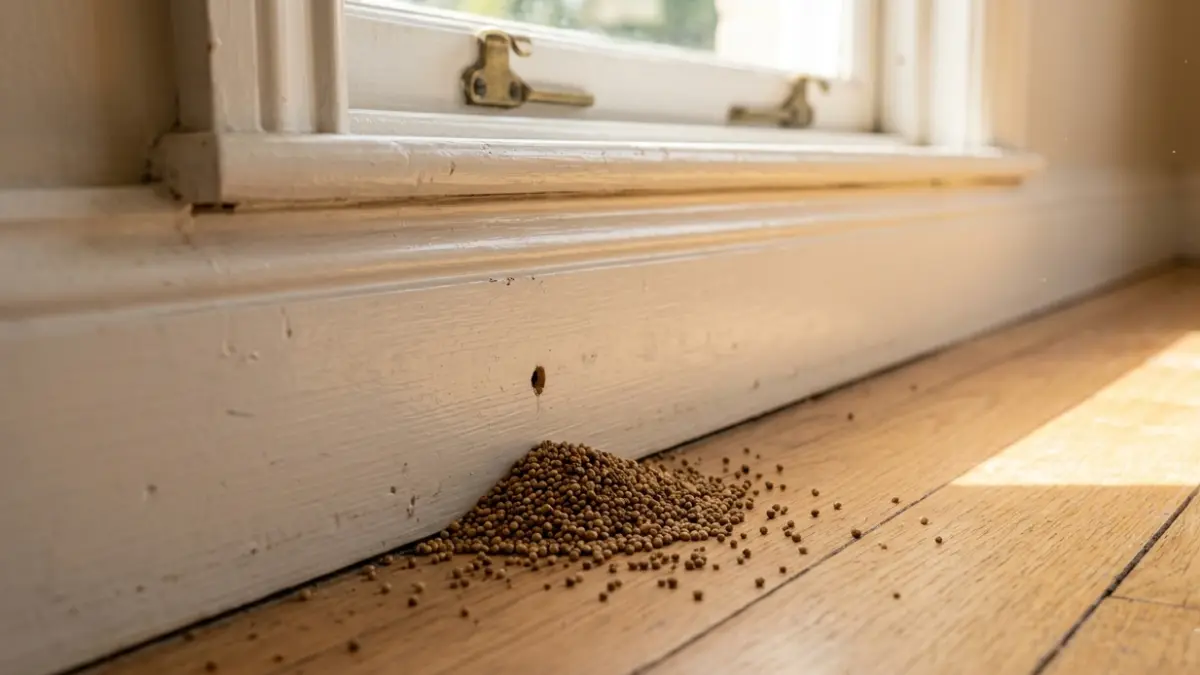
Frass collects on horizontal surfaces directly below infested wood, because gravity does the rest once the pellets leave the kick-out hole.
Common spots to check
The usual places to find termite droppings indoors are:
- Windowsills and window frames
- Baseboards and door frames
- Crown molding and attic beams
- Wooden furniture, shelves, and countertops near exterior walls
Attic infestations often go unnoticed for a long time simply because the frass lands on the attic floor, where no one looks.
Finding the kick-out hole above the pile
Where there’s a fresh pile, there’s usually a kick-out hole directly above it — a pinhole smaller than two millimeters in the wood surface. Finding that hole pinpoints exactly where the termites are working. Frass is only one of several clues; the other early signs of termites include discarded wings and hollow-sounding wood.
✅ Do This: Before you touch the pile, look at the wood directly above it for a tiny pinhole. That hole marks the active spot, and pointing it out to an inspector saves time.
What a fresh pile looks like
A fresh pile resembles a small mound of sand or ground pepper, often no bigger than a coin at first. It builds up gradually, which is part of why it’s easy to miss until it’s well established.
Termite frass vs. the look-alikes
Plenty of household debris resembles termite frass at first glance. A quick comparison usually settles it.
| What you found | What it actually is | Key detail that gives it away |
|---|---|---|
| Termite frass | Drywood termite droppings | Uniform, hard, six-sided pellets about 1 mm long |
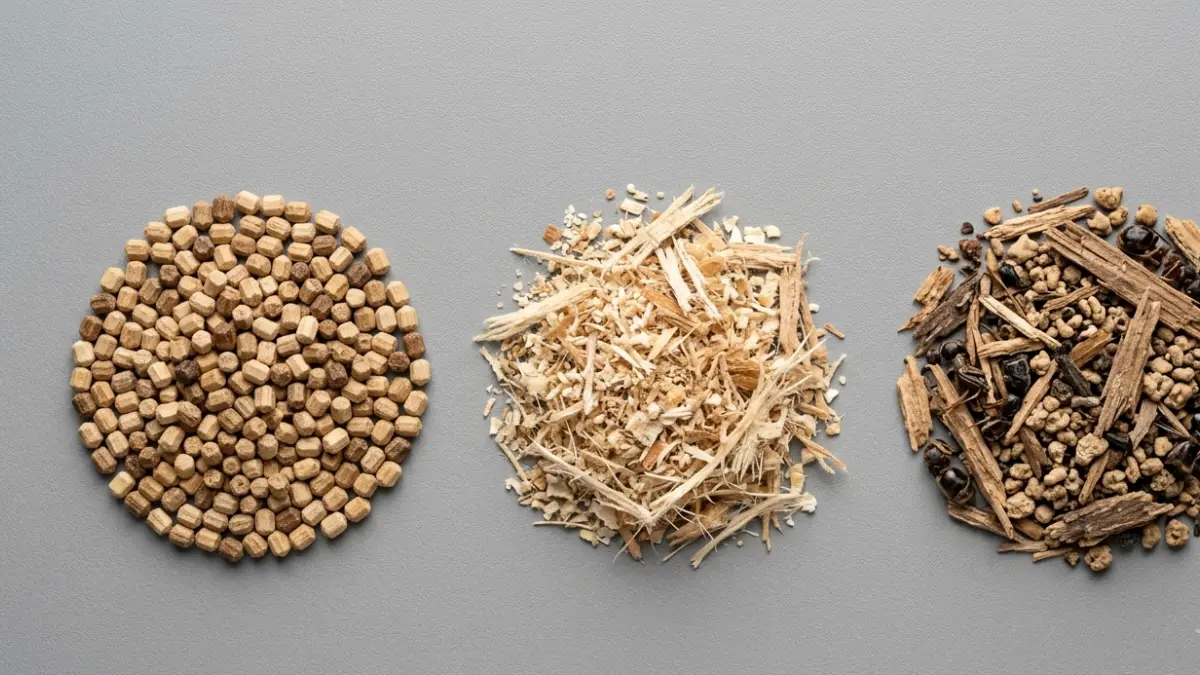
| Sawdust | Wood shavings from drilling or repair | Irregular splinters and fibers, not uniform pellets |
| Carpenter ant debris | Excavated wood plus insect parts | Rough and fibrous, often mixed with soil and body parts |
| Subterranean termite signs | Mud tubes, not pellets | Pencil-width mud tunnels on foundations; no pellet piles |
| Coffee grounds or dirt | Kitchen or household mess | Clumps or smears when pressed; frass stays dry and rolls |
Sources: UC IPM; Orkin; university extension guidance.
Frass vs. sawdust
The giveaway is uniformity. Sawdust is a jumble of splinters and fibers of different sizes, while frass pellets are strikingly consistent — the same shape and size, over and over.
Frass vs. carpenter ant debris
Carpenter ants also push debris out of wood, but theirs is excavated wood, not digested waste, so it’s rough and often studded with soil and insect fragments. If you’re also seeing winged insects, it’s worth learning how to tell flying ants from termites, since the two are frequently confused.
💡 Pro Tip: The dry roll test settles most confusion in one move. Frass rolls between your fingers like sand, while coffee grounds, dirt, and damp debris clump or smear.
Frass vs. subterranean signs
Subterranean termites leave mud tubes rather than pellets, so their evidence looks nothing like a frass pile. Spotting tubes instead of pellets is a strong hint you’re dealing with a different termite and a different fix.
Does finding frass mean an active infestation?

- HUMIDITY SENSOR: Our handy meter tool can quickly determine what level of remediation is needed to keep your family safe…
- WATER LEAK DETECTOR: Finding the moisture content in your wood or drywall is the first step in early prevention. Continu…
- MOISTURE READER: The mold test features large 0.3″ high digits in a backlit LCD for quick and easy detecting. Our mildew…
Here’s where honesty matters more than a quick scare. Finding frass tells you drywood termites have been in that wood — but on its own, it doesn’t prove the colony is still active.
The clean-and-check test
The simplest way to gauge activity is to clean up the pile completely, then check the same spot a few days later. Fresh pellets reappearing in the same place is a strong sign the colony is still feeding above. Both UC IPM and Texas A&M AgriLife’s drywood termite guidance describe this as a practical first check.
Why frass alone can’t confirm it
Pellets can keep trickling out of old kick-out holes long after termites are gone, and building vibration can shake them loose too. That’s why experts are clear that pellets by themselves don’t confirm an active infestation — or reveal how far it extends inside the wood. A confirmed active case means live termites, or fresh pellets after you’ve cleared the old ones.
What frass means for hidden damage
Even a small pile can sit below a much larger problem, because drywood termites tunnel where you can’t see. The visible frass is the tip; the galleries inside the wood are the part that matters, and only an inspection reveals their extent.
What to do if you find termite frass

- Latex-Free & Powder-Free: Our Nitrile Gloves Contain No Natural Rubber Latex And Are Manufactured Without Powder – A Saf…
- Features: Blue Nitrile Has A Smooth Finish For Greater Tactile Feedback And Is The Right Thickness For Most Uses – Finge…
- Bulk Quantity: Conveniently Packaged To Reduce Storage Space While Ensuring A Supply Is Always On Hand – 100 Disposable …
If you’ve confirmed it’s frass, a few simple do’s and don’ts protect both your home and your wallet.
Don’t sweep or vacuum it yet
Leave the pile in place until a professional can see it. An intact pile helps an inspector confirm the species and locate the kick-out hole above it — information you lose the moment you clean up.
⚠️ Watch Out: Don’t seal or paint over the holes, and don’t reach for a can of spray, before an inspection. Sealing hides the evidence an inspector needs, and surface sprays don’t reach the reproductives and workers deep inside the wood.
Don’t seal, paint, or DIY-treat
As the EPA notes in its termite guidance, termiticide application is properly handled by a trained professional. The University of Florida IFAS Extension is equally blunt that controlling an established infestation is generally not a do-it-yourself job.
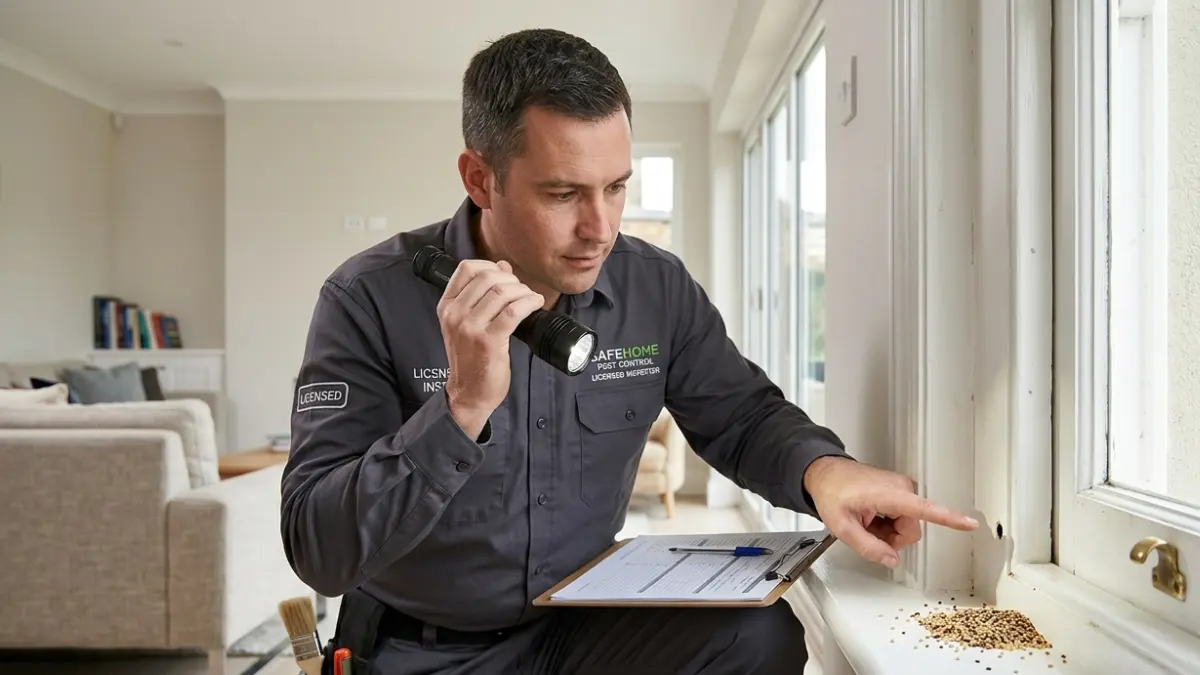
Get a professional inspection
The right next step is a licensed professional inspection. Because drywood and subterranean termites call for different treatments, correct identification matters, and a professional can tell you what you’re actually dealing with. From there, the real options and costs for termite treatment become much clearer.
✅ Do This: Book a licensed pest inspection, confirm the inspector’s license, and ask for the species identification and any treatment plan or warranty in writing.
Termite frass: frequently asked questions
1. What does termite frass look like?
Termite frass looks like tiny, hard pellets about a millimeter long with six flattened sides and rounded ends. It ranges from light tan to nearly black and collects in small piles beneath infested wood. Under a hand lens, the uniform six-sided shape separates termite frass from sawdust or dirt.
2. What color is termite frass?
Termite frass color depends on the wood the drywood termites are eating, ranging from pale tan and beige to dark brown or almost black. A single pile can contain several shades at once. Because color varies so much, the pellet’s shape and dry, gritty texture are more reliable identifiers than color.
3. Is termite frass dangerous or toxic?
Termite frass is not toxic and poses no documented poisoning risk to people or pets, though the pellets can trigger allergy or asthma symptoms in sensitive people. The real concern isn’t the droppings but the termites damaging your wood. If you find frass, wash your hands and schedule a professional inspection.
4. How do I tell termite frass from sawdust?
The difference is uniformity. Termite frass is a pile of consistent, hard, six-sided pellets, while sawdust is an irregular mix of splinters and fibers of varying sizes. Frass is also bone-dry and rolls between your fingers like sand. Ragged wood shavings rather than uniform pellets means sawdust.
5. Does finding frass mean I have an active infestation?
Not necessarily. Finding termite frass confirms drywood termites were in that wood, but pellets can keep falling from old holes long after the colony is gone. To check for activity, clear the pile completely and see whether fresh pellets return within a few days. Either way, a professional inspection reliably confirms whether it’s active.
6. Do subterranean termites leave frass?
No. Subterranean termites mix their waste into the mud tubes they build between soil and wood, so they don’t leave visible pellet piles the way drywood termites do. If you see pencil-width mud tunnels on a foundation instead of frass, you’re likely dealing with subterranean termites, which need a different treatment.
7. Where are termite droppings usually found?
Termite droppings collect on horizontal surfaces directly below infested wood, since the pellets fall once they leave the kick-out hole. Common spots include windowsills, baseboards, door frames, crown molding, attic beams, and wooden furniture near exterior walls. Attic piles often go unnoticed because they land where no one regularly looks.
8. Should I vacuum termite droppings?
Not before an inspection. Vacuuming termite droppings removes the evidence a professional uses to confirm the species and find the kick-out hole. Leave the pile intact until an inspector has seen it. You can clean up afterward — though if the infestation is active, fresh frass will simply reappear in the same spot.
9. How big is termite frass?
Each termite frass pellet is about one millimeter long, roughly the size of a coarse grain of sand. Individually they’re easy to overlook, but they accumulate into small piles beneath kick-out holes that become noticeable over time. A hand lens makes the diagnostic six-sided shape easy to see.
10. What should I do if I find termite frass?
Leave the frass in place, avoid sealing the holes or reaching for a DIY spray, and schedule a licensed pest inspection. Surface products don’t reach termites deep inside wood, and drywood and subterranean termites need different treatments. A professional can confirm the species, gauge the extent, and lay out real treatment options and costs.
- SELF PROPELLED FUNCTION FOR EASY MANEUVERABILITY: EUREKA NEW400 vacuum mop makes cleaning and movement easier than ever …
- SAVES TIME AND EFFORT: Vacuum and wash at the same time. EUREKA NEW400 cordless floor washer is an effective way to clea…
- CONTINUOUS RUNNING WATER CLEANING: Eureka’s dual-tank system keeps clean and dirty water separate, you’re always cleanin…
The bottom line on termite frass
Those little pellets are more informative than they look. Termite frass — hard, six-sided, sand-sized droppings in a pile below the wood — is one of the clearest early signs of drywood termites, and you can now tell it apart from sawdust, ant debris, and everyday dirt.
Finding it isn’t a reason to panic, but it is a reason to act. Clear the pile and watch for fresh pellets to judge whether the colony is active, leave the evidence for a professional, and skip the DIY sprays that can’t reach termites inside the wood. A licensed inspection will confirm what you’re dealing with, and from there the treatment options and honest costs are within reach.
Related Articles
 Termite Treatment
5 Treatments, 3 Real Costs, No Sales Pitch
July 14, 2026 Termite Treatment
Termite treatment cost gaps come down to one hidden number
July 26, 2026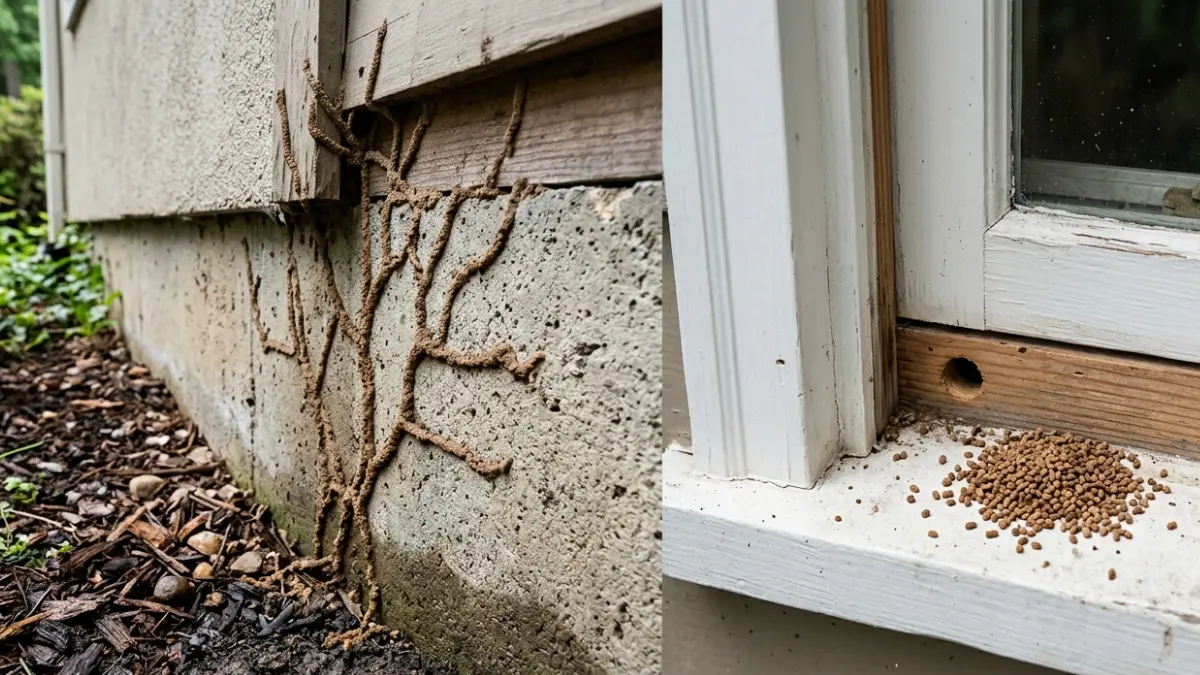 Termite Treatment
Subterranean vs Drywood Termites and the Real Cost to Fix Each
July 18, 2026 Termite Treatment
Termite-resistant wood works only when you buy the right grade
July 25, 2026 Termite Treatment
How to Prepare for Termite Fumigation and Avoid Costly Risks
July 21, 2026 Termite Treatment
Sentricon vs Termidor and How to Choose Without the Sales Spin
July 21, 2026 Termite Treatment
What Orange Oil Can and Can’t Do About Termites
July 22, 2026 Termite Treatment
The overlooked clauses in a termite bond that cost you later
July 27, 2026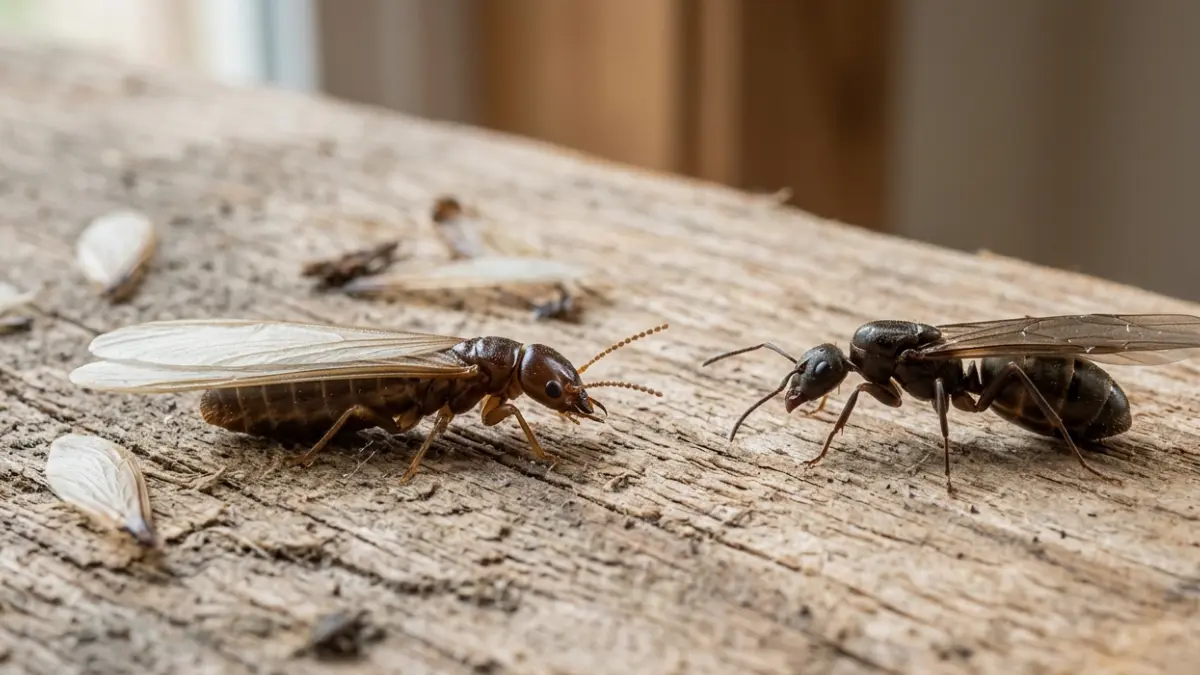 Termite Treatment