
What termite stakes actually do, and the mistake buyers make

Termite stakes kill what finds them — and a 15-stake kit reaches about 150 feet of foundation. Here’s what the label and the FTC record actually say.
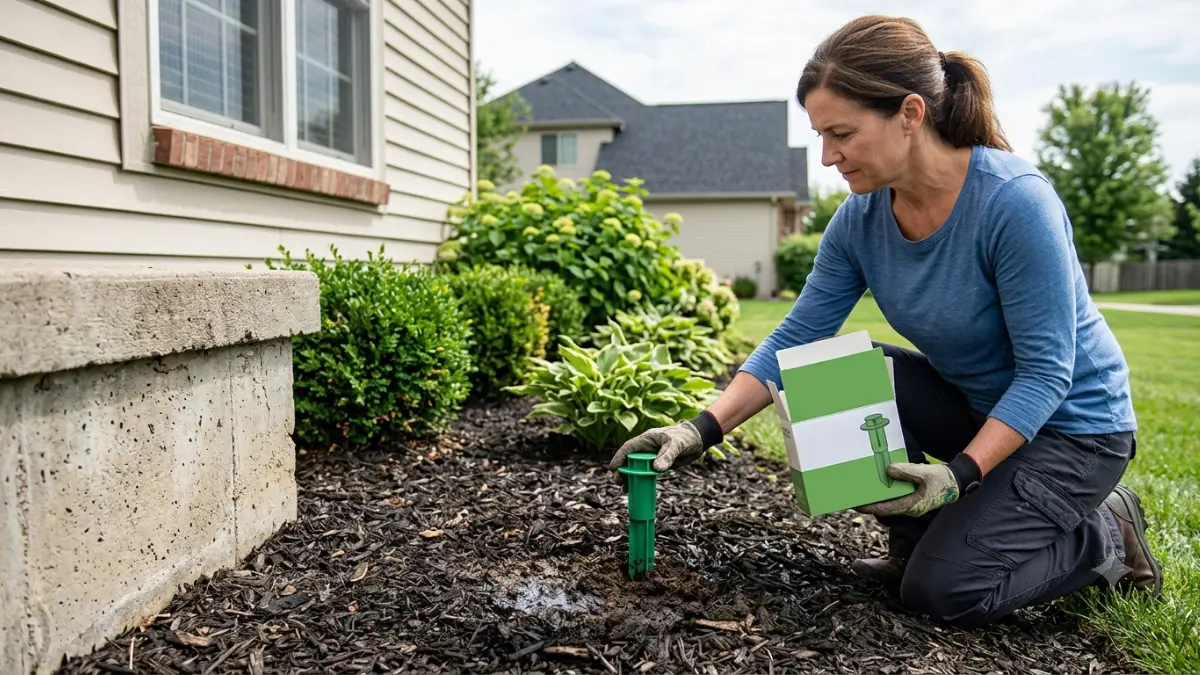
Table of Contents
Do store-bought termite stakes actually kill a colony?
No. Termite stakes sold in hardware stores kill foraging termites that eat the bait, but they are not built to wipe out a colony or protect a house. The manufacturer’s own packaging says so.
Where you are right now decides what to do next:
- Mud tubes, swarmers inside, or hollow-sounding wood? Skip to when to call someone, and book an inspection.
- Shopping ahead of a problem you don’t have yet? Keep reading — there’s one narrow job these stakes do well, and it isn’t the one on the box.
- Already installed a set and had an indicator pop? Go to what a triggered indicator proves.
The short answer, and where it comes from
We aren’t asking you to take our word for it. What follows quotes the current label, the settlement behind it, and university extension guidance.
If you already have signs of termites
Stakes are the wrong tool for an active infestation. Check what you’re seeing against the signs of an active problem, then get a professional in.
ℹ️ Safety Note: Termite stakes are an EPA-registered pesticide, and termite damage is a structural problem. Use any pesticide only as its label directs — using one otherwise violates federal law. This article is general guidance, not a site-specific inspection. If you suspect active termites, hire a licensed pest control operator; licensing and permitted products vary by state.
How a termite bait stake is supposed to work
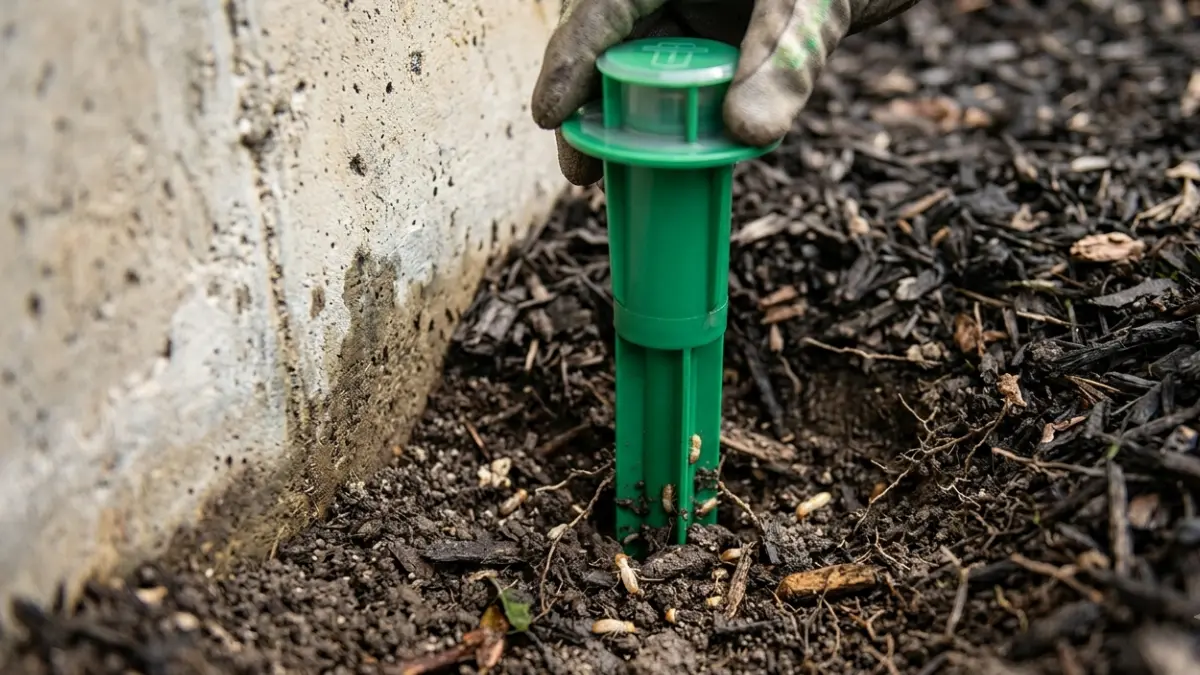
A bait stake is a tube of cellulose treated with a slow-acting chemical, pushed into soil where foraging termites might run into it. Those that feed carry the chemical home and pass it to nestmates. That transfer is the entire theory.
Hexaflumuron: a growth regulator, not a contact poison
The active ingredient in current retail stakes is hexaflumuron at 0.50%, under EPA Reg. No. 9688-299-8845. It interferes with chitin synthesis, according to the National Pesticide Information Center.
🔍 Why It Works: Chitin is what a termite’s exoskeleton is made from. Block its synthesis and the termite can’t complete a moult, so it dies growing rather than on contact — after it has carried the bait home.
Why termites find a stake by accident
Stakes don’t lure anything. University of Kentucky extension entomologists note that termites can’t see or smell buried baits, and meet them largely by chance.
Why the kill is slow
Death typically follows feeding by three to 14 days, which is what lets the chemical spread — and why a stake tells you nothing quickly. See also what retail termite products are actually built to do.
What the label and the regulators actually say
The most useful sentence here is printed by the company selling it: Spectracide states its Terminate products are not recommended as sole protection against termites, and that active infestations need a professional inspection.
Where that sentence came from
In March 1999 the Federal Trade Commission, the District of Columbia and nine state attorneys general announced a settlement with the marketer of Terminate requiring exactly that disclosure on advertising claiming the product kills termites.
What the complaint alleged
Regulators alleged the company lacked substantiation for implying the product alone prevented infestations, eliminated active ones, and matched barrier treatments. They also alleged it failed to disclose that stakes don’t work on drywood termites.
⚠️ Watch Out: A stipulated order is not an admission that any law was broken, and the product has never been recalled. The point is narrower: that warning is the company’s own agreed wording.
What extension entomologists say
The University of Kentucky’s guidance on do-it-yourself termite baits, revised in March 2026, concludes that baiting is best left to professionals — and makes the point most buyers miss: termites feeding on stakes in the yard are no assurance they aren’t also feeding on the house.
How these stakes compare with a professional station
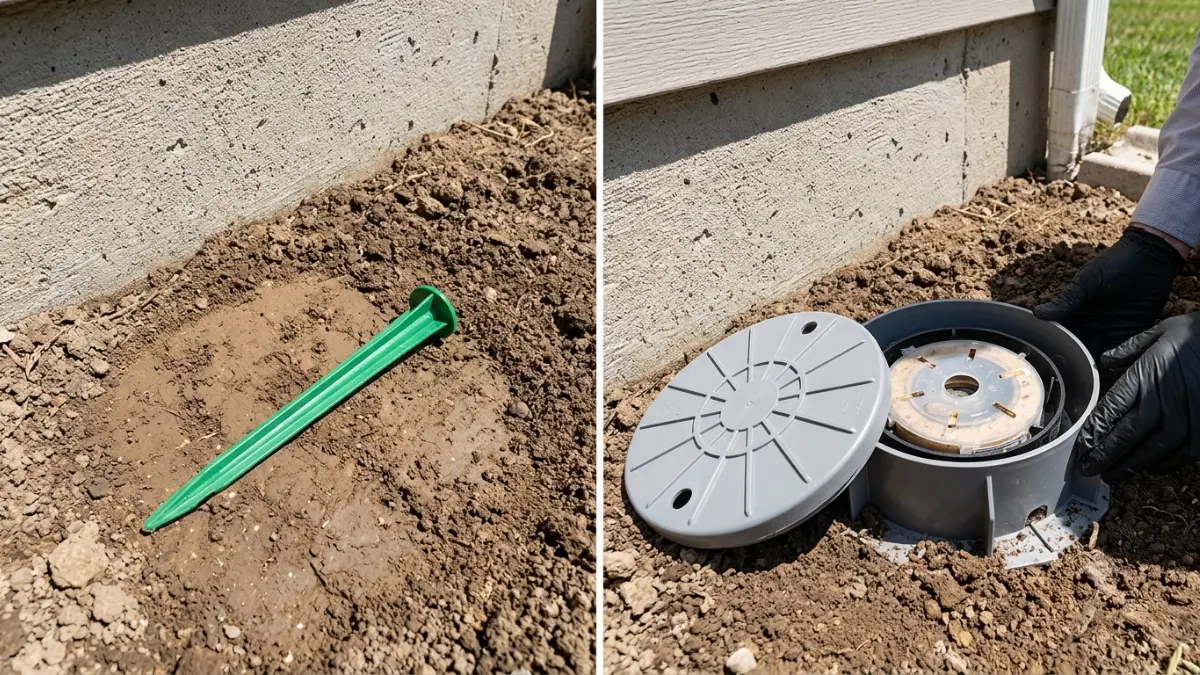
Retail stakes and professional in-ground bait stations share a mechanism and little else. Three differences matter: how much bait sits in the ground, which chemical it carries, and who checks it.
What we have not tested
We didn’t buy a kit, take a stake apart, or weigh anything for this article. Every figure below is published by a manufacturer, regulator or extension service — a sourced comparison, not a bench test.
The comparison
| Retail stake | Professional station | Key detail | |
|---|---|---|---|
| Bait load | Corrugated cardboard roll, tube ~4 in × 1 in | ~100–105 g of bait matrix | UK extension; EPA records |
| Active ingredient | Hexaflumuron 0.50% | Commonly noviflumuron, a later generation | Both are chitin synthesis inhibitors |
| Who checks it | You, quarterly | A technician on a schedule | Label vs. service contract |
📊 Spec: The stake dimensions come from University of Kentucky material describing an earlier Terminate formulation, so the housing may have changed. The station figure comes from EPA records. Neither is ours.
Both approaches are unpacked in how baiting differs from a liquid barrier, and the systems a pro will quote are compared in Sentricon vs Termidor.
How many stakes a house actually needs
The label sets the numbers, and they’re stricter than buyers expect. Spectracide’s own product page puts stakes 2 to 3 feet from the foundation, no more than 10 feet apart, with extras in damp spots — and no more than 20 per home.
The schedule the label requires
Check every three months — monthly in Formosan territory. Find activity and you replace that stake, add three more within a foot, and replace every stake at 12 months.
Coverage, by the label’s own arithmetic
A 15-stake kit at maximum spacing spans about 150 linear feet of perimeter. That’s label arithmetic, not a test.
| Footprint (square) | Approx. perimeter | Stakes at 10 ft | Key detail |
|---|---|---|---|
| 1,200 sq ft | ~139 ft | 14 | One kit covers it |
| 1,800 sq ft | ~170 ft | 17 | One kit falls short |
| 2,400 sq ft | ~196 ft | 20 | At the label’s cap |
| 3,000 sq ft | ~219 ft | 22 | Over the cap — not permitted |
Real houses aren’t squares — bays, garages and decks add footage. Work out your perimeter before assuming one box is enough.
The cost nobody budgets for
Every stake is replaced annually, so the cost repeats. Weigh it against what termite treatment actually costs.
Where these stakes earn their place — and where they do nothing
There’s an honest yes here, and it’s smaller than the packaging suggests. As an early-warning monitor on a soil-contact perimeter — a shed, fence line, deck footing or detached garage — stakes are cheap and better than nothing.

Where they do nothing at all
They do nothing for drywood termites, which never touch soil, so confirm which termite you have first. They also do nothing about termites already inside the structure.
What a triggered indicator proves
It proves termites reached that stake. It doesn’t prove your house is infested, and an untriggered stake doesn’t prove it’s clear. Some buyers report indicators popping from moisture or a corroded ring rather than termites; we haven’t verified that.
🛒 Our Pick: For a monitoring layer around an outbuilding, or alongside a professional program, the 15-count Terminate kit and its 5-count refills are the cheapest option. This is a monitoring recommendation, not a treatment one — we wouldn’t rely on it to protect a house.

- TWO TERMITE PRODUCTS IN ONE: Pop-up indicators detect termite activity, and the stakes kill foraging termites.
- REPLACEMENT STAKES: Includes 5 stakes with locator shields – designed to replace termite stakes already in use with the …
- INSTALLS IN MINUTES: Place stakes in the ground 2 to 3 feet away from your home and no more than 10 feet apart.
Handling them safely, and when to stop and call someone
The safety data sheet lists no hazard pictogram, no signal word and no hazard statements, and rates the product non-irritating to skin and eyes. Low hazard classification isn’t the same as harmless, and the label still carries cautions.
Kids, pets, and where not to put a stake
The label directs you to keep children and pets from playing with the stakes and to wash your hands afterwards. Hexaflumuron is highly toxic to aquatic invertebrates, so keep stakes clear of ponds and anywhere runoff reaches a storm drain.
The signs that mean stop monitoring
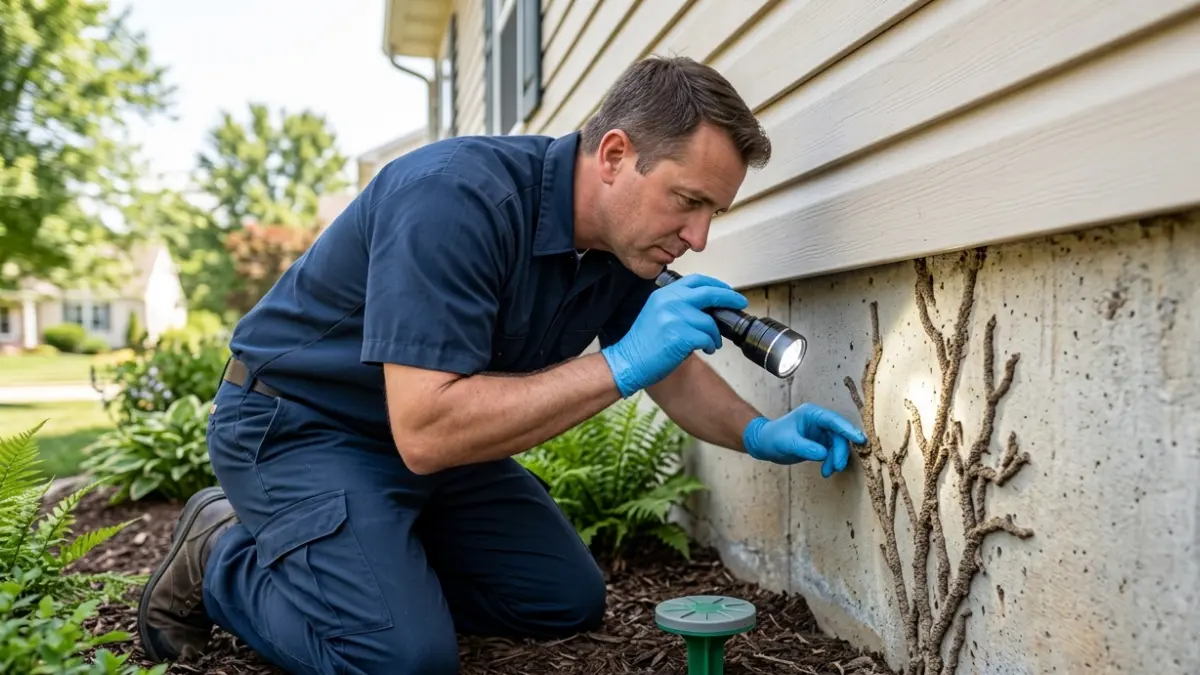
✅ Do This: Book a state-licensed pest control operator — not a handyman — if you see mud tubes on the foundation, swarmers indoors, discarded wings, hollow-sounding wood, or an indicator that keeps triggering. Ask what they’d treat with and what the warranty covers, and check their licence with your state board.

- ALL-DAY RUNTIMES: Flashlight includes two FL1 rated modes that last up to 10 hours
- ON-THE-GO FLOOD LIGHT: Flashlight features an additional array light for larger area coverage with three modes
- HANDS-FREE WORKLIGHT:The magnetic end cap and side-barrel LEDs allow for a convenient, hands-free mounted work light
Retail products carry no damage warranty. Read your own homeowners policy on insect damage rather than assuming you’re covered, and see what DIY termite treatment can and can’t do first.
Termite stakes: your questions answered
1. Do termite stakes kill the entire colony?
No. Termite stakes kill foraging termites that eat the bait, and some chemical transfers to nestmates, but the product isn’t sold as colony elimination. Spectracide’s own wording says Terminate products are not recommended as sole protection against termites. For an active infestation, the label directs you to a professional inspection.
2. How long do termite stakes take to work?
Termites typically die three to 14 days after feeding, because the chemical acts at the moult rather than on contact. That delay is intentional. What it doesn’t tell you is when your house is safe — feeding in a yard stake is not evidence about the structure.
3. How many Spectracide Terminate stakes do I need?
A 15-stake kit covers roughly 150 linear feet at the maximum 10-foot spacing. Most homes above about 1,500 square feet of footprint need more than one kit. The label caps you at 20 stakes per home, so a large or irregular perimeter can’t be fully covered within the rules.
4. How far apart should termite stakes be placed?
The label specifies 2 to 3 feet out from the foundation and no more than 10 feet apart, with extra stakes in damp, termite-favourable spots. Don’t stretch the spacing to make one kit reach further. Using a pesticide outside its label directions violates federal law.
5. What does it mean when the pop-up indicator triggers?
It means termites reached that stake. It doesn’t mean your house is infested, and an untriggered stake doesn’t mean your house is clear — yard activity and structural activity are separate questions. Some buyers report indicators popping from moisture or corrosion, though we haven’t confirmed that.
6. Do termite stakes work on drywood termites?
No. Drywood termites live inside wood and never forage through soil, so an in-ground stake will never intercept them. Regulators specifically alleged the original marketing failed to disclose this. Identify your species first — if it’s drywood, skip stakes entirely and book a licensed inspection.
7. Are termite stakes safe around children, pets and ponds?
The safety data sheet lists no hazard pictogram or signal word and rates the product non-irritating. The label still directs you to keep children and pets away from the stakes and wash your hands after inspection. Hexaflumuron is highly toxic to aquatic invertebrates, so keep stakes away from water.
8. How often do I have to check and replace them?
Every three months as standard, and monthly where Formosan subterranean termites are suspected. If a stake shows activity, replace it and add three or more within one foot. All stakes come out or get replaced at 12 months, making this a repeating annual cost.
9. Can I use stakes instead of a professional treatment?
No, and the manufacturer agrees — Terminate products are not recommended as sole protection, and active infestations warrant a professional inspection. University of Kentucky extension guidance reaches the same conclusion. With mud tubes, swarmers indoors or hollow-sounding wood, book a state-licensed pest control operator rather than waiting on stakes.
10. Are termite stakes worth buying at all?
For one narrow job, yes. As an early-warning monitor around a shed, fence line, deck footing or detached garage — or alongside professional work — they’re cheap and simple. As protection for a house you live in, no. Buy them for what the evidence supports.
What to do next
The verdict is straightforward: these stakes kill foraging termites, which is a different thing from stopping a colony or protecting a structure. The company that makes them says the same, in wording it agreed to use in 1999.
So do two things. Work out which termite you have, because in-ground stakes are irrelevant to drywood species. Then, if there’s any active sign, get a licensed inspection before spending another dollar on retail products.
If there’s no active sign and you want a cheap tripwire around an outbuilding, stakes are a reasonable buy — understanding that they report on themselves, not on your house. To compare real options, start with the five treatments and their real costs.
Related Articles
 Termite Treatment
Termite-resistant wood works only when you buy the right grade
July 25, 2026 Termite Treatment
Knowing where termites in furniture live decides the right fix
August 2, 2026 Termite Treatment
The Fast Way to Tell If Termite Mud Tubes Are Active
July 16, 2026 Termite Treatment
Buying a house with termite damage hinges on one overlooked line
July 30, 2026 Termite Treatment
Termite Swarmers Indoors Often Signal an Active Colony
July 18, 2026 Termite Treatment
The real limits of the best termite treatment you can buy
July 24, 2026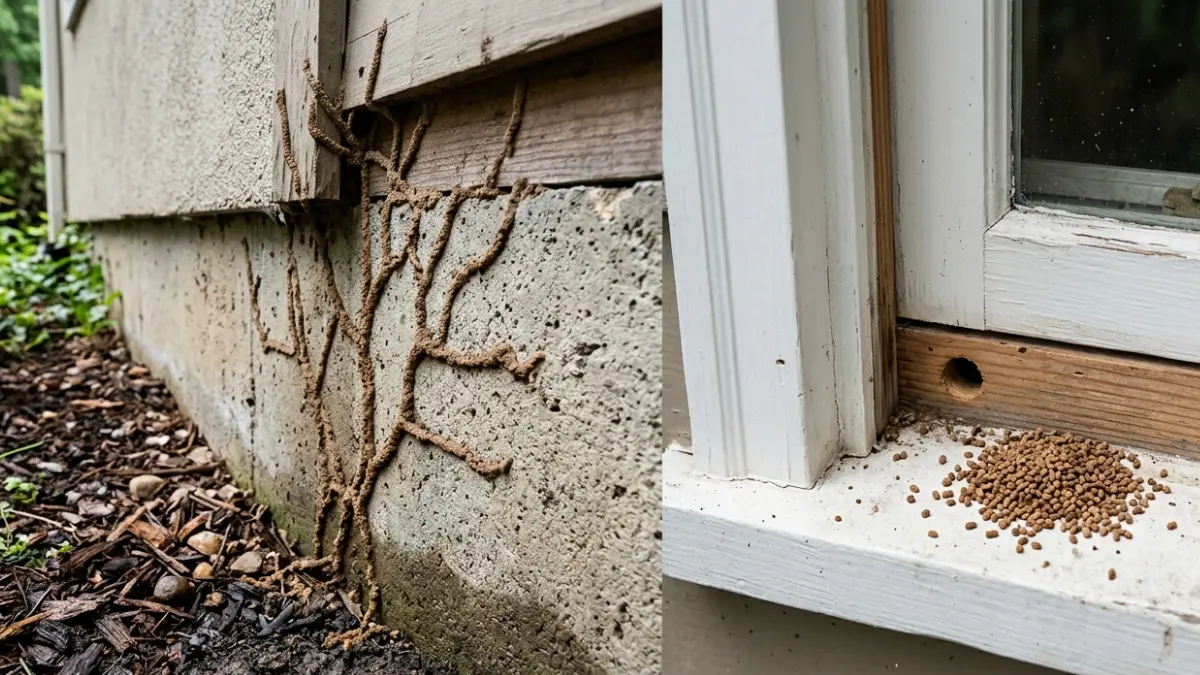 Termite Treatment
Subterranean vs Drywood Termites and the Real Cost to Fix Each
July 18, 2026 Termite Treatment
Crawl space termites and moisture share one common cause
August 1, 2026 Termite Treatment