
How Termite Bait vs Liquid Treatment Compares

Termite bait vs liquid? One builds a fast barrier; the other can wipe out the whole colony over months. Here’s the honest, no-pitch comparison.
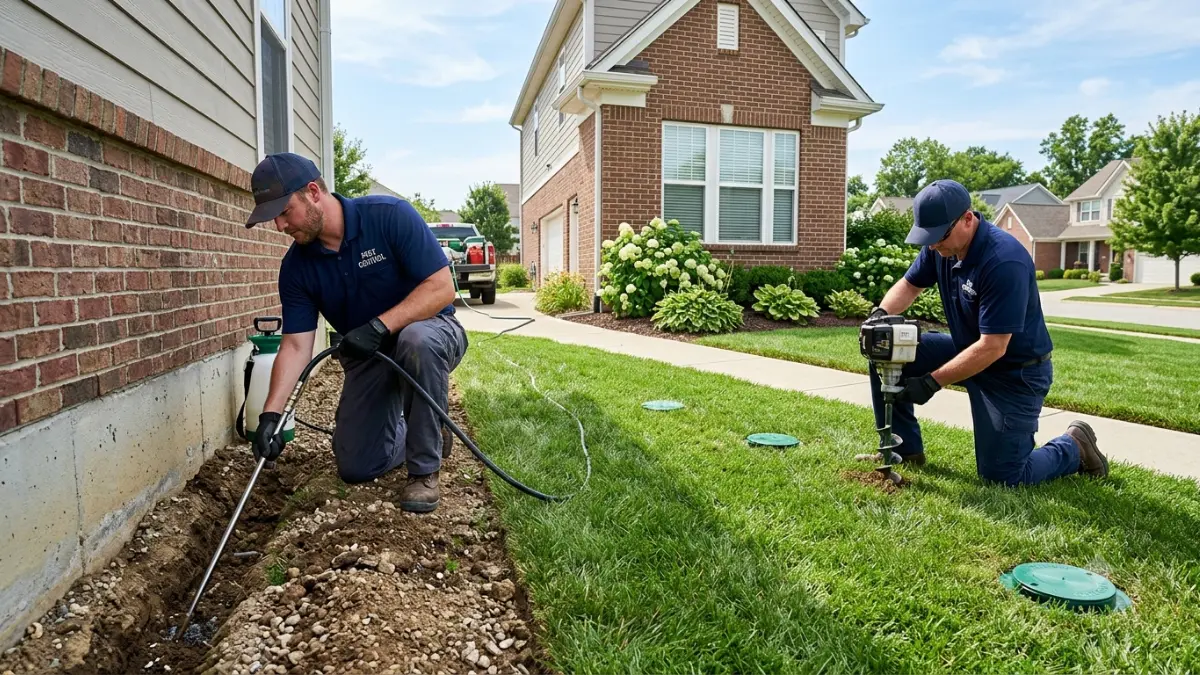
Table of Contents
If you’re weighing termite bait vs liquid treatment, you’ve likely noticed something: almost every guide online is published by a company that installs one method or the other. We sell neither, and every claim below is tied to a named source.
Here’s the honest short version. Neither option is universally better. A liquid barrier protects your structure fast; a bait system can wipe out the entire colony over several months while it keeps monitoring for the pests’ return. Which one is right depends on your situation, and that’s what the rest of this guide sorts out — the way a neutral expert would, not a salesperson.
Quick routing before we dig in:
- Found winged insects inside? Rule out a false alarm first with our guide to termite swarmers appearing indoors.
- Not sure it’s termites at all? Start with the signs of termites and confirm active mud tubes before you spend a dollar.
- Just want the pricing? The real cost breakdown is a few sections down, and our full termite treatment cost guide covers all five methods side by side.
Both of these are professional treatments for subterranean termites, so this is a hiring decision, not a weekend project.
ℹ️ Safety Note: Termite treatment uses EPA-registered pesticides and protects a major structural asset. Everything here is general education, not application instructions — termiticides should be applied by a licensed, state-certified professional following the product label. If you have an active infestation or concerns about children, pets, or exposure, consult a licensed applicator, and contact Poison Control at 1-800-222-1222 for any exposure question.
How liquid barriers and bait stations actually work
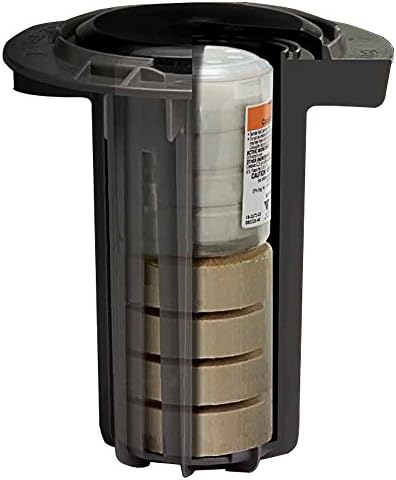
- Includes one CASE of TBS systems: 10 x Advance Termite Inspection Cartdrdge (TIC), 10 x TBS station, 10 x wood block for…
- This bait system functions as a DETECTION tool, and does NOT contain termiticides. Install first to detect if termites a…
- After termites are detected, replace with Trelona cartridges that work with these stations. Trelona is a termiticde by t…
Understanding the two mechanisms is what lets you spot an oversimplified sales pitch, so start here before comparing anything.
Liquid termiticide: a non-repellent soil barrier
A liquid treatment is a termiticide injected into the soil beneath and around your foundation to form a continuous chemical barrier. Modern products are non-repellent, which matters: termites can’t detect the treated soil, so they tunnel through it, pick up a lethal dose, and can carry some back to nestmates. According to the University of Kentucky’s extension guide, the reliable current products are all non-repellent — Termidor and Taurus (fipronil), Premise (imidacloprid), and Altriset (chlorantraniliprole).
The tradeoff is invasiveness. Large volumes of termiticide are applied around the building perimeter, often with drilling and injection through adjacent porches and patios.
Bait stations: a slow colony toxicant
A bait system takes the opposite approach. Plastic bait stations are set into the ground around the perimeter, typically 10 to 15 feet apart, each holding cellulose combined with a slow-acting insecticide that disrupts the molting process. Foraging termites feed, share it with the colony, and die while trying to molt — usually within weeks. Common professional systems include Sentricon, Exterra, and Trelona Advance.
🔍 Why It Works: The bait is deliberately slow. A fast kill would leave dead termites piling up near stations, warning the rest to avoid the area — the delay instead lets the toxicant spread colony-wide, reaching individuals that never touched the bait themselves.
These two methods are built for subterranean termites specifically; if you’re dealing with drywood termites, the approach is different, which we cover in subterranean vs. drywood termites.
Bait vs liquid: speed, coverage, mess, and how long it lasts
Line the two up on the factors that actually drive the decision, and the picture gets clearer.
| Factor | Liquid barrier | Bait system | Best for |
|---|---|---|---|
| Speed | Fast — protection begins right away | Slow — weeks to months to reach the colony | Liquid for urgent or active infestations |
| What it does | Excludes termites from the structure | Can eliminate the entire colony | Bait when killing the colony matters |
| Invasiveness | Trenching plus drilling through slabs/patios; many gallons of product | Minimal disturbance; usually no indoor access needed | Bait for finished spaces and landscaping |
| Residual | Leaves a lasting barrier in the soil | No residual once termites are gone — stations must stay and be monitored | Liquid for lower ongoing effort |
| Upkeep | Periodic re-inspection | Ongoing monitoring, typically quarterly to annually | Depends on your tolerance for visits |
Mechanism and upkeep details per University of Kentucky entomology extension; speed and longevity reflect general industry practice — see cost section for sourcing notes.
Speed and coverage
This is the sharpest split. A liquid barrier works fast and is often the choice when termites are already active or a real-estate deadline is looming. Baiting is patient work — the extension guidance is explicit that weeks or months may pass before termites find the stations, and some feeding and damage can occur before the bait takes hold.
Invasiveness and your landscape
Liquid application disturbs soil and hardscape; bait stations go in with an auger and usually don’t require the technician to come inside at all.
How long each lasts
A soil barrier leaves residual product that commonly holds up for several years, often cited in the roughly 5-to-10-year range depending on soil and product. Baits leave nothing behind once the colony is gone — protection continues only as long as the stations remain in the ground and are monitored.
What termite bait and liquid treatment really cost
The pillar promise applies here: real numbers, no sales pitch. Prices vary widely, so treat these as ranges and get two or three quotes.
| Cost element | Liquid barrier | Bait system |
|---|---|---|
| Pricing basis | ~$3–$20 per linear foot | ~$8–$12 per station / ~$7–$12 per linear foot |
| Typical whole-home install | ~$1,000–$3,200 (some jobs $500–$2,000) | ~$800–$3,500 |
| Ongoing | Largely one-time | ~$200–$500 per year monitoring |
| National single-treatment average | ~$550–$850 across methods | ~$550–$850 across methods |
Ranges compiled from multiple 2026 pricing guides; actual cost varies by region, soil, perimeter length, and company. Re-verify before relying on any figure.
Upfront cost
On day one, a liquid barrier and a bait install can land in similar territory, though bait installs skew higher at the top end because of the hardware and labor.
The ongoing cost most quotes gloss over
Baiting carries an annual renewal for monitoring and re-baiting that a one-time liquid job doesn’t. The extension guide flags a real risk here: because there’s no residual pesticide in the soil once the colony is eliminated, letting a bait renewal lapse leaves the home unprotected.
⚠️ Watch Out: With baits, structural protection depends on keeping the stations in place and monitored. Drop the annual agreement to save money and you’ve quietly removed your protection — there’s no barrier left in the soil to fall back on.
5-year total cost of ownership
Run the math past year one and the shapes diverge. As an illustrative example, a one-time liquid barrier at roughly $1,500 stays near $1,500 over five years, while a bait system at $1,500 to install plus $350 a year in monitoring runs closer to $3,250 across the same span. Cheaper upfront isn’t always cheaper over time — and the reverse can be true too, if a barrier needs retreatment. For context, untreated termite damage is commonly cited at $3,000 to $30,000 or more, and homeowners insurance generally won’t cover it.
Which one fits your home and situation

- [Upgraded Brighter UV Flashlight]: Equipped with upgraded UV 365nm LED bead, the more powerful blacklight makes it easie…
- [Filtered UV 365nm Light with Better Detection Effect]: The filtered uv 365nm ultraviolet light is invisible to human’s …
- [Built-in Rechargeable Battery Powered UV Lights]: The UV 365nm Flashlight is powered by built-in rechargeable battery (…
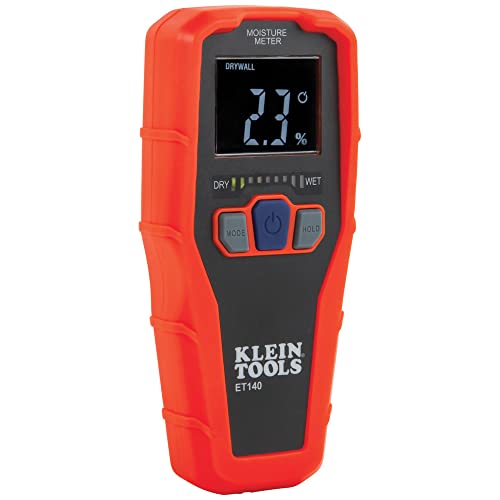
- WATER LEAK DETECTOR detects relative moisture content from leaks and flooding
- PINLESS MOISTURE METER measures relative moisture content in building materials
- NONDESRUCTIVE DETECTION up to 3/4-Inch deep using Electromagnetic field (EMF) technology
Here’s the honest routing, drawn from the extension decision framework and current research.
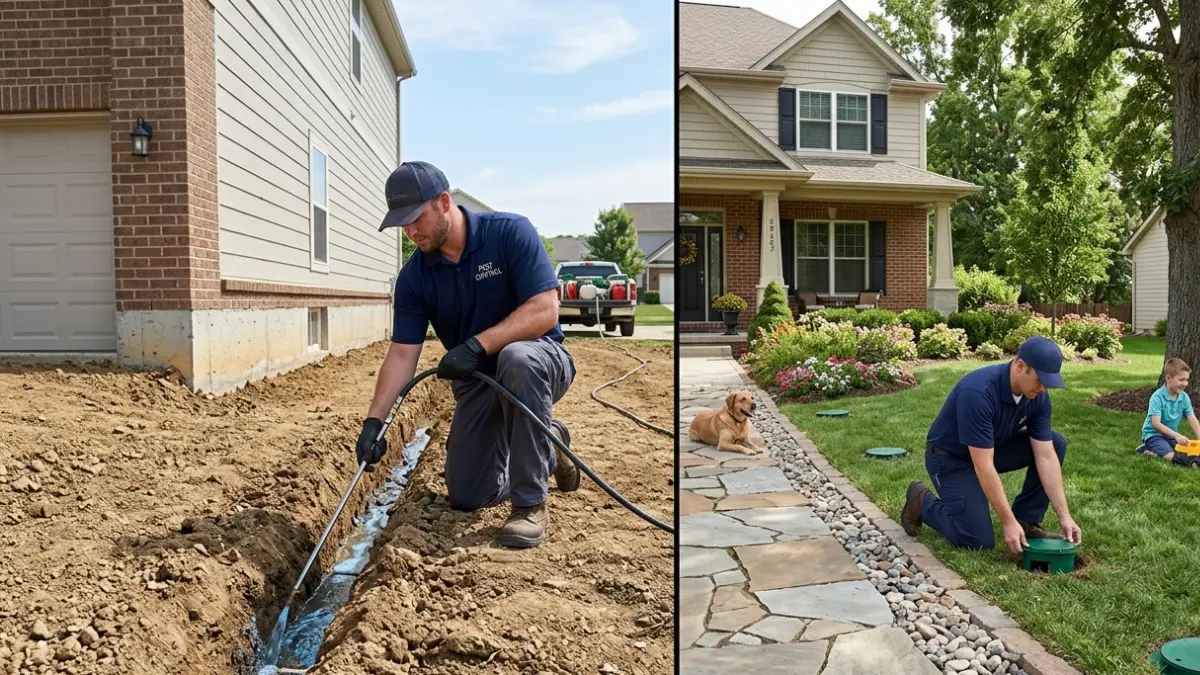
Choose liquid when
- Termites are active and you need protection now.
- You’re mid-sale or otherwise on a tight timeline.
- Your foundation has full perimeter soil access for trenching.
Choose bait when
- You’d rather not have floors or porches drilled or furnishings moved.
- You’re uneasy about pesticide volume — baits use a miniscule amount, confined below ground in tamper-resistant stations.
- Your property has wells, cisterns, nearby ponds or streams, sub-slab heating ducts, or inaccessible crawl spaces that make a liquid barrier hard to apply.
- A previous liquid treatment didn’t solve the problem.
When combining them makes sense (and when it backfires)
Pairing a partial liquid barrier with baits is a recognized approach. But placement matters more than it sounds: a 2024 study in the Journal of Economic Entomology found that bait stations set too close to fipronil-treated soil can sit in a “death zone” where foragers never discover them, undercutting the combination. This is exactly the nuance a single-method vendor rarely raises.
It also helps to remember scale. Extension entomologists note that a single subterranean colony can span up to half an acre and may even be centered in a neighbor’s yard — which is why treating only where you see damage tends to fail.
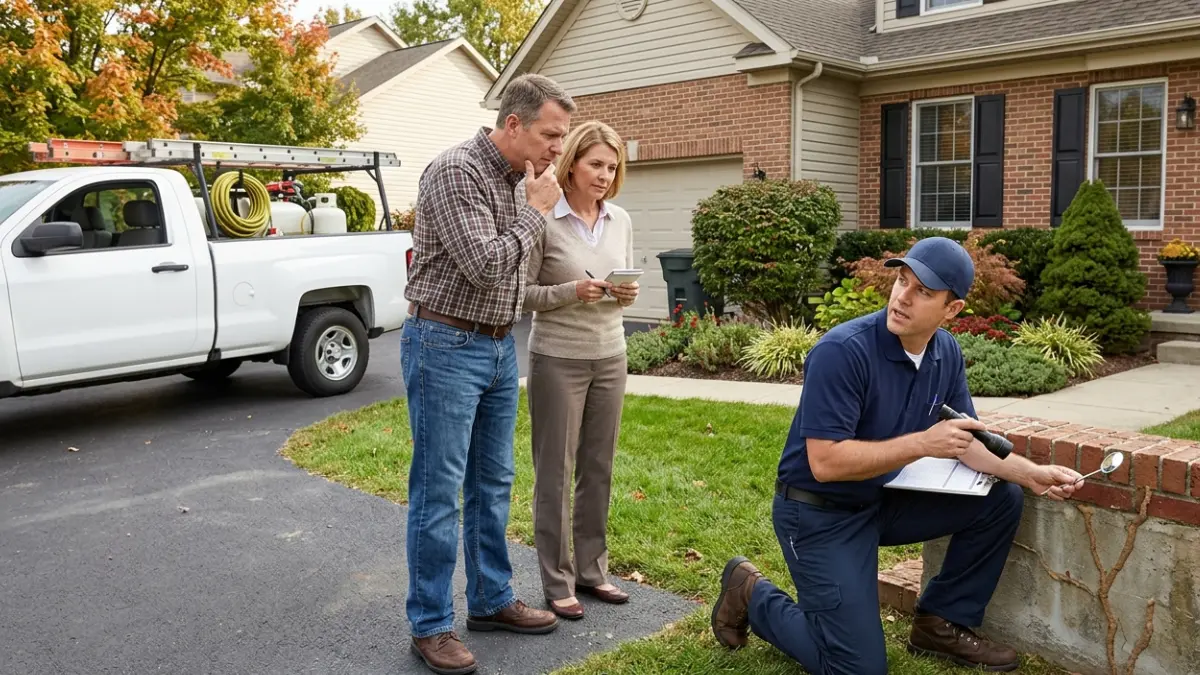
✅ Do This: Before committing, have a licensed, state-certified applicator physically inspect your foundation type and soil. Ask which active ingredient they’ll use, its EPA registration, and how they’ll handle any construction features that complicate a liquid barrier.
Are these treatments safe for kids, pets, and the yard?
This is the top worry for a lot of households, and it deserves a straight, sourced answer rather than either alarm or hand-waving.
The chemicals used and how exposure works
Fipronil, the most common liquid active ingredient, works by disrupting the insect nervous system. Per the National Pesticide Information Center’s fipronil fact sheet, it’s more toxic to insects than to people and pets, and it turns up in many everyday products, including spot-on pet flea treatments. As with any pesticide, follow the label and minimize exposure; for any exposure, call Poison Control at 1-800-222-1222.
Bait stations vs. barriers for pet and child households
The extension guidance notes that baits use only a tiny amount of active ingredient, sealed below ground in tamper-resistant stations — which is why bait systems are often the preferred route for homes with curious kids or pets. Liquid barriers are injected into the soil, and while their health and environmental effects are generally considered negligible, some homeowners still prefer to minimize what’s applied around the house.
Protecting pollinators and the wider yard
Fipronil is highly toxic to honey bees and to some birds, though it shows low toxicity to earthworms. That’s another reason application belongs with a professional who knows how to keep product where it’s needed.
⚠️ Watch Out: Termiticides aren’t a DIY spray job. Improper application can expose your household and non-target wildlife — leave it to a licensed applicator, and ask them how long to keep children and pets off treated soil.
What the independent research actually shows
Strip out the marketing, and one distinction does the most work in this decision.
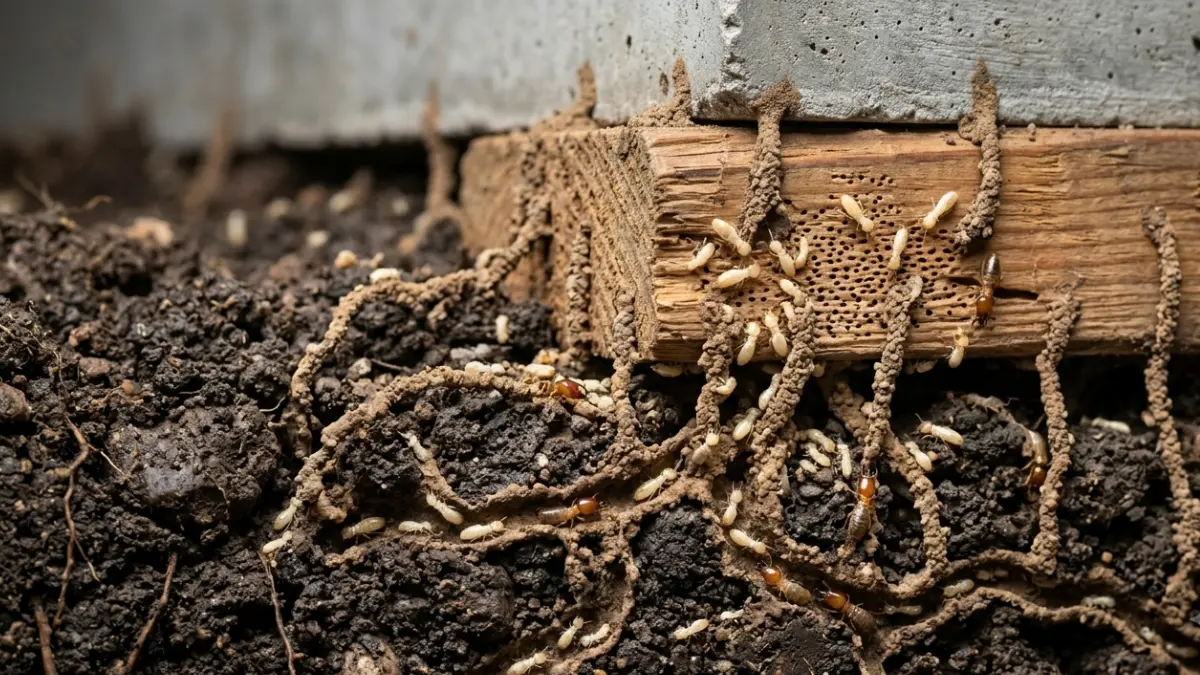
Colony elimination vs. localized exclusion
University of Florida researchers, in work published in the Journal of Economic Entomology, ran a controlled study over long termite foraging distances. Their finding: a chitin-synthesis-inhibitor bait drove whole colonies to near-elimination within about 12 weeks, while a fipronil liquid barrier killed termites only close to the treated soil and left the overall colony size essentially unchanged — the colony simply rerouted around the treated zone. In short, large colonies proved less vulnerable to a liquid barrier than to bait.
What this means for your decision
This is not a verdict that liquid “doesn’t work.” A barrier protects the structure by exclusion, and the extension guidance is clear that eliminating the colony isn’t always necessary for structural protection. The real question is your endpoint: if you just need to keep termites out of the building, a barrier does that; if eliminating a large or shared colony matters — think sprawling or Formosan populations — the evidence favors bait.
💡 Pro Tip: When a company insists both methods “eliminate the colony,” that’s your cue to ask a sharper question. University research consistently separates structural exclusion from colony elimination — they’re different outcomes, and knowing which one you’re buying is the whole game.
Termite bait vs liquid treatment: common questions

- Two termite products IN one: pop-up indicators detect termite activity, and the stakes kill foraging termites
- Installs IN minutes: place stakes in the ground 2 to 3 feet away from your home and no more than 10 feet apart
- Pop-up indicator: check the stakes for termite activity when the pop-up indicator is seen
1. Is bait or liquid better for termites?
Neither is universally better in the termite bait vs liquid treatment decision. A liquid barrier protects your structure quickly, while a bait system works slowly but can eliminate the whole colony and keeps monitoring afterward. Liquid suits active infestations and tight timelines; bait suits sensitive sites, pesticide-averse households, and long-term prevention. The right pick depends on your situation — have a licensed pro inspect first.
2. How much does termite bait vs liquid treatment cost?
Liquid barriers commonly run about $3 to $20 per linear foot, or roughly $1,000 to $3,200 for a whole home, and are largely a one-time expense. Bait systems typically cost $800 to $3,500 to install plus about $200 to $500 a year for monitoring. Ranges vary widely by region and company, so get two or three quotes.
3. How long does liquid termite treatment last?
A liquid barrier leaves residual product in the soil that commonly lasts several years — often cited in the roughly 5-to-10-year range, depending on soil conditions and the specific product. Unlike bait systems, it doesn’t require ongoing monitoring visits to stay effective, though periodic re-inspection is still wise to confirm the barrier is doing its job.
4. Do termite bait stations really work?
Yes. Foraging termites feed on the bait, share it with nestmates, and die while molting, producing a gradual colony decline — and university research shows baits can eliminate entire colonies. Success isn’t automatic, though: it depends on termites finding the stations and on diligent monitoring by an experienced technician, so it’s usually a job best left to professionals.
5. How long do termite baits take to work?
Baits are slow by design. Weeks or months can pass before termites locate the underground stations and distribute the toxicant through the colony, so the full elimination process often takes several months or longer. Some feeding and damage may occur before the bait takes effect, which is why urgent infestations often call for a liquid barrier instead.
6. Can you use both bait and liquid together?
Yes, pairing a partial liquid barrier with baits is a recognized approach. But placement matters — a 2024 study found bait stations set too close to fipronil-treated soil may sit in a “death zone” where termites never find them. If you combine methods, make sure a knowledgeable technician positions the stations away from treated soil so the bait can still be discovered.
7. What is the most effective termite treatment?
It depends on your goal. If you need to keep termites out of the structure, a liquid barrier excludes them effectively. If eliminating the colony matters — especially with large or Formosan populations — university research favors bait, which drove colonies to near-elimination in controlled study while a liquid barrier only excluded termites locally. Match the method to the outcome you actually need.
8. Are termite bait stations safe for pets and children?
Bait stations use only a tiny amount of active ingredient, sealed below ground in tamper-resistant housings, which is why they’re often preferred for homes with pets and children. Fipronil is more toxic to insects than to people and pets, but any termiticide should be applied by a licensed professional following the label. For any exposure, call Poison Control at 1-800-222-1222.
9. What chemical is used in liquid termite treatment?
The most reliable liquid termiticides are non-repellent products the termites can’t detect. Current examples named by university extension include fipronil (sold as Termidor and Taurus), imidacloprid (Premise), and chlorantraniliprole (Altriset). Fipronil is the most widely used; it disrupts the insect nervous system and is applied to the soil to form a continuous barrier around the foundation.
10. Do termite baits require ongoing monitoring?
Yes. Bait stations must stay in the ground and be inspected on a schedule — typically quarterly to annually depending on the system and company. This ongoing monitoring is essential because there’s no residual pesticide left in the soil once the colony is eliminated. Letting the annual renewal lapse leaves the home unprotected, so factor the recurring cost into your decision.
The honest bottom line
The choice between termite bait and liquid treatment isn’t about which is “best” — it’s about matching the method to your situation. Liquid buys speed and a lasting soil barrier that excludes termites from the structure. Bait works slowly but can eliminate the whole colony, at the cost of ongoing monitoring you have to keep paying for. Households with pets, sensitive landscaping, or tricky construction often lean bait; active infestations and tight timelines often lean liquid.
Whatever you choose, start with a licensed, state-certified inspection of your specific foundation and soil, and see how both stack up against the other options in our full termite treatment cost guide. We don’t sell either treatment — the decision is yours to make with good information.
Related Articles
 Termite Treatment
The real work starts where the termite risk map stops
August 5, 2026 Termite Treatment
Termite damage repair cost rests on one costly missing step
July 27, 2026 Termite Treatment
What Orange Oil Can and Can’t Do About Termites
July 22, 2026 Termite Treatment
Termite Swarmers Indoors Often Signal an Active Colony
July 18, 2026 Termite Treatment
Sentricon vs Termidor and How to Choose Without the Sales Spin
July 21, 2026 Termite Treatment
Can You DIY Termite Treatment? An Honest Answer
July 23, 2026 Termite Treatment
Termite treatment cost gaps come down to one hidden number
July 26, 2026 Termite Treatment
Termite-resistant wood works only when you buy the right grade
July 25, 2026 Termite Treatment