
How to Easily Tell Flying Ants From Termites

Flying ants vs termites come down to four features: a pinched waist, bent antennae, uneven wings, and whether a matching pile of wings was shed nearby.
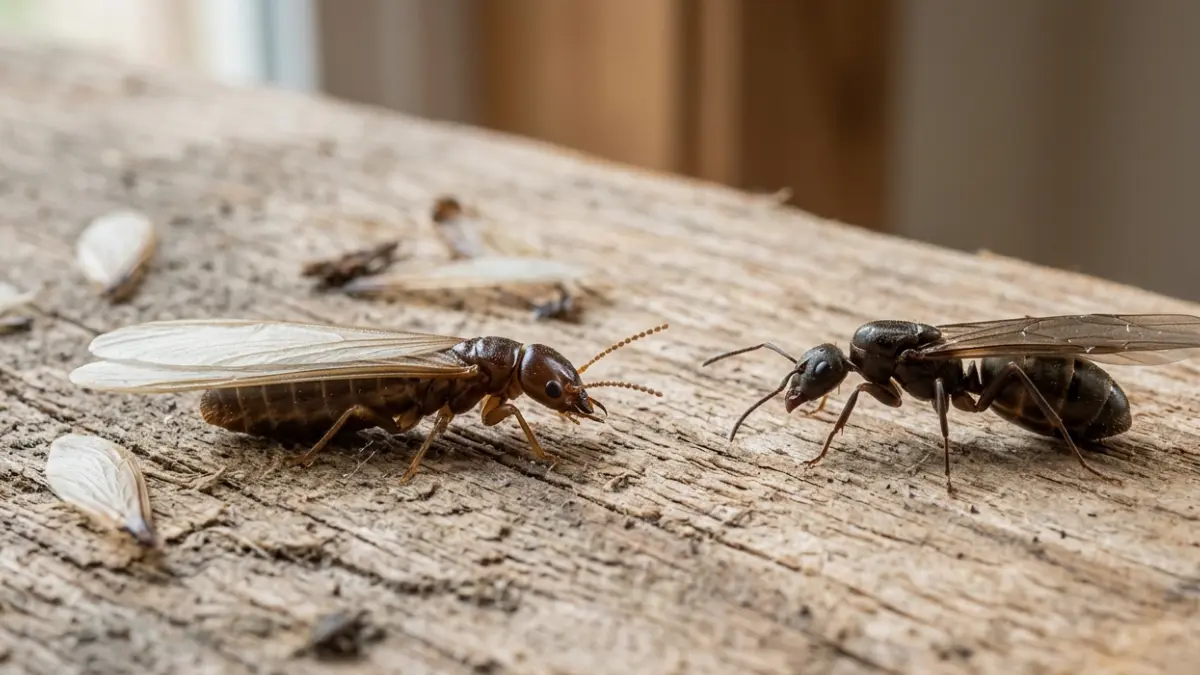
Table of Contents
You found a cloud of winged insects at a window, or a heap of shed wings on the sill, and now you need to know: harmless flying ants, or termites feeding on your house? Most people reading this fall into one of three situations.
If a swarm is happening right now, skip to the four-feature comparison below. If you found wings but no insects, the section on wing piles and mud tubes has your answer. And if you’re just trying to tell the two apart before it becomes a problem, read through — you’ll finish able to identify either one on sight.
The 30-second answer
Check three features and you’ll rarely be wrong: a flying ant has a pinched waist, bent antennae, and front wings longer than its back pair; a termite has a straight, waistless body, straight antennae, and four wings all the same length. One is a nuisance. The other is a structural problem.
Why getting this ID right matters
Flying ants are mostly an annoyance, but termites eat the wood in your home and cause expensive, hidden damage. Calling one the other and doing nothing is the mistake this guide exists to prevent.
ℹ️ Safety Note: This guide helps you identify winged insects; it isn’t a substitute for a professional inspection. If you find or strongly suspect termites, contact a licensed pest professional, and don’t apply pesticides based on a guess — a wrong ID and DIY chemical use waste money and can miss active damage.
The 4 fast differences between flying ants and termites
You don’t need a microscope — good daylight and a steady look are enough, though a magnifier helps with the antennae. Here are the four tells side by side.
| Feature | Flying ant | Termite (winged swarmer) |
|---|---|---|
| Waist | Narrow, pinched — an hourglass shape | Straight, no waist; uniform width head to tail |
| Antennae | Bent, with a clear elbow | Straight, like a string of tiny beads |
| Wings | Front pair longer than the back pair, tinted brown | Four equal-length wings, pale, about twice the body length |
| Shed wings | Held longer; dropped once a nest site is found | Sheds all four soon after swarming, often leaving a pile |
Sources: University of Maryland Extension; Mississippi State University Extension.
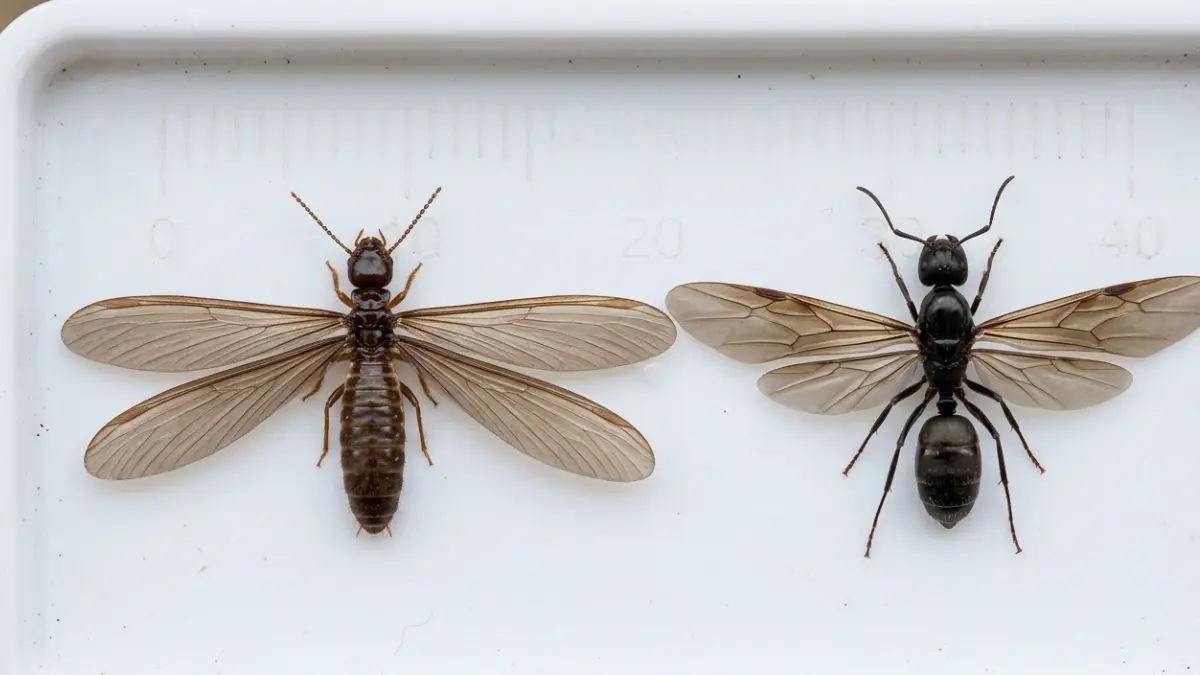
Waist, antennae, wings, shed wings — side by side
Read the columns against the insect in front of you: a pinched waist plus bent antennae plus uneven wings means flying ant; a straight body plus straight antennae plus four matching wings means termite. You can check the descriptions against the University of Maryland Extension’s ant-versus-termite comparison, which uses a USDA reference diagram.
Which feature to check first
The waist is the quickest and hardest to misread, so start there. Wings are useful but easiest to get wrong, since both insects fold two overlapping pairs over the back.
💡 Pro Tip: Extension guides consistently point to the waist as the fastest single tell — if you check only one feature in a hurry, make it that one.
Color: why it’s the unreliable tell
Both insects tend to look dark, and the ranges overlap: ants run black, brown, or reddish; termite swarmers are blackish-brown to black. Because those ranges cross, color alone can’t separate them — use the waist, antennae, and wings.
How to check the four features on a real specimen
- Double magnifying glasses bug viewer: the bug jar provides double magnifying lens, a special and safe observational feat…
- Creative hole design: if you worried that insects can’t breathe insides, our insert bug viewer solves this problem well;…
- Multi-purpose this insert bug viewer has educational significance and accurate appearance, so it is suitable for many ki…
The features are easiest to judge on one insect you can hold still and light well, so capture a single specimen rather than squinting at a moving swarm.
Catch one without destroying it
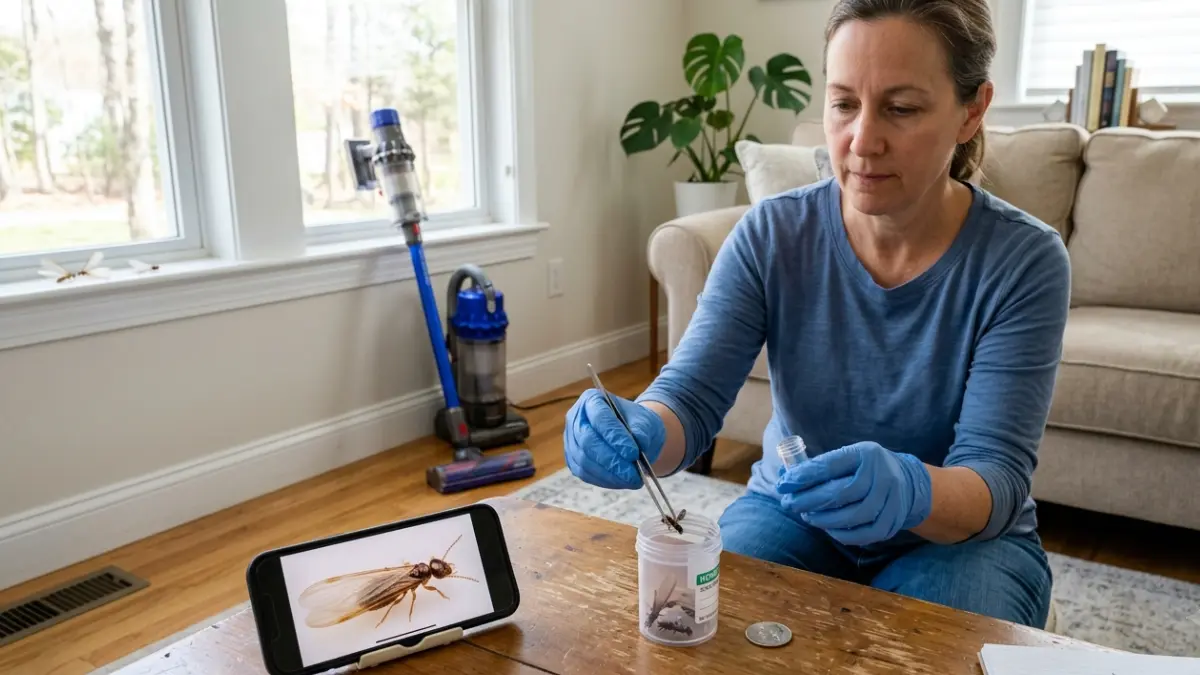
Trap one under a clear jar or in a zip bag, or vacuum up a few and empty the bag outdoors. Don’t crush it — crushing flattens the waist and snaps the antennae you need to see.
⚠️ Watch Out: Reaching for aerosol spray is the common reflex and the wrong one. It scatters swarmers, makes the source harder to trace, and does nothing about a termite colony hidden in the wood.
What to actually look at (and in what order)
- ADVANCED CALIPER CAPABILITIES: Mitutoyo’s ABSOLUTE Digimatic Caliper provides a 6″/150 mm measuring range with +/- 0.001…
- PRECISION MEASUREMENT PERFORMANCE: Engineered with Mitutoyo’s ABSOLUTE encoder, this caliper delivers stable, high-accur…
- DURABLE STAINLESS STEEL BUILD: Built from hardened stainless steel with precision-ground guide surfaces, the 500 series …

- Professional LED Magnifying Glass with Real Glass Lens: This 4.3″ magnifying glass is designed with a clear, distortion-…
- Adjustable Lighting with 3 Color Modes: Featuring 72 high-brightness LED lights with a maximum of 10W & 1500 lumens, thi…
- Versatile 2-in-1 Desk Lamp & Clamp Light: Equipped with a weighted base and C-clip, you can use this magnifying glass as…
Check the waist first, then the wings (equal length or not?), then the antennae (bent or straight?). A magnifier or your phone’s zoom makes the antennae bend obvious at a glance.
Get a photo an expert can confirm
Photograph the insect next to a coin for scale, and chill it briefly to stiffen it and hold the features in place. A sharp, scaled photo lets a local extension office or a pest professional confirm the ID for you.
✅ Do This: Keep one intact specimen and one scale photo before you clean up — that’s the difference between a confident ID and a guess you’ll second-guess later.
Beyond the bug: wing piles, mud tubes, and damaged wood
Identifying the insect tells you what you’re looking at; the next signs tell you whether a colony is actually at work in your home.
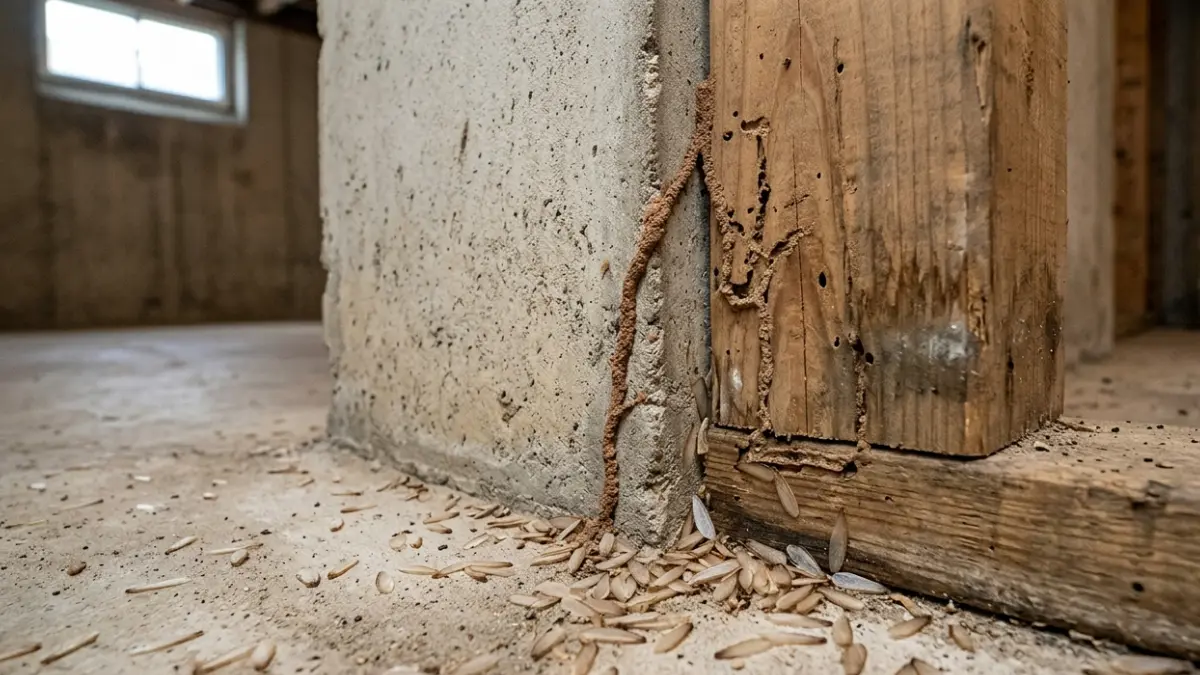
Why a pile of matching wings points to termites
🔍 Why It Works: Termites pair off and shed all four wings soon after landing, so a small heap of same-size shed wings near a window, door, or light is a strong termite signal. Scattered wings are weaker evidence, since flying ants shed theirs too — just later and fewer.
Mud tubes and hollow-sounding wood

- HANDS-FREE RECHARGEABLE LIGHT: One 2-pack of Eveready HDLLP LED Rechargeable Headlamps, offering bright, hands-free ligh…
- LED HEADLAMP WITH RED LIGHT OPTION: Choose from three different LED light modes to customize brightness and maximize run…
- 5X BRIGHTER THAN STANDARD LED TECHNOLOGY: Puts off up to 200 lumens of light on High, with a beam distance of up to 50m;…
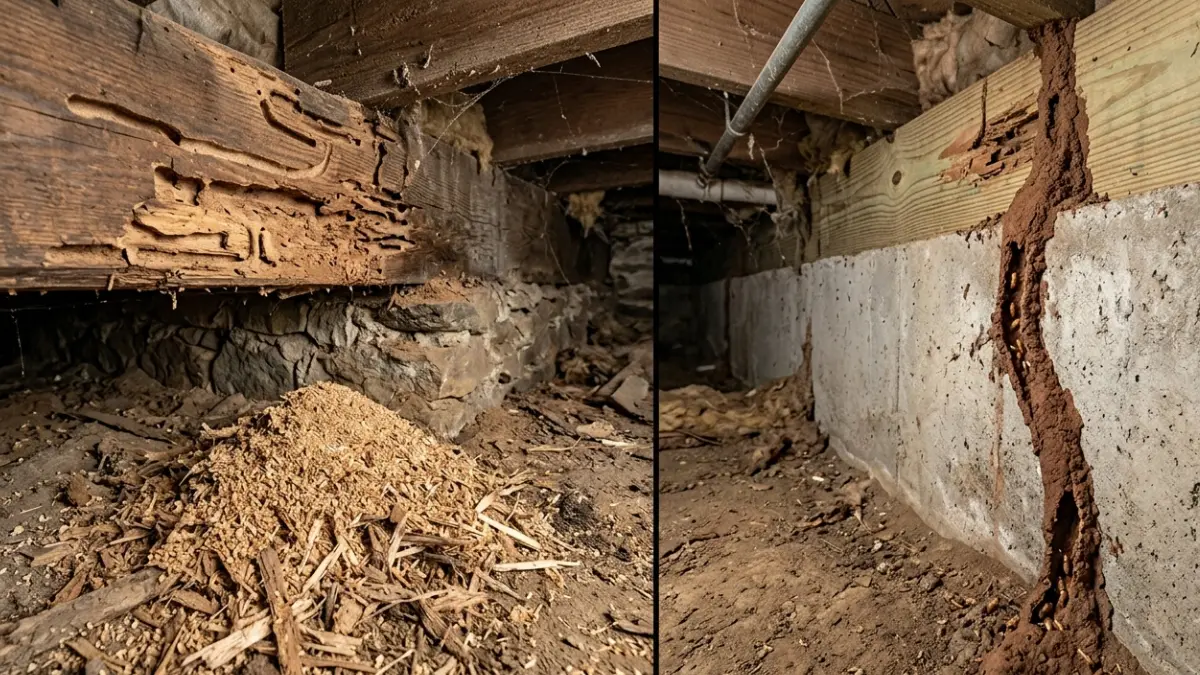
Mud tubes are pencil-width soil tunnels that subterranean termites build up foundations and walls to reach wood without drying out — flying ants never make them. Tap or probe suspect wood: if it sounds hollow or a screwdriver sinks in easily, termites may be inside. These are among the full signs of a termite infestation worth reviewing if the ID points that way.
What one insect can and can’t tell you
A single swarmer confirms the species but not an infestation in your structure, since reproductives fly in from the area to mate. Confirming an active colony in your walls takes an inspection, not one bug on the sill.
The carpenter-ant curveball and when each one swarms
One ant breaks the tidy “ants are harmless” rule, and swarm timing narrows things without ever deciding them on its own.
Carpenter ants: live in wood, don’t eat it
Carpenter ants nest in wood — usually damp or water-softened wood — but they don’t eat it. They carve smooth galleries and push the debris out, which makes them a slower but real concern and often a sign of a moisture problem, still different from termites.
Frass vs mud tubes
🔍 Why It Works: Because carpenter ants excavate rather than consume, they leave frass — coarse, sawdust-like shavings — below their galleries, while subterranean termites leave mud tubes and no clean sawdust. Frass points to carpenter ants; mud tubes point to termites.
When termites swarm vs flying ants (and why it varies)
In much of the US, subterranean termites swarm in spring, often on warm, humid days after rain; carpenter ants typically swarm a little later, into early summer. The windows overlap enough to cause the confusion in the first place.
📊 Sourced: Subterranean termite swarms are commonly triggered in spring when temperatures reach around 70°F, often after rain — though exact timing shifts by region and species, so check your local extension for your area. (Source: university extension guidance.)
Why getting this ID right is worth real money
The reason the ID matters isn’t the insect — it’s the wood and the repair bill behind it.
Nuisance vs structural threat
Flying ants of the non-carpenter kind are a short-lived nuisance you can sweep up and forget. Termites are a structural issue that compounds silently inside wood, which is why “wait and see” is fine for ants and risky for termites.
What termites actually cost (the honest numbers)
📊 Sourced: The EPA reports that termites cause billions of dollars in structural damage each year, and that property owners spend over $2 billion annually on treatment — costs typically not covered by homeowners insurance. (Source: US EPA.)
You’ll also see “$5 billion a year” quoted widely. Our breakdown of what termite treatment actually costs leans on the sourced figures instead.
⚠️ Watch Out: The “$5 billion” figure comes from the pest-control industry, not a government source. Treat it as an industry estimate, not settled fact — a small example of why the source behind a number matters.
You found a swarm indoors — what to do now
- Latex-Free & Powder-Free: Our Nitrile Gloves Contain No Natural Rubber Latex And Are Manufactured Without Powder – A Saf…
- Features: Blue Nitrile Has A Smooth Finish For Greater Tactile Feedback And Is The Right Thickness For Most Uses – Finge…
- Bulk Quantity: Conveniently Packaged To Reduce Storage Space While Ensuring A Supply Is Always On Hand – 100 Disposable …
If the ID points to termites, the next steps are simple and worth doing calmly rather than in a panic.
First moves (and what not to do)
Vacuum up the swarmers and wings and empty the bag outside, and keep one intact specimen with a scale photo. Don’t fog the room with aerosol spray — it scatters them and does nothing for a colony living in the wood.
When to call a licensed pest professional
✅ Do This: For confirmed or suspected termites, have a licensed pest professional inspect and give you a written report. Ask which treatment they’d use (a liquid soil barrier versus a bait system), what the warranty covers, and get estimates from more than one company.
The EPA’s homeowner guide to identifying and controlling termites and the National Pesticide Information Center both cover identification, control, and choosing a company; our guide to your termite treatment and inspection options covers the costs.
Why DIY chemicals aren’t the answer for termites
Termite control depends on identifying the species and applying the right technique, and some termiticides are restricted to licensed applicators — so DIY often falls short and can leave a colony feeding undetected. The prevention you can do yourself is the useful part: keep firewood and wood debris away from the foundation, fix leaks and drainage, and keep mulch below the wood line.
Flying ants vs termites: frequently asked questions
1. How do you tell the difference between flying ants and termites?
Check the waist, wings, and antennae. For flying ants vs termites, a flying ant has a pinched, hourglass waist, front wings longer than the back pair, and bent, elbowed antennae, while a termite has a straight, waistless body, four equal-length wings, and straight antennae. The waist is the fastest single feature to check, since it’s the hardest of the three to misread.
2. Do flying ants turn into termites?
No — flying ants and termites are entirely different insects, not two life stages of the same one. A flying ant is simply a winged reproductive ant leaving the nest to mate and start a colony. They look confusingly similar only because both send out winged swarmers at the same time of year, which is exactly what fools most people into mixing them up.
3. Should I worry if I see flying ants in my house?
Ordinary flying ants are a nuisance rather than a structural threat, so a small swarm you can sweep up isn’t cause for alarm. The important exception is carpenter ants, which nest in damp wood and can signal a moisture problem worth fixing. And if the insects turn out to be termites instead of flying ants, that does warrant prompt action and an inspection.
4. Do flying ants eat wood?
No — flying ants don’t eat wood. Carpenter ants do carve galleries in damp or water-softened wood for nesting, but they push the debris out as sawdust-like frass rather than eating it. Termites are the insects that actually eat wood, feeding on the cellulose inside it, and that appetite is exactly what makes termites a structural problem rather than a passing nuisance.
5. What month do termites swarm compared to flying ants?
In much of the US, subterranean termites swarm in spring, often on warm, humid days after rain when temperatures reach around 70°F. Carpenter ants typically swarm a little later, into early summer. Because the windows overlap and exact timing shifts by region and species, check your local extension for your area rather than relying on a single national date.
6. What does a pile of wings on my windowsill mean?
A small heap of same-size wings near a window, door, or light usually points to termites, which shed all four wings soon after swarming. A few scattered wings are weaker evidence, since flying ants shed theirs too, just later and fewer. Save some to compare against the four features, and treat a pile as a reason to inspect further.
7. Are carpenter ants the same as termites?
No — carpenter ants and termites are not the same, though both live in wood and are often confused. Carpenter ants excavate smooth galleries for nesting and leave frass, while termites eat the wood itself and build mud tubes. Carpenter ants often signal a moisture problem, whereas termites cause the faster and more expensive structural damage of the two.
8. Can I get rid of flying ants or termites myself?
For ordinary flying ants, cleaning up and sealing entry points is usually enough on your own. Termites are different: control depends on correctly identifying the species and applying the right technique, and some termiticides are restricted to licensed applicators, so DIY often falls short. Identify the insect first, and for termites, bring in a licensed pest professional.
9. Do flying ants or termites bite or sting?
Neither flying ants nor termite swarmers meaningfully bite, sting, or spread disease to people, so the swarmers gathering on your windowsill aren’t a health threat to you or your family. The real concern with termites is the wood in your home, not the insect itself. That’s why correct identification, not fear of the bug, is what actually matters here.
10. What should I do if I think I have termites?
Capture one insect and photograph it next to a coin for scale, then check the waist, wings, and antennae to confirm it’s a termite and not a flying ant. Don’t reach for aerosol spray, which just scatters them. For a confirmed or suspected termite, get a written inspection from a licensed pest professional and compare estimates before treating.
The bottom line on flying ants vs termites
Four features settle almost every case: the waist, the wings, the antennae, and whether wings were shed in a matching pile. Flying ants — carpenter ants aside — are a nuisance you can handle yourself; termites are a structural problem worth a professional’s eyes. If the signs point to termites, the next step isn’t panic — it’s a written inspection and, if needed, a treatment plan from a licensed pro.
Related Articles
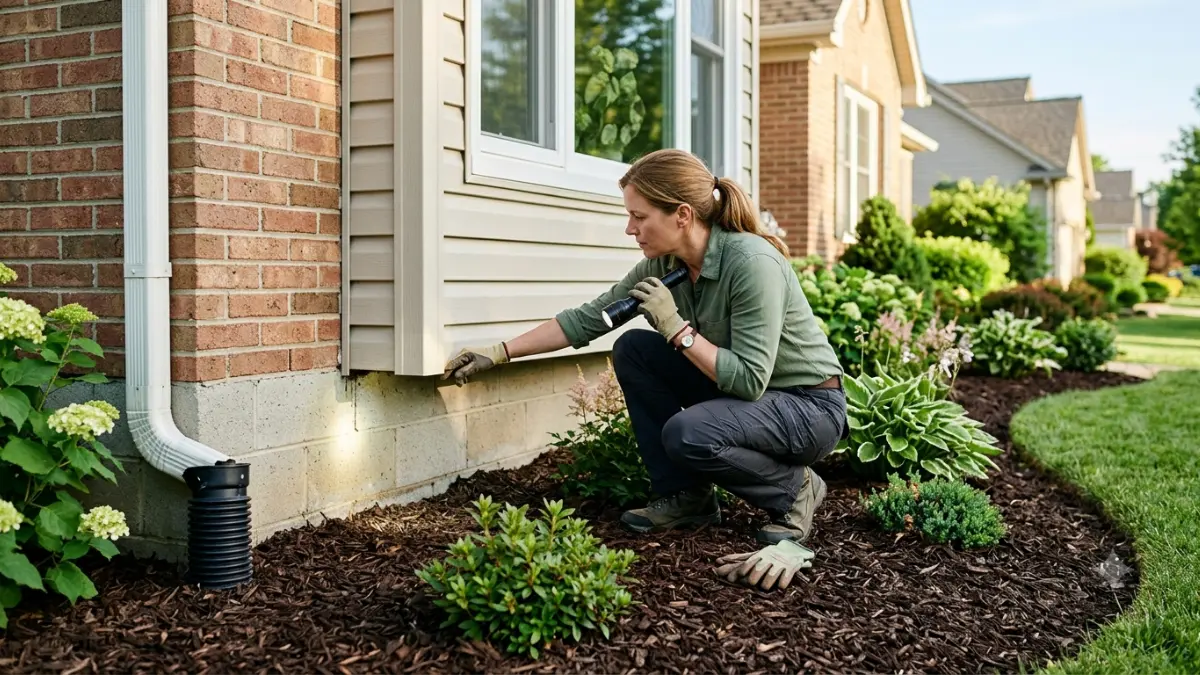 Termite Treatment
The common termite prevention list is really three lists
August 1, 2026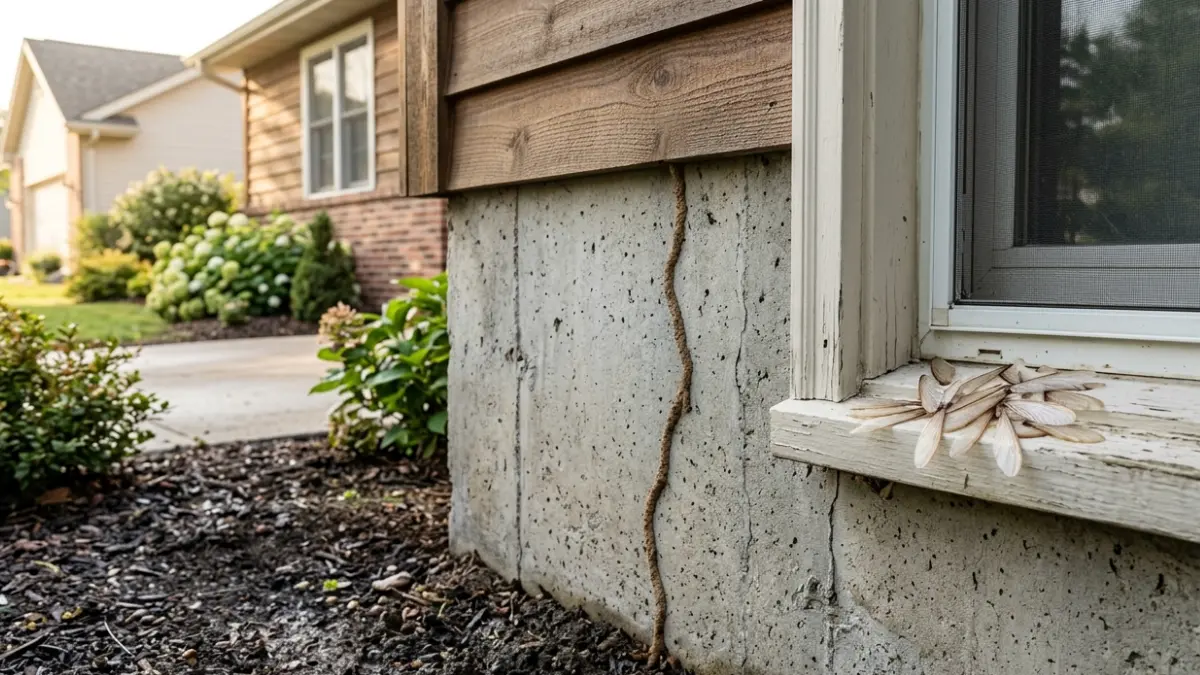 Termite Treatment
The Right Way to Read the Signs of Termites You Just Found
July 14, 2026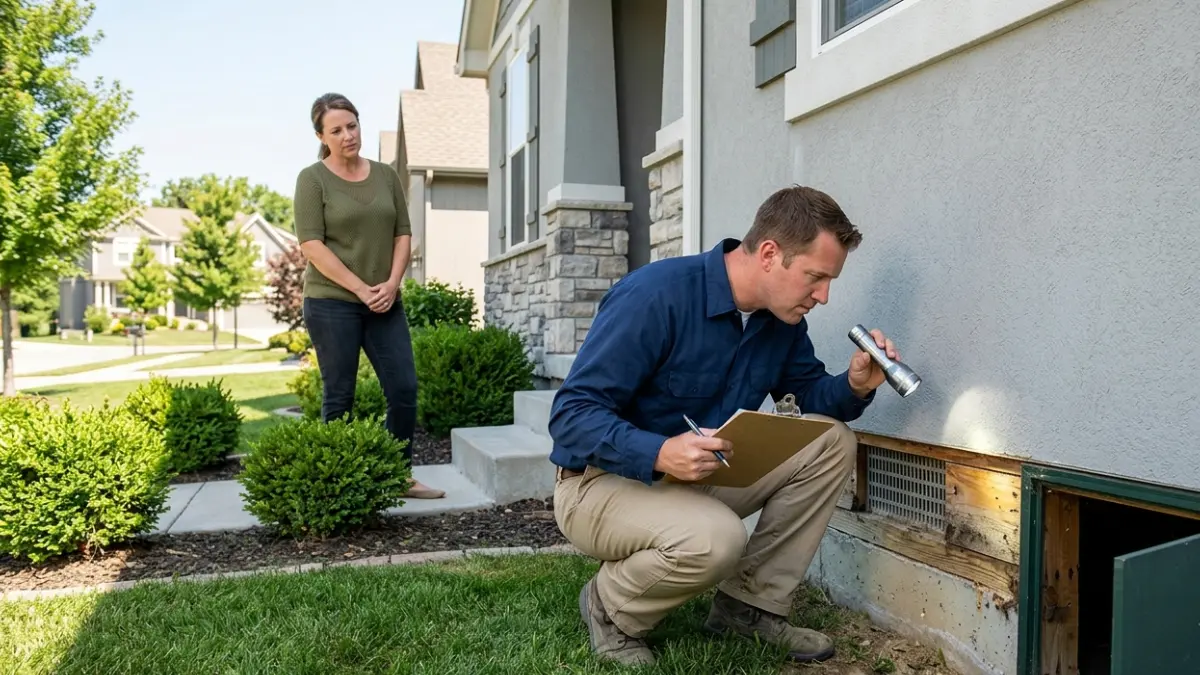 Termite Treatment
Termite inspection cost hinges on one commonly missed limit
July 26, 2026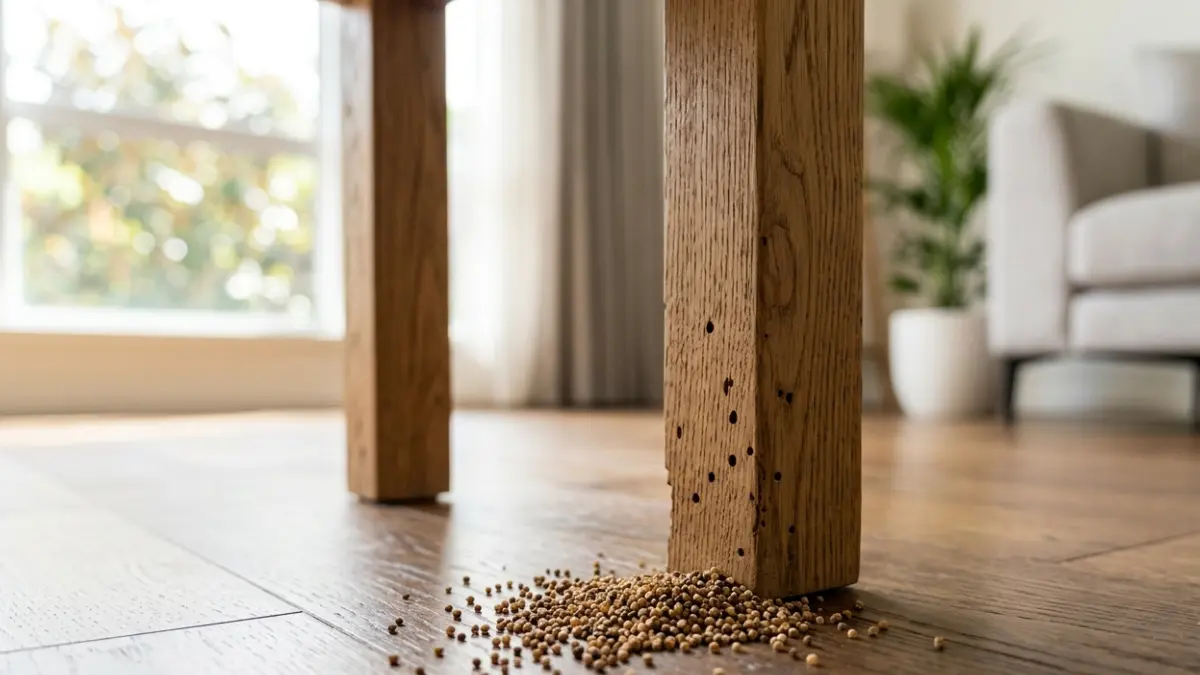 Termite Treatment
Knowing where termites in furniture live decides the right fix
August 2, 2026 Termite Treatment
Crawl space termites and moisture share one common cause
August 1, 2026 Termite Treatment
The right wood to soil clearance depends on your foundation
July 31, 2026 Termite Treatment
Termite damage repair cost rests on one costly missing step
July 27, 2026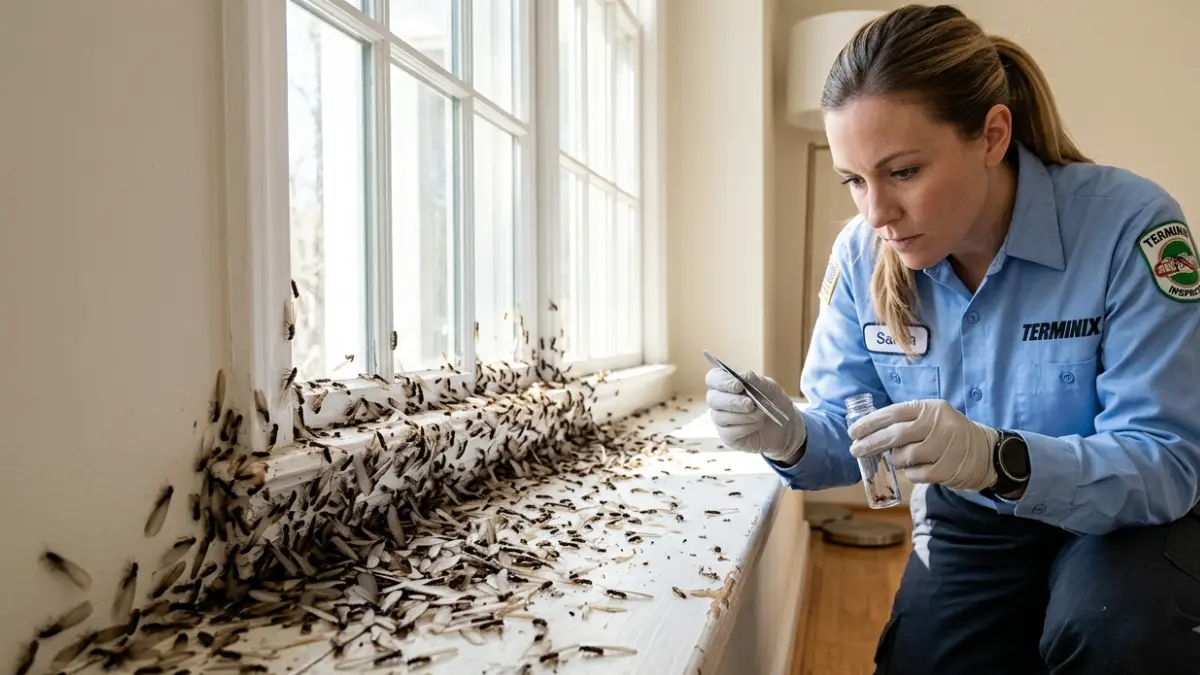 Termite Treatment
The real answer to when termites swarm is species by species
August 2, 2026 Termite Treatment