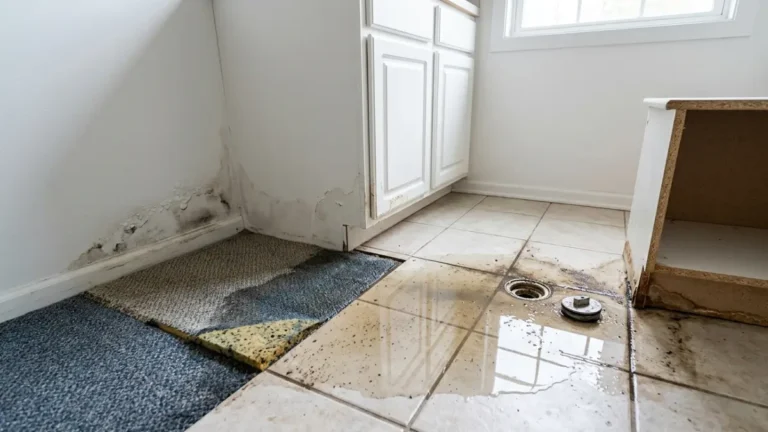
What to Do After Water Damage, and the Common Advice to Skip

After water damage, the first move isn’t a mop — it’s a decision. The CDC’s rule on cutting power has an exception most advice drops, and it matters.
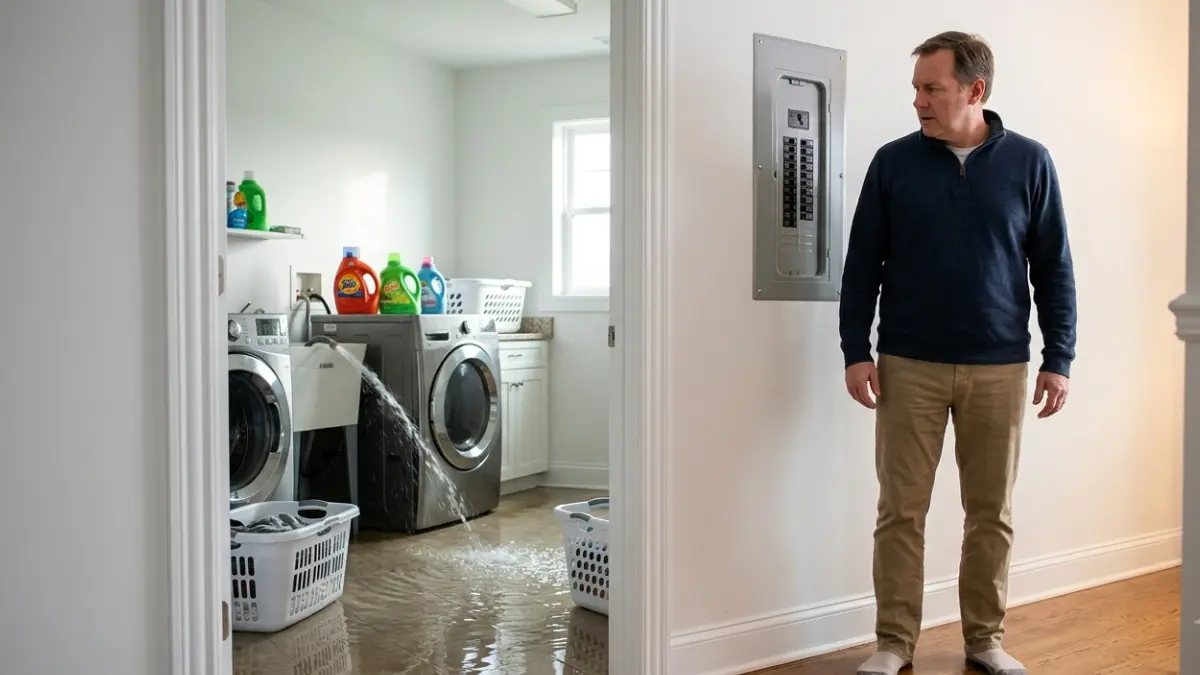
Table of Contents
Start here — before you touch anything
Water is somewhere it shouldn’t be, and your instinct is to start mopping. Spend sixty seconds first.
The order you work in matters more than your speed. Water damage isn’t one situation, so find yours before taking anyone’s advice — this article’s included.
- Supply line or appliance — burst pipe, hose, water heater. Usually clean water, one area.
- Drain or sewer backup — contaminated from the first minute.
- Storm or rising water — highest hazard, and what most advice is written for.
- A slow leak you’ve just found — small area, but the clock started days ago.
The EPA draws that line itself: a pipe leak or rainwater intrusion carries fewer hazards and a smaller area than flooding. Renting changes the hour too, since the building’s main shut-off isn’t yours to operate — though your rights when a landlord stalls follow a familiar pattern.
What happens after this hour belongs to a professional, and the eight things a restorer does before drying is a separate job.
ℹ️ Safety Note: Water damage response can involve electrical shock, gas leaks, structural collapse, contaminated water, and carbon monoxide. This is general guidance on what to do and who to call, not instructions for electrical, gas, or structural work. If you are not certain a task is safe, hire a licensed professional and follow local code.

- Precision in 7 Modes: This wood moisture detector offers seven calibration scales designed for various wood and building…
- 3-In-1: Featuring sensitive pins and a back sensor, this tester measures moisture in various materials and monitors ambi…
- User-Friendly Design: Hold function locks readings for easy viewing and recording; Large color backlit LCD display ensur…
The 8 things to do in the first hour
The first thing to do after water damage isn’t stopping the water — it’s deciding whether the room is safe to be in. Power, gas, and a loaded ceiling all outrank the leak. Once that gate is clear, the remaining seven run in order.
- Decide whether the room is safe to enter. Power, gas, ceiling.
- Cut power to the wet area — but only from a dry spot. Can’t reach the panel dry? That’s a phone call.
- Stop the water at its source. A fixture valve, the main shut-off, or ending all water use if a drain backed up.
- Turn the HVAC off and leave it off. The step nobody lists, and the one that keeps the problem in one room.
- Get vulnerable people, pets, and food out of the affected area.
- Work out what kind of water it is before you touch it.
- Photograph and film everything before you move a single thing.
- Make two calls — and read anything you’re asked to sign.
The order matters more than the speed
The first hour isn’t a countdown; no agency or standard defines one. It’s a sequencing device.
Most first-hour injuries follow one path: someone walks into a wet basement to reach a valve or a breaker box. Putting the safety check first prevents that, and costs ninety seconds.
What the first hour is not for
Extraction and drying. Nearly every checklist puts towels, fans, and a shop vac inside hour one; current federal guidance puts them later, after you know what’s in the water.
A restorer also works through eight opening activities under the ANSI/IICRC S500 standard, several of which depend on finding the loss as it happened.
Power, gas, and ceilings: the safety gate
Should you turn off the electricity?
Yes — if you can reach the main power switch from a dry location. If reaching it means standing in water, call an electrician or your utility instead.
That qualifier is the one most advice drops, and it matters because the service panel often sits in the basement that just flooded. The CDC is specific: cut the main power from a dry spot if you can, and call an electrician if you can’t.
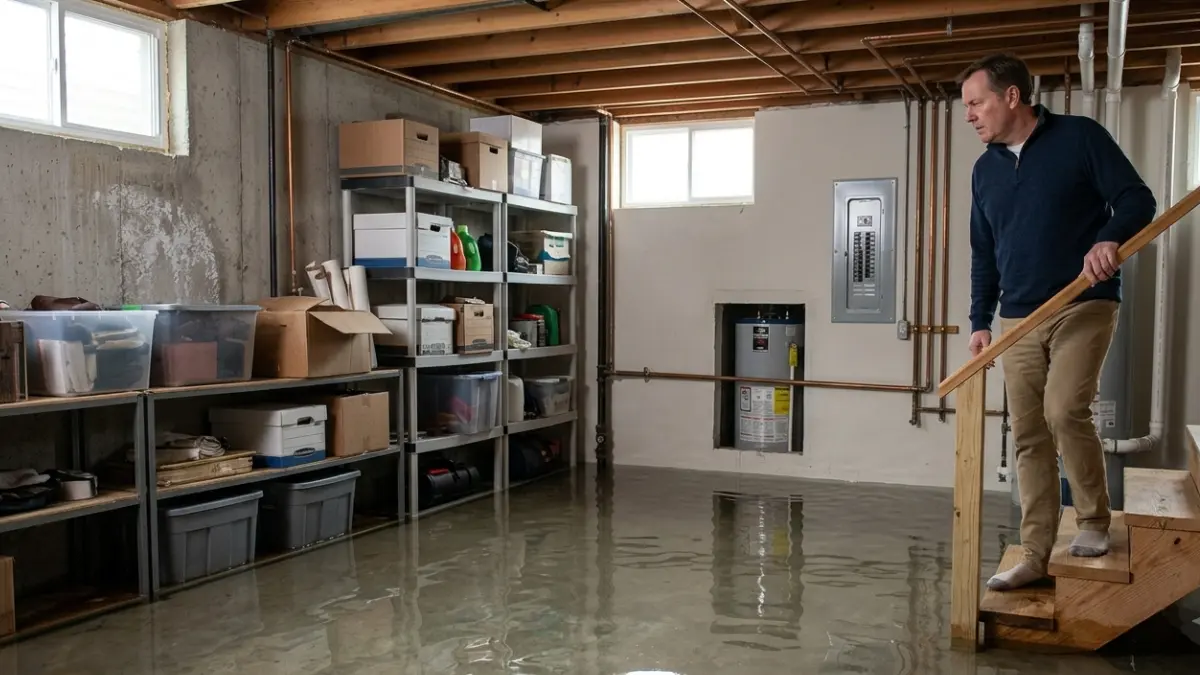
⚠️ Watch Out: Never turn power on or off, or use any electric tool or appliance, while standing in water. That includes the shop vac. The CDC states this without qualification.
Wet appliances are a separate problem. The CPSC warns you should not touch wet appliances still plugged in, and that submerged gas valves, wiring, breakers, and fuses must be replaced rather than dried — even where they seem to work.
If you smell gas
Leave, and call the gas utility or fire department from outside. Operate nothing on the way out — not a light switch, not your phone.
Guidance isn’t uniform. The CDC describes closing the main gas valve first; the CPSC, more recently, says leave immediately. Take the conservative route.
What a sagging ceiling means
A bulging ceiling is holding water. That’s a structural question, not a cleanup task — stay out from under it.
✅ Do This: If standing water blocks your panel, call a licensed electrician and ask whether the panel, breakers, GFCIs, and submerged appliance controls need replacing rather than drying.
Stop the water, then stop the air
Finding the shut-off
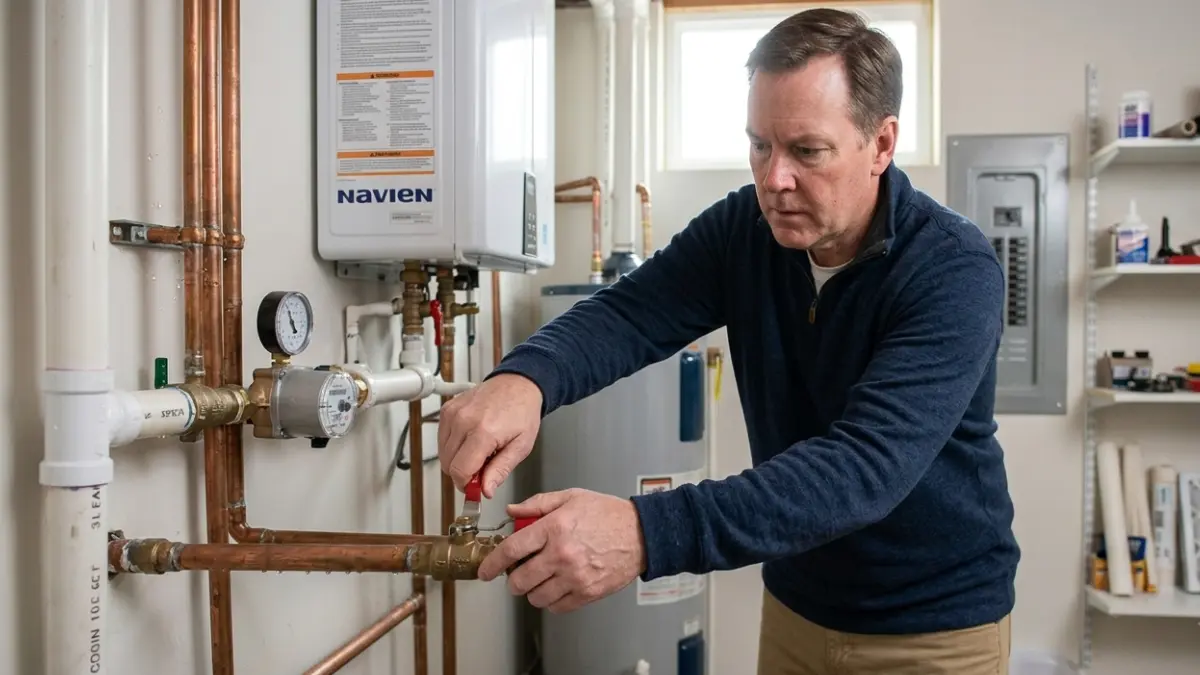
The main water shut-off usually sits where the supply line enters the building, near the meter, or in a utility space. Fixtures normally have their own valve nearby.
A sewer backup works differently. There’s no valve to close, so you stop it by stopping water use everywhere in the house, toilets included, until a plumber clears the line.
Why the HVAC goes off too
Switching the air conditioning on to dry the house out is the most understandable wrong instinct in this hour.
🔍 Why It Works: An air handler pulls air from the affected space and pushes it through every duct. If any part of the system took on water, running it carries contamination into rooms that were dry.
The EPA and CDC land here independently: don’t use an HVAC system for drying if any part was affected, and have a flooded system professionally cleaned before restarting it. If yours took water, mold in air ducts isn’t a homeowner job.
✅ Do This: Have the system checked by an HVAC professional experienced in mold cleanup first. Ask about ductwork below the water line, not just the unit.
What kind of water is it — and who should stay out
Clean, gray, and black water
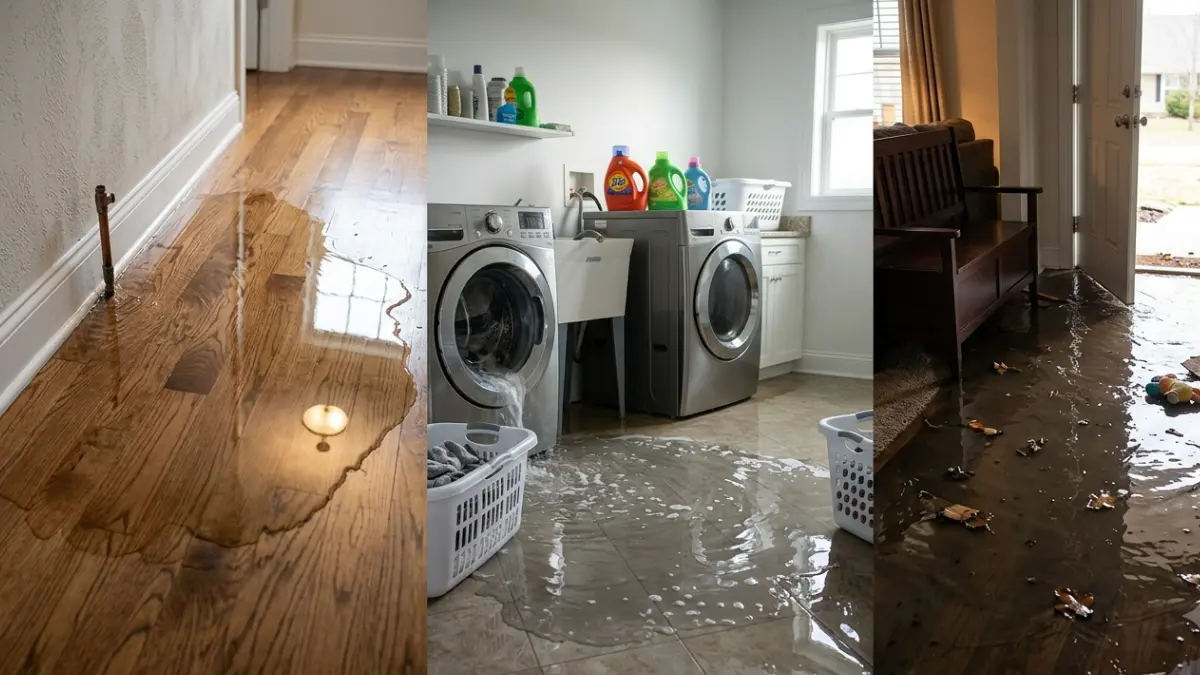
The industry sorts water into three categories, and the category — not the volume — decides who can handle it. Clean water comes from a supply line or rainfall; gray water carries some contamination, from a dishwasher or washing machine; black water means sewage or floodwater.
One correction worth carrying: under the S500, weather-related and wind-driven rain water is not automatically the worst category.
Who should not be in the room
The EPA is direct about this and almost nobody repeats it. People with asthma or weakened immune systems shouldn’t take part in flood cleanup, and neither should children or anyone pregnant.
Where sewage is involved, the CDC specifies rubber boots, gloves, and goggles, and keeping children and pets out until cleanup finishes. The EPA adds an N-95 respirator and goggles without vent holes — check the full protective gear list first.

- 44% Latex, 35% Polyester, 21% Acrylic
- Imported
- CUT RESISTANT – ANSI/ISEA 105-2016 level A2 cut protection and level 4 abrasion resistance for safety for durable protec…


- LIGHTWEIGHT: Unisex protective eyewear combines versatility and value with a comfortable, contoured fit.
- WRAP AROUND DESIGN provides extended eye protection and unobstructed viewing.
- ANTI-FOG LENS COATING makes this protective eyewear ideal for humid environments.
Can you clean it up yourself?
Four things decide it: the source, the size of the area, how long it sat, and who lives in the house. Clean water, small area, caught immediately, no vulnerable occupants — reasonable. Change one and it isn’t, because cleanup after contaminated water is a different undertaking.
Document it before you move anything
Photograph before you mitigate
Your policy requires you to limit further damage. Limiting damage destroys the evidence of what the damage was. The resolution is sequencing: document first, then act.
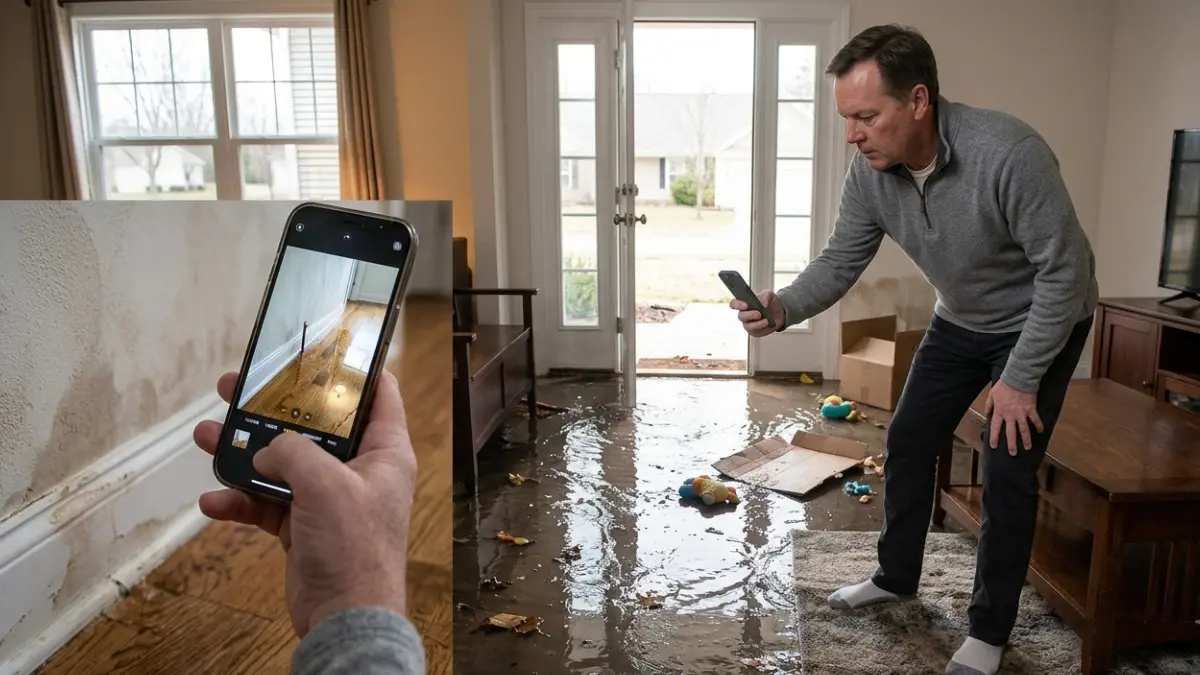
Wide shot of the room, then each affected area, then close on the source, then model and serial plates on anything ruined. Finish with slow video, narrating what’s wet.
Keep every receipt
Standard homeowners policies don’t only require reasonable steps to protect the property — they generally reimburse the reasonable cost of those steps. That makes mitigation recoverable, and it works only if you kept the receipts.
Don’t discard anything before it’s documented, including carpet, which has its own clean-or-replace threshold. Mold is usually handled under separate policy terms, so how mold coverage works is worth reading before the adjuster calls.
The two calls, and what you sign
Your insurer, and a restoration company. Order matters less than people think; knowing what you’re signing matters more.
Three documents get handed over at the door and they do different things. A work authorization lets a company begin, a direction to pay sends claim money to them, and an assignment of benefits transfers your policy rights.
What not to do in the first hour
Don’t start the fans yet
📊 Sourced: EPA guidance states mold can grow on wood, drywall, carpet, and furniture left wet more than 24 hours — not the 24-to-48 window repeated everywhere. EPA’s own remediation table notes mold may appear inside 48 hours and may not appear after. A guideline, not a deadline.
Running fans immediately is standard advice and it’s incomplete. If you can already see mold, the EPA’s position is that you clean what’s visible before starting fans, so airflow doesn’t spread it. The CDC adds direction: fans at a window or door, blowing outward.
Those two aren’t in conflict — one is about sequence, the other direction. Drying equipment earns its place later, on a professional’s readings, and the real timeline runs in days.
Don’t throw anything away
Not before it’s photographed. An adjuster can’t scope what’s already in a dumpster.
Don’t re-energize anything that was wet
⚠️ Watch Out: A breaker, GFCI, fuse, or gas valve that has been under water gets replaced, not dried — the CPSC is explicit that these can fail later even when they seem fine. That’s a professional’s call, not one for hour one.
Water damage: quick answers
1. Should I turn off the electricity if my house floods?
Yes, if you can reach the main power switch from a dry location — the CDC advises doing it even when that delays cleanup. If reaching it means stepping into standing water, stop and call a licensed electrician or your utility instead. Never turn power on or off, or use any electrical appliance, while standing in water.
2. Is it safe to walk in standing water in my house?
Not until power to that area is off and you know what the water contains. Standing water can be energized by submerged wiring or appliances, and floodwater or sewage carries bacteria. If either is uncertain, stay out and have a licensed electrician confirm the power is off before anyone enters.
3. How long do I have before mold grows after water damage?
The EPA states mold can grow on wood, drywall, carpet, and furniture left wet for more than 24 hours. Treat that as a guideline rather than a deadline — EPA guidance elsewhere notes mold sometimes appears in materials dried faster, and sometimes doesn’t appear after longer. Either way, moving quickly is right.
4. Should I run fans after water damage?
Not as your first move. If mold is already visible, the EPA advises gently cleaning what you can see before starting fans or dehumidifiers, so airflow doesn’t spread spores. When fans do go on, the CDC says position them at a window or door blowing outward, and never through a system that took water.
5. Can I use my AC or heating to dry the house out?
Not if any part of the HVAC system was affected by the water. The EPA advises against using it for drying, and the CDC warns that running a flooded system spreads mold into every room it serves. Have it inspected and cleaned by an HVAC professional experienced in mold cleanup before it goes back on.
6. Do I have to call my insurance company right away?
Standard homeowners policies require reasonable steps to limit further damage, and generally reimburse the reasonable cost of those steps. Reporting promptly protects both. Document the loss before starting any mitigation, keep every receipt from the first hour, and check your own declarations page, because wording and deadlines vary between insurers.
7. Who do I call first, insurance or a restoration company?
Either order works, and the sequence matters less than most people expect. What matters more is what you sign when a restoration company arrives, because a work authorization, a direction to pay, and an assignment of benefits do three different things. The last of those transfers your rights under the policy, so read which one you are holding.
8. Should I throw wet things away before the adjuster comes?
No — photograph and film everything first, including model and serial plates on ruined appliances, because an adjuster cannot scope what has already gone to the dumpster. Once documented, porous materials that soak up water and cannot be cleaned and dried usually have to go. Carpet has its own clean-or-replace threshold worth checking.
9. Can I clean up water damage myself?
It depends on four specific things: the source of the water, the size of the affected area, how long it sat, and who lives in the house. Clean water, a small area, caught immediately, no vulnerable occupants — reasonable. Sewage, a large area, days of exposure, or asthma or pregnancy in the household — call a professional.
10. I rent — whose job is this?
Report it to your landlord or property manager immediately and in writing, then document everything yourself. The building’s main shut-off is generally not yours to operate, though a fixture valve usually is. Your belongings sit under renters insurance rather than the building policy, and wet drywall is the landlord’s repair.
What happens next
The hour you just worked through is the part you controlled. From here, most of what happens is somebody else’s process.
A restorer will assess, categorize the water, and set drying goals before equipment runs — and what to ask before you let anyone start work is worth five minutes now. To judge whether the company in your driveway is doing it properly, the eight steps a good restorer takes before drying is the checklist.

- LIGHTWEIGHT COMFORT: Designed with a flexible soft toe and wide calf fit, these rubber boots offer lightweight comfort f…
- 100% WATERPROOF PVC CONSTRUCTION: Made from durable PVC, these rain boots keep your feet dry in rain, mud, and wet condi…
- SLIP-RESISTANT OUTSOLE: The rugged tread pattern helps reduce the risk of slips and falls on wet or uneven surfaces, pro…
You got the sequence right. That’s the hard part.