The Risky Assumption About Wind-Driven Rain and Category 3 Water

Wind-driven rain can be Category 3 water — but the standard’s own wording says one word decides it, and the storm’s name is not that word.
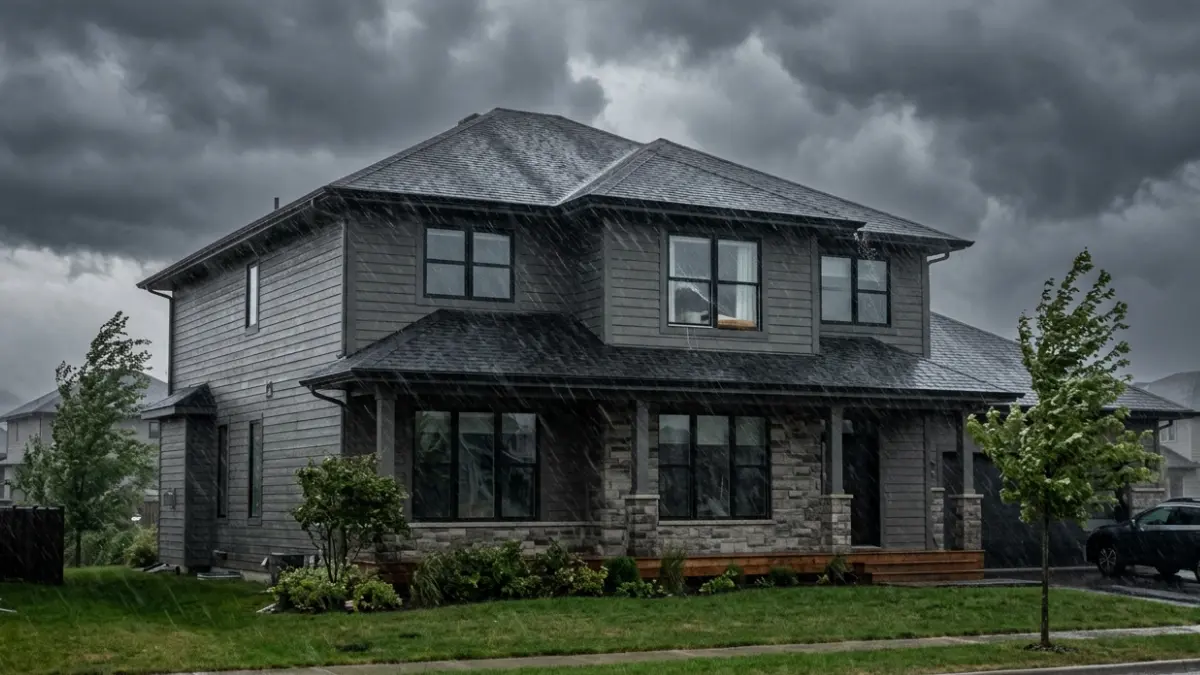
Table of Contents
Not automatically. Wind-driven rain that came through your roof, window or wall during a storm is not Category 3 water by default, and in 2026 the consensus body behind the industry’s own standard said so in a formal position statement.
Where you are decides what you need here. If water is still coming in, start with what to do in the first hour. If someone has already said “Category 3” and attached a demolition scope to it, the next two sections are yours, along with the one on what that call changes.
This determination sits inside everything a restorer should do before drying starts. One thing worth saying plainly: we sell no restoration work and no adjusting, so neither answer pays us.
ℹ️ Safety Note: This article explains how water damage is classified. It does not tell anyone how to enter, clean up or repair a storm-damaged building — that work carries electrical, structural and contamination risks and needs a qualified professional. If you cannot tell whether your water is contaminated, treat it as though it is, and keep infants, elderly people, anyone pregnant and anyone immunocompromised out of affected areas.
What the standard actually says about wind-driven rain
The restoration industry runs on a consensus standard, the ANSI/IICRC S500. Its Category 3 definition is where this argument lives.
Category 3 means grossly contaminated — that is the test
Category 3 water is defined as “grossly contaminated”: water that can carry pathogenic, toxigenic or other harmful agents and can cause significant adverse reactions in anyone who contacts or consumes it.
That condition is the test. The examples that follow illustrate it; they are not events that trigger it automatically.
Why one word in the definition changes the answer
The example list is introduced with the word can, and the S500 defines that term deliberately. Can signals a possibility open to the reader — something capable of application, but explicitly not part of the accepted standard of care.
Wind-driven rain can be Category 3. That is not the same as saying it must be treated that way.
A second detail gets dropped almost everywhere. The thing the example describes is contaminated water entering the structure — wind-driven rain is one way such water might arrive, not a category of its own.
What the 2026 position statement added
In 2026 the ANSI/IICRC S500 Consensus Body issued a position statement on this exact question, and its opening line is unambiguous: top-down water ingress, wind-driven rain and water from weather-related events are not automatically considered Category 3. IICRC Standards Chair Brandon Burton put it this way: “Weather events in and of themselves do not immediately imply contamination.”
If the categories themselves are new to you, how the three water categories differ covers the framework this article assumes.
What actually decides your water’s category

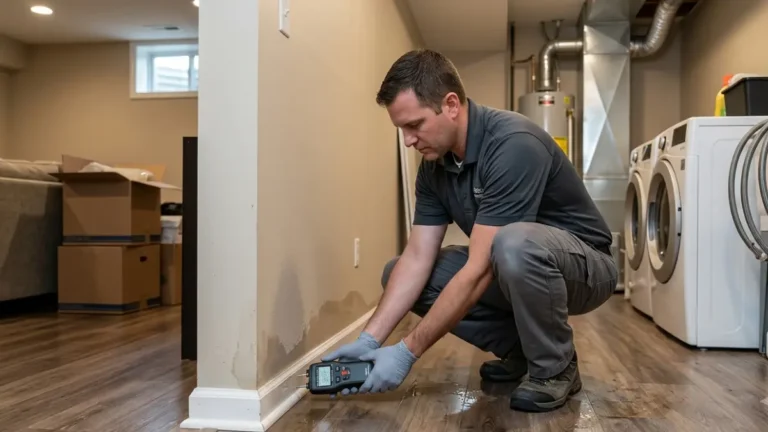
- Accurate & Easy to Use – This pinless moisture meter offers quick, non-invasive readings without surface damage. Simply …
- Early Moisture Detection – Helps identify hidden dampness in floor, wood, and masonry, reducing the risk of long-term wa…
- Deep Sensing Capability – With up to 0.75 inches of penetration depth, this moisture detector provides reliable readings…
If the storm’s name does not settle it, something else has to. The standard says what.
Source, plus what the water met on the way in
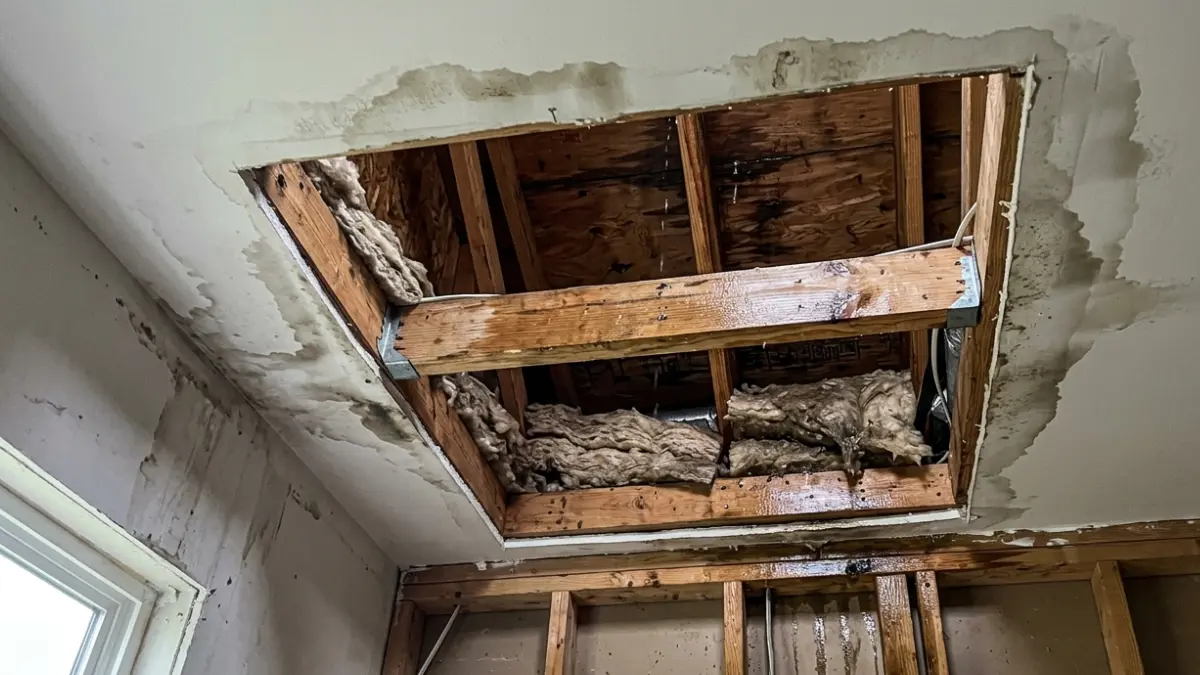
The clause on determining category weighs two things: where the water originated, and its quality after it encounters materials at the job site. That second half is the part homeowners never hear.
The same clause notes that time and temperature can affect or retard the amplification of contaminants. Both directions are in the text, and no hour figure appears anywhere in it.
🔍 Why It Works: Water takes its character from what it touches. Rain that ran down a sealed frame onto a tiled sill has contacted almost nothing. Rain that soaked through roof decking, sat in attic insulation and drained through a wall cavity has contacted a great deal.
The Water’s Path Worksheet
Fill this in before anyone tells you what category your loss is. It is a framework built from the standard’s wording, not a test result, and it asks only for what you already know or can safely see from inside.
| Entry point | What the water likely passed through | What would raise the category | Who can confirm |
|---|---|---|---|
| Roof, ceiling or attic | Decking, insulation, framing, top plate | Rodent or bird activity, suspect old insulation, a pre-existing leak | Restorer; indoor environmental professional if disputed |
| Window, door or sliding track | Frame, sill, flashing, sheathing, cavity | A cavity shared with a drain line, prior staining | Restorer |
| Pipe, vent or HVAC penetration | Cavity, ductwork, mechanical spaces | Contact with ductwork or any nearby drain line | Restorer; HVAC professional |
| Anywhere, if the water stood | Flooring layers, subfloor, contents | Standing time, warm conditions, anything already growing | Restorer |
Framework built from the ANSI/IICRC S500 clause on determining category, which weighs both the water’s source and its quality after contacting site materials. Not a test result.
While anything dries, keeping indoor humidity down is one of the few things you control whatever the category turns out to be.

- 1600 Sq.Ft High Capacity Dehumidifier- The GoGuess basement dehumidifier is equipped with a quiet yet powerful compresso…
- 3 Intelligent Modes for Personalized Use- Our home dehumidifier offers three smart modes: DEHU, TURBO, and SLEEP . Selec…
- Smart Control with Auto Humidity Regulation- Easily customize your comfort with the intelligent control system. Set targ…
When wind-driven rain genuinely is Category 3
The headline cuts both ways. The clause that blocks an automatic call also permits a Category 3 determination when conditions justify it.
When the water met something contaminated, or stood
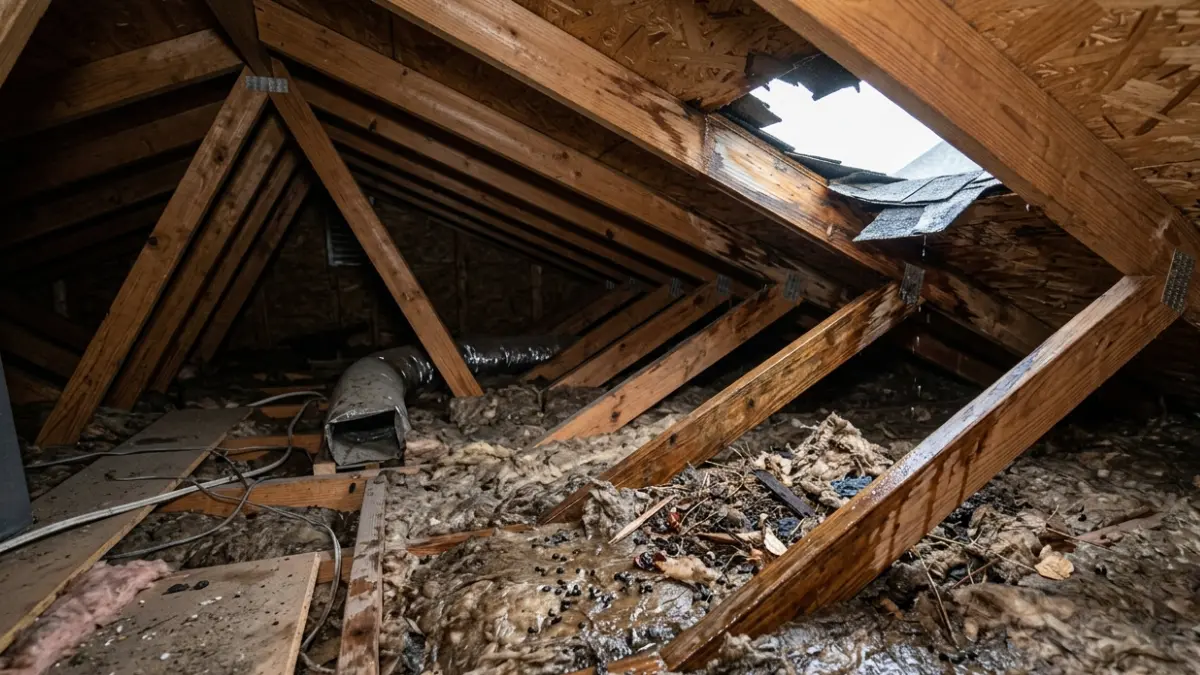
Wind-driven rain becomes grossly contaminated water when it contacts contamination between entry and arrival. A cavity shared with a failed drain line, an attic with heavy animal activity, floodwater it later mixed with, or an assembly that was already moldy are all real routes to a genuine Category 3.
Water that sat has had more opportunity than water dried the same day, and warm conditions accelerate that. A building already leaking or already growing something starts from a different baseline than one that was sound.
If water reached your ductwork, mold in air ducts explains why that changes the picture rather than just the cleanup list.

- 🔥【H13 High Efficiency Purification】Honeyuan air purifiers adopts 360 surround air intake designs, H13 True HEPA filter w…
- 🔥【Portable & Smart Design】 Air purifiers for bedroom is portable and powerful, completely refreshed air in just 30 minut…
- 🔥【Multifunctional & Flexible】Air purifiers for pet can adjust the required fan speed mode (Low/Medium/High) according to…
⚠️ Watch Out: Clear water is not evidence of clean water. The Category 3 definition does not turn on how water looks, and the EPA’s guidance on flooding notes contamination can include raw sewage and hazardous substances you cannot see.
When who lives there changes the answer
The S500 lists elevated-risk situations under which an independent assessor should be brought in: high-risk occupants, a likelihood of adverse health effects, contaminants believed to have become airborne, and a plain need to determine whether the water is contaminated at all.
If your loss is genuinely a flood rather than storm rain, what to do after flooding is the more useful page.
Storm surge and wind-driven rain are not the same water
No — and both can happen in the same house on the same day.
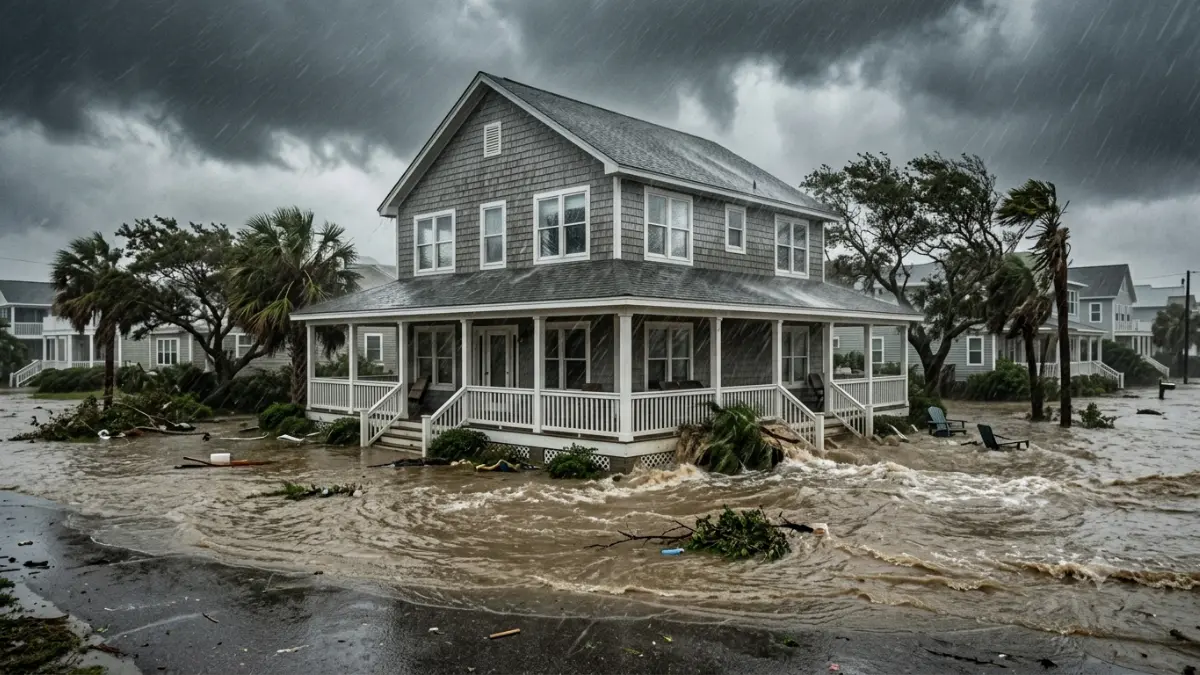
Why seawater sits in a different place in the standard
Read the Category 3 example list closely and it is not uniform. Flooding from seawater and rising water from rivers or streams appear without the “contaminated” qualifier; the weather-water example carries it.
That asymmetry inside one sentence is the whole distinction. Storm surge is ground-level flooding and the standard treats it as the category’s archetype; rain arriving from above is conditional.
One house, two answers, same storm
A hurricane can push surge through a ground floor while wind drives rain into an upstairs window. Those are two water events in one building, and nothing requires them to share a category.
If you are returning to a home that took surge, the CDC’s guidance on floods and your safety warns that a flooded house may be contaminated with mold or sewage.
A separate question your insurer is asking
Restoration category and insurance coverage are different systems, decided by different people on different definitions. A category is a contamination judgment; coverage turns on policy language and how the water entered. We are not qualified to tell you what your policy covers, and neither is your restorer.
✅ Do This: Keep the two questions apart. Ask your restorer for the category and its basis; ask your carrier, a licensed public adjuster or a coverage attorney about the point of entry. How insurers handle mold claims shows how differently that side reasons.
What a Category 3 call actually changes in your house

- COMPACT AND PORTABLE: This small shop vacuum, weighing only 5.5 lb, can be easily hung on the wall, its 10 ft clean rang…
- STRONG SUCTION: 1.5 peak HP vacuum motor provides powerful suction to easily clean up the wet and dry messes in daily li…
- DURABILITY: With storage space alert function, the air flow will be automatically cut off when liquid is overloading the…
This is why the argument is worth having.
The determination exists to set a scope of work
The S500 defines the preliminary determination as a process the restorer performs to establish the category of water for the purpose of establishing a scope of work. The category is not a label filed away; it decides what comes out of your house.
What changes between a Category 1 and a Category 3 response
At Category 1 the standard says a restorer can proceed without contamination controls such as containment barriers or pressure differentials. At Category 2 or 3 it says remediation should happen before restorative drying, and that restorers should use contamination controls and appropriate protective equipment.
Both of those are should, not shall — worth noticing in an article about reading a standard’s words carefully.
In practice: more containment, more material removed, a longer job. A realistic remediation timeline gives a sense of the disruption.
Dry is a measurement, not a judgment call
Whatever category is agreed, the drying goal should be measured rather than declared — a separate question from contamination, and part of the wider restoration sequence.
What to ask if you’re not sure the call is right
Most restorers make this call properly. The goal is a documented, evidence-based determination, not an argument.
Four questions worth asking
- What is the category, and what did you observe that led you there?
- What did the water pass through between the entry point and where you found it?
- Was the determination based on sampling, or on visual assessment?
- What changes in the scope if the category changes?
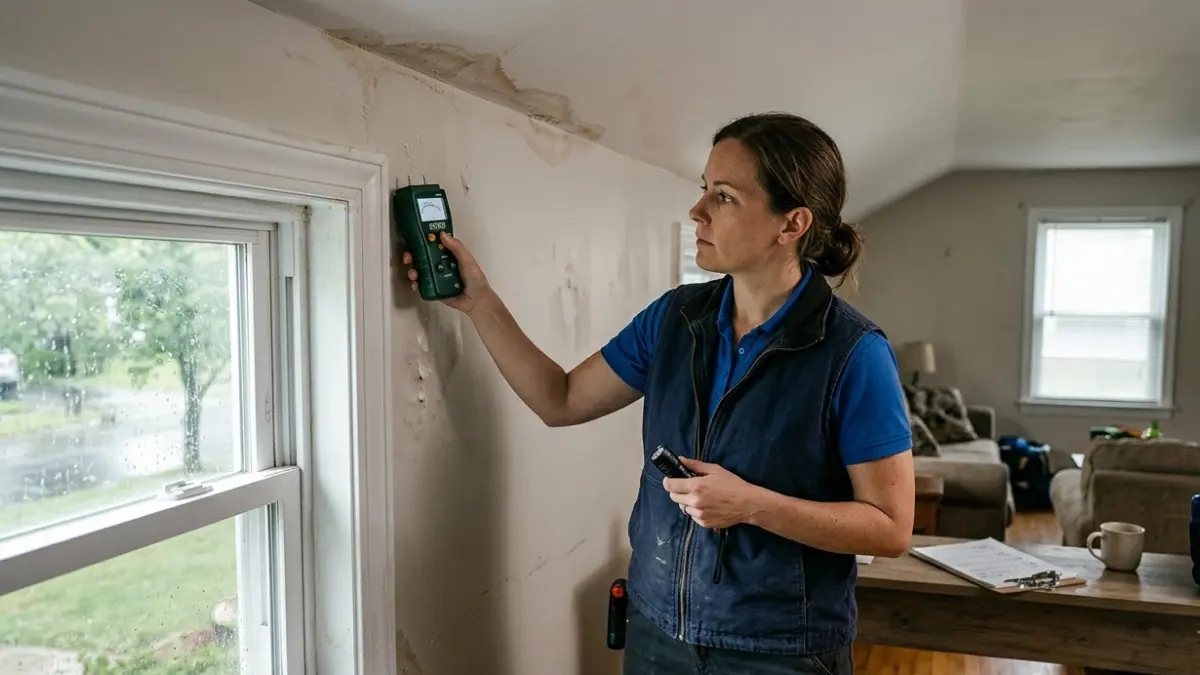
Ask for the answer and its reason together, in one document, at the time the call is made — a category recorded without a reason is hard to revisit later.
Worth knowing before you ask: the S500’s application section names consumers and occupants, property owners and managers, and insurance representatives among the parties the standard was written to serve. You are not an outsider to this conversation.
When to bring in someone independent
The standard says plainly that an assessment by an indoor environmental professional is often not necessary. Where the category is genuinely disputed or an elevated-risk condition applies, that is the person who can settle it — through sampling, laboratory analysis and interpretation rather than opinion.
✅ Do This: If you bring one in, confirm they are independent of the firm doing the work, and ask whether their determination will rest on samples or inspection alone. Vetting a remediation firm covers what else to check, and independent verification after the work applies the same principle at the job’s other end.
Wind-driven rain and water categories: common questions
1. Is wind-driven rain considered Category 3 water?
Not automatically — the ANSI/IICRC S500 Consensus Body stated in 2026 that wind-driven rain and other weather-related water are not automatically Category 3. The category turns on whether the water is grossly contaminated, judged from conditions at your property. Wind-driven rain can be Category 3, but a storm alone does not establish it.
2. Does hurricane rain automatically mean Category 3?
No — a storm’s name and strength describe the weather, not the water’s condition once it is inside. The S500 example list uses the word “can,” which the standard defines as a possibility rather than a required practice. Hurricane rain that met contamination on the way in may well be Category 3; rain that did not may not be.
3. Is rainwater Category 1 or Category 3?
Neither by default. Rain from a sanitary source that touched little on the way in sits at the clean end, while rain that soaked through contaminated materials can sit at the other. The determining clause weighs both origin and the water’s quality after contacting site materials, which is why one rainfall produces different answers in different houses.
4. Can the water category change over time?
Yes, in both directions — the S500 notes that time and temperature can affect or retard the amplification of contaminants, so conditions can worsen or slow. What the standard does not do is attach an hour figure to that change. Any fixed deadline you have read elsewhere came from a different document about mold.
5. Is storm surge the same as wind-driven rain?
No — storm surge is ground-level seawater flooding, and it appears in the Category 3 examples without the “contaminated” qualifier that attaches to the weather-water example. Wind-driven rain arrives from above and is treated conditionally. One hurricane can produce both in the same house, and they need not share a category.
6. Does a Category 3 call mean everything has to come out?
Not everything, though a Category 3 determination does change the scope. The S500 defines the preliminary determination as existing to establish a scope of work, and says remediation should occur before restorative drying at Category 2 or 3, with contamination controls in use. What that means for specific materials is a judgment your restorer should document.
7. Who decides what category my water is?
Your restorer does, through what the S500 calls the preliminary determination, based on inspection and information gathering at the site. Where the category is disputed or an elevated-risk condition applies, an indoor environmental professional can assess it independently. The standard also says such an assessment is often not necessary, so escalation is not automatic.
8. How would anyone prove the water is Category 3?
Through assessment rather than assumption — the S500 describes an indoor environmental professional as someone qualified to design a sampling strategy, submit samples to a laboratory, interpret results and determine the category. Visual assessment alone establishes a working judgment, not proof. If the answer changes your scope, ask for an independent determination.
What to do with this
Whether your wind-driven rain is Category 3 water depends on conditions at your property, and those conditions can be described rather than guessed.
Fill in the Water’s Path Worksheet for your loss, then ask for the category and its reason in one written document. Escalate to an independent assessor only if the answer is genuinely disputed or someone in your household is at elevated risk.
If drywall is already coming out, what happens when mold reaches drywall covers what follows.