The real test with termites in rental property is who caused it

Termites in a rental? Florida’s extermination duty names wood-destroying organisms, then exempts the single-family homes and duplexes most renters live in.
Table of Contents
Termites in rental property disputes almost never turn on the clause both sides go looking for first.
If you rent, you want to know whether you are about to be charged for something you did not cause, and whether your deposit is at risk. If you own the place, you want to know what you must do, how quickly, and whether any of it can fairly be billed to your tenant. Different questions, one thing in common.
Most rules about pests in rented homes are built around health and sanitation — rodents, vermin, insects an inspector can call a hazard. Termites do not bite, sting, or spread disease. They eat the building, which is why the duty that usually reaches them is the one covering repairs and structural condition, not the pest clause.
Underneath the whole argument sits an evidence problem that cuts both ways: nobody can date termite damage. Neither side can prove when it started, which is why so many of these disputes stall. It also helps to know what the treatment options actually involve before the conversation begins, because the scale of the job shapes every argument that follows.
So both of you should do the same thing today. Write down what you saw, photograph it, date it, and send it to the address where rent is paid.
ℹ️ Safety Note: This article covers money and legal duties, and Section 6 touches on pesticide rules. It is general information about how these rules are written and where to find yours — it is not legal advice, and it cannot tell you what your lease or your state requires of you. Landlord-tenant law is state law and changes session by session; every rule below is described as of our review date. For a decision that affects your money, your tenancy, or your property, talk to a landlord-tenant attorney, a legal aid service, or your state’s consumer protection office, and have any termite work done by a pest control firm licensed in your state.
The pest clause is usually the wrong clause
Search this question and you will get a confident answer — the landlord responsibility is to deal with pests — followed by five results that contradict each other on the details. They contradict each other because they are describing different statutes, and those statutes are organized around different things.
Why a vermin clause usually misses a termite
The pest provisions most articles quote were written for creatures that make a home unsanitary. California’s habitability standards, for example, require that a building be kept clean, sanitary, and free from accumulations including rodents and vermin, and the state’s separate substandard-building definition treats an insect infestation as a condition a health officer determines.
Termites fail that test on its own terms. They are not in your kitchen, they are in your joists, and no health officer is going to call them a sanitation hazard.
The repair duty that does reach it
The duty that catches termites is the structural one, and it is written very differently from state to state. Texas frames its whole repair obligation around a condition that materially affects the physical health or safety of an ordinary tenant, under section 92.052 of the Texas Property Code. Hawaii’s landlord obligations under section 521-42 of the Hawaii Revised Statutes name no pest at all — they require compliance with building and housing laws materially affecting health and safety, and all repairs necessary to keep the premises habitable.
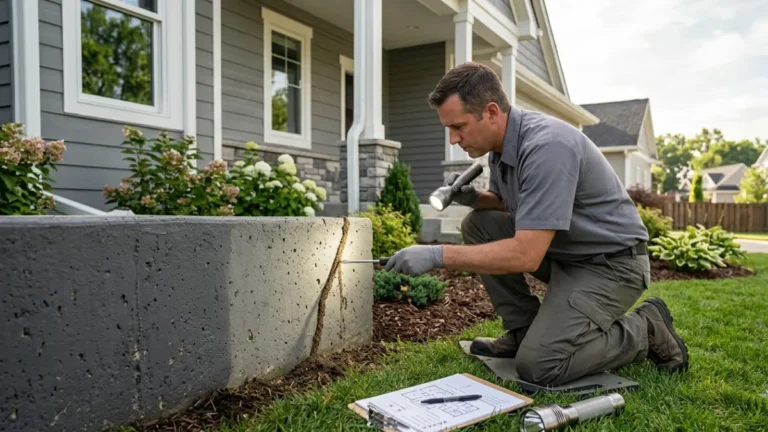
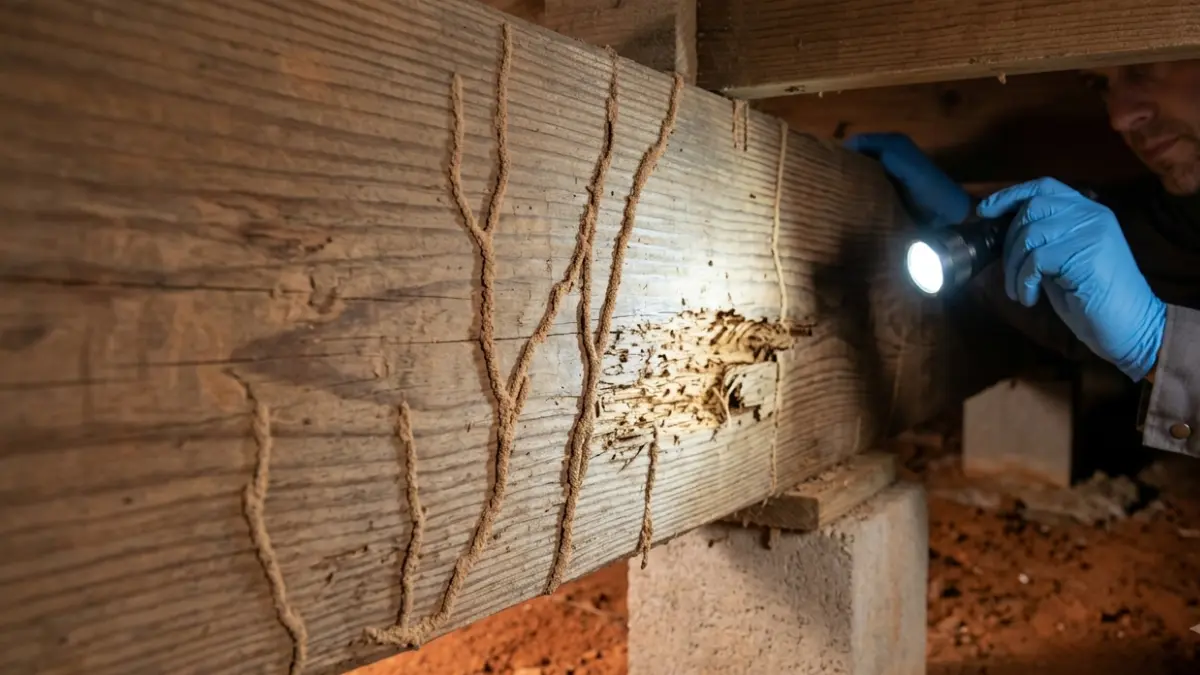
Notice what that means in practice. A termite claim usually has to be argued as a building problem, evidenced by the signs that distinguish an active infestation and by what the wood is doing, not as an infestation complaint.
🔍 Why It Works: Habitability rules were drafted around what makes a home unfit to live in — no heat, no water, filth, disease-carrying pests. Termites make a home unsound rather than unsanitary, so they enter through the structural door instead. That is also why the answer for termites differs from the answer for a pest that does affect health, such as the one covered in our guide to bed bugs and landlord responsibility in apartments.
The state that names wood-destroying organisms outright
Florida is the exception, and it is worth seeing in full. Florida’s statute on a landlord’s obligation to maintain the premises — section 83.51 of the 2025 Florida Statutes — puts extermination of rats, mice, roaches, ants, wood-destroying organisms, and bedbugs squarely on the landlord.
Then it limits itself. That extermination duty applies to a dwelling unit other than a single-family home or duplex, and it opens with the words “unless otherwise agreed in writing.”
| Which duty | How the statute is framed | Where termites usually land | Key detail |
|---|---|---|---|
| Pest / extermination duty | Health and sanitation: vermin, rodents, insects a health officer can assess | Rarely — they are not a sanitation problem | Florida is the visible exception, naming wood-destroying organisms outright |
| Structural / repair duty | Habitability, building and housing codes, structural condition | Usually — the claim is about what the wood is doing | The evidence is the building, not the insect |
Sourced, not tested: framings summarized from Florida Statutes s. 83.51 (2025 edition), Texas Property Code s. 92.052, Hawaii Revised Statutes s. 521-42, and California Civil Code s. 1941.1 with Health & Safety Code s. 17920.3.
What a lease can move, and what it cannot
Before any statute is consulted, one document decides first: the rental agreement. Statutes mostly set a floor underneath it, and that floor is drawn in visibly different places.
The property-type test that switches a duty off
Florida’s extermination duty, as noted, does not attach automatically to a single-family home or duplex. That is the property type most renters with a termite problem are actually standing in.
The same section goes further than most summaries admit. Its subsection (1) maintenance obligations — the structural ones, covering floors, foundations, and other structural components — may themselves be altered or modified in writing with respect to a single-family home or duplex.
What “unless otherwise agreed in writing” actually does
Those five words are the hinge, and states treat them very differently. Hawaii runs the opposite way: section 521-31 of the Hawaii Revised Statutes states that a tenant or landlord may not waive or agree to forego rights or remedies under the chapter, except as the chapter itself allows.
Where Hawaii does permit a tenant to take on repairs and maintenance, section 521-42 attaches four conditions — the agreement must be made in good faith, must not be a way around the landlord’s obligations, must not be needed to cure the landlord’s own non-compliance, and must not reduce what other tenants are owed. Two states, opposite postures, same question.
The limits states keep in place
Every framework examined here keeps one limit: a party is not on the hook for a condition the other side caused. Florida’s section 83.51(4) removes the landlord’s responsibility for conditions created by the negligent or wrongful act or omission of the tenant, a family member, or someone on the premises with the tenant’s consent.
Texas does the same in section 92.052(b), removing the repair duty for conditions caused by the tenant, a lawful occupant, a family member, or a guest — unless the condition came from normal wear and tear. That is the sentence both sides end up arguing about, and Section 4 explains why it is so hard to win.
One more document is worth finding before the argument starts. If the property already carries a service agreement, the answers to the questions worth asking before signing a termite bond will tell you what it covers, who holds it, and whether a retreatment is already paid for.
Nobody can prove when it started
Here is the fact that reshapes most of these disputes, and almost nobody on the first page of search results mentions it. Termite damage cannot be dated.
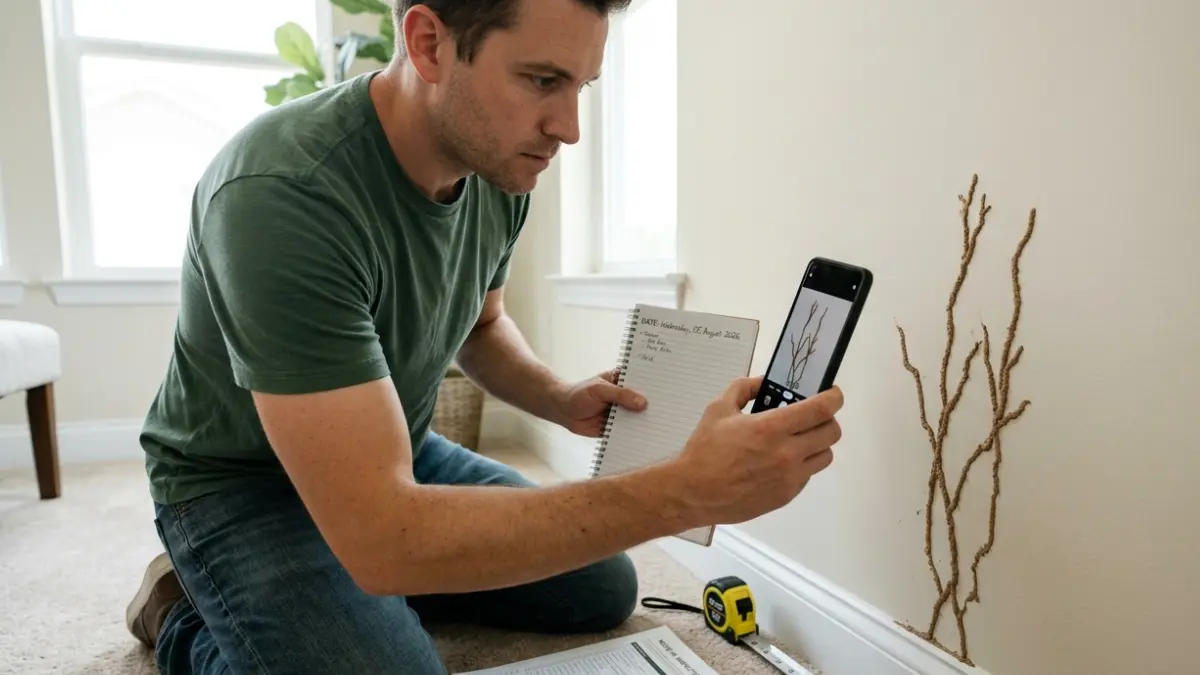
Why the damage cannot be dated
There is no scientifically sound method for looking at damaged wood and saying how old the damage is. University extension guidance in this area is consistent on the point: what can be established is whether an infestation is active now, not when it began.
That single limitation runs both ways, which is what makes it useful. A landlord cannot demonstrate that a tenant’s habits caused damage that may predate the tenancy, and a tenant cannot demonstrate that damage found in month eight was there in month one.
What to photograph, date, and keep

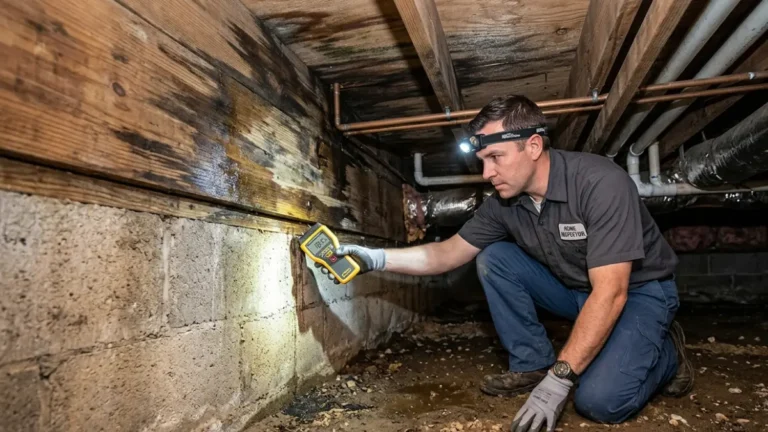
- Measurement for 4 wood categories
- Measurement: range: 2 ~ 40%, accuracy: ± 2%, resolution: 0.1%
- Max / min value acquisition

- Triple Pack Convenience: Get three powerful LED Magnetic Worklights for ultimate convenience. Bulk purchase ensures you …
- Dual Light Modes: Each inspection lamp features two lighting modes – COB light and LED light. Adapt to different situati…
- Battery-Powered Mobility: Powered by 3 AAA batteries (not included), these portable worklights offer hassle-free operati…
Because the wood will not answer the question, the record you each build is the evidence. Both sides should hold the same four things.
- Dated photographs of what was seen and exactly where, including a wide shot that identifies the room.
- A written record of the report — what was sent, when, and to whom, kept as a copy rather than a memory.
- Any inspection report produced by a licensed firm, in full, including the diagram and the exclusions.
- The move-in condition record, which in Hawaii is a statutory requirement: section 521-42 directs the landlord to inventory the premises before initial occupancy, and if no such inventory was made, the condition at the end of the tenancy is rebuttably presumed to be the same as at the start.
Evidence of current activity matters more than evidence of damage. Learning to tell whether mud tubes are active or abandoned, and what it means when swarmers appear indoors, tells both parties whether they are looking at a live problem or an old scar. Before commissioning anything, it is worth understanding what a written inspection report covers and excludes.
In California, there is a public record worth checking first. The Structural Pest Control Board’s search for wood-destroying-organism reports filed on a property covers inspections completed in the last two years, with the detailed activity report available by written request — filing those addresses is required of registered companies under section 8516(b) of the Business and Professions Code.
How notice actually has to be given
Notice is not a formality, and in some states it is the whole ballgame. Texas conditions its repair duty on three things at once: the tenant specifies the condition in a notice sent to the person or place where rent is normally paid, the tenant is not delinquent in rent when that notice is given, and the condition meets the health-or-safety threshold. Under section 92.056 there is a rebuttable presumption that seven days is a reasonable time to repair, and a second written notice is required unless the first went by a tracked mail method.
Tenants carry a reporting duty of their own in some codes. Hawaii’s section 521-55 directs a tenant to report a defective condition to the landlord as soon as practicable where the tenant believes the landlord does not know about it.
⚠️ Watch Out: The most repeated advice on this topic online is to withhold rent until the landlord acts, and it is the advice most likely to cost you the thing you are trying to enforce. The Texas State Law Library’s own explainer of the state’s repair statute warns that a landlord may be able to sue a tenant who withholds rent, makes unauthorized repairs, or deducts repair costs without following the required procedure, citing section 92.058 of the Property Code.
Florida’s section 83.51(2)(c) states that nothing in that part authorizes a tenant to raise the landlord’s non-compliance with that subsection as a defense to an action for possession. Find your own state’s procedure, in your state’s own materials, before you stop paying anything.
The deposit question
Deposits cover what the tenant caused, and the causation test above is the one that applies. Since the damage cannot be dated, a deduction for termite damage rests on showing a condition the tenant created — storing wood against the wall, ignoring a leak, blocking a vent — rather than on the damage itself.
Who pays while the house is being treated
This is the question nobody answers, and it arrives with a date attached. A structural treatment can mean leaving the property, and the argument about who covers what tends to start the evening before.
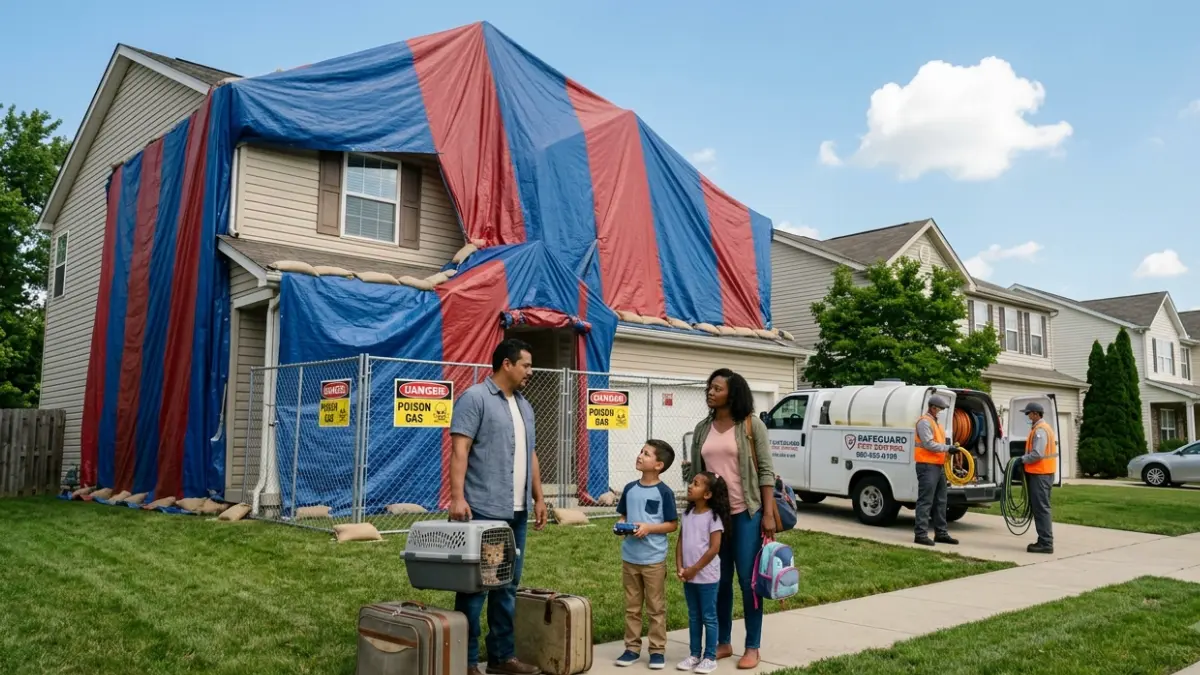
Vacating: how long, and on what notice
Where Florida’s extermination duty applies — again, to dwelling units other than a single-family home or duplex — section 83.51 sets the terms. The landlord must give seven days’ written notice, which since the 2025 amendment may be delivered in person, by mail, or by email under section 83.505, and the tenant is only required to vacate for a period not exceeding four days.
Most states have no equivalent provision at all. We looked and did not find a general rule of this kind outside that framework, which is a finding worth stating plainly rather than papering over.
📊 Sourced Spec: Florida Statutes s. 83.51(2)(a)1, 2025 edition, for dwelling units other than a single-family home or duplex: seven days’ written notice, a maximum of four days’ required vacating, the landlord not liable for damages, and the rent abated. Read on the Florida Senate’s statute page on 5 August 2026. These are Florida’s terms for that property class — not a national rule, and not a statement about any other tenancy.
Abatement is not the same as a hotel bill
That statute says two things in one breath, and the pairing is where the misunderstanding lives: the landlord is not liable for damages, but must abate the rent.
Abatement reduces what is owed for the days the home is unusable. It does not fund a hotel room, a restaurant meal, or a boarding kennel. Reading “the landlord must cover it” into a rent-abatement provision is how both parties end up angry on day three.
The items to agree in writing before the date

Below is what a tented or otherwise disruptive treatment actually costs a household, and how far the statutes examined here go on each. The empty column is the point — and it is why these items belong in an email before the treatment date, not in an argument after it. Preparation is heavier than most people expect, as what preparing a home for fumigation actually requires sets out.
| Cost item | Addressed by any statute examined here? | What to put in writing |
|---|---|---|
| Rent for the days out | Yes, in one framework — Florida abates rent where its extermination duty applies | Whether rent is abated, and for exactly which dates |
| Hotel or alternative lodging | No | Who books it, who pays, and to what standard |
| Meals while out of the kitchen | No | Whether anything is reimbursed, and against receipts |
| Pet boarding and plant removal | No | Who arranges it and who carries the cost |
| Food, medication, and bagging supplies | No | Who supplies the materials the treatment requires |
| Re-entry timing and access | Partly — Florida caps required vacating at four days for that property class | The clearance time the firm gives, in writing, and who confirms it |
| Damage to belongings during the work | No | What the firm’s own agreement covers, before it starts |
Sourced, not tested: statute column reflects Florida Statutes s. 83.51 (2025 edition) and the absence of an equivalent provision in the other codes examined for this article. Not a survey of all fifty states.
One item is worth settling early because the usual assumption is wrong. Neither party can generally expect a policy to absorb this, as why neither policy usually pays for termite damage explains in detail.
Who is even allowed to apply the treatment
Both parties reach the same tempting thought at some point, and in a rented home it runs into a rule neither expects. Pesticide application in housing somebody else occupies is regulated separately from the question of who pays.
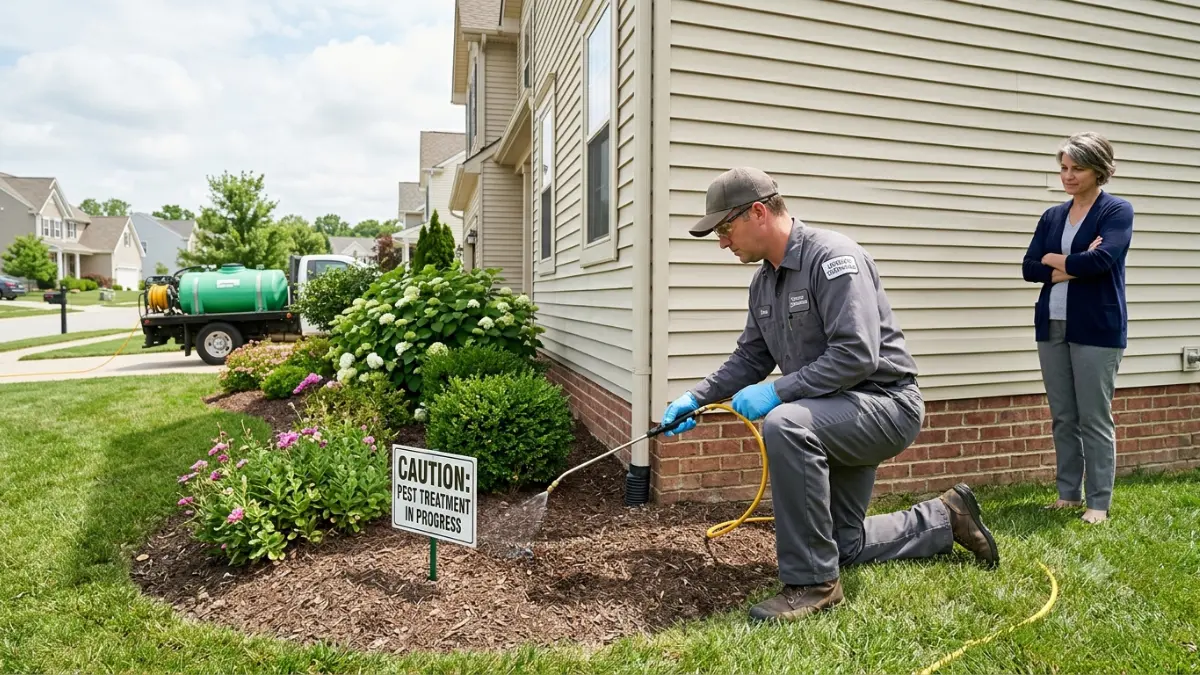
The landlord who treats an occupied unit
New York’s guidance is blunt about it. A state health department’s guide to pest management for landlords and tenants, published by the New York State Department of Health in June 2014 and archived in CDC Stacks, states that an unlicensed landlord, property manager, or building superintendent cannot apply pesticides to any part of an apartment building or multiple-family dwelling except the unit in which they themselves live.
That is not a New York quirk. New Jersey’s Administrative Code at 7:30-6.1 draws its commercial-applicator exemption the same way — it reaches a residence the person occupies, and in multi-family housing only their own unit.
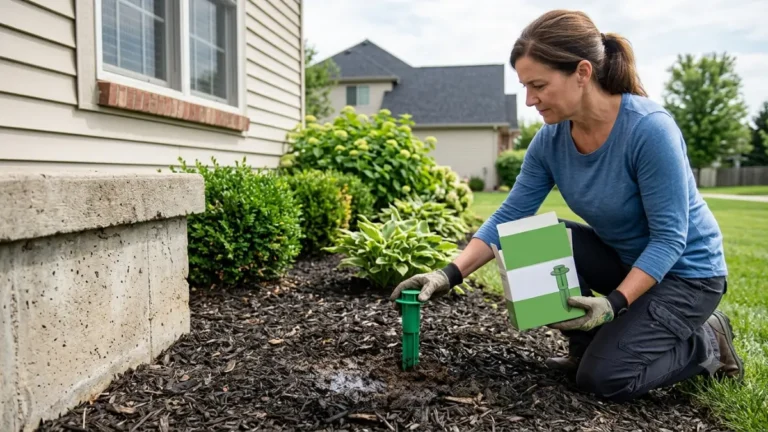
The tenant who buys a product

The same New York guidance sets out the other half: tenants may treat their own living space with a general-use pesticide, but may not apply a product in common areas such as hallways, doorways, or stairwells.
Sit that beside what a subterranean termite treatment physically is — a soil application around and under a structure — and the mismatch is obvious. The unit a tenant may lawfully treat is not where the work has to happen.
Why the effective materials are not on a shelf
The federal position closes the remaining gap. The EPA’s consumer guidance on identifying and controlling termites states that in most cases termiticide application can only be properly performed by a trained pest management professional, and that firms offering termite services must be licensed by the state.
Improperly done, the agency notes, these treatments can contaminate the home and nearby drinking water wells and still fail to protect against termites. Our own look at what store-bought termite products can and cannot do reaches the same place from the shelf end.
What to do when the other side will not move
If the letters are not working, route the problem by what went wrong rather than by who you are. Different failures go to different desks, and sending all of it to a lawyer first is slow and expensive.
If you rent: the order to escalate in
Work through it in this order, keeping a copy of everything.
- Local building or code enforcement for the structural condition — the department that inspects housing standards where the property sits.
- Your state pesticide regulatory agency if a treatment was applied badly, applied by someone unlicensed, or applied without required notice. A directory of state pesticide regulatory agencies is maintained by the National Pesticide Information Center at Oregon State University.
- Your state’s structural pest control regulator, where one exists, for complaints about the firm itself.
- Legal aid or a small-claims self-help service for the money dispute, once the record is complete.
Retaliation is the fear that stops most tenants at step one. Some state codes address it directly — Hawaii’s chapter contains a section on retaliatory evictions and rent increases — so finding whether your own state has an equivalent, and what it actually covers, is worth doing before you file. The escalation machinery is much the same for other housing conditions, and our guide to renters’ rights when a landlord will not fix mold walks the same path in more detail.
If you own: what to commission and in what order
Commission a licensed inspection with a written report first, then scope the work from the report rather than from a phone quote, then handle the repair separately from the treatment. What repairing termite damage involves is a different job from killing the colony, and bundling them hides both.
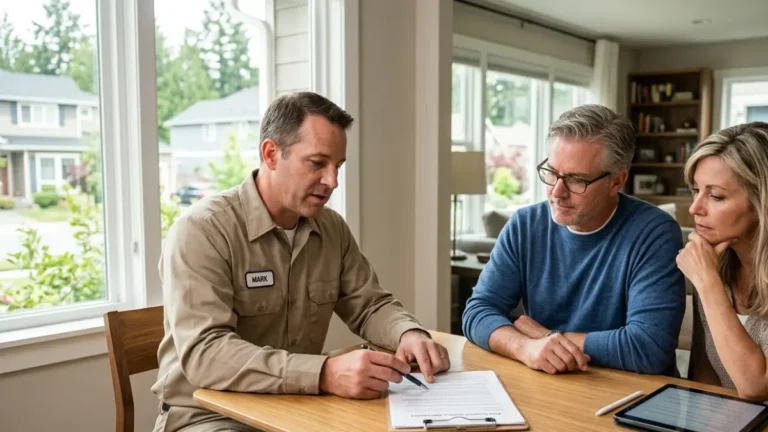
✅ Do This: Whichever side you are on, get a written inspection report from a firm licensed in your state before anyone argues about money. Ask for the diagram, the exclusions, whether the activity found is current, and what the report does not cover. It is the one document that moves this dispute forward for both parties, and it is far cheaper than the argument it ends.
Termites in a rental: common questions
1. Are landlords responsible for termites?
Usually, but through the structural repair duty rather than a pest clause, since termites damage a building rather than making it unsanitary. Florida is the visible exception, naming wood-destroying organisms in its extermination duty for units other than single-family homes and duplexes. The framing differs by state, so check the instrument that applies where the property sits.
2. Can my landlord charge me for termite treatment?
Only where the lease shifts the cost in writing and the state permits that shift, and not for a condition you did not cause. Florida allows written variation for single-family homes and duplexes; Hawaii’s code bars waiving rights except as it allows, and attaches four conditions to tenant-performed maintenance. Read the lease before arguing about statutes.
3. Can my landlord take termite damage out of my security deposit?
A deposit covers damage the tenant caused, and termite damage cannot be dated, so a deduction has to rest on a condition you created rather than on the damage itself. Hawaii goes further: without the required move-in inventory, the end condition is rebuttably presumed to match the start. Keep dated photographs from the day you moved in.
4. How do I prove the termites were here before I moved in?
Usually you cannot, and neither can your landlord, because no method reliably dates termite damage. What can be established is whether the infestation is active now. That is why both sides should document current activity, keep dated photographs, and hold any licensed inspection report in full rather than arguing about how old the damage looks.
5. Can I withhold rent until it is treated?
Treat this as the riskiest option, not the obvious one. Texas conditions its repair duty on the tenant not being delinquent in rent, and its state law library warns that a landlord may sue over rent withheld outside the proper procedure. Florida’s statute says non-compliance with that subsection is not a defense to a possession action. Check your state’s procedure first.
6. Do I have to move out, and for how long?
It depends on the treatment. Where Florida’s extermination duty applies, the statute requires seven days’ written notice and caps required vacating at four days for that property class. Most codes examined here contain no equivalent provision, so the timing comes from the treatment method and the licensed firm’s clearance instructions. Get the clearance time in writing.
7. Who pays for a hotel while the house is treated?
No statute examined for this article assigns the lodging cost to either party. Florida’s provision abates rent and states the landlord is not liable for damages, which reduces what is owed rather than funding a room. Because almost every line item is unaddressed, agree lodging, meals, pet boarding, and re-entry timing in writing before the treatment date.
8. Can I treat the termites myself?
In the rules examined here, a tenant may treat only the unit they live in and not common areas, and an unlicensed landlord or manager may not apply pesticides in a unit somebody else occupies. The EPA states termiticide application is in most cases a job for a trained professional and that termite firms must be state-licensed. Hire a licensed firm.
Where this leaves both of you
The clause both sides reach for first is usually the wrong one: termites are a structural problem, so the duty that reaches them is the repair duty, and the answer changes with the property type and the state. Underneath that, the damage cannot be dated, which means neither party can win the blame argument on the wood alone.
So the next step is the same for both of you, and it is small. If you rent, send a dated written notice with photographs to the address where rent is paid, and keep the copy. If you own, commission a licensed inspection with a written report and scope the work from it.