Termite damage repair cost rests on one costly missing step

Termite damage repair cost has no useful average — published ranges differ more than tenfold. What decides your bill is the repair standard chosen.
Table of Contents
The repair bill starts with a question your report didn’t answer
If you’re holding a report saying damage was noted, or a quote you can’t judge, the number you came for doesn’t exist yet.
- Report in hand? Read the next two sections, then what moves a quote.
- Quote in hand? Skip to the repair standard and audit it line by line.
- Buying or selling? The section on who pays covers the evidence you’d need.
Published termite damage repair cost figures differ by more than tenfold for the same job, and nearly all are self-reported. So instead of an average, this covers what sets the bill: which of two very different repairs you’re buying, and who decides. Treatment is a separate cost, covered in what termite treatment costs.
ℹ️ Safety Note: This concerns load-bearing framing — the joists, sill plates and beams holding your house up. Repairs to structural members should be specified and carried out by a licensed general contractor or professional engineer, under whatever permit your building department requires.
Why you can’t price damage you can only look at
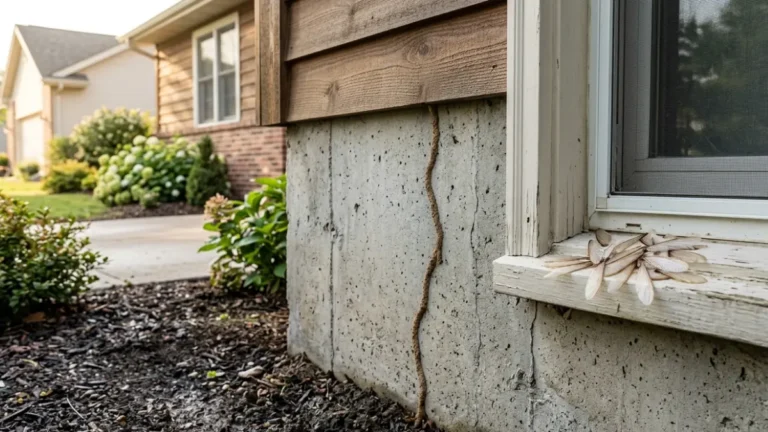
Termites feed inside the wood and work outward, so the last thing to go is the part you can see.
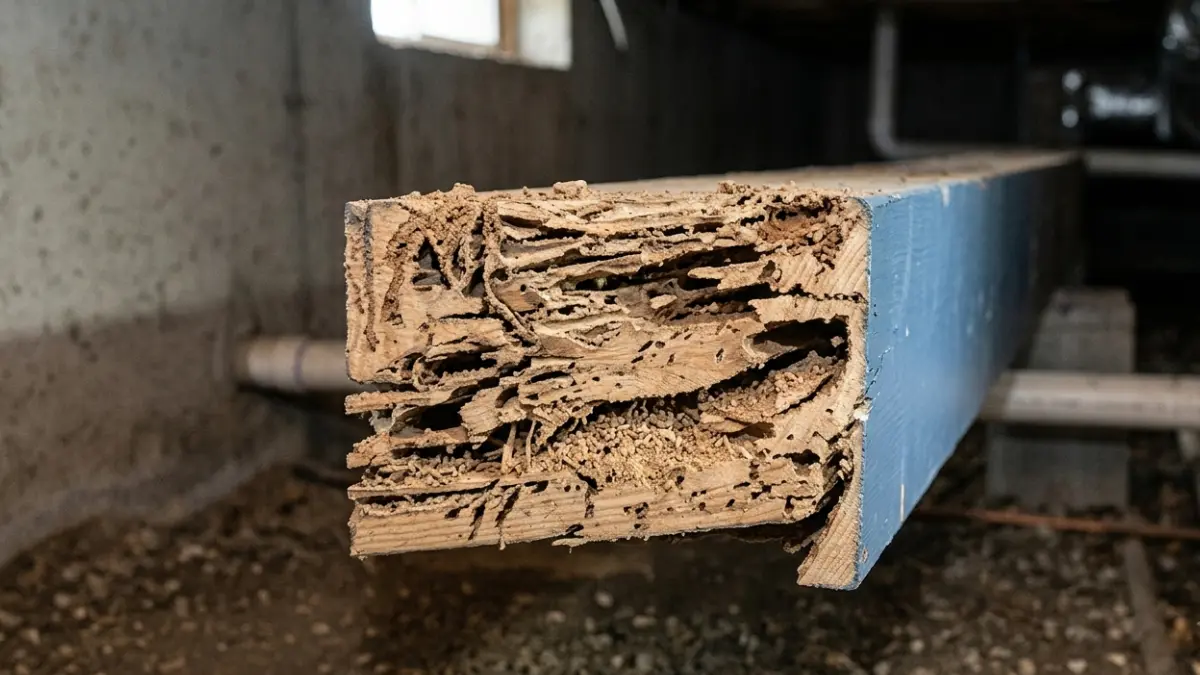
The surface is the last part to go
The University of Kentucky’s homeowner guidance is plain: damage progresses undetected even in exposed wood, because the outer surface usually stays intact. The USDA Forest Products Laboratory describes the same geometry — voids form near the surface under a thin, depressed layer of sound wood, and loading that member at a bearing point can collapse the shell.
🔍 Why It Works: Wood carries load through its cross-section. Hollow out the middle and the piece keeps its shape, its paint and roughly its weight while losing much of what it can hold.
What a tap and a probe actually reach
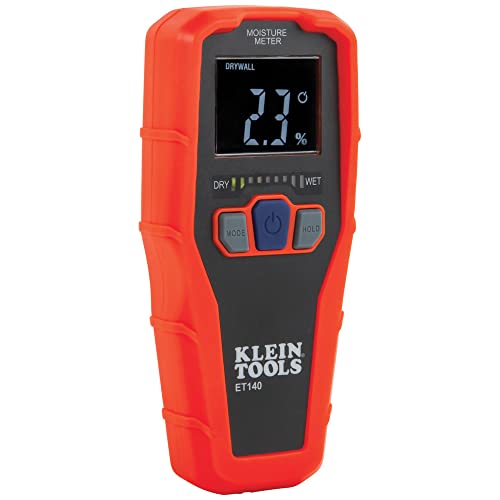
- WATER LEAK DETECTOR detects relative moisture content from leaks and flooding
- PINLESS MOISTURE METER measures relative moisture content in building materials
- NONDESRUCTIVE DETECTION up to 3/4-Inch deep using Electromagnetic field (EMF) technology
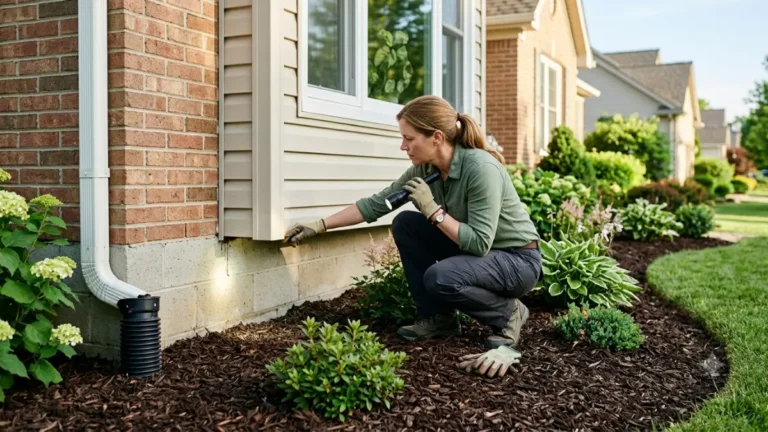
Sounding and probing are real techniques: a brash break, where wood snaps cleanly instead of splintering, indicates deteriorated material. But the Laboratory’s condition assessment manual states outright that visual inspection should never be the sole method used, and cannot always detect early-stage decay.
📊 Sourced: Considerable strength loss occurs without significant weight loss, and a single stress wave reading finds internal decay only past roughly 20% of the cross-section — hence resistance drilling, now used to quantify termite galleries. (USDA Forest Products Laboratory, GTR-299, 2025.)
Those examples are bridges and heavy timbers, not house framing: the physics carries across, the thresholds aren’t residential code.
Why this isn’t a reason to panic today
Serious structural damage usually takes three to eight years, per NC State Extension, and Kentucky’s guidance is direct that termites work slowly enough that another week spent getting a real answer costs nothing. Don’t probe framing yourself — soft, crumbling wood is often rot rather than insects, and knowing the signs that appear first beats a screwdriver.
The report that found the damage can’t tell you what it means
No, a termite inspection doesn’t tell you how bad the damage is — and the standard form says so on its own face.
What the form says about itself
Printed on Form NPMA-33 is a note stating it is not a structural damage report: where evidence is found, some damage including hidden damage may be present, and you should contact a qualified structural professional to determine the extent and whether repairs are needed. Page two adds that the inspector’s training doesn’t qualify them in damage evaluation or repair.
Why the inspector isn’t allowed to answer
That’s no criticism of your inspector — they did the job the standard wood-destroying insect report form defines: visual inspection plus probing and sounding of unobstructed, accessible areas. Several states mandate their own version with similar limits; see what a WDO inspection includes.
The assessment is a separate purchase
The first real cost is one nobody quoted you: a written structural assessment. Skip it and your repair scope gets defined by whoever is bidding to perform it.
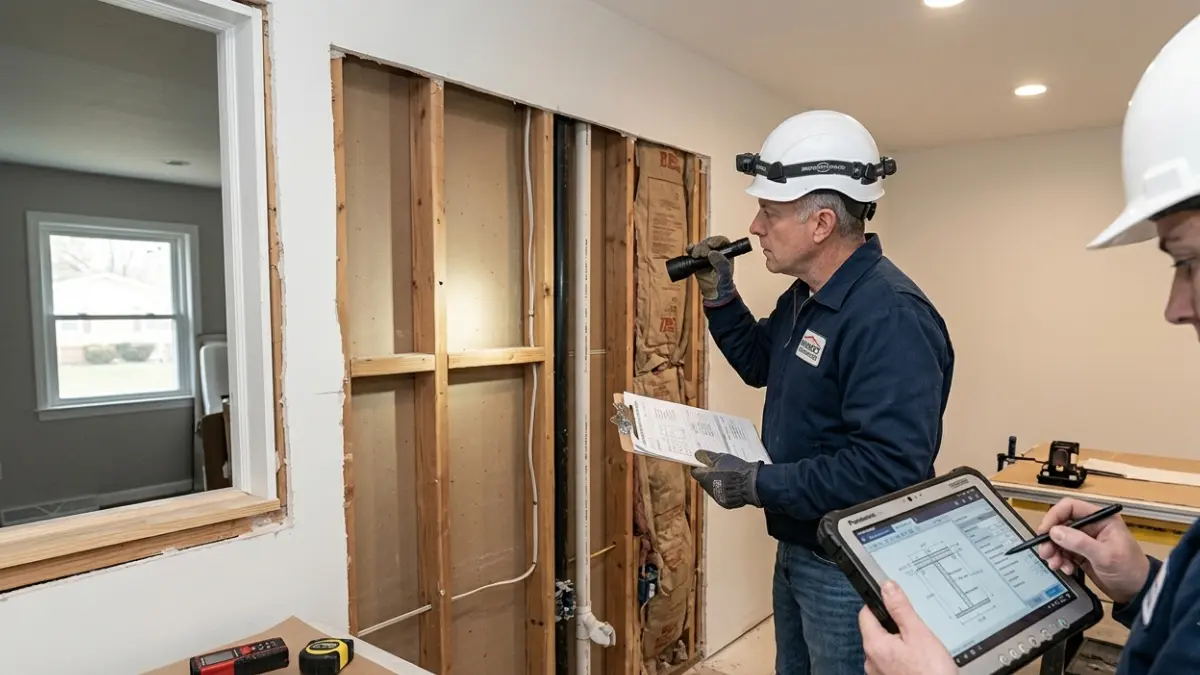
✅ Do This: Engage a licensed general contractor experienced in structural repair, or a professional engineer where a member’s capacity is in question. Ask three things: will the assessment be written and itemised member by member, does the assessor also intend to bid the work, and what opening up is needed — at whose cost?
Four things that move a repair quote after work starts
Every early repair estimate is provisional by construction, because the inspection behind it was forbidden from opening anything. The form makes no inspection of areas requiring removal of objects — floor coverings, wall coverings, siding, fixed ceilings and insulation are all named.
| Driver | Why the first quote missed it | Ask for this in writing |
|---|---|---|
| Exploratory opening | Inspection couldn’t lift flooring, siding or ceilings | Capped allowance, and who pays to re-close if nothing’s found |
| Access and clearance | Crawl spaces may be deemed inaccessible below 24 inches | Whether shoring or access work is in scope |
| The finish trades | Framing repair is followed by drywall, flooring, paint | Whether make-good is included, and to what standard |
| The code step | Permits are set locally, not by the estimator | Who pulls it, and whose cost it is |
Derived from the scope limits stated on Form NPMA-33 (7/01/19).
This feels like being upsold and usually isn’t: the wall opens, more damage appears than a visual inspection could reach, and scope grows. No dollar figures appear here deliberately — the four largest cost sites give ranges for the same job differing more than tenfold, all self-reported.
⚠️ Watch Out: Where an area was reported inaccessible and is later made accessible, the inspecting company can be asked back, and the form notes an additional fee may apply. Settle who carries that before anyone opens a wall.
The repair standard nobody puts in writing — except in one state
Here’s the reframe this topic hangs on: cosmetic and structural aren’t two kinds of damage. They’re two standards a repair can be written to, and somebody chooses between them.
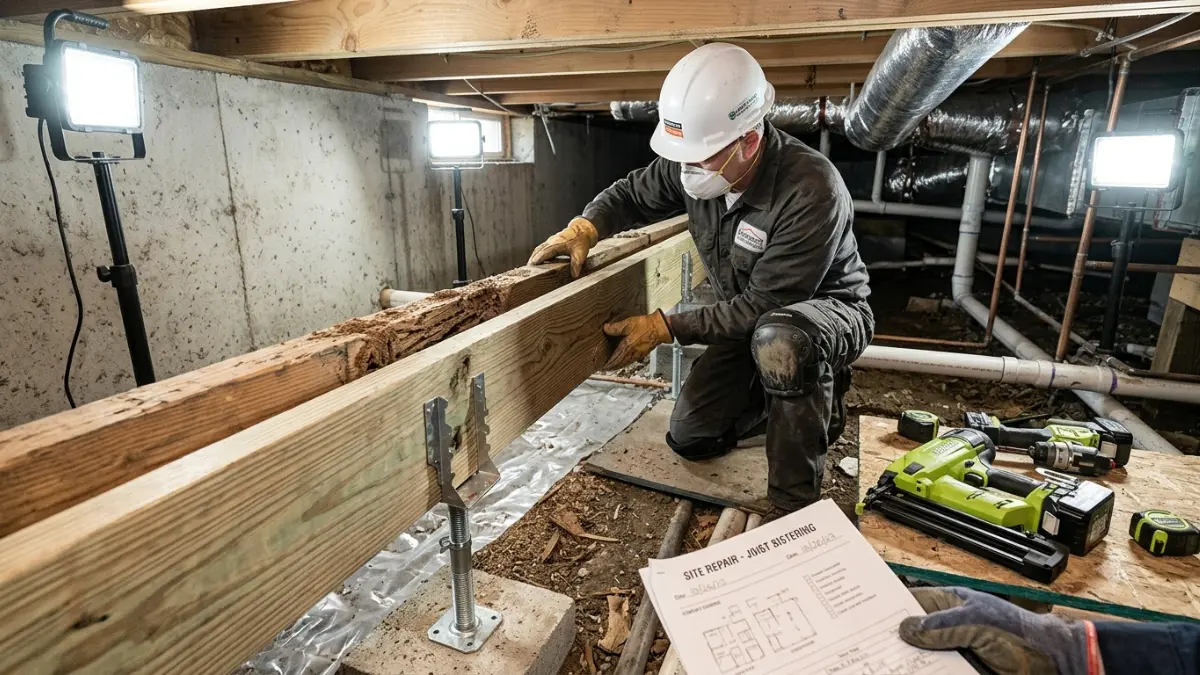
Cosmetic is a standard, not a diagnosis
Almost everywhere that choice is made verbally and leaves no trace. California is the exception: under its structural pest control regulations, secondary recommendations must be labelled as such, explained in full, and noted as below-standard measures, while corrective work must otherwise conform to the building code.
📊 Sourced: Where below-standard work is performed, California requires the completion document to state which recommendations were secondary and below standard — and to name the person or agency who requested them. (16 CCR §1992.)
What a completion notice has to itemise
California’s completion notice form has four boxes: work done to the Board’s standard, substandard work with the requester named, cost alongside the inspection fee, and recommendations not completed with their estimated cost. It’s filed with the Board, and two years of history are public.
Running the same check on your own quote
You likely have no legal right to that, but you can ask for the structure, because it describes any honest repair: what’s repaired to standard, what’s made good only and at whose request, and what’s left alone and at what cost. One point travels furthest — concealed work can only be verified while it’s open, so ask for a look before the drywall goes back on.
Who pays, and the evidence each answer turns on
Three funding routes get asked about constantly, and all three fail on the same missing fact.
Insurance, and the document that answers it
Standard homeowners policies treat termite damage as maintenance rather than a sudden accidental loss, and exclude it. What your policy does is a document question — read your exclusions and any collapse provision, then put it to your carrier in writing, much as with insurance and mold remediation.
Bonds and warranties: why the exclusion bites
A repair guarantee usually pays on damage occurring during the contract, and NC State Extension is blunt that there’s no way to determine whether damage predates one, and no sound method of dating it. On a previously owned home without continuous coverage, existing damage is typically excluded — which is why what a termite bond covers matters more than its price.
💡 Pro Tip: NC State Extension names what would settle these arguments: a reference point, meaning a documented moment when that wood was known to be sound. A dated clean inspection is the only thing that supplies one.
Buying or selling
Neither side can prove when the damage happened, so what gets negotiated is repair scope and who commissions the assessment — and whether activity is current often turns on reading mud tubes. This isn’t legal or transaction advice.
Four things to settle before anyone opens a wall

You have more time than this situation feels like it gives you, and using it well is most of the job.
Treatment comes first. New framing installed while a colony is active is money spent twice, so treatment and what it costs belong ahead of carpentry.
Get concealed work looked at while it’s open. Once closed up, verifying it means opening it again.
Settle the permit question early. Your building department decides what needs one — not your contractor, and not us.
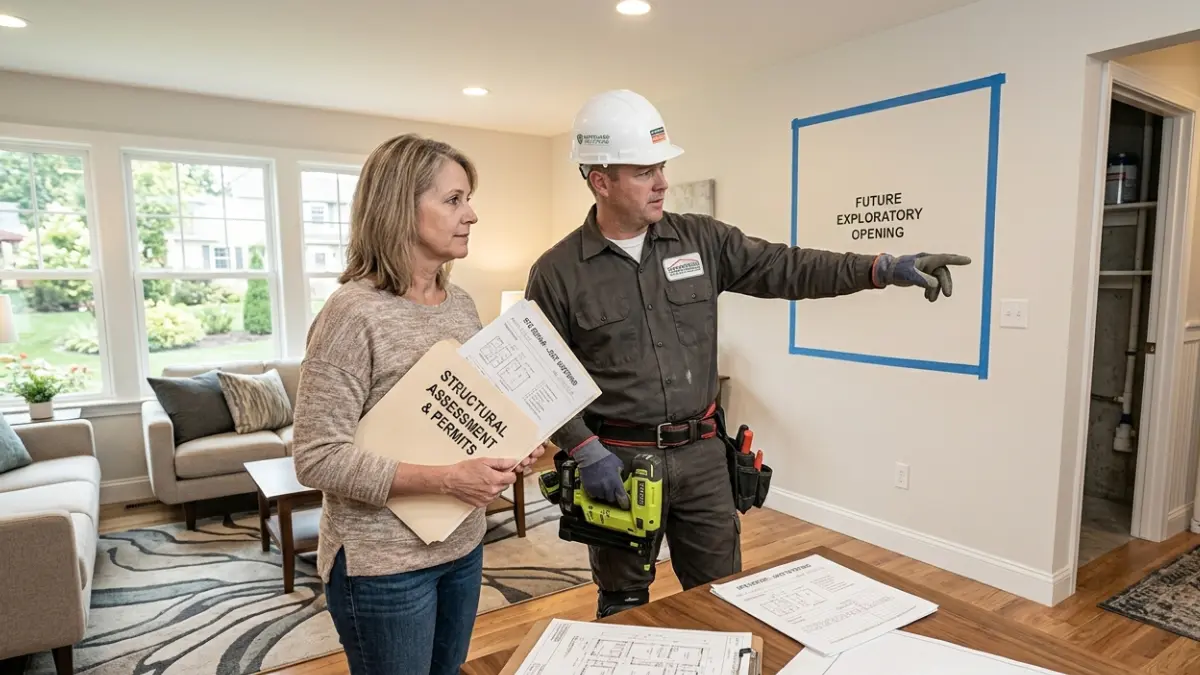
⚠️ Watch Out: There are no repair instructions on this page, and that’s deliberate. Sistering, replacing or shoring a load-bearing member transfers load onto something else, and no article can see your framing or spans. If you think a member is failing now, stop loading it and get a licensed professional on site today.
Termite damage repair questions, answered
1. Does homeowners insurance cover termite damage?
Standard policies exclude it, treating termite damage as a maintenance issue rather than a sudden accidental loss. Outcomes turn on your specific wording, so read your exclusions and any collapse provision, then put the question to your carrier or state insurance department in writing rather than relying on a general answer.
2. How much termite damage is too much?
That can’t be answered by eye. The USDA Forest Products Laboratory states visual inspection should never be the sole method used, and considerable strength loss occurs without significant weight loss. The threshold is a structural judgement about a specific member under a specific load, made on site by a licensed contractor or engineer.
3. Can termite damage be repaired without replacing the wood?
Sometimes — but that’s a decision about which standard the repair is written to, not about the damage. California’s rules label anything short of proper corrective work a below-standard measure and require it documented as such. Ask your contractor which line items meet code and which are make-good only.
4. Who decides whether termite damage is structural?
Not your termite inspector. Form NPMA-33 states it is not a structural damage report and that the inspector’s training doesn’t qualify them in damage evaluation or repair, directing you to a qualified structural professional. Engage a licensed general contractor experienced in structural repair, or a professional engineer, to make that call in writing.
5. Do I need a permit to repair termite damage?
Your local building department decides, and requirements vary by jurisdiction and by what’s being replaced. California requires an inspector who believes a permit is necessary to note it on the report, which tells you the question is expected. Confirm with your building department before work begins, and agree who pulls it.
6. Should I treat before or after repairing?
Treatment first. New wood installed into a structure with an active colony is money spent twice, and most repair guarantees assume the infestation has been dealt with. Sequence the licensed pest control work ahead of the carpentry, and keep both sets of paperwork filed together in case a future claim ever depends on the dates.
7. How long does it take termites to cause serious damage?
NC State Extension puts serious termite damage at roughly three to eight years of activity, though species and climate shift that considerably. The practical point is that your decision window is measured in weeks rather than hours, leaving time to get a proper structural assessment before committing to a repair scope.
8. Can anyone tell how old termite damage is?
No. NC State Extension states there’s no accurate method for determining the age of recently discovered damage, and University of Kentucky guidance agrees dating its onset is difficult. What settles it is a reference point — a dated inspection record showing the wood was sound at a known moment — giving those records real financial value.
9. Is it safe to stay in the house?
This is the one question that genuinely needs someone on site, and no article should answer it for you. Termite damage rarely causes sudden collapse, but a compromised bearing member under load is a real hazard. If a floor is sagging, springing or sounding hollow underfoot, stop loading that area and get a licensed professional out the same day.
10. Why doesn’t this article give an average repair cost?
Because the figures don’t survive checking. The four largest cost sites publish ranges for the same described structural job differing by more than tenfold, all built from self-reported data, at least one labelled advertising. An average drawn from those would hand you false confidence, which is worse than none.
What to do next
The most useful thing you can do with a termite damage repair cost question is refuse to answer it in the wrong order. Commission a written structural assessment from someone who isn’t bidding the repair, then audit the quote against three lines: what’s repaired to standard, what’s made good only, and what’s left undone and at what cost.
Then start the record that makes next time easier — a dated annual inspection is the only document that can establish when your wood was sound. Whether your species reaches structural framing is worth checking in subterranean versus drywood termites.