
How to Tell Termite Damage From Water Damage and Rot

Termite damage or wood rot? Most guides confuse them—the real tells are mud tubes, cubical brown rot, and a musty, fungal smell.
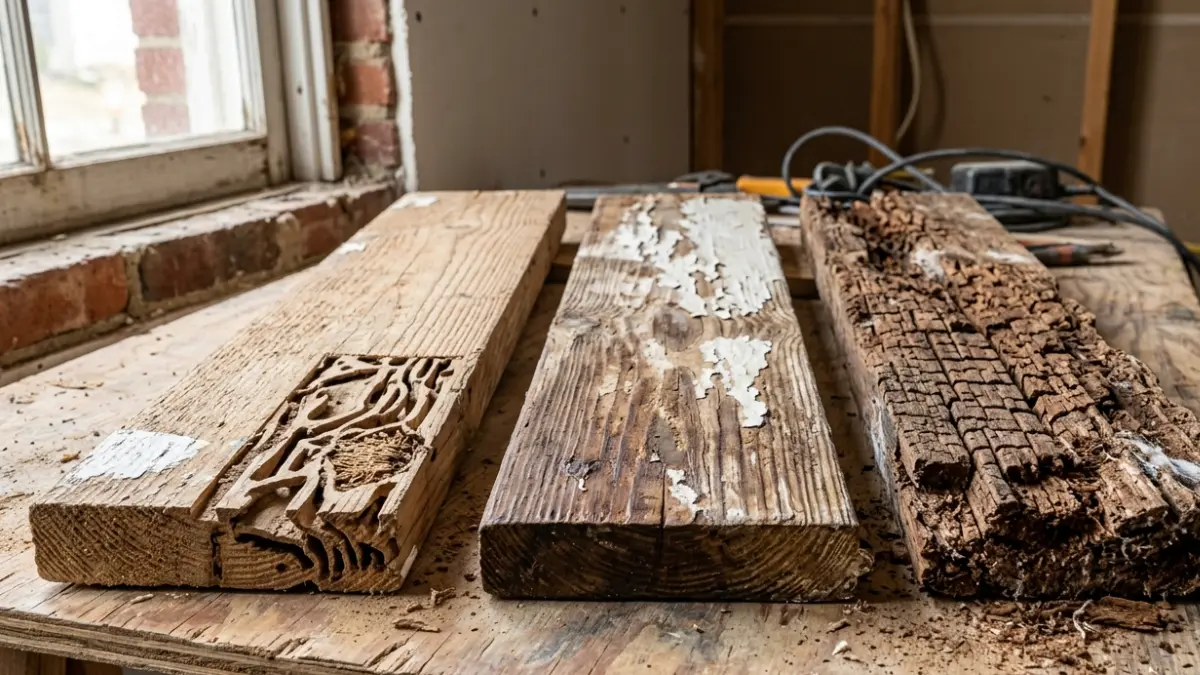
Table of Contents
You found something wrong with the wood — a soft spot, a stain, a small pile of what looks like sand, or a line of dried mud creeping up a wall. Before you spend a dollar fixing it, the first job is naming it correctly.
Three culprits get confused constantly because they can look almost identical: termites, plain water damage, and wood rot. Each needs a different response, and calling the wrong professional wastes time and money.
Here’s how to route yourself. Mud tubes or tiny holes? Start with the termite section. Staining, bubbling paint, or warping with no crumbling? Read the water-damage section. Wood crumbling into cubes, or bleached and stringy with a musty smell? Jump to wood rot. Not sure — the at-a-glance table sorts it in about thirty seconds, and the safe home tests confirm it.
ℹ️ Safety Note: Termite damage and wood decay can weaken a home’s structure, and treatment often involves pesticides or major repairs. Everything here is for identifying the problem, not fixing structural or pest issues yourself. If the wood may be load-bearing, or if you confirm termites, hire a licensed pest-control professional, a qualified contractor, or a structural engineer, and follow your local codes and any pesticide-label directions.
Termite damage vs water damage vs wood rot at a glance
The fastest way to narrow the cause is to hold what you’re seeing against all three at once. Find the row that matches, then confirm it with a test further down.
| Cause | What you see | How it feels / sounds | Where it shows up | The telltale sign |
|---|---|---|---|---|
| Termite damage | Clean tunnels, often mud-lined; surface can look intact | Hollow when tapped; still hard unless badly eaten | Near soil, crawl spaces, foundations, door frames | Mud tubes (subterranean) or pellet frass (drywood) |
| Water damage | Staining, bubbling or peeling paint, warping | Spongy but whole; sounds solid | Roof lines, windows, under sinks, along leaks | Discoloration with no insects and no fungus |
| Wood rot (fungal decay) | Brown and cracked into cubes, or bleached and stringy | Crumbles or feels spongy; usually a musty smell | Anywhere wood stays damp: sills, trim, framing | Active fungal decay plus an earthy, musty odor |
Sources: EPA; University of Kentucky Entomology; Penn State Extension; USDA Forest Products Laboratory.
One clarification the table earns: that brown, cube-cracked “alligator skin” pattern many sites file under water damage is actually brown rot, a fungus — naming it correctly changes how you fix it. The reason all three overlap is moisture, which invites termites and feeds decay fungi alike, so one wet spot can show more than one problem.
What termite damage actually looks like
Termite damage splits cleanly by species, and the two you’re most likely to meet leave very different calling cards.
Subterranean termites: mud tubes and hidden galleries
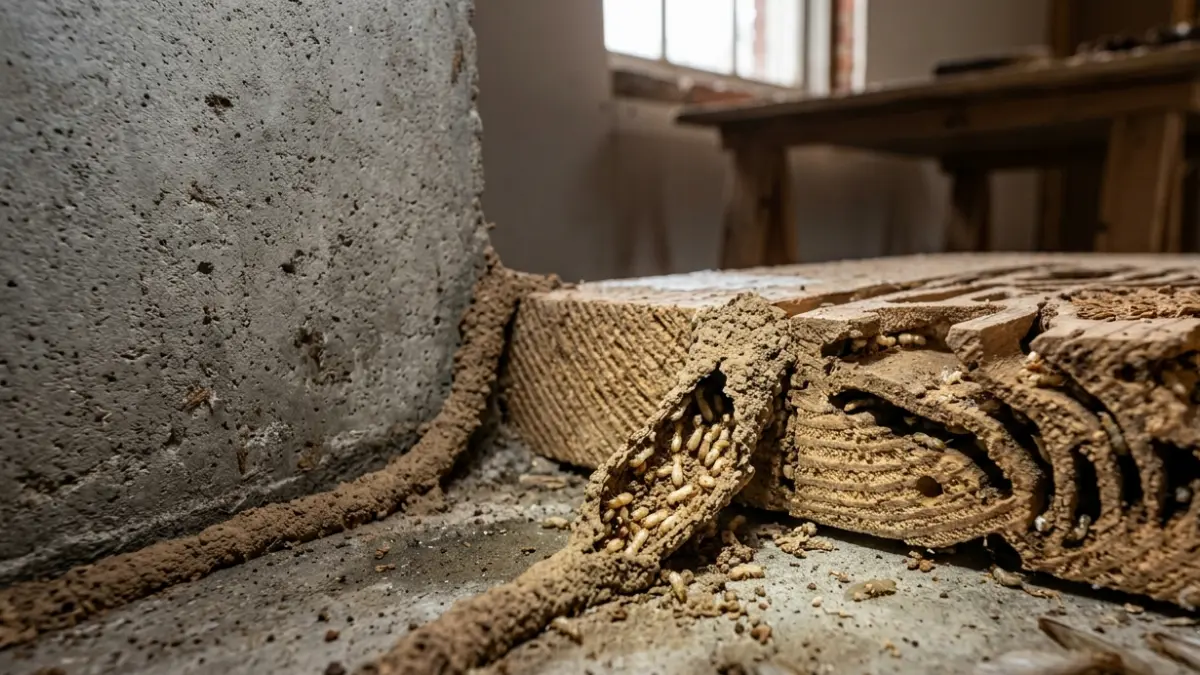
Subterranean termites are the most common type in most of the United States, and they nest in soil rather than in the wood itself. To reach your framing they build mud tubes — pencil-wide tunnels of soil and saliva running up foundations, piers, and walls. Their galleries follow the grain and are mud-lined, and because they eat from the inside out, the surface can look sound while the core is gone. If you spot a mud line, our guide on whether termite mud tubes are active shows the next check.
Drywood termites: frass and kick-out holes
Drywood termites live entirely inside the wood and need no soil contact, so they never build mud tubes. Instead they push dry, pellet-shaped droppings out of tiny “kick-out holes” — roughly 1 mm across — leaving small piles below the infested wood. Learning what termite frass looks like is often what separates a real infestation from swept-up sawdust; real frass is hard, uniform pellets, not splintered shavings.
Common look-alikes: flying ants and carpenter ants
A swarm indoors panics people, but ants swarm too. Termite swarmers have straight antennae, a uniform waist, and equal-length wings; ants have elbowed antennae, a pinched waist, and unequal wings. Carpenter ants tunnel in wood but don’t eat it, leaving smooth galleries and sawdust mixed with insect parts, never a mud lining. Our breakdown of flying ants versus termite swarmers settles most cases in a minute. For the full picture, the EPA’s homeowner guide to identifying termites and the University of Kentucky’s homeowner termite guide are the sources to trust.
Water damage vs wood rot — and what most sites get wrong
Plain water damage and wood rot are not the same thing, and the difference decides who you call. This is also where a lot of popular articles slip.
Water damage: stains, bubbling paint, and warping
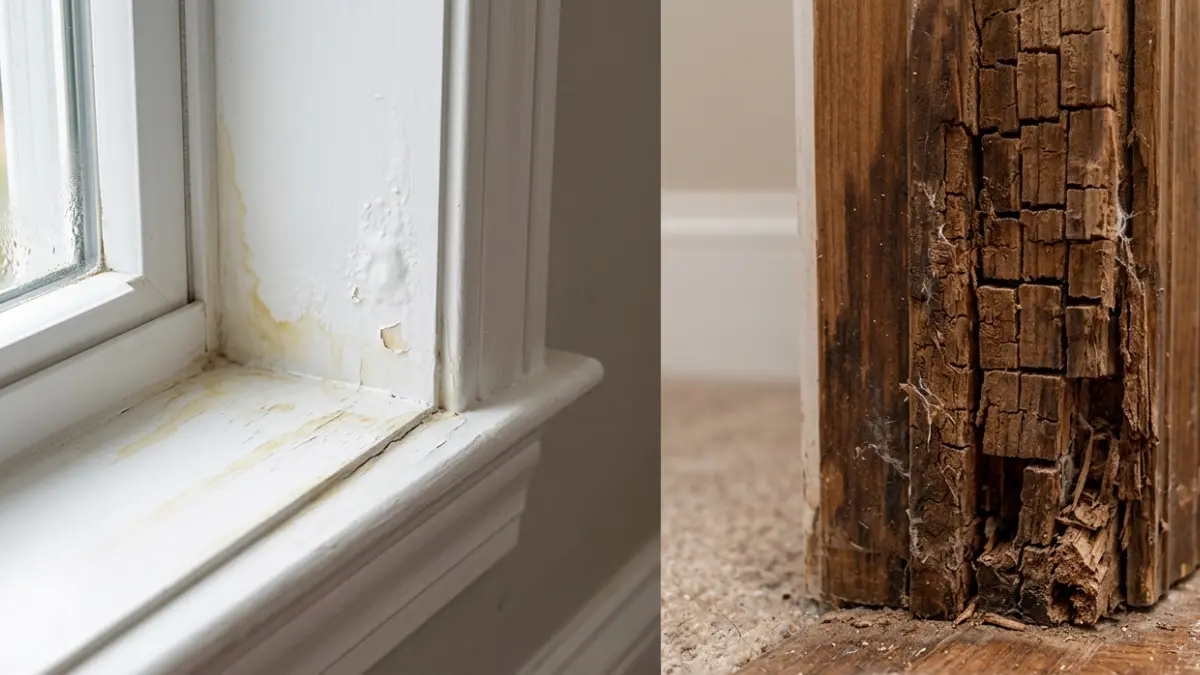
Water on its own — before any fungus takes hold — shows up as water damage: yellow or brown staining, bubbling or peeling paint, and warping. Press on it and the wood often feels spongy but stays whole, with no active crumbling and no musty odor. At this stage you’re dealing with moisture, not decay.
Wood rot is fungal: brown rot, white rot, soft rot
Wood rot is decay caused by fungi, not “just water.” Brown rot leaves wood brown, crumbly, and cracked into cube-like blocks because the fungus digests the cellulose that stiffens wood while leaving the brown lignin behind. White rot leaves it bleached and stringy; soft rot softens the surface in constantly wet spots. If the affected wood is structural, cleaning fungal growth off framing is its own careful job — see safely removing mold from wood and studs.
The “dry rot” myth (and the real moisture number)
Here’s the correction. “Dry rot” is a nickname for certain brown-rot fungi that grow root-like strands carrying moisture into wood that looks dry — the wood at the decay front is still wet. It does not mean fungi rotting genuinely dry timber. So the tidy “dry rot at 20%, wet rot at 50%” figures floating around aren’t reliable. Controlling moisture is the real fix, which is why a dehumidifier helps prevent decay and mold.
📊 Spec (sourced): Decay fungi generally require wood above its fiber saturation point — roughly 28–30% moisture content or higher — and most do poorly below about 30%. Sources: Penn State Extension on brown rot; USDA Forest Products Laboratory on wood-decay fungi.
Safe ways to check at home before you call anyone

- HUMIDITY SENSOR: Our handy meter tool can quickly determine what level of remediation is needed to keep your family safe…
- WATER LEAK DETECTOR: Finding the moisture content in your wood or drywall is the first step in early prevention. Continu…
- MOISTURE READER: The mold test features large 0.3″ high digits in a backlit LCD for quick and easy detecting. Our mildew…

- STRENGTH AND DURABILITY: Made of heat-treated alloy steel
- COMFORT OPTIMIZED HANDLE: For high and low torque application
- Satin-nickel finish
You can narrow the cause yourself with a few checks that don’t damage anything or put you at risk. Treat them as clues, not a verdict.

- [ 2025 Newest & Super Bright 100000 Lumens & Long Range] The EG0770 rechargeable flashlight high lumens is made of updat…
- [ Long Lasting with Improved Digital Power Display & Waterproof ] The super bright flashlight rechargeable can provide 7…
- [ Multifunctional 2-In-1 USB Input & Output ] The high powered flashlight rechargeable is built-in a USB C charging inte…
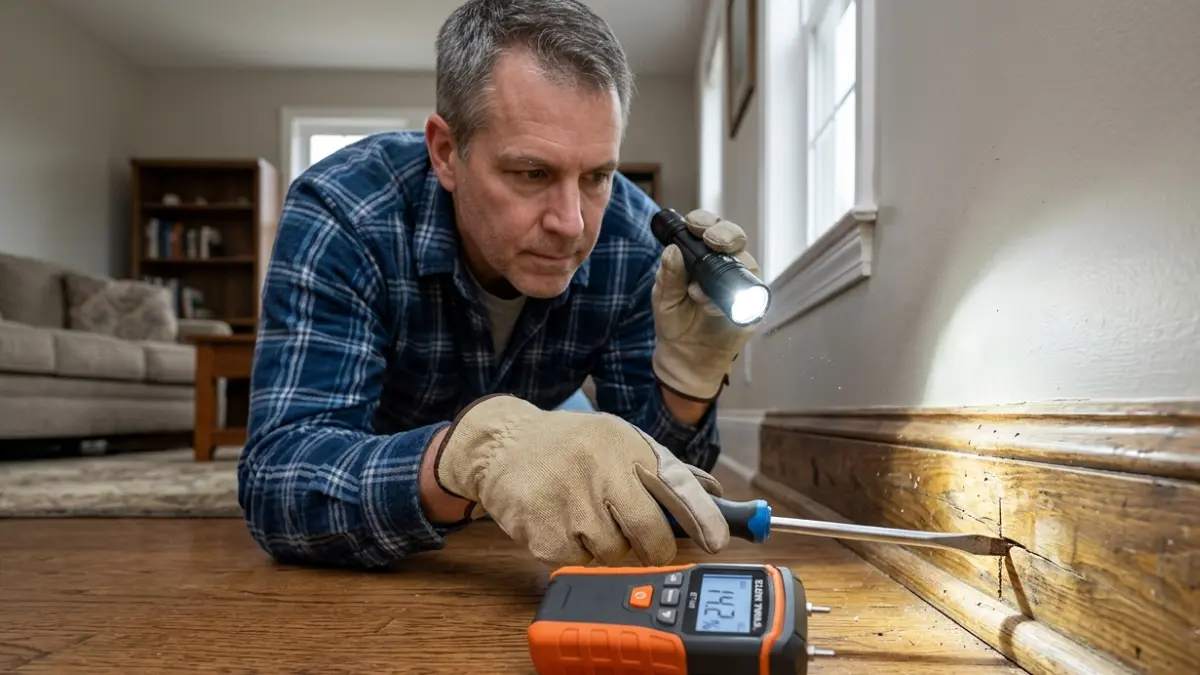
The probe test: gently press suspect wood with a flathead screwdriver and feel for soft or hollow spots. The EPA lists this as a basic way to find hidden damage — hollow points toward termites, soft-but-whole toward water, and crumbly toward rot.
The tap test: tap the wood and listen. A hollow sound can mean termite galleries inside, while water-damaged or lightly rotted wood usually still sounds solid. It’s suggestive, not diagnostic, so pair it with what you see.
The mud-tube break test: found a mud tube? Break out a small section, about an inch, and wait a few days. If it’s rebuilt or live termites appear, the colony is active — this break-and-watch method is exactly what Mississippi State Extension’s field signs recommend.
The smell and pattern check: fungal decay usually brings a musty, earthy smell alongside crumbling (brown rot) or bleached, stringy wood (white rot). Clean, mud-lined tunnels or pellet piles point to termites instead. A wood moisture meter reading above roughly 28–30% flags the dampness that feeds rot.
⚠️ Watch Out: Don’t dig into structural beams, pry open walls, or handle anything hazardous to “see how bad it is.” These checks narrow the cause; they don’t replace a professional inspection. The full range of termite warning signs is worth a look before you decide.
How serious is it, and who should you call?
Once you’ve named the problem, the real questions are how much it threatens the structure and which professional fixes it.
Termites feed from the inside out, and infestations can go undetected for years, so a beam that looks solid can be badly hollowed. Decay quietly removes strength the same way. Both favor hidden, damp spots — which is why crawl-space moisture and decay so often hide the worst of it.
⚠️ Watch Out: Writing damage off as “just cosmetic” can miss real structural loss. The flip side is also true — finding a mud tube isn’t a reason to panic, it’s a reason to get an assessment.
Call a professional when you see mud tubes, get a positive probe result, find swarmers indoors, hit crumbling or bleached structural wood, or doubt whether a member is load-bearing. Match the pro to the problem: a licensed pest-control professional confirms and treats termites, a water-damage restoration company handles active leaks and flooding, and a structural engineer or qualified contractor evaluates compromised framing.
✅ Do This: Buying or selling a home? Get a professional termite (WDO) inspection, ask exactly what it covers, and make sure findings come to you in writing.
Costs swing widely with the cause, how far it has spread, and the treatment chosen, so a real number depends on your home. Rather than guess, work from verified figures in our guide to real termite treatment costs and options.
You found damage — here’s exactly what to do next
Turn everything above into a short, calm sequence so you leave with steps instead of worry.
- Narrow the cause with the table and one safe test.
- Don’t ignore it, and don’t panic — hidden damage is common but very assessable.
- Document it with photos, the location, and the date.
- Fix the moisture source if it’s water or rot; what to do about mold after flooding covers the damp-then-fungus path.
- Call the right licensed professional to confirm and repair.
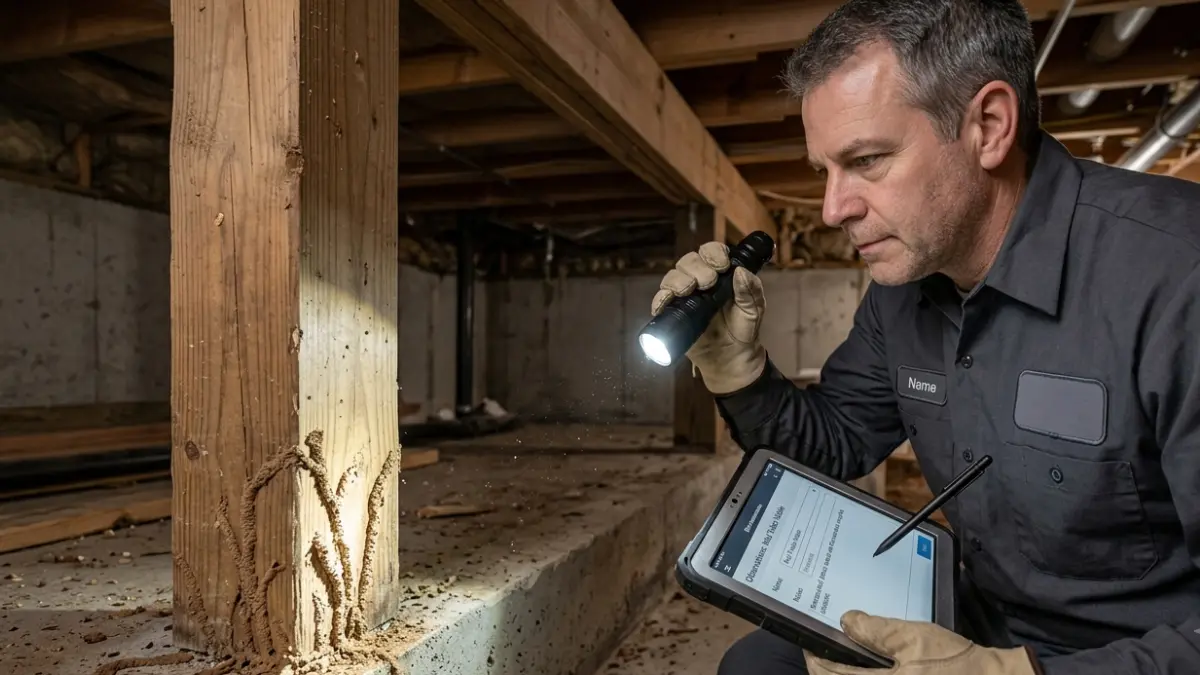
What not to do matters just as much: don’t tear into structural members or open up walls; don’t self-apply termite pesticides, since treatment is a professional job with a labeled product; and don’t ignore mud tubes or swarmers showing up indoors.
Frequently asked questions
1. Can you have termites and water damage at the same time?
Yes. Moisture attracts termites and also feeds decay fungi, so one damp area can carry water damage, wood rot, and termite activity together. Because the fixes differ, confirm each one — and if you’re unsure what you’re looking at, get a professional inspection before starting repairs.
2. What does termite frass look like?
Drywood termite frass is small, hard, dry, uniform pellets that collect in little piles beneath the wood, pushed out through roughly 1 mm kick-out holes. It’s easy to mistake for coarse sawdust, so look closely — real frass is pellet-shaped, not splintered shavings.
3. Do subterranean termites leave frass?
No visible frass. Subterranean termites mix their waste into soil and their mud tubes rather than ejecting pellets, so their calling card is the mud tube, not a pile of droppings. Seeing pellet piles instead of tubes points to drywood termites.
4. What’s the difference between dry rot and wet rot?
Both are fungal decay. “Dry rot” is a nickname for certain brown-rot fungi that grow strands carrying moisture into wood that appears dry, though the decay front is still moist. “Wet rot” simply means decay in obviously wet wood. Either way, fixing the moisture is the real cure.
5. Does knocking on wood really detect termites?
Partly. A hollow sound can signal galleries eaten inside the wood, while water-damaged or lightly rotted wood usually still sounds solid. It’s a useful clue but not proof, so confirm any hollow spot with the screwdriver probe test or a professional before assuming termites.
6. How do I check for termites myself safely?
Probe suspect wood for soft or hollow spots, tap and listen for a hollow sound, break a small section from any mud tube and watch for rebuilding, and check for a musty odor — all without damaging structure. If a check is positive or you’re unsure, book a licensed inspection.
7. What moisture level causes wood rot?
Decay fungi generally need wood above its fiber saturation point, roughly 28–30% moisture content or higher, and most do poorly below about 30%. That’s why keeping wood dry, and drying it quickly after any leak, is the single most effective way to prevent wood rot.
8. When should I call a professional?
Call one for mud tubes, a positive probe result, swarmers indoors, crumbling or bleached structural wood, or any doubt about load-bearing members. Choose a licensed pest-control professional for termites, a restoration company for active water intrusion, and a structural engineer for compromised framing.
9. How much does termite damage cost to repair?
It varies with the cause, how far the damage has spread, and the treatment chosen, so there’s no single figure. For verified ranges and how the main treatments compare, see our guide to real termite treatment costs rather than a ballpark that may not fit your home.
10. Are carpenter ants the same as termites?
No. Carpenter ants nest in wood but don’t eat it, so they leave smooth galleries and sawdust mixed with insect parts, never a mud lining. Termites actually consume the wood. That mud-versus-sawdust difference is usually the quickest way to tell the two apart.
The bottom line
Termites leave mud tubes or pellet frass and wood that’s hollow but often intact on the surface. Water damage stains, bubbles paint, and warps without crumbling. Wood rot is fungal — brown and cubed, or bleached and stringy, with a musty smell. When two or three show up together, moisture is almost always the common thread, so fixing the water source has to be part of any repair.
If your checks point to termites, the next step is understanding your options and what they cost — compare the five termite treatments and their real costs. And whenever you’re unsure whether damage has reached the structure, a licensed inspection is far cheaper than a wrong guess.
Related Articles
 Termite Treatment
Sentricon vs Termidor and How to Choose Without the Sales Spin
July 21, 2026 Termite Treatment
What termite stakes actually do, and the mistake buyers make
July 24, 2026 Termite Treatment
The real test with termites in rental property is who caused it
August 5, 2026 Termite Treatment
The overlooked clauses in a termite bond that cost you later
July 27, 2026 Termite Treatment
Termite treatment cost gaps come down to one hidden number
July 26, 2026 Termite Treatment
Can You DIY Termite Treatment? An Honest Answer
July 23, 2026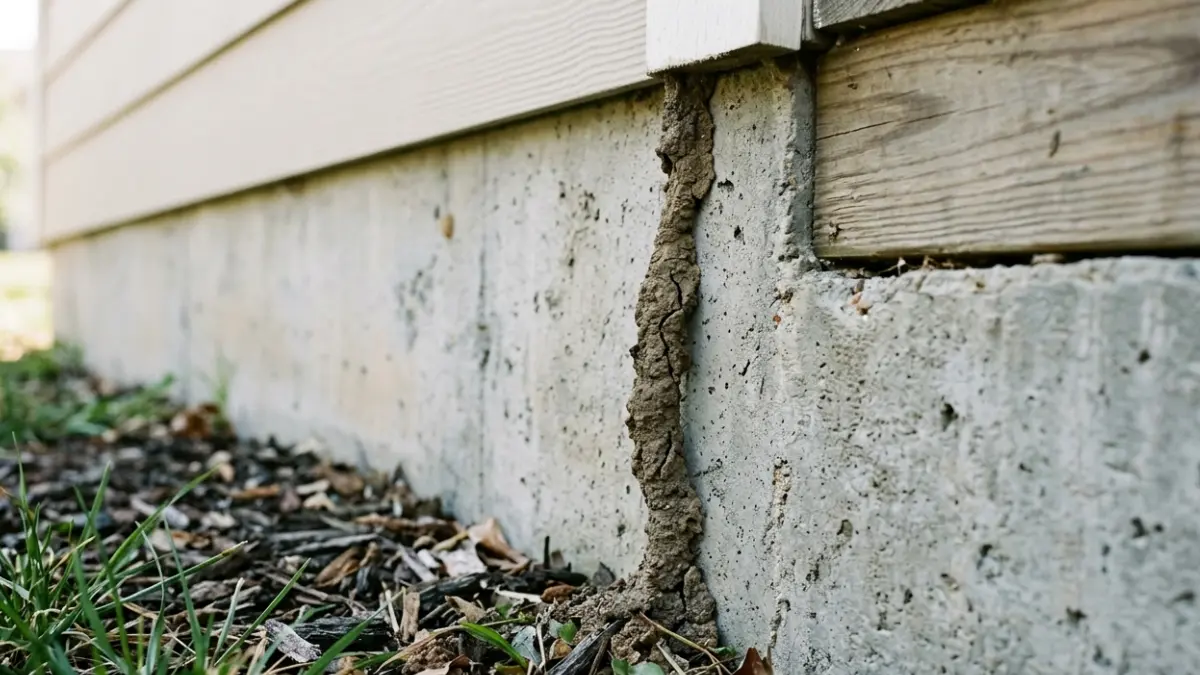 Termite Treatment
The Fast Way to Tell If Termite Mud Tubes Are Active
July 16, 2026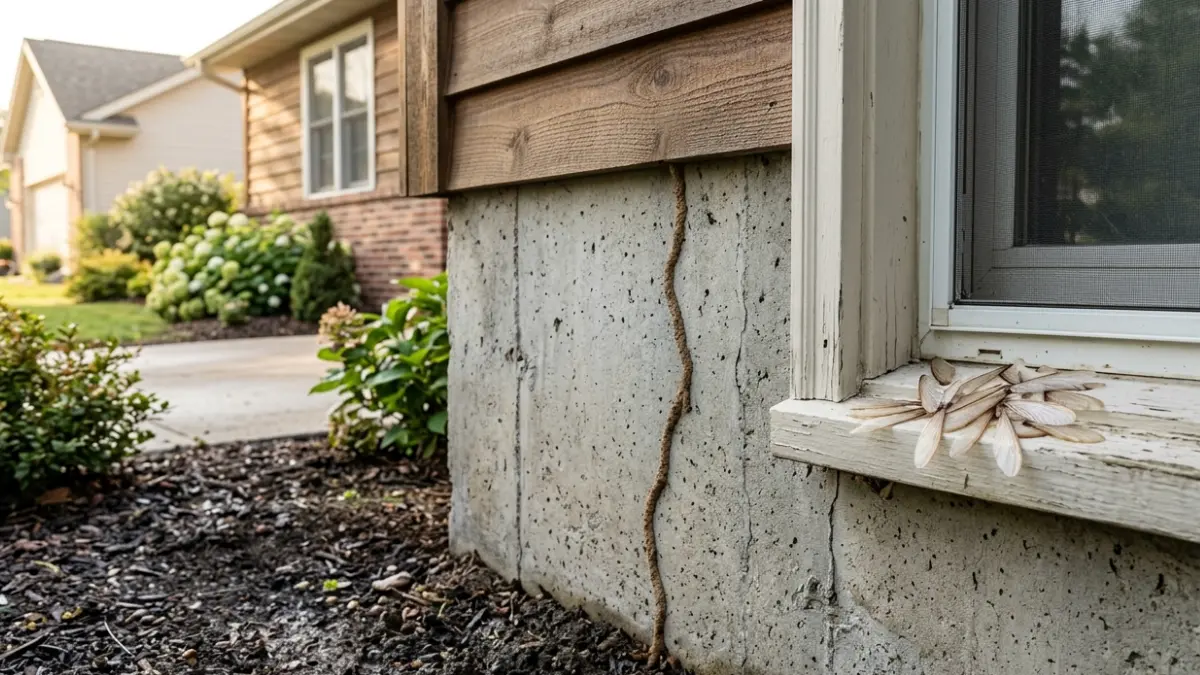 Termite Treatment
The Right Way to Read the Signs of Termites You Just Found
July 14, 2026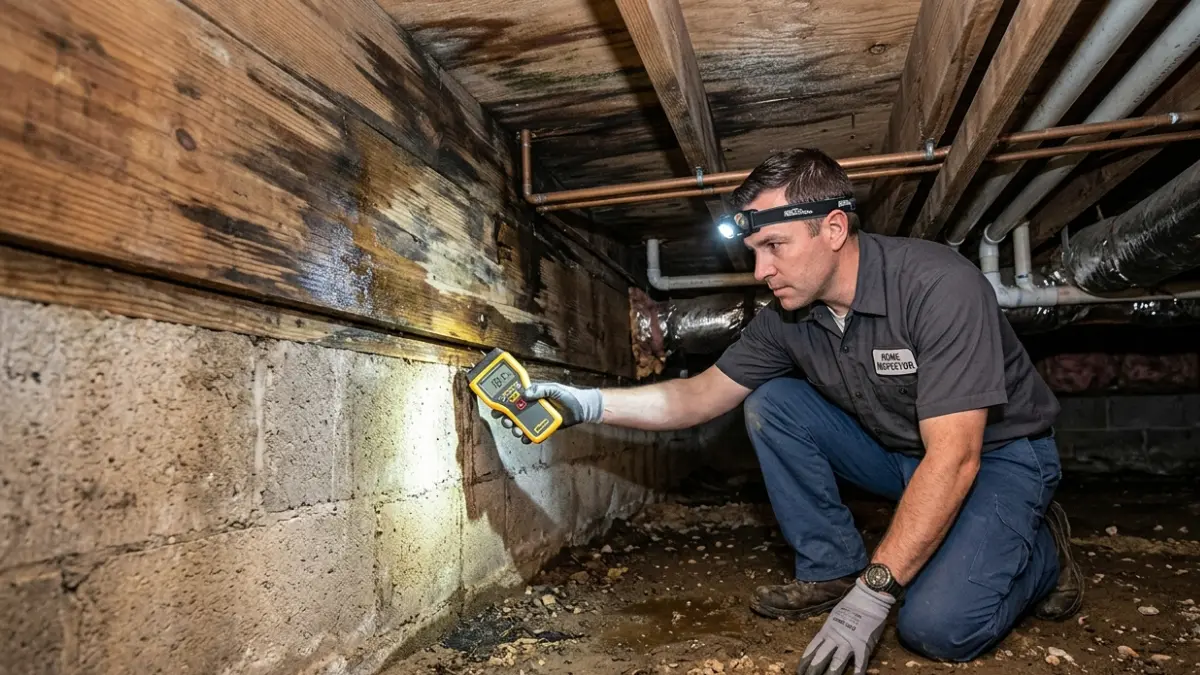 Termite Treatment