
Choosing a Bed Bug Steamer That Gets Hot Enough

A bed bug steamer only kills bugs and eggs if it runs hot and dry. See which recall-free models to trust and how to steam a mattress without mold.
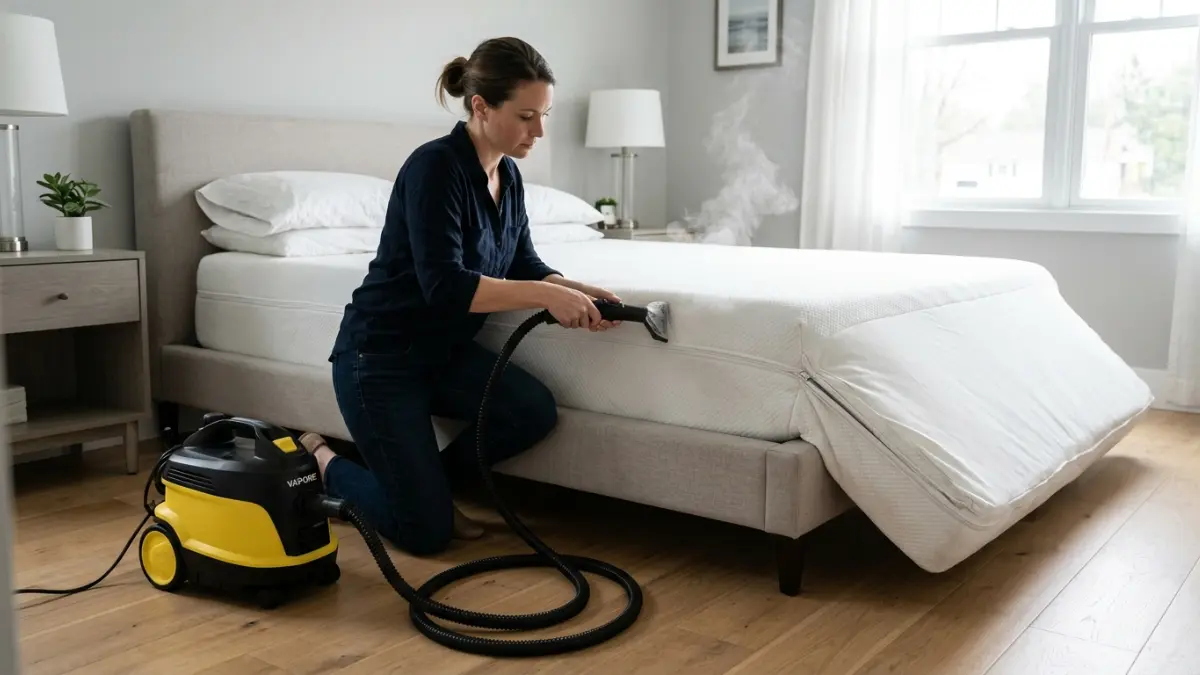
Table of Contents
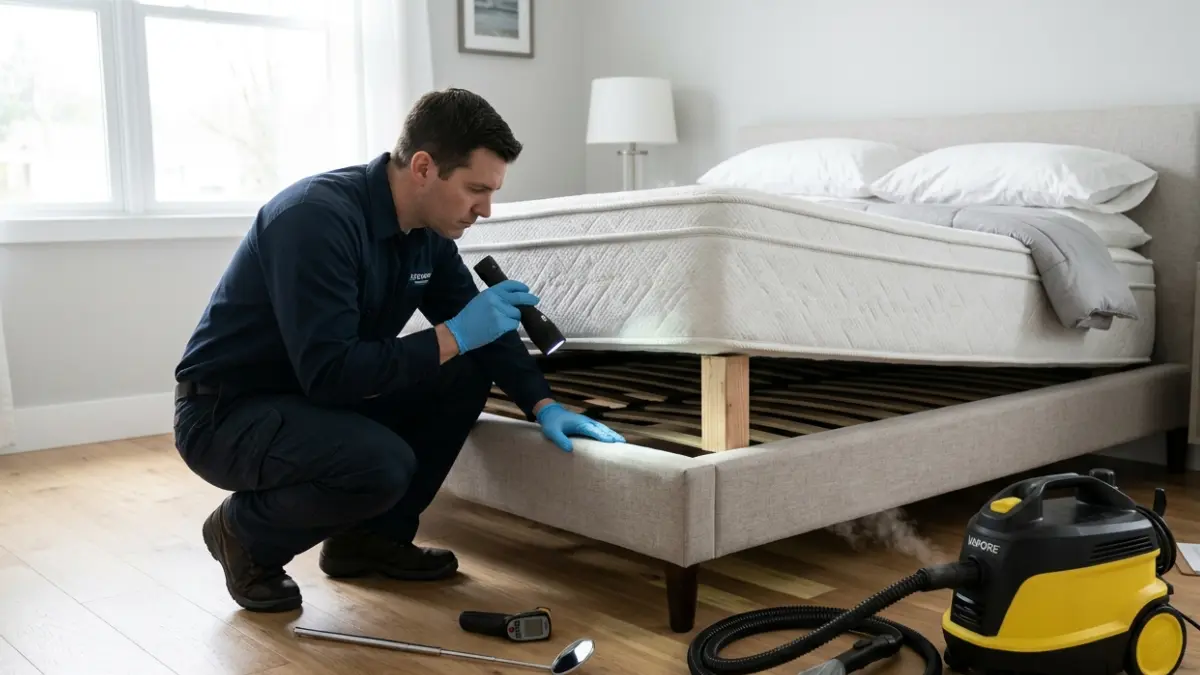
Finding bed bugs is stressful, and steam is one of the few tools that kills them on contact without spraying chemicals near where you sleep. But the honest truth up front: a steamer only works if it runs hot enough and you use it slowly and correctly, and many cheap units fail on both counts. This guide routes you fast. If you have a small or apartment-sized infestation, a handheld unit may be enough. If you’re treating a whole home, you’ll want a canister with a big tank and long runtime. If you’re avoiding chemicals for kids or pets, steam is your strongest option — and if a cheap steamer already “didn’t work,” this explains why. Before treating, it’s worth making sure it’s actually bed bugs — here’s how to check for bed bugs.
ℹ️ Safety Note: Steam cleaners heat water well past boiling and can cause serious scald burns, and pressurized-boiler units can rupture if damaged or misused — one widely sold model was recalled in 2026 for exactly that. The guidance here is general; follow your unit’s manual, keep steam off skin, and for a heavy or spreading infestation, hire a licensed pest management professional.
Does steam actually kill bed bugs and their eggs?
Yes, but the numbers matter, and this is where most articles get it wrong. Research summarized by Virginia Cooperative Extension puts the thermal death point for adult bed bugs and nymphs at about 118°F, while the eggs are tougher and need roughly 122°F. Those are the temperatures the insect’s body must actually reach, and eggs are the reason a treatment that only kills adults lets the problem come back.
Here’s the catch with a bed bug steamer: steam loses heat fast as it evaporates, so the treated surface has to be hotter than the bug’s death point. Cornell’s integrated pest management guidance says the surface should reach about 160–180°F for steam to kill reliably, and low-moisture “dry” steam is preferable.
🔍 Why It Works: Heat kills bed bugs by desiccation — it dries them out. The bug dies around 118–122°F, but because steam cools the instant it hits a cooler surface, you need a machine that delivers 200°F-plus steam so the surface itself holds 160–180°F long enough to matter.
One honest limit: steam only kills what it directly touches. Cornell notes it penetrates barely over two inches into a crack and less than an inch beneath fabric, so it reaches bed bug eggs and adults on and just under surfaces — not deep inside walls. This same heat principle drives whole-room treatments, which you can read about in how heat kills bed bugs.
What to look for in a bed bug steamer (and why cheap ones fail)
The single most useful thing to know before you buy: most inexpensive steam cleaners can’t do this job, and some can make it worse. Purdue extension entomologists note that most retail steamers don’t generate enough heat, that commercial-grade units are typically needed, and that a vapor or dry-steam machine is the right choice because it puts out less moisture. A $40 garment steamer pushed slowly over a mattress can leave it damp enough to grow mold in the padding while never reaching a lethal surface temperature.
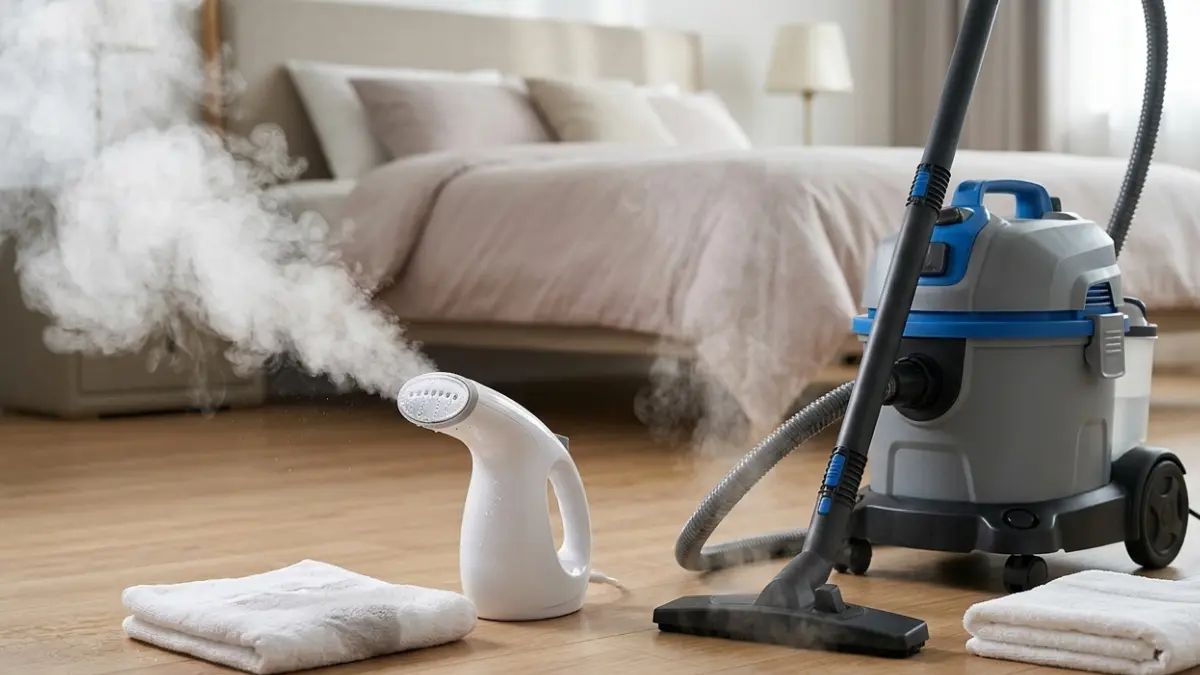
Use these criteria when choosing a steam treatment unit:
- Dry vapor, not wet steam. Dry-vapor machines put out roughly 5% water by volume versus 20–30% for wet steam, so fabric dries fast and mold risk drops. Wet steam soaking into a mattress core is the classic costly mistake.
- High, sustained output. Look for 200°F-plus steam output so the surface can hold 160–180°F. A pressurized boiler (measured in PSI or bar) helps the heat carry.
- A tank big enough for continuous steam. Bed bug work is slow; a tiny tank means constant refills and cooling waits.
- A wide or upholstery nozzle, not a pinpoint jet. Cornell warns that too much pressure blows bugs off the surface without killing them; a wider head treats more area and scatters less.
⚠️ Watch Out: Before buying any steamer, check its current recall status at the CPSC database. In 2026 a top-selling home steamer was recalled for a burn hazard, and cheaper units can carry safety flags too. A steamer that isn’t safe to run is not a bargain.
If you’d rather compare non-heat options first, we cover bed bug sprays separately — though steam avoids the pesticide-resistance problem chemicals increasingly face.
The best bed bug steamers for home use, compared
Every unit below meets the criteria above — dry or high-temperature steam, adequate runtime, and, importantly, no active safety recall as of this review (we checked each against CPSC). Specs are manufacturer-stated; we did not lab-test these units ourselves, so our picks reflect verified specifications, extension guidance, and aggregated owner reviews rather than an independent hands-on test. Confirm current price and recall status before you buy.
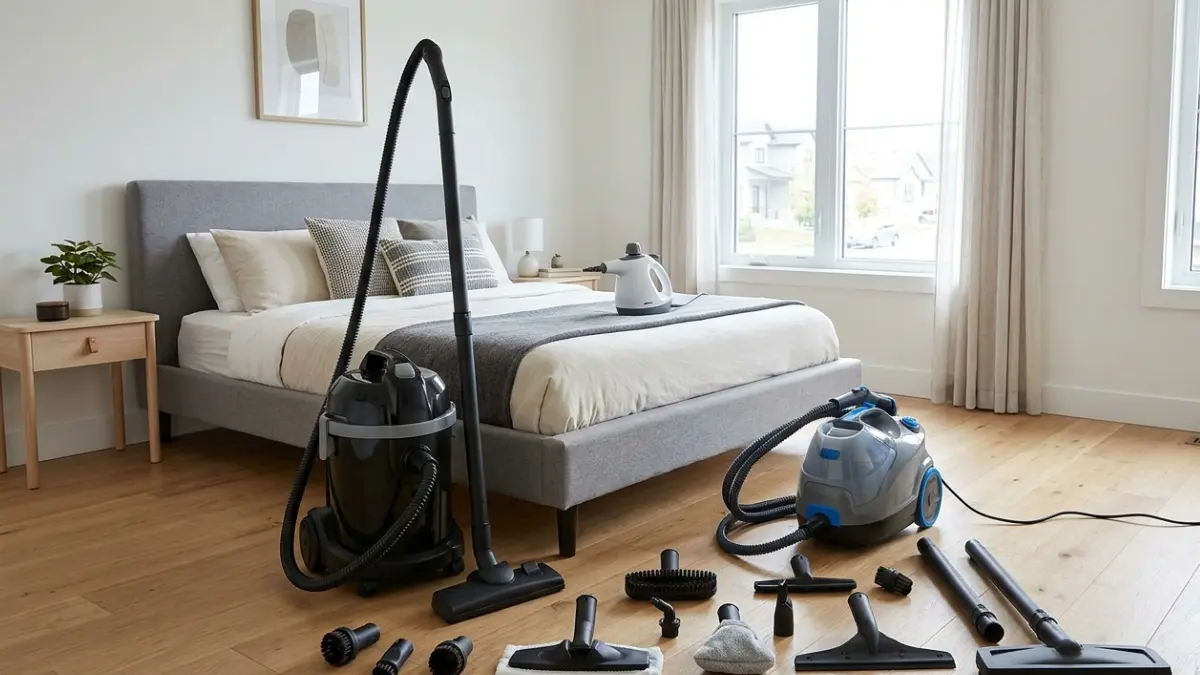
| Steamer | Steam output temp | Tank / runtime | Best for | Approx. price |
|---|---|---|---|---|
| Vapamore MR-100 Primo | 210–220°F (dry vapor, ~5% water) | 1.6 L / 50–60 min | Whole-home + mattresses, mold-averse | $180–200 |
| McCulloch MC1275 | 200°F+ / 43 PSI | 48 oz / ~45 min | Best value, whole-home | $130–160 |
| Vapamore MR-75 Amico | 200–210°F / 43.5 PSI | 6.7 oz / handheld | Spot-treatment, travel, tight seams | $100–130 |
Sources: manufacturer specifications (Vapamore, McCulloch) and CPSC recall database. Prices vary by retailer.

- Professional-Grade Steam Cleaner & Steam Mop in One – Drawing from Vapamore’s roots in Italian steam cleaning design, th…
- High-Temperature Steam for Deep, Chemical-Free Cleaning – Produces up to 220°F high-temperature steam to remove grease, …
- Large Capacity Tank for Extra Working Time – Features a 1.6-liter stainless steel boiler tank that delivers up to 60 min…
🛒 Our Pick — Vapamore MR-100 Primo: The strongest match for bed bug work. Its 210–220°F dry vapor is genuinely low-moisture, so mattresses and upholstery dry quickly instead of staying damp, and the 1.6-liter boiler gives 50–60 minutes of continuous steam for room-by-room treatment.

- 18 VERSATILE ACCESSORIES — Equipped for steam cleaning jobs in and around your home including a floor mop, mop pads, nyl…
- CHEMICAL-FREE CLEANING — Naturally deep clean without the use of harsh chemicals using hot, pressured steam to eliminate…
- DETAILING-ORIENTED — Experience personal car detailing at home with the MC1275. Its powerful steam technology, versatile…
🛒 Best Value — McCulloch MC1275: A recall-free canister that puts out 200°F-plus steam at 43 PSI with a large 48-ounce tank and a lockable trigger for continuous output, usually well under $160. It’s wetter than a true dry-vapor unit, so wipe surfaces and let fabric dry fully.

- Professional Power in a Compact, Handheld Design – Drawing from Vapamore’s roots in Italian steam cleaning design, the M…
- High-Temperature Steam for Deep, Chemical-Free Cleaning – Produces up to 210°F steam to clean and sanitize surfaces natu…
- Heats Up in 4 Minutes – Perfect for quick jobs, detail cleaning, and spot treatment so you can clean messes as they come…
🛒 Best Handheld — Vapamore MR-75 Amico: At 3.5 pounds with a 4-minute heat-up, it’s built for seams, cracks, and travel. The trade-off is honest: the small 6.7-ounce tank empties fast, so it’s for spot work, not a whole house.

- 𝐏𝐨𝐰𝐞𝐫𝐟𝐮𝐥 𝐂𝐡𝐞𝐦𝐢𝐜𝐚𝐥-𝐅𝐫𝐞𝐞 𝐂𝐥𝐞𝐚𝐧𝐢𝐧𝐠: Generates superheated steam up to 275F/135C to effectively lift dirt, grease, and grime…
- 𝟏𝟕 𝐌𝐮𝐥𝐭𝐢𝐩𝐮𝐫𝐩𝐨𝐬𝐞 𝐀𝐜𝐜𝐞𝐬𝐬𝐨𝐫𝐢𝐞𝐬: Versatile kit is engineered for whole-home cleaning, from grout lines and ceramic tile to s…
- 𝐂𝐨𝐦𝐩𝐚𝐜𝐭 & 𝐏𝐨𝐫𝐭𝐚𝐛𝐥𝐞 𝐃𝐞𝐬𝐢𝐠𝐧: Lightweight, easy to maneuver, and sleek design enables effortless cleaning in tight spaces, …
If you already own a Dupray Neat, note that model (DUP020WNA) was recalled in February 2026 for a boiler-rupture burn hazard — stop using affected batches and request the free replacement cap rather than buying a new steamer.
How to use a steamer on bed bugs safely
Technique decides whether steaming works, and rushing it is the most common failure. Move the steamer slowly — extension guidance recommends about 12 inches every 30 seconds — so the surface holds a lethal temperature rather than just getting warm. The EPA’s do-it-yourself bed bug guidance adds that steam should be at least 130°F and should not blast with forceful airflow, which scatters bugs; use a diffuser or wider nozzle to keep them in place.
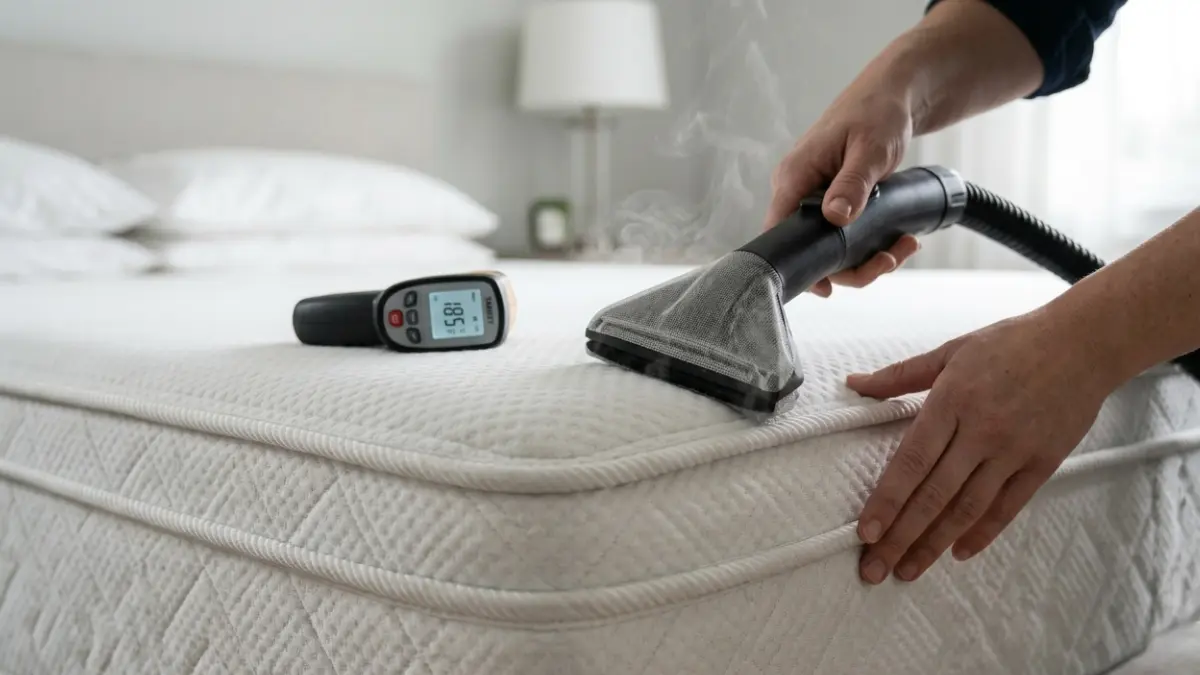
Work methodically across the places bed bugs actually hide:
- Start with the mattress seams, tufts, and the box spring, then the bed frame joints and headboard.
- Treat baseboards, cracks, and the edges of nearby upholstered furniture.
- Overlap your passes, and hold the nozzle close so the surface stays hot.
✅ Do This: Confirm your surface temperature with an inexpensive infrared thermometer as you go, aiming for 160–180°F. It’s the only way to know the heat is actually lethal and not just steamy.
⚠️ Watch Out: These machines run well above 180°F and can cause serious scald burns. Keep the nozzle off skin, unplug and let the unit cool completely before refilling, keep steam away from electronics and outlets, and use dry-vapor settings to avoid soaking fabric and inviting mold.
Steam kills only what it contacts, so plan to repeat treatment every few days for two to three weeks to catch nymphs as eggs hatch. The same care applies whether you’re tackling bed bugs in your mattress or hunting them in all the places bed bugs hide. This section covers safe general use; anyone facing a heavy infestation should have a certified pest professional confirm the plan.
When steam isn’t enough (and when to call a professional)
Steam is a precise surface tool, not a whole-home cure, and being honest about that saves you weeks of frustration. Because it barely penetrates cracks and fabric, it can’t reach a colony breeding deep inside wall voids, baseboards, or a stuffed sofa’s frame. For anything widespread or recurring, the EPA recommends integrated pest management — combining methods rather than relying on one.
That usually means pairing steam with other tactics: sealing survivors out with mattress and box-spring encasements, and using a residual like diatomaceous earth in the cracks steam can’t reach. Steam handles the surfaces; those cover the gaps.
💡 Pro Tip: Extension and EPA guidance consistently frame bed bug control as a repeat, multi-method effort — not a one-pass job. If you’ve steamed thoroughly and still see live bugs after two to three weeks, that’s your signal the infestation is beyond DIY reach.
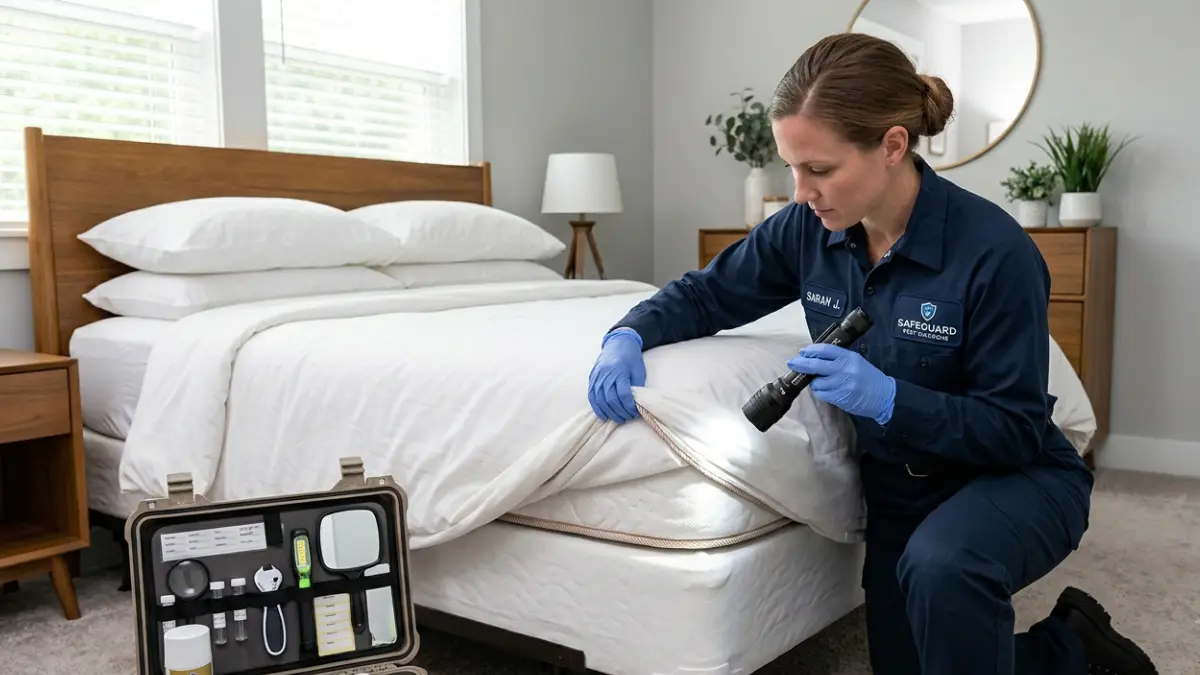
Call a licensed pest management professional when the infestation is spreading between rooms, keeps returning, or was heavy to begin with. Ask whether they use professional steam, targeted treatments, and how they’ll verify results. For the complete approach steam fits into, see the full 5-step bed bug removal plan.
Steaming isn’t working? Common mistakes to fix
If you steamed and still have bed bugs, the cause is almost always one of three fixable things. First, the unit isn’t hot enough or is too wet — a cheap garment or floor steamer often can’t hold 160–180°F at the surface and leaves fabric damp. Upgrading to a dry-vapor or high-temperature unit fixes this.
Second, you’re moving too fast or with too much pressure. Slow to roughly 12 inches every 30 seconds and switch to a wider nozzle so you’re killing bugs, not blowing them onto the next surface.
Third, you stopped too soon. Eggs hatch days later, so a single pass leaves a next generation behind — repeat every few days for two to three weeks. To confirm you’ve won, check how to know when the bed bugs are gone.
Bed bug steamer FAQs
1. Does steam kill bed bugs and their eggs?
Yes. Bed bugs die at about 118°F and their eggs at about 122°F, and steam easily exceeds that on contact. Because steam cools fast, the treated surface must reach roughly 160–180°F to kill reliably, and only what the steam directly touches is affected.
2. What temperature of steam kills bed bugs?
The insect dies around 118–122°F, but a bed bug steamer should output 200°F-plus so the surface holds 160–180°F. The EPA sets a floor of at least 130°F for steam. Higher output plus slow movement is what makes the heat lethal rather than just warm.
3. Can a regular clothes or garment steamer kill bed bugs?
Usually not well. Most cheap garment steamers can’t sustain the surface temperature needed, and their wet steam can leave a mattress damp enough to grow mold. Purdue extension notes most retail steamers don’t get hot enough; a dry-vapor or high-temperature unit is the reliable choice.
4. What’s the difference between dry vapor and wet steam?
Dry-vapor steam is roughly 5% water by volume; wet steam runs 20–30%. On mattresses and upholstery, dry vapor kills on contact without saturating the material, so fabric dries fast. Wet steam soaks in, risks mold in the padding, and takes far longer to dry.
5. Will steaming damage or mold my mattress?
It can if you use wet steam or move too slowly with a soaking unit. Use a dry-vapor steamer, keep passes steady rather than lingering, and let the surface dry fully before replacing bedding. Wiping surfaces afterward and airing the room also helps prevent moisture problems.
6. How slowly should I move the steamer?
About 12 inches every 30 seconds, per extension guidance. Moving faster doesn’t give the surface time to reach a lethal temperature. Overlap your passes and hold the nozzle close, especially on mattress seams and bed-frame joints where bed bugs concentrate.
7. How many times do I need to steam for bed bugs?
Plan on repeating every few days for two to three weeks. Steam kills only what it contacts, so it misses eggs tucked out of reach that hatch later. Repeating catches each new wave of nymphs before they can breed and reset the infestation.
8. Does steam reach bed bugs inside the mattress or walls?
Only shallowly. Steam penetrates just over two inches into cracks and less than an inch beneath fabric, so it treats surfaces and seams, not deep voids. For bugs hiding inside walls or furniture frames, contact a licensed pest professional.
9. Is it safe to steam bed bugs myself?
For light, surface-level treatment, yes — with care. These units run above 180°F and can cause scald burns, so keep steam off skin, let the machine cool before refilling, and follow the manual. For heavy infestations or if you’re unsure, hire a licensed pest management professional.
10. When should I call a professional instead?
Call one when bed bugs are spreading between rooms, keep coming back after treatment, or were widespread from the start. Steam can’t reach deep harborage, so those situations need an integrated, professional approach rather than DIY steam alone.
The bottom line on bed bug steamers
Steam genuinely kills bed bugs and their eggs, but only if your unit runs hot enough, you move slowly, and you repeat treatment over two to three weeks — it’s one precise tool inside a larger plan, not a one-pass fix. For most homes the dry-vapor Vapamore MR-100 Primo is the safest match, with the McCulloch MC1275 the value pick and the handheld Amico for spot work; whichever you choose, check its current CPSC recall status first. When steam alone isn’t finishing the job, layer in encasements, a residual, and a professional. For the full approach, start with our complete bed bug removal plan.
Related Articles
 Bed Bugs Treatment
The True Cost of Bed Bug Treatment, by Method and Home Size
July 8, 2026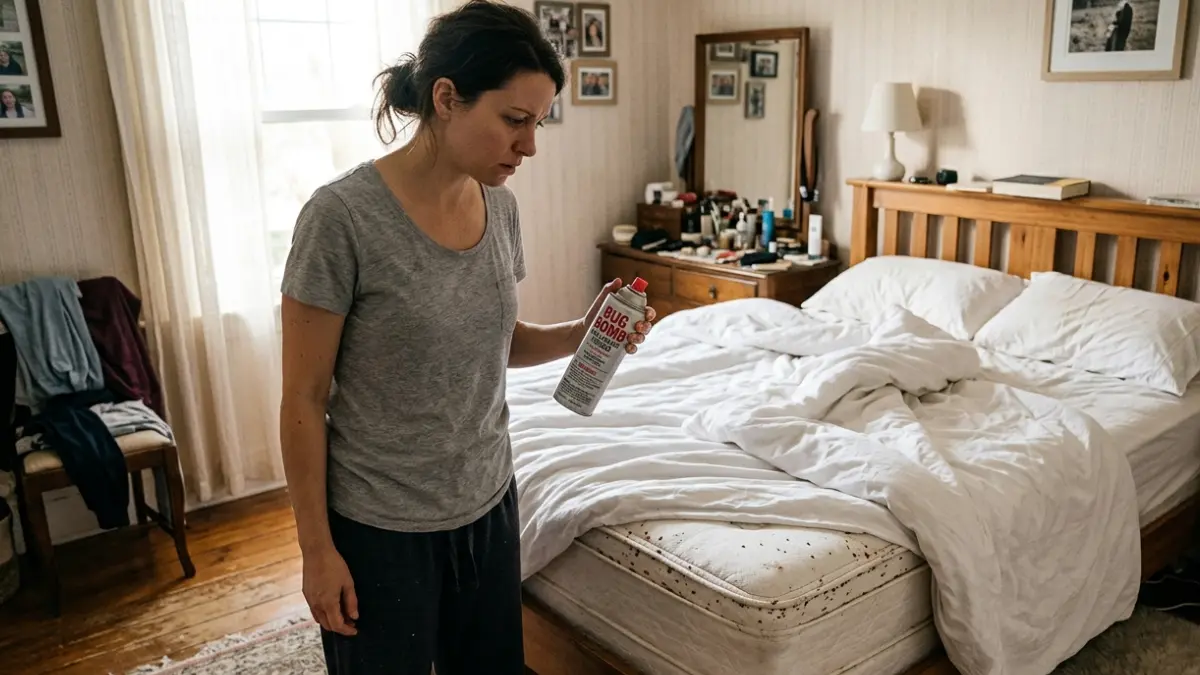 Bed Bugs Treatment
Why Bug Bombs Don’t Work on Bed Bugs (+ What Does)
July 2, 2026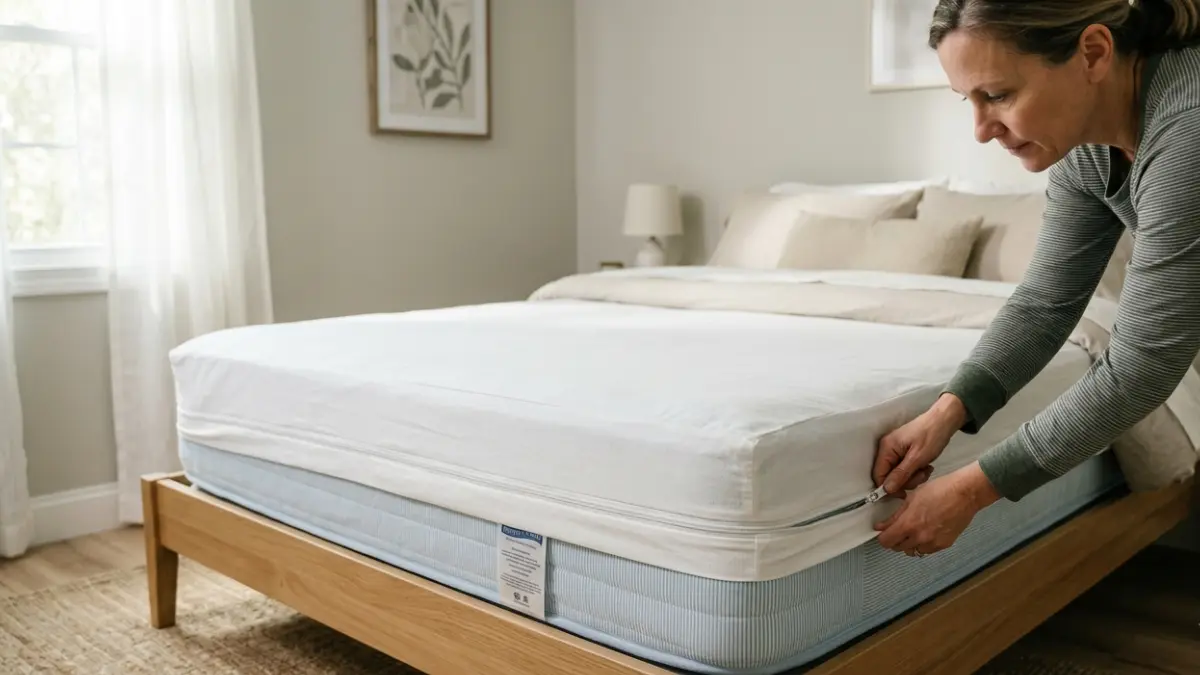 Bed Bugs Treatment
The Right Mattress Encasement for Bed Bugs, and How to Use It
July 4, 2026 Bed Bugs Treatment
How the Right Bed Bug Interceptors Catch the Most Bugs
June 29, 2026 Bed Bugs Treatment
How to Spot the Signs of Bed Bugs Before You Ever See One
June 23, 2026 Bed Bugs Treatment
Choosing DIY or Professional Bed Bug Treatment the Smart Way
July 9, 2026 Bed Bugs Treatment
Getting Rid of Bed Bugs at Home Without the Risk
June 20, 2026 Bed Bugs Treatment
How to Get Bed Bugs Out of a Mattress and Keep It
July 2, 2026 Bed Bugs Treatment