
How Diatomaceous Earth Kills Bed Bugs and the Grade to Avoid

Diatomaceous earth can kill bed bugs, but it works slowly and won’t touch the eggs—and the grade you buy decides whether it’s even safe indoors.
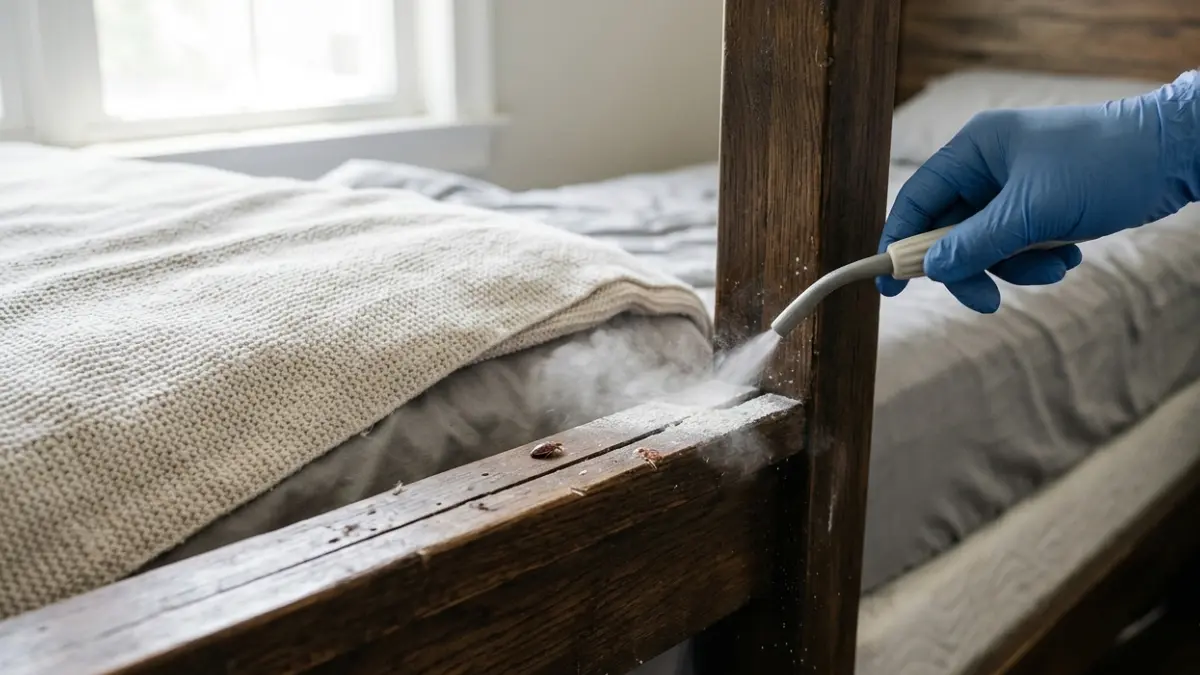
Table of Contents
Yes — diatomaceous earth kills bed bugs by drying out their bodies until they die. But it works slowly, it won’t touch the eggs, and the type you buy decides whether it’s safe to use indoors at all.
What you need next depends on where you are. Deciding whether it’s worth trying? It helps as one part of a plan, not a fix on its own. Choosing a bag in a store? Skip to the section on grades — that choice carries a real health risk. Already applied it and nothing’s dying? The troubleshooting section explains why. Watching it spread room to room? Read the “when to call a pro” section first.
The safety and product guidance here comes straight from the EPA and the National Pesticide Information Center, and it pairs with our full safe, step-by-step plan to get rid of bed bugs.
ℹ️ Safety Note: Diatomaceous earth is an EPA-regulated pesticide, and breathing the dust can irritate your lungs. This is general guidance only — follow the product label, use only a product registered for bed bugs, wear a dust mask while applying, and call a licensed pest control professional for an active or spreading infestation.
How diatomaceous earth kills bed bugs
Diatomaceous earth is a fine powder of fossilized algae shells called diatoms, and it kills insects physically, not chemically.
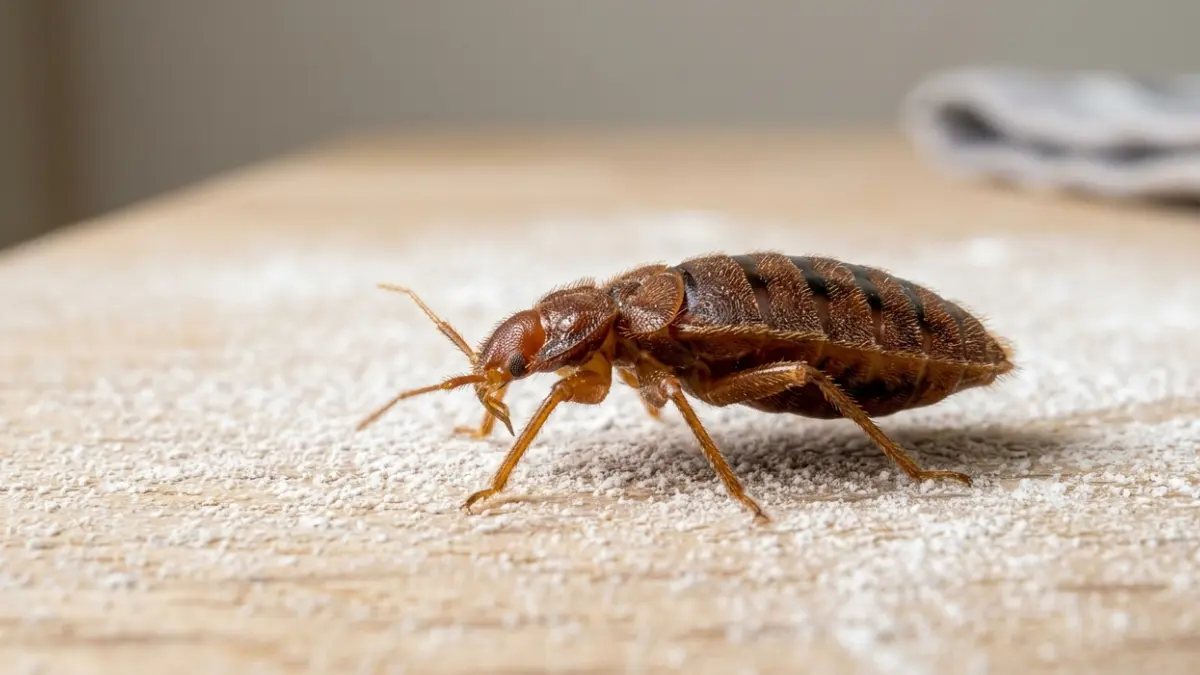
It dries them out — it doesn’t poison them
🔍 Why It Works: A bed bug’s waxy outer shell, its cuticle, holds water inside its body. Diatomaceous earth is a desiccant — as a bug crawls through it, the powder absorbs the oils in that layer, so it can’t hold moisture and dries out. The NPIC diatomaceous earth fact sheet describes the same action, with the sharp particles speeding it along.
You may have read the powder “slices bugs like razors.” That’s a myth — abrasion helps, but drying is the real mechanism, which is why it works only on contact and never instantly.
Why bed bugs can’t build resistance to it
Because the effect is mechanical, bed bugs can’t evolve around it the way they do with many sprays. The EPA explains that desiccants destroy the protective coating so bugs dehydrate, with no resistance developing. But a bug has to walk through the dust, and since they feed only every few days, reaching them all takes time.
How long diatomaceous earth takes to kill bed bugs
In most cases, diatomaceous earth takes about 7 to 17 days to kill bed bugs, sometimes several weeks, because the bugs must keep crossing it and then slowly dry out.
A realistic day-by-day timeline
Speed depends on how much powder a bug contacts, its molt stage, and humidity. Damp air slows everything — above about 50% humidity the powder clumps and loses much of its effect.
| Timeframe | What’s happening | What to do |
|---|---|---|
| Days 1–3 | Bugs start crossing | Leave it alone |
| Days 4–10 | Adults and nymphs dehydrate | Inspect, don’t vacuum |
| Days 6–10 | Eggs hatch; nymphs feed | Keep dust down |
| Days 10–21+ | Hatchlings cross and die | Reapply if disturbed |
Sourced from EPA bed bug guidance and university extension entomology.
Why it doesn’t kill bed bug eggs (and what that means)
Diatomaceous earth cannot kill bed bug eggs — their hard shell protects them, and they hatch in roughly 6 to 10 days. That single fact is why people assume it “failed.”
📊 Tested / Spec: Bed bug eggs hatch in about 6–10 days (university extension), so one application must stay down two to three weeks to catch each newly hatched bug as it crosses the dust.
Keep the powder in place through the full hatch cycle and reapply if disturbed. For more, see bed bug eggs and how they hatch.
Which diatomaceous earth to use (and which to never use)

- POWERFUL CRAWLING INSECT KILLER : Effectively kills a wide range of crawling insects including ants, bed bugs, cockroach…
- 100% DIATOMACEOUS EARTH WITH NO ADDITIVES : Made from pure freshwater diatomaceous earth, this product is safe for use a…
- KILLS INSECTS MECHANICALLY, NOT CHEMICALLY : Works by dehydrating insects on contact through physical abrasion. Insects …
The most important decision with diatomaceous earth isn’t how you apply it — it’s which kind you buy, because one common type is a serious respiratory hazard.
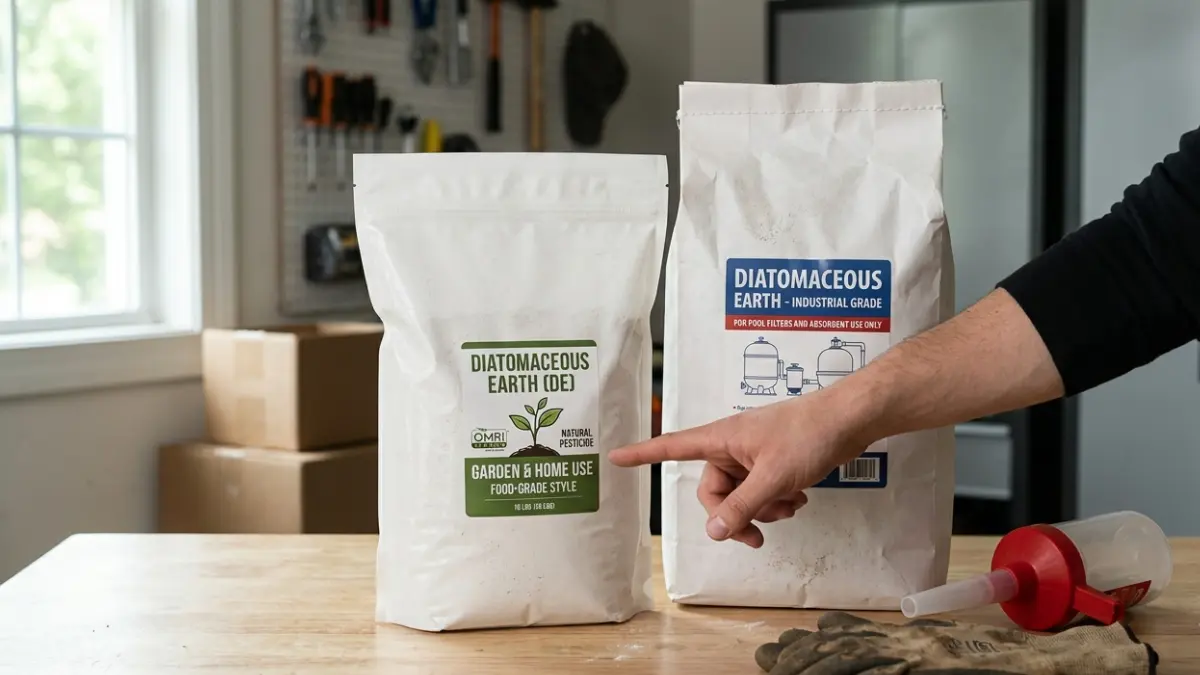
Food grade vs. pool (filter) grade
Food grade is mostly amorphous silica with only trace crystalline silica, and the FDA recognizes it as generally safe. Pool (filter) grade is calcined — heat-treated — which turns much of its silica into crystalline silica, a form the IARC classifies as a human carcinogen and links to the lung disease silicosis.
⚠️ Watch Out: Never use pool- or filter-grade diatomaceous earth where people or pets breathe. The bags look almost identical, so read the label — calcined product belongs only in a swimming-pool filter.
| Type | Crystalline silica | For bed bugs? | Key detail |
|---|---|---|---|
| Food grade | Under ~1–2% | Not labeled | Low-risk to handle; not for pest use |
| Pool / filter grade | Up to ~60% | Never | Carcinogen — filtration only |
| EPA-registered | Low (amorphous) | Yes | Bed-bug-labeled; dosing on the label |
Sourced from the NPIC fact sheet, EPA, and IARC.
What the EPA actually recommends
Here’s where this guide differs from most: the EPA doesn’t tell you to grab food-grade powder. It says to use a desiccant registered by the EPA and labeled for bed bugs, in cracks and crevices only to limit what you breathe. The registered version uses a controlled particle size that lowers inhalation risk; food-grade products aren’t labeled for pest control and won’t tell you how much to use or what precautions to take.
✅ Do This: Before buying, check the container for two things — an EPA registration number, and “bed bugs” listed among the pests. If either is missing, it’s the wrong product.
Is it safe around pets and children?
Registered and food-grade products are low in toxicity if swallowed, but the dust is the concern — it irritates eyes, skin, and lungs. Keep children and pets out of the room while you apply it, and treat only cracks they can’t reach.
How to apply diatomaceous earth for bed bugs correctly
Applied right, diatomaceous earth is a quiet, long-lasting helper; applied wrong, it just makes a mess.
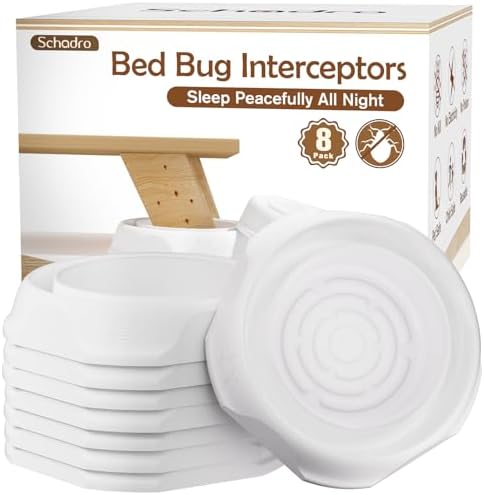
- Sleep Tight: Bed bug trap provides 24/7, 360°protection. It securely catches any bed bug that crawls in, keeping your fu…
- Under Any Legs: Fits snugly under beds, sofas, and desks. Perfect for your apartment and home, and also ideal for hotels…
- Effortless Capture: Bed bugs can easily climb the matte-textured outer surface and inner platform but are unable to esca…
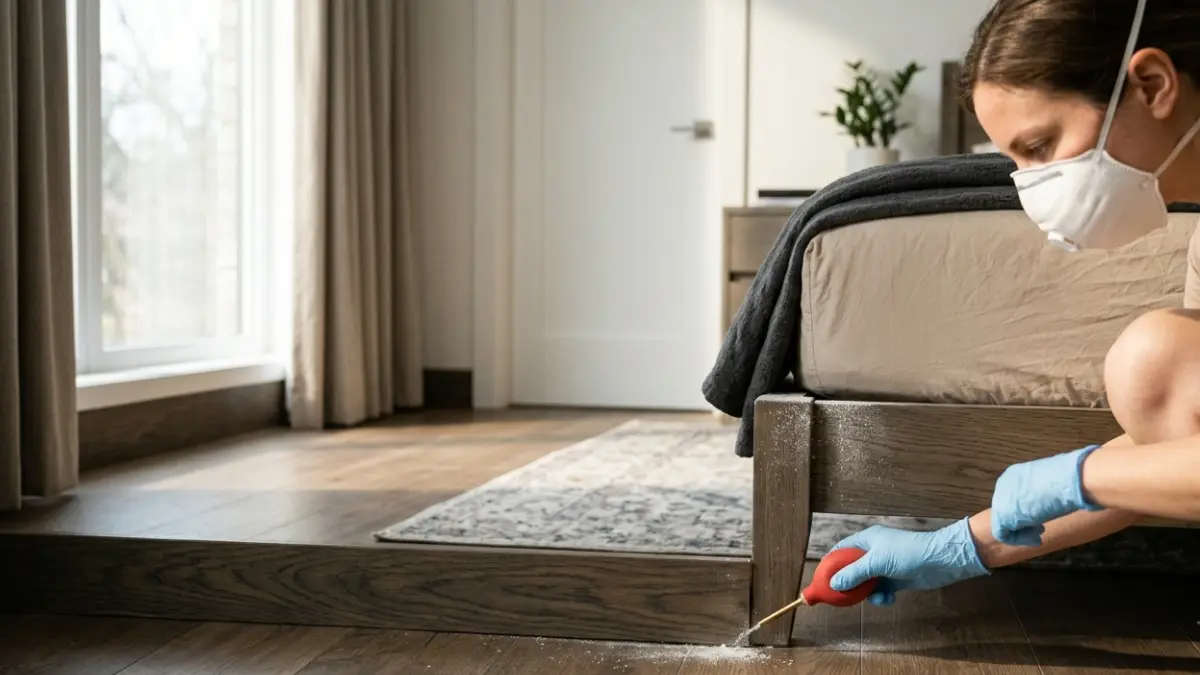
Apply a thin, barely visible layer
The most common error is using too much. A bed bug walks around a visible pile, so a heavy coating shields it. Aim for a thin layer you can barely see — about half a gram to a gram per square foot, a faint film in the cracks where bugs travel.
Where to apply it — and where not to
Treat where bugs hide and the routes they take to feed: cracks in the bed frame and headboard, baseboard gaps, and behind loose outlet covers, following the label for approved spots. Don’t dust mattress tops, pillows, or bedding — encase the mattress and let the powder work along the frame. Finding the hiding spots first makes this far more effective, so learn how to check for bed bugs and where bed bugs hide before you start.
Protect yourself: mask, gloves, dry
✅ Do This: Wear a dust mask and gloves as you apply, avoid dusting near fans or vents that stir powder into the air, and vacuum any visible excess. Keep the area dry — moisture clumps the powder and kills its effect — and reapply if it gets wet or disturbed.
Because this is general guidance, follow your product’s directions, and for a heavy or spreading infestation, have a licensed pest control professional apply treatment.
Why your diatomaceous earth isn’t killing the bed bugs
If you’ve used diatomaceous earth for a week or two and bugs remain, it’s almost always one of a few fixable mistakes — not a useless product.
The usual reasons it fails:
- Applied too thick — bugs detour around visible piles; a faint film works better.
- High humidity — damp air above about 50% clumps it and can ruin it within a day.
- Disturbed or cleaned up — sweeping or wiping resets the clock.
- Missed hiding spots — if bugs never cross it, it can’t reach them.
- Used alone, or expected to kill eggs — it’s a supplement and can’t touch eggs.
Too thick, or it never reaches them
A heavy layer and a missed hiding spot are the same problem: no proper contact. Brush the layer down to a faint film, then trace the bugs’ routes to your bed.
Humidity, disturbance, or missed spots
Keep the powder dry and undisturbed for the full window. In a damp basement or a room beside a bathroom, reapply more often.
Expecting it to work alone — or kill eggs
On its own, the powder rarely clears an established infestation, and bugs move fast between rooms. If yours are spreading, our full DIY removal approach shows how the pieces fit.
When diatomaceous earth isn’t enough — and what to do instead

- PROTECT YOUR INVESTMENT – Mattress covers create a defensive barrier against spills, contaminants, skin cells, and preve…
- WATERPROOF MATTRESS PROTECTOR – Prevents accidents, perspiration, spills, and stains from damaging your mattress, while …
- ODOR-FIGHTING TREATMENT – Featuring FUZE antimicrobial protection, this waterproof mattress cover provides long-lasting …
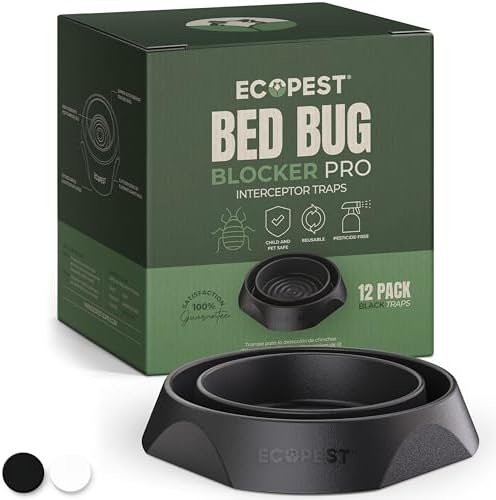
- SLEEP EASY WITH 24/7 BED BUG PROTECTION – Set it, forget it. Place one Bed Bug Blocker interceptor trap under each bed p…
- LAB-TESTED AND PROVEN TO TRAP BED BUGS – Tested by entomologists, trusted by the pros. Bed Bug Blocker interceptor traps…
- BED BUGS CLIMB IN BUT CANNOT CLIMB OUT – Simply place the traps under bed posts and furniture legs. Bed bugs cannot jump…
Be honest about what diatomaceous earth can and can’t do: it’s a useful supporting tool, not a standalone cure for an established infestation.
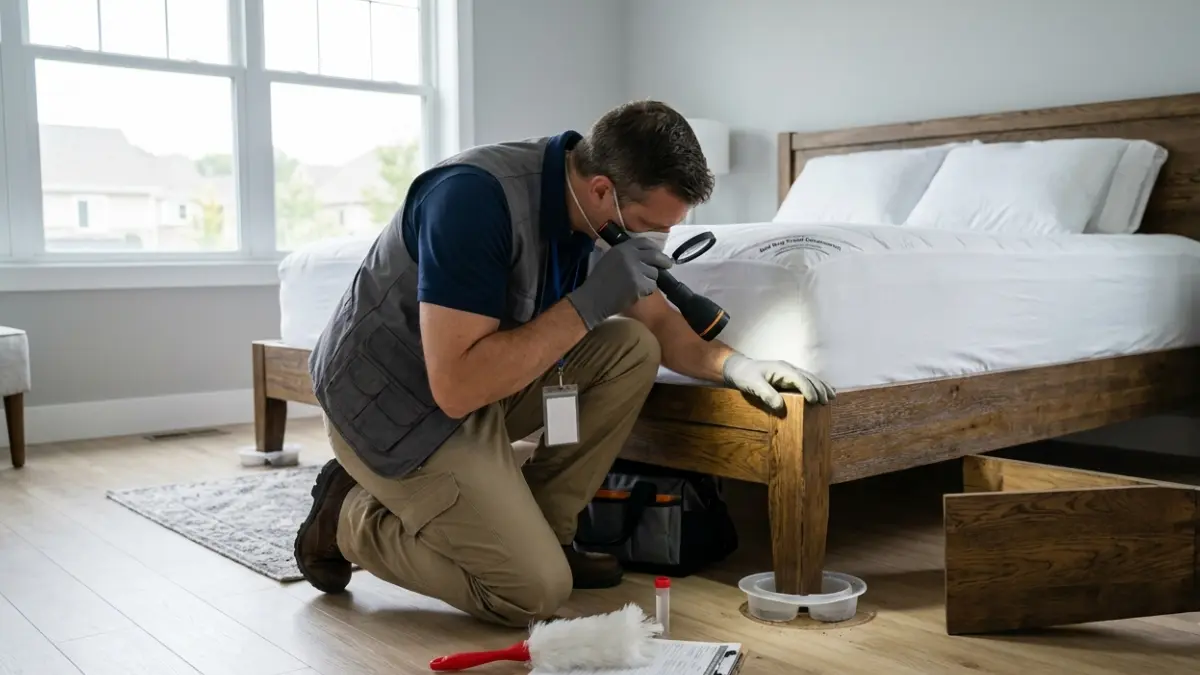
Where DE fits in a real plan
The powder works best as one layer in a fuller strategy — with mattress and box-spring encasements, monitoring traps, hot laundering, and EPA-registered products used to label. Interceptors pair naturally with it, catching bugs that head for the bed while the dust dries out those that cross it; see which interceptors catch the most. Used this way, the powder quietly handles stragglers.
When to stop DIY and call a pro
Call a licensed pest control professional when bites continue after a few weeks of careful effort, when bugs spread to new rooms, or when you can’t find or reach their hiding places. The EPA is direct that established infestations often need professional treatment, and that some DIY shortcuts are neither legal nor safe.
✅ Do This: Before deciding DIY is working, learn how to know if bed bugs are gone — bites can stop while bugs remain, and confirming it prevents a second outbreak.
Diatomaceous earth and bed bugs: frequently asked questions
1. Does diatomaceous earth actually kill bed bugs?
Yes. Diatomaceous earth kills bed bugs by absorbing the oils in their waxy shell, so they dehydrate and die. It works only on contact and acts slowly, so it’s most effective as one part of a full bed bug plan, not a standalone treatment.
2. How long does diatomaceous earth take to kill bed bugs?
Usually about 7 to 17 days, sometimes several weeks. Speed depends on how much powder a bug contacts, its molt stage, and humidity — above 50% slows it. Since newly hatched bugs keep emerging, leave the powder down two to three weeks.
3. Does diatomaceous earth kill bed bug eggs?
No. Bed bug eggs have a hard shell diatomaceous earth can’t penetrate, and they hatch in roughly 6 to 10 days. That’s why one application isn’t enough — keep the dust down through the full hatch cycle so emerging nymphs cross it.
4. What’s the difference between food grade and pool grade diatomaceous earth?
Food grade is mostly amorphous silica with little crystalline silica; pool (filter) grade is heat-treated, converting much of it to crystalline silica — a respiratory carcinogen. Never use pool or filter grade at home. For bed bugs, choose an EPA-registered, bed-bug-labeled product.
5. Is diatomaceous earth safe around pets and children?
Food-grade and registered products are low in toxicity if swallowed, but the dust can irritate eyes, skin, and lungs. Keep children and pets out of the room during application, and treat only cracks they can’t reach. Always read and follow the label.
6. Can I sleep in my bed after applying diatomaceous earth?
Yes, if you apply it correctly. Put the powder only in cracks, seams, and bed-frame joints — never the mattress top, pillows, or bedding — and encase the mattress. The dust works along the frame while you sleep. Wear a mask only while applying.
7. How do I apply diatomaceous earth so it actually works?
Apply a thin, barely visible layer — about half a gram to a gram per square foot — into the cracks and seams where bed bugs hide and travel. Thick piles fail because bugs walk around them. Wear a mask and gloves, and follow the label.
8. Why isn’t my diatomaceous earth killing the bed bugs?
Usually it’s applying too thick, high humidity, disturbing or cleaning up the dust, missing hiding spots, or relying on it alone. Fix it by brushing the layer to a faint film, keeping it dry and undisturbed, and tracing every hiding spot.
9. How often should I reapply diatomaceous earth?
Reapply whenever the dust gets wet, disturbed, or cleaned up, and at least once across the egg-hatch window to catch emerging bugs. In humid rooms above 50%, refresh it every few days, since moisture clumps the powder and weakens its drying effect.
10. Is diatomaceous earth better than a bed bug spray?
Neither is better; they do different jobs. Diatomaceous earth is slow and resistance-proof and treats cracks; sprays act faster but bugs can resist them. They work best combined, with encasements and EPA-registered products. For an active infestation, consult a licensed professional.
The bottom line on diatomaceous earth for bed bugs
Diatomaceous earth does kill bed bugs — slowly, by drying them out — and it earns a place in a careful plan. Two things are non-negotiable: buy a product registered and labeled for bed bugs (never pool or filter grade), and apply it in a thin, barely visible layer in cracks and crevices, never on surfaces you touch. Treat it as a steady supporting player, not a standalone cure, and pair it with encasements, interceptors, and the rest of our safe, step-by-step plan to get rid of bed bugs. Stay patient through the egg cycle, keep the dust dry, and know when a spreading problem has outgrown DIY.
Related Articles
 Bed Bugs Treatment
The Best Bed Bug Traps and Monitors, and How to Use Them
July 5, 2026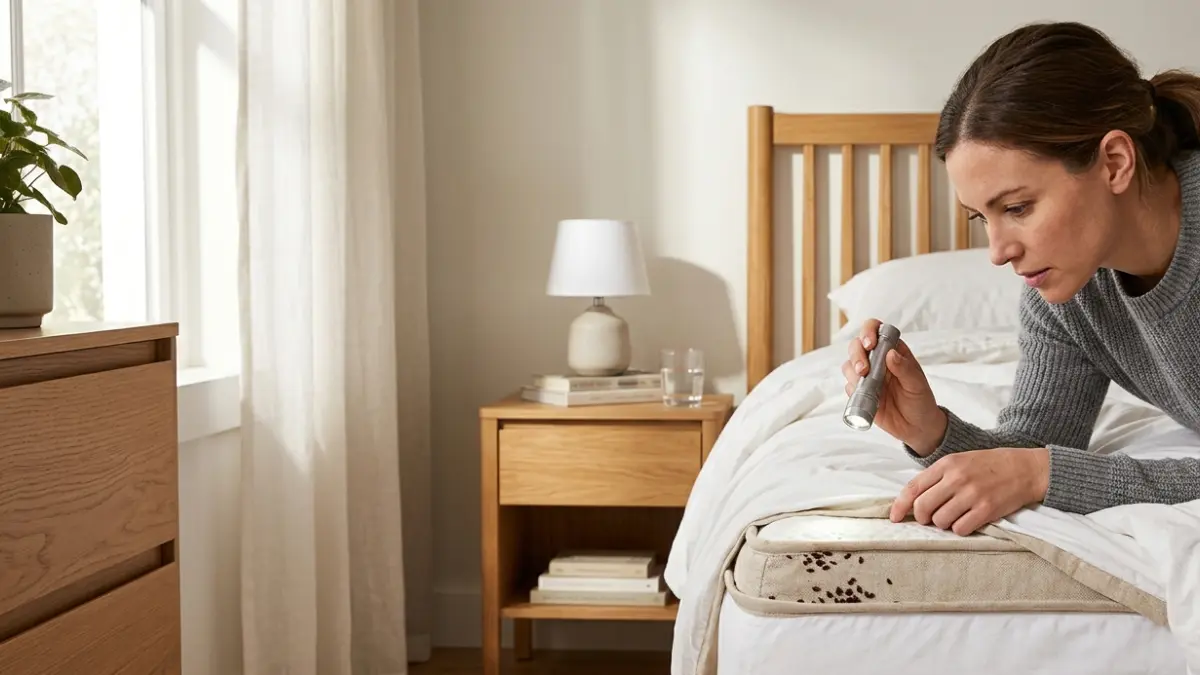 Bed Bugs Treatment
Before You Throw Away a Mattress With Bed Bugs, Read This
July 6, 2026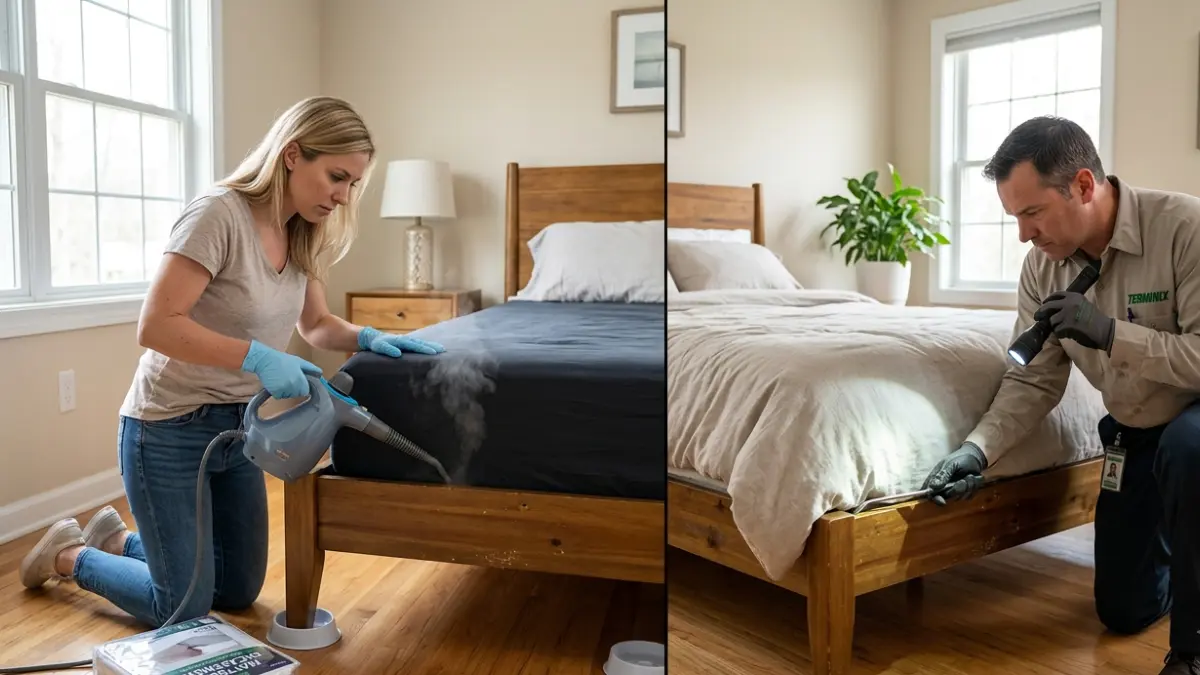 Bed Bugs Treatment
Choosing DIY or Professional Bed Bug Treatment the Smart Way
July 9, 2026 Bed Bugs Treatment
What Do Bed Bugs Look Like at Every Stage?
June 20, 2026 Bed Bugs Treatment
Check Your Hotel Room for Bed Bugs Before You Unpack
July 10, 2026 Bed Bugs Treatment
Getting Rid of Bed Bugs at Home Without the Risk
June 20, 2026 Bed Bugs Treatment
Are Bed Bugs Worse in Summer? What the Data Shows
July 13, 2026 Bed Bugs Treatment
How Fast Bed Bugs Spread, and How to Get Ahead of It
June 25, 2026 Bed Bugs Treatment