
Where Bed Bugs Hide When the Mattress Looks Clean

Bed bugs hide far beyond the mattress—about 85% stay near the bed, but the rest reach baseboards, outlets, furniture, and luggage.
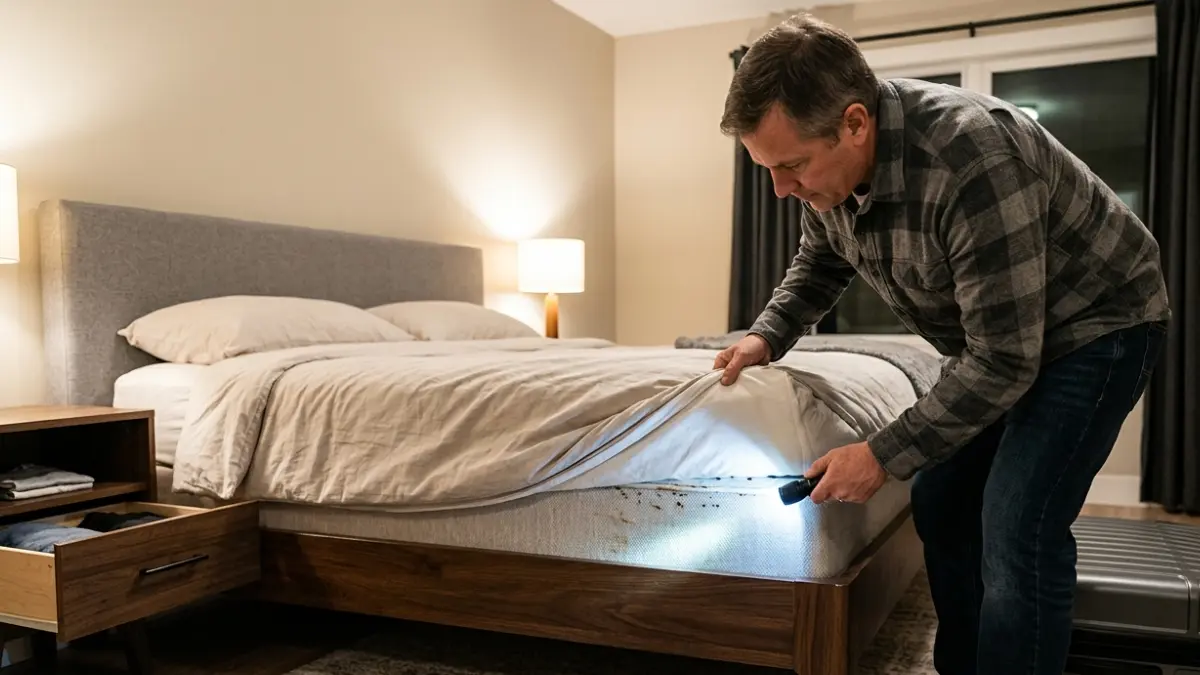
Table of Contents
The mattress is just the starting point
You checked the mattress seams and now you’re wondering where else to look — because the welts keep coming or you spotted a single bug. The mattress is only the first place bed bugs hide, and often not where most of them are.
Why “just the mattress” is a trap
Bed bugs are built to spread. They start near the mattress and box spring, then push outward into the frame, furniture, and walls as their numbers grow — so stopping at the mattress is how an early infestation gets missed.
Find your starting point
If you woke with itchy bites and aren’t sure of the cause, compare bed bug bites on your skin before you tear the room apart. Not sure whether fleas are to blame? Our guide on bed bug bites versus flea bites sorts it out.
If you’ve already confirmed bugs, our safe plan for getting rid of bed bugs takes over from here. Everyone else: start at the bed and work outward through the four zones below.
ℹ️ Safety Note: This guide helps you find bed bugs, not treat them. Don’t probe live electrical outlets while inspecting — cut power or call a pro. Skip foggers and indoor use of outdoor pesticides; they’re ineffective and can be hazardous. Bed bugs don’t spread disease, but a confirmed infestation usually needs a professional.
Why bed bugs hide where they do (the credit-card rule)
Every hiding spot here makes sense once you understand a bed bug’s body. They’re flat — about the width of a credit card — so any crack that holds a card can hold a bug.
The credit-card test
A bed bug is 1 to 7 millimeters long and shaped like a flattened apple seed. The EPA’s guide to finding bed bugs uses a simple credit-card width test: if a thin card slides into a seam, joint, or crack, a bug can wedge in too. That’s why mattress seams, frame joints, and baseboards all qualify.
🔍 Why It Works: A flat profile lets a bed bug press deep into a crevice, shielded from light, from being crushed, and from your eyes — which is why early infestations go unnoticed.
How close they stay (and how far they roam)
Bed bugs want to be near their next meal, so they cluster close to where you sleep.
📊 Tested / Spec: UC IPM reports about 85% of bed bugs are found in or near the bed. The EPA notes they travel 5–20 feet from harborage to feed, while the CDC’s bed bug overview finds they stay within about 8 feet of where people sleep — though they can cover over 100 feet in a night.
Why daytime hiding matters
Bed bugs are nocturnal, feeding while you sleep and hiding by day — which helps you inspect. Daytime is when they’re packed into crevices, so shed skins, fecal spots, and clustered bugs are easiest to spot. Learning what bed bugs and their eggs look like first saves you from second-guessing every speck.
Zone 1 — hiding spots in and around the bed

- 100% Cotton Comfort : Experience true comfort with our mattress cover, made from 100% premium cotton with a high thread …
- Double Mite Protection : The FAUNNA mattress encasement combines a high-density weave to effectively block dust mites an…
- Fully Enclosed Design : Our mattress covers feature 360-degree protection and a premium sealed zipper design. It guards …
This is where most of them are, so inspect it slowly. Beyond the mattress surface, the box spring, frame, and headboard are the heaviest harborage in the room.
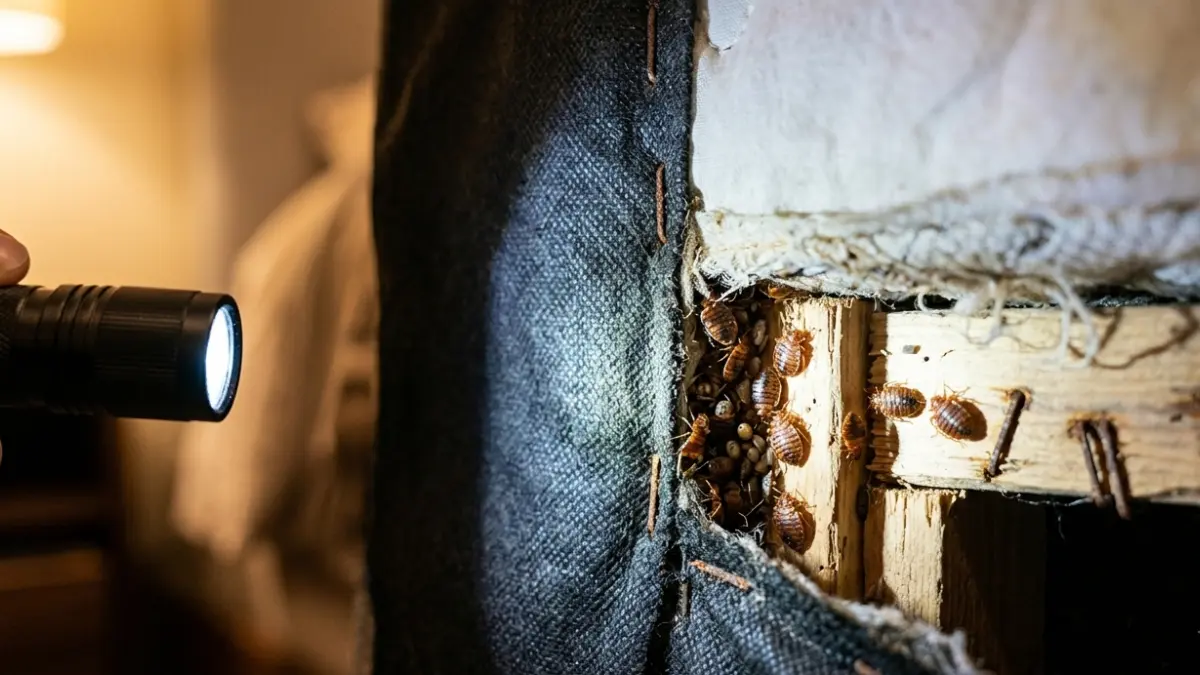
Box spring and bed frame
Lift the mattress and look along the box spring’s seams, staples, and canvas underside. The EPA flags the canvas covering of an old box spring as a spot that hides adults, shed skins, feces, and eggs. Then check every joint of the bed frame, especially where rails meet and where screws leave gaps.
Headboard and the wall gap
Pull the bed away from the wall and inspect the headboard’s cracks, bolt holes, and back face. The narrow gap where a headboard meets the wall is a classic spot people never check.
🛒 Our Pick: A zippered mattress encasement plus under-leg interceptors is the most evidence-backed gear here. UC IPM’s bed bug guidance notes encasements are lab-proven to trap bugs inside until they starve, and interceptor cups catch bugs traveling to and from the bed. We may earn a commission from an encasement and interceptor set, at no extra cost — based on research, not commissions.
Bedding, tags, and the bed skirt
Strip the bed and check the seams of sheets, the mattress tag, and the folds of a bed skirt where it touches the floor. Wash everything hot and dry on high while you finish inspecting.
Zone 2 — nightstands, dressers, and upholstered furniture
Once the bed is searched, widen out to the furniture within a few feet of it. Bed bugs move into wood furniture and upholstery as their numbers grow.
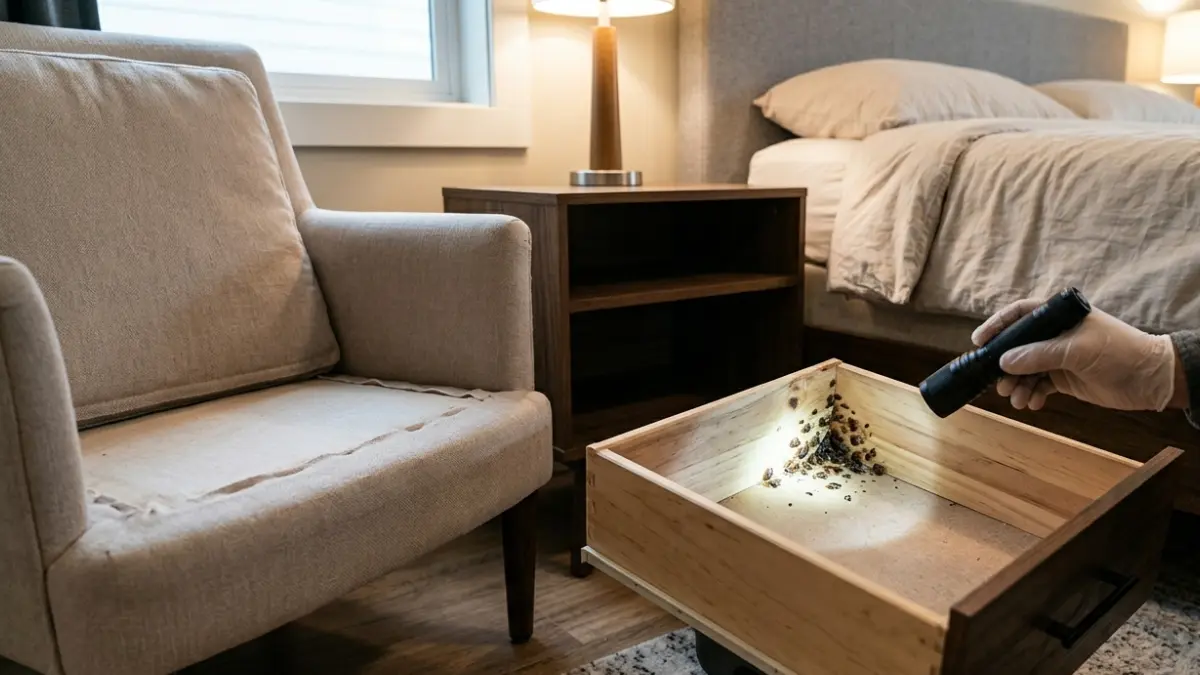
Nightstands and dressers
Pull drawers all the way out and inspect the runners, inside corners, and the joints where panels meet. Bed bugs favor the rough, unfinished wood inside furniture over smooth painted surfaces. A nightstand beside the bed is prime real estate because it sits inches from a sleeping host.
Sofas, chairs, and recliners
Any upholstered piece used for sleeping or sitting is a target. The EPA notes that in a heavier infestation you’ll find bugs in the seams of chairs and couches and between the cushions. Remove every cushion and check the seams, zippers, and the frame underneath — bites alone are a poor indicator, so inspect even when you’ve only been bitten.
Clutter, books, and small objects
Stacks of books, magazines, and clutter near the bed give bed bugs extra hiding spots. The less clutter around your sleeping area, the fewer places there are to search — and to treat.
Zone 3 — baseboards, walls, outlets, and décor
In a larger infestation, bed bugs push out to the edges of the room. These are the spots people forget — where a single missed cluster restarts the whole problem.

- Kills bed bugs and their eggs on contact
- Kills bed bugs on surfaces for up to 4 weeks
- Foam expands into hard to reach indoor places, and is easy to see where you sprayed
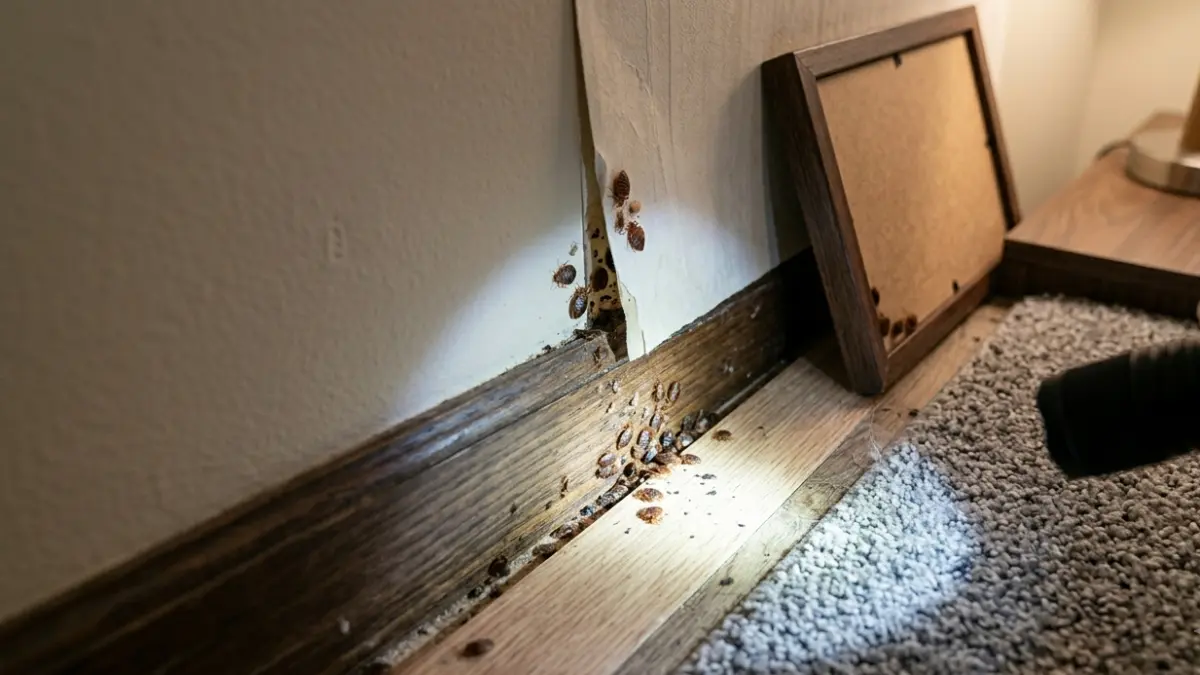
Baseboards, wallpaper, and wall cracks
Run a light along the top edge of baseboards, where the gap behind loose trim makes ideal harborage. Check the edges of peeling or loose wallpaper, cracks in the wall, and the seam where wall meets ceiling. The EPA documents bed bugs under loose wallpaper and along window frames, so none of this is far-fetched.
Picture frames, mirrors, and window frames
Bed bugs climbing a wall often stop at the first sheltered ledge. Lift picture frames, mirrors, and wall art and inspect the backing and corners. Do the same along window and door frame casings and the perimeter edge of wall-to-wall carpet, which the University of Kentucky’s bed bug ENTFACT lists among harborage sites.
Electrical outlets and switch plates (read this first)
Bed bugs can hide behind outlet and switch covers — but this is where inspection meets a real hazard.
⚠️ Watch Out: Never pry into or probe a live electrical outlet looking for bed bugs. Removing covers or inserting tools on a live circuit risks shock and fire.
✅ Do This: Treat bugs near outlets as a sign the infestation is established, and leave that inspection to a licensed electrician or pest control pro rather than opening outlets yourself.
Zone 4 — luggage, clothes, bags, and stuffed animals
This zone explains how bed bugs arrived and how they travel far from the bed. They hitchhike in soft goods that move in and out of your home.
Luggage, purses, and backpacks
The CDC notes bed bugs spread by getting into the seams and folds of luggage, overnight bags, and folded clothes. Check suitcase seams, inner pockets, purses, and backpacks — especially anything that sat on a hotel floor or bus seat. Most people never realize they’re carrying stowaways home.
Laundry hampers and closet clothes
Bed bugs gravitate to stationary fabric, so a full laundry hamper or rarely-worn closet clothes can harbor them. The clothes you’re actively wearing are a poor host site because they move too much. Bag and hot-wash anything you suspect.
Stuffed animals and secondhand items
Kids’ stuffed animals and soft toys near a bed are easy hiding spots; a hot wash and dry cycle handles most. Inspect any secondhand furniture, bedding, or clothing before it comes inside — used items are a leading way bed bugs enter a home.
How to inspect, zone by zone

- [ ULTRA LONG RANGE – 3280 FT & ADJUSTABLE FOCUS ] The Esgreen ED2405B rechargeable flashlights high lumens is made of im…
- [ SINGLE 2 MODES HIGH/LOW – BRIGHTNESS ADJUSTABLE ] The Esgreen LED flashlight rechargeable USB C is single modes, only …
- [ MULTIFUNCTIONAL 2-IN-1 USB C CHARGING & DISCHARGING ] The super bright LED flashlight long range is built-in 2 USB int…
You have the map; here’s how to run the actual bed bug inspection in one pass — the right tools, a route, and the signs that tell you you’re close.
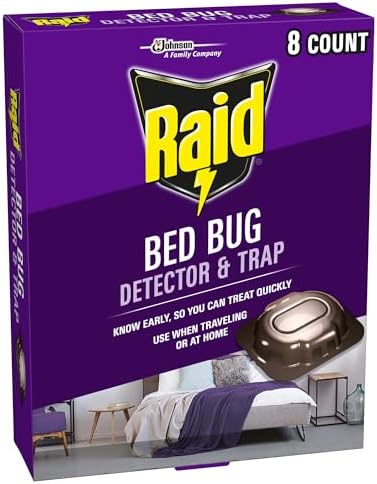
- Partially enclosed trap, designed with a see-through window
- Use when traveling or at home
- Indoor use
Your inspection kit

- Magnifying Power : 6X
- Handle lengt: 80mm
- Optical Lens;Diameter : 80 mm
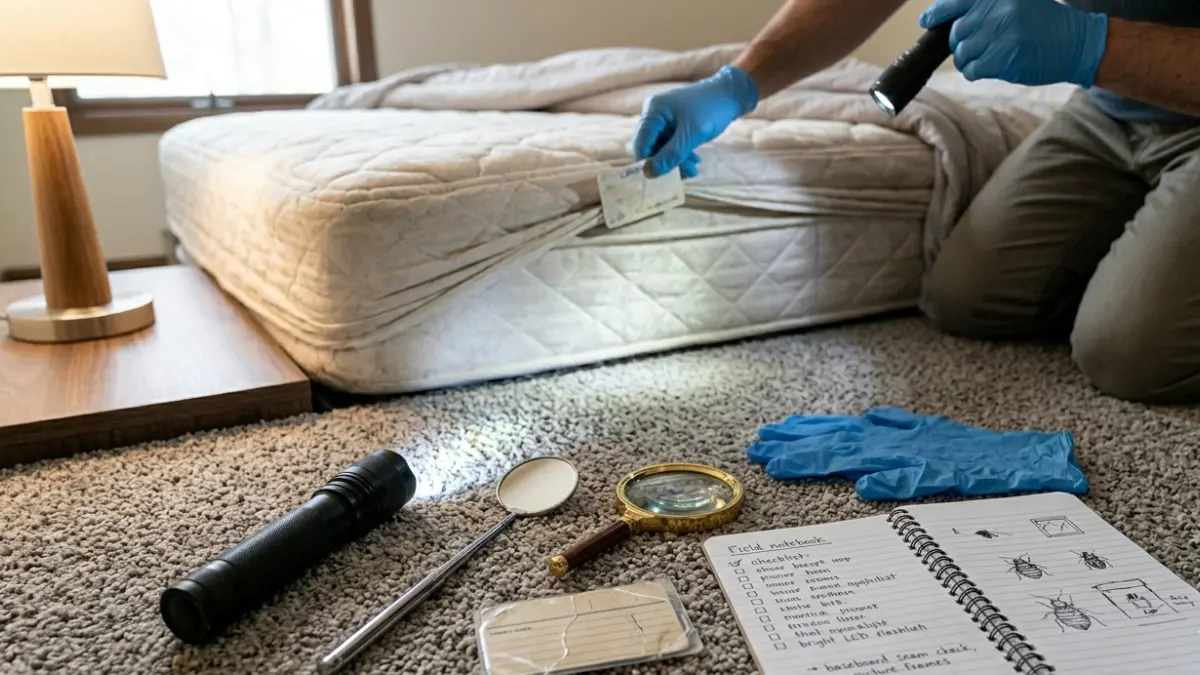
Three cheap tools do most of the work: a bright flashlight, a small mirror to see behind and under things, and an old card to drag along seams. UC IPM also recommends a magnifying lens, since eggs are hard to see otherwise.
🛒 Our Pick: A bright LED flashlight and a telescoping inspection mirror are worth buying if you don’t own them. We may earn a commission from a flashlight and inspection-mirror set, at no extra cost — standard tools, recommended on usefulness, not commissions.
Work outward from the bed
Start at the mattress and box spring, then the frame and headboard, then bedroom furniture, then walls and perimeter, and finally luggage and soft goods. Save our printable zone-by-zone checklist so you don’t skip a spot.
The five signs you’re close
Even without a live bug in view, five signs give them away: rusty stains, dark fecal spots that smear like ink, pale shed skins, tiny eggs, and a musty, sweet odor in heavy cases. The EPA lists these as markers of an active infestation; our guides on the signs of bed bugs and spotting bed bug eggs show what each looks like.
Once you’ve located them, switch from finding to fixing with our step-by-step plan to get rid of bed bugs.
Bed bug hiding spots: frequently asked questions
1. Where do bed bugs hide besides the mattress?
Besides the mattress, bed bugs hide in the box spring, bed frame, and headboard, then spread to nightstands, dressers, and upholstered furniture. As infestations grow they reach baseboards, loose wallpaper, electrical outlets, and picture frames — plus luggage, clothing, and stuffed animals that travel in and out.
2. Can bed bugs live in walls or electrical outlets?
Yes. Bed bugs hide in wall cracks and behind electrical outlet and switch covers, especially in established infestations, since their flat bodies fit any gap that holds a credit card. Never probe a live outlet yourself — have a licensed electrician or pest professional handle it.
3. Do bed bugs hide in the clothes you’re wearing?
No. Bed bugs prefer stationary fabric, so the clothes you’re wearing are a poor hiding spot because they move too much. They’re far more likely to be in a laundry hamper, rarely-worn closet clothes, or the seams and folds of luggage.
4. How far from the bed do bed bugs travel?
Bed bugs cluster close to where you sleep — about 85% are found in or near the bed. They travel 5 to 20 feet from their hiding spot to feed and stay within about 8 feet of a sleeper, though they can cover over 100 feet in a night.
5. Can bed bugs hide in wood furniture?
Yes. Bed bugs readily hide in wood furniture, favoring the rough, unfinished surfaces inside drawers and the joints where panels meet. Nightstands and dressers beside the bed are especially common because they sit within a few feet of a sleeping host.
6. Do bed bugs hide in carpet?
Bed bugs hide along the perimeter edges of wall-to-wall carpet and at tack strips, not usually in open carpet. Like baseboards and wall cracks, carpet edges offer the tight, sheltered gap they prefer. Run a flashlight along the carpet’s edge where it meets the wall.
7. How do I find where bed bugs are hiding?
Use a bright flashlight, a small mirror, and an old card to drag along seams. Work outward from the bed: mattress and box spring first, then frame, furniture, walls, and luggage. A magnifying lens helps you spot eggs. Look for live bugs and the stains they leave.
8. What are the signs bed bugs are hiding nearby?
Five signs reveal bed bugs even when you can’t see one: rusty stains, dark fecal spots that smear like ink, pale shed skins, tiny pale eggs, and a musty, sweet odor in heavier infestations. Spotting any means it’s time to inspect that zone thoroughly.
9. Can you have bed bugs without seeing them on the mattress?
Yes. Low-level infestations often hide in crevices away from the mattress — in the frame, baseboards, outlets, or furniture — so the mattress can look clean. Bites or small stains may appear before you ever spot a bug, which is why a full inspection matters.
10. Do clean homes get bed bugs?
Yes. Cleanliness doesn’t determine whether bed bugs appear, because they feed on blood, not dirt or food. The CDC confirms even spotless, luxury spaces get infested. Bed bugs hitchhike on luggage, clothing, and furniture, so anyone can bring them home regardless of how tidy the space is.
From finding them to getting rid of them
Finding every hiding spot is the hardest part of taking back your home, and you now have a method for it. Work outward from the bed in four zones — the bed, the bedroom furniture, the room’s perimeter, and the soft goods that travel — and let the credit-card rule guide you: if a card fits the gap, check it.
The spots most people miss are the box spring underside, the headboard-to-wall gap, baseboards, and luggage seams. Once you’ve located the infestation, follow our safe, 5-step plan to get rid of bed bugs to clear it for good.
Related Articles
 Bed Bugs Treatment
How Heat Kills Bed Bugs, and Where It Falls Short
July 1, 2026 Bed Bugs Treatment
How Long Can Bed Bugs Live Without Feeding? 20–400 Days
June 27, 2026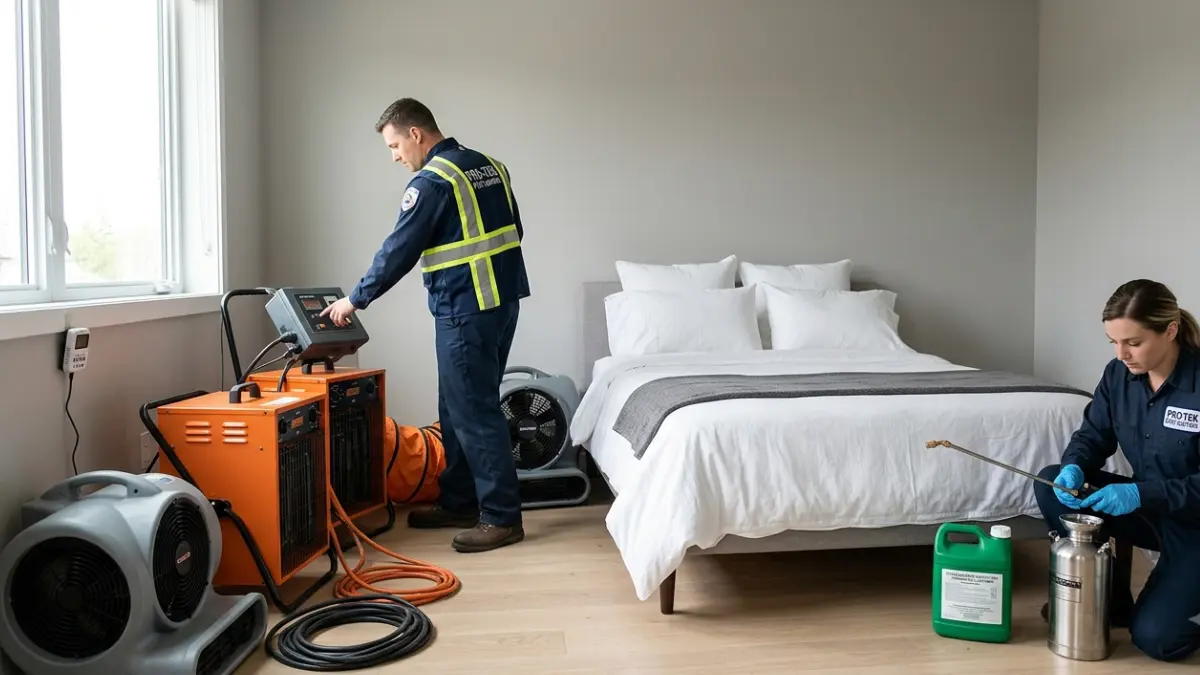 Bed Bugs Treatment
How Bed Bug Heat Treatment Costs Compare to Chemical
July 8, 2026 Bed Bugs Treatment
Are Bed Bugs Dangerous? The Health Risks People Overlook
June 26, 2026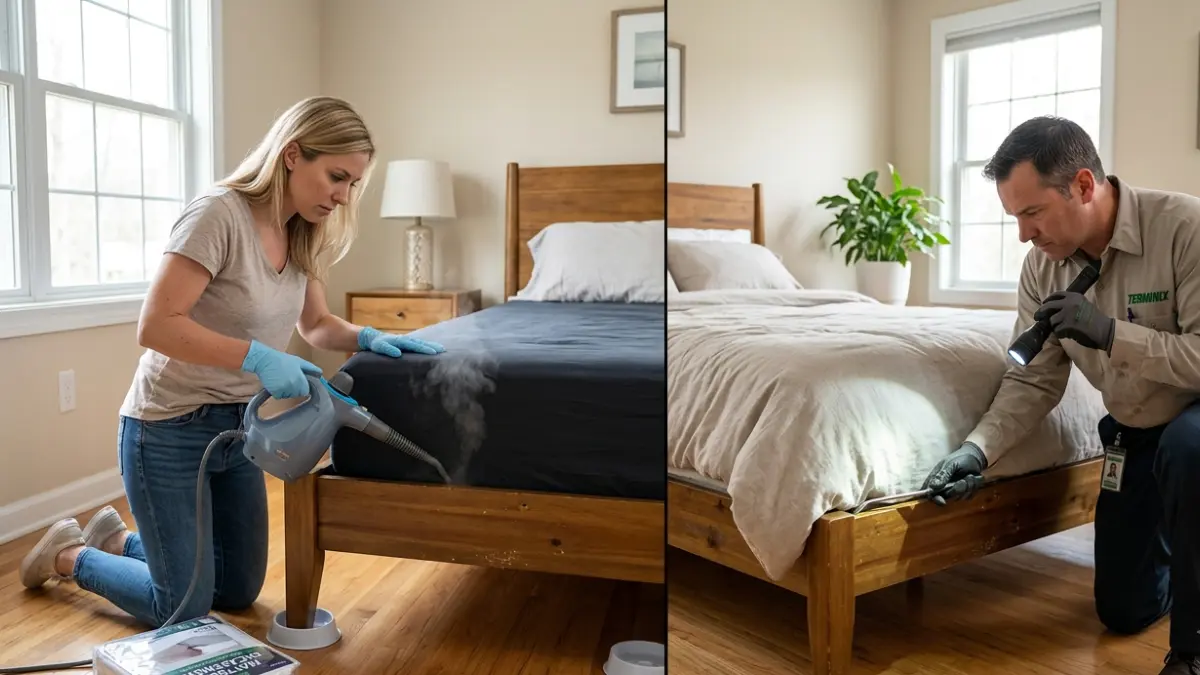 Bed Bugs Treatment
Choosing DIY or Professional Bed Bug Treatment the Smart Way
July 9, 2026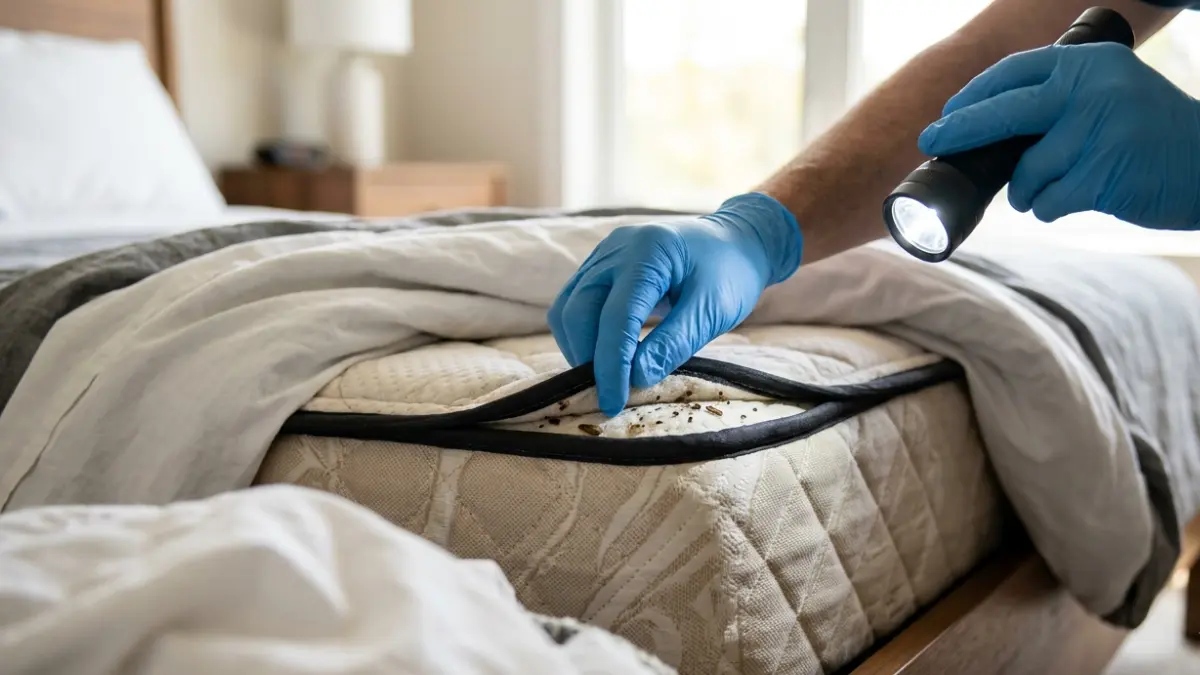 Bed Bugs Treatment
How to Check for Bed Bugs the Right Way
June 27, 2026 Bed Bugs Treatment
What Bed Bug Bites Look Like, and How to Be Sure
June 23, 2026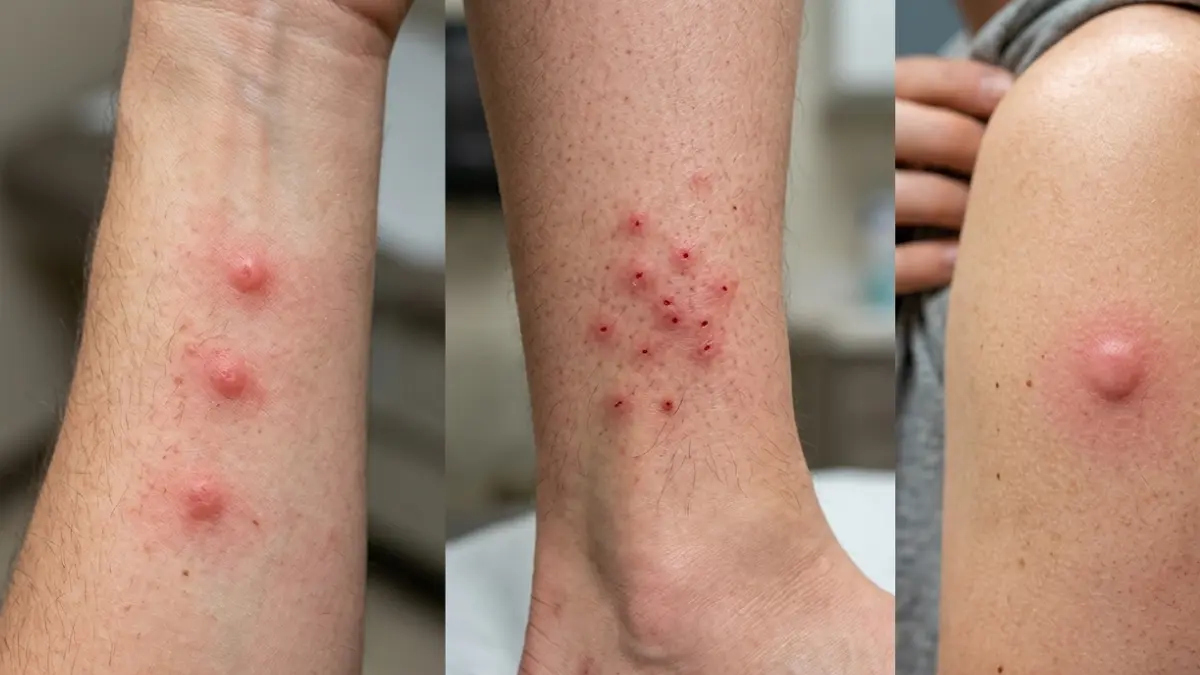 Bed Bugs Treatment
An Easy Way to Tell Bed Bug Bites From Flea and Mosquito Bites
June 24, 2026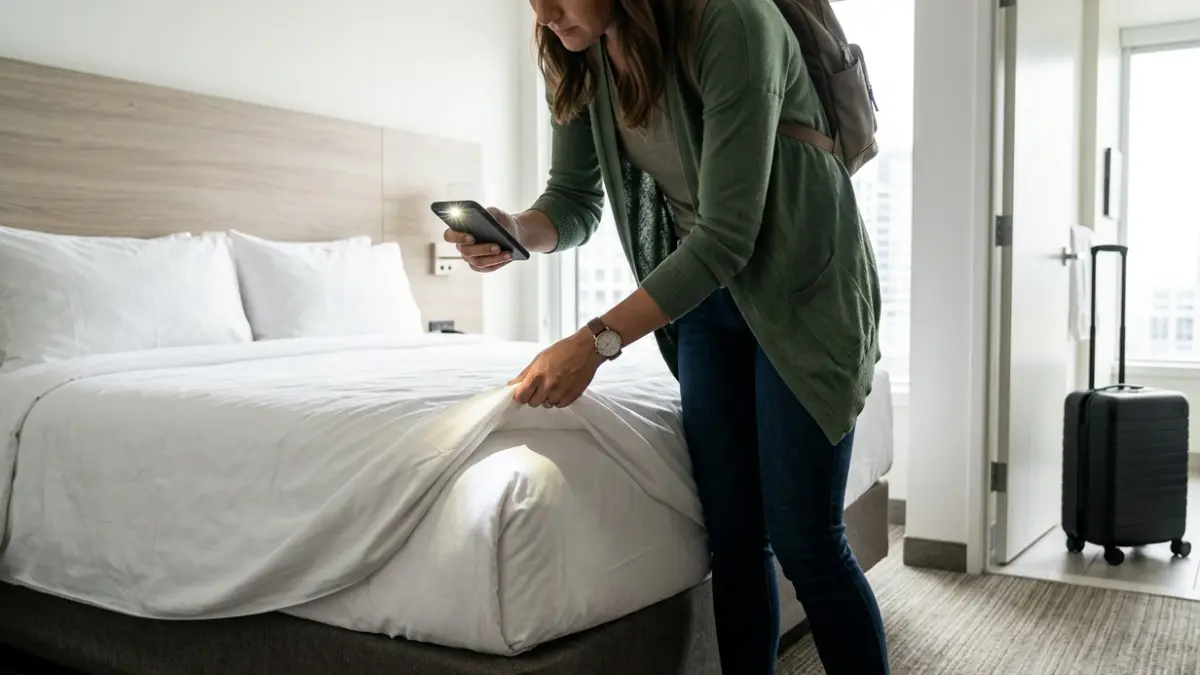 Bed Bugs Treatment