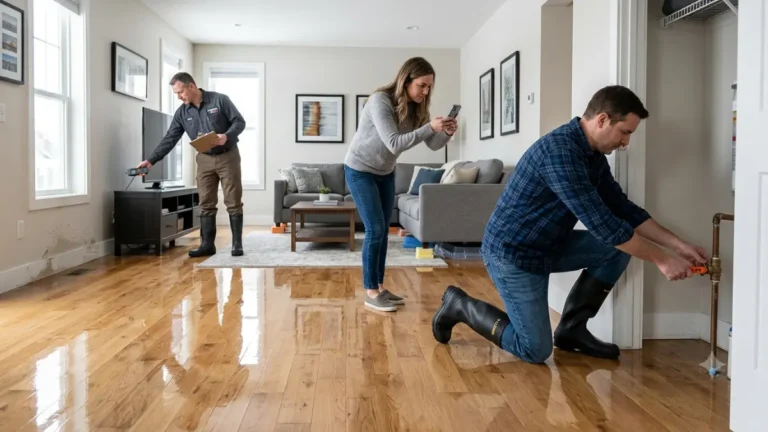
What Water Damage Categories Decide, and the Common Error

Water damage categories aren’t a severity scale — they set the order of the work. At two of the three, cleaning comes before drying, not after.
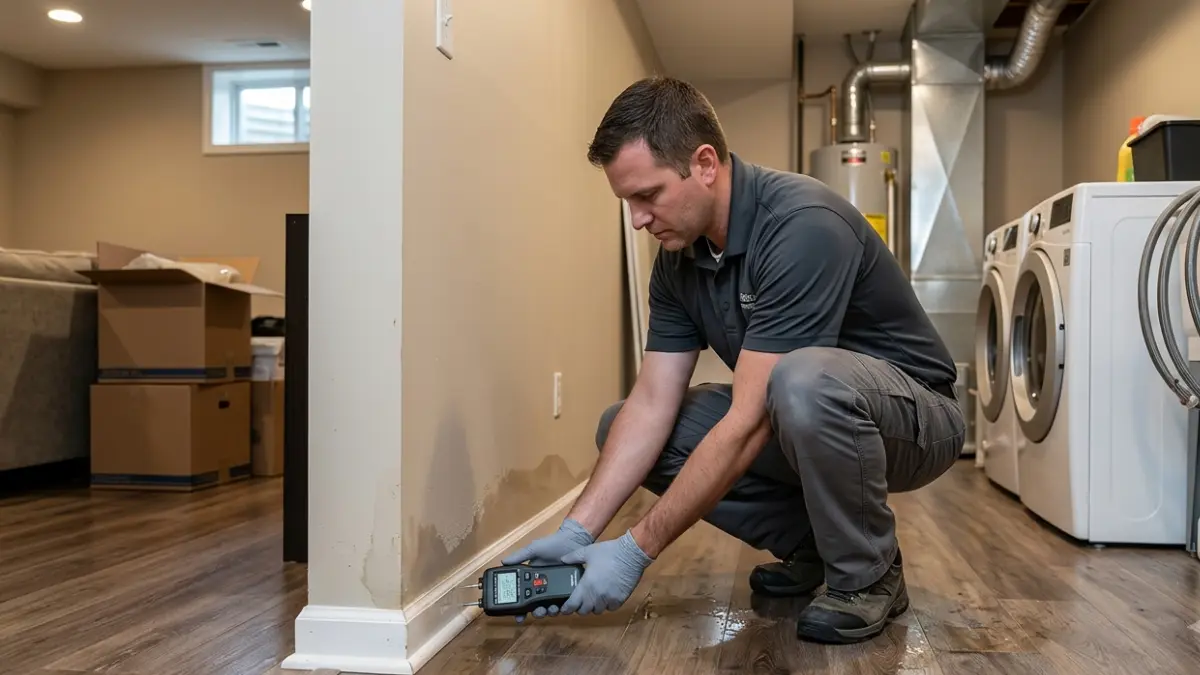
Table of Contents
What the category actually decides
A water damage category is not a severity score. It is the call that decides whether wet material in your home gets dried where it sits or cut out and hauled to the curb.
If water is in your house right now, the category can wait — start with what to do in the first hour, then come back. If a restorer or adjuster has handed you a number, the sections below explain what it commits your house to. If you suspect the number is wrong, the last two sections give you the document it should have come from and the questions that test it.

- 【1-Second Rapid Detection and Response & Dual-Side Sensing】Featuring six highly sensitive sensor probes, Tapo T300 trigg…
- 【Instant App Notifications】Receive an instant app notification when a leak happens or the batteries run low. Find out ev…
- 【90 dB Built-in Alarm】Alerts you immediately with its adjustable 90 dB alarm when leakage occurs. Press once to silence …
One limit up front: no article can categorize your water loss. That call is made on site, by someone who has inspected the water, its source, and everything it reached.
The EPA draws a second useful line. A pipe leak or rainwater through the roof usually brings fewer hazards across a smaller area than a flood does.
ℹ️ Safety Note: Contaminated water carries pathogens, and removing it carries real health risk. This article explains how the industry classifies water; it is not cleanup instructions, and that work belongs to a qualified restoration professional. The EPA advises that people with asthma or weakened immune systems, children, and pregnant people should not take part in flood cleanup.
Category means contamination, not how much water
The category of water measures contamination, not volume. A burst supply line that floods an entire basement can be Category 1; a cup of sewage on a bathroom floor is Category 3.
Source, plus everything the water has touched
The test has two parts: where the water originated, and what its quality became after it contacted the materials already in the building.
That second half is why the same water can carry two different categories a day apart.
Who makes the call, and what it’s for
The industry term is preliminary determination — the process a restorer performs to establish the category. The standard is specific about its purpose: establishing a scope of work.
The category is not a diagnosis or a lab result. It is the decision that sets what gets done, which is why it sits so early in the sequence a restorer should follow before any drying starts.
Category is not the same as class
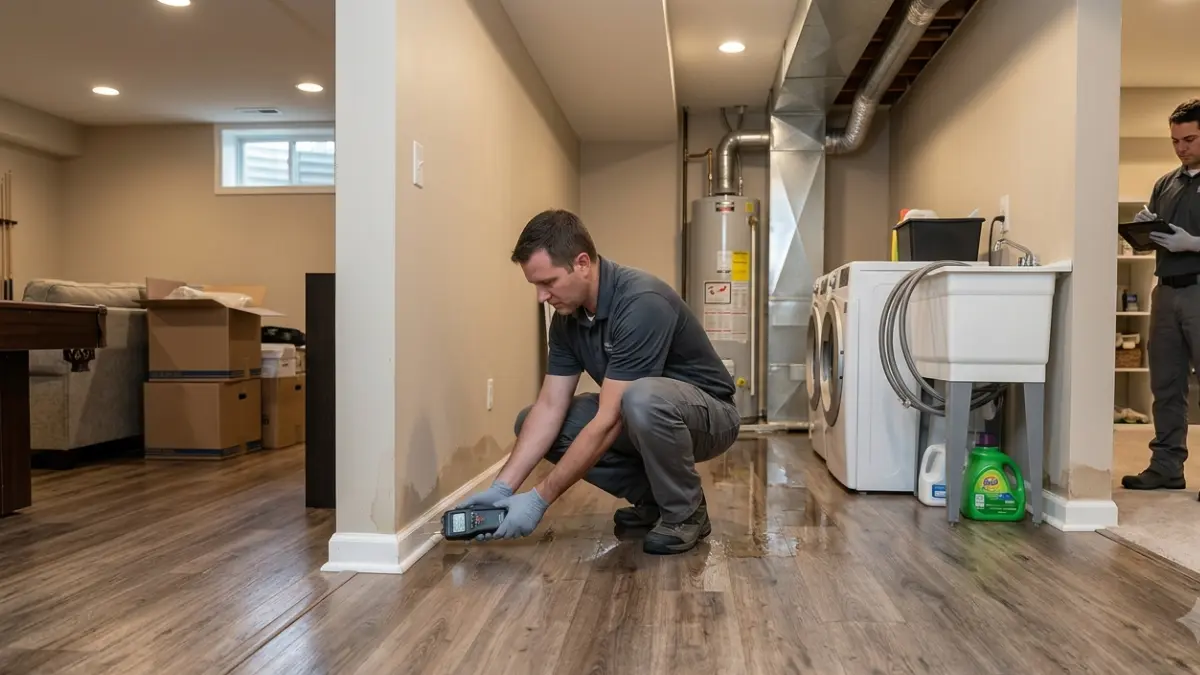
Category and class are separate axes, and they get confused constantly. Category describes contamination; class describes the drying job — how much material is wet and how readily it gives up moisture, which shapes the equipment and the time it takes.
A clean-water loss can still be a large, slow drying project. There are three categories and four classes, so a Category 4 does not exist.
The three categories in the standard’s own terms
Three categories, ordered by how contaminated the water is.
| Category | The water | Common sources | What happens to wet material |
|---|---|---|---|
| 1 | Sanitary at the source | Supply lines, clean tank overflow, melting ice | Dried in place; no contamination controls required |
| 2 | Significantly contaminated | Appliance discharge, seepage, some overflows | Cleaned before drying; porous items often removed |
| 3 | Grossly contaminated | Sewage, backflow past a trap, seawater, rivers | Porous materials discarded; containment and worker protection required |
Sourced: ANSI/IICRC S500, Fifth Edition (2021), quoted in the S500 Consensus Body position statement of March 2026. We verified the Category 3 wording directly against that statement; the Category 1 and 2 wording is the industry’s consistent paraphrase, which we could not verify against the current edition.
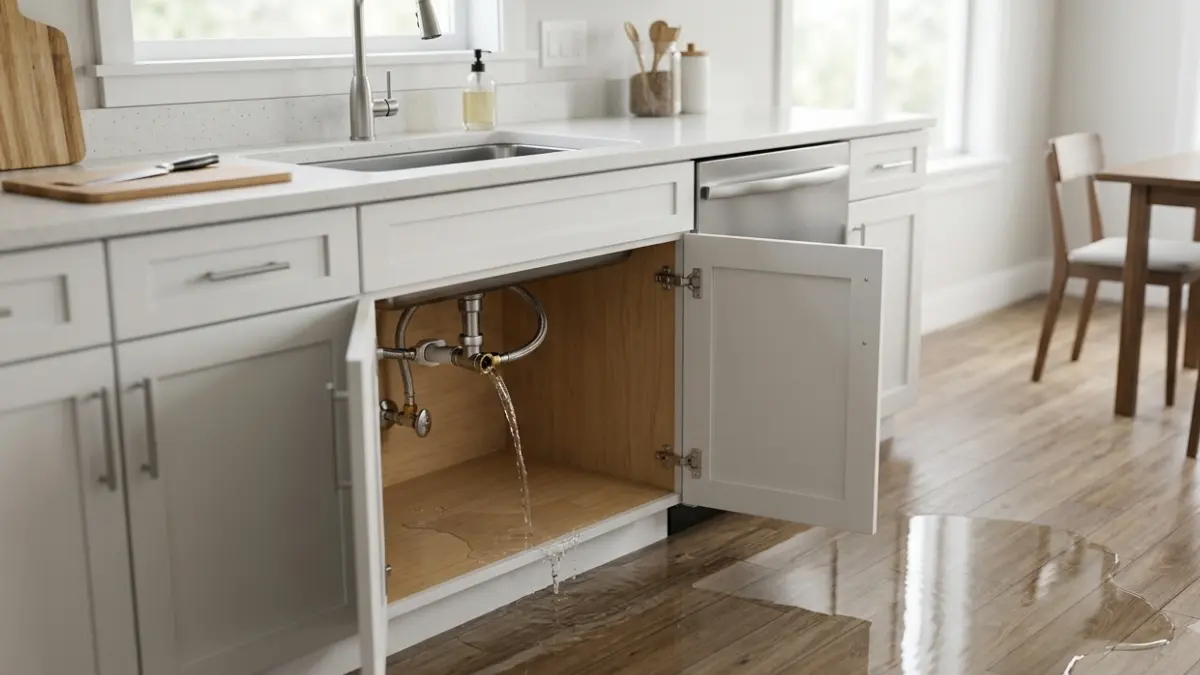
Category 1: sanitary at the source
Sanitary is not the same as drinkable. The test is that the water poses no substantial risk from skin contact, swallowing or inhalation at the point it escaped.
Category 2: significantly contaminated
This one is defined by potential rather than certainty — water carrying enough contamination that contact or ingestion could cause discomfort or sickness.
Category 3: grossly contaminated
One clause is worth memorizing. Waste-line backflow originating beyond any trap sits among the Category 3 examples regardless of what the water looks like or what color it is.
Why “gray water” and “black water” aren’t the test
Those names come from older editions and still run through most of the search results. The current text decides nothing by color: clear water can be Category 3.
What changes in your house at each category
This is where the number stops being vocabulary and starts costing you drywall.
Category 1: dried in place
If the determination is Category 1, the restorer may proceed without contamination controls — no containment barriers, no pressure differentials. Materials dry where they are, and most household leaks caught early land here.
Category 2 and 3: cleaned first, dried second
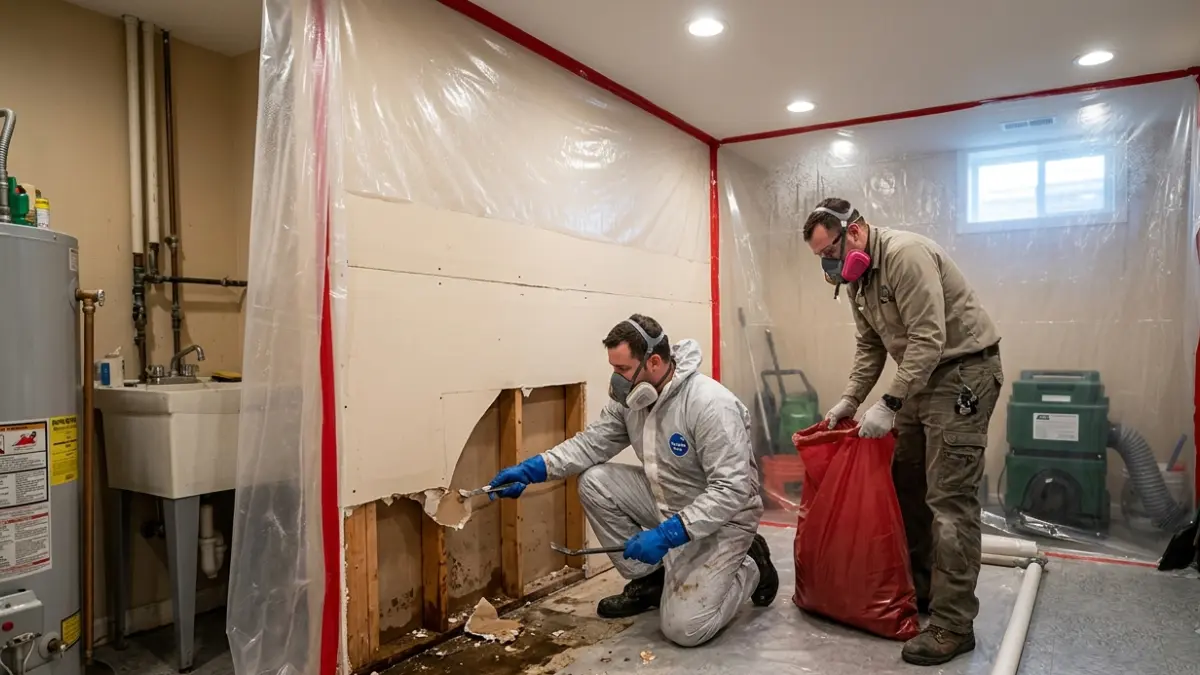
At Category 2 or 3 the standard changes the order of operations. Remediation should happen before restorative drying begins, and at that point contamination controls and appropriate worker protection stop being discretionary — the wording shifts from should to shall.
That is why “they just set up fans” is the wrong response to a contaminated loss. Fans move air, and air moves whatever is in it.
What comes out of the wall

A federal agency and a university extension service agree here. The CDC’s guidance on cleaning safely after a disaster directs homeowners to remove and discard drywall and insulation contaminated with sewage or floodwater.
NDSU Extension’s sewage cleanup guidance goes further: all porous materials exposed to sewage must be discarded, carpet and padding included, because they cannot be adequately cleaned. Whether your own wet carpet is worth saving is the question people ask first.
⚠️ Watch Out: Removing contaminated material is not a homeowner task. Cutting drywall, pulling insulation or running a wet/dry vacuum through Category 3 water spreads contamination and exposes you to it. Leave it to a restoration professional and stay out of the area.
- SUFFICIENT CAPATICY – This wet/dry vac, a capacity of 3 gallon, is equipped with a float mechanism which will rise autom…
- 10 FT CLEANING REACH – 6 ft cord and 4 ft hose, a range of more than 10 ft is available, enough for daily use.
- STRONG SUCTION – 3.0 peak HP motor provides powerful suction to easily clean up the wet and dry garbage of life.

- Advanced Filter Media
- Made in USA
- NIOSH-APPROVED N95 for at least 95 percent filtration efficiency against certain non-oil-based particles and aerosols
✅ Do This: Ask which IICRC certifications the technicians assigned to your job hold, not just the firm. Then ask whether contamination controls and remediation appear in the written scope ahead of the drying equipment.
How clean water stops being clean
The standard specifies no number of hours. None.
What the standard actually says about time
On how a category degrades, the text names two factors — time and temperature — and says they can affect or retard the amplification of contaminants. That second verb is deliberate. Cold slows contamination; warmth speeds it.
Where the 24 to 48 hour number comes from
| Source | What it says | What it’s about |
|---|---|---|
| ANSI/IICRC S500, 5th ed. (2021) | No hour figure; time and temperature can speed up or slow down contamination | Water category |
| EPA flood cleanup page (Mar 2026) | Mold can grow on wood, drywall, carpet and furniture wet more than 24 hours | Mold growth |
| EPA fact sheet 402-F-18001 (2018) | Wet more than two days usually gets moldy; discard what can’t dry within 24–48 hours | Mold growth |
| Restoration company pages, page one | Category 1 degrades to Category 2 within 48–72 hours | Water category, unsourced |
Sourced: all four verified as published, 7 August 2026. The comparison is ours.
The last column is the point. Two of these describe mold and one describes category, and the search results have fused them into a single countdown — the 24-hour clock is a mold clock. The EPA’s own remediation guidance treats even that window as a guideline rather than a deadline: mold can appear sooner, and may not appear later.
Why moving fast still matters
None of this makes delay harmless. Every source agrees wet materials deteriorate; they disagree only about the number.
Drying and humidity control belong in the first day rather than the third, and remediation timelines stretch once material has to come out. EPA’s guidance on flood cleanup and indoor air carries the current consumer position.
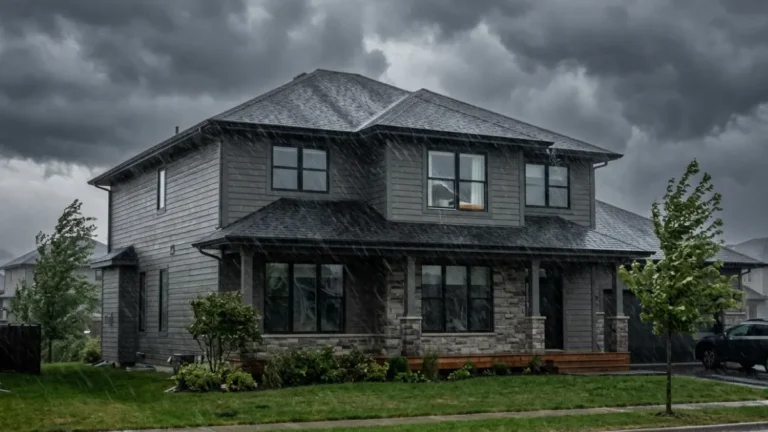
Storm water is not automatically Category 3
No, it is not. In March 2026 the consensus body that writes the standard said so directly.
Why one word in the definition does the work
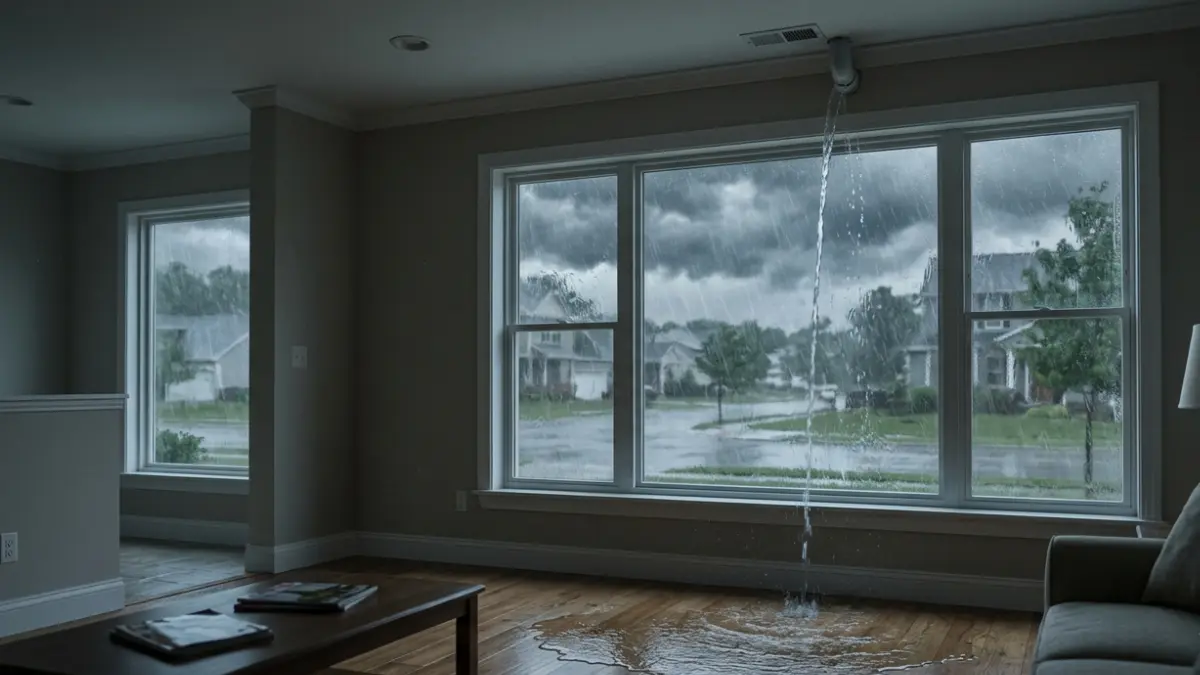
The Category 3 definition lists wind-driven rain from hurricanes and tropical storms among its examples, and that list is where the confusion starts. The list is introduced with the word “can” — which the standard defines as signaling a possibility open to the reader, explicitly not part of the accepted standard of care.
The consensus body’s reading is that the example is contaminated water. How the water got into the building is not the test.
What the restorer is supposed to do instead
Inspect, gather information, then determine. Category 3 follows from finding a grossly contaminated condition on site, not from the forecast.
The IICRC’s standards chair put it plainly in the announcement, saying categorization must be based on “actual conditions observed at the loss site.”
The two ways this goes wrong
Both errors land on the homeowner. A roof leak called Category 3 by default means demolition the house did not need. Genuinely contaminated water called Category 1 means that contamination gets dried into the structure instead of removed.
The argument is not that restorers over-call categories. It is that the call is supposed to rest on an inspection that happens before anything else.
Checking the category you were given
A competent restorer answers all four of these without hesitation, which is what makes them useful.

- Accurate & Easy to Use – This pinless moisture meter offers quick, non-invasive readings without surface damage. Simply …
- Early Moisture Detection – Helps identify hidden dampness in floor, wood, and masonry, reducing the risk of long-term wa…
- Deep Sensing Capability – With up to 0.75 inches of penetration depth, this moisture detector provides reliable readings…
Four questions that test the determination
- What did you inspect before deciding, and what did you find?
- What is the source of the water, and has that been verified rather than assumed?
- What has the water contacted since it escaped?
- What does this category change in the scope of work, compared with the category below it?
They map onto the standard’s own sequence — inspection, then information gathering, then determination. Asking them tests whether that sequence happened.
When an independent assessment is warranted
The standard lists conditions under which an indoor environmental professional should be retained by one of the parties involved: occupants at high risk, a public health setting such as a childcare or elderly care facility, a likely risk of adverse health effects, an unidentified suspected contaminant, contaminants believed to have gone airborne, or genuine uncertainty about whether the water is contaminated at all.
It also says such an assessment often is not necessary. Both halves matter, and only one tends to get quoted.
✅ Do This: If one of those six conditions applies to your household, ask who is retaining the indoor environmental professional, and whether that assessment happens before demolition rather than after. Vetting the contractor comes first; independent testing after the work is a separate step again.
Water damage categories: common questions
1. What are the 3 categories of water damage?
The three water damage categories describe contamination. Category 1 is sanitary at the source, such as a supply line break, and Category 2 carries significant contamination that could cause discomfort or sickness. Category 3 is grossly contaminated and may contain pathogens or toxins — sewage, backflow past a trap, seawater, and rising water from rivers or streams.
2. Is there a Category 4 water damage?
No — the standard defines three water damage categories and four classes, so the four refers to classes. Categories describe how contaminated the water is, while classes describe the drying job: how much material is wet and how readily it releases moisture. Any category can pair with any class, so a clean-water loss can still be a big job.
3. What is the difference between a water damage category and a class?
Category and class measure different things. The water damage category describes contamination, from sanitary at the source through grossly contaminated, while the class describes the drying job — how much material is wet and how readily it gives up moisture. Category drives safety procedures and what gets removed; class shapes the equipment and how long drying takes.
4. Is rainwater Category 1 or Category 3?
It depends on what the water is carrying, not on the fact that it arrived in a storm. In March 2026 the S500 consensus body stated that wind-driven rain and other weather-related intrusion is not automatically Category 3. The Category 3 examples turn on grossly contaminated water; the route into the building is not the test.
5. How long before Category 1 water becomes Category 2?
The standard gives no number of hours, and the figures circulating online do not come from it. What it names is time and temperature, which can either speed up or slow down contamination. That is separate from the mold clock: the EPA’s current guidance is that mold can grow on materials left wet more than 24 hours.
6. Is a toilet overflow Category 2 or Category 3?
The threshold is the trap. Waste-line backflow originating beyond any trap sits among the Category 3 examples regardless of what the water looks like or its color, so clear water arriving by that route still counts. A clean supply line or tank overflow with no bowl contents involved is treated as far less contaminated.
7. Does the water category decide what my insurance pays?
No — the category establishes the scope of work: what has to be done, and in what order. Coverage is a separate question that turns on your policy language and the cause of loss. The two interact, because scope affects what a claim ends up covering, but the category itself is not a coverage determination.
8. Can I clean up Category 3 water myself?
No — Category 3 water is grossly contaminated, and porous materials it has soaked must be discarded rather than cleaned — wet drywall among them. The CDC notes that skin contact with floodwater is not by itself a serious risk, while swallowing anything contaminated by it can cause illness. Call a qualified restoration professional.
What to do with this
The category is a decision about your house, made by a person, for a stated purpose. It is worth understanding for one reason: it determines what gets dried and what gets thrown away.
If you were handed a number that does not match what you can see, ask the four questions, and ask what was inspected before the determination was made. If one of the six escalation conditions applies to your household, ask about an independent assessment before demolition rather than after.
If you want the full sequence before drying begins, that is the parent guide to this one.