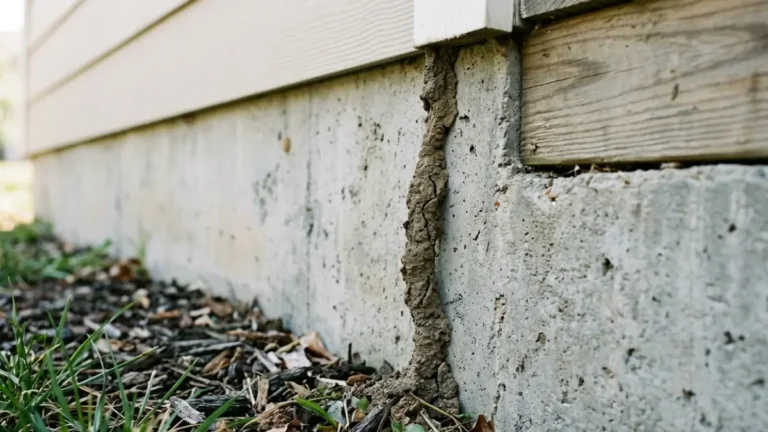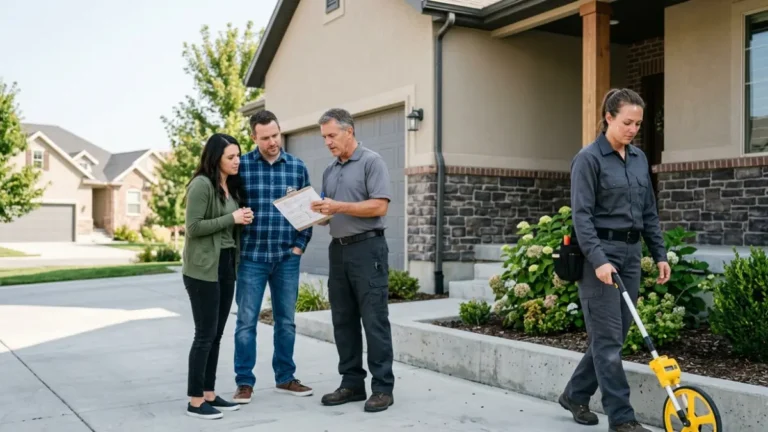
Buying a house with termite damage hinges on one overlooked line

Termite damage on a house you’re buying? The inspection form says the inspector isn’t qualified to evaluate it — and names who is.

Table of Contents
Three situations buyers actually find themselves in
Mississippi State University Extension has published three real enquiries on this topic, and one is probably yours.
The first: termites found in a house already bought. The second: insulation installed, and the pest control company cancelled the contract. The third — the one this article follows — a buyer whose termite inspection report says large areas could not be inspected.
If that third one is you, start at question three. If a seller’s disclosure arrived before any inspection, start at question one. If your lender is the only reason a report exists, question four is yours.
Page one treats buying a house with termite damage as a price negotiation: inspect, quote, credit, close. This article treats it as a documents problem. Four documents each answer a different question, each states its own limits on its face, and the gaps between them are where your money sits.
It will not tell you whether to buy — but what termite treatment actually involves covers the methods and real costs if that side is still unfamiliar.
ℹ️ Safety Note: Buying property with insect damage involves disclosure duties, lender requirements, and structural questions that vary by state and change over time. Everything here is general information, not legal, financial, or transaction advice. Confirm requirements with your lender, your state structural pest control agency, or a licensed professional, and have structural damage assessed by a qualified structural professional.
What the seller’s disclosure actually tells you
A “No” beside a termite question on a seller’s disclosure notice means the seller is not aware of that condition. It does not mean the condition is absent.

Yes, no, and the option the termite line doesn’t offer
Texas publishes its form through the Texas Real Estate Commission, current edition effective 28 May 2026. Item 4 of the Texas disclosure form itself carries four separate termite entries: active termites, damage needing repair, previous damage, previous treatment. The instruction is Yes if aware, No if not — no third option.
- LIGHTWEIGHT: Unisex protective eyewear combines versatility and value with a comfortable, contoured fit.
- WRAP AROUND DESIGN provides extended eye protection and unobstructed viewing.
- INDOOR/OUTDOOR LENS TINT: Designed for tasks requiring frequent movement between indoors and outdoors.
📊 Sourced: The same form offers an “Unknown” box on item 1 and on the smoke detector question. It withholds “Unknown” on items 3, 4, 5, 6 and 9 — every item asking what the seller is aware of. Termites sit in item 4. (TREC Form 55-1, form-dated 05-04-2026.)
What the notice says about itself
The form calls itself a disclosure of the seller’s knowledge on the date signed, not a substitute for inspections, and not a warranty. Read every document in your file the same way — for what it declines to claim.
| Document | Asserts | States it does not assert |
|---|---|---|
| Seller’s disclosure | Seller’s knowledge, date signed | Not an inspection; not a warranty |
| WDI report | Visible evidence, accessible areas, that date | Not concealed damage; not structural |
| Lender requirement | Whether a report is needed | Nothing about this house |
| Treatment proposal | What a company will do and charge | Not a repair assessment |
| Termite bond | Retreatment, sometimes repair | Excludes pre-contract damage |
| Homeowners policy | Named perils, own conditions | Insect damage commonly excluded |
Each entry taken from the document’s own face.
Active infestation, or old damage — and can anyone date it?

- 440 LBS HIGH THRUST FOR TOUGH MATERIALS Delivers up to 440 lbs (200kg) of pressure, making it ideal for dispensing high-…
- ADJUSTABLE 12:1–24:1 THRUST RATIO CONTROL Features a progressive thrust-ratio system (12:1 to 24:1), allowing precise co…
- 360° ROTATING BARREL FOR PRECISION APPLICATION Front holder rotates 360°, enabling easy application in tight corners, jo…
Everyone wants the damage dated. No honest professional can do it.
Why nobody can tell you how old the damage is
NC State Extension states there is no accurate method for determining the age of recently discovered damage, because dating it needs a reference point — a moment when that wood was known to be undamaged. The same source states the age of mud tubes, and the etching they leave, cannot be guessed without a house’s inspection history.
🔍 Why It Works: Damage carries no timestamp. A colony removes wood; it does not date-stamp the cavity. That is why signs of an active infestation matter more than the damage — and why an empty mud tube proves nothing, since termites abandon and rebuild tunnels routinely.
What the report can establish instead
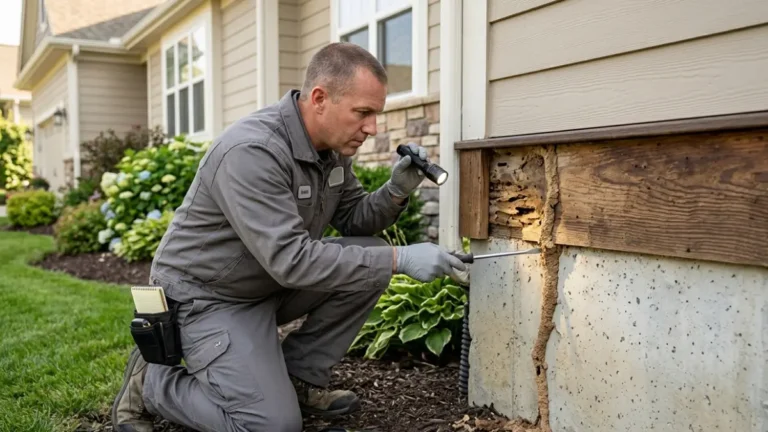
The WDI report records visible evidence on one date: live insects, or dead insects, parts, frass, shelter tubes, exit holes and staining, plus visible damage. The inspection form itself states it is not a guarantee against concealed or future infestation, and excludes non-insect organisms — so damage that is not termite damage may sit outside its scope. Read why termite damage cannot be dated before asking anyone for an age.
Whose report is it, and how much did it reach?

- SMART DESIGN:Handheld Flashlights Mini size & Anti-slip deaign, small enough to fit in your pocket, handbag, drawer, or …
- ADJUSTABLE FOCUS:The flashlights with 3 Modes, XPE , COB and Strobe. The ultra-bright flashlight can zoom in to focus on…
- WATERPROOF&DURABLE: This tactical flashlight is virtually indestructible. Constructed from military-grade aluminum, it i…
A report is a coverage map, not a verdict. Section IV of the standard form exists purely to record what the inspector could not reach.
Areas the inspector could not reach

- ACCURATE: This laser measuring tool features long range measuring with extreme accuracy. It measures distances up to 100…
- EASY-TO-USE: This laser measure features a simple, user-friendly layout with two-button operation: one for measuring, on…
- CLASS II LASER: Specs for this laser distance measuring tool are 635 nm; <1 mW
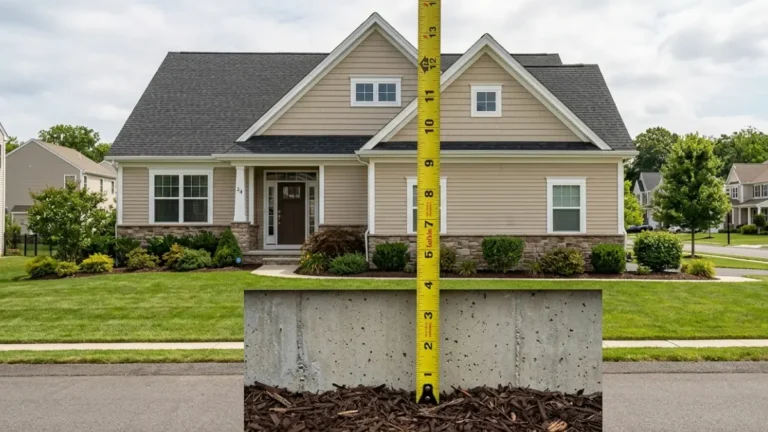
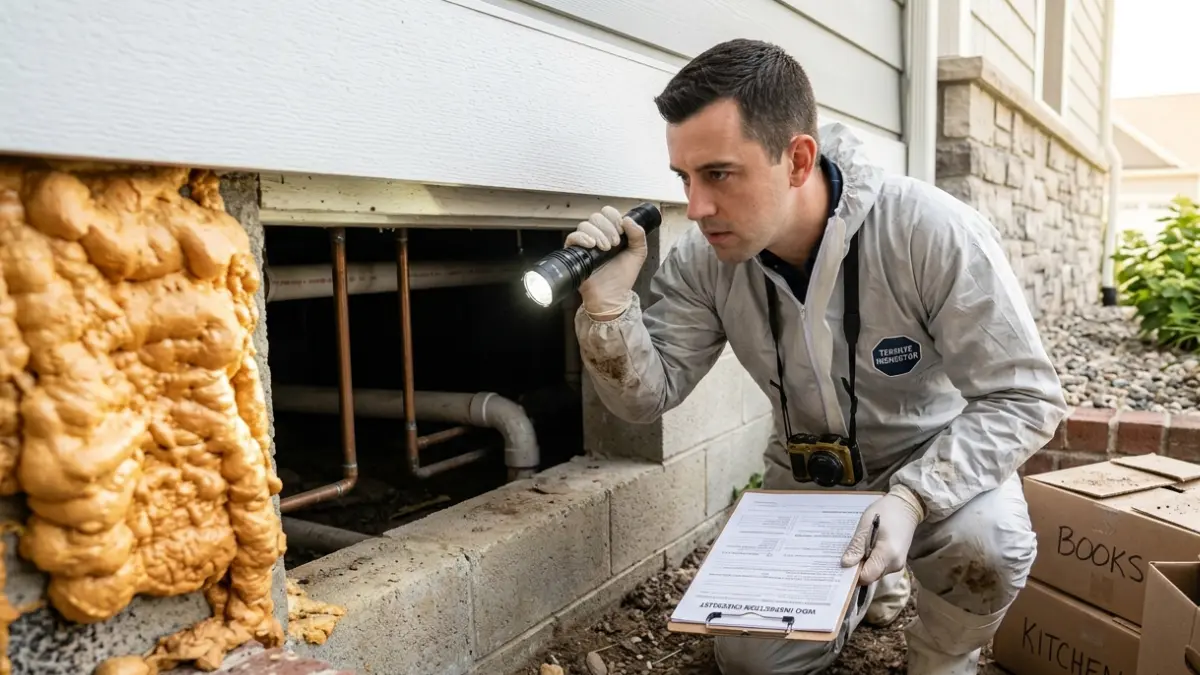
The form gives inspectors a 26-item key for obstructions and inaccessible areas — stored items, insulation, floor coverings, fixed ceilings, clutter and more. Crawl spaces count as inaccessible below 24 inches of clearance between floor joists and the surface, or where the opening is too small to enter.
If such an area is later opened up, the form says the company may be contacted for another inspection, and an additional fee may apply. The report becomes invalid for mortgage or settlement purposes if unused within 90 days — which the form says is not a warranty.
Spray foam and the inspection nobody can finish
Item 25 on that obstruction key is spray foam insulation. Item 23 is rigid foam board.
⚠️ Watch Out: MSU Extension reports termites do not eat spray foam but tunnel through or behind it, and that foam conceals the leaks creating the moisture they need. NC State Extension independently notes termites tunnelling through foamboard. In MSU’s published case, three companies refused a crawl space job on finding foam, and another cancelled a contract after attic foam went in.
So the inspection problem and the who-will-service-it problem are one problem — what spray foam does to a termite inspection is the clearest published account. Ownership matters too: whose name is on the order decides who the inspector answers to, and who pays is a separate question again.
Does your loan require anything here?
Not nationally. The VA requirement is geographic, and in eight states it is decided county by county.
Where the requirement applies, and where it doesn’t
The VA’s own state-and-county list sets out three tiers. Wood-destroying insect information is required for the entire state in 35 listed jurisdictions — 29 states plus the District of Columbia, Puerto Rico, the U.S. Virgin Islands, Guam, American Samoa and the Northern Mariana Islands.
Eight states are county-level only: Colorado, Iowa, Nebraska, Nevada, New York, Pennsylvania, Utah and Wisconsin. In New York that covers all five boroughs and a band of downstate counties, and nothing further west. In Utah, six counties, all in the south.
When the appraisal triggers it anyway
Where a state is not listed at all, the page states no inspection is required unless specific issues are noted in the appraisal report. That third tier is the one people miss: an unlisted state is not an exemption from the appraiser noticing something.
Check your own state and county on the VA’s page rather than a summary, because the VA maintains the list and it changes. Your lender is the only party who can confirm what this loan requires here. Which species the report hunts varies too — see subterranean and drywood compared and regions where risk differs.
Has anyone qualified priced the repair?
Probably not — and the inspection form says so in its own words.
What the report says about repairs
The form states it is not a structural damage report, and that the inspector’s training and experience do not qualify them in damage evaluation, construction technology, or repair. Where visible damage is recorded, it recommends the buyer contact a qualified structural professional to determine the extent and the need for repairs.
Nobody in the transaction has done that yet. The report gets treated as a repair estimate because it is the only document in the file with the word damage on it.
Who assesses structural damage
NC State Extension puts it as a question to ask outright: is there damage that should be repaired, or examined by a contractor or engineer, before control work begins?
✅ Do This: Bring in a structural engineer or licensed general contractor for the damage, and a licensed pest management professional for the infestation. Ask the structural professional what they need opened up, and what they cannot assess without it. The company quoting the treatment is not assessing the repair — see how a treatment quote is built and what repair work involves.
What knowing this costs you later
Close on the house and your position changes. The buyer holding the disclosure becomes the seller filling one in, and everything learned here becomes something you are aware of.
NC State Extension advises keeping the treatment and inspection records and passing them to the buyer when you sell. The 2026 Texas form added something worth noticing too: item 9 now asks whether the property is presently insured, whether it carries windstorm cover, and whether the seller has been unable to insure it.
Buying a previously owned home that has not been under contract usually means a new agreement excludes existing damage — because, again, nobody can establish when it happened. Switching companies later re-imposes that exclusion.
Read the terms before assuming anything transfers: the questions worth asking about a bond, and what a homeowners policy leaves out.
Termite damage and home buying: common questions
1. Is a WDI report the same as a home inspection?
No. A WDI report covers visible evidence of wood destroying insects in accessible areas on one date. The form states the inspector is not qualified in damage evaluation or construction, so it is not a structural report. A home inspection is a separate service entirely.
2. Does a wood-destroying insect report cover wood rot or fungus?
The form defines wood destroying insects as termites, carpenter ants, carpenter bees and reinfesting wood boring beetles, and excludes mold, mildew and non-insect organisms. Some states use their own form covering wood-decaying fungi. Wood rot named on a disclosure will not necessarily appear on the insect report.
3. How long does a wood-destroying insect report stay valid?
The form states it is invalid for securing a mortgage or settling a property transfer if not used within 90 days of the inspection date, and that this is not a 90-day warranty. A delayed closing can therefore require a fresh inspection.
4. What is a conducive condition?
A factor making infestation more likely, rather than evidence of one. The form’s list includes earth-to-wood contact, foam insulation at the foundation touching soil, faulty grade, poor drainage, moisture, wood debris in the crawl space and mulch against the structure.
5. If the inspector couldn’t reach an area, does a re-inspection cost extra?
Possibly. Where a reported inaccessible area is later made accessible, the form says the company may be contacted for another inspection and an additional fee may apply. Who pays is between the parties, not something the form decides.
6. What should I do if the report lists my crawl space as inaccessible?
Find out why — clearance under 24 inches, a too-small opening, stored items or insulation each mean different things, and some are clearable while others are permanent. Ask a licensed inspector, on a report in your own name, what a re-inspection would reach.

Six things to establish, in order
Work through them in the order the documents arrive. What the disclosure records, and that it records awareness rather than condition. Whether there is activity now, since age is unknowable. How far the report reached. What your loan requires where this property sits. Who is qualified to assess the damage — and that nobody has yet. What you hold after closing.
Three you can start today: read your state’s disclosure form, look up your county on the VA’s list, and ask your inspector what they could not reach and why. None requires a decision about the house.