Throw away a mattress with bed bugs? Most can be kept

Before tossing a mattress with bed bugs, encase it for a year as EPA advises. Four states’ recycling programs refuse infested mattresses.
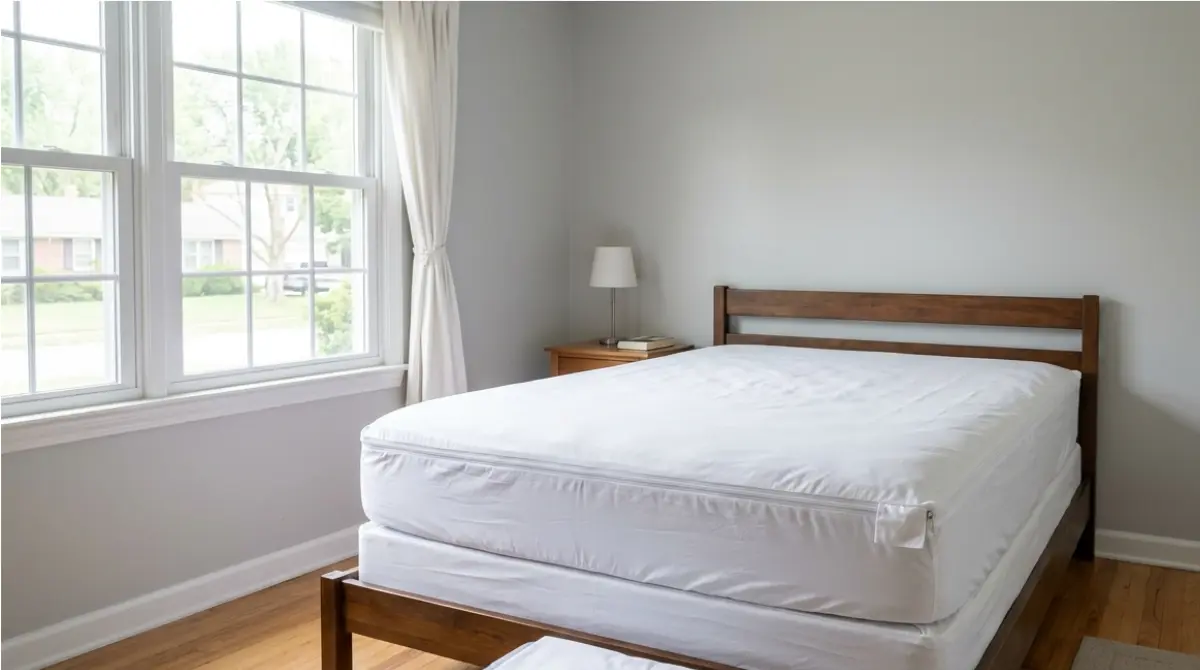
Table of Contents
In most cases you don’t need to throw away a mattress with bed bugs, and tossing it won’t solve the problem on its own (La Porte County Health Department guide). Tonight, zip it into a bed-bug-tested encasement and plan treatment for the whole room. EPA’s bed bug tips note that most belongings can be treated and saved, and that throwing them out is expensive and may spread the bugs to other people’s homes.
The mattress isn’t a health hazard that has to leave tonight. Bed bugs cause itchy bites and lost sleep, but they are not known to transmit or spread disease. If yours does need to go, it has to be sealed and marked first, and some cities and recycling programs set their own rules about where it can end up.
Bed bugs rarely stay in the mattress
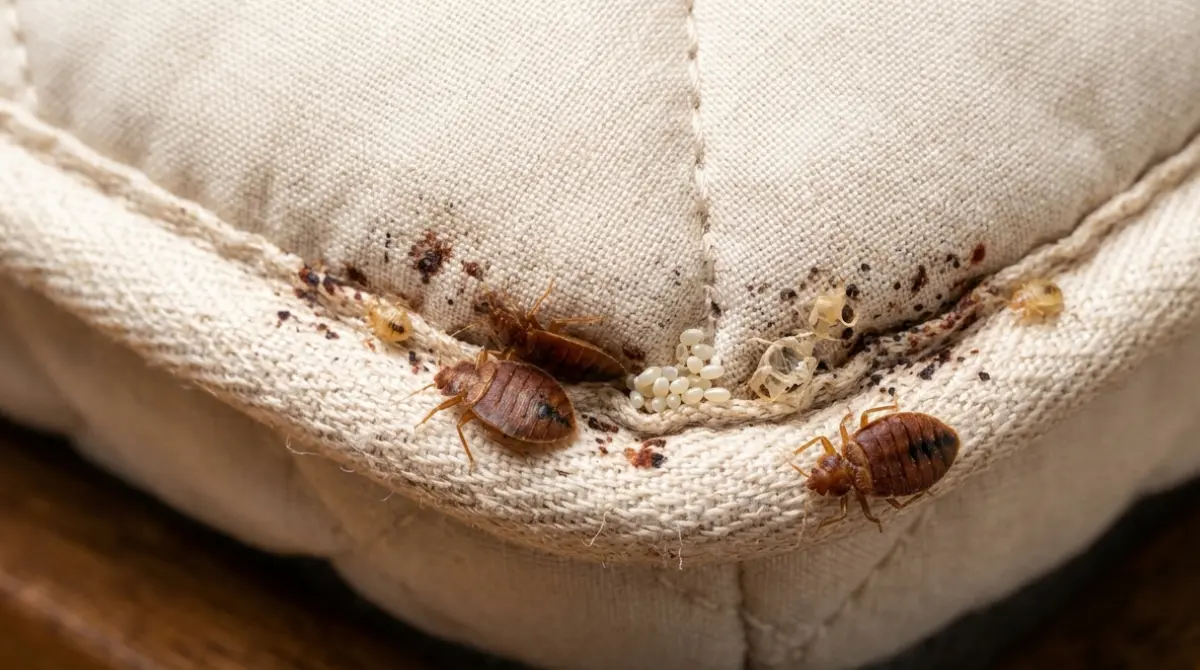
Bed bugs can travel more than 100 feet in a night, though they tend to stay within 8 feet of where people sleep (Pennsylvania Department of Health fact sheet). Inside that circle they hide behind headboards, along mattress seams, inside box springs, along baseboards, and in and under nearby furniture (Oneida County Health Department).
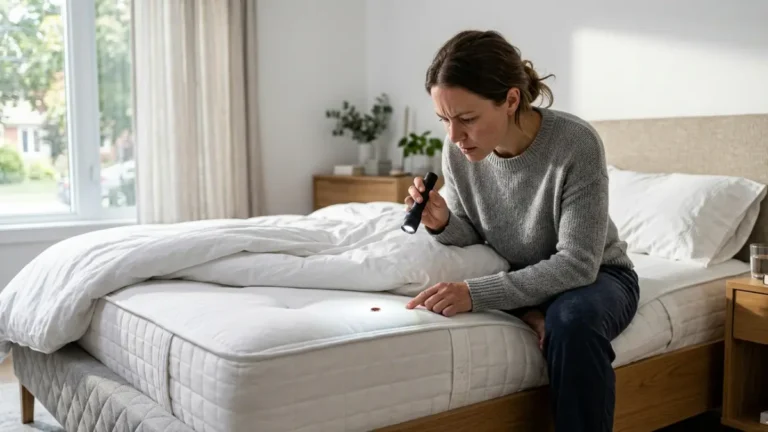
How far they’ve spread on the bed itself shows up in the seams and corners first; checking the mattress and box spring seams walks through where to shine the flashlight.
Throwing away a mattress with bed bugs usually isn’t necessary. Michigan State University Extension notes that mattresses, box springs and bed frames can usually be encased or treated rather than discarded. A new mattress carried into a room where bugs still hide in the frame and baseboards becomes their next place to feed, so treating the room is what ends the problem.
Keeping it: encase it and leave the cover on
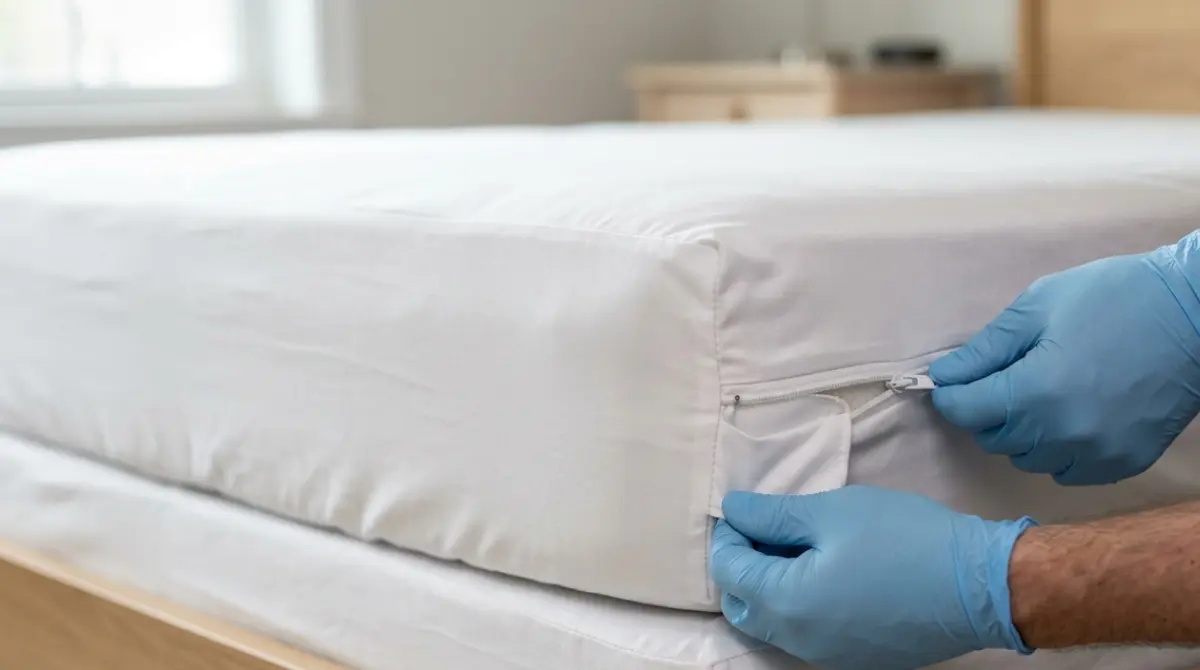
Zip the mattress and the box spring into covers made for bed bugs. Leave the encasements on for a year, and buy a product that has been tested for bed bugs and is strong enough to last that long without tearing (EPA).
A good cover does two jobs. It traps the bugs already inside the mattress and box spring, and it keeps new ones from settling there (Oklahoma State University Extension).
The long wear time has a reason behind it. Bed bugs can live for several months without a blood meal (Pennsylvania Department of Health), and those sealed inside a good encasement are trapped and die there (University of California Agriculture and Natural Resources). The smooth fabric also cuts down hiding spots and makes a returning infestation easier to spot (Philadelphia’s bed bug brochure).
Encasements differ in fabric, fit and zipper design, and which encasements hold up for a full year compares them on published specs. The cover protects only the bed, though. Bugs in the frame, floor and furniture still need treating the rest of the room.
Safety: Don’t spray a pesticide on a mattress unless the product’s label lists mattresses as a place it can be used, and follow that label exactly; if a pesticide is needed, use it as the label directs or hire a professional (EPA bed bug tips). Skip bug bombs, too. Foggers can scatter bed bugs into other rooms of the house (La Porte County Health Department guide).
When does throwing it out make sense?
If the mattress was due for replacement anyway, is badly torn, or the company treating your home recommends discarding it, letting it go is reasonable. Even infested furniture can often be treated, so ask that company what, if anything, has to go (La Porte County Health Department guide).
The box spring follows its own rule. New York City’s health department advises sealing an infested box spring inside a cover for at least a year and, if no cover is available, throwing the box spring away (NYC Health).
Timing matters more than the decision itself. Your home should be free of bed bugs before new furniture comes in (NYC Health disposal guide), so a replacement mattress waits until treatment is finished and follow-up checks come back clean. Signs that the treatment worked show when that point has arrived.
Getting it out of the house without spreading bugs
New York City’s health department publishes the most detailed removal sequence, and it begins with treatment: the home is inspected and treated by a pest management professional before anything is thrown away. The steps after that, in the guide’s order:
- In the room where the mattress sits, cut or deface the fabric. Slashing or otherwise destroying it keeps someone else from taking it home and getting bed bugs.
- Still in that room, wrap it in heavy-duty plastic sheeting or a mattress bag, and tape every opening shut with duct or box tape.
- Attach a sign reading “BED BUG INFESTED – DO NOT TAKE.”
- Carry it out carefully so the plastic doesn’t tear.
- Set it at the curb close to the time the sanitation pickup comes.
- Vacuum the floors afterward, then seal the vacuum bag or canister contents in a plastic bag and put it in an outside garbage bin.
Sources: NYC Health, proper disposal of bed bug infested household items; EPA top ten tips, tips 8 and 9.
The same guide rules out donating anything from an infested home, the mattress included.
For renters: NYC’s guidance asks apartment residents to notify building management and work with them on removing infested items, and says sealed items shouldn’t sit with the regular building trash. Who pays for treatment depends on your state and your lease; the landlord’s side of a bed bug problem covers how that gets decided.
Will the city or a recycler take it?
Where you live decides what happens after the curb.
| Where | The rule | For a mattress with bed bugs |
|---|---|---|
| New York City | Mattresses and box springs must be sealed in plastic bags and set out on the trash-only day; incorrect disposal can bring a fine of up to $300 | Bag it fully and set it out with trash, not recycling |
| California, Connecticut, Oregon, Rhode Island | Bye Bye Mattress offers free mattress recycling, but infested mattresses are excluded | It goes out with regular solid waste, not to the free recycling drop-off |
| Massachusetts | Mattresses have been banned from trash disposal since November 1, 2022 | Infested mattresses count as not recyclable and can be sent for disposal; call the transfer station first |
| Other states | Pickup rules are set by each city or county | Check your sanitation or public works department’s bulk-item page |
Sources: NYC Department of Sanitation; Mattress Recycling Council, California guidelines; MRC Oregon guidelines; Bye Bye Mattress; MassDEP waste ban FAQ.
An infested mattress usually can’t be recycled. The Mattress Recycling Council’s programs in California, Connecticut, Oregon and Rhode Island exclude infested mattresses and direct them to regular solid waste instead (MRC California guidelines). Massachusetts bans mattresses from the trash, yet MassDEP’s FAQ allows unrecyclable ones, bed-bug-infested mattresses among them, to go for disposal without a waiver.
These rules belong to your city or county sanitation department and, for disposal bans, the state environmental agency, so their pages are the final word if anything changes.
Ask your pest pro before it goes to the curb
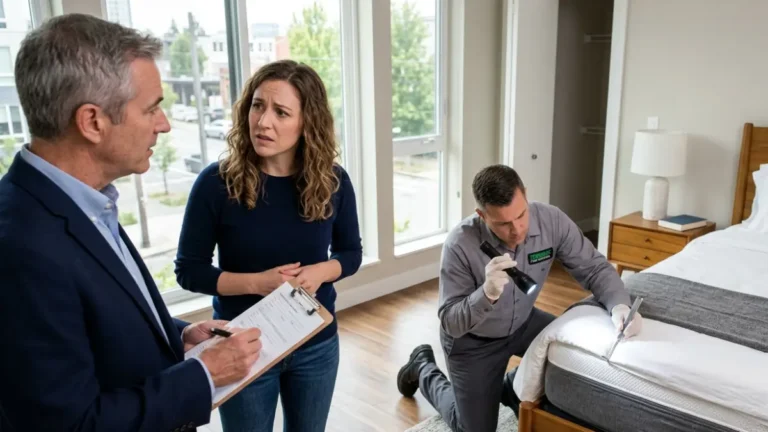
“Can this mattress be treated or encased?” is the first question for the company treating your home, and the answer decides whether you’re ordering a cover or buying tape and a mattress bag. Ask too whether the mattress should leave before or after treatment, and whether the bedroom and the route out of the house will be treated afterward.
If no one has been hired yet, look for a company with a good reputation that uses an integrated pest management (IPM) approach, and contact your state pesticide agency for guidance on hiring (EPA top ten tips). Vetting a bed bug company covers the license check and what to ask before signing.
Should I throw away my sheets and blankets too?
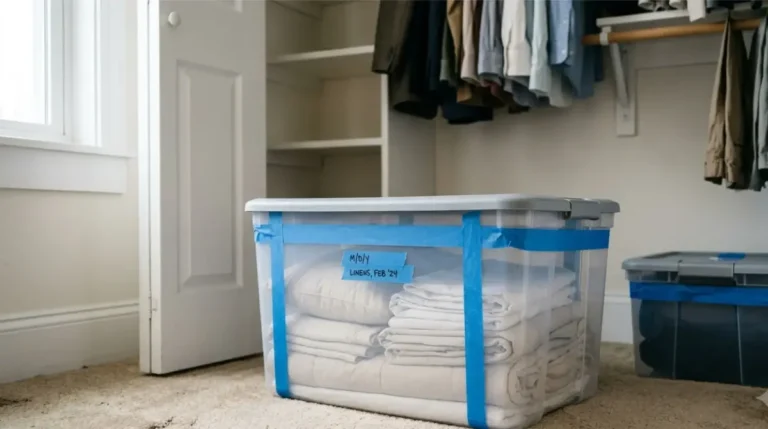
No. Washing and heat-drying sheets, blankets, bedspreads and any clothing that touches the floor reduces the number of bed bugs, and laundry hampers need cleaning at the same time because bugs and eggs hide in them (EPA).