What Do Bed Bugs Look Like at Every Stage?

What do bed bugs look like up close? Size, color, and the tiny eggs are only half the story — the other half is the bugs people mistake for them.
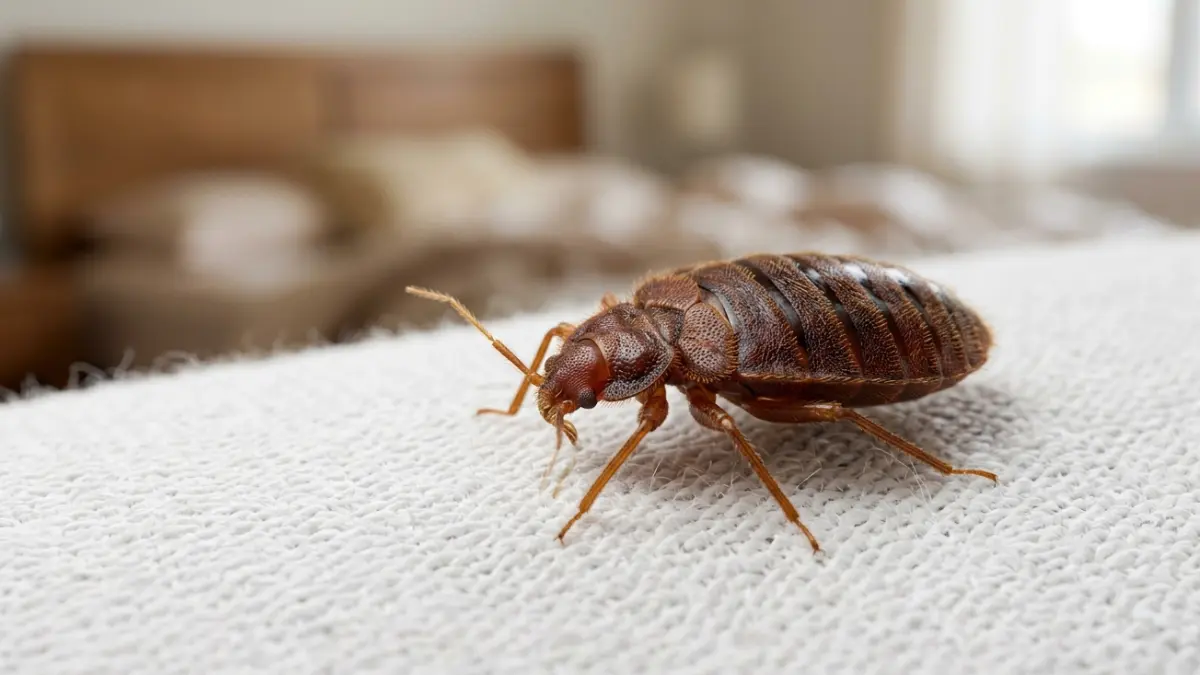
Table of Contents
Finding a small bug near your bed is unsettling, and the first thing you want is a clear answer: is it a bed bug or not? Here it is. A bed bug is a small, flat, oval insect, reddish-brown in color and about the size of an apple seed — roughly 5 to 7 millimeters long.
This guide is built to match what you’re dealing with right now. If you’ve found a bug and want to confirm it, start with the adult and young-stage descriptions below. If you’ve spotted dark spots or specks but no insect, skip to the signs section. And if you think it might be something else entirely, the look-alike comparison will help you rule it out.
Getting the identification right is the most important step, because the wrong ID means treating the wrong pest. Once you’re sure, you’ll want a safe, step-by-step plan to get rid of bed bugs.
What an adult bed bug looks like
An adult bed bug is visible to the naked eye, which makes the adult the easiest stage to identify. According to the EPA’s guide to bed bug appearance, an adult is about the size of an apple seed — 5 to 7 millimeters (3/16 to 1/4 inch) long.
How big is a bed bug?
Picture an apple seed and you have the size almost exactly. That small scale is part of why bed bugs get missed: a single adult is easy to overlook against patterned fabric or in a dim room.
What color are bed bugs?
An unfed adult is a flat, brownish mahogany color. After a blood meal it swells, lengthens, and turns a deeper reddish-brown. So the same bug can look noticeably different depending on whether it has recently fed.
Body shape, legs, and wings
Unfed, the body is flat and oval — broad enough to slip into a crack the width of a credit card. After feeding it becomes balloon-like and more elongated, sometimes called football-shaped. A bed bug has six legs and two antennae, plus small wing pads but no working wings, so it cannot fly and cannot jump.
🔍 Why It Works: That flat, unfed shape is built for hiding. It lets a bed bug wedge into mattress seams, screw holes, and baseboard gaps by day, then emerge at night to feed — which is why you find the bug and its signs in tight crevices, not out in the open.
In heavier infestations, some people also notice a musty, sweetish odor that comes from scent glands on the underside of the body.
What bed bug nymphs and eggs look like
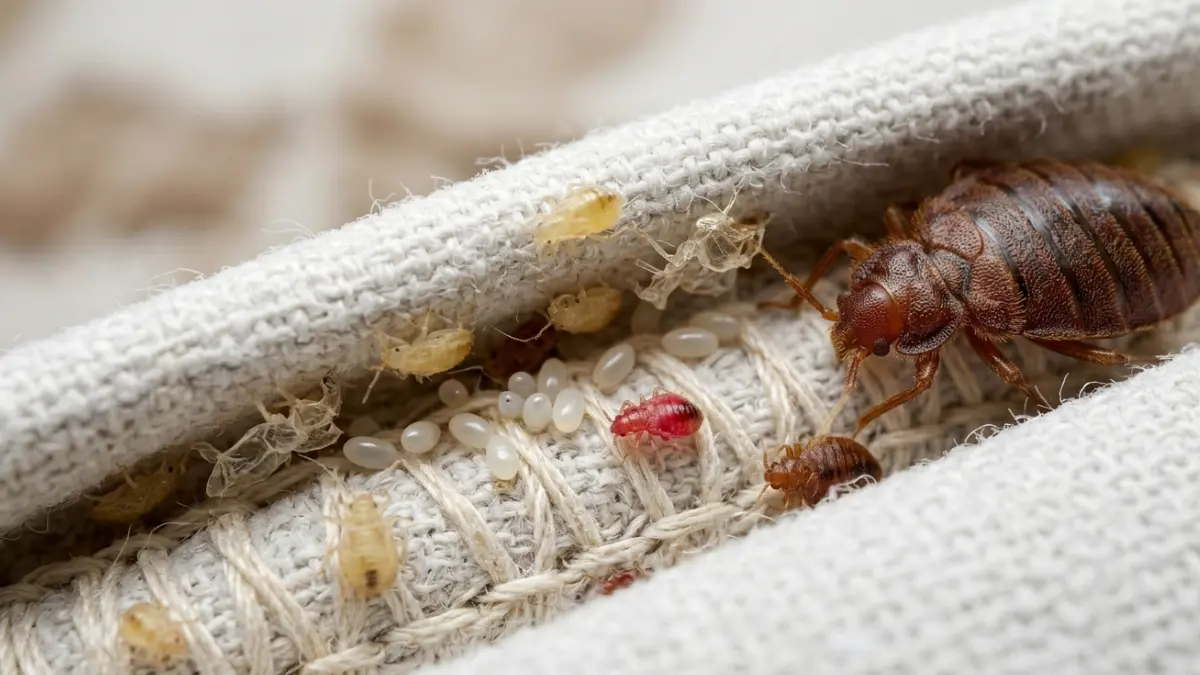
The young stages are where identification gets harder, because bed bug nymphs and eggs are small and pale. The University of Florida’s IFAS Extension notes that nymphs are smaller than adults and translucent or whitish-yellow, which can make an unfed nymph nearly invisible on light bedding.

- Box spring cover is independently lab-tested
- Stretchable 100% polyester knit fabric makes installation a breeze – includes Installation Kit
- Queen size (60” x 80”) fits box spring depths of 9″- 11″
Bed bug nymphs (the young ones)
A nymph is essentially a smaller, paler version of the adult. Before feeding it is translucent to whitish-yellow; after feeding, the abdomen fills with bright red blood that darkens to brown as the meal digests. Newly hatched nymphs are about the size of a pinhead.
Bed bug eggs and the 5-day eye spot
Bed bug eggs are tiny — roughly 1 millimeter, about the size of a pinhead — and pearl-white. They’re laid in clusters and glued into cracks and seams, so they don’t brush away easily. An egg older than about five days carries a small dark eye spot, which helps separate viable eggs from lint or debris. A single female can lay hundreds of eggs over her lifetime, which is how a few bugs become an infestation quickly.
The five growth stages, by size
Bed bugs pass through five immature stages, called instars, molting and growing at each one.
📊 Spec (EPA): Egg ≈ 1 mm · 1st-stage nymph ≈ 1.5 mm · 2nd ≈ 2 mm · 3rd ≈ 2.5 mm · 4th ≈ 3 mm · 5th ≈ 4.5 mm — reaching the apple-seed-sized adult after the final molt.
Signs of bed bugs you can see (even without spotting one)
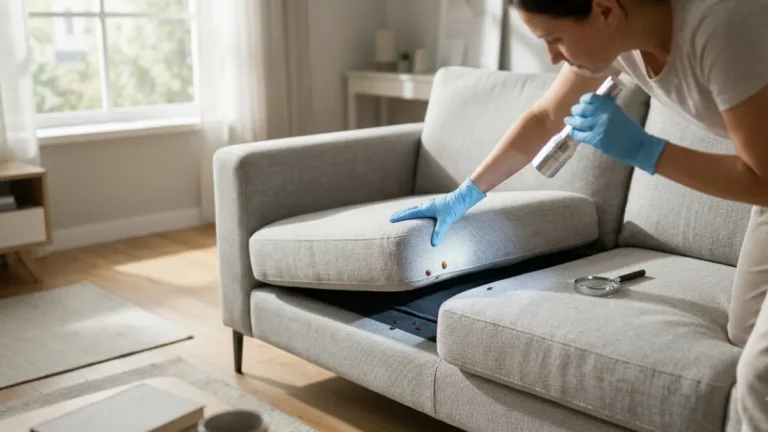
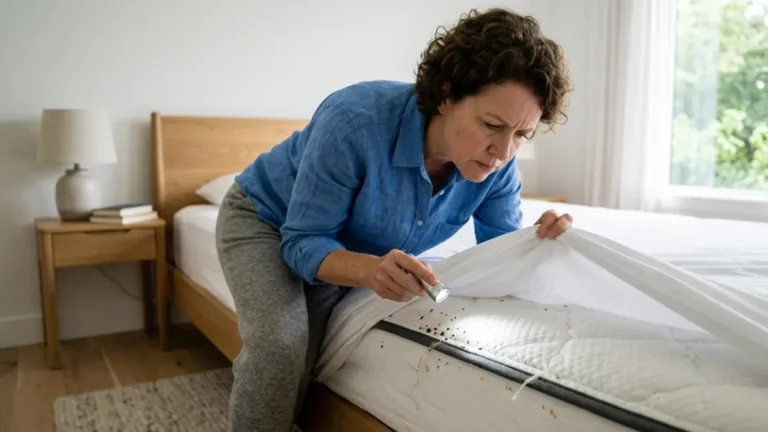
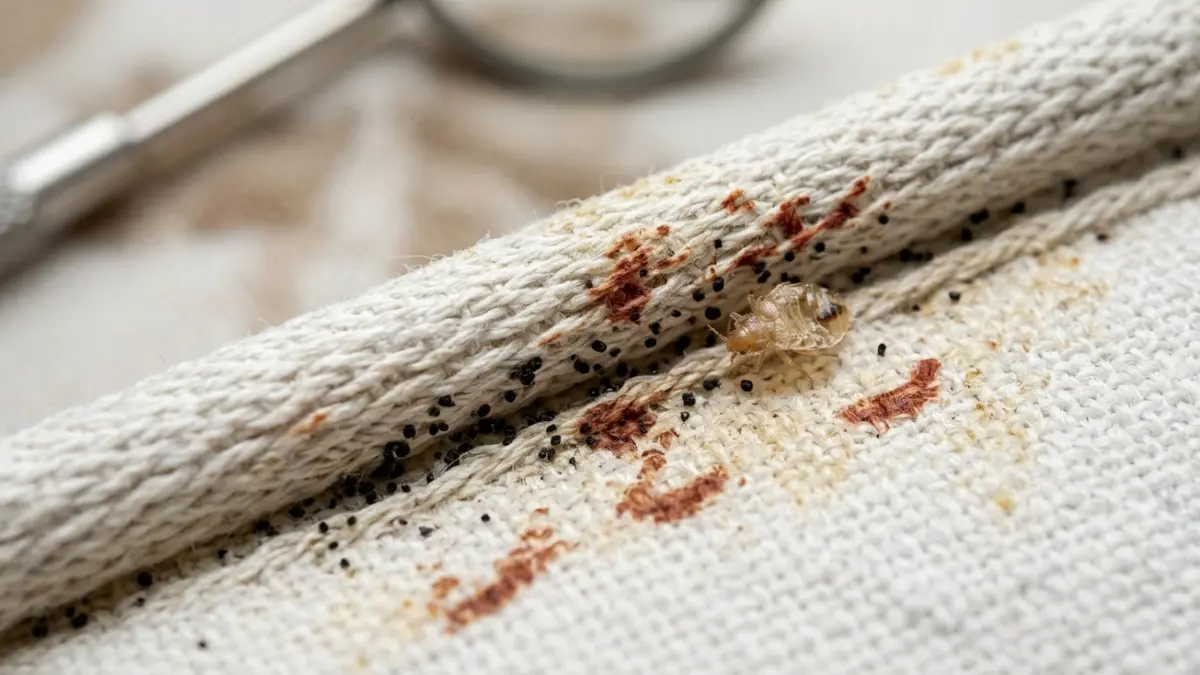
You won’t always catch a live bug, because bed bugs hide during the day. More often, the first signs of bed bugs are the marks they leave behind, and there are five worth checking for:
- Dark fecal spots — small black or rust-colored dots, often clustered along mattress seams
- Rusty or reddish blood smears on sheets
- Translucent shed skins (casings) in crevices
- Pearl-white eggs glued into seams and cracks
- A musty, sweetish odor in heavier infestations
Dark fecal spots (and the wet-tissue test)
The most reliable early sign is fecal spotting — digested blood the bugs excrete, which looks like someone dotted the fabric with a fine-tip marker. The New York State Integrated Pest Management program at Cornell describes a simple field check for it.
💡 Pro Tip (Cornell IPM): Wipe a suspected spot with a damp white tissue. If the smear turns rusty or reddish-brown, you’re likely looking at bed bug waste rather than dirt or a stain.
Blood smears and shed skins
Small blood smears appear when a feeding bug is crushed against the sheet as you move in your sleep. As nymphs grow, they shed their exoskeletons at each stage, leaving empty, translucent casings behind. Both tend to collect where the bugs harbor — mattress seams, the box spring, the bed frame, and nearby baseboards.
The musty smell
A heavy infestation can give off a musty, sweet smell from the bugs’ scent glands. It isn’t a reliable early warning, though, because a small infestation usually produces no noticeable odor.
Bugs that look like bed bugs (and how to tell them apart)
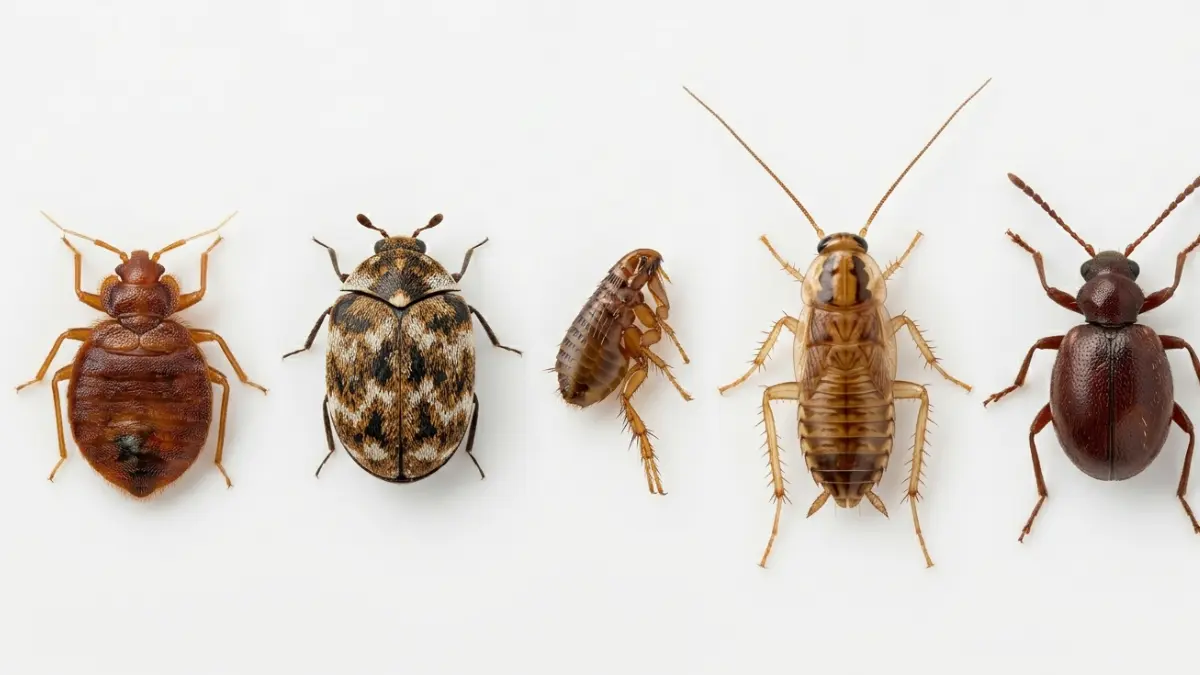
Several common household bugs get mistaken for bed bugs, and confirming you actually have bed bugs — not a harmless look-alike — saves you from treating the wrong pest. Here’s how the most-confused culprits compare.
| Bug | Size | Appearance | Usually found | The tell that rules it out |
|---|---|---|---|---|
| Bed bug | 5–7 mm (adult) | Flat oval, reddish-brown; swollen after feeding | Mattress seams, frames, crevices near where you sleep | Found by the bed, with fecal spots and shed skins |
| Carpet beetle | 2–4 mm | Round, mottled patterned shell; fuzzy larvae | Carpets, closets, stored wool and fabrics | Round, not flat; larvae are fuzzy; eats fibers, not blood |
| Bat bug | 4–5 mm | Nearly identical to a bed bug | Near attic or wall bat roosts | Longer hairs on the thorax; tied to bat roosts |
| Cockroach nymph | 3 mm+ | Cylindrical, pale to dark brown, long antennae | Kitchens, bathrooms, near food and moisture | Long thread-like antennae and spiny legs; not flat |
| Spider beetle | 1.5–3.5 mm | Round, globular, shiny; long spider-like legs | Pantries, stored food | Round bulbous body, never flat — even when a bed bug is engorged |
| Flea | 1.5–3 mm | Dark, flattened side-to-side | Pets, carpets, ankles | It jumps — bed bugs cannot |
Sources: EPA; Colorado State University Extension; university extension and pest-management references (see Source/Test Ledger).
Carpet beetle vs bed bug
The carpet beetle is the most common mix-up. Adults are round with a patterned shell, and the fuzzy larvae feed on natural fibers rather than blood — though shed larval hairs can irritate skin, which sometimes gets mistaken for bites.
Bat bug vs bed bug
A bat bug looks almost identical to a bed bug and belongs to the same family. As Colorado State University Extension’s guide to bat bugs and their relatives explains, the differences are subtle, and the strongest clue is location: bat bugs are tied to bat roosts in attics and walls.
- SLEEP EASY WITH 24/7 BED BUG PROTECTION – Set it, forget it. Place one Bed Bug Blocker interceptor trap under each bed p…
- LAB-TESTED AND PROVEN TO TRAP BED BUGS – Tested by entomologists, trusted by the pros. Bed Bug Blocker interceptor traps…
- BED BUGS CLIMB IN BUT CANNOT CLIMB OUT – Simply place the traps under bed posts and furniture legs. Bed bugs cannot jump…
Cockroach nymph, spider beetle, flea, and booklice
A cockroach nymph is more cylindrical than flat and has long, thread-like antennae. A spider beetle has a round, bulbous body. A flea jumps and is flattened side-to-side. And booklice are soft, pale, and found in damp areas — none of these feeds on you the way a bed bug does.
Can you see bed bugs with the naked eye, and how to confirm it
Can you see bed bugs with the naked eye? Yes — adult bed bugs are visible without any magnification. The stages that trip people up are unfed nymphs and the 1-millimeter eggs, which are pale and small enough to miss.
Can you see bed bugs without a microscope?
You don’t need a microscope, but a little magnification helps with the small stuff. A basic hand lens makes nymphs, eggs, and shed casings far easier to confirm in a seam.

- Kills bed bugs and their eggs on contact
- Kills bed bugs on surfaces for up to 4 weeks
- Foam expands into hard to reach indoor places, and is easy to see where you sprayed

- [ ULTRA LONG RANGE – 3280 FT & ADJUSTABLE FOCUS ] The Esgreen ED2405B rechargeable flashlights high lumens is made of im…
- [ SINGLE 2 MODES HIGH/LOW – BRIGHTNESS ADJUSTABLE ] The Esgreen LED flashlight rechargeable USB C is single modes, only …
- [ MULTIFUNCTIONAL 2-IN-1 USB C CHARGING & DISCHARGING ] The super bright LED flashlight long range is built-in 2 USB int…
How to confirm what you found
Work through four quick steps:
- Contain it — capture the bug in a clear container, or press clear tape over it, so it stays intact for a closer look.
- Magnify it — compare it against the adult and nymph descriptions above, plus the look-alike table.
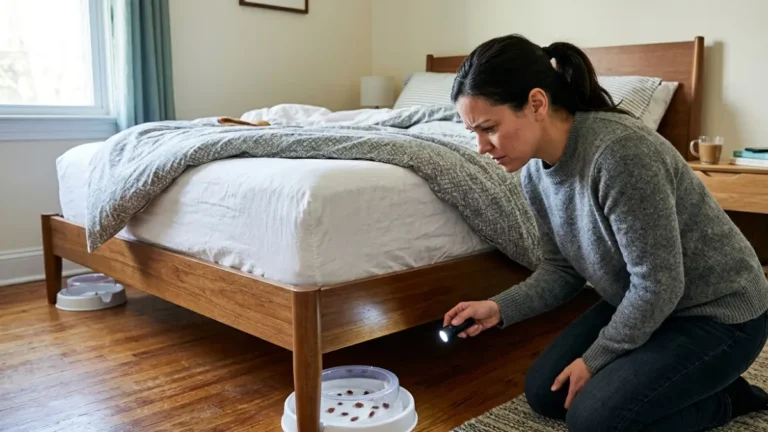
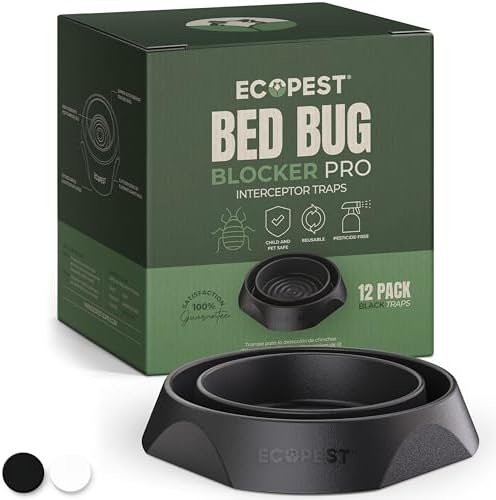
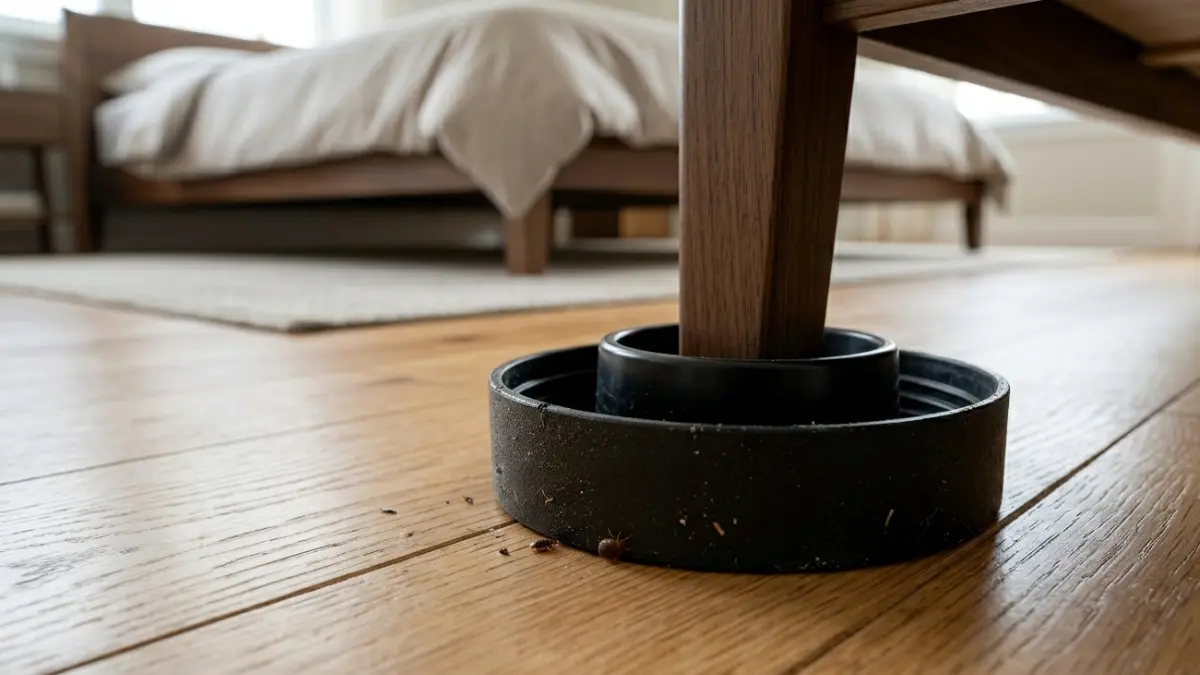
- Monitor — interceptor cups under the bed legs catch bugs traveling to and from the bed and help confirm activity over a few nights.
- Escalate — if you’re still unsure, send a clear photo or the sample to a pest professional or your local extension office.
🛒 Our Pick: For confirming activity, under-leg interceptor monitors plus an inexpensive hand lens are the two most useful tools. We may earn a commission from purchases through our links, at no extra cost to you.
When to get a professional ID
If the bug is damaged, you can’t get a clear look, or you simply want certainty before spending on treatment, a professional inspection settles it. That’s a reasonable step, not an overreaction.
What to do once you’ve identified bed bugs
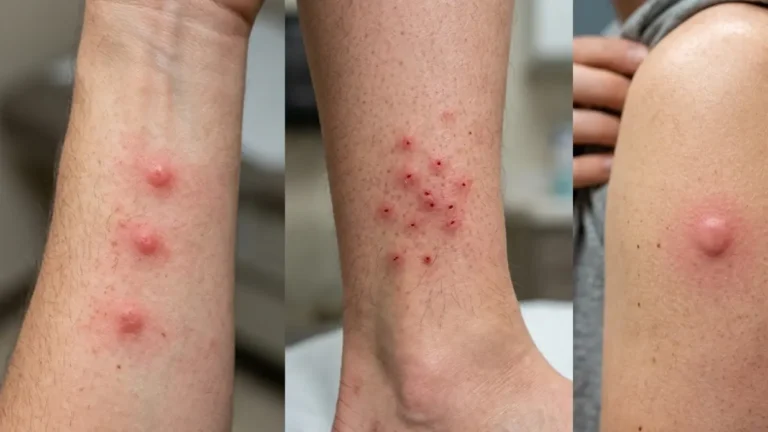
Confirming bed bugs is the hard part; the next steps are about staying calm and not making it worse. First, some perspective: according to the CDC’s bed bug guidance, bed bugs are not known to spread disease to people, though their bites can cause itching and lost sleep. They’re a problem to solve, not an emergency.
Don’t spread them (first, do no harm)
The biggest early mistake is accidentally moving bed bugs to new rooms. Don’t drag an infested mattress through the house, and don’t pile “clean” clothes onto an untreated bed. Careless bagging and moving is how a one-room problem becomes a whole-home one.
Your next step: the safe plan
Resist the urge to fog the room with over-the-counter sprays — they rarely eliminate an infestation and can scatter the bugs. A methodical approach works far better, and that’s exactly what our safe 5-step plan for getting rid of bed bugs walks through, step by step.
Bed bug identification: frequently asked questions
1. What do bed bugs look like to the naked eye?
Adult bed bugs are visible without magnification. They look like small, flat, oval insects, reddish-brown in color and about the size of an apple seed — roughly 5 to 7 millimeters long. After feeding, the body swells and turns a darker red. Younger nymphs are paler and harder to see.
2. How big is a bed bug?
An adult bed bug is about 5 to 7 millimeters long, close to the size of an apple seed. Nymphs are smaller, starting around 1.5 millimeters at the first stage and growing through five stages to adult size. Bed bug eggs are smallest of all, roughly 1 millimeter.
3. What color are bed bugs?
Unfed adult bed bugs are a flat, brownish mahogany color. After a blood meal, the body swells and deepens to reddish-brown. Nymphs are translucent or whitish-yellow before feeding and turn bright red, then brown, as the meal digests. Because color shifts with feeding, check shape and size too.
4. What do baby bed bugs (nymphs) look like?
Bed bug nymphs are smaller, paler versions of adults. Before feeding they are translucent to whitish-yellow, which can make an unfed nymph nearly invisible on light sheets. After feeding, the abdomen fills with bright red blood that darkens as it digests. The smallest nymphs are about the size of a pinhead.
5. What do bed bug eggs look like?
Bed bug eggs are tiny — about 1 millimeter, roughly pinhead-sized — and pearl-white. They’re laid in clusters and glued into cracks and seams, so they resist brushing away. An egg older than about five days shows a small dark eye spot, which helps tell viable eggs from lint or debris.
6. What are the first signs of bed bugs?
The earliest signs are usually what bed bugs leave behind: dark fecal spots along mattress seams, rusty blood smears on sheets, translucent shed skins, and pearl-white eggs in crevices. A musty, sweet odor can appear in heavier infestations. Wiping a suspected spot with a damp tissue that smears rusty suggests bed bug waste.
7. What bugs are mistaken for bed bugs?
The most common look-alikes are carpet beetles, bat bugs, cockroach nymphs, spider beetles, fleas, and booklice. Carpet beetles are round with patterned shells; bat bugs look nearly identical but live near bat roosts; cockroach nymphs are cylindrical with long antennae; spider beetles are round and bulbous; and fleas jump, which bed bugs cannot.
8. How do you tell a carpet beetle from a bed bug?
A carpet beetle is round with a mottled, patterned shell, while a bed bug is flat and oval. Carpet beetle larvae are fuzzy and feed on fibers like wool, not blood, though their shed hairs can irritate skin and be mistaken for bites. Bed bugs are found near where you sleep.
9. Can you see bed bugs with the naked eye?
Yes. Adult bed bugs are visible to the naked eye, about the size of an apple seed. The harder stages to spot are unfed nymphs, which are pale and translucent, and the roughly 1-millimeter eggs. A simple hand lens makes those small stages much easier to confirm in a seam.
10. Do bed bugs have wings, and can they fly or jump?
Bed bugs have small wing pads but no functional wings, so they cannot fly. They also cannot jump — they only crawl. That’s a useful way to rule out fleas, which jump and are flattened side-to-side. If the insect launches itself when you approach, it’s a flea, not a bed bug.
Identify with confidence, then take the next step
Identifying a bed bug comes down to a few reliable details: a flat, oval, reddish-brown body about the size of an apple seed, paler nymphs, and tiny pearl-white eggs tucked into seams. When the bug itself is hiding, the dark fecal spots, shed skins, and blood smears it leaves behind are your confirmation. And when something looks close but not quite right — round, fuzzy, or jumping — the look-alike table helps you rule it out.
Correct identification is the foundation; acting on it calmly is what clears the problem. Once you’re confident it’s bed bugs, you can start the 5-step removal plan and work through treatment methodically, room by room.