Choosing the Best Furnace Filters for Allergies, Pets and Smoke

Furnace filters for allergies, pets and smoke need different MERV ratings, and HVAC systems rarely list their limit. Here is how to match yours.
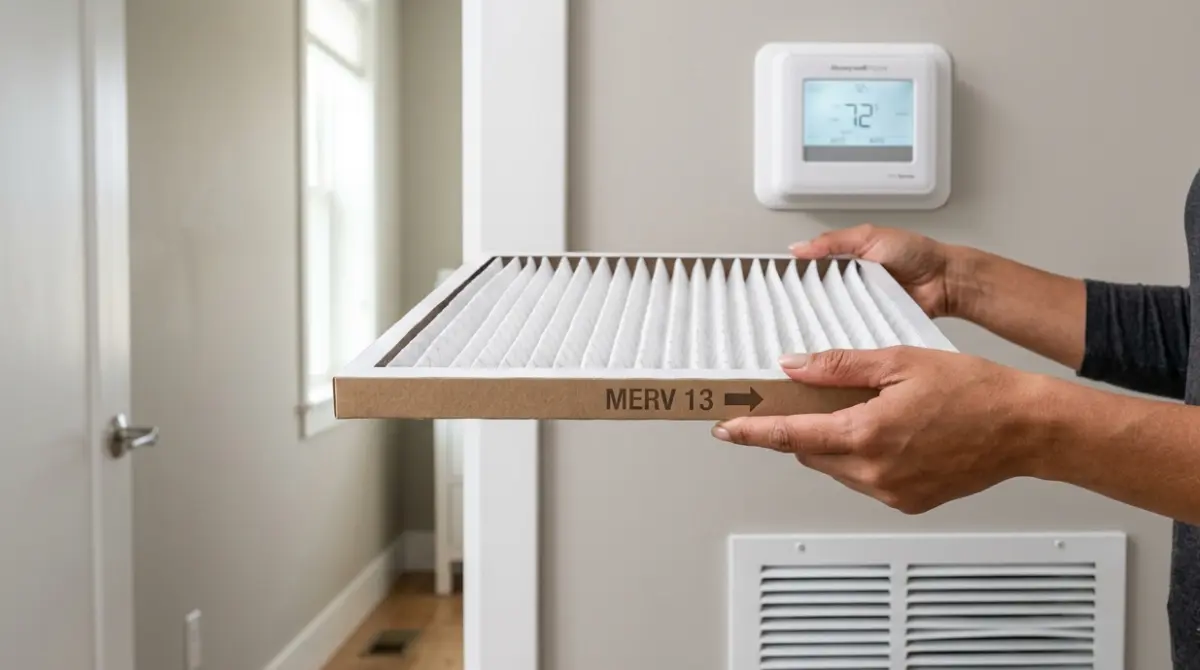
Table of Contents
Which furnace filter do you need? Match it to the problem
Match your filter’s MERV rating to the problem you’re solving, then confirm your system can handle it.
| Your situation | Start with | Check first |
|---|---|---|
| Allergies or asthma | MERV 11–12, allergy-certified | Your exact filter size |
| Shedding pets | MERV 11 pleated | How fast it loads |
| Wildfire smoke | MERV 13, as EPA advises | System airflow |
| Equipment protection only | The rating in your manual | Correct fit |
Quick picks by problem
Allergy and pet households can jump to the picks. Smoke-region readers and renters should read the airflow section first.
One filter serves heating and cooling
In a central system, one return filter serves both the furnace and the AC, so they’re usually the same purchase.
ℹ️ Safety Note: A higher-MERV filter can restrict airflow in some heating systems, and gas furnace problems carry fire and carbon monoxide risk. This guide is general information. Check your furnace manual or ask a licensed HVAC technician before upgrading, and leave repairs to a pro.
MERV and MPR ratings explained in one table
MERV measures how well a filter captures particles from 0.3 to 10 microns, based on an ASHRAE test method, according to EPA’s MERV rating explainer. Higher numbers catch more of the smallest particles.
What MERV measures
| Rating | Smallest particles (0.3–1.0 µm) | Key Detail |
|---|---|---|
| MERV 8 | No minimum | Basic dust and pollen |
| MERV 11 | At least 20% | Adds fine-particle capture |
| MERV 12 | At least 35% | Common allergy rating |
| MERV 13 | At least 50% | EPA’s recommended upgrade |
Source: EPA MERV table, last updated January 14, 2026.
Translating Filtrete’s MPR into MERV
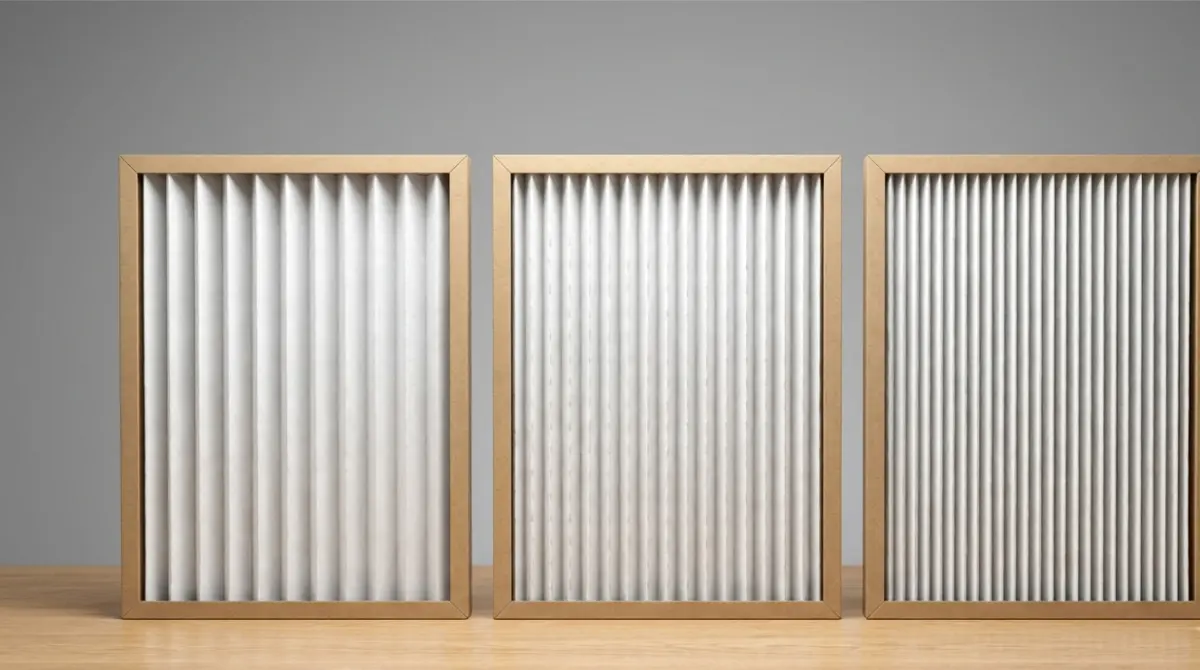
Filtrete uses 3M’s own MPR scale. 3M’s MPR-to-MERV chart lists MPR 1000 as MERV 11, MPR 1500 as MERV 12 and MPR 1900 as MERV 13. Retailer charts vary; we use 3M’s.
🔍 Why It Works: The ratings differ most in the smallest size band, which is why EPA points to MERV 13 for fine particles like smoke.
Can your furnace handle a MERV 13 filter?
Maybe. EPA’s consumer guide notes HVAC systems rarely state which filters they support, so ask rather than guess.
Why higher MERV can strain older systems
A denser filter makes the blower fan work harder to move the same air. If your system can’t handle that airflow restriction, comfort and equipment can suffer, so start by knowing which HVAC system you have.
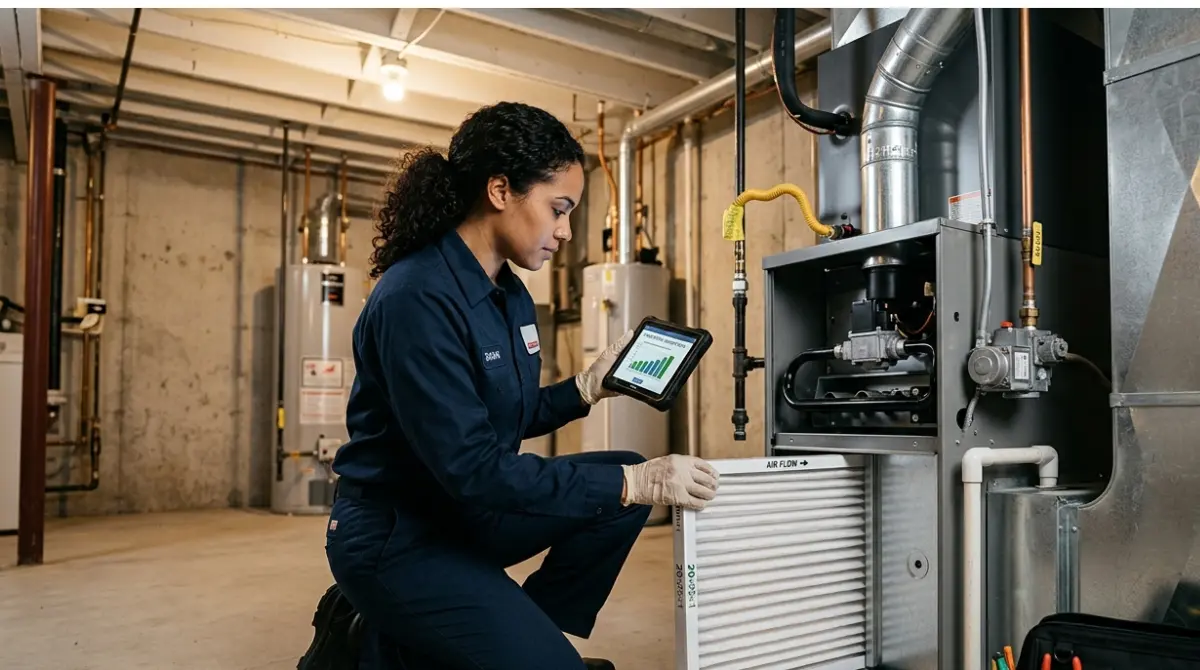
What to ask an HVAC technician
- What’s the highest MERV this blower and filter slot can take?
- Can you measure static pressure with the new filter installed?
- Could a deeper media cabinet let me run MERV 13?
EPA notes a technician can also adapt a system for a higher-efficiency filter. Vet an HVAC contractor’s credentials first.
What about HEPA in a furnace?
HEPA filters sit outside the MERV system and are common in portable air cleaners, per EPA. Get a technician’s approval before using one in a furnace.
✅ Do This: Ask a licensed HVAC technician to confirm your maximum filter rating before buying MERV 13.
Best furnace filters by household: allergies, pets, smoke
These picks come from the AAFA certified filter list and manufacturer ratings, not our own testing.
| Pick | MERV | Evidence | Best For |
|---|---|---|---|
| Filtrete MPR 1500 | 12 | AAFA-certified | Allergies |
| Filtrete MPR 1000 | 11 | AAFA-certified | Pets |
| Kleenex Elite Allergen MERV 13 | 13 | AAFA-certified | Smoke |
| Filtrete MPR 1900 | 13 | 3M rating | Smoke |
Using your furnace filter during wildfire smoke
EPA’s wildfire indoor air guidance pairs the right filter with how you run the system.
Run the fan so the filter works
- Install MERV 13, or the highest rating your system accepts.
- Set the thermostat fan to “On,” not “Auto,” so air keeps passing through the filter.
- If your system has a fresh-air intake, switch to recirculate mode or have a technician close the outdoor damper.
Change it sooner during heavy smoke
EPA advises replacing the filter more often than the manufacturer recommends during heavy smoke. Stock spares before fire season.
What a filter won’t remove
Washington State’s Department of Health notes that MERV 13 filters don’t remove smoke smell. EPA also advises avoiding air cleaners that produce ozone.
🔍 Why It Works: Filters clean air only while the system runs, which EPA says is usually under 25% of heating and cooling seasons.
How often to change filters with pets, allergies or smoke
Start with the interval on the filter package, then check sooner if your home loads filters faster.
Start with the label’s interval
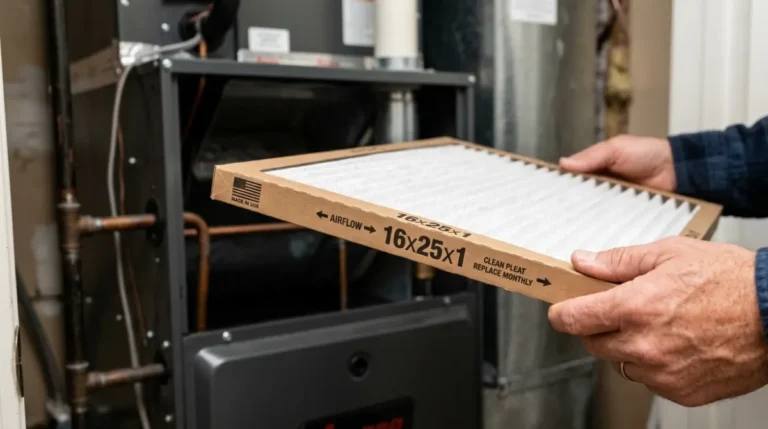
Each pack lists a replacement interval for its thickness. Before ordering, find your exact filter size, because a filter that doesn’t fit lets air slip around it.
When to check sooner
Pull the filter monthly if you have shedding pets, active allergies or smoke outside. Replace it early if it looks heavily soiled. Install it with the frame’s airflow arrow pointing toward the blower.
✅ Do This: Write the install date on the filter frame with a marker so you know its age at a glance.
When a better filter isn’t enough
A filter cleans circulating air, and EPA notes no filter removes every pollutant in your home.
Musty smells and mold
EPA’s Guide to Air Cleaners in the Home is direct: filters don’t address the cause of mold or musty odors. If vents smell, read about musty air from your ducts.
Add a bedroom air cleaner
EPA notes studies of portable HEPA air cleaners found improvements in some allergy or asthma symptoms. For the room you sleep in, see what a portable air purifier can and can’t do.
⚠️ Watch Out: A musty odor that survives a fresh filter can mean hidden moisture. Call a certified mold assessor instead of upgrading again.
Common questions about furnace filters
1. What MERV rating is best for allergies?
For allergies, AAFA-certified MERV 11 to 12 filters are a solid start; MERV 13 captures more of the smallest particles.
2. What is the best furnace filter for pet dander?
A good furnace filter for pet dander is an AAFA-certified MERV 11 pleated filter, such as Filtrete MPR 1000, checked monthly.
3. Is MERV 13 too high for my furnace?
Whether your furnace can take MERV 13 depends on its blower and filter slot, and EPA says systems rarely list supported filters. Ask a licensed HVAC technician.
4. What furnace filter is best for wildfire smoke?
EPA recommends a MERV 13 furnace filter, or the highest your system accepts, with the fan set to On during smoke. Confirm compatibility with an HVAC technician.
5. Is MPR the same as MERV?
No. MPR is 3M’s own scale; its chart lists MPR 1500 as MERV 12 and MPR 1900 as MERV 13.
6. How often should you change a furnace filter with pets?
Follow the package interval, but check a furnace filter monthly with shedding pets and replace it early if it looks heavily soiled.
7. Do furnace filters help with allergies?
Furnace filters capture some airborne allergens while the system runs, but EPA says no filter removes every pollutant from your home.
8. Can I use a HEPA filter in my furnace?
HEPA is rated outside the MERV system and is common in portable air cleaners. Get a licensed HVAC technician’s approval before using one in a furnace.
9. Are furnace filters and AC filters the same?
In a central system, one return filter serves heating and cooling, so the furnace filter and AC filter are usually the same.
10. Do furnace filters remove smoke smell?
No. Washington State’s health department notes MERV 13 furnace filters don’t remove smoke smell; look for activated carbon media for odor.
Your next step before buying a furnace filter
Find your exact size first, then match the MERV to your problem: 11 to 12 for allergies and pets, 13 for smoke. Confirm your system can handle the upgrade before smoke season, not during it. Then date the frame and check it monthly. For bigger questions, our HVAC systems guide covers the equipment behind the filter.