How to Seal Duct Leaks You Can Reach and Skip Costly Redos

Seal duct leaks by gap size: DOE says mastic alone won’t bridge anything over ¼ inch. See what to use instead and which jobs belong to a pro.
Table of Contents
Are leaky ducts costing you comfort and money?
In a typical house, about 20 to 30 percent of the air moving through the ducts is lost to leaks, holes and poor connections, per ENERGY STAR’s duct sealing guide. Ducts deliver the output of any HVAC system for your home, so duct leaks undo the equipment you paid for.
Where do you stand?
- Ducts you can reach in a basement, attic or crawlspace: read on.
- Ducts hidden in walls or ceilings: jump to the professional section.
- Gas, oil or wood heat, or an older home: read the safety gate first.
ℹ️ Safety Note: Sealing ducts means working near heating equipment, in hot attics, and sometimes around old materials that may contain asbestos. This guide is for general understanding. If you’re not fully confident, or your home burns gas, oil or wood, hire a licensed HVAC contractor, follow local code, and keep a working carbon monoxide alarm.
Is sealing your own ducts a safe DIY job?
Two federal sources differ slightly, so weigh both.
What counts as accessible
ENERGY STAR says homeowners can start with accessible ducts, meaning those you can reach in attics, crawlspaces, unfinished basements and garages.
Attics, crawlspaces and older homes
The Department of Energy says qualified professionals should seal ducts in unconditioned spaces. Leaky ducts can also cause backdrafting, which pulls combustion gases indoors, per ENERGY STAR.
✅ Do This: If you burn gas, oil or wood, or the ducts sit in an attic, hire a licensed HVAC contractor. Ask whether they run a combustion safety test, and keep a carbon monoxide alarm working.
Mastic vs foil tape: what to buy and what to skip
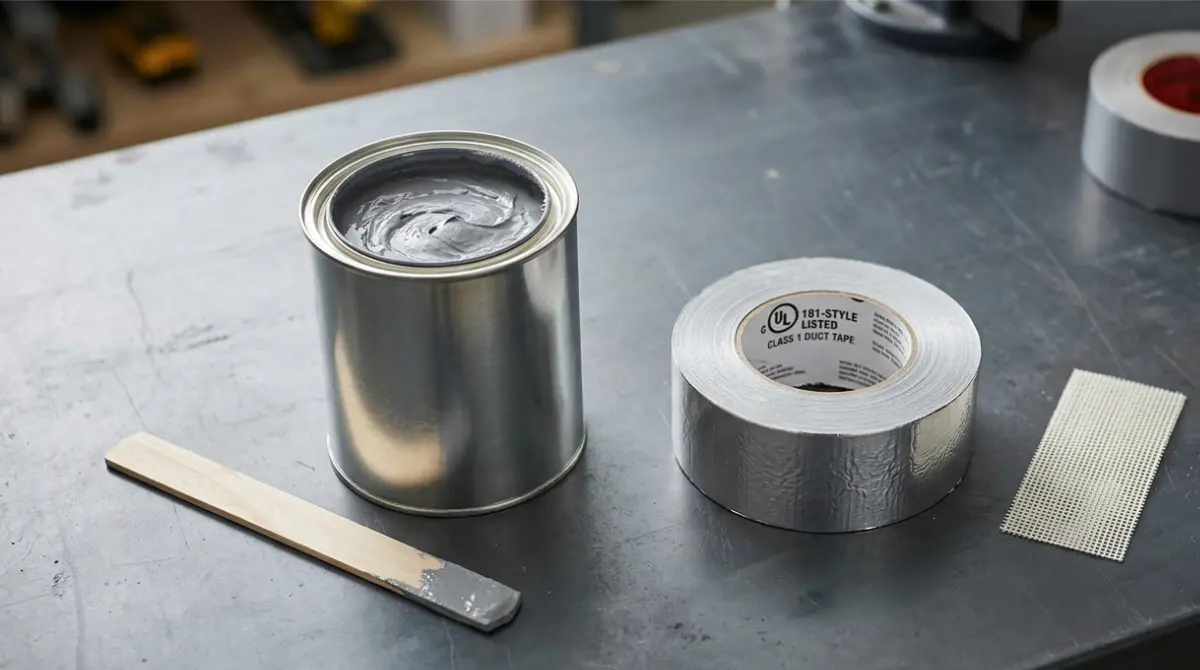
DOE’s duct guidance calls duct mastic the preferred sealant for seams and joints.
Can you use duct tape on ducts?
No. Cloth-backed duct tape tends to fail quickly, and ENERGY STAR says never to use it.
Mastic vs foil tape at a glance
| Product | Best For | Key Detail |
|---|---|---|
| Mastic | Seams, joints, screws | Cannot bridge gaps over ¼ inch |
| Foil tape | Flat, clean metal seams | Needs a UL marking |
Source: DOE; an editorial comparison, not a lab test.
How to read the UL 181 marking
Look for the UL logo, per DOE. Duct foil tapes print a UL 181 marking, such as 181A-P or 181B-FX.
How to find duct leaks you can actually reach
No special tools are needed to start.
Look and feel first
Run the system and check each joint for separated sections, holes and slipped flexible duct. Feel along seams for moving air, and circle every leak with a marker.
Where leaks hide
Check connections at vents and registers first, per ENERGY STAR.
When a smoke pencil or leakage test is worth it
A smoke pencil shows air movement at suspect joints, per NADCA. Pros use a duct blaster for hidden leaks, and This Old House says you can often rent one.
Seal duct leaks by gap size, step by step
Match each repair to the gap; mastic alone will not bridge anything over ¼ inch, per DOE.
Clean the surface first
NADCA says sealant needs a clean, dry surface. Wipe off dust and oil and peel loose tape; old residue can block a bond.
Small gaps: mastic
Brush mastic over tight seams and screw heads. When in doubt, add mesh.
Wider gaps: mesh tape plus mastic
| Gap | Fix | Key Detail |
|---|---|---|
| Under ¼ inch | Mesh tape plus mastic | Press mesh into wet mastic; web-type drywall tape works |
| ¼ to ¾ inch | Backing tape, then mesh and mastic | Extend mastic 1 inch past backing |
| Over ¾ inch | Fastened rigid patch, mesh, mastic | Overlap repair 1 inch |
Source: DOE’s duct-sealing work specification; editorial summary, not our test.
Foil tape, done right
Press UL-marked foil tape along its full length on clean metal, following the maker’s directions. Wear gloves; foil edges can cut skin.
✅ Do This: For gaps over ¾ inch, damaged duct or joints at the air handler, hire a licensed HVAC contractor and ask how they will retest.
Seal register boots, flex duct and bigger gaps
Connections at vents and registers are common leak sites, so check them next.
Register boots
Remove the register and seal gaps where the register boot meets ceiling, wall or floor, with mesh tape and mastic or flexible caulk. Keep the register removable.
Disconnected flex duct
If you can reach it, reattach slipped flexible duct, seal the joint and straighten kinks.
Seal first, then insulate
DOE says to confirm ducts are sealed before insulating, without compressing the insulation. Cooling ducts need a sealed vapor barrier outside the insulation.
When sealing isn’t enough: call an HVAC pro
Some jobs need a pro.
Old white tape or wrap on ducts
You usually can’t tell by looking whether old material contains asbestos, so EPA says to treat it as if it does and leave it alone. EPA’s asbestos guidance explains when to hire an accredited professional.
What a pro does that you can’t
A good contractor, per ENERGY STAR’s hiring guidance, inspects the whole system and runs a combustion safety test after sealing. Musty vents? Read mold in your air ducts first.
What professional sealing costs
HVAC.com’s December 2024 guide lists roughly $1,000 to $2,500, a published estimate, not a quote.
✅ Do This: Ask a licensed HVAC contractor to inspect the whole duct system, and an accredited asbestos professional to assess suspect material.
Duct leak sealing questions, answered
1. Best way to seal duct leaks?
Use mastic on seams and joints, which DOE prefers over tape. Add mesh tape under it for gaps over ¼ inch.
2. Can I seal duct leaks with duct tape?
No. Cloth-backed duct tape tends to fail quickly, so use mastic or UL-marked foil tape instead.
3. How much air do leaky ducts lose?
ENERGY STAR says about 20 to 30 percent of a typical house’s duct air is lost to leaks.
4. What gap can mastic seal alone?
Mastic alone will not bridge gaps over ¼ inch, per DOE. Bridge those first with mesh tape.
5. Should I clean ducts before sealing leaks?
Yes. Sealant needs a clean, dry surface, so wipe off dust and oil and peel loose tape first.
6. How do I find duct leaks?
Check joints for gaps and slipped sections, feel along seams for moving air, and use a smoke pencil.
7. Seal ducts before insulating?
Yes. Confirm ducts are sealed first, then insulate without compressing the insulation, as DOE advises.
8. Can I seal duct leaks in the attic myself?
ENERGY STAR allows DIY on reachable ducts; DOE says professionals should seal ducts in unconditioned spaces. Call a licensed HVAC contractor if unsure.
9. What does professional duct sealing cost?
HVAC.com’s December 2024 guide lists roughly $1,000 to $2,500, a published estimate, not a quote.
10. Could old duct tape contain asbestos?
It might, and EPA says to treat it as if it does and leave it alone. Hire an accredited asbestos professional if it is damaged or work will disturb it.
Your next step
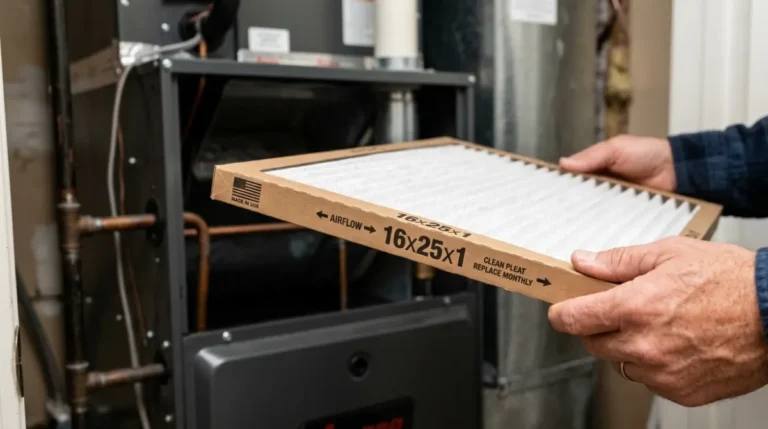
Start with the leaks you marked, match each to its gap, and call a pro for anything hidden, damaged or near suspect old material. With ducts tight, check your HVAC filter size and flush the AC drain line.