Finding the Right Fit Among HVAC Systems for Your Home

HVAC systems and R-410A: existing units can keep running and be repaired, per EPA. See what actually changes when you replace one.
Table of Contents
Which HVAC system fits your home? Start here
You can narrow your options in minutes, even if your system just quit.
HVAC systems in one minute
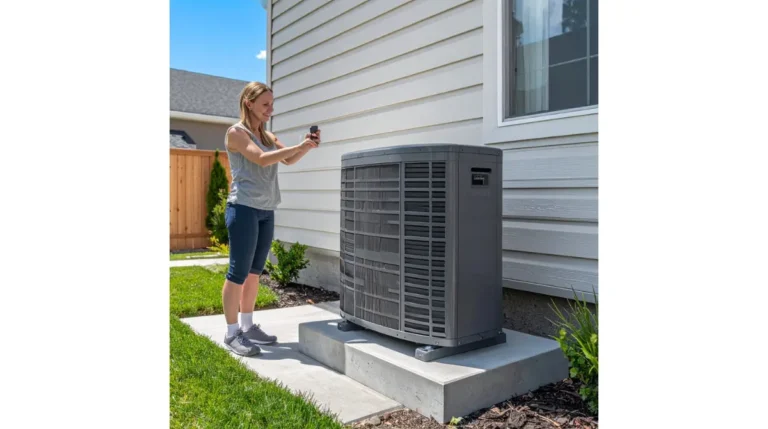
An HVAC system is the equipment that heats, cools and moves air through your home. The most common setup is a split system: an outdoor air conditioner or heat pump paired with an indoor furnace or air handler, connected by ducts.
📊 Tested / Spec: Rules as of October 12, 2026. Since January 1, 2025, a new residential split system using a refrigerant rated 700 GWP or higher can be installed only if every specified component was made or imported before that date. EPA’s May 2026 final rule, effective July 27, 2026, removed the January 1, 2026 deadline for installing that older inventory. Existing systems can keep running and be repaired.
Find your situation and jump to your section
- System died, decision needed this week: go to repair or replace.
- Budgeting for a replacement: start with types, then costs.
- No ducts, or adding a room: read the ductless and heat pump parts.
- Heard “R-410A is banned”: go to the refrigerant section. For existing systems, it isn’t.
- Chasing rebates: read the incentives section; the federal credit changed.
ℹ️ Safety Note: Gas furnaces, 240-volt wiring and refrigerant lines carry carbon monoxide, shock, fire and flammability risks. This guide is for general understanding. Hire a licensed HVAC contractor for any work on these systems, get required permits, and follow local code.
Types of HVAC systems: split, packaged, ductless and more
Five system families cover almost every home.
| System | Needs ducts? | Best for | Key detail |
|---|---|---|---|
| Split (AC plus furnace, or heat pump plus air handler) | Yes | Homes with sound ducts | The most common setup |
| Packaged | Usually | Warmer climates | Shorter lifespan than split |
| Ductless mini-split | No | No ducts, additions, room control | Outdoor unit plus indoor units |
| Heat pump | Ducted or ductless | Efficient heating and cooling | Geothermal costs the most upfront |
| Boiler or radiant | No | Radiators or in-floor heat | Heats water, not air |
Split systems: central AC with a furnace or heat pump
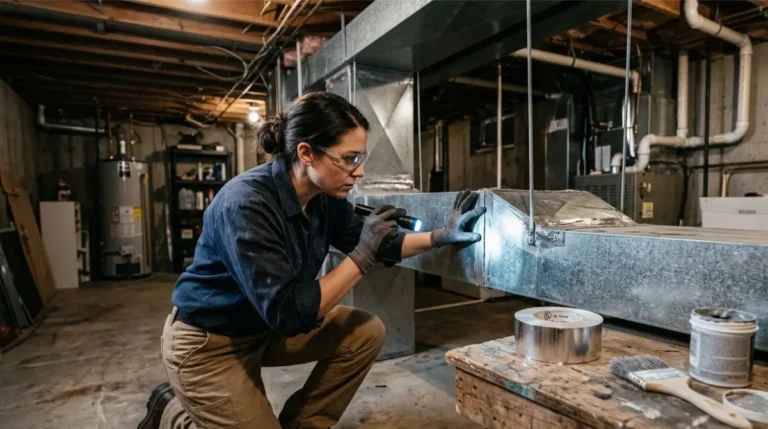
A split system puts the condenser outside and the furnace or air handler inside, linked by refrigerant lines and ducts. It’s versatile if your ductwork is in good shape, so check the ducts as carefully as the equipment.
Packaged systems
A packaged system puts heating and cooling in one outdoor cabinet, usually on a roof or slab. Angi notes they are less common in homes and tend to have shorter lifespans than split systems.
Ductless mini-splits
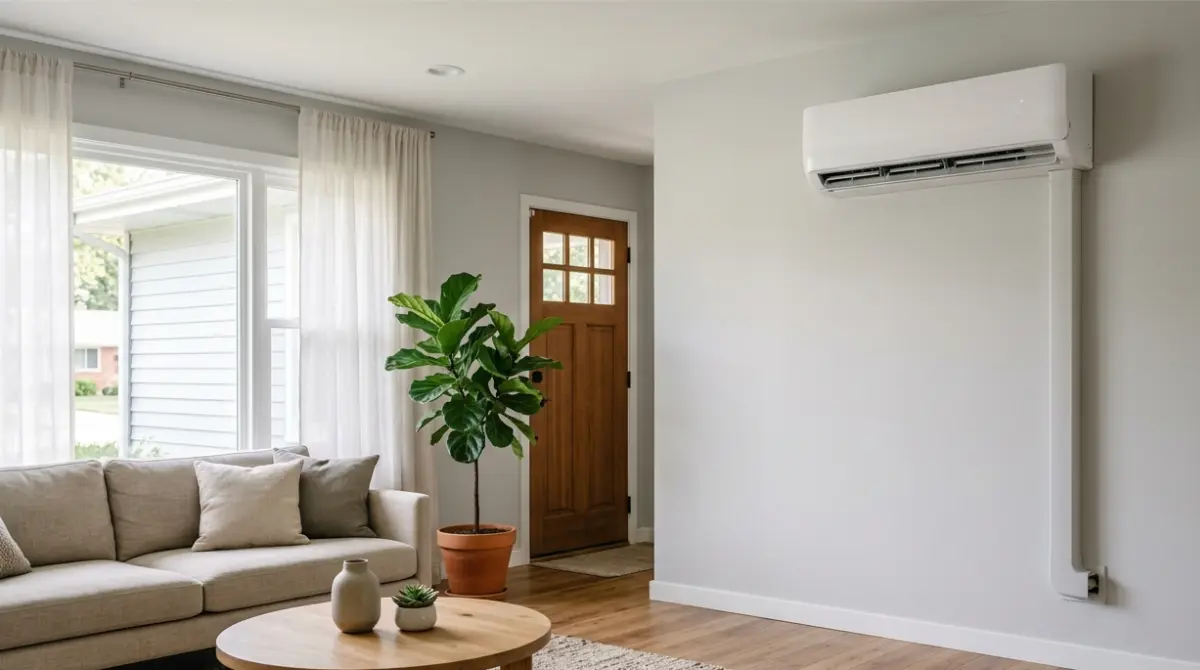
DOE describes ductless mini-splits as an efficient, flexible fit for homes without ductwork and for zone heating, with an outdoor unit plus visible indoor units.
Heat pumps: air-source, cold-climate and geothermal
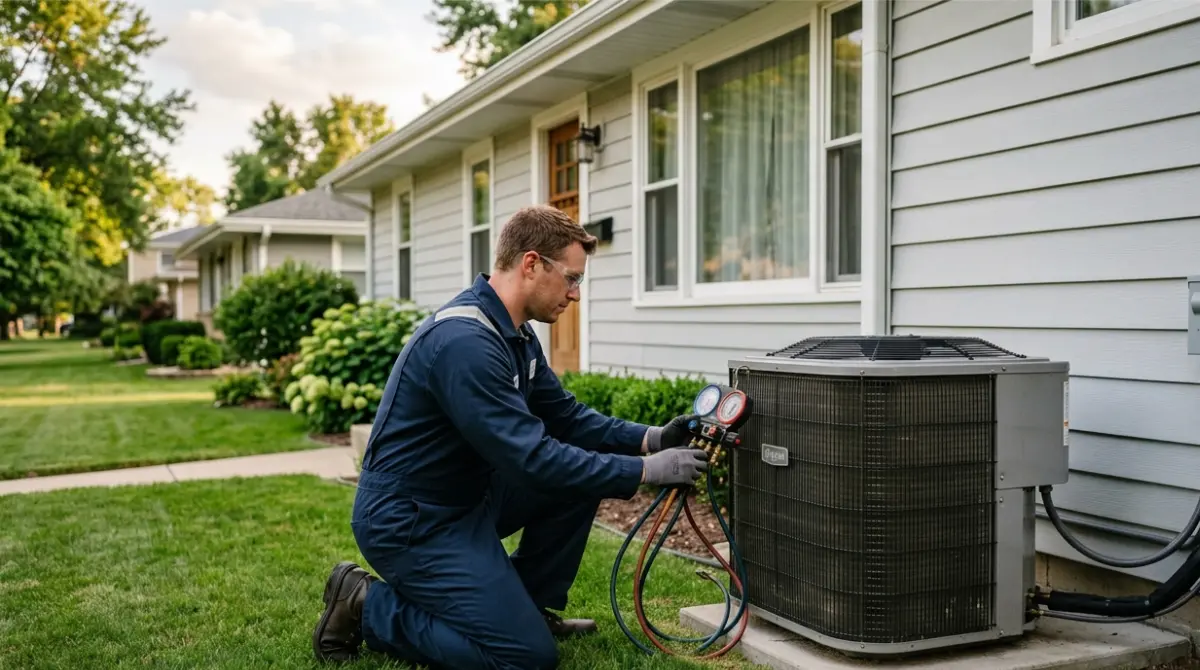
A heat pump moves heat instead of making it; DOE says it can cut heating electricity use by up to 75% compared with electric resistance heat such as baseboards. See DOE’s heat pump overview.
🔍 Why It Works: In summer a heat pump carries heat from inside your home outdoors. In winter it pulls heat from outdoor air, even cold air, and brings it in.
Cold-climate models are designed to perform down to 5°F, per DOE. Geothermal installation can cost several times as much as an air-source system, though DOE says the extra cost may be returned in 5 to 10 years.
Boilers, radiant and dual-fuel systems
Boilers heat water for radiators or in-floor loops, and trade guides note that replacing a boiler with a boiler usually avoids the cost of adding ducts. A dual-fuel system pairs a heat pump with a gas furnace: DOE says the heat pump handles milder weather and the furnace takes over when it gets cold.
✅ Do This: With a gas furnace, ask your contractor to confirm venting and combustion safety in writing, and install working CO alarms.
How to choose an HVAC system for your climate and home
Four questions usually narrow the field to one or two systems.
Match the system to your climate zone
DOE calls modern air-source heat pumps a legitimate heating option even in colder regions. The Gladewick Fit Matrix below is an editorial starting point built from DOE guidance, not a tested ranking.
| Your situation | Price this first |
|---|---|
| Mild or hot climate, sound ducts | Ducted air-source heat pump |
| Cold winters, ducts, gas available | Dual-fuel or cold-climate heat pump |
| No ducts, or an addition | Ductless mini-split |
| Radiators or in-floor heat | Keep the boiler, or add ductless |
| Long-term owner with yard space | Add geothermal to your quotes |
Ducts or no ducts
Existing ducts in good shape keep costs down. Angi says adding ducts can roughly double the project cost, which is why many no-duct homes go ductless.
Fuel and utility rates
Against gas, a heat pump’s running cost depends on local rates. Ask each contractor for an estimate using your actual gas and electric prices.
Home size and why oversizing backfires
A contractor should run a documented Manual J load calculation instead of guessing from square footage. DOE’s Building America program warns about oversizing and urges homeowners to insist on documented sizing.
🔍 Why It Works: An air conditioner removes moisture only while it runs. An oversized unit cools the air quickly and shuts off before it dries it out, leaving a clammy house.
If your home already feels damp, see how a dehumidifier prevents mold without killing it.
HVAC replacement cost by system type
Angi’s April 2026 guide puts a new HVAC system at $5,000 to $12,500, with most homeowners spending around $7,500. These are published averages, not quotes; new ductwork can push a split system past $25,000.
Cost by system type
| System | Published average installed cost | Key detail |
|---|---|---|
| Traditional split | $8,000 | Rises sharply if ducts must be added |
| Packaged | $10,000 | Less common in homes |
| Ductless split | $3,500 per indoor unit | Multi-room homes need several units |
| Geothermal | $14,500 | DOE: can cost several times an air-source system |
📊 Tested / Spec: Averages from Angi’s HVAC buying guide, updated April 10, 2026. Local prices vary, and these are not Gladewick quotes.
What drives the price
- System type and capacity.
- Ductwork. Angi says installing ducts roughly doubles the expense.
- Efficiency level and extras.
- Labor and local market. Use local quotes, not national averages.
What a real quote includes
A usable quote lists equipment model numbers, capacity, SEER2 and HSPF2 ratings, refrigerant type, duct changes, permit costs, labor, disposal and warranty terms. Ask for the load calculation too.
Upfront cost versus running cost
DOE says high-efficiency heat pumps dehumidify better than standard central air conditioners. A higher upfront price can be offset by lower running costs, depending on your rates.
Why prices moved after the refrigerant change
Some contractor blogs claim the transition raised prices by 20% to 30%. We found no government source, so we don’t repeat it. EPA does say the HFC phasedown raises prices of equipment that relies on HFCs and may tighten HFC supply.
R-410A phaseout and new refrigerant rules, explained
Here are the rules that actually apply to your system, with dates.
What changed on January 1, 2025
EPA’s Technology Transitions rule began restricting refrigerants rated 700 GWP or higher in new residential and light-commercial air conditioners and heat pumps. R-410A has a global warming potential of 2,088, so it falls over the line, while the replacements R-454B (465) and R-32 (675) fall under it, per EPA’s reference table. A December 2023 interim rule let pre-2025 equipment be installed until January 1, 2026.
The May 2026 EPA change to installation
EPA announced its final rule on May 21, 2026 and published it in the Federal Register on May 26 (91 FR 31284). It took effect July 27, 2026, and removes the January 1, 2026 installation deadline for systems where all specified components were made or imported before January 1, 2025. EPA’s fact sheet says pre-2025 inventory can be installed until supply runs out. See EPA’s Technology Transitions rule table.
“Specified components” means the condensing unit, condenser, compressor, evaporator unit and evaporator. Replacing both outdoor unit and indoor coil counts as a new system, per EPA. Older guides, and some answers still on EPA’s FAQ page, describe the January 1, 2026 cutoff; the final rule is current.
R-454B and R-32: what “mildly flammable” means
ASHRAE classifies R-32 and R-454B as A2L, lower-flammability refrigerants, while R-410A is non-flammable. They are hard to ignite, but A2L systems need A2L-rated tools, trained technicians and, in new equipment, leak-mitigation features that vary by manufacturer.
🔍 Why It Works: “Class 2L” means a low burning velocity: hard to ignite, slow-spreading flames, yet it can burn.
⚠️ Watch Out: Trade guidance says there is no approved drop-in replacement for R-410A. Don’t let anyone top off or convert a system’s refrigerant unless the manufacturer approves it.
If you own an R-410A system
You can keep using and repairing it, and EPA says replacing a failed condensing unit with a similar R-410A component is allowed. Supply is the risk: under the AIM Act, HFC production allowances fall to 60% of baseline for 2024 through 2028 and to 15% by 2036, per EPA.
✅ Do This: Ask which refrigerant your nameplate lists and whether the technician is EPA Section 608 certified.
Does your state differ?
EPA says states can add their own restrictions and both sets of rules apply; twelve states have HFC laws. ACCA reports New York keeps its January 1, 2026 deadline under state Part 494. Ask your contractor about your state.
SEER2, HSPF2 and AFUE: what the ratings mean
Efficiency labels make quotes easier to compare.
SEER vs SEER2
Since January 1, 2023, new central air conditioners and heat pumps are rated with SEER2, under DOE’s updated test procedure. SEER2 isn’t directly comparable with older SEER numbers.
Regional minimums
DOE splits the country into three regions for air conditioners, as its regional standards page lists. The Southwest is Arizona, California, Nevada and New Mexico. The Southeast is Alabama, Arkansas, Delaware, Florida, Georgia, Hawaii, Kentucky, Louisiana, Maryland, Mississippi, North Carolina, Oklahoma, South Carolina, Tennessee, Texas, Virginia and D.C. The North is the rest.
| Equipment | Minimum rating | Where |
|---|---|---|
| Split air conditioner | 13.4 SEER2 | North |
| Split air conditioner | 14.3 SEER2 (under 45,000 BTU), 13.8 SEER2 (45,000 BTU and up) | Southeast and Southwest |
| Split heat pump | 14.3 SEER2 and 7.5 HSPF2 | Nationwide |
HSPF2 and AFUE
HSPF2 rates a heat pump’s heating efficiency. AFUE rates how much of a furnace’s fuel becomes heat. Higher is better for both.
Which rating is worth paying for
Meet your region’s minimum, then weigh extra efficiency against price and local rates. DOE recommends ENERGY STAR certified heat pumps; rebates may set their own bars.
HVAC rebates and tax credits after the 25C credit ended
The federal heat pump tax credit is gone for new installs, but some rebates may remain.
What ended on December 31, 2025
Per the IRS page on the Energy Efficient Home Improvement Credit, you can claim it for improvements made through December 31, 2025. It covered 30% of costs, up to $2,000 a year for qualified heat pumps, claimed on Form 5695. If you installed in 2025, claim it on that year’s return; nothing installed in 2026 qualifies.
Rebates that may still be open
The DOE Home Energy Rebates page describes two programs: HOMES, up to $8,000 based on modeled whole-home savings of at least 20%, and HEEHR, up to $14,000 at the point of sale. Both are available only in select states. Funds can run out; California’s single-family HEEHRA rebates were fully reserved as of February 24, 2026, according to TECH Clean California.
Utility rebates and financing
Your utility and state energy office may run separate rebates or loans.
How to check your state
Contact your State Energy Office, as DOE advises, before signing.
✅ Do This: Get rebate eligibility in writing from the program administrator, and ask a tax professional about any credit.
Repair or replace? How to decide and get fair quotes
A short checklist beats a rushed decision.
Age and cost rules of thumb
Compare your system’s age with typical lifespans: Angi lists 12 to 20 years for air conditioners, 10 to 20 for heat pumps and 15 to 30 for furnaces. Add repair history, refrigerant type and running costs. No regulator publishes a repair-or-replace formula.
Questions to ask about an R-410A repair
- What exactly failed, and is it a refrigerant leak?
- Is the replacement part an R-410A component labeled “for servicing existing equipment only”?
- Would the job replace both the outdoor unit and the indoor coil? EPA treats that as a new system.
- What does refrigerant cost per pound today, and is it reclaimed?
How to read an HVAC quote
Compare at least three written quotes line by line, using the items listed in the cost section.
License, permit and red-flag checks
Ask for the state license number, proof that refrigerant technicians are EPA Section 608 certified, and whether a permit will be pulled. Get written confirmation the equipment meets your region’s minimum; DOE enforces those standards and takes reports of violations.
✅ Do This: Before you sign, verify the license with your state licensing board.
HVAC maintenance and how long systems last
Small habits catch problems early.
What you can safely do yourself
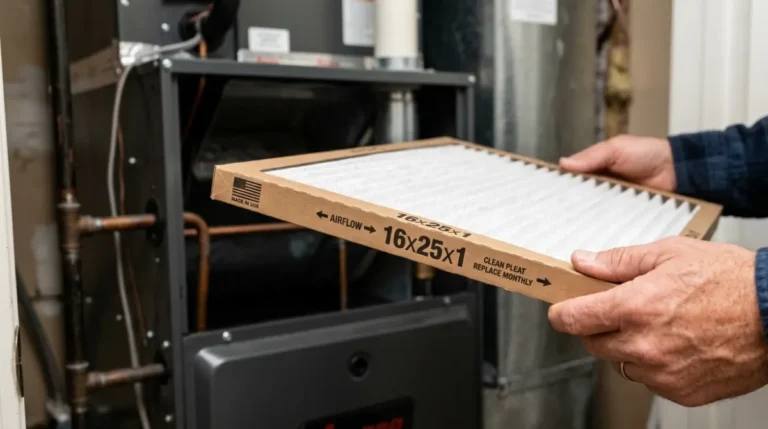
Change or clean the air filter on your manufacturer’s schedule, keep the outdoor unit and vents clear, and check CO alarm batteries when you change your clocks, as the CDC advises. Leave panels, gas lines, wiring and refrigerant to professionals.
When to call a pro
CDC and CPSC say to have fuel-burning heating equipment serviced by a qualified technician every year.
Warning signs worth acting on
A musty smell is a reason to check for moisture, and our guide to mold in air ducts explains what to do next. Short run times with a clammy house suggest oversizing. Angi’s typical lifespans (12 to 20 years for air conditioners, 10 to 20 for heat pumps) mean age matters too.
⚠️ Watch Out: If a CO detector sounds, leave your home immediately and call 911, according to the CDC.
Common questions about HVAC systems
1. What are the main types of HVAC systems?
The main types of HVAC systems are split, packaged, ductless, heat pump, and boiler or radiant; dual-fuel setups pair a heat pump with a furnace.
2. Is R-410A banned?
No. R-410A is not banned: existing systems can keep running and be repaired, though new R-410A production is shrinking under the HFC phasedown.
3. Can R-410A systems still be installed in 2026?
Sometimes: since July 27, 2026, EPA lets pre-2025 inventory be installed until supply runs out, but some states, including New York, keep stricter rules.
4. What is a good SEER2 rating?
Meet your region’s minimum first: 13.4 SEER2 for northern split air conditioners, 14.3 for most southern units and for split heat pumps.
5. Are there HVAC tax credits in 2026?
The 25C tax credit ended: it covered improvements made through December 31, 2025. State, utility and DOE-funded rebates may still be available.
6. How much does a new HVAC system cost?
Angi’s April 2026 guide lists $5,000 to $12,500 for a new system, averaging around $7,500; new ductwork can push totals past $25,000.
7. Should I repair or replace my HVAC system?
Compare system age to typical lifespan, repair frequency and repair cost against replacement cost, using written quotes for both.
8. How long does an HVAC system last?
Angi lists 15 to 25 years on average: air conditioners 12 to 20, heat pumps 10 to 20, furnaces 15 to 30, depending on maintenance.
Your next step before you call an HVAC contractor
You now know the questions that matter.
Pick your path
If humidity is driving your search, read what an air purifier can and can’t do about mold and how a dehumidifier prevents mold. For moisture inside the ducts, start with mold in your air ducts.