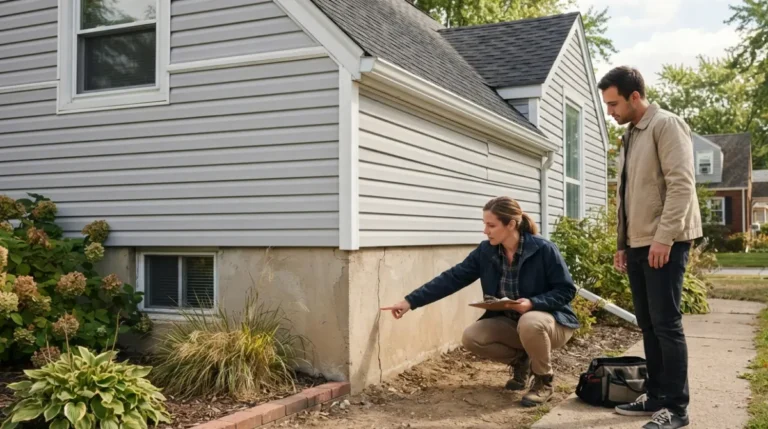
Report New Home Foundation Cracks the Right Way to Your Builder

New home foundation cracks: an FHA/VA warranty needs written notice within one year, so measure and photograph early. Here’s the order to follow.
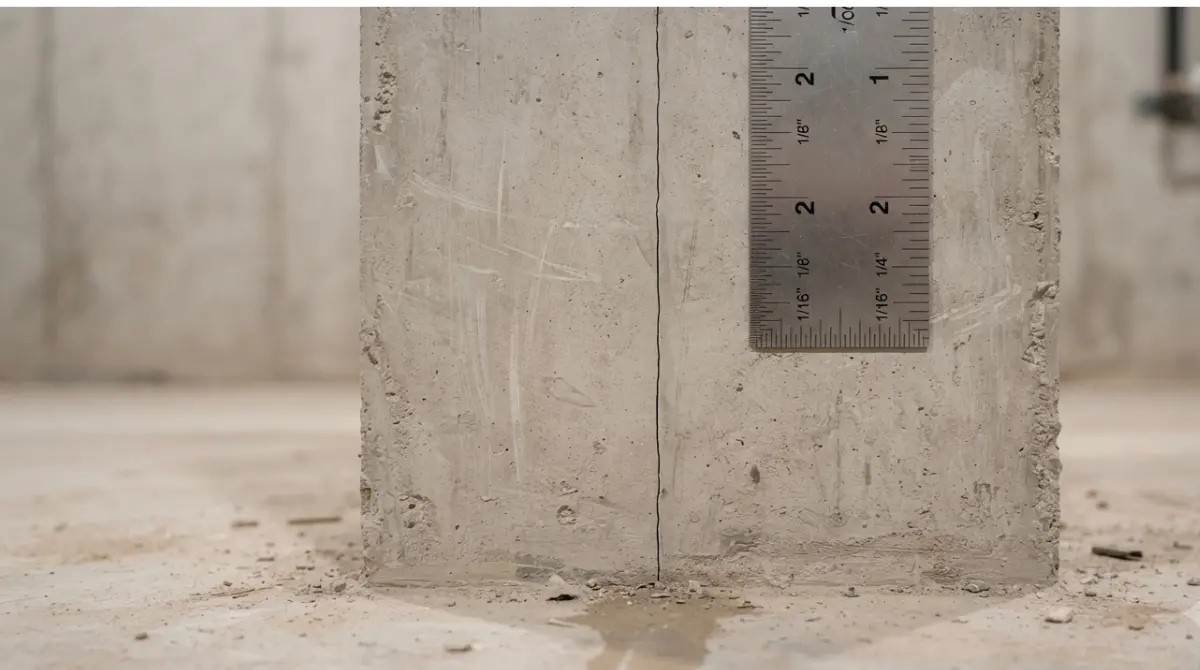
Table of Contents
Are foundation cracks in a new home normal?
Often, yes. Thin, stable cracks are common in a new home foundation, and most builder warranties don’t treat them as defects. Wide, horizontal, growing, or wet cracks are different, and your warranty clock is already running.
Find your situation:
- Thin and unchanged: read Sections 2–4.
- Builder already said “just settling”: jump to Section 6.
- Wide, horizontal, bowing, or leaking: go to Section 7 now.
NAHB’s performance guidelines describe shrinkage cracks as common and expected in basement and crawl space walls.
ℹ️ Safety Note: Foundation problems can involve structural failure and water damage. This article is general information, not engineering or legal advice. If you see a horizontal crack, a bowing wall, or water coming in, hire a licensed structural engineer, and ask a local attorney about your state’s deadlines before filing a claim.
Which foundation cracks are normal and which aren’t?
Why new foundations crack
🔍 Why It Works: Concrete shrinks as the water in the original mix evaporates during curing. Because concrete is weak when pulled apart, that shrinkage relieves itself as a crack.
That is why shrinkage cracks are usually thin, vertical, and even in width.
Why the width rules disagree
No single crack width settles the question. NAHB’s own training material says no absolute universal standard exists for judging cracks.
| Source | What it says | Key Detail |
|---|---|---|
| Repair-company rules of thumb | Under 1/16″ is hairline; over 1/4″ goes straight to professional evaluation | They disagree and sell inspections |
| NAHB performance guideline | Poured-wall cracks over 1/4″ are excessive | Industry guideline, not law |
| Your warranty | Its own crack standard | Controls your claim |
Patterns that need an engineer
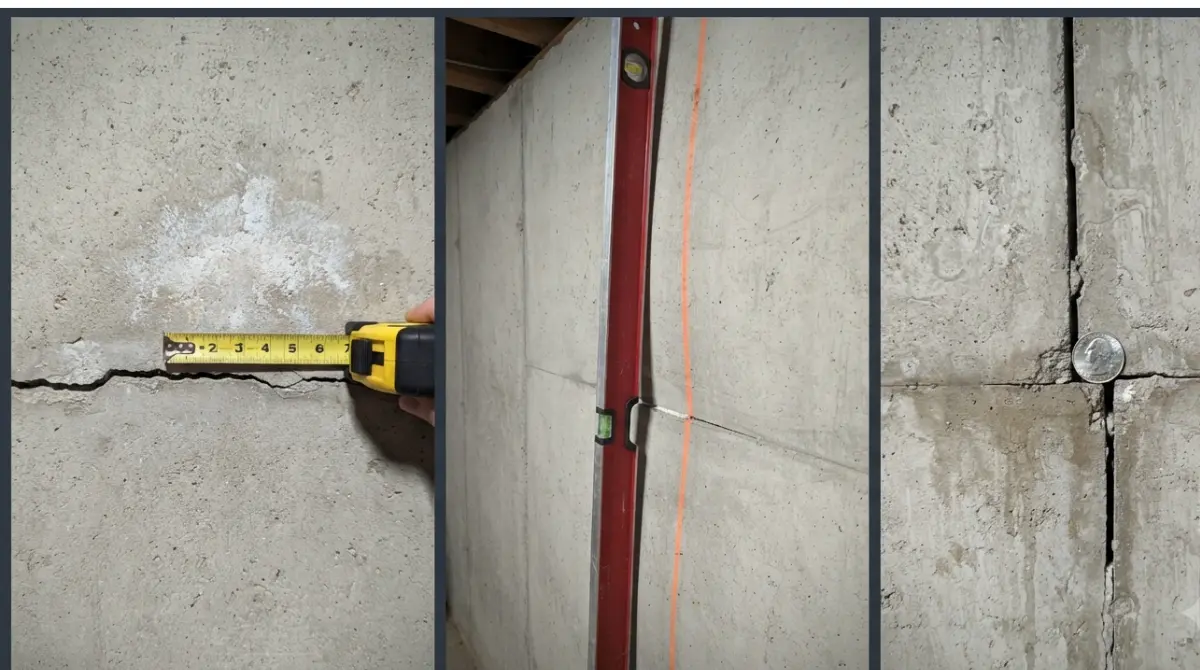
Horizontal cracks, bowing, and offset edges are not shrinkage. One real-estate trade guide says any horizontal crack deserves professional review regardless of width. Compare yours against foundation cracks by pattern.
What does a builder warranty cover for foundation cracks?
A builder warranty covers foundation cracks only when your contract counts them as covered defects. Coverage usually reaches only significant structural defects and typically runs one to ten years. Small cracks are commonly excluded.
FHA and VA loans
📊 Tested / Spec: The HUD-92544 warranty (4/2023 edition) covers defects in equipment, material, or workmanship for one year, requires written notice within one year of title or occupancy, and leaves your other legal rights intact. FHA or VA keeps the final say on whether a defect exists.
Read HUD’s Warranty of Completion of Construction form for the exact wording.
Home warranty plans are different
Standard home warranties generally exclude foundation repair, so a builder warranty is the likelier route.
How to document foundation cracks before you contact the builder
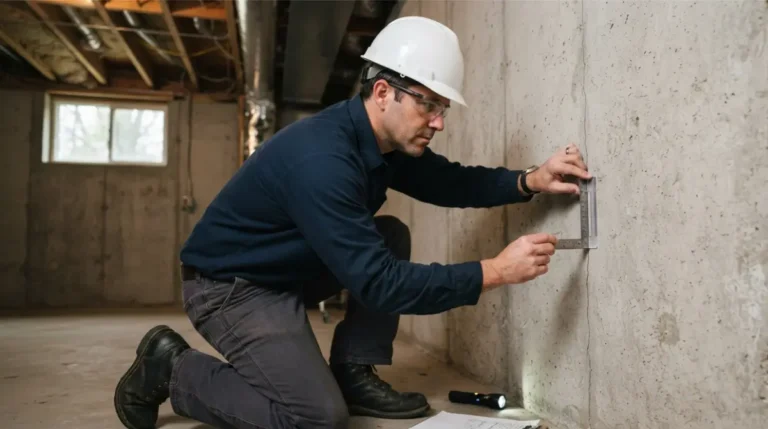
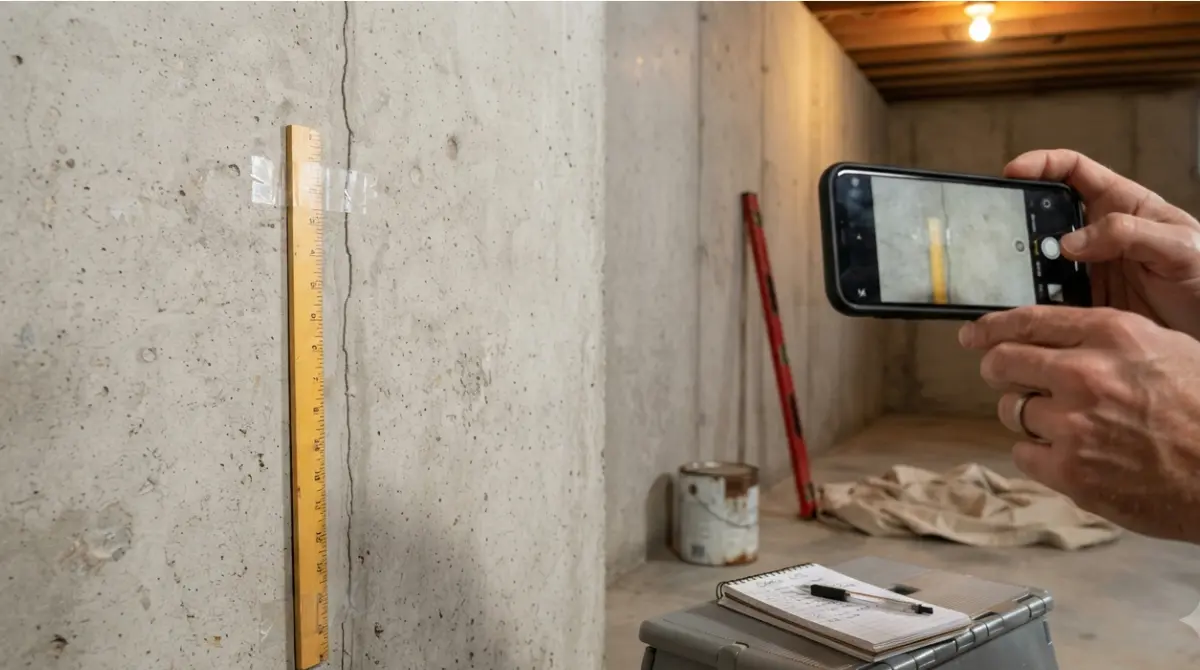
You can build your evidence in an afternoon with a ruler and a phone.
- Photograph each crack with a ruler or crack comparator card beside it.
- Measure the width at the widest point; note length and location.
- Record the date and nearby signs, like sticking doors or damp spots.
- Re-check on a schedule; monthly logging is a common approach.
✅ Do This: Keep one dated crack log with these columns: location, date, width, length, direction, photo file name, change since last check, and moisture present or not.
If you’re tempted to patch, see how hydraulic cement works on basement wall cracks first. Read your warranty before sealing anything, since repairs may affect a claim.
How to file a builder warranty claim for foundation cracks
- Find your warranty and its notice deadline. On an FHA or VA form, written notice must reach the builder within one year of title or occupancy.
- Send written notice through the warranty portal or by certified mail, and keep proof of delivery.
- Attach your crack log photos and measurements.
- Ask for an inspection date and the decision in writing, and keep every reply.
What your state may require
Many states require written notice and a chance to repair before a construction defect lawsuit. For example, Washington requires written notice at least 45 days before filing (Washington’s construction defect claims chapter). Outer deadlines range from about four to fifteen years depending on the state.
⚠️ Watch Out: This is general information, not legal advice. Before any deadline passes, ask a local construction-defect or real-estate attorney what notice your state requires and whether your warranty’s wording changes it.
What to do if your builder says it’s just settling
Settling is a fair answer for thin, stable cracks, but you can test it.
Ask for the reason in writing
Request the builder’s explanation and the standard they applied.
Compare it to your warranty
NAHB’s guideline commentary says warranty claims cover cracks that let in water or horizontal cracks that bow the wall. If yours leak or bow, say so, and review signs of foundation problems versus normal settling.
Get an independent engineer
Hire a licensed structural engineer who doesn’t sell repairs, and ask for a written assessment of the cause.
When a foundation crack is urgent
Stop documenting and call a licensed structural engineer promptly if you see:
- a horizontal crack, regardless of its width
- a wall bowing inward; NAHB’s guideline treats bowing beyond 1 inch in 8 feet as excessive
- offset crack edges, or cracks that keep growing
- water coming through a crack, or doors newly sticking
✅ Do This: Ask the engineer for a written assessment of the cause and whether it points to a construction defect. Attach it to your builder notice.
Who to call first for foundation problems covers the order of calls, and when a basement wall crack is structural shows the signs in more detail.
FAQ
1. Are cracks in a new home foundation normal?
Thin, stable cracks in a new home foundation are common, and shrinkage cracks are expected. Wide, horizontal, growing, or leaking cracks need evaluation.
2. Does a builder warranty cover foundation cracks?
Only if your contract counts the foundation crack as a covered defect; small cracks are commonly excluded, significant structural defects usually covered.
3. How wide is too wide for a foundation crack?
No single foundation crack width applies. Builder-industry guidelines and your warranty set the standard, and NAHB’s guideline calls poured-wall cracks over 1/4 inch excessive.
4. How long is a builder warranty on foundation cracks?
Foundation crack coverage varies by contract, commonly one to ten years. The FHA/VA warranty form covers workmanship defects for one year from title.
5. What should I do first about foundation cracks in a new home?
Photograph and measure each foundation crack, log the date, then read your warranty for notice deadlines before contacting the builder.
6. Should I patch a foundation crack myself before the builder sees it?
Read your warranty first; it may say how repairs affect coverage. Document the foundation crack before sealing anything.
7. Do horizontal foundation cracks mean structural damage?
Horizontal foundation cracks warrant professional evaluation regardless of width, especially with wall bowing. Call a licensed structural engineer.
8. Who pays if the builder refuses a foundation crack claim?
Your warranty’s terms decide who pays for a foundation crack. If denied, request a written reason and an independent engineer’s assessment.
9. Do I need to give written notice for a foundation crack claim?
Send written notice and keep proof. Warranty and state law may set deadlines and require notice before any lawsuit over a foundation crack.
10. When should I call an engineer about foundation cracks?
Call a licensed structural engineer for horizontal cracks, bowing walls, offset cracks, leaking cracks, or foundation cracks that keep growing.
Your next step
Measure and photograph every crack, check your warranty’s notice deadline, and send written notice if anything is wide, horizontal, growing, or wet. If the builder pushes back, get an independent engineer’s written assessment before you pay anyone for repairs.